Overly broad permissions can turn one compromised account into a much larger security problem. Learn how to reduce unnecessary access, review privileges, and apply least privilege across modern Linux systems. Review Linux Privileges×


Stay Ahead With Linux Security Features

 identity management security tactics
 For years, we secured our Linux infrastructure by building walls: VPCs, security groups, and hardened SSH configurations. We treated the cloud like a virtual data center, assuming that if we kept the "bad guys" out of the network, our workloads were safe. . That model is no longer sufficient. Today, one of the most common paths from an initial compromise to a major cloud breach is the identity assigned to your Linux workload. When an attacker gains code execution on a Linux instance—through a...
 Jul 17, 2026
 security practices patch management
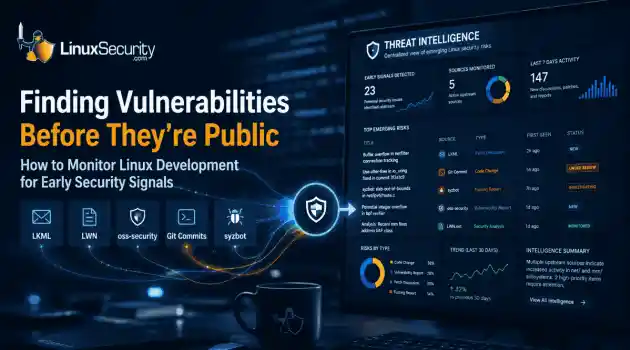
 Most of us don't hear about a kernel vulnerability until a CVE lands in our inbox or the vulnerability scanner starts complaining. By then, the patch isn't new anymore. Kernel developers may have been passing it around for review, arguing over the implementation, or revising it for days before anyone outside that community noticed it. None of those discussions are secret. They're sitting in mailing list archives, Git commits, and patch reviews where they've been the whole time. The strange...
Jul 14, 2026
 Linux security cyber attacks
 Every Linux server in your fleet produces thousands of events every minute. From journald logs and auditd records to kernel-level eBPF hooks, your systems are constantly talking. Most of that noise is just the mundane churn of system services, CI/CD runners, or routine administrative automation. But among that noise, an attacker might be establishing a foothold, moving laterally, or setting up persistence. The challenge for any security team is: how do you separate the routine from the...
Jul 13, 2026
 open-source infrastructure risk
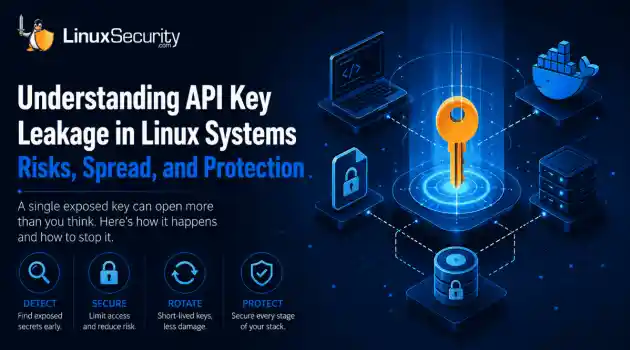
 Security scanners flag exposed API keys in public repositories every day. The initial response is usually predictable: delete the commit, revoke the credential, and move on. That’s a mistake. . In a real Linux environment, an API key never stays in one place. By the time it hits a public repo, it’s already everywhere. It’s in the CI/CD pipeline. It’s in your container registry. It’s in the build logs. It’s in the backups. Git makes this worse because the history never dies. Deleting a file in...
Jul 11, 2026
 open-source rootkit
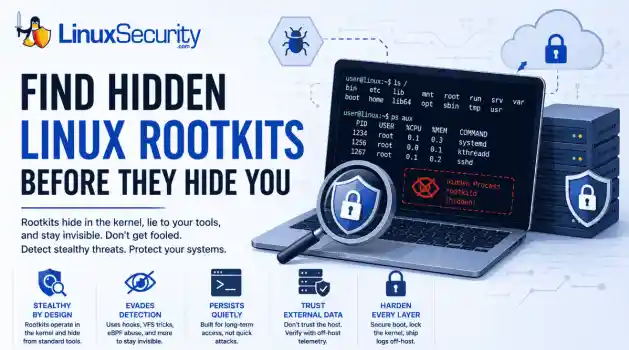
 Most of us think of Linux rootkits as ancient history—the stuff of 90s hacking forums and clunky malware that would crash your system if you looked at it the wrong way. But if you think they’ve gone away, you’re mistaken. They’ve just gotten smarter. . Modern attackers aren't using the noisy tools of the past. Today’s threats are surgical. Many of today’s most advanced Linux rootkits operate at the kernel level or abuse legitimate system features to blend in with normal traffic. They’re...
Jul 09, 2026
 Refine features
X Clear Filters
Get the latest News and Insights
Get the latest Linux and open source security news straight to your inbox.
Community Poll
Should Linux servers automatically install security updates?
Loading...
Explore Latest Linux Security features
We found 4 articles for you...
102
 security advisorynetwork threatscybersecurity
Exploring Linux Security Features and Their Role Against Attacks
Choosing the safest operating system (OS) is a key determinant of your online security. After all, this software manages the memory and processes throughout your server. . Experts agree that Linux is a highly secure OS , if not the most secure OS by design. In this article, we will examine the key features, principles, and capabilities that contribute to Linux's robust security. Additionally, we will evaluate the protection Linux offers against cybersecurity vulnerabilities and threats like malware, viruses, and rootkits. Secure by Design When it comes to security, Linux Security users are at a decided advantage over their Windows- or Mac-using counterparts. Unlike proprietary OSes, Linux is the most secure OS by design, as Linux Security features are built into the system. The increasingly popular open-source secure OS is highly flexible, configurable, and diverse. Linux Security OS also implements a strict user privilege model and offers a selection of built-in kernel security defenses to safeguard against cyber security vulnerabilities and attacks. Linux source code is transparent to ensure any network security issues are short-lived despite being inevitable on even the most secure OS. Let’s look at Linux features and how they contribute to data and network security. The Open-Source Security Advantage Linux Security vulnerabilities are generally identified and eliminated very rapidly since their source code undergoes constant, thorough review by the vibrant, global open-source security community. In contrast, vendors like Microsoft and Apple employ a method known as “security by obscurity,” where source code is hidden from outsiders in an attempt to conceal network security issues from threat actors. This approach is generally ineffective in preventing modern exploits in cyber security because it undermines the security of the “hidden” source code by preventing outsiders from identifying and reporting data and network security weaknesses prior to malicious actors.When it comes to discovering security bugs, a small team of proprietary developers is no match for the worldwide community of Linux Security user-developers who are deeply invested in protecting Linux Security to help it maintain its status as the most secure OS. A Superior User Privilege Model Unlike Windows, where “everyone is an admin,” Linux greatly restricts root access through a strict user privilege model. On Linux, a superuser owns all the privileges, and ordinary users are only granted enough permissions to accomplish their tasks. Because Linux users have low automatic access rights and require additional permissions to open attachments, access files, or adjust kernel options, it is harder to spread malware and rootkits on a Linux system. Thus, these inherent restrictions serve as a key defense against system compromise and attacks on network security. Built-In Kernel Security Defenses The Linux Security kernel boasts an array of built-in security defenses , including firewalls with packet filters, UEFI Secure Boot firmware verification mechanisms, Linux Kernel Lockdown configuration options, and SELinux or AppArmor Mandatory Access Control (MAC) security enhancement systems. By enabling and configuring these Linux security features , known as Linux kernel self-protection, administrators can maintain the safest Operating System. Security through Diversity Linux Security environments allow for much diversity, as there are various distros, system architectures, and components companies can pick to meet their business needs. This diversity not only helps satisfy users’ individual requirements but also enhances the secure OS so that attacks in network security are more difficult to achieve and exploits in cyber security are harder to find. If such cloud security breaches are to take place, however, malicious actors cannot use those tactics on a wide range of Linux systems, as Linux Security features keep every system diverse. In contrast, the homogeneous Windows“monoculture” makes their systems a relatively easy and efficient attack target. In addition to the design diversity seen in Linux, certain secure Linux distros are differentiated in ways that specifically address advanced security and privacy concerns shared among pentesters , reverse engineers , and data and network security researchers. Highly Flexible & Configurable There are vastly more configuration and control options available to Linux Security administrators than to Windows users. For instance, Linux sysadmins have the ability to use SELinux or AppArmor to lock down their system. These security policies offer granular access controls, providing a critical additional layer of security throughout a secure operating system. Linux Kernel Lockdown configuration options strengthen the divide between userland processes and kernel code, and admins can harden the sysctl.conf file , the main kernel parameter configuration point for a Linux system, to give their server a sturdier foundation for their secure OS. Why Is Linux an Increasingly Popular Target among Cybercriminals? Linux powers the majority of the world’s high-value devices and supercomputers, and the secure OS’s user base is steadily growing. Unfortunately, cybercriminals have taken note of these cybersecurity trends. Malware authors and operators are targeting Linux systems in their malicious campaigns more frequently. The past few years have been plagued with e merging Linux malware strains. That being said, Linux is still a relatively small target, with 96% of new malware targeting Windows . Furthermore, the recent increase in Linux malware breaches is not a reflection of whether or not Linux is a secure OS. The majority of attacks on Linux systems can be attributed to misconfigurations and poor administration, highlighting a widespread failure among Linux sysadmins to prioritize data and network security. Luckily, as Linux malware continues to become increasingly prevalent and problematic, Linux offersbuilt-in protection against malware attacks through its strict user privilege model and design diversity. A selection of excellent reverse engineering and malware scanning toolkits like REMnux, Chkrootkit, Rkhunter, Lynis, and Linux Malware Detect (LMD) are available to help admins detect and analyze malware on their systems. Our Final Thoughts: How Secure Am I As A Linux User? Having a secure OS is crucial in maintaining robust data and network security online. However, the security features Linux offers are not a complete safeguard against malware, rootkits, and other attacks. Cybersecurity is dependent upon defense in depth, security practice implementation, and smart online behavior, all of which play a central role in your ability to improve your security posture. That being said, choosing a secure OS is of utmost importance, as the OS is the most critical piece of software running on your computer. Linux is an excellent choice, as it has the potential to be highly secure due to its open-source code, strict user privilege model, diversity, and relatively small user base. However, Linux is not a “silver bullet” when it comes to digital security. The OS must be properly and securely configured, and sysadmins must practice secure, responsible administration in to prevent attacks. Also, it is crucial to keep in mind that tradeoffs exist in terms of security and usability. LinuxSecurity Founder Dave Wreski explains, “The most secure system is one that is turned off, covered in cement, and located at the bottom of the ocean - but this system is obviously not very usable. Admins should configure their systems to be as secure as is practical within their environment. In regards to convenience, Linux has a bit of a learning curve but offers significant security advantages over Windows or MacOS. It’s a tradeoff that’s well worth it if you ask me.” . Discover the essential features of Linux's robust security architecture, from user permissions to kernel integrity, highlighting itsadaptability and community support. choosing, safest, operating, system, determinant, online, security. . Brittany Day
 Mar 19, 2025
•
Mar 19, 2025
•
102
 data securitynetwork threatsprivacy enhancement
Google's IP Protection: Effects on Privacy and Network Security
Google is a popular search engine technology worldwide, as its capabilities permit users to gain answers and information about any questions they have efficiently. Now, Google is constantly developing new cybersecurity projects, and they have created a feature on Chrome that hides IP addresses by implementing a proxy server between the user and cybercriminals. . This proxy server keeps remote websites from seeing the device from which the user is searching. Websites will not be able to tell if users reach out from a phone, tablet, or desktop since they can only access the IP address of the proxy server. Google can already access user information, as the search engine gathers data based on user searches and website interactions. User apps, browsers, and devices have their information input into Google data collections that track IP addresses, crash reports, system activity, and request URLs. Therefore, Google can access any user information it wants. So, what is the purpose of IP Protection through proxy servers? How does this restriction affect our privacies and permissions within the proxy market? This article will discuss proxying, the reason behind Google’s development, the benefits and possible implications of a proxy server on Google, and how it could impact other services. What Is Proxying? Why is Google Developing this New Feature? Proxying refers to a practice in which organizations or employees serve as authorized agents or substitutes for other businesses and workers. Google seeks to act as this intermediary between clients requesting a resource and the server providing that same tool. This information collection is Google’s effort to shift clients away from third-party cookies by limiting cross-site website tracking on Chrome, whether on Android or Apple products . The ad-focused surveillance gives Google more control over what users see and access. This new IP Protection feature can impact privacy, tracking, online advertising, and all three combined. Google plans to improvesecurity posture through user privacy on Chrome Browsers by phasing out third-party cookies. They expect to eliminate those tracking cookies by mid-2024 and replace them with APIs limiting user data from being shared across third-party software and cross-app identifiers. Therefore, Google is introducing the IP Protection feature to phase out Chrome cookies while accommodating regional considerations and allowing websites to adjust to the newest privacy restrictions. The privacy-enhancing technology on IP Protection will be an opt-in feature at first, so users have control over whether or not Chrome keeps track of their behaviors and data that pose value to Google. Google has shared its plans for how its new feature works and what privacy users will still have. Users will continue to control their information and who can access it, but Google will still maintain control over what data it collects from users. How Will IP Protection Benefit Users? IP Protection through proxying can allow browser vendors to offer users additional privacies. An IP Protection expert explains, “The user’s IP address continues to make it feasible to associate users’ activities across origins that otherwise wouldn’t be possible.” While users can formulate unique, persistent profiles that combine with activity tracking, cybercriminals can still pose significant network security threats since information is not fully private. Unlike third-party cookies, users cannot opt out of this covert tracking. Google’s IP Protection feature can shield user IP addresses with proxy servers. Hence, users have additional protection from third-party cookies that threaten data and network security with their exploits in cybersecurity. Opting into this privacy-enhancing technology prevents users from more detrimental impacts and issues that could hinder privacy and keep users from having ultimate security online. Keep your information away from cybercriminals and network security risks they send us. Has Google Restricted our Privacy andAccess with IP Protection? Is It Monopolizing the Proxy Market? Yes, Google restricts privacy and access permissions, monopolizing the proxy market by installing IP Protection. Google assigns IP addresses to proxy connections representing a rough, “coarse” user location rather than their specific location. However, you cannot block requests for your IP address on your browser like you could have done with cookies. Google IP Protection works similarly to how a landline phone does in a household. While individual names are not revealed, the common address can be accessed by those interested, which researchers can use to track habits and interests. IP Protection will work in specific domains to start, but it will expand slowly for cross-site tracking capabilities. Will IP Protection Impact Other Proxy and VPN Services? Google has a reputation for providing the answers to millions of user questions. However, the company must prioritize maintaining trust with its users to ensure users utilize its product for years. A Virtual Private Network (VPN) can monetize by selling your Internet history to advertisers, putting your safety at risk. Therefore, Google wants to strengthen privacy by enhancing technology, data, and network security. IP Protection leads higher-up companies to lose money but in the process of establishing trust and keeping users safe. What Are the Potential Data and Network Security Implications of Launching Google IP Protection? Recently, Google mentioned a few network security risks that could evolve once the company launches and establishes IP Protection as a new feature. Here are such concerns: Data and network security: Google will be tracking its servers, which could make it more difficult for security and fraud protection services to block Distributed Denial of Service (DDoS) attacks in network security and detect invalid traffic and cybercriminals. Identity Authentication: Users will need to verify their identity on the proxy before installing and utilizing IPProtection, which could delay their shift to this level of security. Proxy Hacking: IP Protection should prevent proxies from linking web requests to particular accounts. However, proxy hacking has become a popular method for cloud security breaches that can exploit a program’s internal functions and send control commands to the proxy server. Then, the proxy sends requests from these applications, which can pose a significant network security threat in the future. Server Oversight: Computer systems have rate-limiting techniques that permit them to control traffic within a server so that clients can respond to requests promptly while monitoring for other contacts in the process. Final Thoughts on Google’s New IP Protection Feature As they introduce the new IP Protection feature on servers, Google expects to experience a slight decrease in trust levels among their users. Cybersecurity projects like these could put more information at risk, redefine online privacy-enhancing technology, and lead users to question how much of their information is already public. While Google tests its IP Protection services, users can decide what is best for their cloud security framework. Regardless, Google will undoubtedly benefit from having another network security toolkit in its back pocket that it can offer to users, and the feature will help keep Google on top of its influence over users. . Google's IP Protection feature boosts user privacy using proxy servers to mask IP addresses, adding security against trackers and enabling safer online browsing.. Proxying Techniques, Google IP Protection, Data Privacy Solutions, Cybersecurity Innovations. Marquisha Mathis. Brittany Day
Nov 10, 2023
•

102
 security advisorybuffer overflownetwork threats
Linux: Recent Security Advisory on Network Risks and Protective Measures
In August 1991, Linus Torvalds, a student at the University of Helsinki, created an operating system that could be a free, open-source alternative to MINIX. He said about starting Linux , "Hello everybody out there using minix - I'm doing a (free) operating system (just a hobby, won't be big and professional like gnu)..." . Little did Torvalds know, his hobby would become one of the most powerful systems only thirty years later, assisting billions of devices worldwide. This system, Linux, makes up almost 3.08% of all the operating systems used worldwide. As the backbone to a multitude of servers, workstations, kiosks, and other front-line devices throughout the globe, it is imperative for organizations to keep their Linux environments secure while running at all times. That's the ideal, but the reality isn't as simple, especially with over 1,050 cyber security vulnerabilities being detected in the Linux kernel in the last five years to date. This article will take a look at these network security threats and the best ways to approach and mitigate such issues. What Are Some Common Types of Linux Vulnerabilities? While Linux web application security vulnerabilities are a growing problem for admins and IT teams, it is of great importance to understand the common types of network security issues to be a step ahead in bolstering your system against them. Here are some Linux issues you should be familiar with: Denial of Service (DoS) Vulnerabilities As the name suggests, a Denial of Service (DoS) vulnerability is when exploits in cyber security carry out attacks that prevent the intended users from accessing their systems and services by shutting them down. Such attacks can prevent the account holders of a bank from accessing the bank's services, for example. DoS is generally achieved by overloading target systems with excessive traffic or sending them information that can potentially result in triggers, eventually causing a crash in data and network security. Further,this form of attack is classified into specific types based on the attack vector, such as Ping of Death, Buffer Overflow, Teardrop, and SYN Flood. Remote Code Execution (RCE) Vulnerabilities One of the most common types of cyber security vulnerabilities by far, Remote Code Execution (RCE) can result in attacks in network security that allow malicious code on target systems from afar. These bugs can cause full-scale cloud security breaches, allowing the attackers to gain full control over the exploited systems, thereby compromising entire web servers due to web application security vulnerabilities. Buffer Overflow Vulnerabilities Buffer overflows are yet another common form of Linux cyber security vulnerabilities that can cause arbitrary code execution in target systems, thereby paving the way for threat actors to gain unauthorized access to the network. This occurs when programs attempt to place data in a memory region past a buffer. Such exploits in cyber security are found in both web and application servers, as well as in custom web application code. Buffer overflow attacks in network security can be classified into two types. In stack-based buffer overflows, malicious code is sent to applications that store the data in a stack buffer. In heap-based buffer overflows, the malicious code floods the program's memory space, causing the heap memory data to be overwritten. Some of the other common web application security vulnerabilities affecting Linux systems include Cross-Site Scripting (XSS), Cross-Site Request Forgery (CSRF), and SQL Injection. Linux Vulnerabilities Over Time and Their Impact If we were to consider the earliest Linux virus ever discovered, we would have to begin with Staog , which was discovered in 1996. Over the years, as the kernel's security matured, so too did methods of exploits in cyber security. While Staog reportedly did not contain a critical payload to damage systems, the newer Linux cyber security vulnerabilities are much deadlier. Fromleakage of data and information to memory corruption in the affected systems, these network security threats can be incredibly harmful to an enterprise's security, as well as its normal operations. Here's a look at some of the most notorious Linux vulnerabilities discovered in the past. CVE-2022-47939 In the second half of 2022, Zero Day Initiative, which focuses on international software vulnerabilities, identified this network security threat in the ksmbd file server module of the Linux kernel. This problem was rated to be of Critical severity, owing to its CVSSv3 score of 10.0. Primarily related to the faulty use of dynamic memory allocation, or use-after-free vulnerability , it allowed unauthenticated, remote threat actors to execute code on systems that had ksmbd enabled. Fortunately, this bug could not spread its talons and cause much destruction since ksmbd was disabled by default in most Linux distros. However, certain versions of Debian and Ubuntu were affected by the bug but had the fixes released in the subsequent versions. CVE-2022-25636 Another one of these high-severity cyber security vulnerabilities was made public in February 2022 after it affected the Linux kernel by leveraging a heap out-of-bounds write error, particularly in nft_fwd_dup_netdev_offload in net/netfilter/nf_dup_netdev.c , a netfilter subcomponent of the kernel that enables the implementation of various networking-related operations. Typically, out-of-bounds errors occur in software in case the program writes a code outside its allocated memory area. This vulnerability affected Red Hat Linux patching versions 8.3 and above, as well as certain Debian upgrades, eventually leading to system crashes or elevation of privileges. CVE-2022-0847 Also discovered in 2022, keeping Linux IT administrators busy, Dirty Pipe is another vulnerability that focused on the escalation of local privileges in Linux kernel versions 5.8 and above. Threat actors could overwrite files with justread-only permissions, which means malicious applications could gain full control over the system. Primarily affecting Android devices, Dirty Pipe was assigned a high severity rating to its CVSSv3 score of 7.8. The name of this network security threat derives from how this breach reads, writes, and distributes data via pipes. So, by leveraging the Dirty Pipe vulnerability, malicious actors can instigate exploits in cyber security to modify data in the system files. CVE-2021-4034 The last of the Linux cyber security vulnerabilities we will discuss is Polkit , an authentication framework that controls system-wide privileges, seeking to elevate them for threat actors. This network security threat, with a CVSSv3 score of 7.8 ( high severity), was detected in the pkexec application. First detected in 2022, this vulnerability managed to stay hidden for over 12 years, even though it affected all versions of pkexec since its initial release in May 2009. This vulnerability affected several popular Linux distros, such as Debian, Fedora, CentOS, and even Ubuntu, and threat actors were able to obtain full root privileges on the default installations of these distros. CVE-2024-26592 and CVE-2024-26594 CVE-2024-26592 and CVE-2024-26594 are vulnerabilities affecting the Linux KSMBD file server. An unauthenticated attacker could use the CVE-2024-26594 ksmbd file server module vulnerability to access sensitive data. When combined with CVE-2024-26592, this ksmbd file server module vulnerability allows the execution of arbitrary code in the kernel, though an unauthenticated, remote attacker could also exploit CVE-2024-26592 directly. Successful exploitation of these vulnerabilities could significantly compromise a targeted system's availability, confidentiality, and integrity. Linux systems running ksmbd are especially susceptible to these flaws; taking over an entire file server appliance could seriously affect everything connected to your network. How Can I Safeguard MyLinux-Based Network from Exploits & Vulnerabilities? As enterprises’ digital footprint grows, so do the network security threats and web application security vulnerabilities that can result in various problems. A slight slip or a little oversight, and the next thing you know, your data and network security are facing an attack from cybercriminals. Hence, it is of paramount importance to strategize and develop proactive measures to fend off these cyber security vulnerabilities and attacks in network security. Below are some tips and best practices to follow to secure your Linux-based network and systems. Leverage Linux Kernel Lockdown Restricting access to the features and data structures of the Linux kernel by leveraging Linux Kernel lockdown is one of the most powerful ways to secure Linux systems. Once enabled, this prevents: Any unprivileged access to the Linux systems and their kernel memory. Unsigned kernel modules from being loaded. Secure boot restrictions from being overridden. Regularly Audit Open Ports Ports are the most essential component for all Internet-facing activities. However, they are also one of the easiest doorways for threat actors to creep in and instigate exploits in cybersecurity in the case that these ports are left open unintentionally or accidentally. Some common causes of this mistake are when an admin opens a specific port to perform an action but forgets to close it, or when installed software changes the firewall configuration and keeps certain ports open. Hence, it is highly important to perform port audits at regular intervals to check for open ports and close the ones that aren't supposed to be left open immediately to protect your data and network security. Perform Regular Security Audits Performing regular audits is one of the most foolproof ways to secure your Linux network. By using the Linux Auditing System, admins can audit the kernel and collect important logs on system activities. These logs provideadmins with critical insights into the data and network security and stability of their systems. Ensure Timely Patching of Your OS & software When it comes to fending off cybersecurity vulnerabilities in your network, patch management for your operating system and third-party applications is always a prerequisite. The above-mentioned instances of web application security vulne rabilities in Linux stand as proof that networks are in danger, not just from third-party data and network security issues but also from the ones camping in the kernel. With problems growing at an alarming pace over the years, manually scanning the network for vulnerable distros or third-party applications is just the final nail in the coffin. Combating this exponential growth demands automation—specifically, an automated patch management software that scans the network, detects vulnerable components, and deploys mitigations almost instantaneously. ManageEngine Patch Manager Plus checks all the boxes when it comes to safeguarding your network from Linux cyber security vulnerabilities, be it applications or the operating system as a whole. Right from a single console, this solution lets you automate the patching process for your data and network security and deploy patches to all major Linux distros as well as Windows, macOS, and over850 third-party applications. What's more? Integrating a third-party vulnerability scanning solution, such as Tenable, is easy-breezy with Patch Manager Plus, enabling real-time vulnerability monitoring and mitigation across the entire network. Don't take our word for it. Try out the fully functional,30-day free trial of Patch Manager Plus, and see how easy it can be to thwart Linux cyber security vulnerabilities in your network. Final Thoughts on Protecting Against Linux Vulnerabilities Securing your Linux systems against the plethora of cybersecurity vulnerabilities that exist is no longer a choice but a necessity. To sum up, there isn't just a single antidote to Linuxnetwork security issues. Rather, it is a set of proactive measures that include kernel hardening, constant data and network security monitoring, audits of misconfigurations and open ports in the network, and regular patch deployments to keep systems updated. To better secure your network via proactive security patching, you can take a look at the Linux patching best practices for automating Linux systems security deployment. . Linux has evolved significantly in security, facing threats as its popularity surged. Proactive strategies, regular updates, and user education are crucial for safeguarding against risks. Linux Threats, Network Strategies, Cyber Security Best Practices. . Brittany Day
Aug 25, 2023
•
102
 network threatssecurity challengesopen source security
Analysis of Linux Security Trends and Future Predictions
Linux security is anything but stagnant. Cybercriminals are exploiting the growing popularity of the OS and its powered high-value servers and devices by utilizing new and evolving attacks in network security. Despite the reputation Linux has earned, that of being secure and stable against all forms of network security issues, Linux malware is on the rise. The number of new Linux malware variants reached a record high in the first half of 2022, as researchers discovered nearly 1.7 million samples during this period. . In this article, we will cover a wide range of Linux Security topics, such as current cybersecurity trends, technologies, and policies that are set to shape the next five years of security software and the ever-evolving landscape of open-source security. To gain insights from top experts in the field, we had a seat with Vali Cyber Threat Intelligence Analyst Nathan Montierth and Vali Cyber Co-Founder and CTO Austin Gadient. Gadient is the primary author of Vali Cyber’s product, ZeroLock - the world’s first Linux security product that combines portability, performance, and efficacy into one easy-to-use system. He is also the creator of SecurityPerf, an open-source cloud security framework that determines the impact of security software on production Linux workloads. Before starting Vali, Gadient was an officer in the United States Air Force and developed secure software architectures for America’s satellite infrastructure. Montierth’s work focuses on behavioral identification, technical analysis of modern malware, and offensive methodologies used to develop defensive solutions. He was a cyberwarfare officer in the US Air Force for five years, had extensive cyber operations training, graduated from the AF-Basic Operator Course, and spent three years on the keyboard in operations. LinuxSecurity: Can you speak a bit about the current state of Linux security and your predictions for the future? Specifically, what growing trends have you noticed in malware? Whattechnologies or policies are most important for security software over the next five years and why? Nathan Montierth (NM) : One key security trend I’ve noticed is that Linux network security threats have become more like Windows concerns. The outdated notion that Linux is more secure than other OSes is primarily based on “security through obscurity,” which isn’t much of a valid defense. That entire premise hinges on the idea that less attention is paid to the target. This is increasingly not the case with Linux, so we now see techniques that were previously applied predominantly to more user-centric OSes. Ransomware, bots, and backdoors all seem to be multiplying in the Linux environment. The causality of these cyber security trends could probably be connected to several potential directions, such as the rise of the cloud, increased digitization overall, and higher levels of virtualization. I don’t see these network security issues going anywhere. In the future, I believe that these network security threats will apply to any other OS family that uses Linux. Looking at Linux malware specifically, modern malware campaigns seem much more “business-minded” and systemic. Ransomware strains provide robust real-time “support” to victims, walking them through paying the ransom and hypothetically restoring files. Some services help victims improve their security posture after the ransom is paid and even describe themselves as “consultants.” However, they are arguably more predatory than most who use that title. Perhaps more interesting is the security trend I’ve begun to notice, which is that malware authors seem to focus more on portability. The diverse nature of current hardware and software probably makes it more challenging to engineer effective malware targeting a wide swath of vulnerable devices. We will continue to see malware use victim-native commands and tools rather than newly compiled code. To combat the increasing number and variety of network security threatstargeting Linux, I see the broad adoption of physically based multi-factor authentication becoming one of the best defenses against traditional attacks in network security. The more we can effectively pair traditional authentication methods with authentication based on a physical “thing” in the account holder’s possession, the more widespread remote attacks struggle to find footholds. Of course, this assumes correct implementation. At an organizational policy level, organizations will benefit immensely from routinely role-playing cloud security breaches and incidents in a “fire drill.” Since attacks only seem to be increasing, ensuring that personnel understand and know how to use policies, procedures, and network security toolkits will pay dividends when the incidents happen. Doing this will keep teams from becoming complacent or inexperienced and should reduce the overall impact of attacks on network security. LS: What's your favorite open-source tool and why? Austin Gadient (AG): I am a massive fan of MITRE Caldera . Caldera enables repeatable, measurable efficacy testing to determine how different network security toolkits perform while detecting adversary behavior across the MITRE ATT&CK framework. Another tool I love is SecurityPerf . Of course, I am very biased since I am the creator. However, I love SecurityPerf for the same reasons I love MITRE Caldera. While Caldera provides a repeatable, measurable efficacy test, SecurityPerf provides a performance test. Using SecurityPerf, we’ve found many issues in the performance of different security products and system configurations that would have caused problems in protecting data and network security. LS: What are some of the most significant flaws in existing Linux security tools? NM: The most significant flaw is that Linux endpoint security solutions lag behind the latest Windows endpoint data and network security solutions. The focus hasn’t been on Linux. Existing solutions rely on signatures for detection, whichis the traditional malware detection method, and it requires a person to certify a software signature as malicious. Additionally, the most influential Linux solutions have a very costly resource overhead. Your processing power will take a massive hit for the added efficacy, which at the end of the day, will be a business expense of its own, reducing the product's value. SecurityPerf is a great way to validate this and evaluate the value of any given security system versus any network security issues that could head your way. LS: eBPF is all the rage. What are your thoughts on the technology from a defensive security perspective? AG: eBPF was initially developed as a diagnostic tool. It provides excellent access to low-level kernel event information in a more performant way than other methods such as auditd. However, eBPF is very easy to circumvent from an attacker’s perspective. Even an unprivileged attacker can bypass eBPF-based system call information by overloading the maps used to communicate between an eBPF program and userspace. Furthermore, the eBPF verifier has vast numbers of CVEs against it, making enabling the feature a risk to data and network security. eBPF is an excellent tool for diagnostics but has significant drawbacks when used in security products. LS: How is Vali Cyber revolutionizing Linux security? AG: Vali Cyber provides three primary offerings to the Linux security market. The first and foremost is ZeroLock , a novel runtime detection and response system that combines high portability, efficacy, and performance into one application. The second is SecurityPerf, an open-source network security toolkit that allows organizations to determine the performance impact of a security solution on their workloads. We have used SecurityPerf extensively in PoCs to show customers how their existing solution is causing massive performance impacts, significantly increasing their computing costs. Finally, Vali Cyber is pioneering the concept of self-protecting containersthrough work with the United States Air Force and Space Force. Every deployed container should have some level of runtime security associated with it. ZeroLock provides that protection natively and embeds it directly into container images to ensure they are always protected against the latest network security threats while deployed. ZeroLock's protection extends from desktop Linux systems to LAMP stacks targeted by WordPress web shells. We are actively securing WordPress security vulnerabilities, messaging queues, and other high-volume applications. LS: What does ZeroLock do for the Linux security market? What are the real-world and cost impacts? AG: ZeroLock provides the only Linux security solution that combines portability, performance, and efficacy into a single package. ZeroLock can deploy on any Linux system if the kernel version is 3.5+. Additionally, ZeroLock has unparalleled performance and significantly reduces memory and CPU usage. These claims are easily verifiable with SecurityPerf, an open-source tool we’ve developed to measure system performance that is freely available on GitHub . ZeroLock does not rely on signatures to detect attacks in network security. Instead, ZeroLock uses Artificial Intelligence and Machine Learning behavioral detection out of the box. This approach makes ZeroLock’s detection far more future-proof than the adjustments attackers make to their malware through obfuscation. LS: I see you have a podcast together. Tell me about your podcast. What led you to start it? Where can people listen to your podcast? NM: Yes! Our podcast is called ROP Lobsters, and you can listen on Spotify. Austin and I pool our knowledge and experience to give nuanced takes on information security news, current events, and other cybersecurity trends. We cover hacker techniques and tools, recent attacks in network security, and public policy decisions. We love cybersecurity and enjoy talking together about it. You can find our podcast on Spotify today! Keep Learning AboutLinux Security With attacks in network security on the rise and targeting Linux in recent years, robust Linux security has never been more critical for individuals and organizations. While Linux is heralded for its high levels of data and network security and stability, it is by no means a “silver bullet” in digital security. As previously mentioned, the OS must be correctly and securely configured, and sysadmins must practice secure, responsible administration to prevent further network security issues. Staying informed of the latest cyber security trends and solutions is vital to protecting Linux environments against attacks that could lead to compromise. We hope the information and insights provided in this article have given you a better understanding of the evolution of Linux security, what to expect in the coming years, and the type of protection required to secure against malware and other persistent and dynamic network security threats Linux users face. Learn about the history of Linux malware and what’s being done to stop it. Get tips and advice for securing your Linux system. Learn about open-source vulnerability assessment network security toolkits and scanners to help improve your vulnerability management strategy. Learn about container security considerations and best practices in our Linux Container Security Primer. Have a question that wasn’t covered in this interview? Connect with us on social media, and we’ll provide you with the information you seek! Twitter | Facebook | LinkedIn . Investigate key perspectives on Linux cybersecurity patterns, hurdles, and forecasts from specialists concerning the landscape of network protection.. Linux Security Trends, Cybersecurity Analysis, Malware Insights, Open Source Security. . Brittany Day
Aug 02, 2023
•
102
 network threatsemail securityemail protection
Best Practices for Email Security on Linux With Open Source Solutions
Email is one of the most prominent methods of modern business communication. It is a critical dissemination channel for sharing legal documents and other confidential business information in any formal environment. However, email is also the root cause of over 90% of all attacks in network security, such as phishing, URL spoofing, malicious attachments, trojans, and malware. . Hackers design these messages to look harmless, but a successful attack can cause severe, lasting damage , including data loss, reputational harm, and financial damage to your organization. The impact of data and cloud security breaches can be devastating for a company. Therefore, it is essential to take precautions to help your organization thwart email threats and use reputable open-source network security toolkits to secure business email. This article will explore why the collaborative, transparent, open-source development model is superior to engineering flexible and adequate email protection. It will also offer other tips and practices Linux users should implement to ensure their data and network security within their email. What Are Common & Costly Email Threats Organizations Face? Email is a primary form of communication but, as a result, has become a target for cybercriminals seeking to take advantage of cybersecurity vulnerabilities. Organizations face various email threats that can lead to significant financial losses, reputation damage, and cloud security breaches . Companies should understand what they are facing to protect sensitive information and avoid network security threats. Phishing Phishing attacks are among the most popular and damaging network security threats for email. A cybercriminal poses as a legitimate entity, such as a bank, government agency, or well-known brand. They then use this identity to deceive recipients and obtain sensitive information that can allow them to breach data and network security. Phishing emails often contain persuasive messages that urgerecipients to click on malicious links, provide login credentials, or disclose confidential data. It is important to decipher between typical phishing and spear phishing. While phishing targets many users, a spear attack targets a particular person, such as a company CEO. This distinction shows who faces the network security threat the most in a given attack. There can be severe consequences for financial fraud, data loss, and cloud security breaches. The business's personal information, financial data, or login credentials could be compromised, and such knowledge could allow more attacks on network security, such as installing malware or gaining unauthorized access to an organization's network. Ransomware Malicious actors will use software to encrypt a victim’s data until a ransom is paid. A business can face operational disruptions, financial losses, and reputational damage due to these attacks on network security. Ransomware emails are often disguised as legitimate messages. When one opens an attachment or clicks on a link, the ransomware is activated, rapidly encrypting files and rendering them unusable. In some cases, it can also spread throughout the organization's network, infecting multiple systems. Remember: ransomware recovery is often problematic. Therefore, learning to prevent email threats is incredibly valuable so you never have to deal with the consequences. Business Email Compromise (BEC) Business Email Compromise (BEC) attacks specifically targeted organizations and their employees. Cybercriminals gain unauthorized access to an employee's or a high-ranking executive's email address. They then use these compromised accounts to deceive employees into performing fraudulent actions. Business Email Compromise includes manipulations to make people transfer money or disclose sensitive information. These attacks in network security involve a threat actor studying an organization and monitoring email communications so they can send more convincing messagesduring a network security threat. A company needs a multi-layered approach to address these network security issues. This approach combines technological solutions, employee education, and robust security practices. Open-source software provides cost-effective and customizable network security toolkits to detect and mitigate these risks, enhancing overall data and network security. Why Should My Organization Prioritize Email Data and Network Security? Email security is vital for all companies. Here is why: Email is a primary means of communication for sharing sensitive information and conducting important business transactions. This makes email communications an easy access point for cybercriminals to initiate attacks on network security. Phishing, ransomware, and other network security threats are constantly growing in sophistication, making them even more substantial risks to organizations, regardless of the size. Data and network security regulations and industry standards require strict email security measures to ensure sensitive information confidentiality, integrity, and availability. In addition to security concerns, businesses focus on engaging customers more effectively while maintaining high-security standards. Personalized email outreach helps organizations connect more individually, enhancing communication relevance and boosting response rates. However, pairing these efforts with strong security measures is essential to protect sensitive information. Open Source Utilization in Email Security Organizations can enhance email security by implementing open-source software into their system, which is a community-driven approach to software development. Workers can review and improve the solutions observed by developers who keep track of cybersecurity vulnerabilities so they can fix them immediately. Open-source software can be customized and tailored to the needs of the organization. This dedication to data and network security makes open-sourcesoftware more reliable and secure, minimizing the risk of bugs and other exploits in cybersecurity. Email Security Tips & Best Practices for Linux Users Although Linux is more secure than other operating systems, users must still implement email security measures to defend the system and combat any data and network security threats. Here are a few suggestions to consider to protect the integrity of your company: Use End-To-End Encryption (E2EE) Only the intended recipient of an email can decrypt and read the message when using End-to-End Encryption. This protects the email should it be intercepted, as it will be unreadable to malicious hackers without the correct decryption key, protecting your emails from any network security threats. The intended recipient will get the email and use the private key they have to access the content in the message. The sender and the recipient must have compatible encryption software and exchange public encryption keys securely for E2EE to work appropriately and effectively. You can check our practical guide to using E2EE on Linux for more information. Leverage VPN Using Virtual Private Network offers several email security benefits . VPN has privacy-enhancing technology and monitors internet traffic like email communications to ensure that all your information is encrypted and safe. As a result, hackers and unauthorized entities cannot easily access or intercept information. While VPN can enhance email protection and data and network security, it should be used with other safety measures such as End-to-End Encryption, secure email clients, and robust authentication methods. Deploy an Open-Source Email Security Solution Open-source solutions offer transparency and flexibility so you can customize data and network security configurations according to your needs. Collaboration on such products often includes regular updates, security audits, and improvements driven by a dedicated community. An open-source cloud email security solution allows users to inspect the underlying code for security measures. Utilize Anti-Spoofing Technology Spoofing is a network security threat that occurs when an intruder impersonates a legitimate sender to gain unauthorized access to sensitive information. To prevent these exploits in cybersecurity, Linux users can implement anti-spoofing software or technologies such as Sender Policy Framework (SPF), DomainKeys Identified Mail (DKIM), and Domain-based Message Authentication, Reporting, and Conformance (DMARC). SPF verifies the sender's IP address against a list of authorized ones, ensuring that only legitimate senders can successfully deliver emails. DKIM adds a digital signature to email messages for the recipient to verify the message's authenticity and integrity. DMARC builds upon SPF and DKIM to reduce the risk of domain spoofing, providing a comprehensive framework to authenticate and monitor email domains. Ensure client software is patched and up-to-date Developers constantly release security patching and updates to fix flaws and improve security postures, performance, and stability within a software. Updating email clients and their associated software allows Linux users to experience a more seamless integration of newer hardware components. A business must frequently utilize security patching and software updates, which are critical to ensuring no cybersecurity vulnerabilities that threat actors can exploit. Enabling automatic updates or setting up regular reminders to manually update email client software guarantees that the latest cybersecurity trends are implemented promptly and appropriately. To keep track of newly emerging network security threats, Linux users can check security advisories . There are databases within that discuss the various network security issues different software run the risk of experiencing. This information is available publicly and allows businesses to jump into action when a potential threat appears quickly. Use Securely DevelopedSoftware When choosing an email security solution, options with safe development practices are essential. Your choice should include software that undergoes regular security audits, follows secure coding guidelines, and has a responsive developer community. Security software developers often try to reduce the risk of cybersecurity vulnerabilities and ensure that potential network security issues are identified and addressed quickly. Software choices provide customers confidence in the product, as they can be sure it has undergone rigorous security checks. Therefore, it can help reduce the likelihood of email-based security incidents and protect sensitive information. Educate Users Software users within an organization must be educated about the various email threats a company faces to prevent such workers from being cybersecurity vulnerabilities. Such people end up being the most significant risk to a company. Still, these free educational tips and resources will enable the users to identify and respond effectively to suspicious emails. The training may cover topics including recognizing phishing attempts, avoiding clicking on suspicious links, preventing downloads for attachments from unknown sources, and practicing good password hygiene. Furthermore, users should understand the importance of regular email security assessments , frequent software updates, strong passwords, and enabling two-factor authentication for email accounts, all of which can guarantee improved data and network security. Limit Administrator Privileges There should not be a large number of users that have administrative access within your organization, as it will reduce the potential damages you risk by providing privileged permissions to too many individuals. This decreases the chances of privilege escalation attacks and other email-based security incidents. Granting administrator privileges only to authorized personnel minimizes undesired access, accidental misconfigurations, or intentional misuse ofemail systems. Linux users should ensure that individuals have the level of access required to perform their specific tasks only, no more. Implement Innovative Email Security Technologies To stay ahead of evolving network security threats, embrace innovative email security technologies. These solutions use cutting-edge techniques to detect and mitigate real-time email attacks. Some of the best open-source network security toolkits you can utilize in innovation include Apache SpamAssassin , Amavis Email Content Filter , FuGlu Mail Content Scanner . These instruments provide valuable email security benefits such as effective spam detection, malware prevention, virus protection, content filtering, phishing prevention, and customization options. As open-source solutions with active communities, they offer continuous updates and improvements, ensuring robust protection against all email threats. Other technologies can enhance email security in different ways. Virtual security patching helps protect against known cybersecurity vulnerabilities by providing temporary fixes until permanent patches are applied. Application control enables organizations to restrict the execution of unauthorized or potentially malicious software. Log inspection allows for analyzing email server logs, helping to detect and investigate suspicious activities or potential cloud security breaches. Advanced security technologies employ Machine Learning (ML) algorithms and behavioral analysis to identify and block malicious emails. Using ML in data and network security helps prevent phishing attempts, malware infections, and other email threats. Moreover, ML-based email filtering enhances spam detection accuracy by continuously adapting to new spamming techniques, which reduces the risk of users falling victim to fraudulent emails or unsolicited messages. Defend Against Email Threats with Guardian Digital Open-Source Email Security Solutions Guardian Digital protects businesses against new and known email threatswith its comprehensive EnGarde Cloud Email Security solution. Guardian Digital anticipates the network security threats specific to your users so workers can stop the attacks using flexible filters that adapt to your environment. EnGarde uniquely draws on network security toolkits, resources, and intelligence available through its vibrant, global open-source community to enhance protection against all email-borne threats to your business. A product of open-source development , EnGarde is supported by an innovative, collaborative international input program, resulting in rapid updates and superior security and resiliency. Final Thoughts on Protecting Against Email Threats with Open Source Email is a vital communication channel for all businesses, but it can also present serious network security issues if email protection is not implemented. Utilizing reputable open-source technology and implementing other tips and practices discussed in this article are excellent ways to improve the security posture of your email to defend against cyberattacks in network security and other cloud security breaches. . Fortify your email defenses against phishing attacks and ransomware threats by implementing these crucial strategies and leveraging powerful open-source tools available on Linux.. Email Security Best Practices, Open Source Email Tools, Cyber Threat Prevention, Linux Email Protection. . Brittany Day
Jul 03, 2023
•
102
network threatsemail securitycybersecurity practicesInterview With Guardian Digital CEO: Open-Source Email Security Insights
In this interview, Dave Wreski, Guardian Digital CEO and Founder discusses Guardian Digital's utilization of Open Source in the development of cutting-edge email security solutions and their advantages for your business email. . Security Spotlight: Interview with Dave Wreski, Founder and CEO of Guardian Digital Interviewed by Brittany Day Dave Wreski is the CEO and founder of Guardian Digital, a company that provides open-source email solutions to the many network security threats that impact individuals and businesses. Mr. Wreski started Guardian Digital as an Internet security enterprise offering open-source solutions to critical business problems in 1999 and has narrowed its focus on email security over time. Guardian Digital offers products that are highly effective in preventing phishing, spam, malware, and other attacks on network security. Dave Wreski is an expert in the field of email security, as well as an open-source advocate and active member of the Linux community. In this interview, he shares his knowledge of email security, email-related network security issues, and solutions Guardian Digital provides . Guardian Digital's email security solutions are unique in that they utilize open-source development and open-source software. What advantages does open-source email security provide over alternative proprietary email security solutions? There are multitudes of inherent advantages to using open-source development and open-source software that we provide to our customers so they can utilize them in their data and network security solutions. Compared to proprietary methods, open-source development often results in superior products because many developers are able to collaborate and improve upon ideas, leading to high levels of innovation in engineering. We believe open-source software is more secure over its lifecycle because of its transparency and accessibility. Open-source products with cybersecurity vulnerabilities are fixed rapidly upon detection. The specificopen-source programs we have chosen to use for our email security solutions have a long history of being highly secure, and any network security issues that existed prior to this were identified through peer review so they could be taken care of immediately. Open-source products are standards-based, making them freely accessible to everyone, unlike many proprietary alternatives. What are the shortcomings or downfalls of many email security solutions on the market today? In what ways is the email security that Guardian Digital provides superior? Guardian Digital’s email security solutions offer many advantages over our competitors’ solutions. We utilize a purpose-built operating system that is designed to be extremely secure. We stay updated on the latest cybersecurity trends so we can adhere to the latest standards in email security, which include implementing the highest level of encryption to protect information from unauthorized parties. Guardian Digital also provides the highest level of data and network security for email for no charge, unlike many companies that require customers to pay more for an upgrade. Can you talk a little bit about how being an active member of the Linux community has influenced your views on email security? How has Linux impacted Guardian Digital as an enterprise? We are very passionate about Linux and open source and have used it as the foundation of everything we do since our inception in 1999. Linux is an extremely reliable operating system with customizable software. As a result, we have always been an active member of the Linux community and give back as much as we can. One way we have done this is by sponsoring the development of LinuxSecurity.com, a website that Linux users can visit for the latest open-source updates and cybersecurity news. What do you feel are the biggest email-related threats that exist today? What do you recommend that companies do to protect themselves from these threats? How do the services that Guardian Digital offers protectorganizations from current email-related threats? Phishing is one of the most dangerous email-related network security threats because of the financial damage that can result from these types of scams. Phishing attacks in network security have become highly targeted and sophisticated, making them very difficult to detect. Spam is another significant problem because it has become so prevalent and negatively impacts all email users. Spam is difficult to detect and block and decreases worker productivity. Spam emails can convince people to share personal information or transfer money to criminals. Using a comprehensive, state-of-the-art email security solution like the ones that Guardian Digital provides is the most effective method of protection from any email-related network security issues. Guardian Digital's email security solutions are cloud-based. Can you discuss the various advantages of cloud services in regard to email security? Our open-source, cloud-based email security offers our customers various advantages. First, the server is built to be highly secure, adding yet another element of data and network security to our solutions. Emails must pass through an additional filter before they reach end users. We are able to store spam in the cloud, where we either eliminate it or quarantine it. We have developed highly secure cloud-based solutions to protect email accounts so that companies and individuals can focus on other aspects of business and life rather than whether or not they run the risk of facing cloud security breaches. Guardian Digital prioritizes top-notch customer service. In what ways is outstanding customer service a critical aspect of an effective email security solution? Offering our customers outstanding support and services is and always has been a priority for us. In many ways, the quality of the services we offer is just as important as the email security products we provide. Being an open-source email security company, we view the unrivaled service we offer our customersas the unique value that sets us apart from other enterprises. We realize email is a critical business function and have designed our services to ensure we’re there to help every step of the way with ensuring email is always secure. Guardian Digital is the first of its kind to take the best-of-breed network security toolkits in the Linux community and integrate them into enterprise email solutions with an intense focus on security and unrivaled customer support, designed to ease information technology overhead for its customers. It is this pioneering role we have played in engineering an unprecedented level of open-source security that has made Guardian Digital trusted by so many clients worldwide for almost twenty years. We don't just use existing programs but develop a whole infrastructure of services around them. We are continually at the forefront of the security field to ensure that our engineers preserve our leading-edge products and services as data and network security threats continue to evolve. . Discover insights from Guardian Digital's CEO, Dave Wreski, on how open-source solutions are transforming email security amid ongoing network threat challenges. Email Security, Open Source Solutions, Guardian Digital, Cybersecurity Practices, Cloud Services. . Brittany Day
Mar 28, 2023
•
102
 network threatsdata protectionvulnerability assessment
Effective XSS Protection: Top Open Source Scanners for Security
Linux Cross-Site Scripting (XSS) attacks take place when a threat actor injects malicious, executable scripts into the code of a trusted application or website. XSS is a prevalent and serious data and network security threat for developers and their projects. It is estimated that more than 60% of web applications are susceptible to XSS attacks, which eventually account for more than 30% of all web application exploits in cybersecurity. . If the proper security measures have not been taken to secure applications and websites against these attacks, Linux Cross-Site Scripting can enable a hacker to steal the user’s active session cookies. The higher the compromised user's privileges are in an application, the more critical the impact of the attack is likely to be, and if users input sensitive, personally identifiable information, the repercussions of an attack can be even more severe. Luckily there are many great Linux Cross-Site Scripting open source vulnerability scanners available to Linux users. Such cloud security scanners enable developers to find and fix XSS cybersecurity vulnerabilities before they are exploited by attackers. This article will introduce six great open source Linux Cross-Site Scripting vulnerability scanners you should know about that will help you protect your websites and applications against any data and network security threats. What Is A Cross-Site Scripting Attack? How Does It Work? As previously mentioned, Linux Cross-Site Scripting attacks are when a threat actor injects malicious executable scripts into the code of a trusted application or website. Attackers often initiate a Linux Cross-Site Scripting attack by tricking a user into clicking through a malicious link. If the app or website lacks proper data sanitization, the malicious link executes the attacker’s chosen code on the user’s system. The following criteria must be met in order for a Linux Cross-Site Scripting attack to occur: Data enters a web application through an untrusted source,most frequently a web request. The data is included in dynamic content that is sent to a web user without being validated for malicious content. The variety of cloud security breaches that can be carried out based on Linux Cross-Site Scripting is almost limitless, but these attacks in network security commonly include transmitting private data to the attacker, redirecting the victim to web content controlled by the attacker, or performing other malicious operations on the user’s machine under the guise of the vulnerable site. Cross-Site Scripting Vulnerability Categories to Know There are multiple types or categories of Linux Cross-Site Scripting (XSS) attacks and vulnerabilities you should keep in mind. Here is a list: Reflected XSS (Non-Persistent or Type I) occurs when user inputs immediately get returned by a web application in an error message, search result, or other response that includes some or all of the input provided by the user as part of the request without that data being made safe to render in the browser and without permanently storing the user provided data. Stored XSS (Persistent or Type II) Stored XSS generally occurs when user input is stored on the target server, like a database, message forum, visitor log, or comment field. Then, a victim retrieves the stored data from the web application without that data being made safe to render in the browser. DOM-based XSS (Type-0) is a form of XSS where the entire tainted data flow from source to sink takes place in the browser. The source of the data is in the DOM, the sink is also in the DOM, and the data flow never leaves the browser. Server XSS occurs when untrusted user-supplied data is included in an HTTP response generated by the server. Client XSS occurs when untrusted user-supplied data is used to update the DOM with an unsafe JavaScript call. Tips to Protect Against XSS Attacks Here are some of the best practices to utilize against Linux Cross-Site Scripting attacks innetwork security: Never trust user input. Implement output encoding. Perform user input validation. Use a Web Application Firewall (WAF) . Use one of the XSS open-source vulnerability scanners we recommend below. Implement an in-depth defense strategy for securing websites and applications. Ensure that web application development aligns with OWASP’s XSS Prevention Cheat Sheet . After remediation, perform penetration testing to confirm it was successful. Top Open Source Vulnerability Scanners for Cross-Site Scripting Open source Cross-Site Scripting (XSS) vulnerability scanners are a helpful part of network security toolkits designed to help identify and prevent Linux Cross-Site Scripting exploits in cybersecurity by automating the process of searching for potential web application security vulnerabilities. Here are some of the top open-source vulnerability scanners for Linux Cross-Site Scripting: Damn Small XSS Scanner Damn Small XSS Scanner (DSXS) is a free and open-source Cross-Site Scripting (XSS) vulnerability scanner. Some of DSXS’ key features include: Simplicity: DSXS is designed to be a simple and easy-to-use tool for identifying XSS web application security vulnerabilities, making it accessible to a wide range of users, including those with limited technical expertise. Automated scanning: DSXS automates the searching process, reducing the time and effort required to identify potential network security issues. Payload generation: DSXS provides a range of payloads to test for XSS cybersecurity vulnerabilities, allowing administrators to test for a wide range of possible network security threats. Reporting: DSXS provides basic reporting of the results of its scans, including information on found vulnerabilities, the payload used, and the affected URL. DSXS is unique in its simplicity. Its straightforward and easy-to-use interface makes it a good choice for users who may be new to XSS scanning and web application security.This network security toolkit is great for learning purposes because of its small, understandable code base. Below you will see how Damn Small XSS is utilized in an actual Cross-Site Scripting attack scan: Pwnxss Pwnxss is a free and open-source vulnerability scanner for Cross-Site Scripting. Here are its key features: Automated scanning: PwnXSS automates the process of finding potential XSS web application security vulnerabilities so that companies can use their time and effort elsewhere. Real-time detection: PwnXSS provides real-time detection of XSS network security issues, allowing administrators to take immediate action to prevent exploits in cybersecurity. Payload generation: PwnXSS offers administrators the chance to run tests for various network security threats that could result in XSS attacks so businesses can utilize security patching to take care of risks quickly. Reporting: PwnXSS provides detailed reporting of the results of its scans, including information on the type of vulnerability found, the payload used, and the affected URL. PwnXSS offers real-time detection of XSS vulnerabilities and provides instant feedback on potential security risks, which allows administrators to take immediate action to mitigate attacks in network security. Here are the programming steps or inputs you need in order to install PwnXSS: pip install bs4 pip install requests git clone https://github.com/pwn0sec/PwnXSS chmod 755 -R PwnXSS cd PwnXSS python3 pwnxss.py --help python3 pwnxss.py -u http://testphp.vulnweb.com W3af W3af is a free and open-source web application security scanner that is designed to identify cybersecurity vulnerabilities and formulate comprehensive solutions for Cross-Site Scripting attacks. Key W3af features include: Automated scanning: W3af identifies potential network security issues through an automated XSS cybersecurity vulnerabilities search process. Multiple vulnerabilitydetection: W3af is designed to detect a wide range of vulnerabilities, including XSS and SQL injection, making it a comprehensive network security toolkit for web applications. Customizable scan profiles: W3af provides customizable options so administrators can tailor the scanning process to their specific needs. Reporting: W3af provides detailed reporting of the results of its scans, including information on the type of vulnerability found, the payload used, and the affected URL. W3af has a comprehensive approach to data and network security. W3af’s ability to detect a wide range of web application security vulnerabilities and its customizable scan profiles make it a flexible and effective tool for identifying and preventing XSS attacks in network security. Below you will see how W3af is used: Audit: plugins used to detect vulnerabilities in URLs or forms provided by discovery plugins. Brute Force: plugins used for brute force login forms as well as http-auth logins. XssPy XssPy is a free and open-source vulnerability scanner for Cross-Site Scripting designed to identify and prevent X SS attacks in network security. Here are its key features: Automated scanning: XssPy automates the process of searching for cybersecurity vulnerabilities involving Cross-Site Scripting, minimizing the time and effort needed for risk identification. Multiple injection methods: XssPy supports multiple injection methods, including GET and POST requests, allowing for a more comprehensive scan of web applications. Custom payloads: XssPy allows administrators to use custom payloads when searching for XSS web application security vulnerabilities, providing more flexibility and control over the scanning process. Reporting: XssPy provides detailed reporting of the results of its scans, including information on the type of vulnerability found, the payload used, and the affected URL. XssPy has a focus on automation processes and supports multiple injectionmethods and custom payloads, providing more comprehensive and flexible scanning capabilities compared to other XSS open source vulnerability scanners. OWASP Xenotix XSS OWASP Xenotix (Open Web Application Security Project) helps identify and prevent XSS attacks in network security by automating the process of searching for potential web application security vulnerabilities. Key features of OWASP Xenotix include: Automated scanning: OWASP Xenotix reduces the time and effort workers need in order to mitigate network security issues by automating the search process for them. Multiple injection methods: OWASP Xenotix supports multiple injection methods, including GET and POST requests, allowing for a more comprehensive scan of web applications. Custom payloads: OWASP Xenotix allows administrators to use custom payloads when searching for XSS cybersecurity vulnerabilities, providing more flexibility and control over the scanning process. Reporting: OWASP Xenotix provides detailed reporting of the results of its scans, including information on the type of vulnerability found, the payload used, and the affected URL. OWASP Xenotix focuses on automation and flexibility, support for multiple injection methods, and the use of custom payloads, all of which provide a comprehensive and flexible approach to XSS cybersecurity vulnerabilities in web applications. Additionally, being part of the OWASP community ensures credibility and reliability for the network security toolkit. Final Thoughts on Preventing XSS Attacks with Open-Source Vulnerability Scanners Linux cross-site scripting attacks are common and severe data and network security threats that can put developers and their projects at risk. A successful attack can compromise sensitive personal or financial information, so it is imperative to take measures to protect against Linux Cross-Site Scripting cybersecurity vulnerabilities. By implementing the open-source vulnerability scanners and tips discussed in thisarticle, you can secure your work and sensitive data against compromise and other attacks in network security. . Open-source vulnerability scanners are essential for securing applications from XSS attacks, identifying flaws early and offering real-time feedback to developers. XSS Attack Prevention, Open Source Security Tools, Linux Scanning Tools. Terrence Bragg. Brittany Day
Mar 06, 2023
•
102
 security advisorynetwork threatscybersecurity risks
Azure Linux: Key Security Insights Every WSL User Should Know
Azure Linux is a public computing platform developed by Microsoft that businesses can use for tasks like app development, analytics, virtual computing, networking, storage, and more. Linux uses Azure more frequently than Windows since the server can run large workloads. Windows Subsystem for Linux (WSL) permits developers to run Linux directly on Windows and is a lighter alternative to Virtual Machines. . It would be best to stay aware of the network security threats and cybersecurity vulnerabilities that Azure Linux and WSL have yet to mitigate, such as firewalls that bypass security or hackers gaining unauthorized access to root privileges. Understanding the network security issues will make using Azure security tools much easier, as you will know what solutions to apply to the problem. This article will evaluate Azure Linux and WSL security, how they react to various cybersecurity trends, and the best tips and practices to use when securing them. What Is Azure Linux? Azure Linux is a cloud-hosted Operating System (OS) based on the open-source Linux OS. You can host your preferred Linux OS and images through the community-supported distribution Azure Linux. There are various OS options to choose from on Azure Marketplace as well. Deploy and scale web apps through this cost-effective and straightforward platform. You only pay for features you want to use, and Azure Linux adjusts to your needs by monitoring resources, making the service a helpful, affordable choice. More and more people are using Azure for Linux as the years continue. In 2016, only twenty-five percent of the platform had Linux, followed by forty percent in 2017 and fifty percent in 2018, and Linux surpassed Windows in use in 2019. Linux now dominates most of Microsoft’s cloud platforms, as developers can benefit from Linux’s open-source licensing. Azure has a team of over 3,500 cybersecurity experts facilitated in state-of-the-art data centers worldwide. The highly secure platform offers various third-partysolutions to users and can strengthen data and network security. Microsoft continuously analyzes billions of web pages, emails, device updates, and authentications to help detect network security threats faster. What is Windows Subsystem for Linux (WSL)? Windows Subsystem for Linux (WSL) is a Microsoft-developed network security toolkit that allows users to run Linux natively on Windows without needing a dual-boot setup. Project Astoria provided all of the technology WSL needed during its release in 2016. Several Linux distros, Windows 10, and other servers can get support from WSL. You can download Linux distributions like Ubuntu, Debian, Gentoo, or Fedora from the app store and install WSL on your Windows PC. WSL gives developers an unbeatable Linux experience even when using Windows as their primary OS. Developers can run Linux apps on Windows, a much simpler task than doing so with dual-boot or Virtual Machines (VM). Most laptops and PCs come with Windows preinstalled, so WSL is an excellent tool for learning both systems more efficiently. WSL comes in two versions: WSL1 and WSL2, the more upgraded version from 2019. Both use advanced virtualization technology to run a Linux kernel within a Virtual Machine. However, WSL2 has more features to increase performance and add full system call compatibility. According to studies from Stack Overflow and others, over fifteen percent of developers use WSL, which is active in over 3.5 million active devices monthly. Notable Azure Linux And WSL Security Issues Here is a list of cybersecurity vulnerabilities to be aware of on Azure Linux and WSL: OMIGOD In September 2021, Microsoft’s Open Management Infrastructure (OMI) project discovered the vulnerability OMIGOD (as dubbed by Wiz), where the OMI agent gets deployed secretly. Failure to apply security patching grants attackers access to root privileges to execute ill-natured code distantly. Hackers can encrypt your files and deny you access until you pay a ransom.Sixty-five percent of Azure Linux users still face this network security threat, so run OMI version 1.6.8.1 or later to stay safe. FabricScape Bug The Service Fabric (SF) platform hosts millions of business apps, including Azure Linux. Discovered in January 2022, FabricScape allows cybercriminals to access root privileges, take control of the host node, and overwrite files with harmful content. Fortunately, security professionals have mitigated FabricScape attacks in network security. Though such exploits in cybersecurity are no longer a concern, it would be wise to upgrade to the latest SF version as soon as possible and ensure that you have enabled automatic updates on Linux clusters. WSL-Based Malware Researchers detected more than 100 WSL-based malware in the past few years. Most network security issues spy on users’ information and secretly install malicious modules. Telegram is a malware service that grants unauthorized access to attackers, as this malware has low detection rates that hackers capitalize on to inflict harm on unsuspecting Linux users. Be sure to inspect your Linux system and be alert for suspicious activity to prevent facing malware risks. Windows 10 Firewall Bypass WSL2 can bypass security in the Windows 10 Firewall and all other configured rules, unlike WSL1. WSL can still reach the internet when using a Virtual Private Network (VPN), which could expose your system to various network security threats. Fortunately, there are commands to block connections. Security Implications That WSL Users Should Be Aware Of: How Secure is WSL? WSL users debate whether using the platform creates unwarranted network security issues. Besides noting cybersecurity vulnerabilities, we must also understand how running sensitive apps on WSL can be less secure than running them on Windows or Linux. Additionally, sensitive data theft occurs when running Linux apps on WSL, and anti-virus programs cannot always detect such network security threats. However, WSL is still assecure as any other app running on your Windows OS. Ensure your OS is threat-free, and you will not need to be concerned about facing WSL compromise. Best Practices for Securing Azure Linux & WSL Software developers work around the clock to mitigate WSL and Azure Linux cybersecurity vulnerabilities. Here are a few best practices to utilize when keeping your server secure: Achieve an advanced data and network security level by using third-party Azure security tools that enhance mo nitoring and remediation capabilities. Update your OS to the latest version, and do the same with all apps you include in custom virtual images. Implement a business continuity and disaster recovery strategy to keep your data safe during unprecedented outages. Use Azure Backup to facilitate recovery if your data gets corrupted due to application errors or bugs. Use Azure Disk Encryption to make your data unreadable to hackers who may access your system without authorization. Use sophisticated anti-malware from trusted vendors like Microsoft, Symantec, or Kaspersky to protect your system from network security threats. Use Azure Key Vault to store your keys securely and ensure only authorized people can access the vault. Use Just-In-Time (JIT) VM access to restrict inbound traffic through management ports. Set up your network security groups with rules that govern your screen traffic flow so you can take care of cybersecurity vulnerabilities quickly. Take advantage of the Azure security center to identify and quickly mitigate network security threats. The security center combines all security alerts, enabling you to see messages and respond accordingly. You can also access a detailed account of network security issues and recommendations for alleviating them. Microsoft investigates the threats reported on Azure Security Center and analyzes the frequency of attacks in network security so the servers can notify users immediately. Use Azure Sentinel to collect data regarding securityactivities for analysis and threat hunting. Install Microsoft Defender for Endpoint (MDE), which utilizes behavioral sensors to collect and analyze behavioral signals from the OS. Whenever MDE detects a threat, the system alerts a Microsoft analyst, who analyzes the risks and offers appropriate remediation steps. Typically, you must disconnect the compromised devices and maintain a connection to MDE so they can monitor your server. Microsoft has a wide range of network security toolkits and features to ensure you stay safe while using Azure Linux and Windows Subsystem for Linux. Coupled with third-party data and network security tools, you can mitigate attacks. Our Final Thoughts on Security Considerations for Azure Linux & Windows Subsystem for Linux Users Azure Linux and WSL are precious tools that revolutionize how developers work with Linux. You can access the OS through the cloud or a Windows computer instead of a Linux desktop , but you would open up more attack surfaces for malicious hackers. Hopefully, these tips and best practices can assist you in mitigating cybersecurity vulnerabilities in your system so that you do not need to be concerned about attacks in network security that could lead to compromise. . It would be best to stay aware of the network security threats and cybersecurity vulnerabilities tha. azure, linux, public, computing, platform, developed, microsoft, businesses, tasks. . Brittany Day
Jan 16, 2023
•

Get the latest News and Insights
Get the latest Linux and open source security news straight to your inbox.
Community Poll
Should Linux servers automatically install security updates?
Search Topics
Powered By

Linux Security - Your source for Top Linux News, Advisories, HOWTOs and Feature Releases
QUICK LINKS
subscribe to newsletters!
Like staying secure? So do we.
Sign up for updates, tips, and alerts!