Audit Linux privileges now to limit compromise, escalation, and system-wide damage. Review Linux Privileges×


Stay Ahead With Linux Security Features
 security advisory path traversal
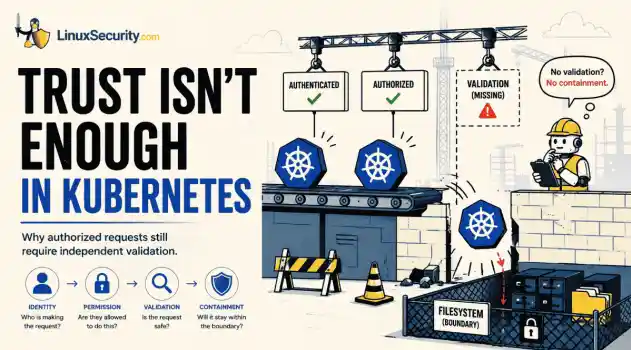
 Two newly fixed storage bugs in Kubernetes showed more than just a problem with path traversal. They found a common security flaw in the cloud: powerful parts often think that requests accepted by a higher system are safe to run. This is a simple lesson for the platform and security teams: RBAC can accept a request without showing that its parameters will stay within a certain filesystem boundary. This is clear from a new study from SentinelLabs into flaws in the Kubernetes CSI drivers for NFS...
 Jul 24, 2026
 security advisory update
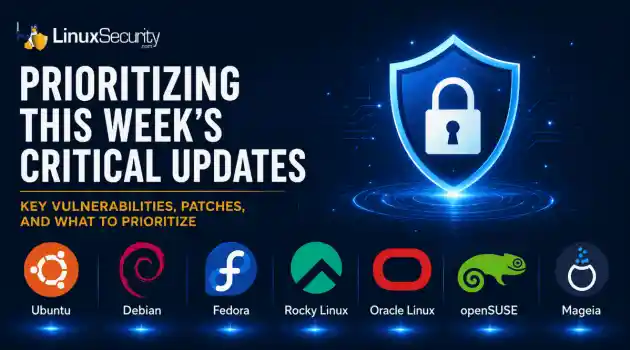
 A large volume of Linux security updates and advisories this week across major distributions once again, but it wasn't just the volume that was the story. Where maintainers and security teams focused their attention was evident in the concentration of fixes targeting Linux kernel updates, identity services, DNS infrastructure, and internet-facing software. . Instead of looking at each advisory in isolation, administrators gain more value from the general trends they reveal about Linux security...
Jul 23, 2026
 identity management security tactics
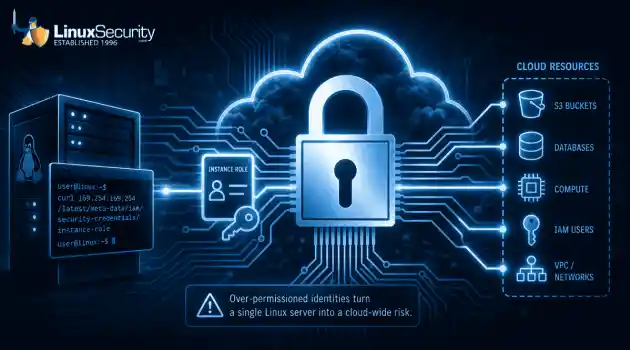
 For years, we secured our Linux infrastructure by building walls: VPCs, security groups, and hardened SSH configurations. We treated the cloud like a virtual data center, assuming that if we kept the "bad guys" out of the network, our workloads were safe. . That model is no longer sufficient. Today, one of the most common paths from an initial compromise to a major cloud breach is the identity assigned to your Linux workload. When an attacker gains code execution on a Linux instance—through a...
Jul 17, 2026
 security practices patch management
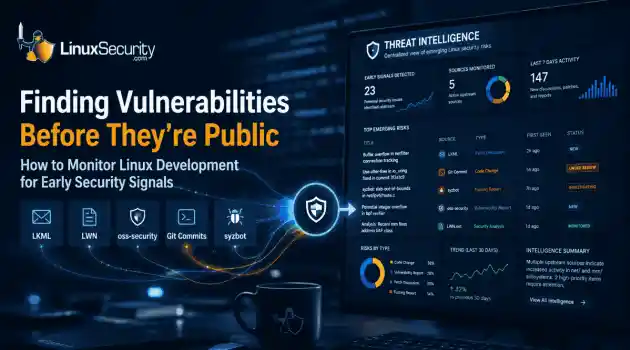
 Most of us don't hear about a kernel vulnerability until a CVE lands in our inbox or the vulnerability scanner starts complaining. By then, the patch isn't new anymore. Kernel developers may have been passing it around for review, arguing over the implementation, or revising it for days before anyone outside that community noticed it. None of those discussions are secret. They're sitting in mailing list archives, Git commits, and patch reviews where they've been the whole time. The strange...
Jul 14, 2026
 Linux security cyber attacks
 Every Linux server in your fleet produces thousands of events every minute. From journald logs and auditd records to kernel-level eBPF hooks, your systems are constantly talking. Most of that noise is just the mundane churn of system services, CI/CD runners, or routine administrative automation. But among that noise, an attacker might be establishing a foothold, moving laterally, or setting up persistence. The challenge for any security team is: how do you separate the routine from the...
Jul 13, 2026
 Refine features
X Clear Filters
Get the latest News and Insights
Get the latest Linux and open source security news straight to your inbox.
Community Poll
Should Linux servers automatically install security updates?
Loading...
Explore Latest Linux Security features
We found -1 articles for you...
102
 network threatsemail securityemail protection
Best Practices for Email Security on Linux With Open Source Solutions
Email is one of the most prominent methods of modern business communication. It is a critical dissemination channel for sharing legal documents and other confidential business information in any formal environment. However, email is also the root cause of over 90% of all attacks in network security, such as phishing, URL spoofing, malicious attachments, trojans, and malware. . Hackers design these messages to look harmless, but a successful attack can cause severe, lasting damage , including data loss, reputational harm, and financial damage to your organization. The impact of data and cloud security breaches can be devastating for a company. Therefore, it is essential to take precautions to help your organization thwart email threats and use reputable open-source network security toolkits to secure business email. This article will explore why the collaborative, transparent, open-source development model is superior to engineering flexible and adequate email protection. It will also offer other tips and practices Linux users should implement to ensure their data and network security within their email. What Are Common & Costly Email Threats Organizations Face? Email is a primary form of communication but, as a result, has become a target for cybercriminals seeking to take advantage of cybersecurity vulnerabilities. Organizations face various email threats that can lead to significant financial losses, reputation damage, and cloud security breaches . Companies should understand what they are facing to protect sensitive information and avoid network security threats. Phishing Phishing attacks are among the most popular and damaging network security threats for email. A cybercriminal poses as a legitimate entity, such as a bank, government agency, or well-known brand. They then use this identity to deceive recipients and obtain sensitive information that can allow them to breach data and network security. Phishing emails often contain persuasive messages that urgerecipients to click on malicious links, provide login credentials, or disclose confidential data. It is important to decipher between typical phishing and spear phishing. While phishing targets many users, a spear attack targets a particular person, such as a company CEO. This distinction shows who faces the network security threat the most in a given attack. There can be severe consequences for financial fraud, data loss, and cloud security breaches. The business's personal information, financial data, or login credentials could be compromised, and such knowledge could allow more attacks on network security, such as installing malware or gaining unauthorized access to an organization's network. Ransomware Malicious actors will use software to encrypt a victim’s data until a ransom is paid. A business can face operational disruptions, financial losses, and reputational damage due to these attacks on network security. Ransomware emails are often disguised as legitimate messages. When one opens an attachment or clicks on a link, the ransomware is activated, rapidly encrypting files and rendering them unusable. In some cases, it can also spread throughout the organization's network, infecting multiple systems. Remember: ransomware recovery is often problematic. Therefore, learning to prevent email threats is incredibly valuable so you never have to deal with the consequences. Business Email Compromise (BEC) Business Email Compromise (BEC) attacks specifically targeted organizations and their employees. Cybercriminals gain unauthorized access to an employee's or a high-ranking executive's email address. They then use these compromised accounts to deceive employees into performing fraudulent actions. Business Email Compromise includes manipulations to make people transfer money or disclose sensitive information. These attacks in network security involve a threat actor studying an organization and monitoring email communications so they can send more convincing messagesduring a network security threat. A company needs a multi-layered approach to address these network security issues. This approach combines technological solutions, employee education, and robust security practices. Open-source software provides cost-effective and customizable network security toolkits to detect and mitigate these risks, enhancing overall data and network security. Why Should My Organization Prioritize Email Data and Network Security? Email security is vital for all companies. Here is why: Email is a primary means of communication for sharing sensitive information and conducting important business transactions. This makes email communications an easy access point for cybercriminals to initiate attacks on network security. Phishing, ransomware, and other network security threats are constantly growing in sophistication, making them even more substantial risks to organizations, regardless of the size. Data and network security regulations and industry standards require strict email security measures to ensure sensitive information confidentiality, integrity, and availability. In addition to security concerns, businesses focus on engaging customers more effectively while maintaining high-security standards. Personalized email outreach helps organizations connect more individually, enhancing communication relevance and boosting response rates. However, pairing these efforts with strong security measures is essential to protect sensitive information. Open Source Utilization in Email Security Organizations can enhance email security by implementing open-source software into their system, which is a community-driven approach to software development. Workers can review and improve the solutions observed by developers who keep track of cybersecurity vulnerabilities so they can fix them immediately. Open-source software can be customized and tailored to the needs of the organization. This dedication to data and network security makes open-sourcesoftware more reliable and secure, minimizing the risk of bugs and other exploits in cybersecurity. Email Security Tips & Best Practices for Linux Users Although Linux is more secure than other operating systems, users must still implement email security measures to defend the system and combat any data and network security threats. Here are a few suggestions to consider to protect the integrity of your company: Use End-To-End Encryption (E2EE) Only the intended recipient of an email can decrypt and read the message when using End-to-End Encryption. This protects the email should it be intercepted, as it will be unreadable to malicious hackers without the correct decryption key, protecting your emails from any network security threats. The intended recipient will get the email and use the private key they have to access the content in the message. The sender and the recipient must have compatible encryption software and exchange public encryption keys securely for E2EE to work appropriately and effectively. You can check our practical guide to using E2EE on Linux for more information. Leverage VPN Using Virtual Private Network offers several email security benefits . VPN has privacy-enhancing technology and monitors internet traffic like email communications to ensure that all your information is encrypted and safe. As a result, hackers and unauthorized entities cannot easily access or intercept information. While VPN can enhance email protection and data and network security, it should be used with other safety measures such as End-to-End Encryption, secure email clients, and robust authentication methods. Deploy an Open-Source Email Security Solution Open-source solutions offer transparency and flexibility so you can customize data and network security configurations according to your needs. Collaboration on such products often includes regular updates, security audits, and improvements driven by a dedicated community. An open-source cloud email security solution allows users to inspect the underlying code for security measures. Utilize Anti-Spoofing Technology Spoofing is a network security threat that occurs when an intruder impersonates a legitimate sender to gain unauthorized access to sensitive information. To prevent these exploits in cybersecurity, Linux users can implement anti-spoofing software or technologies such as Sender Policy Framework (SPF), DomainKeys Identified Mail (DKIM), and Domain-based Message Authentication, Reporting, and Conformance (DMARC). SPF verifies the sender's IP address against a list of authorized ones, ensuring that only legitimate senders can successfully deliver emails. DKIM adds a digital signature to email messages for the recipient to verify the message's authenticity and integrity. DMARC builds upon SPF and DKIM to reduce the risk of domain spoofing, providing a comprehensive framework to authenticate and monitor email domains. Ensure client software is patched and up-to-date Developers constantly release security patching and updates to fix flaws and improve security postures, performance, and stability within a software. Updating email clients and their associated software allows Linux users to experience a more seamless integration of newer hardware components. A business must frequently utilize security patching and software updates, which are critical to ensuring no cybersecurity vulnerabilities that threat actors can exploit. Enabling automatic updates or setting up regular reminders to manually update email client software guarantees that the latest cybersecurity trends are implemented promptly and appropriately. To keep track of newly emerging network security threats, Linux users can check security advisories . There are databases within that discuss the various network security issues different software run the risk of experiencing. This information is available publicly and allows businesses to jump into action when a potential threat appears quickly. Use Securely DevelopedSoftware When choosing an email security solution, options with safe development practices are essential. Your choice should include software that undergoes regular security audits, follows secure coding guidelines, and has a responsive developer community. Security software developers often try to reduce the risk of cybersecurity vulnerabilities and ensure that potential network security issues are identified and addressed quickly. Software choices provide customers confidence in the product, as they can be sure it has undergone rigorous security checks. Therefore, it can help reduce the likelihood of email-based security incidents and protect sensitive information. Educate Users Software users within an organization must be educated about the various email threats a company faces to prevent such workers from being cybersecurity vulnerabilities. Such people end up being the most significant risk to a company. Still, these free educational tips and resources will enable the users to identify and respond effectively to suspicious emails. The training may cover topics including recognizing phishing attempts, avoiding clicking on suspicious links, preventing downloads for attachments from unknown sources, and practicing good password hygiene. Furthermore, users should understand the importance of regular email security assessments , frequent software updates, strong passwords, and enabling two-factor authentication for email accounts, all of which can guarantee improved data and network security. Limit Administrator Privileges There should not be a large number of users that have administrative access within your organization, as it will reduce the potential damages you risk by providing privileged permissions to too many individuals. This decreases the chances of privilege escalation attacks and other email-based security incidents. Granting administrator privileges only to authorized personnel minimizes undesired access, accidental misconfigurations, or intentional misuse ofemail systems. Linux users should ensure that individuals have the level of access required to perform their specific tasks only, no more. Implement Innovative Email Security Technologies To stay ahead of evolving network security threats, embrace innovative email security technologies. These solutions use cutting-edge techniques to detect and mitigate real-time email attacks. Some of the best open-source network security toolkits you can utilize in innovation include Apache SpamAssassin , Amavis Email Content Filter , FuGlu Mail Content Scanner . These instruments provide valuable email security benefits such as effective spam detection, malware prevention, virus protection, content filtering, phishing prevention, and customization options. As open-source solutions with active communities, they offer continuous updates and improvements, ensuring robust protection against all email threats. Other technologies can enhance email security in different ways. Virtual security patching helps protect against known cybersecurity vulnerabilities by providing temporary fixes until permanent patches are applied. Application control enables organizations to restrict the execution of unauthorized or potentially malicious software. Log inspection allows for analyzing email server logs, helping to detect and investigate suspicious activities or potential cloud security breaches. Advanced security technologies employ Machine Learning (ML) algorithms and behavioral analysis to identify and block malicious emails. Using ML in data and network security helps prevent phishing attempts, malware infections, and other email threats. Moreover, ML-based email filtering enhances spam detection accuracy by continuously adapting to new spamming techniques, which reduces the risk of users falling victim to fraudulent emails or unsolicited messages. Defend Against Email Threats with Guardian Digital Open-Source Email Security Solutions Guardian Digital protects businesses against new and known email threatswith its comprehensive EnGarde Cloud Email Security solution. Guardian Digital anticipates the network security threats specific to your users so workers can stop the attacks using flexible filters that adapt to your environment. EnGarde uniquely draws on network security toolkits, resources, and intelligence available through its vibrant, global open-source community to enhance protection against all email-borne threats to your business. A product of open-source development , EnGarde is supported by an innovative, collaborative international input program, resulting in rapid updates and superior security and resiliency. Final Thoughts on Protecting Against Email Threats with Open Source Email is a vital communication channel for all businesses, but it can also present serious network security issues if email protection is not implemented. Utilizing reputable open-source technology and implementing other tips and practices discussed in this article are excellent ways to improve the security posture of your email to defend against cyberattacks in network security and other cloud security breaches. . Fortify your email defenses against phishing attacks and ransomware threats by implementing these crucial strategies and leveraging powerful open-source tools available on Linux.. Email Security Best Practices, Open Source Email Tools, Cyber Threat Prevention, Linux Email Protection. . Brittany Day
 Jul 03, 2023
•
Jul 03, 2023
•
102
network threatsemail securitycybersecurity practicesInterview With Guardian Digital CEO: Open-Source Email Security Insights
In this interview, Dave Wreski, Guardian Digital CEO and Founder discusses Guardian Digital's utilization of Open Source in the development of cutting-edge email security solutions and their advantages for your business email. . Security Spotlight: Interview with Dave Wreski, Founder and CEO of Guardian Digital Interviewed by Brittany Day Dave Wreski is the CEO and founder of Guardian Digital, a company that provides open-source email solutions to the many network security threats that impact individuals and businesses. Mr. Wreski started Guardian Digital as an Internet security enterprise offering open-source solutions to critical business problems in 1999 and has narrowed its focus on email security over time. Guardian Digital offers products that are highly effective in preventing phishing, spam, malware, and other attacks on network security. Dave Wreski is an expert in the field of email security, as well as an open-source advocate and active member of the Linux community. In this interview, he shares his knowledge of email security, email-related network security issues, and solutions Guardian Digital provides . Guardian Digital's email security solutions are unique in that they utilize open-source development and open-source software. What advantages does open-source email security provide over alternative proprietary email security solutions? There are multitudes of inherent advantages to using open-source development and open-source software that we provide to our customers so they can utilize them in their data and network security solutions. Compared to proprietary methods, open-source development often results in superior products because many developers are able to collaborate and improve upon ideas, leading to high levels of innovation in engineering. We believe open-source software is more secure over its lifecycle because of its transparency and accessibility. Open-source products with cybersecurity vulnerabilities are fixed rapidly upon detection. The specificopen-source programs we have chosen to use for our email security solutions have a long history of being highly secure, and any network security issues that existed prior to this were identified through peer review so they could be taken care of immediately. Open-source products are standards-based, making them freely accessible to everyone, unlike many proprietary alternatives. What are the shortcomings or downfalls of many email security solutions on the market today? In what ways is the email security that Guardian Digital provides superior? Guardian Digital’s email security solutions offer many advantages over our competitors’ solutions. We utilize a purpose-built operating system that is designed to be extremely secure. We stay updated on the latest cybersecurity trends so we can adhere to the latest standards in email security, which include implementing the highest level of encryption to protect information from unauthorized parties. Guardian Digital also provides the highest level of data and network security for email for no charge, unlike many companies that require customers to pay more for an upgrade. Can you talk a little bit about how being an active member of the Linux community has influenced your views on email security? How has Linux impacted Guardian Digital as an enterprise? We are very passionate about Linux and open source and have used it as the foundation of everything we do since our inception in 1999. Linux is an extremely reliable operating system with customizable software. As a result, we have always been an active member of the Linux community and give back as much as we can. One way we have done this is by sponsoring the development of LinuxSecurity.com, a website that Linux users can visit for the latest open-source updates and cybersecurity news. What do you feel are the biggest email-related threats that exist today? What do you recommend that companies do to protect themselves from these threats? How do the services that Guardian Digital offers protectorganizations from current email-related threats? Phishing is one of the most dangerous email-related network security threats because of the financial damage that can result from these types of scams. Phishing attacks in network security have become highly targeted and sophisticated, making them very difficult to detect. Spam is another significant problem because it has become so prevalent and negatively impacts all email users. Spam is difficult to detect and block and decreases worker productivity. Spam emails can convince people to share personal information or transfer money to criminals. Using a comprehensive, state-of-the-art email security solution like the ones that Guardian Digital provides is the most effective method of protection from any email-related network security issues. Guardian Digital's email security solutions are cloud-based. Can you discuss the various advantages of cloud services in regard to email security? Our open-source, cloud-based email security offers our customers various advantages. First, the server is built to be highly secure, adding yet another element of data and network security to our solutions. Emails must pass through an additional filter before they reach end users. We are able to store spam in the cloud, where we either eliminate it or quarantine it. We have developed highly secure cloud-based solutions to protect email accounts so that companies and individuals can focus on other aspects of business and life rather than whether or not they run the risk of facing cloud security breaches. Guardian Digital prioritizes top-notch customer service. In what ways is outstanding customer service a critical aspect of an effective email security solution? Offering our customers outstanding support and services is and always has been a priority for us. In many ways, the quality of the services we offer is just as important as the email security products we provide. Being an open-source email security company, we view the unrivaled service we offer our customersas the unique value that sets us apart from other enterprises. We realize email is a critical business function and have designed our services to ensure we’re there to help every step of the way with ensuring email is always secure. Guardian Digital is the first of its kind to take the best-of-breed network security toolkits in the Linux community and integrate them into enterprise email solutions with an intense focus on security and unrivaled customer support, designed to ease information technology overhead for its customers. It is this pioneering role we have played in engineering an unprecedented level of open-source security that has made Guardian Digital trusted by so many clients worldwide for almost twenty years. We don't just use existing programs but develop a whole infrastructure of services around them. We are continually at the forefront of the security field to ensure that our engineers preserve our leading-edge products and services as data and network security threats continue to evolve. . Discover insights from Guardian Digital's CEO, Dave Wreski, on how open-source solutions are transforming email security amid ongoing network threat challenges. Email Security, Open Source Solutions, Guardian Digital, Cybersecurity Practices, Cloud Services. . Brittany Day
Mar 28, 2023
•

102
 open source softwareLinux securitycybersecurity
Enhancing Remote Work Security With Linux Customization And Tools
Operational security at least seemed so much easier back when traditional 9-to-5 office life was still dominant. Talk of professionals taking their work home with them was largely metaphorical, with only occasional instances of C-suite types dragging their laptops everywhere they went. Business hardware and systems would be shielded through physical security and isolated networks. One office (or office complex), one place to guard: entirely straightforward. . Now, after a year that’s seen countless businesses (some eagerly and others reluctantly) adopt the working-from-home model, there are different challenges to overcome. Teams are scattered and must share sensitive data across the internet — data to which other companies and fraudsters would love to gain access. When information gets out, reputations are destroyed and businesses (particularly those working entirely online) struggle to survive. So what can be done about this? Well, there are various steps you can take to improve cybersecurity, and in this post we’re going to consider whether the use of Linux is one of them. Can companies bolster their remote-working operations — even offline — through swapping their current operating systems for Linux? Let’s see what conclusions we can reach. What are the strengths of Linux for securing online activities? While this certainly isn’t a comprehensive account of what makes Linux great for online security, there are three long-standing benefits of Linux distributions that we should focus on here: They’re entirely customizable, removing the need to rely on third parties. Windows is updated by Microsoft, and iOS is updated by Apple. It’s possible to find unofficial and unsigned patches, but they’re always going to cause issues with support services (and that’s if they work at all). This means that those using these systems must rely on those companies to react appropriately to security threats. Because Linux is open-source software, it doesn’t rely on securityupdates from any single provider, and its ever-improving compatibility options make it a stable like-for-like replacement. If you want to run a VPN service, you’ll find that all the leading contenders support Linux — and if you want to do something like implement a system-level proxy server, you can easily load up a caching proxy like Squid through the terminal. Additionally, the fundamental transparency of Linux makes it relatively simple to review for potential security issues. If you’re willing to put in the effort to steer the ship, you can achieve far more impressive levels of security through Linux systems. They’re updated by people who care about privacy and security. Leading software companies do care about security, but largely in the sense that their profits and reputations are affected by system vulnerabilities. Linux, on the other hand, is heavily driven by passionate enthusiasts who actually care about user privacy. If you’re looking to resolve a certain issue, you can inevitably find free community support to point you in the right direction. And if you want to run a cut-down OS with none of the default telemetry services that plague all the mainstream alternatives, Linux isn’t just your best option: it’s your only practical option. Throw in superior support for things like using SSH and saving and reviewing comprehensive log files, and you have a fantastic out-of-the-box option (so to speak) that will only get better the more you work on it. They’re not high-priority targets for hackers due to their niche appeal. While it’s true that Linux servers have become very popular ( and thus attracted attention ), the same can’t yet be said of Linux desktop operating systems. Almost all attention goes towards Windows and iOS, all because it’s far more economical to target them. On top of that, you need to factor in the presence of different Linux distros. Where Windows installations will differ only marginally, systems running on Debian,Red Hat and Linux Mint can have far more substantial differences. There isn’t much motivation for a hacker to specifically target Linux Mint systems, making them much safer. How can Linux secure remote-working hardware? We’ve looked at how Linux helps to secure online operations, but what about offline activity? Remote-working hardware still poses a threat, after all, and needs to be kept in line. Well, just as it supports plenty of online security services, Linux also offers a tremendous array of at-home security solutions that allow extensive configuration. For businesses that still want to use office spaces (or those determined to monitor their remote-working employees extremely closely, however much that seems like a bad idea), there’s open-source monitoring software like Zoneminder . For network user authentication (key for all remote-working companies, and often managed through cloud systems like Azure Active Directory), there’s the free Kerberos protocol. And for those who need to keep their business hardware secure on the go (despite lockdowns, there are still workers who need to travel), it’s easy enough to take advantage of tools like the Yubico Pluggable Authentication Module (PAM). The PAM makes it convenient to use hardware dongles for user authentication, ensuring that lost laptops don’t present major weaknesses. Linux can shield smart technology from threats by offering a robust and customizable security framework capable of combating a wide array of cyber vulnerabilities. What is the value of tech comprehension in cybersecurity? User error is the one thing that even the most tightly-secured systems can’t fully move past. This is why social engineering is such a popular endeavor for fraudsters. Hacking an up-to-date system is complicated and risky, while convincing a poorly-trained employee to volunteer their login details under false pretences can provide quick success. Due to this, ensuring that your employees have strong awareness of security basics willdo much to make your operation stronger — and though Linux still has an intimidating learning curve, it’s sufficiently approachable that you could make it your main operating system without asking more of your workers than they can reasonably provide. It certainly helps that so much is done through browsers at this point. If someone can use a Chromebook, they can get to grips with a Linux distribution, and learning more about how Linux works (and how it treats something like admin authentication) will slowly but surely leave them less likely to make basic security mistakes. Wrapping up, the answer to the titular question is a strong yes. Less likely to be attacked than other systems, built with security and flexibility in mind, and equipped with rich compatibility features that make it easier than ever to swap from Windows or iOS, Linux is a mature solution that every modern business should consider using. About the Author Elliot Mark is a senior writer at Ecommerce Platforms with a deep curiosity for all things digital and the changing world of ecommerce. He’s helped create a number of unique online stores, providing content and marketing support to help people grow their own ecommerce biz. Connect with him on Twitter @EcomPlatformsio. . In today's remote work environment, Linux emerges as a strong OS that enhances organizational security with its built-in features and community support. Remote Work Security, Linux Customization, Cyber Tools, Open Source Solutions, Cybersecurity Best Practices. . Brittany Day
Apr 19, 2021
•
102
 network securitysecurity threatssecurity applications
Maximizing IT Investment Returns And Enhancing Security Solutions
In a time where budgets are constrained and Internet threats are on the rise, it is important for organizations to invest in network security applications that will not only provide them with powerful functionality but also a rapid return on investment.. In most organizations IT success is generally calculated through effectiveness, resource usage and, most importantly, how quickly the investment can be returned. To correctly quantify the ROI of information technology, organizations usually measure cost savings and increased profits since the initial implementation. Additionally, ROI can also be affected based on the overall impact the investment has on employee productivity and overall work environment of the company. With regards to security IT purchases, however, it is much more difficult to calculate an accurate ROI. When it comes to securing a corporate network, it is nearly impossible to assign a dollar amount to the level of security necessary to keep organizations safe from increasing Internet threats. Making incorrect decisions in this area could lead to an exhaustion of resources or an oversight in specific areas needing protection, potentially resulting in debilitating and costly security breaches. To avoid such situations, it is essential that all organizations invest in a solid infrastructure with flexibility and room for future expansion. In addition, leveraging open source solutions consistently deliver greater ROI, substantially increase security protection, and deliver better flexibility. Such an investment will fundamentally change how information is managed and present results in a more quantifiable metric when presenting to them management. -Dave Wreski, CEO Guardian Digital, Inc. In most organizations IT success is generally calculated through effectiveness, resource usage and, . where, budgets, constrained, internet, threats, important. . Anthony Pell
Feb 13, 2010
•

Get the latest News and Insights
Get the latest Linux and open source security news straight to your inbox.
Community Poll
Should Linux servers automatically install security updates?
Search Topics
Powered By

Linux Security - Your source for Top Linux News, Advisories, HOWTOs and Feature Releases
QUICK LINKS
subscribe to newsletters!
Like staying secure? So do we.
Sign up for updates, tips, and alerts!