Audit Linux privileges now to limit compromise, escalation, and system-wide damage. Review Linux Privileges×


Stay Ahead With Linux Security Features
 identity management security tactics
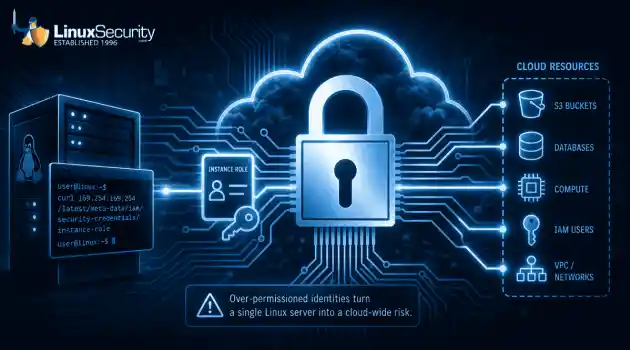
 For years, we secured our Linux infrastructure by building walls: VPCs, security groups, and hardened SSH configurations. We treated the cloud like a virtual data center, assuming that if we kept the "bad guys" out of the network, our workloads were safe. . That model is no longer sufficient. Today, one of the most common paths from an initial compromise to a major cloud breach is the identity assigned to your Linux workload. When an attacker gains code execution on a Linux instance—through a...
 Jul 17, 2026
 security practices patch management
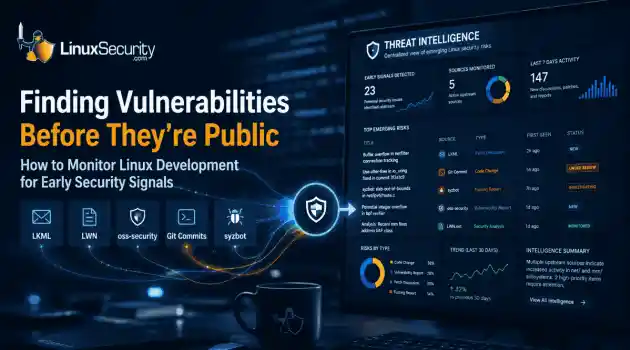
 Most of us don't hear about a kernel vulnerability until a CVE lands in our inbox or the vulnerability scanner starts complaining. By then, the patch isn't new anymore. Kernel developers may have been passing it around for review, arguing over the implementation, or revising it for days before anyone outside that community noticed it. None of those discussions are secret. They're sitting in mailing list archives, Git commits, and patch reviews where they've been the whole time. The strange...
Jul 14, 2026
 Linux security cyber attacks
 Every Linux server in your fleet produces thousands of events every minute. From journald logs and auditd records to kernel-level eBPF hooks, your systems are constantly talking. Most of that noise is just the mundane churn of system services, CI/CD runners, or routine administrative automation. But among that noise, an attacker might be establishing a foothold, moving laterally, or setting up persistence. The challenge for any security team is: how do you separate the routine from the...
Jul 13, 2026
 open-source infrastructure risk
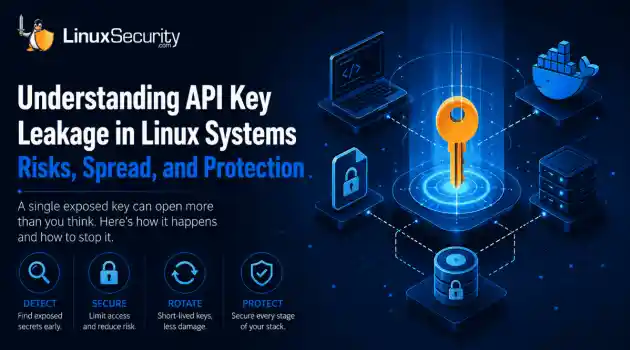
 Security scanners flag exposed API keys in public repositories every day. The initial response is usually predictable: delete the commit, revoke the credential, and move on. That’s a mistake. . In a real Linux environment, an API key never stays in one place. By the time it hits a public repo, it’s already everywhere. It’s in the CI/CD pipeline. It’s in your container registry. It’s in the build logs. It’s in the backups. Git makes this worse because the history never dies. Deleting a file in...
Jul 11, 2026
 open-source rootkit
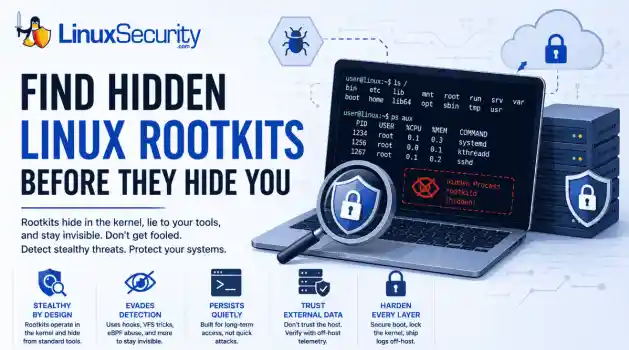
 Most of us think of Linux rootkits as ancient history—the stuff of 90s hacking forums and clunky malware that would crash your system if you looked at it the wrong way. But if you think they’ve gone away, you’re mistaken. They’ve just gotten smarter. . Modern attackers aren't using the noisy tools of the past. Today’s threats are surgical. Many of today’s most advanced Linux rootkits operate at the kernel level or abuse legitimate system features to blend in with normal traffic. They’re...
Jul 09, 2026
 Refine features
X Clear Filters
Get the latest News and Insights
Get the latest Linux and open source security news straight to your inbox.
Community Poll
Should Linux servers automatically install security updates?
Loading...
Explore Latest Linux Security features
We found 2 articles for you...
102
 network assessmentvulnerability scanneropen source tool
Top Linux Vulnerability Scanners in 2026: A Guide to Open-Source Security Tools
Computer systems, software, applications, and Linux servers are all vulnerable to network security threats. Failure to identify these cybersecurity vulnerabilities, often through modern vulnerability scanning tools, can leave companies exposed . Running vulnerability scans regularly makes it easier to spot weaknesses and close them through security patching. Assessment results help developers and network administrators understand potential network security issues so they can implement the right defensive measures against them. In this article, we’ll discuss what a vulnerability scanner is and introduce our top free, adaptable tools, including practical vulnerability assessment tools and open-source vulnerability scanning software designed to improve security without adding cost. What is a Vulnerability Scanner? A Linux vulnerability scanner assesses the network security issues in a system or application. Scanners automate website, server, and cloud security auditing to improve security posture by checking for threats. Vulnerability scanners can also provide a prioritized list of issues you should patch. This list describes the type of vulnerability and the steps to fix it. Some vulnerability tools integrate with patch management systems, but fully automated patching is uncommon — most scanners focus on detection and reporting. It’s crucial to patch problems quickly because leaving them unaddressed puts a system at higher risk of attack. These network security threats let hackers enter your system and exploit weaknesses, potentially causing serious damage to your business. Vulnerability scanning tools rely on large databases of known flaws to automatically test systems — this is where a vulnerability scanner Linux setup shows its strength. Like fail2ban or antivirus software, these scanners are essential in maintaining maximum data and network security. The best open-source vulnerability assessment tools make this process affordable and adaptable for anyenvironment. Types of Vulnerability Scanners Vulnerability scanners are often categorized into types such as network-based, host-based, web application, and cloud-based. Database scanning tools also exist, but they are usually considered a subset of host or application-level scanning. Network-based vulnerability scanners Network-based vulnerability scanners scan the devices, services, and ports across a network to find weaknesses like misconfigurations, open ports, or version issues. They don’t generally monitor traffic in real time — instead, they take snapshots of your network at scheduled intervals. On wired and wireless subnets alike, they help you map out network exposures so you can take action before attackers find them. Host-based vulnerability scanners Even though web hosting and Linux servers include built-in protections, weak spots remain. A Linux security scanner can be installed on every host to provide in-depth insight into potential vulnerabilities, whether from insiders or outsiders with partial access. Web application vulnerability scanners Web applications are a common attack target, especially those relying on user input or integrations. A vulnerability scanner Linux setup can help test for issues such as SQL injection, cross-site scripting, and insecure configurations — areas that attackers often probe to gain access. Cloud-based vulnerability scanners The growing shift to cloud security solutions , especially with remote work, has pushed more companies to adopt cloud-focused scanning. Instead of just checking websites, these tools look at virtual machines, containers, and APIs. A Linux vulnerability scanner built for the cloud can catch weaknesses in those environments before they’re exploited. Top Linux Vulnerability Scanners in 2026 These tools range from lightweight scripts to full vulnerability assessment software platforms used in enterprise environments. Many vulnerability scanners are available online that you can purchase, grab for free,or run as open source. The key is choosing a Linux vulnerability scanner you can rely on. Here are some free and open-source vulnerability scanners worth considering. Modern teams are shifting toward actively maintained alternatives, increasingly leveraging AI-assisted vulnerability scanners to help prioritize critical risks and reduce noise in their security workflows. Aircrack-NG Open Source Vulnerability Scanner Aircrack-ng is an open-source wireless auditing toolkit used for Wi-Fi security. It captures traffic and can crack WEP and WPA keys, but it’s not a general-purpose vulnerability scanner and doesn’t cover web application issues. Here are Aircrack-ng’s key benefits : Support for a wide range of wireless hardware and protocols Coverage of Wi-Fi security issues, including WEP and WPA-PSK cracking Command-line driven, with extensive documentation and tutorials Can perform both active and passive scanning Aircrack-ng’s specialized focus on wireless networks makes it a useful tool for testing and improving Wi-Fi security. For a broader Linux setup, it’s often combined with other tools in a full security stack (see our best secure Linux distros ). Anchore Open Source Vulnerability Scanner Anchore is an open-source Docker container policy compliance and static analysis tool. It looks inside container images to analyze and evaluate them against security and policy requirements. The result is a report that indicates whether each image passes or fails, making Anchore one of the more practical open-source vulnerability assessment tools for container security. Anchore runs static analysis at the build or registry stages. It does not run real-time or runtime scans; it focuses on image content before deployment. Anchore checks image contents — packages, dependencies, configurations — to catch problems early. It also integrates with registries and CI/CD pipelines, which makes it easier to fold into DevOps workflows. Anchore is often describedas a Linux vulnerability scanner for containerized environments, though its focus is image analysis. It’s well-suited for teams running containerized workloads that need a reliable way to find and track vulnerabilities. Security teams also use it alongside other open source VAPT tools to cover more ground in testing. Here are Anchore’s key features: Scans container images for known vulnerabilities and provides detailed reports Breaks down image contents, including software packages and dependencies Gives you control to define and enforce policies, making sure that only trusted images are deployed. Integrates directly into CI/CD pipelines to catch issues early Anchore is actively maintained and supported by a strong open-source community. You can find it on Anchore Engine and adapt it to your environment as part of a broader container security stack. Arachni Open Source Vulnerability Scanner Arachni is an open-source vulnerability scanner built for web applications. It was widely used for its speed and flexibility, and for a while, it was one of the more capable tools in this space. Here are Arachni’s key benefits: Detects common web vulnerabilities like SQL injection, cross-site scripting, and directory traversal Built for scanning dynamic applications — it does not cover static HTML content. Customizable scan options and detailed reports Works with other security frameworks and toolkits Includes documentation and tutorials for setup and use Arachni’s scanning engine combined heuristics and signatures to catch issues that other tools sometimes missed. The modular setup meant you could extend it or plug in new modules as needed. For years, it was a go-to for web app testing on Linux, but that time has passed. Note: Arachni hasn’t been updated since 2017. You can still find the Arachni scanner, though it’s long outdated Burp Suite Free Edition Open Source Vulnerability Scanner Burp Suite Free Edition is a proprietarytool with a free version, not an open-source vulnerability scanner. It’s part of the larger Burp Suite platform and is often used for web application security testing by intercepting and modifying HTTP requests. Here are Burp Suite Free Edition’s benefits: Runs on multiple operating systems and platforms Provides manual testing features for web applications It lets you intercept and modify HTTP requests and analyze responses User-friendly interface with documentation and tutorials Can be paired with other frameworks and toolkits The Free Edition does not include automated scanning for issues like SQL injection or cross-site scripting — that’s only available in the Professional or Enterprise editions. Still, the ability to intercept and work with requests makes it useful for testing smaller applications and APIs. For Linux users, it’s often added to a toolkit as a linux vulnerability scanner companion, even though its scope is limited in the free version. Clair Open Source Vulnerability Scanner Clair is an open-source vulnerability scanner project designed for container security. It’s API-based, letting you query and analyze container layers for known issues. Clair regularly collects vulnerability metadata from multiple sources, indexes container images, and exposes this information through an API for security teams to use in their workflows. Here are Clair’s key benefits: Comprehensive coverage of container images and their associated vulnerabilities Support for many container image formats and registries Integration with orchestration systems like Kubernetes and Docker Swarm Reports that are detailed but easy to work with Performs static image analysis before deployment — it does not scan in real time and is not designed to detect wireless vulnerabilities. Clair is focused on containerized environments, not general-purpose scanning. Security teams often add it to their stack as a linux vulnerability scanner for images, usingit to flag problems before containers move into production. You can find and contribute to the project on Clair GitHub . Lynis Open Source Host Vulnerability Scanner Lynis is an open-source vulnerability scanner built for hosts, especially Linux and other UNIX-based systems. Lynis is widely used among vulnerability assessment tools for Linux system auditing and hardening, valued for its lightweight design and flexibility. You’ll find it running on everything from production servers to lab VMs. Key features include: Detects misconfigurations, weak permissions, service issues, and vulnerabilities Opportunistic scanning that adapts to the system without external dependencies Compliance checks for standards like PCI, HIPAA, and CIS Clear reports with scoring and step-by-step guidance Customizable controls to fine-tune what gets tested Installation is straightforward and works across most major distributions. The Lynis installation guide explains the basics, while administrators on Ubuntu or Rocky can follow a setup tutorial tailored to those platforms. Once installed, Lynis scans in stages — detecting components, applying the right tests, and producing both logs and reports with prioritized findings. Reports are one of its strengths. They don’t just list issues; they provide warnings, suggested fixes, and a scoring system to track improvements over time. The complete Lynis guide shows how to interpret these results and fold them into regular security workflows. Beyond scanning, Lynis plays a role in system hardening. Many organizations pair it with other Unix hardening tools to enforce stronger defaults across fleets of servers. That combination gives teams a practical way to improve resilience without adding commercial software or heavy overhead. Metasploit Open Source Vulnerability Scanner and Framework Metasploit is a penetration-testing framework that can identify and exploit holes in systems and networks. While it’s sometimes lumpedin with scanners, Metasploit is not a traditional vulnerability scanner — it’s a framework for exploitation and validation. For that reason, teams usually run a vulnerability scanner on linux first, then use Metasploit to validate the findings. Metasploit can be used to test for: Remote code execution SQL injection Cross-site scripting (XSS) Directory traversal Buffer overflow issues Authentication bypasses File inclusion problems Misconfigured services and applications Beyond listing issues, Metasploit can launch controlled attacks and exploit them directly. That makes it useful for testing defenses and showing what a real compromise would look like. With its large library of modules and payloads, it’s a standard framework for penetration testers and red teams. Nmap Open Source Vulnerability Scanner Nmap is best known as a network mapper and port scanning tool. It was built for network discovery, finding hosts, services, and open ports, and it remains one of the most widely used tools in security. With its scripting engine (NSE), Nmap can also probe for specific flaws; however, it’s not a comprehensive vulnerability scanner. It doesn’t patch or sandbox systems; it focuses on reconnaissance. Key things Nmap can do: Scan large networks quickly and identify live hosts Detect open ports and the services running on them Fingerprint operating systems and service versions Run scripts to check for misconfigurations and known vulnerabilities Because of that flexibility, Nmap is often treated as a linux vulnerability scanner even though that’s not its primary role. For administrators, it’s a way to map networks and spot weak points before attackers do. Linux setups can be extended with custom scripts, making it a bridge between simple port scanning and deeper assessment tools. Nmap is still under active development and works across all major platforms. That consistency is why it’s trusted in open-source security circles.It’s flexible enough for quick scans but can also be tuned for deeper checks. For a closer look at how it fits into Linux workflows, see our guide on Nmap basics . OpenSCAP Open Source Vulnerability Scanner OpenSCAP is an open-source framework for compliance and vulnerability scanning. It’s widely used in enterprise Linux environments because it combines automated compliance checks with configuration management and security assessments. Key benefits of OpenSCAP: Runs on multiple operating systems and platforms Automates compliance checks with standards like PCI-DSS and CIS benchmarks Manages configurations at scale across large environments Integrates with other security frameworks and toolkits Open-source, with ongoing development and community support OpenSCAP is more than a simple scanner. It can audit Linux systems against compliance baselines, report vulnerabilities, and suggest remediation steps. For administrators who want a Linux vulnerability scanner with built-in compliance features, it’s one of the most practical open-source vulnerability assessment tools available today. OpenVAS Open Source Vulnerability Scanner OpenVAS is an open-source vulnerability scanner used across many Linux distributions. It’s free under the GNU General Public License (GPL) and actively maintained by Greenbone. Because of that support, OpenVAS is one of the most comprehensive vulnerability scanning tools available today. OpenVAS utilizes an automatically updated community-sourced vulnerability database of over 50,000 known Network Vulnerability Tests. It thoroughly examines entire systems and tests both authenticated and unauthenticated protocols. The scanning is detailed, providing an in-depth look at how well protected your computers and servers are. OpenVAS can also run from external servers to give administrators the perspective of an attacker, allowing issues to be fixed before they can be exploited. Some of the criticalbenefits of OpenVAS include: Support for multiple operating systems, making it a dependable Ubuntu vulnerability scanner Ability to scan for more than 50,000 known vulnerabilities Customizable scanning options and detailed reports Integration with other network security toolkits and frameworks Ongoing development and improvement from the Greenbone community OpenVAS works as both a linux vulnerability scanner and a linux security scanner, giving administrators detailed reports and compliance checks. It’s still actively maintained by Greenbone, which makes it a dependable option in the open-source space. Trivy Open Source Vulnerability Scanner Trivy is an open-source vulnerability scanner that detects CVEs in open-source software. Trivy has become a popular option among lightweight vulnerability scanners for container environments, providing a quick explanation of network security issues so developers can decide whether to use it for security patching. Most scanners run static image checks after the fact, but Trivy can be integrated earlier in the process. Teams often add it to build pipelines or IDEs so vulnerabilities surface during development, not just in production. With strong backing from Aqua Security and the open-source community, Trivy has wide support and steady updates. It also complements other open-source VAPT tools well, making it a practical choice for anyone who needs a lightweight Linux vulnerability scanner in containerized environments. Wapiti Open Source Vulnerability Scanner Wapiti is an open-source vulnerability scanner designed for web applications. It’s known for speed and accuracy, and many security professionals use it to test sites and services running on Linux. Key benefits of Wapiti include: Finds common flaws like SQL injection, cross-site scripting, and file inclusion Works with both static pages and dynamic content Customizable scans to fit different environments Generates clear, actionable reports Can be extended or paired with other toolkits Wapiti’s scanning engine combines heuristics with signatures, increasing its ability to detect issues that lighter tools might overlook. Its modular setup also makes it easy to adapt. While it doesn’t cover wireless networks, it remains a practical linux vulnerability scanner for web application testing. Wireshark Open Source Protocol Analyzer Wireshark is an open-source protocol analyzer, often referred to as a packet sniffer. It doesn’t scan for vulnerabilities — instead, it shows you what’s happening on the network. Security teams, universities, and even government agencies use it to trace issues and spot suspicious traffic. It can capture data across various protocols, including Bluetooth, wireless, Ethernet, Token Ring, and Frame Relay. The output isn’t locked to a complex interface either. You can export results into plain text, which makes them easier to read and share, even with less technical users. Key benefits of Wireshark: Captures and inspects network traffic in real time Works with a wide range of protocols Filters traffic for targeted analysis Visualizes network patterns and anomalies Backed by strong documentation and community support Useful for finding bottlenecks and performance issues Wireshark is not a linux vulnerability scanner, but it adds another layer to security workflows. By analyzing network traffic in detail, it can highlight behaviors that other scanners might miss. SQLmap Open-Source Vulnerability Scanner SQLmap is a penetration testing tool designed to detect and exploit SQL injection vulnerabilities. It automates much of the process, helping security teams evaluate risk and document results. While sometimes grouped with linux vulnerability scanner tools, SQLmap is focused specifically on SQL injection, not general system flaws. Sqlmap is written in Python and runs on any system with a Python interpreter. It can recognize password hashes and supportsmultiple techniques to detect SQL injection. An SQL injection attack targets a database by inserting malicious code into input fields, search forms, or login pages. More on this type of attack can be found in the OWASP SQL Injection guide . SQL injection can expose sensitive data, allow changes to records, or even hand control of a system to an attacker. These attacks are common in: Web applications that rely on user input Content management systems and e-commerce platforms Legacy systems with outdated database code Mobile apps that query a backend database through APIs Mitigation requires secure coding practices such as parameterized queries and strict input validation. Sqlmap itself supports a wide range of databases, including Oracle, PostgreSQL, MySQL, SQL Server, and Access. Within the space of open source vulnerability assessment tools, it remains one of the most recognized options for testing SQL injection. OnSecurity (Honorable Mention) It’s designed to run continuous checks on internet-facing assets, carrying out more than 70,000 tests for missing patches, weak or default passwords, and common misconfigurations. The platform keeps an inventory of assets and applies CVSS scores to each issue, making it clear which ones matter most. Alerts show up in the portal but can also be pushed to Slack or Microsoft Teams. If needed, findings can even be turned into tickets in Jira or ServiceNow. While OnSecurity isn’t open source, some teams still use it alongside community tools. For those managing Linux environments, a linux vulnerability scanner that’s community-driven and transparent often remains the preferred option. Final Thoughts on Using Open-Source Vulnerability Scanning Tools to Secure Your Linux Systems Regular scanning is one of the simplest defenses against attack. A properly configured vulnerability scan can flag weak spots early. That might be a misconfigured service, an outdated package, or a forgotten policy rule. Catching theseissues before they’re exploited gives teams time to respond. It also reduces guesswork and provides a clearer view of overall risk. The open-source ecosystem has grown wide. Wireshark looks at traffic. OpenVAS digs into hosts and services. Nmap maps networks and finds what’s running where. None covers everything, but together they paint a fuller picture of your environment. That mix is what allows administrators to prioritize fixes instead of chasing noise. Cost is another reason these tools matter. Open-source scanners are free to use, and they don’t stand still. Communities update signatures, refine features, and share improvements. They’re transparent enough to audit and flexible enough to adapt to different workflows. For example, see our work on open-source security automation and this guide to open-source security scanners. Used consistently, these scanners form the backbone of an open-source security program. They won’t replace strategy, but they give it something solid to stand on. . Running vulnerability scans regularly makes it easier to spot weaknesses and close them th. computer, systems, software, applications, linux, servers, vulnerable, network, security. . MaK Ulac
 Apr 14, 2026
•
Apr 14, 2026
•
102
 patch managementLinux administrationsecurity practice
Best Open-Source Linux Patch Management Software for Secure Linux Servers
Linux servers already have package managers. For most admins, that creates an assumption that patching is largely solved. Run updates, reboot when needed, move on. In small environments, that can feel true for a long time. Then the environment grows, security advisories start landing more often, and someone asks a simple question you cannot answer cleanly: Which systems are actually patched right now? . That gap is where Linux patch management starts to matter. Installing updated packages is a local action. Patch management is a system-level practice. It is about knowing what exists, what applies, when changes should happen, and how to prove they did. Once you are responsible for more than a handful of Linux servers, especially production systems with uptime expectations, the difference becomes hard to ignore. Linux administrators are usually expected to move fast after a Linux vulnerability is disclosed, but not so fast that they cause downtime or regressions. They are also expected to explain their decisions later, often to people who were not part of the original incident. That combination of speed, caution, and accountability is difficult to manage with ad hoc updates or one-off scripts, even when those scripts are well written. This is why open-source Linux patch management tools keep showing up in real environments. Not because package managers are inadequate, but because coordination, cadence, and visibility become problems of their own. Tools like Uyuni, Foreman with Katello, Rudder, and even automation frameworks like Ansible are all used to fill that gap in different ways. Understanding what each of them actually helps with, and what they do not, is what we’ll explore in this article. What Linux Patch Management Actually Means (and What It Doesn’t) Linux patch management is often described as if it were a single action. In practice, it is closer to a discipline. You start to see the difference once you are responsible for more than one server, and especially once those serversare expected to behave predictably over time. At its core, Linux patch management is about control. Not control in the sense of locking systems down, but control in the sense of understanding and intent. You know which Linux servers exist. You know which software and kernels they are running. You know which patches apply to which systems, and which of those patches matter right now. You decide when changes happen, how broadly they roll out, and what happens if something goes wrong. Afterward, you can confirm that the change actually took effect and that it stayed in place. That is very different from simply upgrading packages. When you run apt upgrade or dnf update , you are performing a local operation on a single system. The package manager resolves dependencies, pulls newer packages from a repository, and installs them. It does not tell you whether other servers are in the same state. It does not enforce consistency across environments. It does not record why the update happened, when it was approved, or whether it met a defined timeline. If someone asks for proof weeks later, you are usually left reconstructing events from logs, memory, or shell history. Linux patch management exists to close those gaps. It treats patching as an ongoing process rather than a one-time command. That process includes tracking inventory across Linux servers, understanding which patches are relevant to which roles, coordinating updates so they do not collide with uptime requirements, and keeping a durable record of what was applied and when. Over time, the focus shifts away from keeping systems “current” and toward reducing exposure in a controlled, explainable way. For administrators, this is an important shift. The job is no longer just keeping systems updated. It becomes managing Linux vulnerability exposure across an environment, with enough structure that decisions can be repeated, defended, and improved the next time around. Why Does Linux Patch Management Matter for Linux Server Security? Once youseparate Linux patch management from the act of upgrading packages, the security implications become easier to see. Most serious issues do not come from missing tools or obscure exploits. They come from known weaknesses that stayed exposed longer than they should have. In the Linux world, a Linux vulnerability is often public well before it is exploited at scale. Advisories are published. Patches land in distribution repositories. From that point on, time becomes the variable that matters. A server that is unpatched for a week is in a different risk category than one unpatched for a day, even if both are technically vulnerable. Patch management is what makes that distinction visible and actionable. Patch management should also be treated as part of a broader server-defense strategy, not a standalone maintenance task. Administrators responsible for public-facing Linux systems should pair timely updates with malware protection best practices such as secure hosting controls, web application filtering, access restrictions, tested backups, monitoring, vulnerability scanning, and periodic penetration testing. Linux servers tend to make this harder, not easier. Many of them run long-lived workloads. They are stable, carefully configured, and expected to stay online. That stability is valuable, but it also encourages delay. Updates get postponed until a maintenance window that keeps slipping, or until someone has time to test, or until the next planned reboot. Without a defined process, those delays add up quietly. When patch management is informal, patch timing becomes uneven. Less critical systems are often updated first because they are easier to touch. High-value production systems lag behind because the cost of making a mistake feels higher. Over time, risk concentrates in exactly the places you can least afford it. Admins compensate by keeping notes, writing scripts, or relying on memory. None of that scales well, and none of it holds up when you need to explain why a system remained exposed. Linux patch management software does not eliminate risk, but it changes how it is handled. It makes patch timelines explicit instead of implied. It allows updates to be prioritized based on exposure and impact rather than convenience. It replaces individual judgment calls with shared expectations. For Linux server security, that shift is often the difference between reacting to the last incident and being prepared for the next one. Linux Patch Cadence: How Often Should Linux Servers Be Patched? Patch cadence is one of those topics that sounds simple until you try to apply it consistently. Everyone wants a clear answer. Weekly, monthly, immediately. In practice, Linux environments rarely behave in ways that allow a single rule to work everywhere. There is no universal patch cadence that fits all Linux servers, and pretending otherwise usually creates more risk, not less. What matters is having a cadence that is intentional, understood, and defensible. Once that exists, it can be adjusted as conditions change. Most Linux environments end up with a few overlapping rhythms. Routine updates happen on a regular schedule, often weekly or bi-weekly, covering standard package updates and non-urgent fixes. This creates predictability and keeps systems from drifting too far apart. Alongside that, there is usually a faster path for high-risk issues. When a Linux vulnerability is disclosed that affects exposed services or widely deployed components, waiting for the next routine cycle may not make sense. In those cases, accelerated patching becomes part of normal operations rather than an exception. Then there are the situations no one plans for. Actively exploited vulnerabilities fall into this category. These are the moments when cadence collapses into urgency. The question stops being how often you patch and becomes how quickly you can act without causing harm. Environments that have already defined patch workflows and maintenance expectations handle these moments far better than those that rely onimprovisation. Several factors influence how cadence should be set. The role of the server matters. Production systems supporting customer-facing services are different from internal tools or development hosts. Exposure matters as well. Internet-facing systems carry a different risk profile than isolated internal machines. The type of patch matters too. Kernel updates often require reboots and coordination, while many user-space patches can be applied with far less disruption. This is where Linux patch management tools start to earn their place. They do not decide cadence for you, but they make it possible to apply different cadences without losing track of what happened where. They help schedule updates into maintenance windows instead of around them. They make overdue systems visible instead of silently forgotten. Over time, cadence stops being a vague intention and becomes something you can actually see and manage. For administrators, this changes the conversation. Patching becomes planned rather than reactive. Decisions about delay or acceleration can be explained in terms of role and risk, not convenience. That alone tends to reduce both security exposure and operational stress. Why Open-Source Linux Patch Management Tools Are Still Popular Open-source patch management tools tend to persist in Linux environments for reasons that have less to do with cost and more to do with control. Once you have spent time managing Linux servers at scale, you start to recognize where rigid tools get in the way and where flexibility actually matters. Linux infrastructure is rarely uniform. Distributions vary. Repository strategies differ. Some systems sit behind strict network boundaries or operate in environments where outbound access is limited. Open-source tools fit more naturally into these conditions because they can be inspected, adapted, and hosted alongside the systems they manage. For many admins, that transparency matters as much as any feature list. There is also a cultural component. Linuxadministrators are accustomed to understanding how things work under the hood. Open-source patch management tools make fewer assumptions about workflows and leave more room for deliberate design. That can be an advantage when patch cadence, approval steps, or testing requirements differ across environments. That flexibility comes with tradeoffs. Open-source tools generally place more responsibility on the operator. Setup takes time. Maintenance is ongoing. Reporting and governance capabilities vary widely, and they often need to be shaped rather than accepted as-is. In environments where audit or compliance requirements exist, that gap can become visible quickly. Choosing open-source in this space is rarely about convenience. It is about deciding where you want complexity to live. Some teams prefer to accept more operational ownership in exchange for control and transparency. Others discover that they want those benefits but underestimate the effort required to sustain them. Understanding that balance is essential before comparing specific tools. Best Open-Source Linux Patch Management Software (Strengths, Limits & Use Cases) Once you get past definitions and cadence, the question most Linux admins are actually trying to answer is simpler. Which open-source tools can help me manage patching across real servers, with real constraints, without creating new problems? There is no single best option in the abstract. Open-source Linux patch management tools tend to fall into two broad patterns. Some are platforms designed to centralize patching, content, and system state. Others are automation frameworks that can perform patching, but rely on you to design the surrounding process. Both approaches can work. They solve different problems, and they fail in different ways. What matters is how well a tool supports visibility, control, and repeatability across Linux servers, especially when patch cadence needs to change quickly in response to a Linux vulnerability. Comparison: Open-Source Linux PatchManagement Options Tool What it is best at Strengths for Linux patch management Limitations Best fit for Uyuni Centralized Linux systems and patch management Strong fleet-wide visibility; structured patch and package workflows; handles mixed Linux distributions well Requires dedicated infrastructure and ongoing maintenance; operational overhead grows with scale Organizations managing many Linux servers that need centralized control and a consistent patch cadence Foreman + Katello Errata-driven patching and content lifecycle management Clear separation of environments; controlled promotion of patches; strong repository and content governance Initial setup is complex; requires discipline to design and maintain lifecycles Teams that need structured patch promotion from development to production Rudder (Core) Policy-driven operations with patch workflows Central UI for visibility; policy framing aligns well with compliance discussions; supports ongoing state enforcement The depth of patch management depends on configuration and extensions; requires careful validation Teams that want patching integrated into broader operational and compliance policies Ansible (core) Patch automation through playbooks Flexible and lightweight; easy to integrate with existing workflows; good for targeted updates Not a full patch management system; reporting, approvals, and evidence must be built separately Small to mid-sized Linux environments with strong automation and process maturity Looking at this table, a pattern starts to emerge. Platform-style tools like Uyuni and Foreman with Katello tend to shine when the primary challenge is coordination. They give you a shared view of systems, patches, and timing. That becomes increasingly valuable as servercounts grow or as environments become more heterogeneous. Automation-first tools like Ansible approach the problem from the opposite direction. They assume you already know what you want to do and give you a reliable way to do it repeatedly. That works well when environments are smaller, or when strong processes already exist around change management and reporting. It becomes riskier when patch management is expected to provide visibility and evidence on its own. None of these tools eliminates the need for judgment. They amplify whatever structure you already have. If cadence is undefined, they will not define it for you. If ownership is unclear, they will not resolve that ambiguity. What they can do is make intent executable and outcomes observable, which is ultimately what Linux patch management is supposed to achieve. How to Choose Between Open-Source Linux Patch Management Tools Once you have a sense of how these tools differ, the decision usually comes down to what kind of problems you are actually trying to solve. Not what the tool can do in theory, but where your environment tends to break down under pressure. Platform-style tools such as Uyuni or Foreman with Katello tend to make sense when visibility is the main constraint. If you manage a large number of Linux servers, or a mix of distributions, simply knowing which systems are behind and by how much becomes valuable. These tools give you a shared picture of patch state and make cadence enforceable instead of aspirational. They work best when you are willing to invest in the infrastructure and process needed to keep that picture accurate over time. An automation-first approach, using something like Ansible, fits a different pattern. It works when the environment is smaller or when strong operational habits already exist. You know which systems matter most. You already have a change process. What you need is a reliable way to execute updates consistently and quickly. In those cases, automation reduces error and saves time. The risk isthat governance and reporting are easy to postpone until suddenly they are needed and hard to reconstruct. The hardest part of this decision is being honest about overhead. Open-source Linux patch management tools do not eliminate work. They move it. Platform tools centralize effort but require maintenance and care. Automation tools reduce friction but demand discipline. Neither approach is wrong, but each one assumes a different level of maturity in how patching is planned, tracked, and reviewed. Before choosing, it helps to step back and ask a few grounded questions. How many Linux servers are you actually responsible for today, and how many will you be responsible for in a year? How often do patch timelines change in response to a Linux vulnerability? When someone asks for proof of patch status, can you answer without rebuilding the story from logs and memory? Those answers tend to narrow the field quickly. Not because one tool is better than the others, but because the environment itself sets the constraints. Common Linux Patch Management Pitfalls with Open-Source Tools Most problems with open-source Linux patch management do not come from the tools themselves. They come from assumptions. Teams pick a tool, wire it up, and expect patching to become simpler by default. What usually happens instead is that existing habits get amplified. One common pitfall is treating automation frameworks as if they were patch management systems. Running playbooks that update packages can feel like progress, but without centralized visibility, it becomes hard to answer basic questions. Which servers are behind? Which updates were skipped? Which systems missed a critical window after a Linux vulnerability was disclosed? Automation executes intent. It does not define or track it on its own. Another pattern is the absence of a defined cadence or ownership model. Open-source tools make it easy to patch when someone remembers to do it. They do not enforce consistency unless you design for it. Without clearexpectations, patching drifts. Some systems stay current. Others quietly fall behind. Over time, risk concentrates in the places that feel hardest to touch. There is also a tendency to rely on “latest packages” as a proxy for security. Being current is useful, but it is not the same as being deliberate. Not every update carries the same risk or urgency. Patch management exists to make those distinctions visible. When everything is treated the same, important updates can get lost in routine noise. Finally, self-hosted platforms are often underestimated. Tools like Uyuni or Foreman with Katello bring structure, but they also become part of the infrastructure that needs care. If maintenance of the patch management system itself is neglected, trust in its data erodes. Once that happens, admins revert to side scripts and manual checks, and the original problem returns under a different name. These pitfalls are not failures. They are signals. They usually point to gaps in the process rather than flaws in software. Recognizing them early makes it easier to adjust before patch management becomes another brittle system no one fully trusts. How Open-Source Linux Patch Management Changes Day-to-Day Admin Work The most noticeable change open-source Linux patch management brings is not technical. It is cognitive. The background noise drops. You stop spending as much time wondering whether something was done, or whether it was done everywhere. In environments without structured patch management, patching tends to happen in bursts. Someone notices an advisory. Someone else runs updates on a few systems. Weeks later, another admin is not sure whether a box was included or skipped. Time gets lost to checking, rechecking, and reconstructing what happened. None of that feels dramatic, but it adds up. When patch management is handled through a shared tool, even a simple one, that pattern shifts. Patch schedules become visible instead of implied. Maintenance windows are planned rather than negotiated eachtime. When a Linux vulnerability is disclosed, the initial question changes from “who can update this now” to “which systems does this affect, and what is the safest path to remediation?” There is also less reliance on tribal knowledge. Instead of remembering which servers are fragile or which ones need special handling, that information gets encoded into workflows. Over time, this makes environments easier to operate, not harder. New administrators can understand the patching posture without inheriting a backlog of unwritten rules. None of this eliminates work. Open-source tools still require attention. Repositories need care. Jobs fail. Edge cases appear. The difference is that the work becomes more predictable. Patch management stops interrupting everything else and starts fitting into the rhythm of normal operations. For most admins, that predictability is the real payoff. The Final Takeaway on Open-Source Linux Patch Management Software Linux patch management is easy to misunderstand because the mechanics are familiar. Package managers work. Updates install. Systems keep running. For a while, that is enough. Then scale, security pressure, or compliance questions enter the picture, and the limits of that approach become visible. What patch management adds is not complexity for its own sake. It adds intent. It gives structure to decisions that otherwise happen informally, unevenly, and under stress. For Linux servers, that structure matters because the systems tend to be long-lived, widely varied, and expected to stay stable even as the threat landscape shifts. Open-source Linux patch management tools fit naturally into this space, but only when expectations are clear. Platform-style tools offer visibility and coordination at the cost of operational overhead. Automation-first tools offer flexibility and speed, but rely heavily on discipline and process outside the tool itself. Neither path is inherently better. Each one reflects a different way of managing risk. The right choicedepends on how many Linux servers you manage, how often the patch cadence needs to change, how much evidence you are expected to produce, and how much operational ownership your team can realistically support. When those constraints are understood, the decision tends to narrow itself. At that point, Linux patch management stops being a vague responsibility and becomes something concrete. You know what you are managing, why you are managing it, and what “good enough” looks like in your environment. That clarity is what ultimately reduces risk and makes the work sustainable. . Explore the best open-source tools for effective Linux patch management and enhance your server security with structured workflows.. Linux Patch Management, Open-Source Tools, Linux Security, Server Management, Patch Automation. . Brittany Day
Jan 30, 2026
•

102
 Linux securitythreat managementopen source tool
CrowdSec: Effective DDoS Mitigation and IP Threat Management
CrowdSec is a massively multiplayer firewall designed to protect Linux servers, services, containers, or virtual machines exposed on the Internet with a server-side agent. It was inspired by Fail2Ban and aims to be a modernized, collaborative version of that intrusion-prevention tool. . CrowdSec is free and open-source (under an MIT License), with the source code available on GitHub . It uses a behavior analysis system to qualify whether someone is trying to hack you, based on your logs. If your agent detects such aggression, the offending IP is then dealt with and sent for curation. If this signal passes the curation process, the IP is then redistributed to all users sharing a similar technological profile to “immunize” them against this IP. The goal is to leverage the power of the crowd to create a real-time IP reputation database. As for the IP that aggressed your machine, you can choose to remedy the threat in any manner you feel appropriate. Ultimately, CrowdSec leverages the power of the community to create an extremely accurate IP reputation system that benefits all its users. It was clear to the founders that Open Source was going to be one of the main pillars of CrowdSec. The project's founders have been working on open-source projects for decades - they didn’t just jump on the train. Rather, they are strong Open Source believers. They believe that the crowd is key to the mass hacking plague we are experiencing, and that Open Source is the best lever to create a community and have people contribute their knowledge to the project, ultimately make it better and more secure. The solution recently turned 1.x, introducing a major architectural change: the introduction of a local REST API. How CrowdSec Works CrowdSec is written in Golang and was designed to run on modern, complex architectures such as clouds, lambdas, and containers. To achieve this, it's "decoupled," meaning you can "detect here" (e.g., in your database logs) and "remedy there" (e.g., in your firewall or rproxy). Thetool uses leaky buckets internally to allow for tight event control. Scenarios are written in YAML to make them as simple and readable as possible without sacrificing granularity. The inference engine lets you get insights from chain buckets or meta-buckets, meaning if several buckets (e.g., web scan, port scan, and login attempt failed) overflow into a "meta-bucket," you can trigger a "targeted attack" remediation. Aggressive IPs are dealt with using bouncers. The CrowdSec Hub offers ready-to-use data connectors, bouncers (e.g., Nginx, PHP, Cloudflare, Netfilter), and scenarios to deter different attack classes. These bouncers can remedy threats in various ways. Crowdsec works on bouncers such as Captcha, limiting applicative rights, multi-factor authentication, throttling queries, or activating Cloudflare attack mode just when needed. You can get a sense of what's happening locally (and where it's occurring) with a lightweight visualization interface and strong Prometheus observability . Crowdsourcing Security While the Crowdsec software currently looks like a spruced up Fail2Ban, the project's goal is to leverage the power of the crowd to create a highly accurate IP reputation database. When CrowdSec bounces a specific IP, the triggered scenario and the timestamp are sent to our API to be checked and integrated into the global consensus of bad IPs. While we are already redistributing a blocklist to our community, we plan to really improve upon this aspect as soon as we have dealt with other prerequisite code lines. The network already has sightings of 130,000+ IPs (refreshed daily) and is able to redistribute ~10% (13,000) of those to our community members. Our vision is that once the CrowdSec community is large enough, we will all generate, in real-time, the most accurate IP reputation database available. This global reputation engine, coupled with local behavior assessment and remediation, should allow many businesses to achieve tighter security at a very low cost. Case Studies Here are two examples of what CrowdSec does: Case #1 A company protecting its customers from DDoS attacks set up a DDoS mitigation strategy relying on Fail2Ban. When one of its customers was attacked by a 7,000-machine botnet, CrowdSec was able to ingest all the logs and successfully banned more than 95% of the botnet, efficiently mitigating the attack in less than five minutes. For the sake of comparison, to deal with this attack Fail2Ban would have needed to process several thousand logs per minute, which is quite challenging and would have taken nearly 50 minutes. Case #2 An e-commerce business was going through a massive credit card stuffing attack. The attacker was spamming the payment gateway, testing thousands of different credit card details using a sole IP address. Instead of having to amend all of its apps to try to detect the attack, by installing CrowdSec, the company could scan all the logs and block the intrusion within minutes. Business model A common stress among open-source projects is setting up a viable monetization model. So, in full transparency, we'll offer premium subscriptions to businesses that want to leverage our IP reputation database without contributing to it or sharing their banned IP data. This will allow anyone to query the IP reputation database upon receiving the first packet from an unknown IP before accepting it. Getting Started and Getting Involved CrowdSec's setup is quick and easy (taking just five minutes, tops). It's heavily assisted by a wizard to allow as many people and organizations as possible to use it. The project is production-grade and already runs in many places, including hosting companies (although it's still in beta). Currently, community members come from 70+ countries across six different continents and have blocked 130,000+ malicious IPs. The Crowdsec team is looking for more users, contributors, and ambassadors to take the project to the next level. The team would love to hear your feedback about this latest release. If youare interested in testing the software or would like to get in touch with the team, check the following links: Download CrowdSec v1.x The CrowdSecwebsite Their GitHub repository Thank you to the Crowdsec project for contributing this article. . Uncover the ways in which CrowdSec, an open-source security tool, fortifies Linux systems by leveraging a community-powered IP reputation framework.. crowdsec, collaborative firewall, IP security, threat remediation, open source. . Brittany Day
Feb 22, 2021
•
102
 Linux securityopen source toolremote monitoring
ZoneMinder: Open Source Video Surveillance with Remote Access Features
For January and February, we chose some of the staples of open source security (GnuPG and Nmap) as the tool of the month. And deservedly so; both have just celebrated their ten-year anniversary in the open source realm, a rare feat for any open source project, much less one founded on security. But for the month of March, we wanted to move ahead and change gears. This month's Open Source Tool is no newbie for sure, but we bet that most of you reading haven't heard of it. While most Linux security tools deal with digital security, this month's tool is one of the few to cross that divide; Welcome to Zone Minder , the Open Source Tool for March... . Y ou've seen all the movies. A museum security guard on the night-watch sits munching on donuts and sipping coffee as he stares, eyes glazing, into 20 camera monitors. Enter two thieves through a side-window to steal a million-dollar painting from that very same museum. Having planned this for weeks, they know exactly what to do, synchronize their watches and spring into action. One secretly trips a false alarm to distract the guard's attention, forcing him to leave his station. And really, he wasn't paying attention anyway. All the while, the other thief slips into the main chamber, uses some fancy tools, avoids some laser sensors and steals the painting. Having been distracted from watching the monitors, the guard misses it all. He sits back down, shrugs and takes another sip of his coffee as the thieves escape, painting in hand, not to be tracked until morning. Or not. In real life, the first thief distracts the guard while the other moves into the main room to steal the painting. The guard, away from his station, gets an immediate email alert sent to his mobile phone that the camera in the main room has detected movement. So does another guard, an off-site security firm and the museum's insurance company, all sent by the security software tracking and implementing the whole system. Immediately, the policeare called and in three minutes they show up to apprehend the thieves. Sorry thieves, no dice. ZoneMinder is real security with Linux: Surveillance software with this kind of remote monitoring capability isn't just for those with thousands of dollars. It's free, it's open source and its ZoneMinder. While not everyone may need to set up a home surveillance system, for those who've been the subject of a house or office theft, it can be worth it. In fact, with thousand dollar laptops and the like, everyone from home users to small business owners can benefit from such a system. And since ZoneMinder provides all this and more free with a Linux-based system, if there's even a small need, and you have a modest budget of a couple hundred dollars for the equipment, why not? From the site: "ZoneMinder is the top Linux video camera security and surveillance solution. ZoneMinder is intended for use in single or multi-camera video security applications, including commercial or home CCTV, theft prevention and child, family member or home monitoring and other domestic care scenarios." After being subjected to theft where he wasn't able to catch the thief in the act, Philip Coombes decided to create a completely open source tool for robust surveillance capability. Of course, as stated, you need the hardware; the cameras themselves, the wires to link to the computer (or a wireless router), not to mention the computing power necessary to run your system. But with the ability for capture, analysis, recording, and monitoring of video data coming from one or more cameras connected to a Linux system, a web-based GUI for remote access, available email alerts and a laundry list of capabilities , ZoneMinder is one heck of a security tool available to the open source community. So for the month of March, keep an eye out for more articles on using this open source security tool! ZoneMinder - Home . Y ou've seen all the movies. A museum security guard on the night-watch sits munching ondonuts and . january, february, chose, staples, source, security, (gnupg, nmap). . Brittany Day
Mar 03, 2008
•
102
network securitysecurity auditingopen source toolNmap: Celebrating 10 Years as a Leading Network Mapping Tool
This February, the team at Linuxsecurity.com has chosen NMAP as the Open Source Security Tool of the Month! In January, we chose GnuPG in part because it had just celebrated its 10th anniversary. Well, it wasn't alone. As of this past December Nmap ("Network Mapper"), the free and open source utility for network exploration and auditing, celebrated its 10th Anniversary as well! And because of its popularity, chances are very good that you've already used NMAP for quite some time. Even if you have, it's always good to take a look at how it all got started and what it's all about... . What has really made NMAP such a staple of network security configuration is that its capability was the result such a strong communal need. As is the case with so many open source projects, NMAP followed a path that really mimics "necessity is the mother of invention." As huge networks began to take shape, as the Internet took its hold within businesses and schools, and as users everywhere started to understand and protect their network, a similar story kept popping up: 'I need to know the information is passing between my network and the Internet and I have to track X ports on X machines to do it.' So how many is X? A number that screams "I need something heavy-duty and automated." And so it was in 1997, while fulfilling the role of TA at Johns Hopkins University, that its creator Fyodor was presented with a dorm room, access to a large network and some insufficient tools. Some of them did one job. Some did another. And yet, even after modifications, none of them (Strobe, Reflscan or UDP) really seemed to do what was needed. So, during the summer of that year he hacked together a robust scanning tool and that September, the first official version of NMAP was released. It was gloriously received by users around the world; which, by community standards, equates to a huge influx of bug fixes, ideas and suggestions on how you should take your code and start again. (Of course, this is what thecommunity is all about The link for this article located at is no longer available. . What has really made NMAP such a staple of network security configuration is that its capability was. february, linuxsecurity, chosen, source, security. . Brittany Day
Feb 01, 2008
•
102
encryptionGnuPGcryptographyGnuPG: A Decade of Innovations in Open Source Encryption Technology
Encryption is one of the main pillars of security, and GnuPG is a robust and flexible tool with great functionality that is fully GPL Licensed. And since it just celebrated its landmark 10th Anniversary, it was an easy choice for our tool of the month. . Ten years is a long time in the open source community; a very long time. Lasting a decade, especially in these years of open source development, is nothing short of remarkable. And like all great open source projects, it came from humble beginnings - it was initiated as a way to encrypt data without relying on restricted patents (namely RSA and IDEA) by Werner Koch from Germany. Why? Back in 1999 Richard Stallman was interested in pursuing a PGP replacement after existing patents had run out and had decided to turn to European developers... U.S. arms trafficking laws were tough, and prohibited the development of such cryptography software. He then introduced the idea that European developers could help to create a crypto tool, and pushed it at a talk in Germany in May of 1997. Looking for a way to contribute, Werner Koch took it upon himself to create this GPL licensed tool (and also consistent with existing standards). He sought to use algorithms that would end up bypassing RSA and IDEA. To do this he used the alternatives Blowfish and Elgamel. With this strategy in hand, he hacked on PGP and implemented the very first GnuPG release on December 20th, 1997, including added file management and streaming encryption. (There is much more to the story, and for the complete overview from Werner Koch himself, go here... ) Considering that it now ranks among the most widely used encryption systems in use with functionality for over ten different encryption formats, support in 16 different languages, full PGP compatibility, a near limitless variety of front-end applications and utility for mail and other uses, GnuPG is one of the best open source tools period, much less a security tool! So for the month of January,we will continue to pay homage to all things in GnuPG and cryptography and present you with articles, HowTo. Ten years is a long time in the open source community; a very long time. Lasting a decade, especiall. encryption, pillars, security, gnupg, robust, flexible. . Anthony Pell
Jan 07, 2008
•
102
Linux administrationnetwork assessmentNessusStep-By-Step Nessus Setup Guide For Effective Network Scanning
There are a number of security scanners out there. Most of them are vendor specific, and each boasts a number of vulnerability checks to determine what is secure on your system and what is not. So what if you are a hardcore open source paranoid like myself who wouldn't think to spend a dime on the latest commercial security scanner from CyberSlueths or CrackerCops? Well there is a superior alternative that is regularly updated, free, and open source. It's called Nessus, and it is by far the best scanner available. . The first time I encountered Nessus was when I was looking into what crackers use to scan for vulnerabilities of systems that they plan to exploit. The logic here is that by first scanning yourself using their tool of choice, you are taking the initative in preventing the exploitation, since you are aware of what they are looking for and have already taken steps to prevent it. That is the beauty of Nessus. It is an incredibly versitile and extremely efficient application that not only identifies nasty vulnerabilities that could be exploited, but tells you how to prevent hackers from taking advantage of your system, and even gives you a risk level for each vulnerability it discovers. There are many tricks and tweeks that that can used within Nessus, including its own scripting language, the Nessus Attack Scripting Language (NASL), which you can use to write your own security tests. But those subjects are beyond the scope of this article. At first, I intended just to download and install Nessus, do a quick scan of my systems, and be on my merry way, safer and a little more secure, just like I would do with Nmap, the excellent port scanner from insecure.org. But what happened was a little more complicated. Nessus is composed of two parts: a client and a server. The server is in charge of the attacks, whereas the client is the front end, so that you can perform scans of your whole network via your local workstation. So there is a little more to setting it up than your typical application. That is what this article covers. I'll show you how to get Nessus onto your machine as quickly and painlessly as possible, without having to spend hours fiddling with it or pulling out your hair due to the fact that you missed one little thing. I began with a fresh installation of Red Hat 7.0. Make sure when you install that you select the custom option and choose the development load so that you'll have all the necessary libraries and compilers. Then follow these instructions step by step in order to get Nessus up and running. 1. Make sure /usr/local/bin is in your path. To check, at the command line, type echo $PATH If it is not in your path, add usr/local/bin to the /etc/profile file. Remember: If you have to add this to your path, you have to log out and log back in for the change to take effect, or you can type: export PATH=$PATH:/usr/local/bin 2. Add /usr/local/lib to the /etc/ld.so.conf file. Then go to /sbin and type: ./ldconfig 3. Nessus uses Nmap for port scans so you'll want to go to https://insecure.org/ and download the Nmap tarball and untar it. tar -zxvf nmap-VERSION cd nmap ./configure make su (to super user) make install To make sure that it is properly installed, type nmap at the command line and you should get a list of options and flags. This shows you that it has been properly installed. 4. In your home directory, create a new sub-directory ' mkdir Nessus ' 5. Download the Nessus tarballs into your new Nessus directory. 6. In the Nessus directory, you should have four tarballs. You absolutely must have all four for Nessus to work. You want to untar, configure, make, andmake install in this order exactly. su (into superuser) tar -zxvf nessus-libraries-VERSION cd nessus-libraries ./configure make make install After you finish the make install of the libraries, you get a prompt to make sure that you have /usr/local/lib in the /etc/ld.so.conf file, and to type ldconfig . But since we already covered this in step two, all you need to do is go back to /sbin and run ./ldconfig again. 7. Go back to the Nessus directory, and just like in step six, untar, configure, make, and make install the other three downloaded files in this order. libnasl nessus-core nessus-plugins 8. At this time go back to /sbin and run ./ldconfig again. 9. Go to /usr/local/sbin and, as superuser, type: ./nessus-adduser This runs a script that starts by generating some primes. Then you should see a prompt that asks you to add a user. You will get another prompt for Authentication method, cipher or plaintext. The default is cipher, so just hit Enter. It should then ask you if your user name is a local user. Type y and hit enter. It then tells you that it is treating your user name as a local user. After this, the add-user program prompts you to add rules such as where you can or cannot scan. I leave this blank since I am the only one using my machine and I want to scan everything in my network. And since this is a quick start guide, we don't want to complicate things. Then hit Ctrl - d, and the program will ask you if your selections are correct. If they are, type y and hit Enter. Once more the program generates some primes. Now you will be asked for a passphrase and you will be prompted to repeat it twice more. Then you will get a confirmation that theuser was added and you will be returned to a shell prompt. 10. To run Nessus the Nessus daemon must be running. In the /user/local/sbin type ./nessusd which will start the daemon. (It will continue to run while you are using the scanner. When you finish using the scanner, kill it by typing Ctrl - c). If you choose to have the daemon running in the background all the time type ./nessusd -D and then you can close that terminal window without killing the process. 11. Return to your home directory as a normal user and not superuser. Type: nessus and the nessus program begins with a password prompt. Your login name should be the same user name that you entered in the nessus-adduser program. Then click the login button and you are ready to go. You then see different option tabs that you can click through: Nessusd host, Plugins, Preferences, Scan options, Target selection, User, and Credits. These options are generally preconfigured so that while you are getting aquainted with Nessus you don't have to worry about changing the settings.There is one exception: if you are planning to run a scan against your own local host where you have Nessus running, you must only use the Nmap TCP scan and disable the other five. According to the man pages, there is a bug that will prevent them from working properly. There you have it. A quick and easy step-by-step guide to getting Nessus up and running on your system. As I mentioned earlier, Nessus is extemely versatile and there are an infinite number of ways that it can be configured and utilized. In no way is this article a substitute for the man pages, README files or the online instructions found at the nessus.org site. I strongly encourage you to read all availible documentation so that you'll have a better understanding of thescanner itself since such a powerful and diverse tool can be used just as easily to exploit systems as to secure them. Resources: Nessus Homepage https://www.tenable.com/ Nmap Homepage https://insecure.org/ Author Bio: Paul Christensen currently works for Penguin Computing as a Linux Support Specialist. He is a regular contributor to "Best of Technical Support" in the Linux Journal and spends the rest of his free time working with Open Source security applications. . Learn how to set up Nessus, the open-source scanner, with strategic steps for effective vulnerability assessment and improved network security. Nessus Setup Guide, Open Source Scanning Tool, Network Vulnerability Assessment. . Brittany Day
May 07, 2001
•

Get the latest News and Insights
Get the latest Linux and open source security news straight to your inbox.
Community Poll
Should Linux servers automatically install security updates?
Search Topics
Powered By

Linux Security - Your source for Top Linux News, Advisories, HOWTOs and Feature Releases
QUICK LINKS
subscribe to newsletters!
Like staying secure? So do we.
Sign up for updates, tips, and alerts!