Audit Linux privileges now to limit compromise, escalation, and system-wide damage. Review Linux Privileges×


Stay Ahead With Linux Security Features

 security advisory vulnerability
 For decades, Linux defenders relied on a comfortable assumption: a public security patch did not imply an imminent vulnerability. While open-source openness made vulnerability fixes public to everyone on kernel.org or the Linux Kernel Mailing List (LKML), converting a raw commit into a weaponized exploit took a significant amount of manual effort. This delay, estimated in weeks or months, gave businesses enough time to assess exposure, organize testing windows, and push changes across...
 Jul 27, 2026
 security advisory path traversal
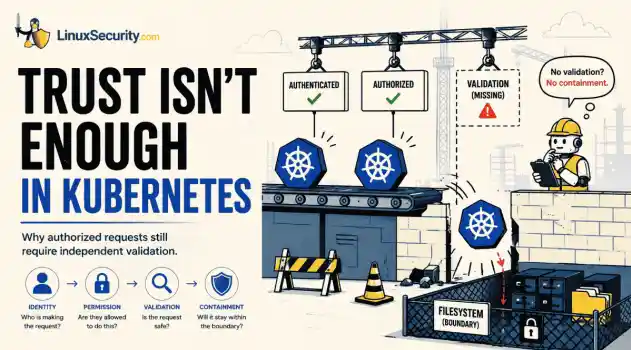
 Two newly fixed storage bugs in Kubernetes showed more than just a problem with path traversal. They found a common security flaw in the cloud: powerful parts often think that requests accepted by a higher system are safe to run. This is a simple lesson for the platform and security teams: RBAC can accept a request without showing that its parameters will stay within a certain filesystem boundary. This is clear from a new study from SentinelLabs into flaws in the Kubernetes CSI drivers for NFS...
Jul 24, 2026
 security advisory update
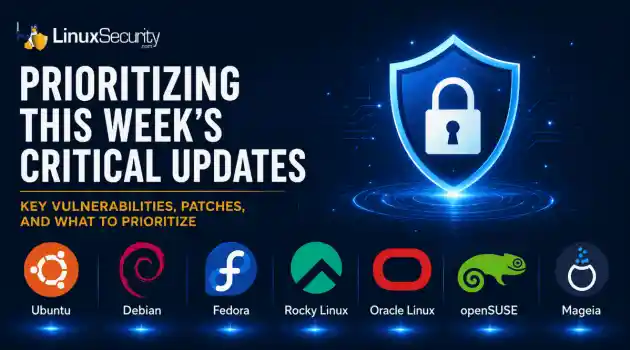
 A large volume of Linux security updates and advisories this week across major distributions once again, but it wasn't just the volume that was the story. Where maintainers and security teams focused their attention was evident in the concentration of fixes targeting Linux kernel updates, identity services, DNS infrastructure, and internet-facing software. . Instead of looking at each advisory in isolation, administrators gain more value from the general trends they reveal about Linux security...
Jul 23, 2026
 identity management security tactics
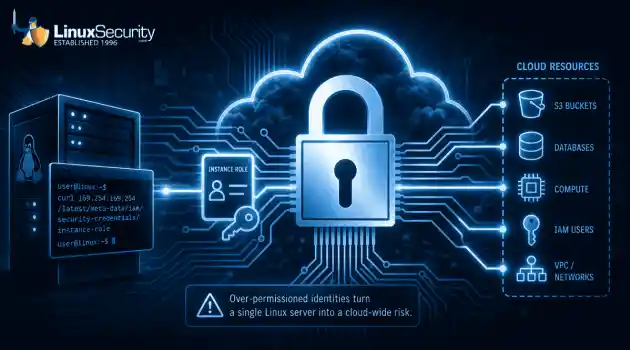
 For years, we secured our Linux infrastructure by building walls: VPCs, security groups, and hardened SSH configurations. We treated the cloud like a virtual data center, assuming that if we kept the "bad guys" out of the network, our workloads were safe. . That model is no longer sufficient. Today, one of the most common paths from an initial compromise to a major cloud breach is the identity assigned to your Linux workload. When an attacker gains code execution on a Linux instance—through a...
Jul 17, 2026
 security practices patch management
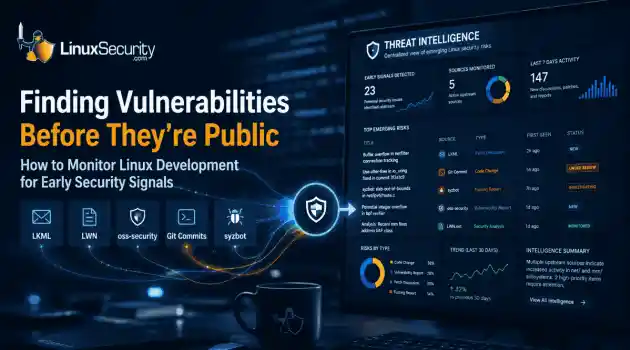
 Most of us don't hear about a kernel vulnerability until a CVE lands in our inbox or the vulnerability scanner starts complaining. By then, the patch isn't new anymore. Kernel developers may have been passing it around for review, arguing over the implementation, or revising it for days before anyone outside that community noticed it. None of those discussions are secret. They're sitting in mailing list archives, Git commits, and patch reviews where they've been the whole time. The strange...
Jul 14, 2026
 Refine features
X Clear Filters
Get the latest News and Insights
Get the latest Linux and open source security news straight to your inbox.
Community Poll
Are host-based firewalls still worth using?
Loading...

Explore Latest Linux Security features
We found -4 articles for you...
102
 apacheopensslweb server
Create a Safe Web Server Configuration with Apache and OpenSSL Tools
Using apache and OpenSSL you can create your own secure web server to keep authentication and other information private from prying eyes. . Having a secure web server is a vital necessity if you are doing on-line administration, banking and/or e-commerce. You may just have personal information you need to access over the web and wish to make secure. Using a secure web server is perfect for these implementations. Using Apache , mod-ssl and OpenSSL we can create a secure server quickly and easily. We also no longer have to worry in the U.S. about the RSA encryption. Prior to Sept. 6, 2000 the RSA algorithm was fully patended by RSA. The patent officially expires on September 20, 2000, but RSA lifted the patent a little earlier. Because of this we no longer need to use the RSAREF package, which is still under license from RSA. The first task in setting up our secure server will be to retreive the software required to do it. We will need three vital packages, Apache, OpenSSL and mod-ssl. You must have the following packages installed: Apache 1.3.12 or later mod-ssl-2.2.6 or later OpenSSL-0.9.5a or later RPMs and Debian packages most certainly also exist. See your favorite mirror site for pre-built packages. Instead of using mod-ssl you also have the option to use Apache-SSL. This document will instead focus on using mod-ssl instead. Mod_SSL was derived from Apache-SSL originally. The code has been completely rewritten since then. Mod_SSL has been known to run faster and be easier to configure than Apache-SSL. Compile and Install OpenSSL First Assuming you have perl and a working compiler installed, decompress the three packages. Compile OpenSSL first (this takes a while): $ ./config $ make $ make test $ make install Once this is all done compile mod-ssl: Note: ' ALL ' means you MUST have the option and ' optional ' is optional. $ cd mod_ssl-2.6.x-1.3.x ALL $ ./configure \ ALL --with-apache=../apache_1.3.x \ ALL --with-ssl=../openssl-0.9.x \ ALL --with-mm=../mm-1.1.x \ OPTIONAL --with-crt=/path/to/your/server.crt \ OPTIONAL --with-key=/path/to/your/server.key \ OPTIONAL --prefix=/path/to/apache \ ALL [--enable-shared=ssl] \ OPTIONAL [--disable-rule=SSL_COMPAT] \ OPTIONAL [--enable-rule=SSL_SDBM] \ OPTIONAL [--enable-rule=SSL_EXPERIMENTAL] \ OPTIONAL [--enable-rule=SSL_VENDOR] \ OPTIONAL [...more APACHE options...] OPTIONAL $ cd ../apache_1.3.x $ make $ make certificate $ make install For more information on compiling mod-ssl directly into Apache read the mod-ssl INSTALL and README files included with the package. They will provide you with the steps necessary to do this. Configure httpd.conf for SSL Support After Apache mod-ssl is installed, you can configure your httpd.conf like you would for a normal site. You will, however, have to setup your SSL secure site through a VirtualHost . You will access with instead of . There are many configuration options and requirements for a VirtualHost in Apache. Since there is too much to talk about here I will only give you an example of a basic VirtualHost . A VirtualHost contains the server name, system administrators e-mail address, the path to the files and a path to the logs for the host. It turns out looking something like this: ServerAdmin
 Sep 19, 2000
•
Sep 19, 2000
•

Get the latest News and Insights
Get the latest Linux and open source security news straight to your inbox.
Community Poll
Are host-based firewalls still worth using?
Search Topics
Powered By

Linux Security - Your source for Top Linux News, Advisories, HOWTOs and Feature Releases
QUICK LINKS
subscribe to newsletters!
Like staying secure? So do we.
Sign up for updates, tips, and alerts!