Audit Linux privileges now to limit compromise, escalation, and system-wide damage. Review Linux Privileges×


Stay Ahead With Linux Security Features
 identity management security tactics
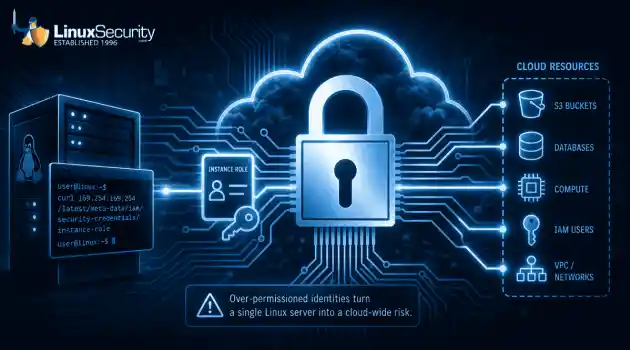
 For years, we secured our Linux infrastructure by building walls: VPCs, security groups, and hardened SSH configurations. We treated the cloud like a virtual data center, assuming that if we kept the "bad guys" out of the network, our workloads were safe. . That model is no longer sufficient. Today, one of the most common paths from an initial compromise to a major cloud breach is the identity assigned to your Linux workload. When an attacker gains code execution on a Linux instance—through a...
 Jul 17, 2026
 security practices patch management
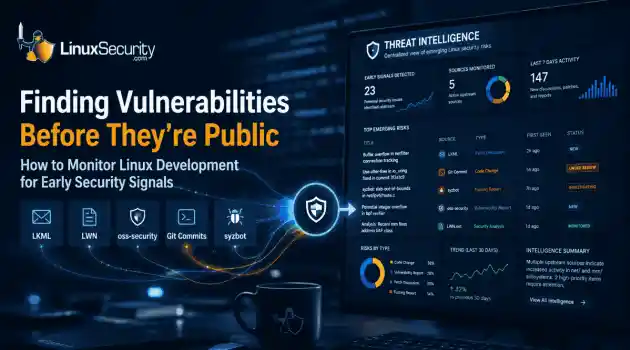
 Most of us don't hear about a kernel vulnerability until a CVE lands in our inbox or the vulnerability scanner starts complaining. By then, the patch isn't new anymore. Kernel developers may have been passing it around for review, arguing over the implementation, or revising it for days before anyone outside that community noticed it. None of those discussions are secret. They're sitting in mailing list archives, Git commits, and patch reviews where they've been the whole time. The strange...
Jul 14, 2026
 Linux security cyber attacks
 Every Linux server in your fleet produces thousands of events every minute. From journald logs and auditd records to kernel-level eBPF hooks, your systems are constantly talking. Most of that noise is just the mundane churn of system services, CI/CD runners, or routine administrative automation. But among that noise, an attacker might be establishing a foothold, moving laterally, or setting up persistence. The challenge for any security team is: how do you separate the routine from the...
Jul 13, 2026
 open-source infrastructure risk
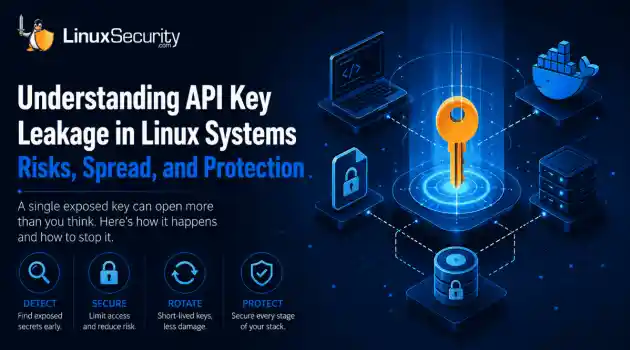
 Security scanners flag exposed API keys in public repositories every day. The initial response is usually predictable: delete the commit, revoke the credential, and move on. That’s a mistake. . In a real Linux environment, an API key never stays in one place. By the time it hits a public repo, it’s already everywhere. It’s in the CI/CD pipeline. It’s in your container registry. It’s in the build logs. It’s in the backups. Git makes this worse because the history never dies. Deleting a file in...
Jul 11, 2026
 open-source rootkit
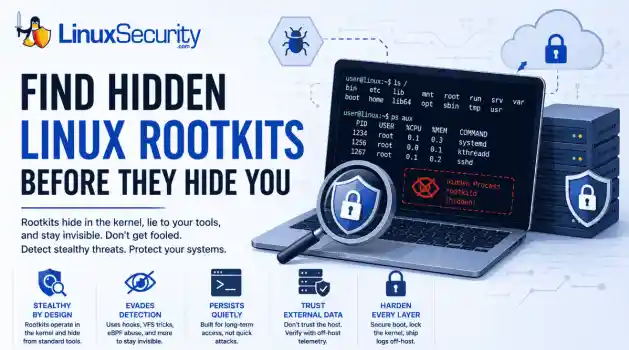
 Most of us think of Linux rootkits as ancient history—the stuff of 90s hacking forums and clunky malware that would crash your system if you looked at it the wrong way. But if you think they’ve gone away, you’re mistaken. They’ve just gotten smarter. . Modern attackers aren't using the noisy tools of the past. Today’s threats are surgical. Many of today’s most advanced Linux rootkits operate at the kernel level or abuse legitimate system features to blend in with normal traffic. They’re...
Jul 09, 2026
 Refine features
X Clear Filters
Get the latest News and Insights
Get the latest Linux and open source security news straight to your inbox.
Community Poll
Should Linux servers automatically install security updates?
Loading...
Explore Latest Linux Security features
We found -3 articles for you...
102
 security advisorybackup strategiesransomware
Strengthening WordPress Security on Linux: Key Strategies & Threats
Did you know that 43.1% of websites on the Internet run on WordPress, according to W3Techs? Most WordPress websites run on Linux servers, which makes them prime targets for hackers—these servers experience approximately 90,000 attacks each minute! . As the owner or admin of a WordPress website, security should always be your top priority. You must monitor vulnerabilities within WordPress and third-party plugins for potential vulnerabilities and exploits that could result in website defacement, malware infections , data breaches, downtime, and other damaging repercussions. Luckily, there are proven strategies for securing your WordPress website, which we'll discuss here. Why Is WordPress Security Critically Important? Maintaining the security of a WordPress site is paramount, whether for personal or professional use. Unfortunately, many beginners overlook security when setting up new WordPress sites, which can prove costly in terms of reputation damage and lost business revenue. WordPress security risks are on the rise mainly because it's so popular, making it a prime target for cybercriminals. Many sites rely on a lot of third-party plugins for added features, but if these plugins aren't updated regularly or properly vetted, they can introduce vulnerabilities. Many WordPress sites are running outdated plugins that haven't been patched in years. Even when patches are available, not everyone updates right away. The enormous variety of themes and plugins, all created by different developers, adds to the difficulty in maintaining robust security across the entire WordPress ecosystem. Worse yet is the persistent ransomware threat to WordPress sites. Hackers can gain entry to vulnerable WordPress sites and lock up all files before demanding payment to unlock them. Worse yet, sometimes these attackers can’t even unlock these files themselves, leaving you with financial damage and a broken site! Below, we will examine some common WordPress vulnerabilities and security threats thatadmins face. What Are Common WordPress Vulnerabilities? To protect your WordPress site from persistent and emerging attacks, you must first understand some common vulnerabilities that hackers exploit. The following are the most prevalent and problematic WordPress vulnerabilities that may lurk within a typical WordPress installation. Outdated Software The most common vulnerability you'll find in WordPress websites is outdated software. This may include the use of an outdated WordPress version, as well as the use of outdated plugins inside the CMS. You need to update a WordPress installation and its plugins to ensure your site is secure from software flaws that newer versions don't have. Worse still, many of those flaws become common knowledge to hackers once developers issue a software update, placing outdated sites at even greater risk. Despite the risk, over 21% of known WordPress websites still use older, unsupported versions of the CMS. Vulnerable Plugins & Themes Vulnerable WordPress plugins can be a real headache and danger for users because they open the door to various security problems. Imagine these plugins like unlocked windows in your house—hackers can easily slip through to wreak havoc. They might install other dodgy plugins without you knowing or even mess with your website’s code to do harmful things like steal data. It's essential to monitor your plugins and ensure they're updated to the latest, safest versions. Otherwise, you're leaving your site vulnerable to an array of attacks. A recent critical vulnerability in the Hunk Companion plugin (tracked as CVE-2024-11972 ) demonstrates the risk of vulnerable WordPress plugins. This flaw, found by WPScan, is being actively exploited to install vulnerable plugins, creating significant security risks. This flaw, which affects all versions of Hunk Companion before 1.9.0 and has a CVSS score of 9.8, enables attackers to exploit Remote Code Execution (RCE), SQL Injection, Cross-Site Scripting (XSS) , and other maliciousactivities by installing or reactivating compromised or outdated plugins. Despite the availability of the fix, only 11.6% of users have upgraded, leaving approximately 8,800 sites still at risk. Another critical vulnerability was recently found in the popular WordPress security plugin Really Simple Securit, which has put over four million websites at risk. This bug allows attackers to log in as any user, including admins, without needing a password, thereby gaining full access to the site's permissions. The ease of exploitation and potential for severe consequences, such as malware injection, unauthorized content changes, and attacks on visitors, have earned this vulnerability a CVSS score of 9.8 out of 10. Just recently, some big security holes were found in the Woffice WordPress theme, used on thousands of websites. These issues could let bad actors take control of your site by registering with admin privileges or logging in as any user - including you! Weak Passwords Weak passwords are also a persistent vulnerability for WordPress websites. Hackers exploit weak passwords by targeting administrator accounts that can grant them complete control of a WordPress site. From there, nothing stops them from wreaking havoc and making whatever changes they wish. Shared Hosting Although shared hosting is popular for WordPress website owners, it has significant security vulnerabilities . If an attacker manages to execute a privilege escalation attack on the underlying server, they gain unfettered access to every WordPress website it hosts, too. Lack of Server Hardening Another common vulnerability present in WordPress websites is a lack of server hardening. The default installation of the WordPress CMS leaves various features turned on for the convenience of the site's owner. However, some of those features, such as the built-in file editor, the hotlinking function, PHP execution, and directory browsing, can be powerful weapons in the hands of an attacker. Using those functions, an attackercould execute malicious code, conduct a cross-site scripting attack , or enable a denial-of-service attack. Incorrect File Permissions Misconfigured file permissions are another common vulnerability found in WordPress websites. Generally speaking, the underlying wp-content and wp-admin folders that house most of a WordPress site's files should have restricted file permissions, including a restriction on who can write to them. However, plenty of novice admins change those default permissions while trying to troubleshoot configuration issues and fail to change them back, creating a major vulnerability. Essential WordPress Security Tips & Best Practices for Linux Users To combat the vulnerabilities discussed above, owners and operators of WordPress Websites must follow established WordPress security best practices to the letter. Here's what they are and some other tips on keeping WordPress sites secure. Keep Software & Plugins Updated The most important way to keep a WordPress website secure is to update the CMS to the latest version and enable auto-updates for the future. Plus, it's equally important to keep all installed plugins up to date, too. This means checking with plugin developers regularly or installing software that can check for new plugin versions and make the necessary updates for you. Keeping WordPress plugins up-to-date will protect against bugs like the previously mentioned CVE-2024-11772 and the recently identified critical flaw in the Really Simple Security WordPress plugin. Admins must monitor security advisories vigilantly and apply the latest WordPress software and plugin patches as soon as they are released. Be Wary of the Software Packages You Install WordPress users should be vigilant about the software packages they install, preferably sticking to direct downloads from verified sources. A recent sophisticated yearlong supply-chain attack reported by security firms Checkmarx and Datadog demonstrates the importance of this WordPress security best practice. The attack involves malicious actors distributing Trojanized versions of open-source software, specifically through the NPM repository and GitHub, to infect devices. One such package, @0xengine/xmlrpc, masquerades as a legitimate JavaScript implementation but contains a backdoor that activates malicious code, resulting in attackers stealing credentials and other sensitive information, including SSH private keys and AWS access keys. A second package, yawpp, indirectly installs this malware by requiring @0xengine/xmlrpc as a dependency. This malware campaign has resulted in approximately 390,000 stolen WordPress credentials and has persisted due to its subtlety and strategic updates. Install & Configure a Firewall Installing a firewall is another excellent way to keep a WordPress website secure. WordPress-specific firewall software can monitor incoming and outgoing data for signs of malicious activity. Plus, many can halt DDoS attacks in progress and block vulnerability scans that alert hackers to exploitable site vulnerabilities. We recommend focusing on WordPress plugins to keep the process of adding a firewall as simple as possible. Using add-ons will be the most straightforward option. WordPress Firewall Rules to adhere to when configuring your firewall can be found here. Scan for Malware & Security Threats It's also good to perform periodic scans of your WordPress website to detect any malware or security threats that may have slipped by your site's defenses. Various tools can scan WordPress sites for such things, and many of the best ones are totally free, too. WPScan is an invaluable tool for Linux administrators looking to protect their WordPress sites from malware and other persistent threats. By scanning for malware and security risks, WPScan allows admins to identify issues such as outdated plugins, vulnerable themes, and weak passwords that need fixing. Installation is quick and painless, and its vulnerability database updates regularly to protect against new threats,making life simpler for administrators who want to maintain secure, healthy websites. Secure WordPress Usernames & Passwords Defining and enforcing a secure password policy is another best practice for securing a WordPress website. At a minimum, the policy should insist on passwords of at least 20 characters, which include letters, numbers, symbols, and a mix of capital and lowercase letters. Installing a two-factor security plugin that adds a time-limited one-time password to every login into the WordPress front-end or back-end is also advisable. Set Up Off-Site Backups Maintaining complete and current offsite backups of a WordPress website is a critical bulwark against malware intrusions and ransomware attacks. Having multiple backup versions of a WordPress website spanning a reasonable amount of time is important. This allows you to restore a version of your WordPress website before malware or ransomware infiltration. Plus, having the backup copies offsite eliminates any chance that a successful server-side attack will compromise them, too. Limit Login Attempts Limiting login attempts is another best practice for guarding a WordPress website against brute-force password attacks. To do it, you can configure your website to lock a user account after a reasonable number of login attempts. You can also set it to ban connections from the IP address associated with the failed login attempts. While these measures alone won't stop a hacker in their tracks, they will significantly slow their efforts to harm your site. Use HTTPS for Encrypting Data Switching your WordPress site over to HTTPS is vital for security and trust. HTTPS protects information by encrypting data sent between visitors, making it hard for hackers to intercept and read personal details like passwords or sensitive financial data. In addition, it ensures users communicate directly with your authentic website, protecting against man-in-the-middle attacks. Plus, search engines prefer sites using HTTPS, as they won't appear as"Not Secure" in browsers - improving both search rankings and trust among visitors. To enable HTTPS on your site, purchase and install an SSL certificate from your hosting provider. Afterward, modify WordPress settings so your URL includes s:// rather than ://. Additionally, force all traffic through HTTPS while simultaneously addressing mixed content issues with plugins like Really Simple SSL for enhanced peace of mind for both visitors and you alike. Secure File Permissions & Ownership As previously mentioned, it's important to set the proper file permissions and ownership for the files associated with a WordPress website. Most WordPress folders should be 755, and most individual files should be 644. Of course, there are always exceptions to those generalities, so it's important to follow all relevant WordPress and plugin documentation and to check trustworthy guides on the subject. Use an Uptime Monitor Uptime monitors can be a useful security tool because they can alert you to a problem with your WordPress site as soon as it happens. When there's any possibility of a malicious intrusion, every second counts. An uptime monitor could warn to block an attack in progress or at least blunt its damage. Add ReCAPTCHA in WordPress Login In addition to the aforementioned two-factor authentication, it's also advisable to add ReCAPTCHA functionality to your WordPress site's login pages and user forms. Various plugins make this easy, and installing one can safeguard your site against botnets, spam, and attacks from sketchy shared IP addresses. Conduct Security Audits & Penetration Testing Since no WordPress security scheme will ever be perfect, conducting regular security audits is an excellent way to ensure your site complies with the previously covered security best practices. It is also good to perform penetration testing to ensure your security measures work as intended. Implement Robust Monitoring & Logging Practices Finally, every WordPress website should include robustmonitoring and logging . The logs generated by the WordPress installation and any plugins can be treasure troves of useful data. For example, your site logs may reveal intrusion attempts by hackers and even clue you into specific vulnerabilities they may be looking to exploit. Various plugins will aggregate your logs into a single interface and even send you alerts based on predefined preferences. Our Final Thoughts on Improving WordPress Security on Linux Webservers At the end of the day, WordPress, running on one Linux variant or another, is and will continue to be the backbone of the Internet. However, it's incumbent upon every WordPress website owner to do their part to keep their sites safe from exploitation. With knowledge of the most common vulnerabilities and the best practices to mitigate them, securing your WordPress site is easier than you think! With a bit of effort and vigilance, running a secure WordPress website is well within reach of even a beginner web admin. Have additional questions? Reach out to us @lnxsec - we’re here to help! . Safeguard your Linux-based WordPress platform by adhering to optimal strategies regarding firewalls, malware defenses, and regular software maintenance.. WordPress Security Best Practices, Linux Server Protection, Web Threat Mitigation. . Duane Dunston
 Dec 17, 2024
•
Dec 17, 2024
•
102
 security practicesnetwork monitoringsoftware management
Common Sysadmin Mistakes and Best Practices for Network Security
It is valuable to learn from any administrative mistakes you make rather than repeat the same issue again. System administrators, or sysadmins, make mistakes but utilize what they learn to develop more skills, advance their careers, and improve their capabilities. It's also helpful to learn from the blunders of others, so today, we will discuss ten common administrative mistakes sysadmins make and how to address such problems. . Overuse of Privilege Escalation Sudo access permits users to control who runs commands on the system, as well as permits such users to do so with elevated privileges. Sysadmins can delegate permissions so workers can perform certain root commands and provide an audit record of actions and arguments. Adversaries can escalate privileges by implementing poorly configured methods that take away the need for a password. It's easy for sysadmins to get frustrated every time workers require sudo access for a minor task, so rather than finding an alternative, a system administrator will grant permanent sudo access to specific programs for users. This gives workers a clear path to the root software so they can utilize interactive shells and write to file systems. However, these types of common administrative mistakes give threat actors more advantage should they be able to breach into a sudo-accessed area of a system. A mitigation solution would be to implement privileged account management. Even if an attacker has terminal access, they must know the password to run anything in sudo-accessed files. Sysadmins can also restrict file and directory permissions by modifying files to require passwords so users with greater privileges cannot initiate dangerous processes. Key Takeaways: Use privilege account management. Restrict files and directories. Avoid using sudo if you don't have to. Use of Outdated Software Many of us are guilty of postponing a software update. As a system administrator, this laziness can be detrimental to your organization.It is critical that sysadmins track security advisories and network security issues and install security updates as soon as they become available. Many servers have been affected because a year-old fix was never installed, and instead, these servers were compromised by a zero-day attack. Cybersecurity vulnerabilities can result from a lack of proper security patching done in due time. Hackers can sometimes see the updated patches and use them to instigate attacks in network security for systems that haven't upgraded yet. Missing updates might not always be due to mismanagement but could be because it would damage a legacy app. If it's a crucial server, a few minutes of downtime during a scheduled maintenance window is preferable to losing hours or days because the box has been effectively compromised due to a network security threat. Test patches as soon as they are issued and set up a schedule for releasing updates. Perhaps there are ways to quarantine the servers to limit risk or to adopt new technologies to lessen reliance on legacy services. Security patching can be a political minefield in real life. If a higher-ranking manager prohibits a system from being patched, make sure everyone understands the consequences of not doing so. Bring the issue to the attention of the proper stakeholders and management so that everyone works to mitigate such cyber security vulnerabilities and avoids making such common administrative mistakes. Key Takeaways: Test patches as soon as they are available. Quarantine servers if you can't push a crucial update. Make sure that management understands the importance of the update. Bad Password Management Although passwords are still one of the most secure ways of authentication available, they are one of various cyber security vulnerabilities at risk when misused . Password management is helpful in this situation, as it is a collection of guidelines to follow while saving and managing passwords to keep systems as secure as possible and preventunwanted access that could result in network security issues. Servers are frequently set up with weak administrator credentials or the same password for other machines. Because many people still make this basic mistake, brute-force attacks utilizing common passwords work. This network security threat becomes much worse when numerous machines share the same password, making it one of these common administrative mistakes. Sysadmins should utilize a key file instead of using the same root password on all computers. Each server should have a public key file, and the private key should be paired with the public key on the system admin's desktop. Key Takeaways: Don't use the same root password on all machines. Use a key file instead. Make sure admin credentials are strong. Do not have a list of passwords stored in a text file. Troubleshooting Incorrect VLAN Assignment Sysadmins use Virtual Local Area Networks (VLANs) to segment and organize networks. Segmenting has several benefits, including greater security since devices can only connect with other VLAN systems, as those are the only ones visible to users. VLANs can aid in controlling broadcast traffic and the movement of end systems around a network. Users will be sent to the wrong VLAN if not correctly configured in these common administrative mistakes. This is why sysadmins have to deal with difficulties like network devices being unable to connect to switch ports, failed device registration efforts, and the inability to connect the device to critical servers. To ensure that the device has the right IP address, test the switch port. Check which VLAN is configured on that port using a VLAN tag and make the necessary modifications. With documentation, you can avoid having cybersecurity vulnerabilities within your VLAN settings. VLAN is frequently assigned to the wrong port due to a lack of communication. Sysadmins, for example, would never know that specific ports need to be adjusted to be compatible with new services if therewas no documentation. Key Takeaways: Reconfigure ports to support new services. Check switch configuration to validate new VLAN assignments. Test the port to see which VLANs are supported. Monitoring Log Files for Tampering and Attack Signals Log files keep track of what's going on behind the scenes, so if something goes wrong with a complex system, you can refer to a complete record of events that occurred before the failure. This record includes transactions, errors, and intrusions. An Advanced Persistent Threat (APT) in your organization or other attacks in network security could result in your log files, typically in the form of transaction issues. Sysadmins keeping track of log files can increase the chance of catching and stopping an intruder before any severe damage can occur. Log filtering software can help you analyze the data and find relevant log messages to prevent persisting common administrative mistakes. Key Takeaways: Write logs to two separate locations and compare hashes. Don't log passwords or failed passwords from logins. Use log-filtering software to help find relevant information. IP Address Conflict At any one time, one IP address is assigned to each device on a network by default. However, two devices sharing the same IP address can prevent users from connecting to a network. The default Dynamic Host Configuration Protocol (DHCP) configuration on your router could be to blame, as well as manual human error. Having a good DHCP server on your network is critical to protect your devices from IP conflicts. Bad DHCP servers may contain cyber security vulnerabilities that cause IP conflicts by incorrectly assigning IP addresses to network devices during dynamic IP allocation. Sysadmins should reconfigure the router to assign DHCP addresses to the top end of your subnet, leaving the static IP addresses out of the mix to avoid these common administrative mistakes. Key Takeaways: Check IP conflicts that arise from DHCP servers. Check BYOD policies. Release and renew your IP address. Preventing DNS Failures The Domain Name System (DNS) is a decentralized and hierarchical naming system for identifying computers, services, and other resources accessible via the Internet or Internet Protocol networks. DNS failure prevents users from accessing the internet and other critical applications. A failed connection request occurs when the client PC cannot resolve the server name with the server's IP address. Cache poisoning, DDoS, and DNS rebinding attacks in network security are some exploits that adversaries might use to induce DNS failure. Workstations may be configured to use their DNS server for highly active networks, resulting in a DNS traversal to your ISP's servers and overloading the router. To directly access their DNS servers, sysadmins need to change the client's DHCP settings. Disable DNS recursion to prevent DNS poisoning attacks. Have a server that will activate in the event of the nameservers failure to ensure data and network security. Key Takeaways: Properly configure DHCP settings. Be prepared with a DNS failover. Disable DNS recursion to prevent cache poisoning. Not Using Security Audits Best Practices A security audit is a thorough examination of your company's information system. Often, this examination compares the security of your system to a checklist of industry best practices, externally defined standards, or federal regulations. The audit thoroughly examines all aspects of your IT infrastructure, including operating systems, servers, digital communication and sharing abilities, network security toolkits, apps, and data storage and gathering methods. A security audit will give a roadmap of your organization's primary information cyber security vulnerabilities, identifying where it is meeting and where it is not fulfilling the requirements set forth by the organization. For firms that deal with individuals' sensitive and confidential data, security audits are essentialfor building risk assessment plans and mitigation measures. On the market, there are a variety of Computer-Assisted Audit Techniques (CAATs) that can help sysadmins automate the audit process to help with common administrative mistakes. CAATs go through the processes of an audit regularly, looking for cybersecurity vulnerabilities and generating audit reports automatically. Key Takeaways: Understand that audits are essential for security. Enlist a third-party auditor. Use CAATs to automate the audit process. Poor SSH Key Management SSH is a secure protocol commonly used to connect to Linux servers. By establishing a remote shell, it provides a text-based interface. All commands you enter in your terminal are transferred to the remote server and executed after you connect. Any commands you type into your terminal are transferred across an encrypted SSH tunnel and executed on your server for the length of your SSH session. SSH is used by sysadmins frequently alongside SSH keys. Mismanagement of SSH keys exposes you to data and network security threats and puts you out of compliance with industry regulations. If your keys are lying around or you frequently hand them out to everyone, that's very bad for security. Having an improper key management setup could also affect compliance needs. SSH key management is a set of network security toolkits, policies, and processes that enable sysadmins to safeguard and manage such digital key pairs to prevent future common administrative mistakes. Users can utilize secure shell keys to authenticate themselves to your network, servers, or other systems and securely transfer files without logging in every time. Key Takeaways: Keep an eye on the SSH key rotation. SSH keys should be tied to a specific person rather than an account several people can access. Find and keep an inventory of all SSH keys. Improperly Configured & Open Ports Ports allow devices to communicate with one another. To perform their tasks, internet-facingservices, and applications listen on ports for a connection from the outside. Communication between hosts via the internet is impossible wi thout ports. One of the most common administrative mistakes takes place when a port is left open when it should be closed. An administrator may have opened a port to fulfill a request and then forgotten about it, or a program may have automatically changed a firewall configuration, leaving some ports open without your knowledge. Ports that aren't absolutely necessary should be closed as soon as possible to mitigate this network security threat. Sysadmins can also run port scans with network security toolkits like Nmap regularly. Key Takeaways: Check for open ports with vulnerability scanners. After opening a port for requests, remember to close them. Check for ports that may have been opened from the firewall configuration. Final Thoughts on Avoiding Common Administrative Mistakes as Sysadmins Learning from others' mistakes can also be an invaluable tool to grow as a sysadmin without compromising company security in the process. In this article, we looked at ten common administrative mistakes that sysadmins make regarding security and tips for avoiding these pitfalls. We encourage you to explore this LinuxSecurity must-read article on top tips for securing your Linux system so that you can better protect your company against any and all cybersecurity vulnerabilities. A common oversight by sysadmins involves underestimating the significance of a robust secure remote access solution . Thus, it is crucial to integrate a dependable remote access system which safeguards against unauthorized entries and counteracts potential threats from remote links, essential measures for ensuring network security. Have you made any of these mistakes, or do you have additional advice for avoiding these issues? We'd love to discuss this with you! . Explore common sysadmin pitfalls and preventative measures to enhance network security and operationalpractices effectively.. Sysadmin Mistakes, Network Security Practices, Security Audits, Password Management, Software Updates. . James Bogert
Aug 01, 2023
•


Get the latest News and Insights
Get the latest Linux and open source security news straight to your inbox.
Community Poll
Should Linux servers automatically install security updates?
Search Topics
Powered By

Linux Security - Your source for Top Linux News, Advisories, HOWTOs and Feature Releases
QUICK LINKS
subscribe to newsletters!
Like staying secure? So do we.
Sign up for updates, tips, and alerts!