Explore top 10 tips to secure your open-source projects now. Read More
×


Stay Ahead With Linux Security Features
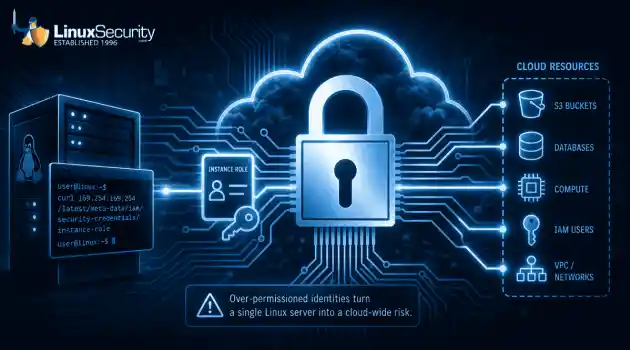
 identity management security tactics
 For years, we secured our Linux infrastructure by building walls: VPCs, security groups, and hardened SSH configurations. We treated the cloud like a virtual data center, assuming that if we kept the "bad guys" out of the network, our workloads were safe. . That model is no longer sufficient. Today, one of the most common paths from an initial compromise to a major cloud breach is the identity assigned to your Linux workload. When an attacker gains code execution on a Linux instance—through a...
 Jul 17, 2026
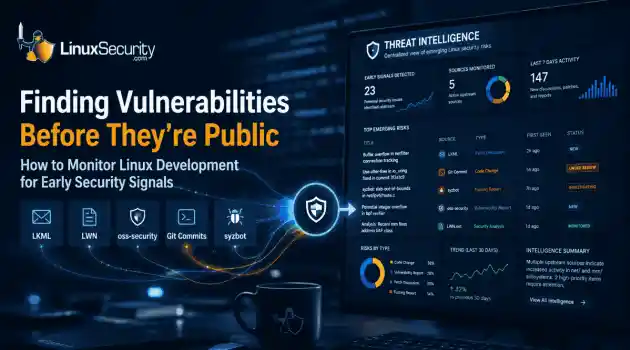 security practices patch management
 Most of us don't hear about a kernel vulnerability until a CVE lands in our inbox or the vulnerability scanner starts complaining. By then, the patch isn't new anymore. Kernel developers may have been passing it around for review, arguing over the implementation, or revising it for days before anyone outside that community noticed it. None of those discussions are secret. They're sitting in mailing list archives, Git commits, and patch reviews where they've been the whole time. The strange...
Jul 14, 2026
 Linux security cyber attacks
 Every Linux server in your fleet produces thousands of events every minute. From journald logs and auditd records to kernel-level eBPF hooks, your systems are constantly talking. Most of that noise is just the mundane churn of system services, CI/CD runners, or routine administrative automation. But among that noise, an attacker might be establishing a foothold, moving laterally, or setting up persistence. The challenge for any security team is: how do you separate the routine from the...
Jul 13, 2026
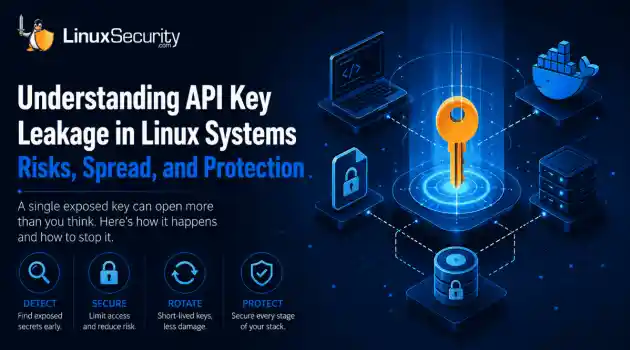 open-source infrastructure risk
 Security scanners flag exposed API keys in public repositories every day. The initial response is usually predictable: delete the commit, revoke the credential, and move on. That’s a mistake. . In a real Linux environment, an API key never stays in one place. By the time it hits a public repo, it’s already everywhere. It’s in the CI/CD pipeline. It’s in your container registry. It’s in the build logs. It’s in the backups. Git makes this worse because the history never dies. Deleting a file in...
Jul 11, 2026
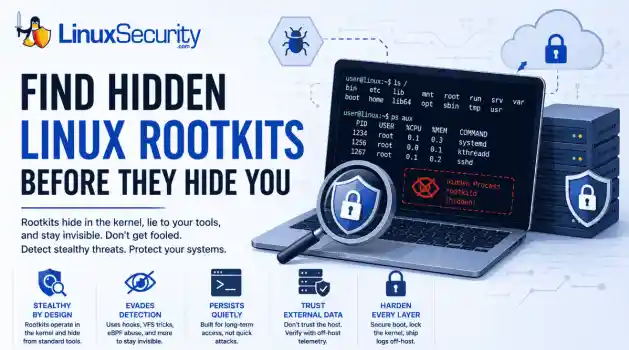 open-source rootkit
 Most of us think of Linux rootkits as ancient history—the stuff of 90s hacking forums and clunky malware that would crash your system if you looked at it the wrong way. But if you think they’ve gone away, you’re mistaken. They’ve just gotten smarter. . Modern attackers aren't using the noisy tools of the past. Today’s threats are surgical. Many of today’s most advanced Linux rootkits operate at the kernel level or abuse legitimate system features to blend in with normal traffic. They’re...
Jul 09, 2026
 Refine features
X Clear Filters
Get the latest News and Insights
Get the latest Linux and open source security news straight to your inbox.
Community Poll
Is continuous patching actually viable?
Loading...
Explore Latest Linux Security features
We found 7 articles for you...
102
 security practicespatch managementvulnerability assessment
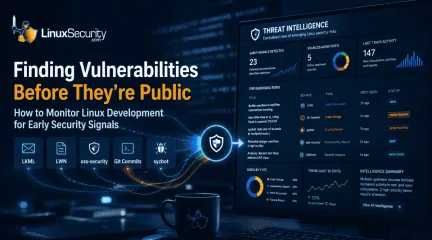
How Linux Security Teams Spot Vulnerabilities Before CVEs Are Published
Most of us don't hear about a kernel vulnerability until a CVE lands in our inbox or the vulnerability scanner starts complaining. By then, the patch isn't new anymore. Kernel developers may have been passing it around for review, arguing over the implementation, or revising it for days before anyone outside that community noticed it. None of those discussions are secret. They're sitting in mailing list archives, Git commits, and patch reviews where they've been the whole time. The strange part isn't that the information is hard to find. It's that most of us never think to look there. . The Linux Vulnerability Lifecycle To understand how to spot vulnerabilities early, it helps to visualize the typical path from discovery to disclosure: Where Early Security Signals Actually Appear Security fixes rarely appear in just one place. A patch might start as a mailing list discussion, move through several revisions, show up in the stable tree, and only later receive a CVE. Following that entire path isn't realistic for most teams, but knowing where those conversations happen makes it much easier to understand why some fixes deserve closer attention than others. LKML is where most of that story begins. It's also noisy. Hundreds of patches move across the mailing list every day, so the interesting part usually isn't the existence of a patch. It's the discussion around it. Long review threads, repeated revisions, or several maintainers debating the same change are often more revealing than the patch itself. oss-security feels different. Instead of watching development unfold, you're watching researchers, vendors, and Linux distributions compare notes as a disclosure moves toward becoming public. If something significant is about to land in multiple distributions, there's a good chance the discussion shows up there first. Most people aren't going to spend their mornings reading LKML archives, and that's where LWN.net becomes useful. Rather than reproducing every discussion, itexplains why a particular thread mattered and what changed before the patch reached users. When a fix is merged, kernel.org becomes the reference point. Stable releases and Git history make it possible to follow how quickly a change moved from development into supported kernels. Then there's syzbot . It never gets tired, never stops fuzzing, and produces far more crash reports than anyone could read. Most don't turn into vulnerabilities. The interesting part is when the same area of the kernel keeps showing up. That's usually a sign that developers haven't reached the end of the story yet. Reading Between the Lines of a Kernel Patch Most kernel commit titles aren't especially descriptive. A subject line like "net: validate skb length before parsing" could be anything from routine maintenance to the first step in fixing a serious security problem. The title rarely provides enough information on its own. The commit footer is often more revealing than the first line. net: validate skb length before parsing Fixes: a34be7... Cc: Reported-by: syzbot A Fixes: tag points back to the commit that introduced the bug. Cc: stable tells stable kernel maintainers that the patch should be considered for backporting to supported releases. Reported-by: syzbot means the issue was uncovered during automated fuzz testing. None of those details say "security vulnerability," and many commits with those tags never receive a CVE. Even so, seeing them together is usually enough to slow down and read the patch more carefully. The commit title might be ordinary, but the surrounding metadata often isn't. Common Security Clues Hidden in Commit Metadata Some clues appear over and over again in kernel development, although none of them should be treated as proof that a security issue exists. Take syzbot reports. Most never become serious vulnerabilities, but recurring reports against the same subsystem can indicate that developers are chasing a difficult bug. The report itselfisn't the story. The pattern is. KASAN and UBSAN findings deserve similar attention. Developers use these sanitizers to expose memory corruption and undefined behavior, so seeing them referenced in commit messages usually means someone found a genuine defect rather than a cosmetic bug. It's also worth paying attention to how maintainers react. A patch that attracts multiple revisions, lengthy review threads, or several subsystem maintainers often involves code that's difficult to change safely. The same goes for fixes that are rapidly backported to stable kernels or unexpectedly reverted after merging. Neither guarantees a vulnerability, but both suggest there's more happening beneath the surface than the commit title alone reveals. Building a Layered Intelligence Workflow Mature security teams treat upstream intelligence as a tiered model. Most organizations stop at the first two layers; high-maturity teams integrate the rest to gain an edge. Vendor Advisories: Your baseline for compliance. NVD/CVEs: The historical record for tracking exposure. Openwall (oss-security): The best source for identifying when a public disclosure is imminent. LWN.net: The bridge between raw discussions and finished advisories. Kernel Mailing List (LKML): The raw stream for monitoring specific subsystems. Git Commits: The authoritative record of what actually changed. By framing your process this way, you realize that upstream monitoring isn't about replacing traditional vulnerability management; it’s about contextualizing it. You aren't reading the mailing list to panic; you're reading it to know which servers to prioritize the moment the stable kernel release lands. Improving Patch Prioritization Through Context When you understand the upstream flow, your patch management changes. Instead of treating every kernel change as a generic update, you can assess the risk yourself: Assess the Subsystem: Is the affected code even used in your environment? Evaluate the Bug Class: Does the fix address memory corruption (high risk) or a rare race condition (lower risk)? Review Discussion: Extensive review cycles, multiple revisions, or involvement from several maintainers can indicate that a change affects complex or security-sensitive code paths. Check the "Stable" Signal: If a patch is being pushed to all stable branches, consider increasing its priority for testing and deployment. Conclusion It's easy to see a CVE as the starting point because that's when most security teams first encounter it. In reality, it's usually the point where everyone else has caught up. The debugging, code review, disagreements, testing, and patch revisions have often already happened in public, leaving behind a trail that anyone can follow. That doesn't mean every administrator needs to spend the day reading LKML threads or reviewing kernel commits. Most organizations won't, and they don't need to. But understanding where those discussions happen and knowing what they're telling you changes the way you look at a security update. A kernel patch stops being just another package to install and becomes the final result of a much longer investigation. The Linux development process has always favored openness. For security teams willing to look upstream, that transparency offers something no CVE score can provide: the opportunity to understand how a vulnerability evolved before it became another entry in a database. Organizations looking to strengthen this process should also review best practices around Linux security patches , Linux kernel security , and staying current with Linux security news . . Discover how Linux security teams identify vulnerabilities before CVEs are published, enhancing patch management and awareness.. Linux Kernel Vulnerability Management, Early Security Signals, Patch Management Practices. . Dave Wreski
 Jul 14, 2026
•
Jul 14, 2026
•
102
 security advisoryrisk managementpatch management
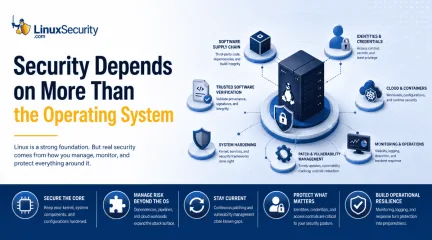
Does Linux Give Users a False Sense of Security? What This Year's Biggest Linux Security Incidents Actually Reveal
If more than 12 million enterprise systems can be exposed by flaws in a security control designed to harden Linux, it's probably worth asking whether Linux gives people a false sense of security. That's a question that has come up repeatedly throughout 2026. . This year alone, researchers have disclosed privilege-escalation vulnerabilities, root-level kernel flaws, and multiple supply-chain compromises affecting Linux environments. That doesn't mean Linux suddenly became insecure. It means that vulnerabilities still exist, trusted software can still be compromised, and security depends on much more than the operating system itself. Linux earned its reputation for security, but that reputation can sometimes lead people to assume they're safer than they actually are. Why Linux Earned Its Reputation It did not get that reputation by accident. The controls are real. They change how a system behaves after something goes wrong. They limit what a normal user can touch, what a compromised process can modify, and how much software is exposed in the first place. Permission separation: Keeps normal users and compromised processes away from root-level access. Open-source code: Can be inspected by researchers, maintainers, and security teams. Package managers: Centralized repositories make updates easier to distribute and discourage downloading random executables. Security frameworks: Tools like SELinux and AppArmor restrict what processes can do after they are already running. These aren't cosmetic advantages. They reduce exposure and slow down privilege abuse. The mistake is treating these controls as the end of the security conversation. When Advantage Becomes Misconception The misconception starts when those advantages get turned into assumptions. Fewer visible attacks get read as no attacks. Open source gets treated as if someone has definitely reviewed the code. Security features get mistaken for secure outcomes. The operating system gets all the attentionwhile identities, packages, and build systems sit in the background. That matters now more than ever: Trusted workflows: A malicious package doesn't need to defeat the Linux permission model if a developer installs it inside a trusted CI/CD pipeline. Credential exposure: An exposed credential does not care which distribution is running underneath it. Operational reality: A weak build system can leak secrets while the host OS behaves exactly as configured. The systems that stayed protected in 2026 were not protected because they ran Linux. They were protected because vulnerabilities were patched, dependencies were managed, and security controls were maintained. The Problem With Assuming Security by Default: Copy Fail The Copy Fail ( CVE-2026-31431 ) kernel flaw was a reminder that even core components are not exempt. It was a local privilege escalation, meaning an attacker with low-privileged access could move to root. What stood out wasn't the bug—privilege escalation happens in every major OS—but where it lived. Administrators weren't dealing with a neglected third-party package; they were patching a core component. The systems that stayed vulnerable didn't fail because Linux was insecure. The lesson wasn't about kernel design. It was about patch management. A vulnerability with a fix is no longer a software problem; it's an operational one. Mature Code and the Myth of Review: Dirty Frag Dirty Frag ( CVE-2026-43284 and CVE-2026-43500 ) affected mature networking components like IPsec ESP and RxRPC. These aren't experimental features. They are established parts of the networking stack. The assumption is usually: The component has been around forever. Large organizations use it. If something serious existed, somebody would have found it by now. Dirty Frag showed that complex networking code accumulates edge cases over time. Stability and security are related, but they are not the same thing. Public code can be examined by anyone, but that does not meaneveryone is looking at it. Old code earns trust; it does not earn immunity. Complexity as an Implementation Problem Sometimes a vulnerability is the result of architectural complexity. Sometimes it’s a single character. A 2026 kernel flaw came down to a small implementation mistake that created a privilege escalation path for containers. These bugs are frustrating not because they are common, but because they are ordinary. There was no failed security model. The problem was that inside a massive codebase, one small mistake survived long enough to become a vulnerability. The kernel contains millions of lines of code; complexity creates opportunities for mistakes, regardless of the review process. The Attack Surface Shifted The compromises involving Nx Console and the Mini Shai-Hulud campaign were notable because Linux often wasn't the target. The target was trust. Compromised packages: Can expose secrets within a build. Stolen credentials: Provide access to cloud infrastructure and Kubernetes environments. The human element: The XZ backdoor attempt showed that maintainer relationships and social engineering are as important as the code. Visibility helped uncover these problems, but visibility alone did not prevent them. That is why initiatives like SBOMs and software provenance are gaining attention. The goal is to make trust easier to verify. In several recent supply-chain incidents, organizations weren't breached through a kernel exploit at all. They were breached because trusted software, build pipelines, or credentials became part of the attack path. What Actually Protects Linux Systems The incidents of 2026 happened because vulnerabilities existed, software became complex, and trust relationships were abused. The OS matters, but what surrounds it matters just as much. For desktop users: Apply updates, enable MFA, and treat browsers as a primary attack surface. For self-hosters: Harden SSH, maintain a regular patching schedule, andreview which services are exposed to the internet. For developers: Audit dependencies, secure CI/CD pipelines, and scan containers before deployment. For enterprise admins: Prioritize identity protection, monitor endpoint visibility, and review supply chain controls. Notice how few of these depend on Linux specifically. That’s the point. Linux remains one of the strongest security platforms available. But the real danger is not choosing Linux. The real danger is assuming Linux removes the need for patching, monitoring, governance, and operational discipline. 2026 has already provided several reminders why. Want more Linux security news, vulnerability analysis, and software supply chain updates? Subscribe to the LinuxSecurity Newsletter and get the latest threats, advisories, and expert insights delivered directly to your inbox. Related Reading Linux Security Uncovered: Open Source, User Privilege, and Defense Tactics Why Linux Supply Chain Attacks Are Becoming a Nightmare for DevOps Teams Nx Console Supply Chain Breach Shows How Trust Becomes the Attack Surface . In 2026, Linux systems faced multiple security incidents highlighting the importance of patching and operational discipline.. Linux Security, Vulnerability Management, Incident Response, Cybersecurity Best Practices. . MaK Ulac
Jun 15, 2026
•

102
 security advisoryvulnerabilityimportant
LinuxSecurity.com Major Update for Improved Threat Discovery and Research
LinuxSecurity.com has been part of the Linux and open-source security community since the late 1990s. Over the years, the platform has evolved alongside the Linux threat landscape itself — from the early days of mailing lists and isolated vulnerability disclosures to today’s nonstop cycle of advisories, exploit research, malware reporting, supply chain attacks, and infrastructure-focused threat intelligence. . For many readers, LinuxSecurity.com became more than just a news site. It became a long-running research archive used to track vulnerabilities, investigate Linux threats, review hardening guidance, and stay current on operational security risks affecting enterprise systems, cloud environments, and open-source infrastructure. But the way security professionals research information has changed dramatically. Modern Linux security investigations rarely happen inside a single article or isolated advisory feed. Security teams move rapidly between vulnerability disclosures, mitigation guidance, malware analysis, hardening documentation, threat reporting, and historical research while trying to understand exposure and respond quickly. The previous platform no longer reflected that workflow. So we rebuilt LinuxSecurity.com from the ground up with a stronger focus on discoverability, connected research, faster navigation, and operational threat visibility. The new platform was designed to help Linux administrators, security teams, researchers, and open-source professionals move naturally between advisories, HOWTOs, feature analysis, archived research, and emerging threat coverage without constantly fighting disconnected archives or fragmented navigation. The mission itself has not changed. LinuxSecurity.com remains focused on delivering Linux security news, open-source threat intelligence, vulnerability awareness, practical hardening guidance, and security education for the Linux community. The difference is that the platform is now built to support the way modern Linux securityresearch actually happens. A Better Way to Explore Linux Security Topics The updated LinuxSecurity.com platform was redesigned around the realities of modern Linux security research workflows. Instead of forcing readers to manually navigate disconnected archives, static categories, or isolated article feeds, the new structure organizes content around related security topics, operational workflows, and active threat intelligence. Whether readers are researching SSH hardening, privilege escalation, Linux malware, OpenSSL vulnerabilities, cloud exposure, container security, or supply chain threats, the platform now helps surface connected advisories, tutorials, feature analysis, and historical research within a unified experience. The goal is not simply faster navigation. It is to create a faster understanding. Readers can now move more naturally between vulnerability disclosures, mitigation strategies, hardening guidance, malware reporting, and related Linux security coverage during active investigations without losing research continuity or context. The updated structure also improves visibility into ongoing Linux security activity by making advisories, trending topics, distribution-specific vulnerability reporting, featured analyses, and archived research easier to discover directly on the homepage and in topic hubs. LinuxSecurity Features The Features section was redesigned to highlight deeper Linux security analysis, investigative reporting, and long-form technical coverage focused on real-world operational risk. Readers can explore in-depth articles examining vulnerability trends, malware activity, supply chain threats, Linux hardening strategies, cloud security exposure, infrastructure attacks, and broader developments affecting the Linux and open-source security landscape. Rather than focusing solely on breaking disclosures, Features provide additional context on how vulnerabilities are exploited, why operational failures persist, and how organizations can strengthentheir defensive posture across Linux environments. The updated structure also improves discovery of related research, helping readers move between advisories, technical guidance, historical analysis, and current threat reporting during ongoing investigations. LinuxSecurity Advisories Streamlined access to vulnerability reports and security updates. The redesigned Advisories section gives readers direct access to Linux vulnerability disclosures and distribution-specific security updates without forcing them to dig through fragmented archives or disconnected feeds. Advisories are now easier to browse by distribution, topic, and publication date, helping administrators quickly identify patches and exposure affecting their environments. Readers can move between current vulnerability activity, related advisories, and connected Linux security coverage more naturally while tracking emerging threats across Debian, Ubuntu, Fedora, openSUSE, Rocky Linux, Slackware, Gentoo, Oracle Linux, and additional distributions. The updated interface also improves visibility into ongoing advisory activity by surfacing recent searches, trending topics, and newly published security updates directly from the main advisory hub. LinuxSecurity HOWTOs Practical, step-by-step hardening and configuration guidance. The LinuxSecurity HOWTOs section was redesigned to make technical hardening guidance easier to discover and apply during active security investigations. Readers can quickly access step-by-step walkthroughs covering Linux hardening, access control, file integrity monitoring, container security, SSH configuration, CI/CD security, and cloud infrastructure protection. Rather than existing as isolated tutorials, HOWTOs are now more tightly connected to related advisories, malware reporting, and feature analysis, allowing readers to move directly from vulnerability awareness into actionable remediation and defensive implementation guidance. LinuxSecurity News The LinuxSecurity News section wasredesigned to provide faster visibility into ongoing Linux security developments, vulnerability disclosures, malware activity, and emerging open-source threats affecting enterprise and infrastructure environments. Readers can now more quickly monitor active Linux security discussions, follow evolving attack trends, and explore timely reporting covering cloud security, supply chain risk, privilege escalation, ransomware activity, infrastructure compromise, and operational security issues impacting Linux systems. The updated layout also improves access to trending stories, featured reporting, and related security coverage, helping readers stay informed without constantly sorting through fragmented security feeds or disconnected news archives. By surfacing current Linux security developments more effectively, the platform helps administrators, researchers, and security professionals maintain stronger awareness of rapidly evolving threats across the open-source ecosystem. LinuxSecurity Newsletters LinuxSecurity.com newsletters were redesigned to help readers stay informed on meaningful Linux security developments without needing to constantly monitor dozens of separate advisory feeds, threat intelligence sources, and open-source security discussions throughout the week. Subscribers receive curated coverage focused on Linux vulnerability advisories, malware reporting, open-source threat intelligence, hardening guidance, cloud security risks, infrastructure attacks, and newly published HOWTOs and feature analysis. Some weeks focus heavily on patching activity, disclosure tracking, and active vulnerabilities. Other weeks center around operational failures, evolving attacker techniques, Linux malware trends, or recurring security mistakes that continue to expose enterprise infrastructure and cloud environments. The goal is simple: surface the Linux security developments that matter most and make them easier to review quickly during busy operational workflows. For administrators,researchers, and security professionals already using LinuxSecurity.com during vulnerability response and ongoing research, the newsletters provide a steady stream of connected security intelligence tied directly to the platform’s broader advisory and threat coverage. LinuxSecurity Security Dictionary The LinuxSecurity Security Dictionary was expanded to serve as a practical reference resource for Linux administrators, researchers, and security professionals navigating complex security terminology during active investigations and ongoing research. The dictionary provides organized definitions and contextual references covering vulnerability terminology, malware concepts, encryption methods, access control models, authentication technologies, attack techniques, and broader cybersecurity terminology frequently encountered throughout Linux security operations. Rather than functioning as a simple glossary, the Security Dictionary helps readers better understand the technical language surrounding advisories, hardening guidance, threat reporting, and feature analysis published across the platform. The updated structure also improves navigation and discoverability, making it easier to quickly reference unfamiliar terms while researching vulnerabilities, reviewing threat intelligence, or investigating operational security issues. LinuxSecurity Polls LinuxSecurity Polls were redesigned to encourage greater community participation while helping surface real-world perspectives from Linux administrators, security professionals, researchers, and open-source users across the broader Linux ecosystem. Poll topics focus on operational security priorities, Linux adoption, hardening practices, infrastructure management challenges, defensive tooling, and evolving security concerns affecting modern Linux environments. Beyond simple engagement, polling data provides additional visibility into how security professionals are approaching ongoing operational risks, vulnerability management, cloudsecurity, and system hardening across real-world deployments. The updated polling experience also creates more opportunities for readers to participate in broader Linux security discussions happening throughout the platform. About Us The About Us section was redesigned to provide additional context around LinuxSecurity.com’s long-standing role within the Linux and open-source security community. Readers can learn more about the platform’s history, editorial mission, research focus, and ongoing commitment to delivering practical Linux security guidance, vulnerability awareness, open-source threat intelligence, and educational security coverage for the broader Linux ecosystem. The updated section also highlights LinuxSecurity.com’s relationship with Guardian Digital and its continued focus on supporting Linux administrators, developers, researchers, and enterprise security teams with reliable security-focused reporting and operational guidance. As Linux threats continue evolving across enterprise infrastructure, cloud environments, and open-source software ecosystems, the platform remains committed to helping readers stay informed on the vulnerabilities, hardening practices, malware activity, and defensive strategies shaping Linux security today. Distribution-Specific Advisories LinuxSecurity.com now organizes advisories by Linux distribution to help administrators and security teams identify relevant vulnerability disclosures and patch activity faster during active operational workflows. Readers can quickly review advisories affecting Debian, Debian LTS, Fedora, Gentoo, Mageia, Oracle Linux, openSUSE, Rocky Linux, Slackware, SuSE, Ubuntu, and additional Linux distributions without manually filtering through unrelated security updates. This structure improves visibility into distribution-specific exposure while helping organizations track vulnerabilities, package updates, and patching activity affecting their environments more efficiently. By separating advisory coverageby distribution, the platform also makes it easier to monitor recurring vulnerability trends, identify software components that are actively targeted, and track ongoing Linux security developments across the broader open-source ecosystem. AI-Powered Search and Topic Discovery The new AI-powered search and topic discovery system was designed to reduce the amount of manual research required during active Linux security investigations. Instead of forcing readers to navigate disconnected archives, isolated advisories, or fragmented category structures, the updated platform connects related content dynamically across advisories, HOWTOs, feature analysis, malware reporting, historical research, and broader threat intelligence coverage. Readers researching topics such as SSH hardening, OpenSSL vulnerabilities, Linux privilege escalation, systemd abuse, container security, ransomware activity, supply chain attacks, or cloud exposure can now uncover connected tutorials, advisories, and threat analysis within a unified research experience. The updated search experience also includes refined filtering and discovery tools that allow readers to narrow results by: Topics and categories Authors Publication dates HOWTO-specific criteria Related Linux security subjects This connected discovery model helps security professionals move more naturally between vulnerability intelligence, defensive guidance, operational hardening, and historical Linux security research during active investigations. The result is a more continuous research workflow that surfaces both current threat activity and foundational Linux security knowledge that may still remain operationally relevant today. Faster Visibility Into Emerging Linux Threats Our homepage was redesigned to provide faster visibility into ongoing Linux security activity while making active threat coverage easier to follow throughout the platform. Readers can now quickly explore: Weekly vulnerability activity Trending securitytopics Featured Author’s Choice coverage Recent advisories Active Linux security discussions Current threat reporting The previous homepage often made important information difficult to surface consistently, especially during busy vulnerability cycles where new advisories and threat coverage were published rapidly throughout the week. The updated experience makes it easier to identify active security developments quickly while connecting related coverage together more naturally. Readers can now monitor vulnerability activity, malware reporting, trending Linux security discussions, and recent advisories from a single location without constantly digging through disconnected archives or categories. The updated platform was designed to support the way modern security research actually happens, moving quickly between advisories, tutorials, threat analysis, hardening guidance, and related vulnerabilities during the same investigation. Bringing Archived Security Research Back Into View LinuxSecurity.com contains decades of Linux and open-source security coverage, much of which remains highly relevant today. Older hardening guides, technical explainers, and vulnerability research can sometimes be difficult to rediscover over time, even when the information itself remains useful. The new platform structure helps reconnect archived knowledge with current advisories, modern threat reporting, and newer tutorials, making foundational security guidance easier to surface during active research. As a result, older Linux hardening articles can now appear alongside newer vulnerability coverage whenever the topics overlap, allowing readers to discover both historical context and current threat intelligence within the same research flow. Improved Mobile Navigation and Article Experience Linux security research doesn’t always happen from a desktop. The new LinuxSecurity.com experience was also designed to make long-form technical content easier to navigate on mobile devices. Articlesnow include features like “In This Article” navigation, allowing you to quickly jump between sections without scrolling through an entire page. Whether you’re looking for: mitigation steps detection guidance vulnerability details hardening recommendations command examples You can move directly to the information you need faster. We are excited to welcome readers to the new LinuxSecurity.com and look forward to continuing to deliver the Linux security news, research, tutorials, and threat coverage the community relies on every day. Thank You for Supporting LinuxSecurity.com Whether you have been using LinuxSecurity.com for years or are discovering the platform for the first time, we’re glad to have you here. The new LinuxSecurity.com was rebuilt to better support the way today’s Linux administrators, researchers, and security professionals investigate threats, track vulnerabilities, and stay informed on the rapidly evolving open-source security landscape. We look forward to continuing to provide the Linux security news, advisories, hardening guidance, and threat intelligence the community relies on every day. . For many readers, LinuxSecurity.com became more than just a news site. It became a long-running rese. linuxsecurity, linux, open-source, security, community, since, 1990s. . Dave Wreski
May 25, 2026
•
102
 security advisoryprivilege escalationpatch management
When LKML Patches Signal Exploitation Risk Before CVE Assignment
Think about Linux security like a product recall. A manufacturer starts fixing the issue before the public notice goes out. If you catch those early signals, you can act before it becomes a known problem. . Fixes show up in the kernel, the core engine behind the operating system, before anyone calls them a security vulnerability. That time gap is what you’re really working against. Most teams rely on CVEs for vulnerability management. That’s fine, but the real signal usually shows up earlier in the patch activity. You don’t need a new process, just better prioritization inside your patch management to keep Linux security tight. Why Linux Vulnerabilities Show Up Before CVEs Open-source doesn’t hide much. Fixes and discussions happen out in the open, usually on places like the Linux Kernel Mailing List , where you can see changes as they happen. This creates a kind of "fishbowl effect." You are watching the system evolve in real time, including fixes for a Linux kernel vulnerability that hasn't been flagged yet. A CVE isn't the discovery—it’s just the classification paperwork that happens later. A vulnerability can exist as a simple patch. The official label might not show up for days, sometimes longer. That transparency cuts both ways. It helps defenders, but if nobody’s watching the feed, attackers get the early read. The Disclosure Gap: Why Official CVEs Often Lag Behind There is a natural sequence to how issues become “official,” and it isn't built for speed. It usually follows this path: A patch gets committed. Developers discuss and refine it. A CVE gets assigned later. The Before and After of Your Visibility: Before (Reactive): You wait for the CVE assignment. By this time, the patch has already been public for days or weeks, giving attackers an "exploitation window" where they know the fix, but you are still waiting for the alert. After (Proactive): You monitor the patch activity. You see the "security hardening" or"privilege escalation" notes as they hit the kernel. You patch based on the fix , not the paperwork . This academic study on vulnerability disclosure timing documents exactly how these delays happen. The short version? Code fixes move fast, but classification moves slowly. That delay creates a blind spot. Your systems might be exposed to cybersecurity threats even though no CVE vulnerability has been announced to warn you. What This Means for Everyday Linux Systems This isn’t just theory. It affects your day-to-day operations. If you only look at official advisories, your patch management cycle starts later than the actual risk. This changes how you schedule maintenance and how you prioritize your updates. You don’t need to be a kernel expert; you just need to recognize the timing. Most teams are already patching, but the difference is deciding what gets fixed first when everything looks urgent regarding security vulnerabilities. Lessons from “Dirty Pipe”: A Real-World Look at the Disclosure Lag “Dirty Pipe” is a perfect example because it followed this exact pattern, just more visibly than most. It was a major flaw that allowed someone to take control of a system. The fix was already out there before most people realized there was a serious issue. It followed this timeline. Event Status Visibility Patch Committed Fix live in kernel High Public Disclosure Technical details emerge Increasing CVE Assignment Official "Critical" label Peak By the time the CVE vulnerability was officially assigned, the patch was already live. The signal was there; it just wasn't labeled "critical" yet. Analysis from Recorded Future shows that this gap between visibility and classification is exactly where attackers operate, specifically because they know most defenders wait for a formal alert regarding cybersecurity threats. Decoding Security Signals: How to Spot Risks in Daily Updates You don’t have to read raw kernel code to see these warning signs. Most of the signal is actually sitting right there in plain language if you know what you’re looking at. The info is usually in the places you already check—like your apt, yum, or dnf update outputs, your distro’s security advisories, or simple package changelogs. When you're doing your normal patch review, just keep an eye out for phrases that sound a bit more serious than a standard update. I usually watch for things like: “Security hardening” “Privilege escalation” “Memory management fixes” “Out-of-bounds write/read” “Use-after-free” They sound like routine maintenance, but they often aren't. This analysis on patch signal detection shows that these patterns often point to real security vulnerabilities long before they are formally named. If you aren't sure how a specific patch might affect your environment, cross-reference it with our LinuxSecurity Advisory Database . It provides the context you need to decide if an update is a "routine fix" or a critical security imperative. The best part is that this doesn’t add extra work to your day. It just changes how you interpret what you’re already seeing. When you spot one of those keywords, just bump that patch into your next available maintenance window instead of leaving it for your standard monthly cycle. For all the other stuff—the minor bug fixes or performance tweaks—you can just keep your normal schedule. By using those patch notes as a quick triage signal, you’re not changing your process; you’re just adding a filter that lets you act before the official alarm bells go off. It really is the difference between waiting for a memo and actually staying ahead of the risk. Smart Prioritization: Integrating Early Signals Into Your Routine This process doesn't add extra work; it just changes how you prioritize. You are already reviewing theseupdates—now, you are simply looking at them differently. The Old Way: You treat every update as equal until a CVE alert forces an emergency. The New Way: You scan your update logs for "privilege escalation" or "security hardening." You move those patches to the front of the line immediately. This small shift makes your vulnerability management faster and more effective without needing to buy new tools or change your entire workflow. To automate this intelligence-gathering, sign up for our LinuxSecurity Newsletter . We highlight the most important Linux security developments, helping you spend less time scouring changelogs and more time actually securing your infrastructure. Why You Should Use CVEs for Compliance and Early Signals for Faster Security CVEs still matter. They are the standard for reporting, compliance, and tracking across your team. They make audits possible and give your vulnerability management structure. But remember: they only confirm risk after it’s already visible. Early signals—like watching your patch activity—give you the speed you need to respond to cybersecurity threats before the formal classification comes in. When you use them together, you get fewer surprises. That is usually the difference between just reacting to security vulnerabilities and actually staying ahead of them. . Monitor patch activity to stay ahead of Linux security risks and improve vulnerability management with proactive strategies.. Linux kernel patches, patch management, exploit detection, vulnerability assessment. . MaK Ulac
Apr 16, 2026
•
102
 patch managementLinux administrationsecurity practice
Best Open-Source Linux Patch Management Software for Secure Linux Servers
Linux servers already have package managers. For most admins, that creates an assumption that patching is largely solved. Run updates, reboot when needed, move on. In small environments, that can feel true for a long time. Then the environment grows, security advisories start landing more often, and someone asks a simple question you cannot answer cleanly: Which systems are actually patched right now?. That gap is where Linux patch management starts to matter. Installing updated packages is a local action. Patch management is a system-level practice. It is about knowing what exists, what applies, when changes should happen, and how to prove they did. Once you are responsible for more than a handful of Linux servers, especially production systems with uptime expectations, the difference becomes hard to ignore. Linux administrators are usually expected to move fast after a Linux vulnerability is disclosed, but not so fast that they cause downtime or regressions. They are also expected to explain their decisions later, often to people who were not part of the original incident. That combination of speed, caution, and accountability is difficult to manage with ad hoc updates or one-off scripts, even when those scripts are well written. This is why open-source Linux patch management tools keep showing up in real environments. Not because package managers are inadequate, but because coordination, cadence, and visibility become problems of their own. Tools like Uyuni, Foreman with Katello, Rudder, and even automation frameworks like Ansible are all used to fill that gap in different ways. Understanding what each of them actually helps with, and what they do not, is what we’ll explore in this article. What Linux Patch Management Actually Means (and What It Doesn’t) Linux patch management is often described as if it were a single action. In practice, it is closer to a discipline. You start to see the difference once you are responsible for more than one server, and especially once those servers areexpected to behave predictably over time. At its core, Linux patch management is about control. Not control in the sense of locking systems down, but control in the sense of understanding and intent. You know which Linux servers exist. You know which software and kernels they are running. You know which patches apply to which systems, and which of those patches matter right now. You decide when changes happen, how broadly they roll out, and what happens if something goes wrong. Afterward, you can confirm that the change actually took effect and that it stayed in place. That is very different from simply upgrading packages. When you run apt upgrade or dnf update , you are performing a local operation on a single system. The package manager resolves dependencies, pulls newer packages from a repository, and installs them. It does not tell you whether other servers are in the same state. It does not enforce consistency across environments. It does not record why the update happened, when it was approved, or whether it met a defined timeline. If someone asks for proof weeks later, you are usually left reconstructing events from logs, memory, or shell history. Linux patch management exists to close those gaps. It treats patching as an ongoing process rather than a one-time command. That process includes tracking inventory across Linux servers, understanding which patches are relevant to which roles, coordinating updates so they do not collide with uptime requirements, and keeping a durable record of what was applied and when. Over time, the focus shifts away from keeping systems “current” and toward reducing exposure in a controlled, explainable way. For administrators, this is an important shift. The job is no longer just keeping systems updated. It becomes managing Linux vulnerability exposure across an environment, with enough structure that decisions can be repeated, defended, and improved the next time around. Why Does Linux Patch Management Matter for Linux Server Security? Once youseparate Linux patch management from the act of upgrading packages, the security implications become easier to see. Most serious issues do not come from missing tools or obscure exploits. They come from known weaknesses that stayed exposed longer than they should have. In the Linux world, a Linux vulnerability is often public well before it is exploited at scale. Advisories are published. Patches land in distribution repositories. From that point on, time becomes the variable that matters. A server that is unpatched for a week is in a different risk category than one unpatched for a day, even if both are technically vulnerable. Patch management is what makes that distinction visible and actionable. Linux servers tend to make this harder, not easier. Many of them run long-lived workloads. They are stable, carefully configured, and expected to stay online. That stability is valuable, but it also encourages delay. Updates get postponed until a maintenance window that keeps slipping, or until someone has time to test, or until the next planned reboot. Without a defined process, those delays add up quietly. When patch management is informal, patch timing becomes uneven. Less critical systems are often updated first because they are easier to touch. High-value production systems lag behind because the cost of making a mistake feels higher. Over time, risk concentrates in exactly the places you can least afford it. Admins compensate by keeping notes, writing scripts, or relying on memory. None of that scales well, and none of it holds up when you need to explain why a system remained exposed. Linux patch management software does not eliminate risk, but it changes how it is handled. It makes patch timelines explicit instead of implied. It allows updates to be prioritized based on exposure and impact rather than convenience. It replaces individual judgment calls with shared expectations. For Linux server security, that shift is often the difference between reacting to the last incident and being preparedfor the next one. Linux Patch Cadence: How Often Should Linux Servers Be Patched? Patch cadence is one of those topics that sounds simple until you try to apply it consistently. Everyone wants a clear answer. Weekly, monthly, immediately. In practice, Linux environments rarely behave in ways that allow a single rule to work everywhere. There is no universal patch cadence that fits all Linux servers, and pretending otherwise usually creates more risk, not less. What matters is having a cadence that is intentional, understood, and defensible. Once that exists, it can be adjusted as conditions change. Most Linux environments end up with a few overlapping rhythms. Routine updates happen on a regular schedule, often weekly or bi-weekly, covering standard package updates and non-urgent fixes. This creates predictability and keeps systems from drifting too far apart. Alongside that, there is usually a faster path for high-risk issues. When a Linux vulnerability is disclosed that affects exposed services or widely deployed components, waiting for the next routine cycle may not make sense. In those cases, accelerated patching becomes part of normal operations rather than an exception. Then there are the situations no one plans for. Actively exploited vulnerabilities fall into this category. These are the moments when cadence collapses into urgency. The question stops being how often you patch and becomes how quickly you can act without causing harm. Environments that have already defined patch workflows and maintenance expectations handle these moments far better than those that rely on improvisation. Several factors influence how cadence should be set. The role of the server matters. Production systems supporting customer-facing services are different from internal tools or development hosts. Exposure matters as well. Internet-facing systems carry a different risk profile than isolated internal machines. The type of patch matters too. Kernel updates often require reboots and coordination, while manyuser-space patches can be applied with far less disruption. This is where Linux patch management tools start to earn their place. They do not decide cadence for you, but they make it possible to apply different cadences without losing track of what happened where. They help schedule updates into maintenance windows instead of around them. They make overdue systems visible instead of silently forgotten. Over time, cadence stops being a vague intention and becomes something you can actually see and manage. For administrators, this changes the conversation. Patching becomes planned rather than reactive. Decisions about delay or acceleration can be explained in terms of role and risk, not convenience. That alone tends to reduce both security exposure and operational stress. Why Open-Source Linux Patch Management Tools Are Still Popular Open-source patch management tools tend to persist in Linux environments for reasons that have less to do with cost and more to do with control. Once you have spent time managing Linux servers at scale, you start to recognize where rigid tools get in the way and where flexibility actually matters. Linux infrastructure is rarely uniform. Distributions vary. Repository strategies differ. Some systems sit behind strict network boundaries or operate in environments where outbound access is limited. Open-source tools fit more naturally into these conditions because they can be inspected, adapted, and hosted alongside the systems they manage. For many admins, that transparency matters as much as any feature list. There is also a cultural component. Linux administrators are accustomed to understanding how things work under the hood. Open-source patch management tools make fewer assumptions about workflows and leave more room for deliberate design. That can be an advantage when patch cadence, approval steps, or testing requirements differ across environments. That flexibility comes with tradeoffs. Open-source tools generally place more responsibility on the operator.Setup takes time. Maintenance is ongoing. Reporting and governance capabilities vary widely, and they often need to be shaped rather than accepted as-is. In environments where audit or compliance requirements exist, that gap can become visible quickly. Choosing open-source in this space is rarely about convenience. It is about deciding where you want complexity to live. Some teams prefer to accept more operational ownership in exchange for control and transparency. Others discover that they want those benefits but underestimate the effort required to sustain them. Understanding that balance is essential before comparing specific tools. Best Open-Source Linux Patch Management Software (Strengths, Limits & Use Cases) Once you get past definitions and cadence, the question most Linux admins are actually trying to answer is simpler. Which open-source tools can help me manage patching across real servers, with real constraints, without creating new problems? There is no single best option in the abstract. Open-source Linux patch management tools tend to fall into two broad patterns. Some are platforms designed to centralize patching, content, and system state. Others are automation frameworks that can perform patching, but rely on you to design the surrounding process. Both approaches can work. They solve different problems, and they fail in different ways. What matters is how well a tool supports visibility, control, and repeatability across Linux servers, especially when patch cadence needs to change quickly in response to a Linux vulnerability. Comparison: Open-Source Linux Patch Management Options Tool What it is best at Strengths for Linux patch management Limitations Best fit for Uyuni Centralized Linux systems and patch management Strong fleet-wide visibility; structured patch and package workflows; handles mixed Linux distributions well Requires dedicated infrastructure and ongoingmaintenance; operational overhead grows with scale Organizations managing many Linux servers that need centralized control and a consistent patch cadence Foreman + Katello Errata-driven patching and content lifecycle management Clear separation of environments; controlled promotion of patches; strong repository and content governance Initial setup is complex; requires discipline to design and maintain lifecycles Teams that need structured patch promotion from development to production Rudder (Core) Policy-driven operations with patch workflows Central UI for visibility; policy framing aligns well with compliance discussions; supports ongoing state enforcement The depth of patch management depends on configuration and extensions; requires careful validation Teams that want patching integrated into broader operational and compliance policies Ansible (core) Patch automation through playbooks Flexible and lightweight; easy to integrate with existing workflows; good for targeted updates Not a full patch management system; reporting, approvals, and evidence must be built separately Small to mid-sized Linux environments with strong automation and process maturity Looking at this table, a pattern starts to emerge. Platform-style tools like Uyuni and Foreman with Katello tend to shine when the primary challenge is coordination. They give you a shared view of systems, patches, and timing. That becomes increasingly valuable as server counts grow or as environments become more heterogeneous. Automation-first tools like Ansible approach the problem from the opposite direction. They assume you already know what you want to do and give you a reliable way to do it repeatedly. That works well when environments are smaller, or when strong processes already exist around change management and reporting. It becomes riskier when patch management isexpected to provide visibility and evidence on its own. None of these tools eliminates the need for judgment. They amplify whatever structure you already have. If cadence is undefined, they will not define it for you. If ownership is unclear, they will not resolve that ambiguity. What they can do is make intent executable and outcomes observable, which is ultimately what Linux patch management is supposed to achieve. How to Choose Between Open-Source Linux Patch Management Tools Once you have a sense of how these tools differ, the decision usually comes down to what kind of problems you are actually trying to solve. Not what the tool can do in theory, but where your environment tends to break down under pressure. Platform-style tools such as Uyuni or Foreman with Katello tend to make sense when visibility is the main constraint. If you manage a large number of Linux servers, or a mix of distributions, simply knowing which systems are behind and by how much becomes valuable. These tools give you a shared picture of patch state and make cadence enforceable instead of aspirational. They work best when you are willing to invest in the infrastructure and process needed to keep that picture accurate over time. An automation-first approach, using something like Ansible, fits a different pattern. It works when the environment is smaller or when strong operational habits already exist. You know which systems matter most. You already have a change process. What you need is a reliable way to execute updates consistently and quickly. In those cases, automation reduces error and saves time. The risk is that governance and reporting are easy to postpone until suddenly they are needed and hard to reconstruct. The hardest part of this decision is being honest about overhead. Open-source Linux patch management tools do not eliminate work. They move it. Platform tools centralize effort but require maintenance and care. Automation tools reduce friction but demand discipline. Neither approach is wrong, but eachone assumes a different level of maturity in how patching is planned, tracked, and reviewed. Before choosing, it helps to step back and ask a few grounded questions. How many Linux servers are you actually responsible for today, and how many will you be responsible for in a year? How often do patch timelines change in response to a Linux vulnerability? When someone asks for proof of patch status, can you answer without rebuilding the story from logs and memory? Those answers tend to narrow the field quickly. Not because one tool is better than the others, but because the environment itself sets the constraints. Common Linux Patch Management Pitfalls with Open-Source Tools Most problems with open-source Linux patch management do not come from the tools themselves. They come from assumptions. Teams pick a tool, wire it up, and expect patching to become simpler by default. What usually happens instead is that existing habits get amplified. One common pitfall is treating automation frameworks as if they were patch management systems. Running playbooks that update packages can feel like progress, but without centralized visibility, it becomes hard to answer basic questions. Which servers are behind? Which updates were skipped? Which systems missed a critical window after a Linux vulnerability was disclosed? Automation executes intent. It does not define or track it on its own. Another pattern is the absence of a defined cadence or ownership model. Open-source tools make it easy to patch when someone remembers to do it. They do not enforce consistency unless you design for it. Without clear expectations, patching drifts. Some systems stay current. Others quietly fall behind. Over time, risk concentrates in the places that feel hardest to touch. There is also a tendency to rely on “latest packages” as a proxy for security. Being current is useful, but it is not the same as being deliberate. Not every update carries the same risk or urgency. Patch management exists to make those distinctionsvisible. When everything is treated the same, important updates can get lost in routine noise. Finally, self-hosted platforms are often underestimated. Tools like Uyuni or Foreman with Katello bring structure, but they also become part of the infrastructure that needs care. If maintenance of the patch management system itself is neglected, trust in its data erodes. Once that happens, admins revert to side scripts and manual checks, and the original problem returns under a different name. These pitfalls are not failures. They are signals. They usually point to gaps in the process rather than flaws in software. Recognizing them early makes it easier to adjust before patch management becomes another brittle system no one fully trusts. How Open-Source Linux Patch Management Changes Day-to-Day Admin Work The most noticeable change open-source Linux patch management brings is not technical. It is cognitive. The background noise drops. You stop spending as much time wondering whether something was done, or whether it was done everywhere. In environments without structured patch management, patching tends to happen in bursts. Someone notices an advisory. Someone else runs updates on a few systems. Weeks later, another admin is not sure whether a box was included or skipped. Time gets lost to checking, rechecking, and reconstructing what happened. None of that feels dramatic, but it adds up. When patch management is handled through a shared tool, even a simple one, that pattern shifts. Patch schedules become visible instead of implied. Maintenance windows are planned rather than negotiated each time. When a Linux vulnerability is disclosed, the initial question changes from “who can update this now” to “which systems does this affect, and what is the safest path to remediation?” There is also less reliance on tribal knowledge. Instead of remembering which servers are fragile or which ones need special handling, that information gets encoded into workflows. Over time, this makes environmentseasier to operate, not harder. New administrators can understand the patching posture without inheriting a backlog of unwritten rules. None of this eliminates work. Open-source tools still require attention. Repositories need care. Jobs fail. Edge cases appear. The difference is that the work becomes more predictable. Patch management stops interrupting everything else and starts fitting into the rhythm of normal operations. For most admins, that predictability is the real payoff. The Final Takeaway on Open-Source Linux Patch Management Software Linux patch management is easy to misunderstand because the mechanics are familiar. Package managers work. Updates install. Systems keep running. For a while, that is enough. Then scale, security pressure, or compliance questions enter the picture, and the limits of that approach become visible. What patch management adds is not complexity for its own sake. It adds intent. It gives structure to decisions that otherwise happen informally, unevenly, and under stress. For Linux servers, that structure matters because the systems tend to be long-lived, widely varied, and expected to stay stable even as the threat landscape shifts. Open-source Linux patch management tools fit naturally into this space, but only when expectations are clear. Platform-style tools offer visibility and coordination at the cost of operational overhead. Automation-first tools offer flexibility and speed, but rely heavily on discipline and process outside the tool itself. Neither path is inherently better. Each one reflects a different way of managing risk. The right choice depends on how many Linux servers you manage, how often the patch cadence needs to change, how much evidence you are expected to produce, and how much operational ownership your team can realistically support. When those constraints are understood, the decision tends to narrow itself. At that point, Linux patch management stops being a vague responsibility and becomes something concrete. You know what you aremanaging, why you are managing it, and what “good enough” looks like in your environment. That clarity is what ultimately reduces risk and makes the work sustainable. . Explore the best open-source tools for effective Linux patch management and enhance your server security with structured workflows.. Linux Patch Management, Open-Source Tools, Linux Security, Server Management, Patch Automation. . Brittany Day
Jan 30, 2026
•
102
patch managementSELinuxauthenticationComprehensive Security Tactics for Linux System Administrators
As cyber threats rapidly advance, Linux administrators and InfoSec professionals are essential defenders against increasingly sophisticated threats. Protectors of critical infrastructure and sensitive data, these experts must implement a wide array of security practices designed specifically to their unique challenges. . Drawing upon knowledge shared at LinuxSecurity.com , this article discusses advanced Linux security practices designed to ward off today's most dangerous cyber risks. Why Is Staying Informed the Bedrock of Linux Security? Knowledge is power in cybersecurity; knowledge is protection. Linux professionals prioritize keeping abreast of threats, vulnerabilities, and security trends. For this reason, LinuxSecurity.com is an indispensable source of up-to-date information, offering insights to identify and address potential breaches preemptively. Senior administrators should go beyond passive news consumption; they should actively engage in security forums, subscribe to threat intelligence feeds, and connect with the broader cybersecurity community. Platforms such as CVE and NIST provide extensive databases of vulnerabilities and exposures paired with automated alert systems, providing real-time threat intelligence essential for early detection and response. Patch Management: Beyond the Basics Advanced Linux administrators understand that effective patch management requires a different approach than simply applying updates automatically; they consider their systems' individual needs and configurations when considering strategies. An effective patch management protocol begins with prioritization. Administrators can assess vulnerabilities using the Common Vulnerability Scoring System (CVSS) and then prioritize patches based on potential impact and severity. While automation tools may assist, human oversight is always required to ensure patches do not disrupt critical operations or introduce new vulnerabilities. How Is SELinux A Mighty Fortification for Linux Systems? Security-Enhanced Linux (SELinux) is a highly effective weapon in the Linux security arsenal, but its complexity often deters wider adoption. Yet SELinux offers unparalleled granularity regarding access controls for experienced professionals who need precise control over who has access to what on their systems. Crafting custom SELinux policies requires an in-depth knowledge of one's network architecture and threat model, but audit2allow can assist this process by analyzing log files to generate policy modules that reflect actual system usage while restricting any unauthorized actions. Why Is Authentication The First Line of Defense? Robust authentication mechanisms are integral to protecting Linux systems from unauthorized access, yet many organizations depend on password policies as their only protection. Advanced administrators should look beyond simple password policies by adopting SSH key-based authentication multi-factor authentication (MFA) and investigating Pluggable Authentication Modules (PAM) for enhanced control over accessing systems. MFA adds another level of protection by requiring two verification forms beyond just passwords or keys, such as hardware tokens or mobile app-generated codes in high-security environments. MFA can more easily distinguish between impenetrable and compromised systems than without additional layers of defense. Why Is Continuous Education and Training Essential? Human factors in cybersecurity can often be the source of instability. Offering regular training to users and administrators, regular and updated education on password hygiene and phishing awareness, and more advanced topics such as secure coding practices , social engineering tactics, and how to respond in case of a suspected breach can drastically decrease the risks of security breaches. Senior Linux administrators can lead by example and champion a culture of security vigilance while constantly honing their skills to stay ahead of emerging threats. What Is the Importance of ServiceHardening and Attack Surface Reduction? Service hardening refers to configuring system services and applications to reduce vulnerabilities while restricting unnecessary functionalities. For Linux administrators, this usually means running regular audits of running services, disabling or terminating unnecessary ones, and using tools like systemd-analyze security to analyze potential service vulnerabilities in depth. Reducing the attack surface requires implementing network segmentation, strict firewall policies, and least privilege models for system access. Each measure makes it harder for attackers to gain entry and move laterally across networks. How Does Data Encryption Protect Data at Rest and in Transit? Securing sensitive data at rest and transit is an essential security practice in an age when data breaches can have devastating repercussions. Tools like GnuPG can offer end-to-end file encryption, while Linux Unified Key Setup (LUKS) offers robust disk encryption solutions. Transport Layer Security (TLS) encrypts data in transit between servers and clients, thus protecting against eavesdropping and man-in-the-middle attacks. Linux administrators should use only robust, modern cryptographic protocols that have been reviewed regularly to ensure compliance. Why Is Automating Security and Compliance Beneficial? Manual security audits and compliance checks can be time-consuming and potentially inaccurate in complex environments. At the same time, automation tools like OpenSCAP offer a solution by continuously evaluating systems against established baselines and producing reports with remediation scripts to address any issues found. Integrating security testing tools into the CI/CD pipeline enables continuous security analysis, helping ensure new code deployments do not introduce vulnerabilities into production environments. Why Should Admins and Organizations Adopt a DevSecOps Culture? The DevSecOps movement advocates for integrating security practices throughout the software development lifecycle . For Linux administrators, this means working closely with development teams to ensure security considerations remain paramount from inception through deployment. Infrastructure as Code (IaC) tools like Ansible , Terraform, and Kubernetes are essential. They enable security policies and configurations to be codified within version control alongside application code for consistency, repeatability, and auditability of security configurations across environments. Our Final Thoughts on the Importance of Implementing Advanced Linux Security Practices Comprehending advanced Linux security requires an integrated approach that combines technical know-how, strategic planning, and constant monitoring. By adopting advanced practices like those found at LinuxSecurity.com and taking advantage of resources like these, Linux administrators and InfoSec professionals can drastically enhance their organization's cybersecurity posture. . Delve into cutting-edge Linux security measures provided by LinuxSecurity.com, enhancing your protection against the ever-changing landscape of cyberattacks.. Advanced Linux Security, Cyber Threat Protection, InfoSec Best Practices. . Dave Wreski
Jul 20, 2024
•
102
 network securitymalwaresecurity threats
ManageEngine Patch Manager Plus Protecting Linux From Malware Threats
Linux is widely recognized for its impressive levels of security and stability offered to admins and organizations. However, the popular open-source operating system is not immune to malware, viruses, and other network security threats. . In fact, attackers now view the OS as a viable target due to its rapidly growing user base, its high-value servers, and the devices it powers worldwide. The number of new Linux malware variants reached a record high in the first half of 2022, as nearly 1.7 million samples were discovered. Threat actors frequently exploit unpatched cyber security vulnerabilities in software and applications to gain access to corporate networks, enable malicious code, and compromise critical systems. Thus, having a reliable patch management strategy in place is crucial in identifying and remediating network security issues before they are exploited by adversaries in damaging malware attacks. Despite the critical importance of effective data and network security, too many organizations still neglect to implement the Linux patch management best practices. This could be due to limited time and resources, the threat of numerous cyber security vulnerabilities throughout an entire network, and minimal opportunities to prioritize such risks prior to them resulting in attacks on network security. In this article, we introduce an automated Linux patch management solution that can help your organization overcome these obstacles, defend against Linux malware and other malicious network security threats, and maintain complete visibility and control over your system. Why Is Linux Malware A Serious & Growing Threat for Businesses? The evolution of malware research has provided superior visibility into attacks in network security threatening Linux servers. Just like any other software, unpatched cybersecurity vulnerabilities in Linux can be exploited by malware operators to gain unauthorized access to a system. A vulnerable server is an open door for data and credential theft, DistributedDenial-of-Service (DDoS) attacks, cryptocurrency mining, and web traffic redirection, leaving it susceptible to becoming a host for Malicious Command and Control (C&C) servers. Anandraj Paul, Head of Development for Endpoint Security at ManageEngine, elaborates, “Unpatched vulnerabilities can also be leveraged to install backdoors or create botnets which can be used to launch further attacks or steal resources from the infected Linux system. These flaws are often targeted by automated attacks that spread rapidly and infect many systems within a short period of time.” In recent years, the Linux malware network security threats have become more sophisticated , with attackers leveraging advanced techniques such as fileless malware , weaponized documents, code injection, and Zero-Day attacks that can compromise systems. With the rise of cryptocurrency, mining malware, ransomware , and banking trojans, Linux is a target for gaining financial data through servers, desktops, and IoT devices like routers, cameras, and smart appliances, all of which are often more vulnerable to attacks since due to cybersecurity vulnerabilities and weak data and network security practices. These network security threats have magnified the importance of having the right technology and systems in place to detect and remediate network security issues that these advanced malware attacks exploit. With the rapid evolution seen in recent years, Linux malware is now harder to detect and mitigate, so cybersecurity trends need to be implemented immediately. Modern malware can evade detection by traditional antivirus solutions through the use of advanced techniques such as polymorphism, rootkits, and encryption. Rangaraj Santhanam, Head of Linux Development for Endpoint Security at ManageEngine, explains, “Threat actors are also increasingly using Linux malware to specifically target organizations, industries, and even individuals. These targeted attacks can be more difficult to detect because they are customized to evade securitymeasures that the target may have in place.” Linux implementation into business-critical systems and on the cloud has increased the attack surface for Linux malware. Linux security expert and LinuxSecurity.com Founder Dave Wreski, warns, “It is critical that organizations are able to find and fix unpatched security bugs before cybercriminals have the opportunity to exploit them to infect devices and systems with harmful malware that can lead to downtime and compromise. Implementing an automated patch management and compliance solution is an efficient and effective way to ensure that security bugs aren’t left unaddressed.” Comprehensive, Automated Protection Against Unpatched Security Vulnerabilities Leaving Businesses Susceptible to Attack ManageEngine Patch Manager Plus is a comprehensive security patching solution for Linux, Windows, and macOS that offers automated patch deployment for endpoints. It's available both on-premises and on the cloud. With Patch Manager Plus in use, businesses can scan endpoints to detect missing patches, test patches, automate and customize patch deployment, make use of pre-built, tested, ready-to-deploy packages, and gain better visibility and control by conducting powerful audits and accessing comprehensive reports. ManageEngine Patch Manager Plus addresses growing Linux malware threats by: Patching known cybersecurity vulnerabilities in real time for admins before attackers can exploit them. Automating patch management processes, from detecting, testing, approving, and deploying patches to ensure that network security issues are consistently patched across all Linux systems to reduce the quantity of missed or delayed patches and to negate the possibility of any manual error. Integrating cloud security scanners that identify and patch vulnerabilities rapidly, all from a single console. Patching for Linux OS and third-party applications, including enterprise-use ones like Red Hat, SUSE, and Ubuntu, and more general distros like Debian, CentOS, Pardus,Oracle Linux, and Rocky Linux. Improving compliance by utilizing in-depth reporting capabilities to meet regulatory requirements for patching and maintaining system data and network security. Here are the benefits of using Patch Manager Plus to protect your cybersecurity vulnerabilities: Blazing speed: Automate patch management to get more endpoints patched in less time. Flexibility: Gain the ability to customize deployment policies to meet your enterprise's patching needs. Reliability: Secure networks by applying timely patches to OS and applications. Compliance: Achieve 100% patch compliance status across all systems. Visibility: Use powerful audits and reporting to better analyze and fix network security issues faster. Patch Manager Plus includes reporting capabilities like: System Health Reports: Patch Manager Plus classifies the systems in the network based on their vulnerability: “Highly vulnerable,” “Healthy,” and “Health Not Available.” Leveraging this report, admins can have a holistic view of the health status of their systems during audits. System Compliance Graph: Admins can get an overview of the systems that are compliant or non-compliant in the network. Missing Patches by Severity: Right from the console, admins can access an overview of the patches missing in the network based on their severity: Critical, Important, Moderate, Low, and Unrated. This ensures timely remediation and prioritization of cybersecurity vulnerabilities based on their severity. For these reasons, ManageEngine Patch Manager Plus meets all of the LinuxSecurity team’s criteria for an effective and efficient Linux patch management solution that organizations can deploy to protect against malware and other network security threats that exploit unpatched problems. Final Thoughts on Patch Manager Plus’ Linux Malware Protection Linux malware is a serious and growing network security threat but can be prevented with responsible administration and the implementation of acomprehensive patch management and compliance solution like ManageEngine Patch Manager Plus. Wreski concludes, “The majority of malware attacks on Linux systems can be attributed to misconfigured servers and unpatched vulnerabilities. Having a patch management solution in place that you can count on to fix security bugs before they are exploited in damaging cyberattacks is of critical importance in protecting against Linux malware and improving your organization's overall security posture.” Sign up for a free 30-day trial of ManageEngine Patch Manager Plus and improve your security posture through your patch management and compliance strategies to defend an unlimited number of endpoints against Linux malware and other dangerous, pervasive attacks in network security. . Fortify Unix platforms against emerging vulnerabilities via automated update solutions for strong antivirus defense and safety.. Malware Management, Patch Solutions, Network Security Products, Linux Protection Strategies, Cybersecurity Compliance. . Brittany Day
May 01, 2023
•
102
 security advisorynetwork threatspatch management
Automating Linux Patch Management: Boost Security and Efficiency
Although patching endpoints is exhausting and redundant, Linux admins must do so when keeping up with the latest security upgrades so that their company can maintain and improve its security posture frequently. Failure to have robust data and network security patching in place and implement Linux patch management best practices can leave a system vulnerable to cybersecurity exploits and Linux network security threats, including infected endpoints and harmful malware integration. . Automating patch deployment in Linux can relieve admin stress while ensuring a server handles all cybersecurity vulnerabilities. ManageEngine Endpoint Central can make the automation process simple, efficient, and effective. In this article, we will share what we learned from ManageEngine representatives about how their services can patch network security issues and stay up-to-date with the latest information security news so they can strengthen your safety measures as needed. Linux: An Increasingly Popular - and Targeted - OS Businesses continue to use Linux to power their digital infrastructure due to its universality, dependability, and adaptability. However, too many organizations need to take care of security patching Linux endpoints, which can put users, critical assets, and the brand's image at risk. Not patching services such as Apache or NGINX and third-party software can leave Linux systems with cybersecurity vulnerabilities that make them easy targets for threat actors. Linux OS’s growing popularity and integral role in powering web servers worldwide has made the server more susceptible to ransomware and phishing attacks in network security that can damage valuable data. Linux users must strengthen their data and network security to combat cybersecurity trends. Companies can enhance protection in their third-party applications and Linux kernel so that everything is up-to-date and network security issues occur less frequently. Rotate user credentials regularly, turn off root logins, and educateadministrators regarding the latest security news and Linux patch management best practices to keep your business safe. Linux Endpoint Security & Management Has Never Been More Challenging for the Organization Securely and efficiently managing Linux endpoints has never been more difficult for organizations due to the pandemic's heterogeneous workforce, the frequent use of multiple Linux distros within an organization, the prevalence of unpatched third-party applications, and the complexity of security patching. Addressing the security needs for endpoints in the organization and remotely is challenging for admins due to the difference in time zones, bandwidth, and secure authentication modes. With a hybrid/remote work model, organizations need help to strike the right balance between ensuring productivity and maintaining data and network security. The lack of proper bandwidth in remote endpoints, the absence of secure authentication modes such as firewalls or a VPN , and the difference in geographical locations (time zones) make endpoint security increasingly challenging. Moreover, unifying and prioritizing security updates across many organizations running multiple Linux distros in the network can be difficult. Third-party applications that need upgrades can make downloads even more taxing on workers. Still, failure to keep these applications updated at all times can lead to exploits in cybersecurity as severe as ransomware attacks. Implementing all patch management stages for your company can take time and effort, but automation services like ManageEngine can improve security posture behind the scenes. ManageEngine Digital Marketing Analyst Sylvester Jayan states, "Despite the many advantages of open-source Linux, automating patch deployment in Linux can be challenging. So, patching continues to remain a significant hurdle for many businesses." Here are some of the various obstacles Linux users face in managing cybersecurity: Excessive red tape: Some patches undergo testing stagesfrom various teams before clearance. Lack of staff: Organizations may need more funds for a dedicated team, and workers could have difficulty juggling their responsibilities and Linux patch management. Pain in patching: Security patching is repetitive, time-consuming, and resource-intensive. Resistance from end users: End users seek convenience and do not want to restart their devices to update the latest cybersecurity trends. Fear of breakage: Admins worry about facing technical glitches once new updates get installed, so workers might delay patching or follow the n-1 patching method. Automating patch deployment in Linux can take care of these security patching concerns. What Is Required to Secure Linux Endpoints Against Modern Threats? Securing Linux endpoints against today's advanced attacks in network security requires a defense-in-depth approach. No security feature or mechanism can defend against sophisticated and evasive network security threats like ransomware and fileless malware . Organizations should prioritize the following critical areas in their Linux endpoint security solutions: Patch management: Keep cybersecurity vulnerabilities at bay by implementing security patching on third-party applications and the OS to quickly mitigate bugs and network security issues. Reducing SSH attack surfaces: Harden Secure Shell (SSH) access methods in Linux endpoints via least privileged access, host-based firewalls, and so on to prevent the chances of an attack. Disabling irrelevant services: Turn off unused or unnecessary services with endpoint hardening to prevent threat actors from enabling and leveraging those options. Monitoring root accounts: Use strong passwords, rotate passkeys frequently, and monitor accounts occasionally. Auditing sessions: Record terminal sessions so that cloud security audits can use them as playbacks in the event of a security incident. Fortify endpoints across organizations by deploying a reputableunified endpoint management and security solution that addresses these areas. Improve security posture with these solutions so that companies can stay safe. Admins might resist utilizing specific solutions in the market since they may need to be more intuitive and user-friendly. Additionally, mergers and acquisitions can drastically increase a solution's features overnight, making communication between different back-end processes and workflows challenging. Also, most vendors need more pricing transparency before deciding about automated endpoint solutions. Effective Linux Patch Management Is Critical to Robust Security, Yet Too Often Overlooked Effective Linux patch management is essential to maintaining a strong security posture and preventing attacks in network security. Detecting, downloading, testing, approving, and installing new or missing patches for Linux devices within a network gives users a centralized view of the applicable endpoint Linux patches. Classify a system as “Vulnerable,” “Highly Vulnerable,” and “Healthy” so that companies can implement the appropriate measures to keep the network safe from cyberattacks. Keeping Linux endpoints up-to-date is critical, as Linux software updates include cybersecurity vulnerability fixes, better hardware compatibility, and improved stability. In some cases, these significant changes enhance the user experience overall. If you delay security patching, you can miss out on all of these new features and improvements, presenting your company to malicious hackers who can create network security issues that infect your machine with malware and compromise your business. Key Benefits of Automating Linux Patch Management Admins and organizations can ensure that endpoints remain up-to-date with the latest Linux security patching by implementing a unified automated endpoint management and security solution like ManageEngine Endpoint Central. Such operations for automating patch deployment in Linux conserve time and energy, so businessescan focus elsewhere. Here are the notable benefits organizations will see when automating data and network security: Enhanced security: Mitigate Zero-Day attacks and other critical cybersecurity vulnerabilities by preventing delays in patch deployment. Elimination of redundancy: Automate downloads, tests, deployments, and reports so you can negate repetitive security tasks. Prevention of manual errors: Avoid network security issues due to poor configurations through automated patch management that can prevent the regulation of such errors. Secure Linux Endpoints Against Vulnerabilities & Attacks with ManageEngine Endpoint Central ManageEngine Endpoint Central helps admins responsible for controlling network devices increase efficiency by automating network device activities and managing heterogeneous OSs from a single console. Here are the features Endpoint Central offers to assist your enterprise: Asset management : Access real-time information about the hardware and software used across the organization, along with web-based inventory management. Patch management : Ensure that all Linux machines on your network are up-to-date with Endpoint Central’s end-to-end critical or recent security patching and non-security updates (RedHat, Ubuntu, CentOS, Debian, Oracle, and SUSE machines) that total over 250 OS upgrades. Software deployment: Distribute, install, update, and uninstall software applications remotely and automatically in seconds with Endpoint Central’s 38,000+ Ubuntu and 200+ Debian predefined application templates. Configurations: Execute custom scripts to perform repetitive administrative tasks efficiently, install or uninstall patches and software as per convenience, and display messages to target users. Remote control: Access computers on LAN and WAN using Active X and HTML5 Viewer ( Note: Remote control will only work if the X Window GUI component is available in agent computers). Privately manage devices and perform repairswith one-click desktop sharing. Vulnerability assessment & remediation: Perform tests and mitigations in minutes. Insightful desktop management reports: Gain access to comprehensive reports on asset details, patch management, software deployment, network inventory, Active Directory report information, and custom reports. Jayan explains, "Endpoint Central is a great fit for IT executives who are looking to consolidate all of their endpoint management and security. Our dashboard is our single source of truth that lets you manage end-to-end IT from a single portal." He elaborates, "Our solution is also ideal for organizations that lack IT resources and expertise. Getting up and running with Endpoint Central is possible within a few weeks, even with zero technical knowledge." Endpoint Central Automated Linux Patch Management: An Easy & Effective Way to Stay on Top of Linux Security Updates Automating patch deployment in Linux is simpler than ever with ManageEngine Endpoint Central. Endpoint Central provides solutions for Linux patch management that keep Linux network devices up-to-date, mitigate critical network security threats, and ensure no cybersecurity vulnerabilities are present. Admins can completely automate the process for zero downtime, allowing for increased productivity and compliance. Endpoint Central offers automatic and manual security patching, as it has a streamlined patch management process to ensure no system is left unpatched. Here are the variety of critical features Endpoint Central provides to improve Linux patch management: The updated vulnerability database supports Linux patches within 24 hours of release. Discern how vulnerable your network is at a glance with the system health policy . Disable automatic updates to control your installed network patches completely. Test & approve patches so none of your network systems face downtime. Schedule patch deployment during off-hours to preventinterference with daily tasks. Automate Endpoint Central in just four minutes! Deploy the latest cybersecurity trends and updates with a recurring task automation setup , cutting down manual intervention and errors. Install patches using Endpoint Central's mobile app. Gain insights by viewing detailed reports regarding network and patch compliance. Support Operating Systems like Windows, Mac, Linux, and more you can find here. Jayan elaborates, "System administrators can automatically apply updates missing from their network devices using Endpoint Central's Automate Patch Deployment (APD) capability, without user involvement. APDs make sure there are no delays in patch delivery. Complete other, more crucial duties in the time your company saved using automation. Security updates, non-security updates, updates from third parties, and updates for antivirus software can all deploy automatically." Endpoint Central's Automated Patch Deployment (APD) capability benefits organizations: Deployment and distribution adjustments help tighten security. Apply authorized patches directly following their download without having to wait. Every time your system disconnects from the server, agents automatically inspect your system upon refreshing and reconnecting to implement cybersecurity vulnerabilities and security patching immediately. Agents can contact the server every 90 minutes. Agents continue deployment until they take care of all data and network security issues and their patches to meet the APD requirements. Our Final Thoughts on Automating Linux Patch Management & Improving Security The rise in attacks on Linux network security on Linux has made effective Linux patch management critical in establishing and maintaining a solid cybersecurity strategy. Automating patch deployment in Linux can improve security posture and optimize efficiency by making security patching seamless and easy. ManageEngine Endpoint Centraloffers unified endpoint management and data and network security, including automated Linux patch management, enabling admins and organizations to optimize time and resources while engaging in Linux patch management best practices. . Streamlining software updates on Linux reduces the workload for administrators and simultaneously mitigates crucial security vulnerabilities across server infrastructures.. Automated Patch Management, Endpoint Security Solutions, ManageEngine Features. . Brittany Day
Jan 09, 2023
•

Get the latest News and Insights
Get the latest Linux and open source security news straight to your inbox.
Community Poll
Is continuous patching actually viable?
Search Topics
Powered By

Linux Security - Your source for Top Linux News, Advisories, HOWTOs and Feature Releases
QUICK LINKS
subscribe to newsletters!
Like staying secure? So do we.
Sign up for updates, tips, and alerts!