Audit Linux privileges now to limit compromise, escalation, and system-wide damage. Review Linux Privileges×


Stay Ahead With Linux Security Features
 security advisory path traversal
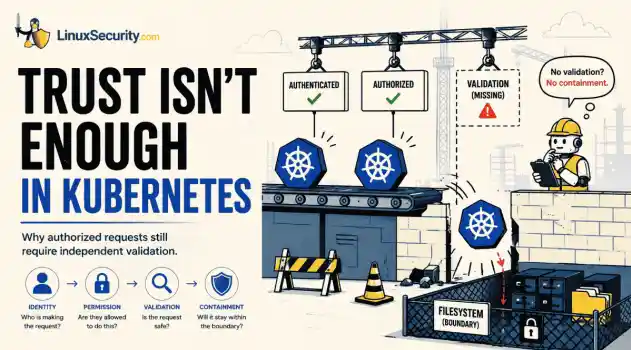
 Two newly fixed storage bugs in Kubernetes showed more than just a problem with path traversal. They found a common security flaw in the cloud: powerful parts often think that requests accepted by a higher system are safe to run. This is a simple lesson for the platform and security teams: RBAC can accept a request without showing that its parameters will stay within a certain filesystem boundary. This is clear from a new study from SentinelLabs into flaws in the Kubernetes CSI drivers for NFS...
 Jul 24, 2026
 security advisory update
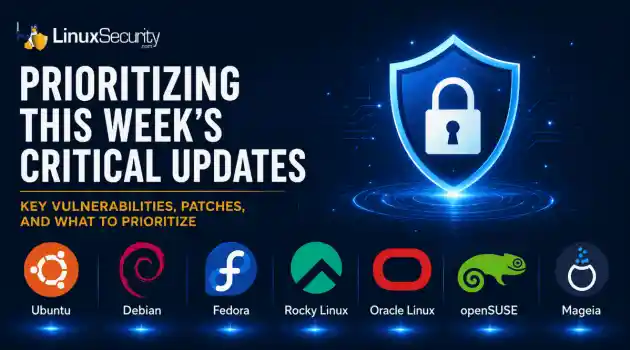
 A large volume of Linux security updates and advisories this week across major distributions once again, but it wasn't just the volume that was the story. Where maintainers and security teams focused their attention was evident in the concentration of fixes targeting Linux kernel updates, identity services, DNS infrastructure, and internet-facing software. . Instead of looking at each advisory in isolation, administrators gain more value from the general trends they reveal about Linux security...
Jul 23, 2026
 identity management security tactics
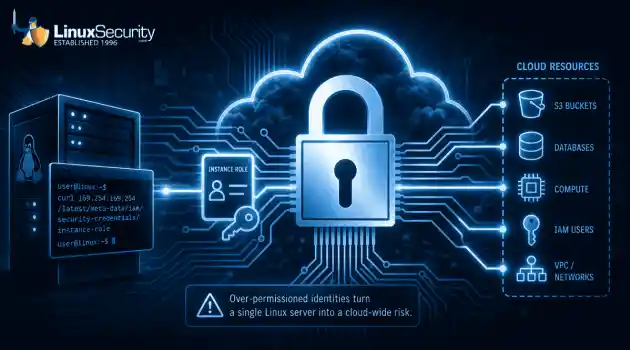
 For years, we secured our Linux infrastructure by building walls: VPCs, security groups, and hardened SSH configurations. We treated the cloud like a virtual data center, assuming that if we kept the "bad guys" out of the network, our workloads were safe. . That model is no longer sufficient. Today, one of the most common paths from an initial compromise to a major cloud breach is the identity assigned to your Linux workload. When an attacker gains code execution on a Linux instance—through a...
Jul 17, 2026
 security practices patch management
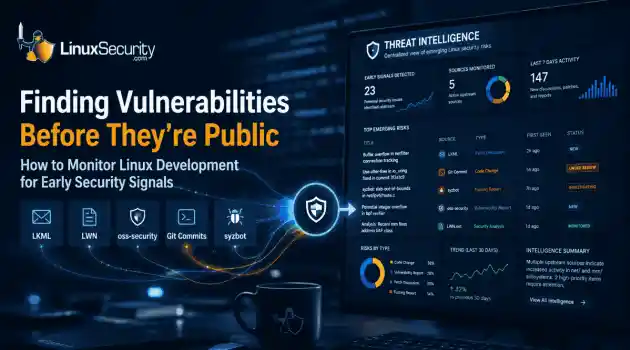
 Most of us don't hear about a kernel vulnerability until a CVE lands in our inbox or the vulnerability scanner starts complaining. By then, the patch isn't new anymore. Kernel developers may have been passing it around for review, arguing over the implementation, or revising it for days before anyone outside that community noticed it. None of those discussions are secret. They're sitting in mailing list archives, Git commits, and patch reviews where they've been the whole time. The strange...
Jul 14, 2026
 Linux security cyber attacks
 Every Linux server in your fleet produces thousands of events every minute. From journald logs and auditd records to kernel-level eBPF hooks, your systems are constantly talking. Most of that noise is just the mundane churn of system services, CI/CD runners, or routine administrative automation. But among that noise, an attacker might be establishing a foothold, moving laterally, or setting up persistence. The challenge for any security team is: how do you separate the routine from the...
Jul 13, 2026
 Refine features
X Clear Filters
Get the latest News and Insights
Get the latest Linux and open source security news straight to your inbox.
Community Poll
Should Linux servers automatically install security updates?
Loading...
Explore Latest Linux Security features
We found 2 articles for you...
102
 security advisorythreat analysisprivacy
Explore 2026 Secure Linux Distros for Enhanced Privacy and Security
Privacy and security have never been more important—or more under threat. With headlines constantly reporting data breaches, hacks, and the unchecked collection of sensitive personal information, it’s easy to feel like your digital life is always at risk. . However, there’s a silver lining for Linux users: experts widely agree that Linux is a highly secure OS—arguably the most secure OS available. That said, not all Linux distributions are created equal. While every distro benefits from the inherent strengths of Linux, some go the extra mile in safeguarding your privacy and security. From those designed for enterprise-grade reliability to others explicitly built for anonymity, there’s a distro tailored to meet your needs. We’ve explored some of the best specialized secure Linux distros, including insights from their developers, to help you navigate the options. Whether you’re focused on advanced security frameworks, protecting personal data, or simply locking down your system, this guide will help you choose the Linux distro that fits your priorities and gives you confidence in your digital security. Linux Security in 2026: Key Vulnerabilities and Solutions When it comes to security, Linux users undoubtedly fare better than their Windows or Mac-using counterparts. Linux offers inherent security advantages over proprietary OSes due to its diversity, flexibility, transparency of its open-source code, and role as a foundation for open-source intelligence tools. Distributions like Rocky Linux remain secure, RHEL-compatible options for users seeking enterprise-grade reliability in 2026. Thanks to its community-driven nature, security issues are caught and fixed quickly. Security technical implementation guides, like the DISA STIG, now support benchmarks for RHEL 9, ensuring compatibility with modern distributions like Rocky Linux. These guides provide clear security standards for users to follow, enhancing system resilience. Tools like the DISA STIG, on the otherhand, give you a solid framework for finding and managing these security gaps yourself. Along with its secure open-source roots, Linux's diversity within environments, the high level of configurability and control it provides sysadmins with features built into the kernel, such as SELinux and AppArmor, and the high level of security it offers also help defend against attacks. In this sense, Linux is, in many ways, secure by design. Implementing reliable backup Linux solutions is another crucial step in maintaining system resilience. Although attacks targeting Linux systems are on the rise due to its relatively small user base, Linux is still a relatively unpopular target among malware operators and malicious hackers. Most malware still targets Windows, but the growing adoption of Linux in cloud and IoT environments has made it a target in 2026. Attackers increasingly exploit kernel vulnerabilities and IoT-specific malware to compromise Linux systems. Top Reasons to Choose Secure Linux Distros Like Rocky Linux Switching from a proprietary OS to a Linux distro like Ubuntu, Fedora, or Debian is an excellent step for privacy and security. In 2026, alternatives like Rocky Linux will continue to offer robust RHEL-compatible solutions, delivering enterprise-grade reliability and scalability for modern applications. If you really want to take things up a notch, implementing a security technical implementation guide ensures your system is locked down to meet top security standards. Secure Linux distros are built to focus on security, privacy, and anonymity. Understanding Linux distributions can help users choose the best option for their needs. Adding the DISA STIG into the mix makes sure your system lines up with well-established security standards, giving you extra peace of mind. Many of them incorporate Tor technologies and offer an impressive selection of hacking, pentesting, and digital forensics tools. As you can imagine, these characteristics and resources are invaluable whenassessing an organization's security infrastructure or conducting a security audit. Each distro offers a different balance of privacy and convenience. Rocky Linux emerges as a secure and reliable choice for those seeking stability in enterprise environments. Distros like Tails and Whonix leverage the Tor browser for Linux to maximize anonymity. However, these benefits come with some tradeoffs. The most popular programs and OSes typically have the weakest privacy protections, but are also compatible with the majority of websites and offer the most support. While certain secure Linux distros are relatively mainstream and user-friendly, others have a steep learning curve, especially for less tech-savvy users. Explore the Top Secure Linux Distros for Privacy & Security 1. Qubes OS Qubes OS is ideal for users looking to mitigate risk by compartmentalizing their digital lives. As of 2025, version 4.2 introduces enhanced hardware compatibility and faster Qube management tools, making it even more user-friendly. Qubes OS uses multiple virtual machines—or 'Qubes'—to separate your systems into categories like 'work,' 'personal,' and 'Internet.' In its latest release, version 4.2, Qubes OS enhances hardware compatibility and improves Qube management tools, making it even more accessible to users in 2026. Users can ensure consistent security across these Qubes by following a security technical implementation guide. These Qubes, conveniently color-coded to help users differentiate them, are highly secure and can offer privacy advocates peace of mind in an increasingly invasive digital environment. As a result of this compartmentalization, if you happen to download malware to your work machine, your personal files won’t be affected, and vice versa. Integration of various Qubes is provided by the Application Viewer, which creates an illusion for the user that all system applications execute natively on the desktop - when, in reality, they are hosted in isolation in separate Qubes. The Dom0 domain manager, which manages the virtual disks of all other VMs, is isolated from the network to prevent attacks originating from an infected VM. In a conversation with the LinuxSecurity editors, Qubes OS Community Manager Andrew David Wong elaborated: “Rather than attempting to fix all of the security bugs in software, Qubes assumes that all software is buggy and compartmentalizes it accordingly, so that when flaws are inevitably exploited, the damage is contained and the user's most valuable data is protected.” Why We Love Qubes OS: Its “Security by Isolation” approach, which uses containers—aka “Qubes”—eliminates the concern of compromised programs. These Qubes are integrated into one everyday desktop environment and color-coded to help users stay organized. Sandboxing protects system components. Qubes OS offers full disk encryption for maximum file protection. 2. Tails Tails keeps users safe online by using the Tor network , which is heralded for privacy and anonymity. In version 5.15, released in 2025, Tails introduces streamlined USB installation and an updated Tor browser, further enhancing its ease of use and privacy protections. Tails comes with the Tor browser for Linux, a secure email client, and other secure Internet tools. Tails is the most well-known privacy-focused distro and a popular choice among less tech-savvy security enthusiasts. A Tails Project contributor explains, “With Tails, anybody can turn any computer into a secure environment free from malware and capable of circumventing censorship.” On top of Tor's privacy and anti-censorship properties, Tails empowers users worldwide by developing and distributing an integrated and secure operating system that protects users from most surveillance and censorship threats by default. The distro provides a level of security that individual applications cannot achieve because they ultimately depend on the safety of the underlying operating system. The TailsProject relies heavily on donations and partnerships to maintain its independence and to continue serving the Linux community. Why We Love Tails: Its tight integration with the Tor network ensures anonymity online. The included web browser is pre-configured for maximum security and includes add-ons like NoScript, Ublock Origin, and HTTPS Everywhere. Users get access to Onion Circuits, a valuable tool that allows them to view how their PC traverses through the Tor network. Tails comes with the Aircrack-NG wireless network auditing tool. The OS is encrypted and designed to run with full functionality on a USB drive. The distro features a built-in Bitcoin wallet ideal for users looking to make secure cryptocurrency transactions. 3. Kali Linux Kali Linux is an industry-standard pentesting distro. In 2025, its latest updates include AI-driven pentesting tools, automating vulnerability detection, and improving workflow efficiency for security professionals. It is one of the most popular distros among pentesters , ethical hackers, and security researchers worldwide and contains hundreds of tools. A Kali Linux contributor provides some insight into the distro’s history and the benefits it offers users: “Named after a Hindu goddess, Kali has been around for a long time – but it’s still updated weekly, can be run in live mode or installed to a drive, and can also be used on ARM devices like Raspberry Pi.” Why We Love Kali Linux: Kali Linux uses LUKS full-disk encryption to protect sensitive pentesting data from loss, tampering, and theft. This flexible distro offers complete customization with live build . Users can automate and customize their Kali Linux installations over the network. “Forensics” mode makes this distro perfect for forensics work. A Kali Linux training suite, Kali Linux Dojo, is available, where users can learn how to customize their own Kali ISO and learn the basics of pentesting. These resources areavailable on Kali’s website , free of charge. Kali Linux also boasts a paid-for pentesting course that can be taken online, with a 24-hour certification exam. Once you pass this exam, you’re a qualified pentester! 4. Parrot OS Parrot OS is constantly updated and has tons of hardening and sandboxing tools. By using the DISA STIG, you can configure Parrot OS to meet strict security requirements and get the most out of its features, from pentesting to reverse engineering and digital forensics - but this Debian -based distro also includes everything you need to secure your data and develop your own software. Parrot OS is frequently updated and offers users a wide selection of hardening and sandboxing options. Including backup Linux strategies further enhances its reliability. The distro’s tools are designed to be compatible with most devices via containerization technologies such as Docker or Podman . For projects that require a high degree of backend customization and security-focused engineering, many teams choose to hire dedicated backend developers . These professionals can help implement tailored Linux-based environments and reinforce system resilience with advanced configurations. Parrot OS is very lightweight and runs surprisingly fast on all machines, making it an excellent option for systems with old hardware or limited resources. Why We Love Parrot OS: The distro provides pentesters and digital forensics experts with the best of both worlds - a state-of-the-art “laboratory” with a full suite of tools and standard privacy and security features. Applications that run on Parrot OS are fully sandboxed and protected. Parrot OS is fast, lightweight, and compatible with most devices. 5. BlackArch Linux This popular pentesting distro hails from Arch Linux and contains over 2,000 hacking tools - allowing you to use whatever you need without downloading new tools. BlackArch Linux offers frequent updates and can be run from a USB stick, CD, or installedon your computer. BlackArch Linux is similar to Kali Linux and Parrot OS in that it can be burned to an ISO and run as a live system. This makes it a robust open-source intelligence tool for security professionals. However, this up-and-coming distro does offer a large selection of preconfigured Window Managers. Why We Love BlackArch Linux: BlackArch Linux offers a large selection of hacking tools and preconfigured Window Managers. The distro provides an installer with the ability to build from source. Users can install tools either individually or in groups with the modular package feature. 6. Whonix Sometimes, using a live OS can be inconvenient – you have to restart your machine each time you want to use it, which is tedious and time-consuming. By installing an OS on your HD, however, you run the risk of the OS being compromised. Whonix offers a solution to this predicament – a virtual machine that works inside the free program VirtualBox and aims to provide security, privacy, and anonymity on the Internet. This Debian-based distro operates in two parts. The first part, known as the Gateway, routes all connections to the Tor network. The second part, referred to as the Workstation, runs user applications and can communicate directly only with the Gateway. The Workstation VM can only “see” IP addresses on the Internal LAN, which are identical in every Whonix installation. Therefore, user applications do not know the user’s actual IP address, nor do they have access to any information about the physical hardware of the machine on which the OS is running. This split design allows the user to remain completely anonymous and mitigates the risk of DNS leaks, which reveal private information such as web browsing history. Whonix has recently added an amnesic live mode that “forgets” users’ activities, leaving no traces on disk. The distro is currently working to create a unified desktop experience. Whonix developer Patrick Schleizer explains:“Our upcoming Whonix-Host extends many of our usability and hardening features to the entire desktop.” Whonix encourages users to provide feedback on their experience and sincerely appreciates donations and contributions to support the project’s ongoing efforts. Why We Love Whonix: Whonix comes with the Tor Browser and the Tox privacy instant messenger application, which ensures full-anonymous web browsing and instant messaging. The OS employs an innovative Host/Guest design to conceal users’ identities behind the anonymous proxy and prevent IP and DNS leaks. The distro features pre-setup Mozilla Thunderbird PGP email. Linux Kernel Runtime Guard (LKRG) , a kernel module that performs runtime integrity checking of the Linux kernel to detect security vulnerabilities and exploits, can be easily installed on Whonix . Best Secure Linux Comparison Table The comparison table comprehensively overviews several Linux distributions tailored for security-focused users. It encapsulates key factors such as User Friendliness, GUI Availability, Tutorial Availability, Community Support, Recommended User Level, Open Source License, and Top 3 Security Applications for each distribution. Tails OS, known for its strong privacy features, is moderately user-friendly. It offers abundant tutorials and robust community support, suggesting it's well-suited for intermediate users. Parrot Security OS (my favorite) is highly user-friendly, making it accessible to beginners and intermediates. It offers a plethora of tutorials and strong community support. Kali Linux is recommended for advanced users. It offers moderate user-friendliness, many tutorials, and a supportive community. Qubes OS scores low in user-friendliness, suggesting it's best for advanced users. It has a limited GUI, moderate tutorials, and community support. BlackArch Linux is also geared toward advanced users with low user-friendliness, while Whonix provides an intermediate level of user-friendliness with moderatetutorials and community support. Each Linux distribution is backed by an open-source license. The table highlights three key security tools, helping readers discern which Linux distribution best suits their experience level and security needs. This comparison is an invaluable resource for users to select a distribution that offers the appropriate balance of ease of use, educational resources, support, and advanced security functionalities to meet their specific requirements. Distribution User Friendliness GUI Availability Tutorial Availability Community Support Recommended User Level Open Source License Top 3 Security Applications Tails OS Moderate Yes High High Intermediate GPLv3 and others Tor, KeePassXC, Electrum Parrot Security OS High Yes High High Beginner to Intermediate GPLv3 and others Metasploit Framework, Nmap, Aircrack-ng Kali Linux Moderate Yes High High Advanced Various OSI approved Nmap, Metasploit Framework, Wireshark Qubes OS Low Limited Moderate Moderate Advanced GPLv2 Xen, FirewallVM, Whonix BlackArch Linux Low Yes Moderate Moderate Advanced Various OSI approved Metasploit, Wireshark, SQLmap Whonix Moderate Yes High Moderate Intermediate GPLv3 and others Tor, Onionshare, sdwdate Our Final Thoughts on Choosing a Secure Linux Distro There is a selection of excellent, specialized, secure Linux distros available to pentesters, software developers, security researchers, and users with a heightened concern for their security and privacy online. Picking the right Linux distro is about finding the balance that works for you. The DISA STIG helps standardize your setup, so it’s secure and follows proven best practices. A security technical implementation guide enables you to set things up correctly so you’re meeting solid security benchmarks right out of the gate. Based on your specific requirements and concerns, it is likely that one (or many!) of the distros profiled above could be an excellent fit for you, offering the tools and capabilities you are looking for in a distro, coupled with the peace of mind that your system is secure and your privacy is protected online. . However, there’s a silver lining for Linux users: experts widely agree that Linux is a highly secu. privacy, security, never, important—or, under, threat, headlines, constantl. . Brittany Day
 Dec 22, 2025
•
Dec 22, 2025
•
218
security advisorylinux distributionprivacyExploring Privacy Focused Secure Linux Distros for Enhanced Security
Privacy and security have never been more important—or more under threat. With headlines constantly reporting data breaches, hacks, and the unchecked collection of sensitive personal information, it’s easy to feel like your digital life is always at risk. . However, there’s a silver lining for Linux users: experts widely agree that Linux is a highly secure OS —arguably the most secure OS available. That said, not all Linux distributions are created equal. While every distro benefits from the inherent strengths of Linux, some go the extra mile in safeguarding your privacy and security. From those designed for enterprise-grade reliability to others explicitly built for anonymity, there’s a distro tailored to meet your needs. We’ve explored some of the best specialized secure Linux distros, including insights from their developers, to help you navigate the options. Whether you’re focused on advanced security frameworks, protecting personal data, or simply locking down your system, this guide will help you choose the Linux distro that fits your priorities and gives you confidence in your digital security. Linux Security in 2026: Key Vulnerabilities and Solutions When it comes to security, Linux users undoubtedly fare better than their Windows or Mac-using counterparts. Linux offers inherent security advantages over proprietary OSes due to its diversity, flexibility, transparency of its open-source code, and role as a foundation for open-source intelligence tools. Distributions like Rocky Linux remain secure, RHEL-compatible options for users seeking enterprise-grade reliability in 2026. Thanks to its community-driven nature, security issues are caught and fixed quickly. Security technical implementation guides, like the DISA STIG, now support benchmarks for RHEL 9, ensuring compatibility with modern distributions like Rocky Linux. These guides provide clear security standards for users to follow, enhancing system resilience. Tools like the DISA STIG, on the otherhand, give you a solid framework for finding and managing these security gaps yourself. Along with its secure open-source roots, Linux's diversity within environments, the high level of configurability and control it provides sysadmins with features built into the kernel, such as SELinux and AppArmo, and the high level of security it offers also helps defend against attacks. In this sense, Linux is, in many ways, secure by design. Implementing reliable backup Linux solutions is another crucial step in maintaining system resilience. Although attacks targeting Linux systems are on the rise due to its relatively small user base, Linux is still a relatively unpopular target among malware operators and malicious hackers. Most malware still targets Windows, but the growing adoption of Linux in cloud and IoT environments has made it a target in 2026. Attackers increasingly exploit kernel vulnerabilities and IoT-specific malware to compromise Linux systems. Top Reasons to Choose Secure Linux Distros Like Rocky Linux Switching from a proprietary OS to a Linux distro like Ubuntu, Fedora, or Debian is an excellent step for privacy and security. In 2026, alternatives like Rocky Linux will continue to offer robust RHEL-compatible solutions, delivering enterprise-grade reliability and scalability for modern applications. If you really want to take things up a notch, implementing a security technical implementation guide ensures your system is locked down to meet top security standards. Secure Linux distros are built to focus on security, privacy, and anonymity. Understanding Linux distributions can help users choose the best option for their needs. Adding the DISA STIG into the mix makes sure your system lines up with well-established security standards, giving you extra peace of mind. Many of them incorporate Tor technologies and offer an impressive selection of hacking, pentesting, and digital forensics tools. As you can imagine, these characteristics and resources are invaluable whenassessing an organization's security infrastructure or conducting a security audit. Each distro offers a different balance of privacy and convenience. Rocky Linux emerges as a secure and reliable choice for those seeking stability in enterprise environments. Distros like Tails and Whonix leverage the Tor browser for Linux to maximize anonymity. However, these benefits come with some tradeoffs. The most popular programs and OSes typically have the weakest privacy protections but are also compatible with the majority of websites and offer the most support. While certain secure Linux distros are relatively mainstream and user-friendly, others have a steep learning curve, especially for less tech-savvy users. Explore the Top Secure Linux Distros for Privacy & Security 1. Qubes OS Qubes OS is ideal for users looking to mitigate risk by compartmentalizing their digital lives. As of 2025, version 4.2 introduces enhanced hardware compatibility and faster Qube management tools, making it even more user-friendly. Qubes OS uses multiple virtual machines—or 'Qubes'—to separate your systems into categories like 'work,' 'personal,' and 'Internet.' In its latest release, version 4.2, Qubes OS enhances hardware compatibility and improves Qube management tools, making it even more accessible to users in 2026. Users can ensure consistent security across these Qubes by following a security technical implementation guide. These Qubes, conveniently color-coded to help users differentiate them, are highly secure and can offer privacy advocates peace of mind in an increasingly invasive digital environment. As a result of this compartmentalization, if you happen to download malware to your work machine, your personal files won’t be affected, and vice versa. Integration of various Qubes is provided by the Application Viewer, which creates an illusion for the user that all system applications execute natively on the desktop - when, in reality, they are hosted in isolation in separate Qubes. The Dom0 domain manager, which manages the virtual disks of all other VMs, is isolated from the network to prevent attacks originating from an infected VM. In a conversation with the LinuxSecurity editors, Qubes OS Community Manager Andrew David Wong elaborated: “Rather than attempting to fix all of the security bugs in software, Qubes assumes that all software is buggy and compartmentalizes it accordingly, so that when flaws are inevitably exploited, the damage is contained and the user's most valuable data is protected.” Why We Love Qubes OS: Its “Security by Isolation” approach, which uses containers—aka “Qubes”—eliminates the concern of compromised programs. These Qubes are integrated into one everyday desktop environment and color-coded to help users stay organized. Sandboxing protects system components. Qubes OS offers full disk encryption for maximum file protection. 2. Tails Tails keep users safe online by using the Tor network , which is heralded for privacy and anonymity. In version 5.15, released in 2025, Tails introduces streamlined USB installation and an updated Tor browser, further enhancing its ease of use and privacy protections. Tails comes with the Tor browser for Linux, a secure email client, and other secure Internet tools. Tails is the most well-known privacy-focused distro and a popular choice among less tech-savvy security enthusiasts. A Tails Project contributor explains, “With Tails, anybody can turn any computer into a secure environment free from malware and capable of circumventing censorship.” On top of Tor's privacy and anti-censorship properties, Tails empowers users worldwide by developing and distributing an integrated and secure operating system that protects users from most surveillance and censorship threats by default. The distro provides a level of security that individual applications cannot achieve because they ultimately depend on the safety of the underlying operating system. The TailsProject relies heavily on donations and partnerships to maintain its independence and to continue serving the Linux community. Why We Love Tails: Its tight integration with the Tor network ensures anonymity online. The included web browser is pre-configured for maximum security and includes add-ons like NoScript, Ublock Origin, and HTTPS Everywhere. Users get access to Onion Circuits, a valuable tool that allows them to view how their PC traverses through the Tor network. Tails comes with the Aircrack-NG wireless network auditing tool. The OS is encrypted and designed to run with full functionality on a USB drive. The distro features a built-in Bitcoin wallet ideal for users looking to make secure cryptocurrency transactions. 3. Kali Linux Kali Linux is an industry-standard pentesting distro. In 2025, its latest updates include AI-driven pentesting tools, automating vulnerability detection, and improving workflow efficiency for security professionals. It is one of the most popular distros among pentesters , ethical hackers, and security researchers worldwide and contains hundreds of tools. A Kali Linux contributor provides some insight into the distro’s history and the benefits it offers users: “Named after a Hindu goddess, Kali has been around for a long time – but it’s still updated weekly, can be run in live mode or installed to a drive, and can also be used on ARM devices like Raspberry Pi.” Why We Love Kali Linux: Kali Linux uses LUKS full-disk encryption to protect sensitive pentesting data from loss, tampering, and theft. This flexible distro offers complete customization with live build . Users can automate and customize their Kali Linux installations over the network. “Forensics” mode makes this distro perfect for forensics work. A Kaili Linux training suite, Kali Linux Dojo , is available, where users can learn how to customize their own Kali ISO and learn the basics of pentesting. Theseresources are available on Kali’s website , free of charge. Kali Linux also boasts a paid-for pentesting course that can be taken online, with a 24-hour certification exam. Once you pass this exam, you’re a qualified pentester! 4. Parrot OS Parrot OS is constantly updated and has tons of hardening and sandboxing tools. By using the DISA STIG, you can configure Parrot OS to meet strict security requirements and get the most out of its features, from pentesting to reverse engineering and digital forensics - but this Debian -based distro also includes everything you need to secure your data and develop your own software. Parrot OS is frequently updated and offers users a wide selection of hardening and sandboxing options. Including backup Linux strategies further enhances its reliability. The distro’s tools are designed to be compatible with most devices via containerization technologies such as Docker or Podman . Parrot OS is very lightweight and runs surprisingly fast on all machines, making it an excellent option for systems with old hardware or limited resources. Why We Love Parrot OS: The distro provides pentesters and digital forensics experts with the best of both worlds - a state-of-the-art “laboratory” with a full suite of tools and standard privacy and security features. Applications that run on Parrot OS are fully sandboxed and protected. Parrot OS is fast, lightweight, and compatible with most devices. 5. BlackArch Linux This popular pentesting distro hails from Arch Linux and contains over 2,000 hacking tools - allowing you to use whatever you need without downloading new tools. BlackArch Linux offers frequent updates and can be run from a USB stick or CD or installed on your computer. BlackArch Linux is similar to Kali Linux and Parrot OS in that it can be burned to an ISO and run as a live system. This makes it a robust open-source intelligence tool for security professionals. However, this up-and-coming distro does offer a largeselection of preconfigured Window Managers. Why We Love BlackArch Linux: BlackArch Linux offers a large selection of hacking tools and preconfigured Window Managers. The distro provides an installer with the ability to build from source. Users can install tools either individually or in groups with the modular package feature. 6. Whonix Sometimes, using a live OS can be inconvenient – you have to restart your machine each time you want to use it, which is tedious and time-consuming. By installing an OS on your HD, however, you run the risk of the OS being compromised. Whonix offers a solution to this predicament – a virtual machine that works inside the free program Virtualbox and aims to provide security, privacy, and anonymity on the Internet. This Debian -based distro operates in two parts. The first part, known as the Gateway, routes all connections to the Tor network. The second part, referred to as the Workstation, runs user applications and can directly communicate only with the Gateway. The Workstation VM can only “see” IP addresses on the Internal LAN, which are identical in every Whonix installation. Therefore, user applications do not know the user’s actual IP address, nor do they have access to any information about the physical hardware of the machine on which the OS is running. This split design allows the user to remain completely anonymous and mitigates the risk of DNS leaks, which reveal private information such as web browsing history. Whonix has recently added an amnesic live mode that “forgets” users’ activities, leaving no traces on disk. The distro is currently working to create a unified desktop experience. Whonix developer Patrick Schleizer explains: “Our upcoming Whonix-Host extends many of our usability and hardening features to the entire desktop.” Whonix encourages users to provide feedback on their experience and sincerely appreciates donations and contributions to support the project’s ongoing efforts. Why We Love Whonix: Whonix comes with the Tor Browser and the Tox privacy instant messenger application, which ensures full-anonymous web browsing and instant messaging. The OS employs an innovative Host/Guest design to conceal users’ identities behind the anonymous proxy and prevent IP and DNS leaks. The distro features pre-setup Mozilla Thunderbird PGP email. Linux Kernel Runtime Guard (LKRG) , a kernel module that performs runtime integrity checking of the Linux kernel to detect security vulnerabilities and exploits, can be easily installed on Whonix . Best Secure Linux Comparison Table The comparison table comprehensively overviews several Linux distributions tailored for security-focused users. It encapsulates key factors such as User Friendliness, GUI Availability, Tutorial Availability, Community Support, Recommended User Level, Open Source License, and Top 3 Security Applications for each distribution. Tails OS, known for its strong privacy features, is moderately user-friendly. It offers abundant tutorials and robust community support, suggesting it's well-suited for intermediate users. Parrot Security OS (my favorite) is highly user-friendly, making it accessible to beginners and intermediates. It offers a plethora of tutorials and strong community support. Kali Linux is recommended for advanced users. It offers moderate user-friendliness, many tutorials, and a supportive community. Qubes OS scores low in user-friendliness, suggesting it's best for advanced users. It has limited GUI, moderate tutorials, and community support. BlackArch Linux is also geared toward advanced users with low user-friendliness, while Whonix provides an intermediate level of user-friendliness with moderate tutorials and community support. Each Linux distribution is backed by an open-source license. The table highlights three key security tools, helping readers discern which Linux distribution best suits their experience level and security needs. This comparison is aninvaluable resource for users to select a distribution that offers the appropriate balance of ease of use, educational resources, support, and advanced security functionalities to meet their specific requirements. Distribution User Friendliness GUI Availability Tutorial Availability Community Support Recommended User Level Open Source License Top 3 Security Applications Tails OS Moderate Yes High High Intermediate GPLv3 and others Tor, KeePassXC, Electrum Parrot Security OS High Yes High High Beginner to Intermediate GPLv3 and others Metasploit Framework, Nmap, Aircrack-ng Kali Linux Moderate Yes High High Advanced Various OSI approved Nmap, Metasploit Framework, Wireshark Qubes OS Low Limited Moderate Moderate Advanced GPLv2 Xen, FirewallVM, Whonix BlackArch Linux Low Yes Moderate Moderate Advanced Various OSI approved Metasploit, Wireshark, SQLmap Whonix Moderate Yes High Moderate Intermediate GPLv3 and others Tor, Onionshare, sdwdate Our Final Thoughts on Choosing a Secure Linux Distro There is a selection of excellent specialized secure Linux distros available to pentesters, software developers, security researchers, and users with a heightened concern for their security and privacy online. Picking the right Linux distro is about finding the balance that works for you. The DISA STIG helps standardize your setup, so it’s secure and follows proven best practices. A security technical implementation guide enables you to set things up correctly so you’re meeting solid security benchmarks right out of the gate. Based on your specific requirements and concerns, it is likely that one (or many!) of the distros profiled above could be an excellent fit for you, offering the tools and capabilities you are looking for in a distro, coupled with the peace of mind that your systemis secure and your privacy is protected online. . However, there’s a silver lining for Linux users: experts widely agree that Linux is a highly secu. privacy, security, never, important—or, under, threat, headlines, constantl. . Brittany Day
Dec 22, 2025
•
102
 network securitydata protectionencryption
Benefits of VPN for Linux, Windows, and Mac OS Users Explained
Regardless of whether you are a Windows, Linux, or MacOS user, you use the Internet to stay connected with friends, relatives, and colleagues. While doing so, you must remain safe while exploring the Internet by using a trustworthy VPN (Virtual Private Network) . . It doesn't make a difference if you're a learned techy or a beginner; getting started with a VPN can be beneficial for anybody looking to protect their data and network security, privacy, and anonymity online. This article covers what you need to know about VPNs for Linux, MacOS, and Windows to help you secure your information on any device. What Is a VPN? A Virtual Private Network is a secure way to access the Internet. When you connect to a website or service over a VPN, your internet connection is securely encrypted to keep your data and identity safe from prying eyes. Having a VPN is like having an extra layer of security on top of your existing Internet connection. With the privacy-enhancing technology and cryptography cybersecurity that comes with using a VPN, you can feel more comfortable when connecting to websites or services that require personal information like banking details, credit card information, and more. Accessing content in other countries may be easier with a VPN since it can help bypass geo-restrictions that websites place on users. Using a VPN can give you peace of mind, knowing that your data is protected whenever you're connected to the web, no matter what operating system you have. How Does a VPN Work? A VPN uses a public network (typically the Internet) to connect remote sites or users. These "virtual" connections routed through the Internet, whether from a private network or a third-party VPN service to a remote site or user, help mask online behavior from snooping third parties . This is done by creating an encrypted connection or "tunnel" between your device and a remote server operated by the VPN service. This ensures that anyone who is able to bypass security and intercept the encrypted datacannot read it. A VPN also hides your IP address so you can access content that may be blocked in one country but accessible in another. In addition, using a VPN will protect you on public WiFi networks like those you find in airports or cafes. What Are the Benefits of Using a VPN? Let’s explore some of the key advantages of using a VPN on your Windows, Linux, and Mac OS systems: Security Benefits Using a VPN helps protect your privacy and keeps your data secure with end-to-end encryption . It also adds an extra layer of security to your internet activity , hiding it from hackers or snoopers tracking you. If you're worried about leaving a digital footprint, you'll be pleased to know that VPNs are also great for masking online data and preventing advertisers from tracking you. All of these efforts maintain data and network security for your business and reduce the chance of any cloud security breaches headed your way. Unblocking restricted content Whether it's content from another country or unwanted ads, using a reliable VPN can help access trustworthy sites. This can be useful when streaming geo-restricted content and reaching blocked sites from anywhere worldwide. It will also enable you to bypass firewalls at work or at school. Cost savings Using a secure VPN is more than convenient and can save you money. By taking advantage of the best VPN deals , you’ll gain access to servers worldwide and save money on flights, accommodations, and other purchases by simulating another country’s IP address. It is a perfect choice for travelers who want to keep their identities safe while traveling abroad. Why Should Windows, Linux, and Mac OS Users Use a VPN? For Windows, Linux, and Mac OS users, it is important to understand that a VPN provides an extra layer of security for everything you do online. Whether on a Wi-Fi network at the airport or office or accessing a website or app containing sensitive information, a VPN lets you encrypt your data and protect it fromprying eyes. Here are some more reasons why Windows, Linux, and Mac OS users should use a VPN: Provides Anonymity : A VPN masks your IP address so that anyone, not even your Internet service provider, can't track your online activity. Bypass Censorship : A VPN helps circumvent government censorship by allowing you to access websites and apps even if they're blocked in your country. Improves Speed : A good VPN can also help reduce latency (lag time) when accessing content from far-away servers. Increases Privacy : By connecting through a secure tunnel when accessing websites or apps, a VPN shields all kinds of personal information, such as passwords and bank account details, from hackers. These VPN advantages are incredibly helpful in ensuring data and network security and keeping all of your information safe, even if a hacker is able to bypass security. What Should I Look for When Choosing a VPN Provider? Security Security is usually the top priority, so ask your provider the right questions. Are they using advanced encryption protocols? Do they have protocol selection options? What level of encryption do they use? Knowing these details will help you decide when choosing your VPN provider. Server Options The number of servers available can determine the quality of your online experience. You should look for a VPN provider that offers a wide variety of servers worldwide and unlimited bandwidth so you can access content without lags or interruptions. Logging Policy & Privacy Policy The best VPN providers don't keep logs of user activities, including IP addresses, web activity, and any other data that could be traced back to them. Ensure that your provider has a trustworthy privacy policy and an explicit logging policy that protects your data from any malicious actors or third-party companies that might try to access it. The stronger the privacy-enhancing technology, the safer your network. These are the essential features to look out for when choosing a VPN providerthat’s right for you, whether you’re using Linux, Windows, or MacOS. Keep in mind that it is important to do some research before signing up for any service. Final Thoughts on Using a VPN on Linux, Windows or MacOS A VPN is one of the most useful network security toolkits to use for protecting yourself and your data online, regardless of the operating system. Every OS has its share of viruses, malware, malicious data, and network security threats, but arming yourself with a trustworthy VPN service will go a long way toward protecting your business. No matter which OS you choose, it is critical to ensure your VPN service is reputable, reliable, fast in speed, and robust in protection. Each OS has a wide selection of VPN services from which to choose, and making the right choice for your operating system will help keep your data safe and secure. . Ensure your online security with this VPN tutorial tailored for Linux, Windows, and Mac OS platforms, highlighting essential advantages and characteristics.. VPN Security, Protect Data Online, Encryption Privacy, Secure Internet Access. . Brittany Day
Mar 27, 2023
•
102
 network securitydata protectionremote access
Business VPN Overview: Essential For Safeguarding Data And Privacy
Cybersecurity threats are on the rise. With the rapid shift of the business environment to digital work, and the growing trends of work-from-home and global workforces, hackers and cybercriminals can have a field day. . However, there’s a lot of things businesses of any size can do to ensure affordable, intuitive protection against such intrusions- and an integrated business VPN solution should be the launch point for all your other security measures. Today we take a deep dive into what VPNs are, how they boost your online security against ransomware and other issues, and how to make the most of them as a business solution. What is a VPN? VPN is simply the acronym for Virtual Private Network. Today, it’s not enough to simply ensure your business PCs, laptops, and other devices are up-to-date on antivirus software (although they should be). We host a ton of sensitive data on our devices, and we interact primarily through digital interfaces. We chat online, send emails between coworkers, and work from all sorts of locations. The more data being openly transferred across the net, the more risk that the ‘bad guys’ can intercept and access it. The easiest way to envisage a VPN is as a ‘secure tunnel’ between your staff’s device and the websites, cloud services, and other online resources they need to carry out their daily tasks. The VPN creates the online illusion that your device is in the same space and local connection as the VPN. In other words, you appear to be browsing from the server’s geographical location, not wherever the end device is. Sophisticated modern VPNs also encrypt the data being transferred through them. This means hackers ‘see’ a stream of nonsense they can’t decode, instead of the actual contents of your data. VPNs help ensure better online privacy, decrease monitoring from data collectors, ads, and government agencies, and help keep you safe and secure no matter where you are or the quality of your underlying connection. Even public wifi becomes a safer space with a VPN in use, meaning your staff are free to work where they will, when they can, without worrying about the integrity of your company’s data. Why Businesses Need a VPN In the modern digital space, privacy and security are a must- and a VPN brings you that. Company financial details or card details, private conversations, client and third-party supplier data, sensitive documents, and login credentials are masked from the prying eyes of cybercriminals, leaving you as safe as if everyone was in the same building. Or even more so! VPNs can also be incredibly useful when you have staff working across geographic boundaries. Because everyone appears to be working in the ‘same’ location, it’s a lot easier for geo-restricted websites you may be using as part of your work day. Choosing a Smart, Business-Focused VPN There’s a variety of security products on the market today, for everything from enterprise-sized businesses down to startups and small businesses. Obviously, you want to aim for a product that’s sized for the developmental stage of your company, preferably with cost-effectiveness and scalability built in so it can adapt with you. It should go without saying that free VPNs are a no-no for the business market. Many of them collect data themselves, selling it on to data brokers and even cybercriminals themselves. Even legitimate free services support themselves through ads, the last thing you want to have splattered all over your corporate face. It’s better to opt for a high quality, reliable product that delivers all the security features you need. Many cybersecurity solution providers allow you to build, manage and defend your corporate networks, no matter where your staff are working from. In addition to their VPN, they offer an integrated one-stop unified security platform that’s easy to use and deploy. This may well be a better solution than ‘just’ a VPN that requires you to run (and pay for) other security solutions separately. Otherkey considerations when choosing a business VPN include: Location: This is most critical if you’re using region-blocked websites regularly, or need to ensure all team members present from the same geographical location Capacity: Some VPNs have data use restrictions. In the corporate environment, you need to know you won’t be blocked halfway through the month due to your traffic Devices: It’s unusual to just be using PCs in the modern business environment. You need to know all devices used by your staff can be integrated into the VPN network you choose. Trust: IP leaks, where your IP address can be determined despite using a VPN, are not uncommon in inferior products. When considering different VPN providers, it's important to weigh the benefits and drawbacks of different IP types to ensure maximum protection against potential IP leaks. Working with a trustworthy product you can rely on is essential. Problems Solved by VPNs Common internet searches around VPNs center on the ability to bypass geo-location and censorship, and identity concealment. It can be tough to see how this translates to the business environment- but those same factors greatly improve your own cybersecurity efforts, simply through a different lens. While outright censorship is unlikely to be a business issue, not being able to access resources because of geographic location very much is. Likewise, while you may not think of it as needing your staff to ‘conceal their identity’, you don’t want your most sensitive company documents vulnerable to anyone’s intrusion, nor do you want ad trackers and data farmers intruding into the business environment. This links to the other business-critical reason to use a VPN- wifi security. For staff working in the office, you (hopefully) have a fully secure wifi network. However, with a mobile workforce, that isn’t a given anymore. Public wifi is convenient and allows staff members to work whenever, wherever is needed. But there’s noguaranteeing what, if any, security is in place on the connection. We’re commonly warned to be careful of using sensitive websites like online banking portals on such networks, but it’s just as important that staff don’t allow intrusive access into your private files on the same. Many will not even consider this. Lastly, but no less importantly, data tracking has become a default of the online and social media landscape. From Amazon to Google, an immense amount of valuable data is being stored around what you do online, your preferences and choices, and a lot more. While we’ve seen recent inroads to help curb this from Apple as well as the EU, most sites and devices allow little control over this data collection and targeting of content. It’s even sold to us as a ‘better’ browsing experience, because you can see ‘targeted content’ that ‘only interests you’. In reality, you and your staff are just a valuable source of marketing data. Even where you are comfortable with this tracking, seeing localized data and personalized results is not always useful in a business role. You may want your staff to be able to access standardized pricing, or see results relevant to your business, not their location. A secure cybersecurity solution starts with a strong business VPN- and grows from there. In the digital work landscape, having sufficient cybersecurity measures in place to keep your company data and infrastructure safe is essential, and good business practice. Keep Learning About Business VPNs An efficient VPN connection is protected from outside threats and conceals your IP address by directing the network traffic through a specifically set-up distant server that is operated by a VPN host. It’s important that you consider the pros and cons of using a VPN on Linux, and understand what it can and cannot do for you before using one. It entirely safeguards your private and personal information and keeps it from falling into the hands of third parties who may use it against you. When choosing a reliable VPN, privacy and security should be prioritized. Looking for additional resources? Have a look at: What You Need to Know when Considering a VPN on Linux , Benefits & Drawbacks of Using a VPN on Linux , and The Dangers of Using a VPN for Remote Work: Zero Trust to Replace It . . In today's digital landscape, organizations increasingly rely on VPNs to bolster their cybersecurity strategies, safeguarding sensitive data from cyber threats. Business VPN, Cybersecurity Trends, Remote Workforce Security, Data Privacy Solutions. Dan Elbaz. Brittany Day
Sep 22, 2022
•
102
network securitydata protectionVPNUnderstanding VPN Use On Linux For Enhanced Privacy And Security
Virtual private networks, or VPNs, have gained popularity, especially among enterprises, since they offer high security without sacrificing convenience. One of the most economical cybersecurity choices available today, they are simple to set up and utilize. . Almost all businesses have a corporate VPN as part of their IT infrastructure. They have developed from daily user use and people wanted to protect their privacy from big corporations. Implementing a VPN is a terrific way to preserve your privacy, overcome restrictions by some governments, and improve security on insecure networks. In this article, we go over why you need a VPN and how to choose the one that is ideal for you. How Do VPNs Work? All of your internet traffic is routed through another computer using an efficient VPN, giving the impression that you are using that distant computer to access Internet services. In other words, if you use a VPN to access the Internet, the distant computer or server where traffic is being routed becomes the data source. Even your ISP and other outside parties cannot see the websites you visit or the data you send and receive online when you use a VPN. Your whole data transmission is routed through a virtual tunnel that is encrypted. An efficient VPN connection is also protected from outside threats. In essence, a VPN conceals your IP address by directing the network traffic through a specifically set-up distant server that is operated by a VPN host. Do VPNs Make You Completely Anonymous? To say the least, a VPN improves privacy. Privacy is not synonymous with anonymity, and although a VPN can help maintain anonymity, VPNs do not make you entirely anonymous. In desire of privacy, web users turn to products like VPNs, which promise it but it is safe to note that there are many ways one can find you, even with a VPN. With every piece of information you publ ish online is kept in a database somewhere. Your data has probably been gathered and utilized without your awareness, either for marketing orsome other purpose like monitoring. We are all identifiable online, and our right to privacy is always under jeopardy. In reality, there are only a select few people who can possibly ‘find’ you even with a VPN and that is strictly limited to your ISP and Government agencies like the NSA, however, it is still possible. Keeping in mind that when it comes to VPNs, phrases like anonymity, privacy, and security appear to be synonymous, it is safe to say however, that being private does not imply being anonymous . So there are very good chances you can remain private with a VPN, with the idea being that people are still aware you are using the internet, they just cannot see what you are doing. Compared to anonymity which is near impossible to achieve on the internet unless you are a caveman who does not use the internet but if that were the case, you would not be reading this! At the end of the day, anyone with the necessary expertise and tools may determine who you are based on things like your digital footprint , or the trail of pieces of information you leave behind when you use the internet. Sure, using a VPN and encryption makes it more difficult, but the point is that it is not impossible. Do VPNs Protect against Malware? It is critical to understand that VPNs do not work as full anti-virus software. A VPN connection, although protecting your IP and encrypting your internet history, does not safeguard your machine from outside infiltration. To do this, you need to utilize anti-virus software such as AVG or Surfshark, as utilizing a VPN alone will not protect you against Trojans, viruses, bots, or even fileless malware . Once the virus has infiltrated your device, it can steal or harm your data regardless of whether you are using a VPN. To achieve optimal protection, you should use a VPN in conjunction with a robust antivirus package. Also, some VPN providers provide extra functions, such as an ad and malware blocker included into contemporary antivirus packages. Although VPNs and antivirus softwareserve separate objectives, there is some overlap that makes using both products together advantageous. Do VPNs Hide Your IP? An individual may exchange and receive information on the internet more privately by using a VPN to conceal their IP address, block their location, and erase their browsing history. Your browsing history, cookies, and cached data are leaving digital traces whenever you perform an online search or engage in social media communication. What you search for, browse, and download can be monitored by your ISP, the government, and other third parties. A VPN can provide online privacy and hide your IP address when you download and enable it before surfing. This is done by the use of a VPN server. VPN servers effectively function as your internet proxies. Your exact location cannot be established since the demographic location data is obtained from a server in another nation. Only the remote VPN's IP address will be visible to your ISP, Government Agencies, and other third parties and they are unable to access your location, browser history, or personal data because of this. Furthermore, most VPN servers do not keep logs of your actions so you can feel safe in the thought that your browsing history is not being kept and your IP address is hidden. Do VPNs Bypass Censorship? When regimes block essential websites, VPNs provide an immediate emergency option. Government censorship often involves instructing local ISPs to ban access to social media or domains that display information that the government does not wish to see. Governments can also filter search engines to exclude particular results. Take for example China, where the government has segregated its internet from the rest of the world in order to prevent residents from accessing restricted, unwanted information. In this case, a VPN may be the perfect solution to circumvent government censorship . It is not 100% fool proof, but it is amongst the few tools that will actually work. VPNs will provide you access to other networksthat aren't prohibited, and because your device's IP address isn't being sent to the site you wish to visit, it will be more difficult to trace you. One issue is that some countries intentionally prohibit VPN use or make VPN use illegal. If that is the case, then unfortunately, there is not much you can do. However, there are some VPNs that have managed to remain active, even in some countries where VPNs are blocked. Are VPNs Trustworthy? When it comes to using a VPN, there is always the matter of trustworthiness. Well, that depends on your security needs; in general, you should not trust a third party or their network. Ultimately, once the communication is decrypted at the data center of the VPN service provider, they or any other source on the network can do whatever they want with your data. This is true for any Internet service; if you do not have complete control at both ends, you should probably not trust anyone or anything. However, if you still decide to use a VPN, paid-for VPNs tend to be more trustworthy than free VPN services. The most concerning issue with free services is that they frequently do not offer the same security precautions as paid-for versions, in addition to having issues accessing various libraries on streaming platforms and slowing down your internet connection. With very few exceptions, some of the greatest VPN services are those that you have to pay for. A good rule of thumb is that if a company isn't making money off of you, it's likely that they are making money off of your "private" data . VPN’s such as SurfShark are very trustworthy and we will tell you why. What is SurfShark? Should You Use It? With affordable prices and excellent OS compatibility, SurfShark is one of the biggest VPN services in the entire globe. SurfShark offers thousands of servers to select from, lightning-fast connection speeds, top-notch security, and compatibility for numerous VPN protocols . More particular, it is a good option for any OS because it supports the Wireguard VPN protocol .Surfshark is a stable, safe, and trustworthy VPN service since it does not keep track of your data, offers AES-256 encryption, and has RAM-only servers, which means that they cannot retain information for an extended amount of time. Capabilities such as split tunneling and SmartDNS are what makes SurfShark such a great VPN. Additionally, Surfshark is continually releasing new features and upgrades, which only serves to improve the situation. Despite the monthly plan's semi-high cost, Surfshark VPN provides outstanding value. Furthermore, Surfshark VPN allows you to utilize an unlimited number of devices with one subscription, in contrast to the great majority of VPNs. Do You Need a VPN? When it comes to the question of whether you NEED a VPN, there is no answer that is set in stone. There are many use cases for a VPN and if yours fits the criteria, then I suggest you get one ASAP! A VPN is especially necessary when browsing online; it's among the quickest and most effective ways to secure oneself. With government agencies, ISPs, and cybercriminals increasingly threatening data privacy, now is an excellent moment to begin utilizing a VPN. If you need a little push, think about what could happen if you don’t use a VPN! To begin with, you are jeopardizing your privacy and security, your internet activity may be watched, and some services may be refused. A VPN improves your digital security by providing an encrypted shield. In the end, users can do as they please and at the end of the day, most users do not use a VPN but here at LinuxSecurity, we strongly encourage you to. Conclusion Ultimately, a VPN is an essential and valuable tool in 2022. VPNs are a crucial component of a comprehensive cybersecurity suite in a world riddled with inherently hazardous WiFi networks and data mining corporations vulnerable to breaches. It’s important that you consider the pros and cons of using a VPN on Linux, and understand what it can and cannot do for you before using one. It entirely safeguards your privateand personal information and keeps it from falling into the hands of third parties who may use it against you. VPN providers such as SurfShark allow us to roam the internet at ease without us having to worry about our traffic being viewed. So, if at the end of all of this you're wondering, "Should I purchase a VPN?", the answer is clear. For more information on VPNs and how to install SurfShark on Linux, take a look at our Installing SurfShark VPN On Kali Linux: The Authoritative Guide article. We hope you found this article helpful and hope you stick along for future news! . Explore how a VPN improves privacy and security on Linux. Understand functionality, trustworthiness, and whether you need one.. virtual, private, networks, gained, popularity, especially, among, enterprises, since. . Brian Gomez
Sep 14, 2022
•
102
securityVPNaccessibilityExamining VPN Use on Linux: Advantages and Disadvantages Uncovered
If you use Linux, whether it is just to browse the web, use it as a VPN server, or even if you use it to hack people (Just kidding!), then it is pretty essential and worthwhile to understand the pros and cons of using a VPN for Linux. . An effective VPN works by routing all your Internet traffic through another computer. This means that if you use the Internet with a VPN, the remote computer/server in which traffic is being routed through becomes the source of data. In short, A VPN allows you to secure traffic between two locations, whether that be a VPN server you set up yourself at home or a location provided by a VPN provider, or even between your location and your work office! All your data traffic is routed through an encrypted virtual tunnel. With a VPN, not even your ISP or other third parties can see which websites you visit or the data you send and receive online. This article will explore the benefits and drawbacks of using a VPN on Linux. Benefits of Using a VPN on Linux Linux is a free open-source system that allows users to customize their experience and is a top choice for individuals interested in securing their privacy. Because of this, many users turn to VPN service providers. With an effective VPN, you can protect the following: Privacy: You might not be aware of how many breadcrumbs you're leaving when you're browsing the web. A VPN will disguise your IP and encrypt your connection, making it truly anonymous. Security: The more anonymous you are, the more secure you are. Having a new IP address every time you go online can be enough to deter doxxing and DDoS attacks. Plus, if you're in the habit of frequently connecting to Wi-Fi hotspots, you can never be too sure whether the network is safe. Unblocking websites: If you're living in Europe, you can't just go to the Hulu webpage and pay for your subscription. The website is off-limits if you're not from the US or Canada. The VPN helps to solve all these problems. It's even more useful in restrictivecountries. Torrenting: Linux users heavily rely on P2P networks to exchange operating system ISO files. The same networks tend to be a bit sketchy, and you might not always know what you're downloading. A VPN helps you stay private when downloading and helps you avoid copyright infringement notices. Avoid bandwidth throttling: Some ISPs impose restrictions on a particular type of traffic. So, if web pages load almost instantly, but downloading files takes forever, the culprit may be your ISP. A VPN disguises your traffic type, making it impossible to restrict based on its type. As like anyone who wants to do any of the things listed above, whether it be protecting your private information or your browsing data, or simply just maintaining anonymity, a VPN sounds like the perfect solution. Potential Drawbacks of Using a VPN on Linux Now although there may be many benefits to using a VPN, as well as many reasons as to why one might want to implement one, it is important to learn the potential drawbacks: Speed: Although some VPNs claim to boost your internet speed, you will eventually experience drops with your connection speed. There are many dependent variables when it comes to VPN connection speed such as your location, server availabilit y, your own internet connection speed, so on and so forth. However, there have been cases where even people with some of the quickest internet connections experience MAJOR drops. Most of the time, it depends on the VPN provider as well as the protocol that the VPN provider uses. You will find that VPN protocols and providers that value security tend to have slower connection speeds. Security and Privacy: Depending on which VPN you use for linux, you might never fully experience complete and total security & privacy. If you decide to go with a free VPN, there is a good chance that your connection will not be fully secure. Paid VPNs tend to provide stronger encryption and more security than free VPNs. VPNs such as SurfShark also support top-tierencryption by the use of VPN protocols such as WireGuard and OpenVPN. Moreover, SurfShark provides no-logging, which means they do not log your traffic, hence the privacy part. With many other VPN providers, whether it be free or paid, it is possible that they are logging your traffic. Moreover, with some VPNs, it could be very possible for the government to track what you are doing, especially if you have malicious intent. They would firstly have to ask the VPN provider for the logs of servers you’ve visited, if the VPN provider allows logging in the first place, and they can look at your traffic that way. Moreover, ISPs can also see your traffic in a sense! They cannot see it entirely but they can see when you connect to a VPN as you go through their server and connect the dots from there. My advice is to choose a VPN that does not log your traffic, provides VPN protocol options such as WireGuard, and also, do not do anything that will attract attention to yourself (aka black-hat hacking). Moreover, if one really wanted to keep ISPs and the government on a wild goose chase, then proxy chaining would be the best option. Website Tracking: I spoke about how the government and ISPs can still manage to track you if necessary, but what about websites? Well, if you are using a VPN, there is a way to still be tracked. If you visit websites where you use session cookies and have to log in with your information, it still uses your real public IP address rather than the VPN public ip address. Moreover, websites can deny you access to their services if they determine you are using a VPN. Difficult to configure: When it comes to Linux, you are left with many grayed-out options when using a VPN. You can find yourself a lot of the time doing a command line installation and even further than that, you might have to configure it yourself. It is critical to configure your VPN correctly. If you do not use a high-quality and dependable VPN, no VPN server, protocols, or encryption can protect you from IP address andDNS leaks. You'll be gone the instant your IP address and DNS leak. Cybercriminals can exploit this gap in your privacy and security. If you're familiar with VPN functions and configuration, put one in place as soon as possible! Do You Need a VPN? After considering the benefits and drawbacks of utilizing a VPN, you should select one to take use of the device's safety and security capabilities. Using a VPN allows you to access filtered, banned, and geo-restricted information. It is entirely up to you whether to use a high-quality commercial VPN or an unpaid one. To avoid bandwidth restriction, use a VPN that provides a high-speed connection and unlimited bandwidth. Before purchasing a VPN, be sure to read over the list of finest top-rated VPNs based on favorable ratings. It will assist you in making the best decision. Final Thoughts Overall, A reliable VPN is recommended if you wish to enjoy advantages such as circumventing geo-blocked material, privacy, anonymity, and encrypted data transfer. Before deciding on the best VPN for you, I recommend considering all of the benefits and drawbacks. When choosing a reliable VPN, privacy and security should be prioritized. . Examining the pros and cons of using VPNs on Linux offers crucial insights for users aiming to enhance their online security and privacy. Linux VPN Benefits, Internet Privacy, Network Security Linux, VPN Risks, Secure Browsing. . Brian Gomez
Aug 08, 2022
•
102
 data protectionprivacysurveillance
Understanding Privacy Risks in Emerging Technologies and AI Surveillance
As technology evolves and the use of Artificial Intelligence and Machine Learning becomes increasingly mainstream, consumers are more concerned than ever before about protecting their privacy. Awareness surrounding how activities are being tracked and how personal information is being accessed and used is growing. The world’s biggest companies are frequently being challenged on the ways that they collect and utilize people’s data. . The growing concern surrounding privacy and data security encompasses technologies both online and offline. While consumers are fine with some forms of tracking, the bigger concern is how it could be used for surveillance. Here are three controversial emerging technologies with privacy-threatening implications that you may not have considered. Location-tracking technologies on mobile phones New technologies are capable of tracking and recording your every movement, revealing detailed information about your lifestyle and personal choices that you make. For example, your mobile phone registers its location with cell towers every few minutes whenever it is turned on. Mobile carriers collect this data on their customers, and government officials can easily obtain detailed information about you by accessing your location. The federal government invokes powerful surveillance authorities to collect sensitive data including location, contact lists, call records and contents of text messages and calls. Facial recognition technologies Facial recognition technologies analyze images of human faces for the purpose of identifying them. These technologies are often used for general surveillance, and passively collect images without people’s knowledge or consent. State motor vehicle agencies possess high-quality photographs of most citizens, which can be used for facial recognition programs that can serve identification and tracking purposes. People are becoming aware of the privacy implications associated with facial recognition technology and they are takinga stand. In May, San Francisco outlawed the use of facial recognition technology by city agencies, and other cities are considering regulating facial recognition technology as it continues to become increasingly controversial. Just recently, the state of California banned the use of facial recognition in police body cams. This new legislation ensures that body cameras, which were promoted as a tool for officer accountability, cannot be twisted into surveillance systems used to target and oppress marginalized populations. California’s law is impressively more preemptive than reactive, as no law enforcement officers in California were using body cameras with facial recognition software prior to this new rule. Despite the growing awareness of the dangers of facial recognition, technologies and programs that utilize it are still prevalent. France is currently in the process of creating a nationwide program to create legal digital identities for its citizens using facial recognition. And France is not alone. According to a report released by the Carnegie Endowment for International Peace, at least 75 out of 176 countries worldwide are actively using AI technologies for surveillance purposes. Automatic license plate readers Automatic license plate readers (ALPRs) are an emerging surveillance technology designed to track the movements of every passing driver and record traffic accidents. These readers are often mounted on police cars or objects like road signs, bridges, or traffic lights. They use discrete high-speed cameras to indiscriminately photograph not only license plates, but pedestrians, bicyclists, workers, residents and animals. The video footage collected by these readers is often pooled into regional sharing systems and, as a result, enormous databases of innocent people’s personal information are expanding rapidly. This data can be kept indefinitely with little or no privacy restrictions, and can be sold to and used by anyone who is willing to pay for it.Because these surveillance cameras are small and usually well-hidden, they often go unnoticed, making them especially invasive and threatening. To make matters worse, this technology is often abused. Data that the Electronic Frontier Foundation obtained from the Oakland Police Department shows that police disproportionately deploy ALPR-mounted vehicles in low-income communities and communities of color. In addition to the deliberate abuse of this software, ALPRs are not fool-proof and sometimes misread plates, leading serious consequences. In 2009, San Francisco police pulled over Denise Green, an African-American city worker, handcuffed her at gunpoint and searched both her and her car - all because her vehicle was misidentified as stolen due to a license plate reader error. This horrific incident led to the U.S. Ninth Circuit Court of Appeals ruling that technology alone can’t be the basis of such a stop. However, this legislation unfortunately does not apply everywhere, leaving people vulnerable to tragic law enforcement errors. How can I protect my privacy? People should not be forced to choose between technology and privacy. While some aspects of privacy are unfortunately out of individuals’ control, there are various practices and behaviors that people should engage in which will help protect citizens’ privacy both online and offline. They include: Choose strong, unique passwords for each of your accounts NEVER share passwords Set automatic locks on all devices Avoid connecting to unsecured WiFi networks Download apps from trusted sources Limit personal information given to apps and websites Manage what is shared online Practice robust data security and minimal data collection Encourage education and awareness By taking measures to protect aspects of our privacy that are within our control and by challenging privacy-threatening programs and initiatives, we can collectively work toward creating a more secure future! Have a questionor a comment about privacy? Please share it with us. We are passionate about this topic and would love to discuss it with you. . Delve into the confluence of cutting-edge tech and confidentiality as we analyze the implications of artificial intelligence, monitoring, and observation.. Emerging Technology, Data Protection, Privacy Awareness, AI Surveillance. . Brittany Day
Oct 31, 2019
•

Get the latest News and Insights
Get the latest Linux and open source security news straight to your inbox.
Community Poll
Should Linux servers automatically install security updates?
Search Topics
Powered By

Linux Security - Your source for Top Linux News, Advisories, HOWTOs and Feature Releases
QUICK LINKS
subscribe to newsletters!
Like staying secure? So do we.
Sign up for updates, tips, and alerts!