Overly broad permissions can turn one compromised account into a much larger security problem. Learn how to reduce unnecessary access, review privileges, and apply least privilege across modern Linux systems. Review Linux Privileges×


Stay Ahead With Linux Security Features
 identity management security tactics
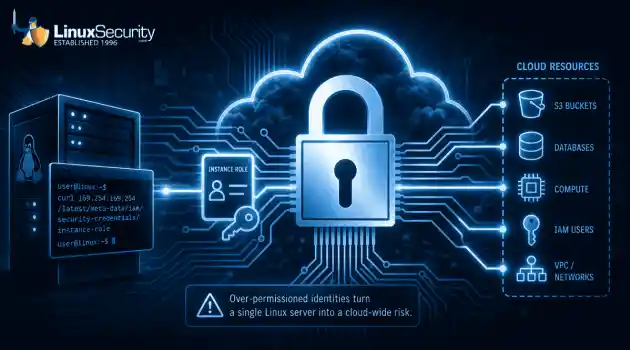
 For years, we secured our Linux infrastructure by building walls: VPCs, security groups, and hardened SSH configurations. We treated the cloud like a virtual data center, assuming that if we kept the "bad guys" out of the network, our workloads were safe. . That model is no longer sufficient. Today, one of the most common paths from an initial compromise to a major cloud breach is the identity assigned to your Linux workload. When an attacker gains code execution on a Linux instance—through a...
 Jul 17, 2026
 security practices patch management
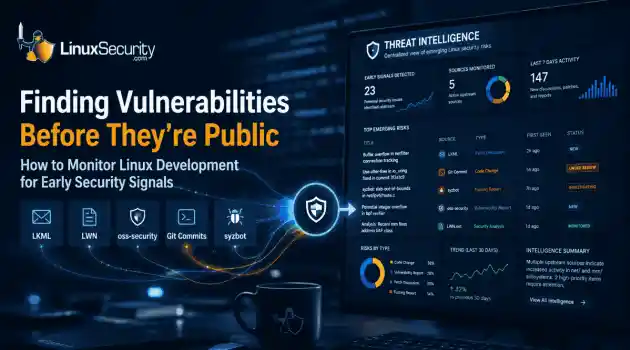
 Most of us don't hear about a kernel vulnerability until a CVE lands in our inbox or the vulnerability scanner starts complaining. By then, the patch isn't new anymore. Kernel developers may have been passing it around for review, arguing over the implementation, or revising it for days before anyone outside that community noticed it. None of those discussions are secret. They're sitting in mailing list archives, Git commits, and patch reviews where they've been the whole time. The strange...
Jul 14, 2026
 Linux security cyber attacks
 Every Linux server in your fleet produces thousands of events every minute. From journald logs and auditd records to kernel-level eBPF hooks, your systems are constantly talking. Most of that noise is just the mundane churn of system services, CI/CD runners, or routine administrative automation. But among that noise, an attacker might be establishing a foothold, moving laterally, or setting up persistence. The challenge for any security team is: how do you separate the routine from the...
Jul 13, 2026
 open-source infrastructure risk
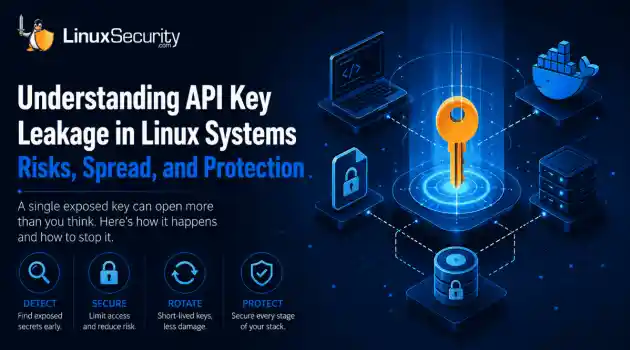
 Security scanners flag exposed API keys in public repositories every day. The initial response is usually predictable: delete the commit, revoke the credential, and move on. That’s a mistake. . In a real Linux environment, an API key never stays in one place. By the time it hits a public repo, it’s already everywhere. It’s in the CI/CD pipeline. It’s in your container registry. It’s in the build logs. It’s in the backups. Git makes this worse because the history never dies. Deleting a file in...
Jul 11, 2026
 open-source rootkit
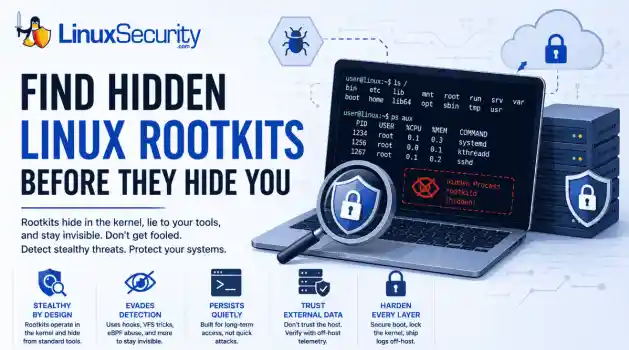
 Most of us think of Linux rootkits as ancient history—the stuff of 90s hacking forums and clunky malware that would crash your system if you looked at it the wrong way. But if you think they’ve gone away, you’re mistaken. They’ve just gotten smarter. . Modern attackers aren't using the noisy tools of the past. Today’s threats are surgical. Many of today’s most advanced Linux rootkits operate at the kernel level or abuse legitimate system features to blend in with normal traffic. They’re...
Jul 09, 2026
 Refine features
X Clear Filters
Get the latest News and Insights
Get the latest Linux and open source security news straight to your inbox.
Community Poll
Should Linux servers automatically install security updates?
Loading...
Explore Latest Linux Security features
We found 3 articles for you...
102
 secure developmentrisk assessmentmemory safety
Why Memory Safety Is Becoming a Core Requirement in Modern Software
Most information security best practices are built on a single, comfortable assumption: that we have control over what software is running on our hardware, and that the underlying system behaves exactly as we expect. We assume that the memory management happening under the hood is a solved problem—a silent utility that stays within its lines. . But the data from the world's largest tech giants just blew that theory apart. From Microsoft to Google, the telemetry is consistent: roughly 70% of all serious software vulnerabilities are memory safety issues. We aren’t just dealing with occasional glitches; we are dealing with a structural failure in how we’ve built software for forty years. The Hidden Layer of Software Security Everyone Ignores When we discuss how to secure a system, we usually focus on the perimeter: hardening SSH, configuring firewalls, and managing user identities. But there is an invisible layer of legacy code and memory-unsafe programming languages running in the background that most admins never touch. Many of the most common software vulnerabilities—like buffer overflows and use-after-free errors—stem from how applications manage memory. Languages like C and C++ are the bedrock of our infrastructure, but they operate on an "honor system." They give developers total control over system memory, but they offer no guardrails. Academic and technical research—such as studies on memory safety issues and vulnerabilities in C/C++ systems —confirms that memory safety issues are a primary cause of kernel and system vulnerabilities. The problem? You can harden your network security all day, but if the foundation is written in an unsafe language, you’ve left a root-level power tool sitting on the counter for anyone to pick up. True system security isn't just about who can get into the box; it's about what the box is allowed to do once they're there. How Memory Safety Breaks System Security The technical failure here is a classic lack of boundaries, butthe design failure is much deeper. In a healthy system security model, trust should be atomic—it either exists or it doesn't. Memory-safe languages (like Rust) enforce this at the compiler level. They check if the data belongs in that memory space, and if it doesn't, the code simply refuses to compile. Memory-unsafe languages break this by splitting trust across layers. The developer has to manually verify every single pointer, and the moment there is a gap between the check and the action, the gap becomes a playground for exploits. Why Endpoint Security Doesn't Catch This This is where the reality of endpoint security gets uncomfortable. Most security tools are designed to look for "bad" things: known malware signatures, suspicious network traffic, or unauthorized binary execution. Memory corruption or a buffer overflow doesn't look "bad" to a standard monitor: The process is a legitimate system component. The action is a legitimate system function. The error happens entirely in the background. Security tools trust the same system components that attackers abuse. If your security strategy is purely reactive, it will stay silent while the system's own "trusted" tools are used to dismantle it from the inside. Linux and Rust: A Signal, Not the Story When a vulnerability is widespread, it stops being a local issue and becomes a massive failure in secure software development, as detailed on the OSS-Security mailing list and industry research. This isn't just a misconfiguration; it's the default behavior shipped to millions of users. Distribution Default Language Risk Profile Ubuntu / Debian Predominantly C/C++ High (The backbone of many servers) RHEL / Fedora Mixed C / Legacy Medium-High (Enterprise standard) The adoption of Rust in the Linux kernel is the clearest signal we have that the tide is turning. This shift is especially visible in Linux kernelsecurity , where new components are increasingly written with memory safety in mind. As noted in recent reports on Linux kernel adoption, this isn't about replacing every line of C overnight. It’s about starting with the most dangerous parts: drivers and new kernel components. By bringing open source security to the core of the operating system, Linux is demonstrating that even the most critical infrastructure can—and must—evolve without sacrificing performance. Rust-based drivers are already proving safer than C-based ones. Rust improves memory safety , concurrency safety, and performance simultaneously. You can also get a clear visual summary of how the integration functions by watching the Linux 7.0 and Rust Integration video . Breaking the Information Security Model We need to be clear about the stakes: Root access is total access. All your software security best practices assume that you have control over what software is running on your hardware. If an attacker can exploit a memory bug to gain arbitrary code execution or escalate privileges, that control is gone. They don't need to crack your database encryption; they can just pull the keys directly from memory. Your entire policy model is built on the assumption that software execution is a privileged, controlled act. Vulnerable, memory-unsafe code turns that act into a free-for-all. How to Secure a Server Right Now (Without Waiting) Most environments should not be relying on unsafe dependencies or unverified memory access where it can be avoided. Here is how to secure a server against this class of vulnerabilities: Audit: Check your dependencies and system binaries for unmanaged C/C++ libraries. Isolate: Stop using unneeded background helper services. If you don't need a middleman, kill the service and mask it so it can't be "woken up" by other processes. Patch/Migrate: Ensure your environments are utilizing up-to-date, securely compiled packages and dependencies. The Real Lesson: StopTrusting Default System Behavior If there is one thing that cybersecurity best practices consistently get wrong, it’s the idea that "default" equals "safe." Defaults prioritize usability. They want the system to "just work" for the broadest number of people. But security assumes correct behavior, and reality breaks both. If structural flaws can sit in default installs across every major distribution, the problem isn’t a lack of patching; it’s a lack of skepticism. The most dangerous systems are the ones that look normal. Security isn't about the tools you've installed. It's about the trust you've refused to give. Stop trusting that the "standard" install has your back. Start validating the foundation. . Explore the critical nature of memory safety in modern software and its impact on system security and vulnerabilities.. Memory Safety, Software Security, Secure Development Practices, System Integrity. . MaK Ulac
 Apr 30, 2026
•
Apr 30, 2026
•
102
 security advisoryprivilege escalationpatch management
When LKML Patches Signal Exploitation Risk Before CVE Assignment
Think about Linux security like a product recall. A manufacturer starts fixing the issue before the public notice goes out. If you catch those early signals, you can act before it becomes a known problem. . Fixes show up in the kernel, the core engine behind the operating system, before anyone calls them a security vulnerability. That time gap is what you’re really working against. Most teams rely on CVEs for vulnerability management. That’s fine, but the real signal usually shows up earlier in the patch activity. You don’t need a new process, just better prioritization inside your patch management to keep Linux security tight. Why Linux Vulnerabilities Show Up Before CVEs Open-source doesn’t hide much. Fixes and discussions happen out in the open, usually on places like the Linux Kernel Mailing List , where you can see changes as they happen. This creates a kind of "fishbowl effect." You are watching the system evolve in real time, including fixes for a Linux kernel vulnerability that hasn't been flagged yet. A CVE isn't the discovery—it’s just the classification paperwork that happens later. A vulnerability can exist as a simple patch. The official label might not show up for days, sometimes longer. That transparency cuts both ways. It helps defenders, but if nobody’s watching the feed, attackers get the early read. The Disclosure Gap: Why Official CVEs Often Lag Behind There is a natural sequence to how issues become “official,” and it isn't built for speed. It usually follows this path: A patch gets committed. Developers discuss and refine it. A CVE gets assigned later. The Before and After of Your Visibility: Before (Reactive): You wait for the CVE assignment. By this time, the patch has already been public for days or weeks, giving attackers an "exploitation window" where they know the fix, but you are still waiting for the alert. After (Proactive): You monitor the patch activity. You see the "security hardening" or"privilege escalation" notes as they hit the kernel. You patch based on the fix , not the paperwork . This academic study on vulnerability disclosure timing documents exactly how these delays happen. The short version? Code fixes move fast, but classification moves slowly. That delay creates a blind spot. Your systems might be exposed to cybersecurity threats even though no CVE vulnerability has been announced to warn you. What This Means for Everyday Linux Systems This isn’t just theory. It affects your day-to-day operations. If you only look at official advisories, your patch management cycle starts later than the actual risk. This changes how you schedule maintenance and how you prioritize your updates. You don’t need to be a kernel expert; you just need to recognize the timing. Most teams are already patching, but the difference is deciding what gets fixed first when everything looks urgent regarding security vulnerabilities. Lessons from “Dirty Pipe”: A Real-World Look at the Disclosure Lag “Dirty Pipe” is a perfect example because it followed this exact pattern, just more visibly than most. It was a major flaw that allowed someone to take control of a system. The fix was already out there before most people realized there was a serious issue. It followed this timeline. Event Status Visibility Patch Committed Fix live in kernel High Public Disclosure Technical details emerge Increasing CVE Assignment Official "Critical" label Peak By the time the CVE vulnerability was officially assigned, the patch was already live. The signal was there; it just wasn't labeled "critical" yet. Analysis from Recorded Future shows that this gap between visibility and classification is exactly where attackers operate, specifically because they know most defenders wait for a formal alert regarding cybersecurity threats. Decoding Security Signals: How to Spot Risks in Daily Updates You don’t have to read raw kernel code to see these warning signs. Most of the signal is actually sitting right there in plain language if you know what you’re looking at. The info is usually in the places you already check—like your apt, yum, or dnf update outputs, your distro’s security advisories, or simple package changelogs. When you're doing your normal patch review, just keep an eye out for phrases that sound a bit more serious than a standard update. I usually watch for things like: “Security hardening” “Privilege escalation” “Memory management fixes” “Out-of-bounds write/read” “Use-after-free” They sound like routine maintenance, but they often aren't. This analysis on patch signal detection shows that these patterns often point to real security vulnerabilities long before they are formally named. If you aren't sure how a specific patch might affect your environment, cross-reference it with our LinuxSecurity Advisory Database . It provides the context you need to decide if an update is a "routine fix" or a critical security imperative. The best part is that this doesn’t add extra work to your day. It just changes how you interpret what you’re already seeing. When you spot one of those keywords, just bump that patch into your next available maintenance window instead of leaving it for your standard monthly cycle. For all the other stuff—the minor bug fixes or performance tweaks—you can just keep your normal schedule. By using those patch notes as a quick triage signal, you’re not changing your process; you’re just adding a filter that lets you act before the official alarm bells go off. It really is the difference between waiting for a memo and actually staying ahead of the risk. Smart Prioritization: Integrating Early Signals Into Your Routine This process doesn't add extra work; it just changes how you prioritize. You are already reviewing theseupdates—now, you are simply looking at them differently. The Old Way: You treat every update as equal until a CVE alert forces an emergency. The New Way: You scan your update logs for "privilege escalation" or "security hardening." You move those patches to the front of the line immediately. This small shift makes your vulnerability management faster and more effective without needing to buy new tools or change your entire workflow. To automate this intelligence-gathering, sign up for our LinuxSecurity Newsletter . We highlight the most important Linux security developments, helping you spend less time scouring changelogs and more time actually securing your infrastructure. Why You Should Use CVEs for Compliance and Early Signals for Faster Security CVEs still matter. They are the standard for reporting, compliance, and tracking across your team. They make audits possible and give your vulnerability management structure. But remember: they only confirm risk after it’s already visible. Early signals—like watching your patch activity—give you the speed you need to respond to cybersecurity threats before the formal classification comes in. When you use them together, you get fewer surprises. That is usually the difference between just reacting to security vulnerabilities and actually staying ahead of them. . Monitor patch activity to stay ahead of Linux security risks and improve vulnerability management with proactive strategies.. Linux kernel patches, patch management, exploit detection, vulnerability assessment. . MaK Ulac
Apr 16, 2026
•

102
 access controlLinux securityapplication security
Why Your "Shadow IT" Developer Tools Are the Biggest Risk to Your Linux Systems
Every company has a "Shadow IT" layer—a collection of developer-built dashboards, AI workflow runners, and data-science notebooks that weren't built by the central IT team. They are the convenient tools that let your teams push features faster, train models quicker, and visualize data on the fly. . The problem is that these tools have become the most dangerous assets in our stack. Because they were built for speed, they lack the security hardening of our core systems. Right now, they aren't just "support infrastructure"—they are unmonitored backdoors sitting in the middle of our production environment. If you want to know how an attacker skips our firewall and walks straight into your Linux host, it’s not through a complex, movie-style exploit; it’s by logging into a "productivity" tool that we forgot to lock down. The Invisible Doorway: Direct Access to Your Linux Host Imagine an office building with guards and locked doors. You have total control over the perimeter. But someone from the dev team installs a "smart" coffee machine that happens to have an unmonitored back door into the building’s power grid. That is exactly what is happening with our internal systems. We aren't being hacked because our front door is weak; we are being hacked because we are installing convenient platforms—often part of a sprawling Shadow IT ecosystem—that act as secret, wide-open entry points directly onto your Linux servers. Because these tools are designed to remove friction, they often bypass standard application security controls, essentially leaving the keys in the ignition. Here is how an attacker dismantles your business by hijacking your Linux host in three direct steps: Phase 1: Reconnaissance (Finding the Door) . Attackers don't waste time breaking down your front door. They use automated scanners to crawl internal network ranges, hunting for specific patterns associated with common developer platforms. They find a dashboard that lacks a login prompt—and they’re in. Phase 2: Capability Abuse (Exploiting the Linux Environment). The attacker doesn't need to break anything; they simply use the tool’s built-in features. If the interface allows file uploads, they upload a script. If it has a terminal window, they open it. Because the tool trusts anyone who reaches the URL, the dashboard executes the request on the underlying Linux host with the tool's permissions. Phase 3: Immediate Escalation (Total Host Control). The attacker runs a command to check the user context on the server. They see they have "root" (the highest level of permission on a Linux system). Because the tool was misconfigured to run as "root" for "ease of use," the attacker doesn't need to perform any complex vulnerability management or privilege escalation. They are already at the top of the food chain. They dump your .env files, scrape your SSH keys, and take full control of the Linux host. This Pattern Is Already Showing Up Across Modern Tools Marimo and FalkorDB are not outliers. They are examples of a broader design pattern that is quietly spreading across developer-facing platforms. These tools are built to remove friction—exposing powerful functionality through the browser so developers can move faster, test ideas, and interact with systems in real time. That convenience is the feature. It is also a risk. You can see the same pattern in other environments: Marimo: Exposes a browser-based terminal, turning a WebSocket endpoint into direct shell access when authentication fails. FalkorDB Browser: Allows file uploads that interact with the underlying filesystem, creating a path to overwrite and execute. Langflow: Exposes execution pipelines through UI-driven interfaces, often without strong separation between user input and backend execution. The issue is not the individual vulnerabilities; it is the consistency of the design. Shadow IT interfaces are being given direct paths to execution without strong trust boundaries in place. That shift is what attackers areexploiting. Tools That Are Also Likely To Be Exploited When we talk about compromised dashboards, we aren't talking about your Jira board or your internal HR portal. We are talking about developer-facing platforms that live inside your infrastructure but have the power to talk to your host. If you are running these in your environment, they are the first things you need to audit for application security gaps: Data Science Notebooks: Platforms like Jupyter, or custom Python notebooks. They are designed to let users write and execute code in the browser. If a user can execute code in the browser, and that browser is connected to your backend server, an attacker who hijacks that session is essentially "logging in" to your server. AI/LLM Workflow Orchestrators: Tools like Flowise are meant to bridge your data to your AI models. They often require broad filesystem access and execution permissions to "process" your data. An attacker doesn't need to break your AI model—they just need to hijack the workflow builder to run commands on the underlying host. Database Management Dashboards: Admin panels like pgAdmin or custom database management UIs that aren't properly locked down. These often have features meant to "export" or "import" data, which—if poorly secured—become simple paths for an attacker to upload a shell or read sensitive configuration files. Internal CI/CD Build Interfaces: While we usually harden our main CI/CD pipelines, smaller, "ad-hoc" build dashboards created for quick dev testing are rarely protected by the same zero-trust architecture standards. They often run with elevated permissions to save time. The Linux Security Failure These tools are not just web apps—they are execution surfaces that live inside your Linux infrastructure. For instance, CVE-2026-39987 demonstrated how a notebook tool's terminal endpoint failed to enforce any authentication, providing direct, unauthenticated shell access to the Linux host. Similarly, in tools like FalkorDB, CVE-2026-6057 showed that file upload functionality combined with path traversal leads directly to arbitrary file writes. As noted in research from Sysdig , attackers are exploiting these gaps within hours because the design patterns allow them to land on your Linux server without any complex exploit chain. Why This Matters to the Business When we talk about compromised dashboards, we are talking about your Linux-based production assets: Customer Databases: When a database management dashboard is exposed, an attacker doesn't just see "data"—they gain the ability to export your entire customer list or manipulate core business records on the Linux filesystem. Proprietary Code and AI Models: AI workflow tools bridge your data to your models. Hijacking these tools allows an attacker to steal your proprietary datasets and the models that power your business logic directly from the host. Cloud Infrastructure Keys: Many of these tools run with the same permissions as your production servers. A breach here means the attacker can move laterally from the Linux host, hijacking your cloud environment, spinning up rogue services, or shutting down your production stack. How To Shrink The Surface Area If an attacker gains host-level access through one of these notebooks or dashboards, they aren't just poking around a UI—they are accessing the keys to our cloud environment and our customer databases. We need to stop treating internal dashboards as "trusted" and start treating them as part of our core attack surface. If these platforms have the power to execute code or access files on your Linux servers, they need the same authentication, vulnerability management, and Zero Trust Architecture standards as our public-facing production apps. Treat internal tools like public services: Secure them like you would your public website. Kill the dangerous paths: Isolate or block terminal endpoints and file upload APIs unless strictly necessary. Enforce real identity: Network boundaries are not enough. Use SSO and MFA at the application level. Reduce your blast radius: Stop running these tools as "root." Use containers and sandboxes to keep the application isolated from the core Linux system. Watch the behavior: Stop looking for "logins." Use security as code to monitor traffic, command execution, and unauthorized access to your credential stores. As noted in the Global Cybersecurity Outlook 2026 , the risk from these technologies is climbing as fast as their adoption. By adopting DevSecOps best practices and implementing shift left security, we can bake these guardrails into our deployment lifecycle. Moving fast is a competitive advantage. But it’s not an advantage if the tools that help us move fast are the same ones that give an attacker the map to our entire production stack. . Shadow IT tools pose significant risks to Linux systems due to lack of security hardening and monitoring.. Shadow IT, Linux Security, Developer Tools, Application Security. . MaK Ulac
Apr 13, 2026
•
102
 security advisoryencryptionrisk assessment
What Is TLS (Transport Layer Security) in Linux Security?
Most Linux outages that get labeled as “security issues” are not breaches. They are TLS failures that sit quietly until a renewal expires, a client updates, or a service starts refusing connections for reasons that look unrelated at first. By the time users notice, traffic has already stopped, and the only clue is a vague handshake error buried in a log file. . Transport Layer Security is everywhere in a modern Linux environment. Web servers rely on it. APIs assume it. Mail servers negotiate it. Package managers trust it. Even internal services that never leave a private network depend on TLS in ways that often go unexamined. Because it usually works, it fades into the background. You stop thinking about it until it breaks. What makes TLS tricky is that it is not just encryption. It is a set of decisions about trust, identity, compatibility, and how much failure you are willing to tolerate in the name of security. Those decisions are spread across libraries, daemons, configs, and defaults that change over time. If you inherit a system, you inherit those choices, whether you agree with them or not. You start to see the trend after a few incidents. A cert renews automatically, but one service was pinned to an old chain. A scanner flags a weak cipher that nobody remembers enabling. An internal API fails because a client finally stopped accepting legacy TLS. Nothing was “hacked,” yet availability and trust still took a hit. This article is meant to slow that down. We’ll walk through what TLS actually protects in Linux environments, where it quietly does not, and how it behaves in real service stacks. The goal is not to turn you into a cryptography expert. It’s to help you decide how strict your defaults should be, what you need to monitor before you trust it, and which risks still exist even when TLS is technically enabled. What Does TLS Actually Do in a Linux Environment? TLS protects data while it is moving between two endpoints. That sounds simple, but most misunderstandingsstart right there. It does not protect data once it lands on disk. It does not protect what lives in memory. It does not clean up logs or sanitize application behavior. If traffic is encrypted on the wire but everything else around it is loose, TLS has still done its job. In Linux, TLS usually shows up through libraries like OpenSSL or GnuTLS and through the services that sit on top of them. The kernel is not making trust decisions. Your web server, mail daemon, package manager, or client library is. That matters because each of those components can enable TLS in slightly different ways, with different defaults and different failure modes. A common assumption is that enabling TLS automatically means both sides are authenticated. In practice, authentication is often one-sided. The server proves its identity; the client does not. For public services, that may be fine. For internal APIs or service-to-service traffic, it quietly changes the risk model. You may have encryption without strong identity. Another piece people underestimate is integrity. TLS is not just about hiding data from eavesdroppers. It also protects against modification in transit. That becomes critical for things like package downloads, update channels, and API calls, where a small change can have a large impact. Confidentiality gets most of the attention, but integrity failures tend to hurt faster. To make this concrete, here’s what TLS actually gives you and what it does not, regardless of how many checkboxes say “enabled”: Encryption of data in transit between endpoints Optional authentication, often only of the server Integrity checking to prevent tampering in transit No protection for data at rest, in memory, or in logs No validation of application logic or authorization No guarantee that peers are who you think they are unless you enforce it This is the part that changes how you classify risk. Internal traffic on a flat network may be encrypted, but if clients are not verified and defaults allownegotiation down to weaker settings, the trust boundary is thinner than it looks. When someone says, “It’s fine, it’s using Transport Layer Security,” this is where you decide whether that statement actually holds up. Where TLS Sits in Common Linux Services Once you move past the definition, the real question becomes where TLS actually lives in your stack. On Linux, it is rarely end-to-end in the way people assume. It starts in one process, stops in another, and often hands off to something that was never designed with strong trust guarantees in mind. For web services, TLS usually terminates at the web server or a reverse proxy . nginx or Apache handles the handshake, decrypts the traffic, and passes plain HTTP to the application. That is not a flaw. It is a design choice. But it means the security boundary is at the web tier, not the app, and everything behind it needs to be treated accordingly. Mail servers add another layer of confusion. SMTP commonly uses opportunistic TLS, where encryption is attempted but not required. If the remote side cannot negotiate, mail still flows. From a delivery standpoint, that is useful. From a Linux security standpoint, it means encryption is conditional unless you explicitly enforce it. Many environments never revisit that default. Internal APIs and service-to-service traffic are where assumptions creep in. Because traffic stays on a private network, verification is often skipped. Certificates are accepted without hostname checks. Self-signed certs get copied around. Encryption exists, but identity does not. You start to notice this only when a client library tightens its defaults and something that “worked forever” suddenly fails. Package managers and update systems are another quiet dependency. apt, dnf, and similar tools rely on TLS trust chains to fetch metadata and packages. When trust stores change, or certificates rotate, updates can fail in ways that look like network issues. This is one of the few places where TLS failures directlyaffect patching, which makes the risk very real, very quickly. Proxies, load balancers, and container platforms complicate things further. TLS may terminate at a load balancer, re-encrypt to a backend, or not be used at all internally. Containers do not remove the need for TLS. They just add more places where termination can happen without being obvious. This is why Linux security discussions around TLS tend to get abstract. The same host can be terminating TLS for one service, passing it through for another, and ignoring it entirely for a third. Once you map where TLS actually starts and stops, you are forced to decide where termination is acceptable and where it creates exposure you did not intend. TLS Versions, Ciphers, and Why Defaults Drift Over Time TLS configurations age in a way that most Linux services do not. A web server can run for years with the same basic settings and behave predictably. TLS sits underneath that, evolving through library updates, client behavior, and deprecations that happen whether you plan for them or not. TLS versions move on faster than most Linux lifecycles. What was considered safe when a system was built often becomes legacy long before the host is retired. Older versions stick around because they do not break anything immediately. Clients still connect. Monitoring stays quiet. The risk increases slowly, which makes it easy to ignore. Ciphers follow a similar pattern. Weak options linger because negotiation allows the connection to succeed. Nothing fails fast. You only see the problem when a scanner flags it, a compliance review asks questions, or a modern client refuses to talk to you. By then, the config may have been inherited through multiple upgrades. Library updates add another layer. OpenSSL and GnuTLS adjust defaults over time, sometimes tightening behavior, sometimes removing support outright. From the service’s point of view, nothing changed. From the client’s point of view, everything did. That mismatch is behind a lot of “it broke afterpatching” tickets. Clients and servers will also negotiate down unless you tell them not to. Compatibility wins by default. That is intentional, but it means you are accepting the weakest option both sides support unless you set boundaries. In environments with a mix of old and new systems, this becomes a policy decision whether you acknowledge it or not. You usually feel this section during upgrades. Disabling legacy TLS versions or ciphers eventually breaks something. An old monitoring agent. A forgotten integration. A third-party system nobody owns anymore. That breakage is not a failure of TLS. It is delayed feedback. This is where decisions start to matter. Minimum versions, allowed ciphers, and deprecation timelines determine whether you absorb that pain gradually or all at once. If the answer to “what versions do we allow” is “whatever the default is,” the default will keep changing without you. Certificates, Trust Chains, and the Parts That Fail First Certificates are often treated like an on-off switch for encryption, but in practice, they are how identity is expressed in TLS. When something goes wrong here, services do not degrade gracefully. They stop talking to each other, usually without a clear explanation. On Linux, trust is fragmented. Different distributions ship different trust stores. Applications sometimes bundle their own. Language runtimes may ignore the system store entirely. A certificate that works in one place can fail in another, even on the same host. You only really notice this when a renewal or rotation exposes the mismatch. Expiration is the most predictable failure and still the most common. The date is known in advance, yet renewals regularly break services. Automation helps, but it also hides problems until the moment a new certificate is actually used. A chain changes. A client does not trust the issuer. A pinned fingerprint no longer matches. The failure shows up as a handshake error, not a reminder. Wildcards and internal certificateauthorities reduce day-to-day work, but they widen the impact when something goes wrong. A single bad issuance or misconfiguration can affect many services at once. That tradeoff is usually acceptable, but it needs to be understood. Convenience always concentrates risk somewhere. Revocation is another area where expectations and reality diverge. Many admins assume compromised certificates can be revoked, and clients will refuse them. In practice, revocation checking is inconsistent and often disabled for performance or reliability reasons. Once a certificate is trusted, it may stay trusted until it expires. All of this ties back to Transport Layer Security because trust is what makes encryption meaningful. Without a clear chain and clear ownership, TLS becomes fragile. This section tends to fail first because it sits at the intersection of automation, human process, and assumptions that nobody revisits until something breaks. Monitoring TLS So You Know It’s Working TLS failures rarely announce themselves cleanly. They show up as connection timeouts, generic client errors, or retries that mask the real problem. If you only rely on configuration reviews or periodic scans, you usually find out too late. The earliest signals are almost always in logs. Handshake failures, protocol mismatches, and certificate errors appear long before users report outages. On Linux systems, these messages are easy to miss because they look like noise mixed in with normal connection churn. You start to recognize them once you have chased a few incidents back to their source. Certificate expiration is the one thing everyone agrees to monitor, but the timing matters. Alerts that fire a day or two before expiration are not useful. By then, you are already in reactive mode. Weeks of lead time give you room to catch trust chain issues, not just renew the leaf certificate. Another thing worth watching is what actually gets negotiated. The protocol version and cipher in use tell you whether your policy is being enforcedor quietly bypassed. This is especially important for internal services, where older clients can pull everything down to the lowest common denominator without anyone noticing. Client verification failures deserve attention as well. When you start enforcing stronger identity checks, these failures surface quickly. They are not always attacks. More often, they are undocumented dependencies that were relying on permissive defaults. Packet capture comes up a lot in troubleshooting conversations. It has its place, but it should not be your primary signal. By the time you are decrypting traffic to understand a TLS issue, you have already missed earlier, cheaper indicators. From a Linux security perspective, this is where trust becomes operational. Monitoring tells you whether TLS is behaving the way you think it is, not the way a config file suggests. What you choose to alert on here directly shapes how much risk you are carrying without realizing it. TLS Policy Decisions Linux Admins Actually Own At some point, TLS stops being a technical setting and starts being a judgment call. Defaults can carry you only so far. After that, the outcomes depend on what you decide to enforce and what you allow to slide for the sake of compatibility or uptime. One of the first questions is whether TLS is required everywhere or only at the edges. External traffic is usually clear-cut. Internal traffic is not. Allowing plaintext inside a trusted network can simplify troubleshooting and legacy integrations, but it also assumes that trust never erodes. Once you have seen lateral movement in a real incident, that assumption becomes harder to defend. Mutual TLS is another decision that sounds obvious on paper and complicated in practice. It raises the bar for identity, especially for internal APIs, but it adds operational weight. Certificates need ownership. Rotations need coordination. When it breaks, it tends to break loudly. Whether that cost is worth paying depends on how much you need a strong service identityversus how much complexity you can absorb. Cipher and version strictness sit in the same category. Tighter policies reduce exposure but surface hidden dependencies. Looser policies preserve compatibility but accumulate risk quietly. There is no neutral choice here. Even doing nothing is a decision that inherits whatever the libraries decide next. Certificate ownership is often overlooked until something fails. Shared platforms, load balancers, and common services end up with certificates that nobody feels responsible for. When a renewal fails or a trust chain changes, the lack of a clear owner turns a routine task into an incident. Upgrades are where all of this becomes visible. Every environment has a breaking point where “good enough” stops being acceptable. That point is different for every organization, but it should be chosen deliberately. TLS forces that conversation because it will keep changing, whether you plan for it or not. What TLS Does Not Protect You From Once TLS is in place, it is easy to let it absorb more trust than it deserves. Encryption in transit feels comprehensive, and that can hide gaps until something slips through them. TLS does nothing for a compromised endpoint. If an attacker controls a system, traffic can be encrypted and still fully exposed. Credentials, tokens, and session data move through TLS just like legitimate traffic. The protocol cannot tell the difference. It also does not validate application behavior. Authorization bugs, logic errors, and unsafe defaults all survive intact inside an encrypted connection. When something goes wrong here, TLS can actually make investigation harder by reducing visibility unless you have the right logging in place. Encrypted traffic can still carry malicious content. Malware downloads , command and control traffic, and data exfiltration all work fine over TLS. Without inspection or context, encryption simply hides the payload, not the intent. Insider access bypasses transport protections almost entirely.Admins, service accounts, and automation already sit on the trusted side of the connection. TLS protects the path, not the person using it. Misissued or improperly trusted certificates are another quiet failure mode. If a client trusts the wrong issuer, encryption still succeeds. The connection looks healthy, even though trust has been undermined. All of this creates monitoring blind spots. As more traffic moves to TLS, tools that rely on plaintext lose signal unless they adapt. That is not a reason to avoid encryption, but it is a reason to understand what visibility you are trading away. What This Means for Your Linux Environment Going Forward Once you understand how TLS actually behaves, it stops feeling like a feature and starts feeling like ongoing work. Not busywork, but something that needs attention in the same way patching or backups do. It changes slowly, then all at once. TLS is not something you enable and forget. Certificates expire. Trust stores evolve. Libraries tighten defaults. Clients get less tolerant over time. None of that is a failure. It is the environment moving forward without waiting for your change window. Every TLS choice carries a tradeoff, even when it looks like a default. Allowing older versions keeps legacy systems alive. Enforcing newer ones forces cleanup. Both are valid in the right context, but only one is intentional. The same applies to internal traffic. Treating it with the same scrutiny as external traffic feels excessive until the day it isn’t. Ownership matters more than configuration perfection. Certificates, trust chains, and termination points need a named human or team. When that ownership is clear, renewals and changes become routine. When it is not, small issues turn into outages because nobody is sure who should act. Monitoring is what keeps this from becoming theoretical. Seeing what versions are negotiated, where handshakes fail, and how close certificates are to expiring tells you whether your assumptions match reality. A cleanconfig without visibility is just optimism. Upgrades will still break things. They always have. The difference is how you interpret that breakage. If TLS changes surface undocumented dependencies or brittle integrations, that is useful information. It is feedback you can act on, not a reason to loosen controls indefinitely. Transport Layer Security does its job when you treat it as part of the system, not a checkbox. Once you do, the quiet failures become visible earlier, the loud ones become rarer, and the risk you are carrying becomes something you chose rather than something you inherited. . Gain insights on Transport Layer Security in Linux, its risks, and monitoring for enhanced security.. Transport Layer Security, Linux security, TLS monitoring, data encryption, network security. . Brittany Day
Feb 07, 2026
•
102
cybersecurityrisk assessmentcomplianceEnhancing Risk Management: Automating Third-Party Relationships in Linux
As more vendors, suppliers, and contractors become integral to an organization's operation, the need to identify and mitigate risks associated with such external partners is significant. Third-party risk management automation (TPRM) is essential in this process. TPRM involves integrating technology that streamlines and automates various methods for identifying, assessing, and mitigating risks from external partners. . In this article, I’ll explore the transformative potential of TPRM process automation in detail, showing how technology can help improve accuracy and efficiency while enabling organizations to make speedier, data-driven decisions without compromising compliance and focusing on Linux distro solutions. What is Third-Party Risk Management Automation? Third-party risk management automation (TPRM) means integrating technology that streamlines and automates various processes for identifying, assessing, and mitigating risks from external partners. Most traditional methods rely on manual work: spreadsheets, emails, and phone calls. Such an approach is not only very resource-consumptive but also prone to errors. TPRM automation helps an organization load these activities into one single central ecosystem, thus enhancing its overall risk management strategies. Automation allows for the constant monitoring of third parties for signs of risk on an automated basis. At the same time, more productive data analysis and timely updates are ensured accordingly. According to an IBM report, organizations that use automation in their risk management processes can save up to 30% of their time on such activities. This allows them to free up resources to help drive efforts toward more strategic activities. This process of enterprise risk management is proactive rather than reactive. The Importance of TPRM Automation in the Current Threat Landscape One thing that characterizes the digital landscape is its particular challenges and opportunities for organizations. According to theCybersecurity and Infrastructure Security Agency, "Supply chain vulnerabilities can provide threat actors with a vector of entry into an organization's network and result in significant security breaches-making robust, effective risk management practices all the more critical.” A Forbes report in 2022 estimated that 63% of organizations experience a data breach caused by third-party vendors. These figures point to the dire need for effective TPRM strategies. The very interconnectedness that's the hallmark of modern business means that the failure of one vendor can cascade down the links of an entire supply chain . Therefore, it is incumbent upon every business to make the identification of potential risks within third-party relationships paramount. In addition to automating the risk assessment process, TPRM will go a long way in positioning an organization to identify and mitigate its risks before they become significant. Key Capabilities of TPRM Automation Tools When assessing TPRM automation, a core set of functionalities could make all the difference in business processes. While each automation tool has its respective functionalities, some make all the difference in third-party risk management by offering the following capabilities. Open-source TPRM scanning tools like OpenVAS provide: Continuous Monitoring The most critical capability of any TPRM automation tool involves ongoing, continuous monitoring of third-party relationships. Even in cases where the initial risk assessment of vendors has been performed, the system periodically assesses whether changes in a vendor's profile may indicate a higher level of risk. In this respect, continuous monitoring may involve a variety of risk indicators, including financial instability, inability to comply with regulatory requirements , or the emergence of new cybersecurity threats. This proactive approach enables corporations to steer clear of conditions that could be problematic and put them at an advantage in managing risk. Risk Scoring by Automation This builds on another powerful feature: automatic risk scoring, which aids organizations in determining the quick assessment of the risk level for every third party. Systems will have a generality of data, including data points from financial health to compliance records and performance history, providing a risk score. These scores help an organization filter those vendors or partners that may demand greater attention or extra controls to minimize risks. Companies can protect themselves from questionable third-party relationships by automating processes around risk assessment, enabling them to make more informed decisions based on real-time data. Custom Workflows Each organization has different needs when it comes to managing third-party risk. This is where customizable workflows emerge, meaning an organization can adapt the automation process in many ways to suit its specific needs. This can include setting risk thresholds, automating approval processes, and even system integrations. Be it whichever, the customizable workflow will ensure that TPRM automation only complements the company's overall risk management strategy. This level of flexibility will significantly enhance an organization's response to changed circumstances and risks. Central Risk Management Dashboard A Centralized Dashboard enables an enterprise to maintain real-time visibility into its third-party risk management activities. It shows current risks, pending assessments, and ongoing continuous monitoring activities. All this information in one place enables executive leadership to examine the overall risk landscape quickly and aids timely decisions for more effective risk management. According to Wikipedia , centralized dashboards can facilitate significant communication and coordination among stakeholders involved, allowing better integration of risk management strategies. Notable Benefits of Automating TPRM Among several other benefits, automation of TPRM processes offers variousadvantages to an entity in its quest to solidify its risk management capabilities. Some of the main advantages include: Enhanced Efficiency Automation affects labor-intensive operations, allowing the core business to focus on value addition in high-priority activities. A study conducted by the Institute of Risk Management used input from organizations that had already started automating their TPRM processes. It reported a 40% reduction in time spent on risk assessments. Improved Accuracy By minimizing human intervention, automated systems reduce the potential for mistakes from manual processes; hence, they are more accurate and can provide more dependable risk assessments with better-informed decisions. Proactive Risk Management With continuous monitoring capabilities, automated TPRM systems allow an organization to identify potential risks before they get out of hand. In this respect, the business would not suffer from the negative consequences of expensive disruption. Still, it would be able to maintain operational resilience. Regulatory Compliance Maintaining compliance with industry regulations is critical for any business. Automation tools can help a company ensure that each third-party relationship maintains all the standards of essential compliance and reduces the risk associated with regulatory fines and reputational damage. Challenges with TPRM Automation Despite the many benefits of automating the TPRM process, implementing such systems may pose several challenges to an organization. Some common challenges are: Integration with Existing Systems Integrating new automation tools with legacy systems can often be cumbersome and extended. In addition, an organization should ensure that its automation solution is well integrated with an existing platform. Data Quality And Accuracy Success in automating TPRM is tied to the quality of the data analyzed. Therefore, organizations must invest more in robust data management practices to ensure the information feedingthe automated systems is correct and reliable. Change Management Transitioning to an automated process can also be a cultural change. Employees must be adequately trained to accept the new tools and workflow, which often creates resistance and loss of productivity in its initial stages. Our Final Thoughts on Automating Third-Party Risk Management in Linux Environments Automating third-party risk management processes is a significant development in how organizations can identify, assess, and mitigate risks associated with their external partners. A business can bring efficiency, accuracy, and compliance into proactive risk management through technology. Organizations that embrace such developments will be better positioned to navigate the complexities associated with contemporary business operations and secure their assets against potential threats. All business entities should include TPRM automation tools in their future investment plans. The key is smoothing risk management processes to prepare businesses for success in an increasingly dynamic and competitive landscape. . Explore the potential of TPRM automation for improving risk management in organizations, enhancing efficiency and accuracy.. vendors, suppliers, contractors, become, integral, organization', operation. . Brittany Day
Nov 11, 2024
•
102
 data protectionweb applicationrisk assessment
Linux Web Apps: Achieve SOC 2 Compliance and Secure Your Applications
Security is vital for your Linux web apps, but keeping up with the latest exploits and meeting compliance standards can quickly become overwhelming. . This article breaks down the essentials of locking down your Linux web apps and simplifies the process of meeting essential compliance standards like SOC 2. You'll learn the key steps to safeguarding your web apps using proven security controls and get pointers for tackling SOC 2 requirements . Whether you're a startup looking to assure customers or an enterprise preparing for an audit, you'll learn how easy it is to protect your apps and prove your security posture. What Vulnerabilities and Attacks Threaten Linux Web Apps? Web app vulnerabilities refer to weaknesses or flaws within web applications that attackers can exploit to compromise the security of the application, its data, or its users. These vulnerabilities can exist in various web application components, including the frontend user interface, backend server logic, and the interaction between different components. Common types of web app vulnerabilities include: Injection: Attackers can inject malicious code into the application to steal data or disrupt operations. Broken Authentication: Attackers can gain unauthorized access to accounts by exploiting weaknesses in authentication procedures. Sensitive Data Exposure: Sensitive data can be exposed if not adequately secured. Broken Access Control: Attackers can gain access to data they shouldn't be able to see. Security Misconfiguration: Applications can be vulnerable if not correctly configured. Cross-Site Scripting : Attackers can inject malicious scripts into an application to steal data or hijack user sessions. Insecure Direct Object References: Attackers can access data they shouldn't be able to see by exploiting weaknesses in how applications handle object references. Cross-Site Request Forgery: Attackers can trick users into performing actions in an application they don't intend toperform. Failed Logging & Monitoring: Organizations may be unable to detect attacks if they don't correctly log and monitor activity. What Is SOC 2 Compliance and Why Does It Matter? If you manage a web application, data security must be a top priority. One of the best ways to do that is to achieve SOC 2 compliance with the help of SOC 2 compliance automation, which ensures your controls and safeguards meet industry standards. SOC 2, short for Service Organization Control 2, is a comprehensive framework designed to assess the security, availability, processing integrity, confidentiality, and privacy of data handled by service providers. Achieving SOC 2 compliance means that a company's systems and processes meet rigorous American Institute of Certified Public Accountants (AICPA) standards. This certification assures customers that their data is handled carefully and meets industry best practices. Failing to meet SOC 2 compliance standards can have several repercussions for an organization, particularly those that deal with sensitive data or provide services to other businesses. Some potential repercussions include loss of customer trust and confidence, increased risk of data breaches and security incidents, and difficulty obtaining contracts with new customers and forming partnerships. How Can I Achieve SOC 2 Compliance for My Linux Web Apps? Admins and organizations should implement the following best practices to ensure their Linux web apps are secure and compliant with industry standards and regulations: Conduct a risk assessment. The first step is identifying potential risks and threats to your web app infrastructure and data. This involves evaluating an organization's information systems, infrastructure, and processes to identify vulnerabilities, assess risks, and recommend measures to mitigate those risks (like unauthorized access, data breaches , and system failures). Evaluating your risk exposure will help determine the appropriate SOC 2 controls to implement. Thisevaluation typically involves the following key steps: 1. Identifying Assets : This involves identifying all the assets within the web application infrastructure, including hardware, software, data, and personnel. 2. Risk Assessment: In this step, the identified threats and vulnerabilities are assessed to determine their potential impact and likelihood of occurrence. Risk assessment helps prioritize security measures based on the level of risk they pose to the organization. 3. Vulnerability Scanning and Penetration Testing: Vulnerability scanning involves using automated tools to scan the web application for known vulnerabilities such as outdated software versions, misconfigurations, or insecure coding practices. Penetration testing , however, involves simulating real-world attacks to identify security weaknesses that automated tools may not detect. 4. Remediation: Based on the assessment's findings, organizations should prioritize and implement remediation measures to address the identified security vulnerabilities and weaknesses. 5. Continuous Monitoring and Review: Security is an ongoing process, and continuous monitoring and review of the web application infrastructure are essential to detect and respond to new threats and vulnerabilities as they emerge. Establish and document security policies. You'll need written policies covering data access, storage, transmission, and disposal. These should map to the SOC 2 Trust Service Criteria, which, in summary, are the following: Security: This principle focuses on protecting the system against unauthorized access, both physical and logical. It involves implementing safeguards to prevent unauthorized access to data and ensuring the confidentiality and integrity of information. Availability: Availability concerns the system's accessibility, ensuring it is reliably available for operation and use as agreed upon or required. This includes measures to prevent and mitigate downtime and disruptions impacting service availability. Processing Integrity: Processing integrity ensures system processing is complete, valid, accurate, timely, and authorized. It encompasses controls to prevent errors, inaccuracies, or unauthorized alterations during data processing. Confidentiality: Confidentiality addresses the protection of sensitive information from unauthorized disclosure. It involves controls to restrict access to data only to authorized individuals or entities and to prevent unauthorized disclosure or exposure. Privacy: Privacy focuses on the collection, use, retention, disclosure, and disposal of personal information by an organization's privacy notice and regulatory requirements. It involves implementing controls to safeguard individual's personal data and ensure compliance with applicable privacy laws and regulations. Implement robust access control. Organizations should employ password protection, two-factor authentication (2FA), role-based access control, and user activity monitoring to restrict access to sensitive data and systems. Password protection involves enforcing strong password policies, encrypting passwords, and implementing multi-factor authentication (MFA) for an added layer of security. 2FA requires users to provide a second verification form, like a code sent to their phone and their password. Role-based access ensures that users only have access to the resources relevant to their roles within the organization, reducing the risk of unauthorized access. User activity monitoring involves logging and analyzing user actions to detect suspicious behavior, allowing for timely responses to potential security threats. Encrypt sensitive data. Any confidential information stored or transmitted by your web app should be encrypted. Several crucial measures should be implemented to safeguard encryption keys effectively. Firstly, robust industry-standard encryption algorithms such as AES (Advanced Encryption Standard) must be employed to secure the keys. Utilize hardware security modules (HSMs) ortrusted execution environments (TEEs) to provide a secure key generation, storage, and operations environment. Implement proper key management practices, including regular key rotation and securely storing keys in a centralized key management system. Additionally, strict access controls and authentication mechanisms should be enforced to restrict access to the keys only to authorized users and services. Audit and monitor key usage and access regularly for suspicious activities. By implementing these measures, organizations can significantly enhance the protection of encryption keys and safeguard sensitive data from unauthorized access or compromise. Conduct employee training. Educating your staff on security best practices and policies is crucial for safeguarding your organization's data. Train them on password hygiene, phishing awareness, and proper data handling procedures to minimize the risk of security breaches. Regular refreshers will reinforce the importance of data security and compliance. Additionally, LinuxSecurity offers excellent educational resources and newsletters specifically tailored to educate users on topics related to Linux security, providing valuable insights and updates to enhance your organization's security posture. Use web app pentesting to identify threats. Web application penetration testing, commonly known as web app pentesting, is a proactive approach to identifying and addressing security vulnerabilities within web applications. It involves simulating real-world attacks on a web application to uncover weaknesses that malicious actors could exploit. The primary goal is to identify and mitigate security flaws before attackers can exploit them. During a web app pentesting process, trained security professionals, known as penetration testers or ethical hackers, systematically assess the application's security. This assessment typically involves the following steps: Reconnaissance: Gather information about the web application, infrastructure,technologies, and potential attack vectors. Scanning: Identify all the entry points, functionality, and endpoints exposed by the web application, such as forms, input fields, APIs, and URLs. Vulnerability Assessment: Perform automated and manual testing to identify common security vulnerabilities, including but not limited to injection flaws (e.g., SQL injection, XSS), authentication bypass, insecure direct object references (IDOR), insecure deserialization, and misconfigurations. Gain Access: Attempt to exploit the identified vulnerabilities to demonstrate their impact and severity. This step involves validating vulnerabilities by executing attacks within a controlled environment without causing harm to the application or its users. Post-Access Analysis: Analyze the penetration test results, prioritize vulnerabilities based on their severity and potential impact, and provide actionable recommendations for remediation. Reporting: Document the findings, including detailed descriptions of identified vulnerabilities, their potential impact, and recommended remediation steps. The report should be comprehensive and understandable to technical and non-technical stakeholders and include evidence of successful exploitation where applicable. Implement advanced secure coding practices. Implementing advanced secure coding practices is essential for improving Linux web app security. These practices help prevent vulnerabilities that attackers could exploit. By following these practices, developers can significantly reduce the risk of security breaches and protect sensitive data from unauthorized access or manipulation. Some key advanced secure coding practices for Linux web app security include: Input Validation: Validate all user input to prevent attacks such as SQL injection and Cross-Site Scripting (XSS). Use libraries or frameworks that offer built-in input validation functions to ensure data integrity. Authentication and Authorization: Implement robust authenticationmechanisms, such as multi-factor authentication (MFA), and enforce proper authorization controls to restrict access to sensitive resources based on user roles and permissions. Session Management: Use secure session management techniques, such as generating unique session IDs, encrypting session data, and implementing session expiration policies to prevent session hijacking and fixation attacks. Encryption: Use HTTPS with TLS encryption to secure data transmission between clients and servers. Employ strong cipher suites, enable HSTS (HTTP Strict Transport Security), and implement certificate pinning to protect against man-in-the-middle attacks. Error Handling: Implement proper error handling mechanisms to avoid leaking sensitive information to attackers. Provide informative error messages to users without revealing internal system details that could be exploited. Prevent Injection Attacks: Use parameterized queries and input validation to prevent injection attacks, such as SQL injection and command injection. Regular Security Audits and Penetration Testing: Conduct routine security audits and penetration tests to identify vulnerabilities and assess security measures' effectiveness. How Can I Automate SOC 2 Compliance Processes for Efficiency? Automating essential parts of the SOC 2 compliance process can save your team considerable time and effort. Rather than manual data collection and report generation, automation tools can handle many of these tasks for you. Continuous Compliance Monitoring With automation, you can continuously monitor your web apps and systems. Automated scans will check for vulnerabilities or configuration issues that could impact security or compliance on an ongoing basis. You'll get alerts when problems are detected so you can address them immediately. Streamlined Audit Preparation When it's time for your annual SOC 2 audit, much of the work will already be done. Automated tracking of risks, controls, and processes means you'll have readyevidence for auditors. Rather than scrambling to gather documentation, your team can focus on higher-value initiatives. Automated report generation also simplifies creating materials for your auditors. Optimized Control Testing Control testing procedures ensure your web apps meet all necessary compliance standards. However, testing controls manually can require significant time and resources. Automation tools can execute control tests on your behalf and provide detailed results, allowing your team to optimize control testing processes. What Tools Can Help with Automated Vulnerability Scanning? Automated vulnerability scanning tools are crucial in identifying security weaknesses within Linux web applications. These tools streamline the process of detecting vulnerabilities and provide actionable insights for remediation. Some popular tools can be found in this list . Final Thoughts: Are Your Web Apps SOC 2 Compliant? So, in closing, you've got this. Keeping your web apps secure and compliant may feel daunting, but taking it step-by-step and leveraging frameworks like SOC 2 can make it very manageable. Start by speaking to an expert to see where you stand before proceeding with the audit. You'll meet essential compliance standards and protect sensitive data in no time. The peace of mind and trust you'll build with customers will be worth the effort. . Lock down your Linux web apps with essential security steps and ensure compliance with SOC 2 standards effectively.. security, vital, linux, keeping, latest, exploits, meeting, compl. . Brittany Day
May 18, 2024
•
102
 security advisoryrisk assessmentinternet security
Comprehensive Guide To Internet Security Risk Assessment Methodologies
This article is the second in a series that is designed to help readers to assess the risk that their Internet-connected systems are exposed to. In the first installment, we established the reasons for doing a technical risk assessment. In this installment, we'll start discussing the methodology that we follow in performing this kind of assessment.. This article is the second in a series that is designed to help readers to assess the risk that their Internet-connected systems are exposed to. In the first installment, we established the reasons for doing a technical risk assessment. In this installment, we'll start discussing the methodology that we follow in performing this kind of assessment. Why all the fuss about a Methodology? If you ever read anything SensePost publishes on assessments, or if you attend our training, you'll notice that we tend to go on a bit about methodology. The methodology is the set of steps we follow when performing a certain task. We try and work according to methodologies with just about everything we do. We're not fanatical about it, and the methodologies change and adapt to new and different environments, but they always play a big role in the way we approach our work. Why such a big fuss then? There are a few good reasons for performing assessments according to a strict methodology: Firstly, it gives us a game plan . Rather then stare blankly at a computer screen or a network diagram, an analyst now has a fixed place to start and a clear task to perform. This takes the whole "guru" element out what we do. The exact steps that we will follow are clear, both to us, and to the customer, from the outset. Secondly, a methodology ensures that our work is consistent and complete . I've worked on projects where the target organization has in excess of 150 registered DNS domains. Can you imagine how many IP addresses that eventually translates to. I don't have to imagine - I know it was almost 2000. Consider how hard it must be to keeptrack of every DNS domain, every network and every IP to ensure that you don't miss something. Consider also what happens when the actual "hacking" starts (we'll get to this later) and the analyst's heart is racing. A strict methodology ensures that that we always cover all the bases and that our work is always of the same quality. This holds true, no matter how big all small the environment is that you're assessing. Finally, our methodology gives our customers something to measure us against . Remember, to date there are really no norms or standards for technical assessment work. How does the customer know that she's getting what she paid for? This is an especially pertinent question when the assessment findings are (how can I put this?) dull. By working strictly according to a sensible methodology with clear deliverables at each stage we can verify the quality of the assessment even when there's very little to report. A Methodology that Works I'm completely sure that, when it comes to security assessment, there's more then one way to skin the cat. What follows is a description of a methodology that we like to use when performing security assessments over the Internet. It's certainly not the only way to approach this task, but it's one way that works, I believe. 1. Intelligence Gathering The first thing we do when we begin an assessment is to try and figure out who the target actually is. Primarily we use the Web for this. Starting with the customer's own Web site(s), we mine for information about the customer that might be helpful to an attacker. Miscellaneous tidbits of useful data aside, our primary objective is to derive the DNS domain names that the target uses. If you're assessing your own infrastructure, you may already have this information but if the organization is big, it can be a fascinating exercise. Later, these domain names will be mapped to the IP addresses we will actually analyze. Some companies have a small Internet presence, anddiscovering the DNS names they use may be simple. Other companies we've worked with have hundreds of domains, and discovering all of them is no mean feat. How do we get the DNS domain names? Well, usually we have an e-mail address, the company's name or some other logical place to begin. From there we have a number of techniques: We use search engines to search all instances of the company's name. This not only provides links to the company's own site (from which DNS domain information can be easily derived), we also obtain information about mergers and acquisitions, partnerships and company structure that may be useful. We use a tool like httrack to dump all the relevant Web sites to disk. We then scan those files to extract all mail and HTTP links, which are then parsed again to extract more DNS domains. Then, we use the various domain registries. Tools like geektools.com, register.com and the like are simple and can often be used in one of two ways: To help verify whether the domains we have identified actually belong to the organization we are assessing. To extract any additional information that may be recorded in a specific domain's record. For example, you'll often find that the technical contact for a given domain has provided an e-mail address at a different domain. The second domain then automatically falls under the spotlight as a potential part of the assessment. Many of the registries provide for wildcard searches. This allows us to search for all domains containing a certain string, like "*abc*". I would use such a search to identify all the domains that may be associated with the company ABC Apples Inc , for example. Then, we need to apply some human intelligence - using the information we read on Web sites, company reports and news items we attempt to make logical jumps to other domains that may be relevant to our analysis. The output of this phase is a comprehensive list of DNS domains that are relevant to the targetcompany. You'll notice that the next phase of the assessment may provide additional domain names that weren't found during this phase. In that case, those domains are used as inputs during this phase and the entire process is repeated. Phases 1 and 2 may recur a number of times before we've located all the relevant domains. Typically, we'll check this list with the customer once we're done to ensure that we haven't missed anything or included something inappropriate. 2. Foot Printing At the start of phase two we have a list DNS domains - things like apples.com, apples-inc.com, applesonline.com, apples.co.uk, etc. The reasons these domains exist is to provide Internet users with a simple way of reaching and using the resources they require. For example, instead of typing , a user simply needs to remember https://sensepost.com/. Within a domain, therefore, there are a number of records - specific mappings between machine names and their actual Internet Protocol (IP) numbers. The objective of this phase is to identify as many of those IP/name mappings as we possibly can in order to understand which address spaces on the Internet are actually being used by the target organization. There are a few different techniques for identifying these mappings. Without going into too much detail, these techniques are all derived from the same assumptions, namely: Some IP/name mapping must exist for a domain to be functional. These include the name server records (NS) and the mail exchanger records (MX). If a company is actually using a domain then you will be able to request these two special entries. Immediately you have one or more actual IP addresses to work with. Some IP/name mappings are very likely to exist on an active domain. For example, "www" is a machine that exists in just about every domain. Names like "mail", "firewall" and "gateway" are also likely candidates. We have a long list of common names that we test. This is by no means a watertight approach butone is more often lucky then not. An organization's machines usually live close together. This means that if we've found one IP address, we have a good idea of where to look for the rest of the addresses. The Name -> IP mapping (the forward lookup), and the IP -> Name mapping (the reverse lookup) need not necessarily be the same. The technology is fundamentally verbose. DNS, as a technology, was designed for dissemination of what is essentially considered "public" information. With one or two simple tricks we can usually extract all the information there is to be had. The DNS zone transfer - a feature of DNS literarily designed for the bulk transfer of DNS records - is a fine example of this. Other, craftier, techniques fall beyond the scope of this paper. Once we have all the relevant DNS names we can find, we attempt to identify the distinct network "blocks" in which the target organization operates. As stated previously, IPs tend to be grouped together. The nature of IP networking is to group addresses together in what are known as subnets. The expected output of this phase is a list of all the IP subnets in which the target organization has machines active. At this stage, our broad reasoning is that if we find even a single IP in a given subnet we include that entire subnet in the list. The technically astute among you will already be crying "False assumption! False assumption!" and you'd be right. But bear with me. At this stage we tend rather to over-estimate then to under-estimate. Later, we will do our best to prune the list to a more accurate depiction of what's actually there. 3. Vitality We ended the last phase with a list of IP subnets in which we believe the target organization to have a presence and a horde of technocrats objecting loudly to our assumptions about the subnet size. Let's quickly make a list of the some of the facts we need to know before we can move on with the process: An organization does not need to own the entire subnetin which it operates. IP addresses can be lent, leased or shared. Nor do all an organization's IPs have to be grouped together, they can be as widely spread across the Internet as they wish. Just because a Name / IP mapping exists for a machine, doesn't mean that machine actually exists. Conversely, just because a Name / IP mapping doesn't exist for a machine, doesn't mean the machine doesn't exist. There are thousands of nameless addresses on the Internet. Yes, it's sad, but true nevertheless. Without a route to describe how an IP address can be reached, that address can never be used on the Internet So we see that, although DNS gives us a logical starting point for our search, it by no means provides a comprehensive list of potential targets. This is why we work with the rather loose subnet definitions we derived in the previous phase. The objective of the "Vitality" phase of the assessment is to determine, within the subnet blocks that we have, which IP addresses are actually active and being used on the Internet. We now leave the wonderful world of DNS behind us, and begin to concentrate solely on the IP address space. So how does one determine if an address is active on the Internet or not? Well, let's recall the third "fact" from our list above. If there's no route to a given IP subnet, that subnet is as good as dead. Various core routers on the Internet graciously allow technicians and administrators to query them regarding routes to any given address. At the time of writing, one such router is route-views.oregon-ix.net . Such a router can't tell us that an IP address is alive. If there's no route for a subnet on the core routers, however, then we can conclude that all the IPs in that subnet are dead. The next, and probably most the obvious technique is the famous IP "ping". Pinging works just like sonar. You send a ping to a specific address and the machine responds with a "pong" indicating that it is alive and received your request. Ping is astandard component of the Internet Protocol (IP), and machines that talk IP are compelled to respond when they receive a ping request. With simple and freely available tools we are able to ping an entire subnet. This is know as a "ping scan". Without going into too much detail, the response of such a ping scan can be interpreted as follows: A reply from an IP address indicates that the address is probably in use and accessible from the Internet. Multiple replies from a single IP address indicate that the address is probably actually a subnet address or a broadcast address and suggest a subnet border. No reply can only be interpreted to mean that the machine is not replying to IP ping requests. I realize that the latter point is a bit vague, but that really is the only conclusion that can be drawn from the information available. I said that all machines that speak IP are obliged to respond to ping requests. Why not simply conclude that if the IP doesn't respond, it isn't being used? The confusion is introduced by modern network security products like firewalls and screening routers. In the real world, one often sees networks configured in such a way that the IP ping packet is blocked by the firewall before the packet reaches the machine. Thus the machine would respond if it could, but it's prevented from doing so. So we haul out the heavy artillery. Just about every machine on the Internet works with a series of little Internet "post boxes" called ports. Ports are used to receive incoming traffic for a specific service or application. Each port on a machine has a number and there are 65536 possible port numbers. A modern machine that is connected to the Internet and actually functioning is almost certain to be using at least one port. Thus, if an IP address does not respond to our ping request, we can further probe it using a tool called a "port scanner". Port scanners are freely available software utilities that attempt to establish a connection to every possibleport within a specified range. If we can find just one port that responds when probed, we know that the IP is alive. Unfortunately, the amount of work required to probe all 65,000 plus ports is often prohibitive. Such an exercise can takes hours per single IP address and days or even weeks for an entire range. So we're forced to make yet another assumption: If an IP address is active on the Internet, then it's probably there for a reason. And there are only so many reasons to connect a machine to the Net: The machine is a Web server (and thus uses port 80 or 443) The machine is a mail server (and thus uses port 25) The machine is a DNS server (and thus uses port 53) The machine is another common server - FTP, database, time, news, etc) The machine is a client. In this case it is probably a Microsoft machine and uses port 139. Thus, we can now modify our scan to search for only a small number of commonly used ports. This approach is called a "host scan". It is by no means perfect, but it generally delivers accurate results and is efficient enough to be used with large organizations. The common ports we scan for can be adjusted to better suite the nature of the organization being analyzed, if required. The nmap network utility (available from https://insecure.org/ ) is a powerful tool that serves equally well as ping scanner and a port scanner. Thus, by the end of this phase we have fine-tuned our list of IP subnets and generated a list of actual IP addresses that we know to be "alive" and that therefore qualify as targets for the remainder of the process. At this point, our findings are usually presented to the customer to ensure that we're still on the right track. Conclusion That concludes the first part of our discussion of Internet assessment methodology. In the next installment in this five-part series on Internet Risk Assessments, we will continue to discuss methodology, including: visibility, vulnerability scanning, and analyses ofWeb applications. . Uncover effective strategies for online risk evaluation aimed at assessing safe networks and enhancing your protection protocols.. Internet Security Assessment,Risk Evaluation Methods,Methodology for Security. . Brittany Day
Jul 18, 2002
•
102
risk assessmentIT risk managementsecurity strategyAssessing Security: Balancing Risks And Budget In Your Organization
Anton Chuvakin discusses the known approaches to choosing the level of security for your organization, risk assessment, and finding the balance between effective security practices and the existing budget. . Scary stories of companies gutted by the worm attacks, virus outbreaks, malicious hacker intrusions and other information risks are plentiful. The rising exploitation of most existing vulnerabilities is combined with the appearance of new ones resulting in a new and powerful threat to Internet users (see, for example, 2001 CSI/FBI Survey, a standard cyber crime statistical reference). The security industry often takes the position that companies should promptly design and implement more and more security, increase its priority within the business and train all computer users in using the multiple layers of enterprise defense. Similar advice is given to small office, home office and individuals using the Internet from home. Firewall or at least a filtering router is now considered a standard network protective measure for any company. Personal firewalls are recommended for all home users on broadband Internet connections. However, companies will often choose to comply only with the reduced set of requirements due to business needs. So far, it sounds like the beginning of a typical security convincer speech. In fact, the rarely addressed issue of choosing an appropriate level of security for the organization is about to be investigated. All organizations are different; they have different needs (that includes security needs), resources (that includes human, financial and technology resources) and, on the human side of the problem, different perceptions of "how much is enough" security. The article addresses common approaches to information technology risk management and discusses some of the issues that can simplify the assessment and mitigation of these risks. It summarizes existing knowledge in the area and gives someuseful hints on IT risks. It should be noted, that by enforcing security we understand maintaining the classic CIA: Confidentiality, Integrity, Availability. Many experts claim that an average company has "too little" security. However, if you ask the CTO you will sometimes hear that they have "just enough". Apparently, their business process was going on just fine with whatever level of security they had. As someone said, selling security to management is sometimes like asking to pay real many for hypothetical (unlike fire, flood, earthquake) risks. Often, company chooses to implement security only after the major incident strikes them or their competitors, just as emergency planning was brought to light after September 11. What are the known approaches for choosing the level of security? Here are a few of the common ones discussed in a security literature. "No security" used to be a viable option for smaller companies, which considered their information assets as being of little interest to attackers. Believing that "we are too small to be attacked" has proved to be an inherently flawed logic. The popularity of random IP address scanning tools employed by "script kiddies"*, mass deployment of DDoS zombies and recent rise of IIS worms makes this option a perilous choice. Whoever owns a computer does have something of interest to malicious hackers - it can be the hard drive space for hosting a "warez" site, processor power for cracking passwords from other systems or network connection for attacking third parties. In addition, while the threat of "due diligence" lawsuits has not materialized yet, it is often quoted as a motivation for implementing basic security measures. "As much as management allows" is usually simply too little - too late. After the next well-publicized bug story or a security incident, the company decides to implement a certain security measure, such as deploying a firewall. It mightor might not be helpful for overall enterprise security, since technology safeguards implemented without the foundation of a solid security policy are rarely helpful. For example, having a firewall but allowing most of the potentially dangerous protocols through due to "company needs" does not lower the risk by any significant amount. "Qualitative risk assessment" , while favored by many in security industry, is a rather controversial method due to the high degree of uncertainty associated with some IT risks. Several techniques were developed for defining the appropriate level of security spending based on risk. One way is to find risk level by multiplying the threat frequency by the loss amount. Then the resulting amount is compared with the value of protected asset. It is sometimes referred to as Annual Loss Expectancy method and goes back to the FIPS publication 65 from 1979. The problem is that often both loss frequency and amount are totally unknown in many cases for digital risks. For some risk factors, there is not enough statistical data accumulated, some are usually not reported to the authorities, while others are too new and unpredictable. At whatever level of digital risk assessment currently is, it will be needed when digital risks insurance finally catches up since that is the way insurance companies seem to operate. "Best practices" is another often mentioned method to manage company information technology risks. It avoids the uncertainty of a formal risk analysis by relying on the commonly accepted baseline for security protection. Projects such as CASPR (Commonly Accepted Security Practices & Recommendations) or GASSP (Generally Accepted System Security Principles) are aimed at developing the common set of guides on all areas of security. For example, CASPR uses the following topics to organize the developed guides: Operating System and System Security, Network and Telecom Security, Access Controland Authentication, Infosecurity Management, Disaster Recovery and Business Continuity, Infosecurity Auditing and Assessment, Logging and Monitoring, Application Security, Application and System Development, Computer Operations, Investigations and Forensics and Cryptography. By summarizing the methods and techniques to handle technology risks from the majority of industry players, the documented best practices can effectively protect the company that adopts them from attacks and liability suits. Implementing this approach requires the minimum amount of analysis and planning. British standard BS 7799 that recently became the international standard ISO 17799 is another example of the best practices guides. A lot of information is available on the web, for a nice overview and a short resource list, visit the ISO17799. It should be noted that using best practices provides better protection from liability lawsuits than from the actual network intrusions. Some other disadvantages of utilizing this approach are the independence from actual risks that can lead to both over-securing and under-securing, lack of information collection on new threats and difficulties in measuring the efficiency of security procedures. "Scenario analysis approaches" involve creation of various scenarios in which computer security can be compromised. After the threat scenario is created the appropriate mitigation procedure should be developed, deployed and tested. Scenarios can also be used to demonstrate how vulnerable the company is to certain threat factors: for example, penetration testing can show that the company is exposed to insider risks and that the methodology to handle them should be built. This approach requires brainstorming of as many risks as possible done by internal security staff and outside security consultants. Unfortunately, all hazards can never be brought to light. It limits the effectiveness of the scenario-based approach.In case an important and high-probability threat factor is missed in the methodology, the financial loss can be severe. In brief, under this approach the security program will address only those risks for which loss scenarios are developed. Cost-benefits analysis is an attempt to base the choice of security safeguards on the asset cost alone. Apparently, deploying a $10,000 to protect $1,000 information on a server is not a wise decision no matter what the risk is. Cost-benefit analysis allows drawing a line limiting the price of projected security technologies. The cost of protected assets can be used to determine the security requirements, which are than compared with organization technological and human resources. This does not involve any risk assessment, thus the question whether the asset is actually at risk is never asked. However, this method certainly provides a useful way to start the security infrastructure design. Insuring all risks might become a promising option for companies that cannot afford designing a full-blown security architecture in the near future. It might not be the most effective option since it just transfers the need to do assessment to the insurance company. Likely, some combination of managed risk and insured risk will eventually become a standard. Overall, the knowledge of the above methods can help you increase the safety of doing business. Risk assessment is not an esoteric process. Let us apply all of the above methods to a simple IT risk. To those in the know, the example might look simplistic, but it does serve as a useful illustration. For example, security administrator of the site is asked to let the instant messenger (such as ICQ, AIM or MSN Messenger) communication though the firewall. The case of no security is trivial - the protocol is allowed and no second thought is given to the issue. Qualitative risk assessment is complicated: there is no statistical dataon IM risks to the company and only the anecdotal evidence is available. Thus, it is impossible to evaluate the probability and the amount of loss, unless one chooses to trust the risk evaluation based on insufficient data. Best practices approach will call for checking the industry guidelines on allowing IM communication through. In this case, most of the guides will advise against doing this, unless a clear business need for IM use is established. Scenario-based approach will look for all ways to abuse IM and will make provisions for responding to each of them. Security team might want to demonstrate how IM is used as an attack vector and then create appropriate safeguards if they are possible. In case ways to cause loss, using IM cannot be handled by security procedures, the software is not allowed. Cost-benefit analysis might determine that the savings from less phone calls that stem from using IM software will be bigger than endangered assets in engineering department, while in case of accounting department the risks might outweigh the benefits. Thus, IM will be allowed in one case and banned in another. In addition, several important points related to risk strategies should be made. Whatever method of handling risks is implemented, security policy should relate the resources with corresponding protection measures. Thus, policy is written after all organization resources are evaluated and risk assessment (if it is required by the chosen risk mitigation model) is completed to establish the guidelines to be followed by the company. Policy should also be reviewed regularly to reflect the changes in the enterprise and security environment. After an appropriate level of security is carefully chosen and fixed by the written policy, the problem of convincing users to use it remains. Another important requirement is to keep current with all the security-related information, since new vulnerabilities are found everyday. Malware attacks happen with no advance warning and can be initiated by strangers or disgruntled employees seeking revenge. Malicious hackers need only know a single vulnerability to get through your defenses. And you have to defend against all of them. It requires following the changes in security technology, IT industry and even hacker underground. Once you know the enemy you must still implement a defense strategy. Security awareness program for employees should be a crucial part in any infosec policy. Unless the employees are trained in using the deployed security technologies, the effectiveness of those controls will fall apart. In addition, people responsible for critical computing resources should complete a more rigorous infosecurity training to understand all of the security implications of their job functions. Enterprise security education should be kept up to date with technology and current best practices. One possible way to assure the adequate level of cybersecurity knowledge is periodic tests and quizzes based on current policies and procedures accepted by the management. Finding the balance between effective security practices and the existing budget for security is important for every environment. The above guidelines should send the reader in the right direction. When security program is designed, the unfortunate consequence of security measures should be considered. Overall, most security measures hinder usability to some extent. This is a fact, and so far, no workarounds have been developed. We divide all "complications" from security into impact on the information systems and impact on employees. Some of the computer-related issues are: Antivirus software might degrade performance of a desktop system, especially for older computers *Content filtering may remove non-malicious attachment *Firewall may slow down network communication False positives from the IDS and anti-virussoftware heuristic engines create network overhead and undermine employee confidence and value in such security software. Employee related security challenges include: Complicated password policy with no user education, resulting in employees writing passwords on infamous Post-It notes Need to login to many systems to perform daily job duties results in employees selecting the same password or several easily guessable passwords for multiple systems The previous need combined with short system login timeouts causes productivity loss due to a constant need to login Restrictive physical security may result in employees sharing access cards Video surveillance, with no justification, may lower employee morale and degrade trust within an organization Complex remote access procedures may result in some employees installing "black" modems for home access Encrypted email, such as PGP email is hard to use without some level of understanding of public key cryptography Addressing those issues is essential after the security program is designed. Ideally, security should be user-independent (security of the system should not depend upon the decision of an end-user), user-transparent (does not prevent or hinder any authorized action of the user), effective ! (stop all unauthorized actions of a legitimate user and all actions of an intruder) and cost-effective (not cost more than the protected assets). Security measures should also be flexible to reflect a fast-paced and somewhat chaotic environment of the modern infosec threat landscape. To conclude, too much security can be as much of a problem in some cases as too little. Restrictive and unjustified security measures especially those not based on a security policy can lower productivity of human and performance of technology components of a business. Implementing effective security requires careful design, and a need analysis and detailedrisk analysis should be done first. Such assessments are then followed up with an implementation plan, where organizational communication, policy, maintenance plans, training and deployment are considered (to name a few). About the Author Anton Chuvakin, Ph.D. is a Senior Security Analyst with netForensics ( ), security information management company that provides real-time forensics software solutions. His infosecurity expertise includes network security, firewalling, UNIX hardening, security administration, etc.. Evaluate viable security tactics, aligning cost constraints with potential threats to maintain organizational resilience.. IT Risk Management, Security Strategies, Risk Assessment Methods. . Brittany Day
Jan 28, 2002
•

Get the latest News and Insights
Get the latest Linux and open source security news straight to your inbox.
Community Poll
Should Linux servers automatically install security updates?
Search Topics
Powered By

Linux Security - Your source for Top Linux News, Advisories, HOWTOs and Feature Releases
QUICK LINKS
subscribe to newsletters!
Like staying secure? So do we.
Sign up for updates, tips, and alerts!