Audit Linux privileges now to limit compromise, escalation, and system-wide damage. Review Linux Privileges×


Stay Ahead With Linux Security Features
 security advisory vulnerability
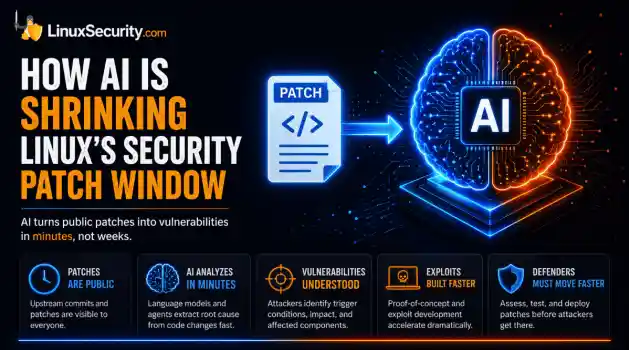
 For decades, Linux defenders relied on a comfortable assumption: a public security patch did not imply an imminent vulnerability. While open-source openness made vulnerability fixes public to everyone on kernel.org or the Linux Kernel Mailing List (LKML), converting a raw commit into a weaponized exploit took a significant amount of manual effort. This delay, estimated in weeks or months, gave businesses enough time to assess exposure, organize testing windows, and push changes across...
 Jul 27, 2026
 security advisory path traversal
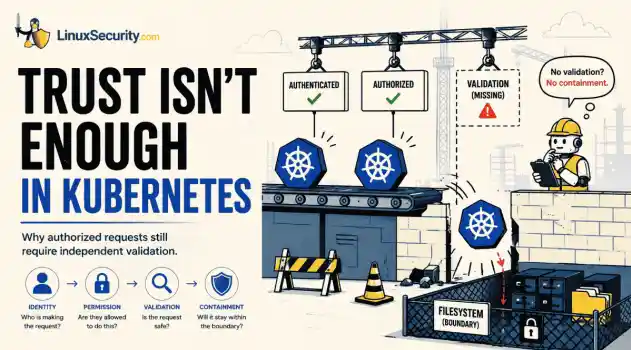
 Two newly fixed storage bugs in Kubernetes showed more than just a problem with path traversal. They found a common security flaw in the cloud: powerful parts often think that requests accepted by a higher system are safe to run. This is a simple lesson for the platform and security teams: RBAC can accept a request without showing that its parameters will stay within a certain filesystem boundary. This is clear from a new study from SentinelLabs into flaws in the Kubernetes CSI drivers for NFS...
Jul 24, 2026
 security advisory update
 A large volume of Linux security updates and advisories this week across major distributions once again, but it wasn't just the volume that was the story. Where maintainers and security teams focused their attention was evident in the concentration of fixes targeting Linux kernel updates, identity services, DNS infrastructure, and internet-facing software. . Instead of looking at each advisory in isolation, administrators gain more value from the general trends they reveal about Linux security...
Jul 23, 2026
 identity management security tactics
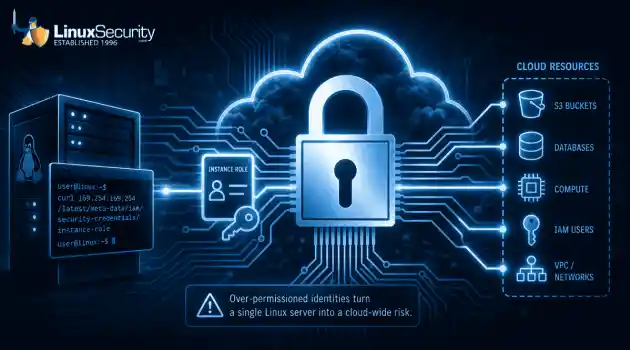
 For years, we secured our Linux infrastructure by building walls: VPCs, security groups, and hardened SSH configurations. We treated the cloud like a virtual data center, assuming that if we kept the "bad guys" out of the network, our workloads were safe. . That model is no longer sufficient. Today, one of the most common paths from an initial compromise to a major cloud breach is the identity assigned to your Linux workload. When an attacker gains code execution on a Linux instance—through a...
Jul 17, 2026
 security practices patch management
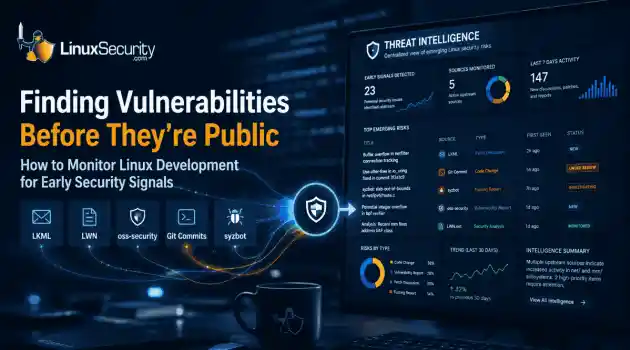
 Most of us don't hear about a kernel vulnerability until a CVE lands in our inbox or the vulnerability scanner starts complaining. By then, the patch isn't new anymore. Kernel developers may have been passing it around for review, arguing over the implementation, or revising it for days before anyone outside that community noticed it. None of those discussions are secret. They're sitting in mailing list archives, Git commits, and patch reviews where they've been the whole time. The strange...
Jul 14, 2026
 Refine features
X Clear Filters
Get the latest News and Insights
Get the latest Linux and open source security news straight to your inbox.
Community Poll
Are host-based firewalls still worth using?
Loading...
Explore Latest Linux Security features
We found -3 articles for you...
102
 cloud securitycontainer securityeBPF
Why Runtime Monitoring Is Replacing Traditional Linux Logging
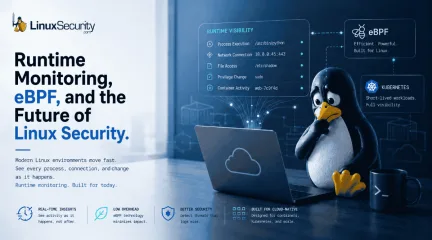
The problem is not necessarily a lack of security tools. Modern Linux infrastructure changes so quickly that maintaining consistent visibility has become one of the hardest operational problems in cloud security. . From Kubernetes clusters to CI/CD pipelines, production environments now depend heavily on Linux systems that are distributed, containerized, and constantly changing. Many workloads may only exist for a few seconds before disappearing entirely. Traditional logging systems were designed for stable, long-running servers, not ephemeral workloads that scale dynamically across cloud infrastructure. That shift is forcing organizations to rethink how Linux activity is monitored in real time. Traditional logfile logging still provides useful historical records, but many Linux security teams are increasingly looking for more modern monitoring approaches that can capture runtime activity as it happens instead of reconstructing events afterward. Runtime monitoring technologies, particularly eBPF (Extended Berkeley Packet Filter) , are becoming more important because they allow defenders to observe process execution, network activity, file access, and process lineage in real time across highly dynamic Linux environments. Why Traditional Monitoring Fails Linux environments are rarely standardized. A single organization may run Ubuntu in the cloud, Red Hat on production servers, Alpine inside containers, and custom kernels for specialized workloads, all at the same time. Security tools that work well in one environment may collect incomplete activity in another. That inconsistency creates operational blind spots long before an attacker appears. A monitoring platform may capture process activity correctly on one host but lose file visibility after a kernel update on another. Container workloads may terminate before alerts are fully processed. Security teams often assume they are collecting the same activity everywhere when, in reality, visibility varies heavily across systems. The issueis not always tooling quality. Linux infrastructure itself changes too quickly to guarantee perfectly uniform monitoring. That is one reason many Linux security teams are adopting runtime monitoring platforms and eBPF to improve visibility across distributed infrastructure, where traditional log file logging often struggles. Why Traditional Logs Fail to Detect Modern Attacks Many organizations still rely heavily on logs to investigate Linux activity. While logs remain useful for troubleshooting and historical investigations, modern attackers increasingly avoid techniques that generate obvious alerts. Instead of deploying traditional malware, attackers often rely on legitimate Linux utilities already present on the system. A compromised account may: connect through SSH, pull payloads with curl or wget, execute scripts directly in memory, or move laterally using valid credentials. To a logging platform, much of this can look identical to normal administrative work. For example, a developer running: curl internal-script.sh | bash may generate activity that looks nearly identical to an attacker downloading and executing a malicious payload in the same way. Both actions involve a shell process, a network request, and script execution. Without additional runtime context around the process itself, security teams may not immediately know the difference. This becomes especially dangerous in cloud environments where attackers intentionally blend into routine operational activity using legitimate Linux utilities already trusted inside production environments. Many organizations still struggle to correlate process activity, network connections, and file access together in real time, which is why runtime monitoring and technologies like eBPF are becoming increasingly important for improving process lineage visibility and identifying living off the land attacks. Consider a Kubernetes workload launched through a compromised CI/CD pipeline that briefly executes ashell, downloads a binary with wget, opens an outbound connection, and terminates less than 30 seconds later. Traditional logs may capture fragments of the activity separately: a shell execution, a network connection, and a terminated container. What often disappears is the runtime relationship between those events. eBPF helps preserve that process lineage in real time, allowing investigators to see which parent process launched the shell, which workload initiated the network activity, and whether privilege escalation or additional child processes followed before the container disappeared. These visibility challenges become even harder once workloads become highly ephemeral. The Security Challenges of Containerized Workloads Containers changed the way Linux infrastructure operates, but many security strategies still assume systems are stable and long-running. In Kubernetes environments , workloads may exist for only seconds before disappearing entirely. By the time an alert appears, the container involved may no longer exist. This creates several practical problems for defenders: process histories become incomplete, evidence disappears quickly, and investigators may struggle to identify which workload originally triggered suspicious activity. Imagine a container briefly launching, connecting to an unfamiliar external IP address, downloading a file, and terminating 20 seconds later. If monitoring systems are not collecting activity in real time, much of the evidence disappears alongside the workload itself. Traditional host-based monitoring was designed for persistent servers, not constantly changing infrastructure. The faster environments scale and rotate, the harder traditional monitoring becomes. How eBPF Is Improving Linux Runtime Monitoring To close these gaps, many organizations are shifting away from simple post-event logging and toward runtime monitoring. One of the most important developments driving this shift is eBPF, which allowssecurity tools to observe low-level Linux activity with far less performance impact than older monitoring methods. Instead of relying entirely on logs written after activity occurs, runtime monitoring can observe: process execution, network connections, privilege changes, and file access while activity is actually happening. This is especially valuable in container environments where workloads may disappear before investigators can manually review them. Runtime monitoring also improves process lineage, meaning security teams can better understand what launched a process, what happened afterward, and whether related network or file activity followed nearby. That context is often what determines whether the activity is a benign administration or an active intrusion attempt. Practical Steps to Reduce Linux Visibility Gaps No organization will achieve perfect visibility across every Linux workload, but several practical steps can reduce monitoring blind spots significantly. Standardize monitoring wherever possible The more Linux distributions, kernel versions, and custom environments an organization maintains, the harder visibility becomes. Standardizing production environments reduces inconsistency between systems and improves monitoring reliability. Prioritize runtime monitoring for internet-facing systems Traditional logs alone are often insufficient for cloud workloads and exposed infrastructure. Runtime monitoring helps security teams observe activity while it is happening instead of reconstructing events afterward. Validate visibility after infrastructure changes Kernel updates, container platform updates, and agent upgrades can quietly reduce monitoring coverage. Security teams should routinely validate that expected process, file, and network activity is still being collected correctly after major changes. Correlate activity instead of relying on isolated alerts Single events rarely tell the full story on Linux systems. Correlating process activity, filechanges, authentication events, and network connections together provides a much stronger detection context. Focus on short-lived workloads Container environments require real-time monitoring strategies. If activity is only reviewed after an alert triggers, important evidence may already be gone. The Tradeoff Between Visibility and System Performance One of the hardest operational problems in Linux security is balancing visibility against performance. Security teams want detailed information about process execution, network activity, file access, and privilege changes. The problem is that collecting all of that activity consumes CPU, memory, and storage resources. Production systems are usually optimized aggressively for uptime and application performance. If a monitoring agent introduces latency, increases resource usage, or causes instability, operations teams may disable it entirely. That forces organizations into difficult tradeoffs. Lightweight monitoring agents reduce performance impact but often provide incomplete visibility. More aggressive monitoring platforms collect deeper runtime activity but may increase operational overhead or strain production workloads. There is rarely a perfect balance, especially in cloud-native environments where workloads scale constantly, and resource usage is tightly controlled. eBPF-based runtime monitoring has become increasingly important partly because it allows organizations to collect deeper runtime telemetry with significantly lower overhead than many traditional kernel instrumentation approaches. Conclusion: Runtime Visibility Is Becoming Essential Traditional logfile logging still plays an important role in Linux security operations, but modern cloud infrastructure increasingly requires runtime visibility that can capture process activity, workload relationships, and low-level system behavior as it happens. Modern Linux environments are distributed, performance-sensitive, heavily containerized, and constantly changing. Attackersincreasingly rely on legitimate Linux utilities and living off the land attacks that blend directly into normal operational activity. That is why runtime monitoring and eBPF-based telemetry collection are becoming central to modern Linux security strategies, particularly inside Kubernetes and other highly dynamic environments where traditional logging alone often arrives too late. Stay Ahead of Linux Runtime Security & Infrastructure Trends Interested in more in-depth coverage of Linux runtime monitoring, cloud-native security, Kubernetes visibility, eBPF, and modern infrastructure defense strategies? Subscribe to the LinuxSecurity newsletter for weekly analysis, threat updates, and technical insights from across the Linux ecosystem. Related Reading Linux Supply Chain Attacks Threaten DevOps Teams and Security Why Software Supply Chain Security Matters in Linux Systems GitHub Actions Critical Misconfigurations Expose Open Source Risks Securing the Software Supply Chain with In-Toto Targeted Threats Against Open Source Maintainers: Key Insights Linux Supply Chain Attack Update: Protecting Against Threats . From Kubernetes clusters to CI/CD pipelines, production environments now depend heavily on Linux sys. problem, necessarily, security, tools, modern, linux, infrastructure, changes. . MaK Ulac
 May 12, 2026
•
May 12, 2026
•
102
 open source toolscontainer securitysupply chain attack
Comprehensive Overview Of Emerging Tools In Container Security
Containers are among the many recent inventions of modern computing. They have emerged as the cornerstone of software development and deployment. They isolate applications and their dependencies into a closed environment, enabling efficient and consistent deployment across different infrastructures. . There are plenty of reasons behind the shift to containerization, the key being the widespread adoption of DevOps practices and cloud-native innovations. However, despite the unmatched convenience and efficiency, containers bring various security challenges that traditional security measures can’t fully address. As this new technology proliferates across production environments, securing them should be a priority for all organizations. Unlike traditional devices, containers share the hosts’ OS kernel, which is beneficial but exposes it to potential vulnerabilities. This means businesses should re-evaluate their security strategies throughout the container’s lifecycle. Similarly, the future of container security depends on several emerging innovations. The increasing shift towards Zero Trust models is especially relevant to containerized environments. This model assumes no inherent trust within the network and enforces stringent authentication measures for access. The shift-left security option, which integrates security practices from the development lifecycle, is also beneficial. This strategy helps developers detect and mitigate vulnerabilities before production, significantly reducing attack surfaces. Various open-source tools, including Trivy, lead the pack in ensuring these developments. Below is a detailed guide on container security and its future. Read on! The Current State of Container Security With the rise of the adoption of containers, there’s a need to understand the current state of container security. While containers offer significant benefits, they introduce significant security challenges. It is prudent for organizations and businesses to know some of theexisting threats and common attack vendors before adopting them. They Include: Vulnerable code is the most important security risk of containerized applications. As mentioned, containers package applications alongside their dependence. This often includes insecure or outdated libraries that attackers can exploit. Compromised images: Containers rely on images containing apps and their dependencies. Unfortunately, some may have insecure components that expose the entire network to security risks. A compromised container image serves as a perfect entry points for attackers. Insecure working: Containers communicate through internal networks. Poorly secured networks become excellent vectors for attacks. Lack of encryption and insufficient segmentation often lead to data breaches. Container escape: This severe threat occurs when attackers break out of container isolation and access the host system, compromising the host and other containers running on it. While these risks are dire, container environments have various built-in security measures that mitigate these vulnerabilities. These features are built on Docker and Kubernetes but have some limitations. For instance, Docker uses namespaces to isolate containers and host systems. This significantly prevents unauthorized access and denial-of-service attacks and reduces the attack surface. However, Docker’s default features are slightly insufficient. Simple issues like using untrusted images can bypass its security setup. Kubernetes also provides perfect built-in security features for container environments. It enhances container security by implementing RBAC, which controls access and empowers network segmentation. Unfortunately, configuring Kubernetes securely often proves challenging. Wrong settings expose containers to vulnerabilities. However, this doesn’t mean containers are entirely insecure. Organizations can leverage various open-source container security tools to address these issues that exceed the capability of built-insecurity measures. These tools include: Trivy and Clair for image vulnerability scanning Kube-bench and Kubescape for configuration and compliance issues. Falco and Sysdig for enhanced runtime security Cilium and Calico will address network security issues. Open Policy Agent and Kyverno to sort policy enforcement issues. Dex and Keycloak for identity verification and access management. Sealed Secrets and HashiCorp Valut for secrets management. They enhance the security of stored sensitive information. Grafana Loki and Prometheus for better incident responses. Collectively, these tools provide targeted solutions that enhance container security in different aspects of the container lifecycle. Emerging Trends in Container Security With the expanding use of containerization, the security realm surrounding these environments keeps evolving in response to emerging threats. Below is a breakdown of top trends shaping the future of container security: Exploitation patterns and attacks targeting containerized environments Attackers now use sophisticated techniques to exploit vulnerabilities present in these systems. Some of the recent trends in exploitation patterns include: Supply chain attacks : Malicious persons compromise container images and dependencies, ultimately affecting the supply chain. They can inject malware into private or public repositories. Lateral movement: Attackers attempt to move laterally to access other containers after successfully accessing a container. Resource hijacking – malicious individuals hijack resources for malicious activities. Containers with misconfigured resources are often very vulnerable. Integrating security into the CI/CD pipeline This practice is a perfect response to the dynamic nature of container deployments. Also called shift-left security, it focuses on identifying and mitigating vulnerabilities earlier in the container development lifecycle. Various tools, including automated vulnerability scanning andsecurity testing, are integrated into CI/CD workflows before containers reach final production. Automated checks are also conducted to ensure containers have the necessary security structure before deployment. The use of software bills of materials Containers heavily rely on third-party components and dependencies. Using SBOM has become crucial for tracking and managing all components. It provides a detailed inventory of all components in the container image, including frameworks, libraries, and dependencies. Doing this is beneficial in many ways. For starters, it helps in vulnerability management. Organizations can easily identify and address threats in third-party components. SBOMs also provide vital information during incident response. Knowing the components makes it easy to identify the origin of the compromise. Adoption of policy as code practices Policy as Code is a practice of defining security policies enforceable through code. This approach aligns perfectly with shift-left practices, embedding security policies directly into the container development lifecycle. Adoption of these practices helps organizations achieve consistency and automation. Administrators define and automate policies, significantly reducing the risk of misconfiguration and human error. These policies also enhance collaboration between development and security teams. Adoption of AI and ML  Artificial intelligence and machine learning have transformed container security in the following ways: Threat prediction: ML models analyze patterns and historical data to predict potential threats. This proactive approach helps anticipate and mitigate vulnerabilities before they materialize. Behavior analysis: Al-powered tools analyze container patterns to identify anomalies that indicate security threats like resource usage or unexpected connections. Automated responses: Automatedtools provide faster and accurate responses to arising incidents. Integrating AI with incident response workflow allows organizations to streamline threat mitigation and minimize the impact of breaches. Adoption of service mesh architectures Organizations have increasingly adopted service mesh architectures to secure communication between containerized environments. This practice enhances traffic control and policy enforcement. Service meshes like Istio provide more control over network traffic, enhancing confidentiality and data integrity. Service meshes also allow organizations to monitor traffic patterns and detect anomalies. Such visibility is crucial for identifying and responding to threats in real time. However, meshes introduce some complexities. Organizations should carefully balance these security advantages with resource demands. Spotlight on Open Source Security Tools Securing these environments becomes important as containerization becomes the cornerstone of modern app deployment. Open-source tools can help organizations address various challenges. Some of the top open-source tools to consider include: Trivy Trivy is an open-source tool from Aqua Security that offers excellent vulnerability scanning for container images and file systems. This tool stands out for its comprehensive vulnerability scanning ability, which makes it a must-have tool in business container security sets. Key features of Trivy include: Wide vulnerability coverage: The tool scans various vulnerabilities in container images. It also supports various languages and package managers, broadly covering potential threats. Ease of use: The command-line interface is straightforward and requires minimal setup. Community and support: As an open-source project, Trivy benefits from contributions from a vibrant community of developers. This collaborative environment ensures that it remains up-to-date. Hadolint This is another open-source linter that helps developers write secure Dockerimages. Hadolint evaluates Docker files, ensuring they adhere to best practices like minimal image size, reduced number of layers, and more. These practices enhance the performance and security of container images. Hadolint also provides security recommendations for improving Docker Files' security. For instance, it can suggest using the “latest” tag, which has potential security vulnerabilities. The tool allows users to define custom configurations and rules to suit their requirements. Organizations can also benefit from Clair, Grype, Syft, and Kube-Bench. These tools play a crucial role in improving the container security landscape. Future of Open Source Container Security Tools
  The container security landscape continues evolving, with applications becoming more complex and new threats emerging. Open-source tools like Trivy will also likely undergo significant advancements to meet emerging challenges. As containerized environments become sophisticated, Trivy will expand its detection abilities. Its threat detection abilities will include supply chain attacks and new exploitation techniques. Trivy will also evolve to adapt to the needs of modern architectures, especially hybrid and multi-cloud environments. On the other hand, Hadolint will feature advanced limiting rules and a deeper integration with the container ecosystem. Hadolint will feature sophisticated features that address emerging performance and security issues in Docker Files. However, the fast-paced culture of this environment will necessitate a community-driven approach to open-source tool development. Open-source communities allow for rapid response to emerging threats, leveraging collective expertise and resources. Similarly, integrating open-source security tools into comprehensive security platforms is very possible. Integration ofthese tools will focus on enhancing interoperability and automation. This will require standardization of APIs and data formats to allow smooth data exchange and communication of these tools. Lastly, new tools will emerge tailored to address specific vulnerabilities associated with evolving container technologies. These tools will likely focus on specific areas, like serverless security. New tools will also help organizations navigate complex compliance requirements. For instance, they will automate compliance checks and provide detailed reports to ensure containerized apps adhere to legal provisions. Challenges and Considerations for the Future Maintaining robust security becomes challenging as containerization becomes more disrupted and dynamic. The main issues are: Securing dynamic and distributed environments: This requires tools that adapt to diverse deployment environments, including on-premise data centers, edge devices, and multiple clouds. Balancing agility and usability: Focusing overly on agility leads to misconfiguration, while stringent security practices hinder usability. Finding the perfect balance is key. Legal and regulatory issues: Open-source tool development should adhere to a complex legal landscape. Compliance with data protection laws, software licensing and other legal issues becomes challenging. Addressing these challenges requires collaboration and continuous innovation. Keep Learning About Container Security Container technologies offer great flexibility and scalability. However, they come with unique security challenges that necessitate innovative solutions. Fortunately, open-source tools play a crucial role in enhancing security. Their capabilities, ranging from vulnerability scanning to runtime monitoring, help secure container environments. However, developers and professionals still need to contribute to enhancing the security of these projects. Participating in open-source communities helps shape the future of container security and ensuresthese tools meet the demands of modern applications. Learn about Container Security basics Secure Docker Containers with These Data Management Software Options Open Source Vulnerability Assessment Tools & Scanners . Investigating developments, technologies, and threats influencing the next phase of container protection and its transformation.. Container Security, Open Source Tools, Shift Left Security, CI/CD Pipeline, Runtime Monitoring. . Dave Wreski
Jul 13, 2024
•


Get the latest News and Insights
Get the latest Linux and open source security news straight to your inbox.
Community Poll
Are host-based firewalls still worth using?
Search Topics
Powered By

Linux Security - Your source for Top Linux News, Advisories, HOWTOs and Feature Releases
QUICK LINKS
subscribe to newsletters!
Like staying secure? So do we.
Sign up for updates, tips, and alerts!