Audit Linux privileges now to limit compromise, escalation, and system-wide damage. Review Linux Privileges×


Stay Ahead With Linux Security Features

 security advisory vulnerability
 For decades, Linux defenders relied on a comfortable assumption: a public security patch did not imply an imminent vulnerability. While open-source openness made vulnerability fixes public to everyone on kernel.org or the Linux Kernel Mailing List (LKML), converting a raw commit into a weaponized exploit took a significant amount of manual effort. This delay, estimated in weeks or months, gave businesses enough time to assess exposure, organize testing windows, and push changes across...
 Jul 27, 2026
 security advisory path traversal
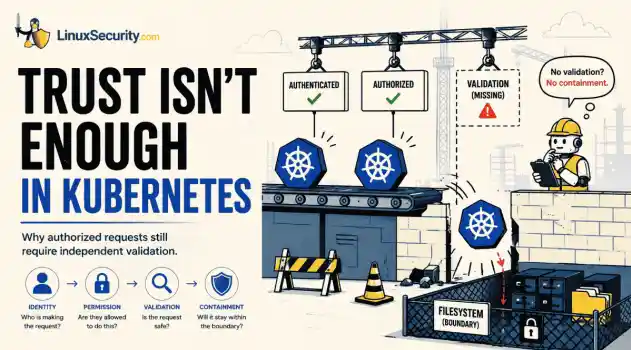
 Two newly fixed storage bugs in Kubernetes showed more than just a problem with path traversal. They found a common security flaw in the cloud: powerful parts often think that requests accepted by a higher system are safe to run. This is a simple lesson for the platform and security teams: RBAC can accept a request without showing that its parameters will stay within a certain filesystem boundary. This is clear from a new study from SentinelLabs into flaws in the Kubernetes CSI drivers for NFS...
Jul 24, 2026
 security advisory update
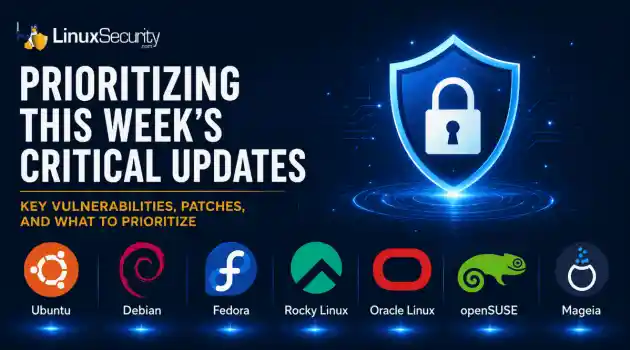
 A large volume of Linux security updates and advisories this week across major distributions once again, but it wasn't just the volume that was the story. Where maintainers and security teams focused their attention was evident in the concentration of fixes targeting Linux kernel updates, identity services, DNS infrastructure, and internet-facing software. . Instead of looking at each advisory in isolation, administrators gain more value from the general trends they reveal about Linux security...
Jul 23, 2026
 identity management security tactics
 For years, we secured our Linux infrastructure by building walls: VPCs, security groups, and hardened SSH configurations. We treated the cloud like a virtual data center, assuming that if we kept the "bad guys" out of the network, our workloads were safe. . That model is no longer sufficient. Today, one of the most common paths from an initial compromise to a major cloud breach is the identity assigned to your Linux workload. When an attacker gains code execution on a Linux instance—through a...
Jul 17, 2026
 security practices patch management
 Most of us don't hear about a kernel vulnerability until a CVE lands in our inbox or the vulnerability scanner starts complaining. By then, the patch isn't new anymore. Kernel developers may have been passing it around for review, arguing over the implementation, or revising it for days before anyone outside that community noticed it. None of those discussions are secret. They're sitting in mailing list archives, Git commits, and patch reviews where they've been the whole time. The strange...
Jul 14, 2026
 Refine features
X Clear Filters
Get the latest News and Insights
Get the latest Linux and open source security news straight to your inbox.
Community Poll
Are host-based firewalls still worth using?
Loading...
Explore Latest Linux Security features
We found -3 articles for you...
102
 backup strategiessecurity policiesmonitoring tools
Enhancing WordPress Security with Containerization and Optimal Practices
Keeping WordPress secure can be challenging, especially when considering Linux security concerns in a typical LAMP stack setup. Most WordPress security issues stem from third-party plugins, insecure coding, and server-level vulnerabilities in a typical LAMP stack setup-Linux, Apache, MySQL, PHP-to build and deploy WordPress. . So, malicious attackers could gain an undue advantage if you don't ensure proper care and security for these weaknesses. This makes it more important than ever to fortify WordPress security. That's where containerization comes in. Nowadays, most WordPress development companies use containers and tools like dockers for robust security. Containerization is a virtual process where all application components are packed as a single unit, supporting Linux cyber security through isolation. On the other hand, Docker allows us to run WordPress in isolated containers, reducing the chances of conflicts and security breaches and making it much easier to manage updates and dependencies. So, knowing how to set up, secure, and manage WordPress and containers is essential. This article will guide you through the basics of containerizing WordPress and explore best practices for maximizing Linux container security and ensuring streamlined management. Let's begin! Benefits of Containerizing WordPress Using containerization for WordPress has a lot of advantages: Isolation and Consistency: Containers allow each application, such as PHP, MySQL , and WordPress, to run in its isolated environment, avoiding conflicts between them. Portability: Containers can operate seamlessly in various environments, including a user’s local machine, cloud servers, or on-premises servers. Scalability and Resource Efficiency: Unlike virtual machines (VMs), which use a separate operating system, containers share the host operating system's kernel. This shared kernel approach makes containers lightweight and easier to deploy and scale. Overall, containerization forWordPress is the best thing you can do because it makes the application more easy to manage, and you can scale independently as per use. Setting Up a Secure WordPress Container To set up a WordPress container, you'll first need to install both Docker and Docker Compose. A basic handle on Linux cyber security commands and system management is a plus, especially configuring permissions, handling files, and troubleshooting activities. With these basics in place, you’re ready to begin setting up your containerized WordPress environment. Step 1: Install Docker and Docker Compose Install Docker and Docker Compose on your system by following the instructions on Docker’s official website. Step 2: Define Containers in Docker Compose You can manage multiple containers in one file. For a WordPress setup, create containers for: WordPress : Runs the WordPress application. MySQL (or MariaDB): Stores WordPress data. Step 3: Start the Containers Run your WordPress environment with the following: bash docker-compose up -d To improve security, it is recommended to use non-root users in containers to minimize risks and limit container permissions to essential access only. Implementing Security Policies with Kubernetes If you’re ready to take security a step further, Kubernetes brings additional tools for container management and protection. When securing your WordPress deployment, Kubernetes offers a powerful way to manage and safeguard containers efficiently. In addition to strong security, Kubernetes provides robust management features. Embedding WordPress containers in a Kubernetes cluster allows you to take advantage of load balancing, auto-scaling, and rolling updates over Kubernetes infrastructure. You can also use Helm Charts, a Kubernetes package manager, to make deployments faster and more customizable by bundling Kubernetes resources into single packages that are easy to configure and reuse. Network Policies to Isolate Workloads Isolatingworkloads helps protect your network by reducing exposure to potential threats. This approach prevents unauthorized containers from accessing sensitive components, strengthening your overall security. Using Security Contexts To Define And Enforce Container-Level Security Measures Security Contexts in Kubernetes allow you to set permissions and security configurations for individual containers or pods. Role-Based Access Control (RBAC) for Managing Permissions and Access Control Role-based access Control (RBAC) allows you to manage who has access to specific resources within a cluster. You can also assign roles and permissions to trusted identities so they can modify or access sensitive configurations. Managing and Monitoring Secure WordPress Containers Engaging in WordPress security best practices is essential to secure your WordPress environment and support Linux vulnerability mitigation. Practical measures for securely managing and monitoring WordPress containers include: Regular Security Audits and Updates Database backups are essential for WordPress sites, and regularly applying Linux security patches is equally crucial to maintaining security. Schedule regular backups of your MySQL or MariaDB data and store them securely. You can automate backups by creating cron jobs on the host system or using a backup container. Regular updates are essential for applying the latest Linux security patches, which keep your containers secure and up-to-date. Keep containers updated with the latest Linux security patches because new vulnerabilities are discovered daily for vulnerability mitigation. For effective Linux vulnerability mitigation, update your WordPress or database container by pulling the latest image and restarting your containers: bash docker-compose pull docker-compose up -d Note: If you are not technical, hire WordPress developers to handle the updates and maintenance professionally. Here’s an example of running a MySQL dump command in a separatecontainer: bash docker run --rm --network container:db -v $(pwd)/backup:/backup mysql:5.7 bash -c \ "mysqldump -h localhost -u user -password wordpress > /backup/backup.sql" This command creates a dump of the WordPress database and saves it in the specified backup directory. Monitoring Tools As with most other things in life, catching issues before they escalate keeps your application running smoothly. Tools such as Prometheus and Grafana are good for monitoring CPU, memory, and network usage in real-time, while Docker's built-in docker stats command gives a live view of container resource usage, so it would be pretty easy to spot any potential problems before they escalate. Tools like WPScan enable WordPress site admins to protect their websites from malware and other security threats. By scanning for malware and potential attacks, WPScan allows admins to detect potential risks like outdated plugins, vulnerable themes, and weak passwords that must be addressed. Installing WPScan is quick and easy, and its vulnerability database updates regularly to safeguard against emerging threats, making your administrative life simpler and more secure. Backup and Disaster Recovery A robust backup and disaster recovery strategy is critical in responding to potential issues and mitigating damage. Admins should know how to properly handle database connection issues and file permission errors they may encounter. These issues should be dealt with in the following way: Database Connection Issues If you see “Error establishing a database connection,” verify that the WordPress container’s WORDPRESS_DB_HOST environment variable points to the correct database container. File Permission Errors WordPress requires specific permissions to upload files and install plugins. If you encounter permission errors, update the volume’s permissions on the host system. Real-World Example of the Benefits of Containerizing WordPress Skybound faced challenges scaling its virtualmachines during peak traffic and struggled with complex code changes. The vast codebase contains many images and other resources, leading to delays and excessive manual effort in setting up new deployments. Solution and Result Skybound used containerization to manage its WordPress site and source code. It leveraged AWS services like ECS, Fargate, and CloudFormation to save each environment as a Docker image in Amazon ECR, efficiently handle resource scaling, and provision infrastructure. Additionally, they adopted Azure's serverless architecture for their database, removing the complexity of traditional database management. This setup allows Skybound to manage high-traffic loads smoothly, deploy code updates seamlessly across environments, and reduce manual infrastructure tasks. Our Final Thoughts on Securely Containerizing WordPress Containerization is necessary to keep any WordPress website safe today. However, using best practices to make your WordPress site more manageable and secure is what matters most . Your WordPress container ecosystem needs regular updates, monitoring, and maintenance for optimal operation. Lastly, if you want a robust and scalable WordPress website, we recommend consulting an experienced WordPress development company to provide further insight and guidance. If you have further questions, please do not hesitate to reach out to us @lnxsec - we're here to help! . Fortify your WordPress security against attackers and learn to securely containerize your application using best practices.. keeping, wordpress, secure, challenging, especially, considering, linux, security, concerns. . Brittany Day
 Dec 18, 2024
•
Dec 18, 2024
•
102
 network securityintrusion detectionLinux tools
Understanding Intrusion Detection and Network Security Best Practices
Benjamin Thomas, an active LinuxSecurity.com contributor, puts together an Intrusion Detection Primer. It is a collection of six research summaries that outline the basics of Intrusion Detection. . Introduction Internet security and privacy is an issue that is beginning to get the attention of almost all who use computers. Last month the news media was inundated with reports of Internet vandals unleashing DDoS (Distributed Denial of Service) attacks on major websites. Almost all attacks on computer networks can be prevented if system administrators take the appropriate steps to secure and monitor their networks. The process of preventing and detecting security breaches by monitoring user and application activity is known as intrusion detection. In this paper I illustrate what makes systems vulnerable, how they are attacked, how to react when a system is compromised, and give a brief introduction of LIDS(Linux Intrusion Detection System). Intrusion detection is a proactive process that requires constant attention of system administrators. In order to remain secure, network systems must continually be probed for new security weaknesses. Security is a process of staying informed. Intrusion Detection Basics Why is intrusion detection important in today's network environment? Phil Bandy, Michael Money, and Karen Worsted write in the "SANS Institute Intrusion Detection FAQ" (1999) that intrusion detection is important because it is impossible to keep up with the rapid pace of potential threats of computer systems. The Internet is changing rapidly day by day. Businesses are expanding exponentially using the Internet as a resource. Because of its quick evolution, system monitoring and administration is becoming an endless task. Intrusion detection tools make it easier for administrators to keep a secure network environment. Who is attacking our networks? The vandals probing networks for security vulnerabilities may be curious teenagers, disgruntled employees, or corporate criminals from rivalcompanies. Network intrusion is a systematic process. Usually unauthorized access is gained by exploiting operating system vulnerabilities (flaws in installed software). This can be done a number of ways. When an attacker chooses a target, he/she will execute software to determine the remote operating system, search various underground websites for flaws in that particular operating system, and then execute scripts that exploit the victim system. Virtually all server attacks progress in this manner. Intrusion detection tools help system administrators stop network attacks and aid in tracking down the attackers. System flaws that exist in software are the root cause of network intrusions. What are some of the vulnerabilities that exist? What types of software is vulnerable to attack? The next article addresses the type of applications vulnerable to attack, password security, and the importance of security policies. The rapid expansion of client/server networking is taking a toll on information security. Yona Hollander, in "Intrusion Prevention: The Next Step in IT Security," writes that new system vulnerabilities are discovered each day. Because information on intrusion techniques is freely available on the Internet, breaking into systems is an easier feat. Usually, a companies first line of defense is a firewall. When a firewall is compromised, system administrators rely on security assessment tools to simulate attacks, analyze logs, and audit file permissions. Many believe that operating systems are the only applications vulnerable to attack. This is untrue; many network servers such a mail daemons, ftp(file transfer protocol) hosts, and and web browsers have significant problems. If assessment software is out-of-date how will the security hole be found? It won't! Many companies do not have on-hand security experts to analyze their networks. Another major problem is lack of security enforcement. Passwords are widely used, but never long enough or obscure. Words found in the dictionary will not serve asadequate protection. Companies should conduct periodic security audits on all terminals, workstations, and servers. Security policies are also important in a work environment. Some companies go as far as employee termination for repeated violation of security policies. On the spot prevention/detection, security policy enforcement, and limiting local user privileges will create a more secure network. In order to effectively audit a network for security vulnerabilities, one must be familiar with how security can be compromised. Are passwords secure? In most cases, no. Crackers have many systematic methods of circumventing a networks security structure. Robert Graham in "FAQ: Network Intrusion Detection Systems" (2000) writes that user passwords can be obtained very easily. Crackers have many techniques of capturing passwords. One way they can be obtained is called clear-text sniffing. The three most popular Internet protocols HTTP, FTP, and TELNET use plain-text passwords that can be intercepted if an intruder installed a protocol analyzer ( aka Packet Sniffer ) between the client and server. Another way crackers can obtain passwords is by capturing the password ( /etc/passwd ) file on the server, and using a cracker program with a dictionary file to uncover passwords. Bruteforce ( programming a computer to try every possibility) cracking can take significant lengths of time especially if users have chosen passwords greater than 8 charters long. Social Engineering is probably the easiest way to obtain passwords. This is simply a method of calling the target and simply conning them into giving out their password. Usually intruders will call large companies, find vulnerable people, claim to be in the IS department, and ask for the password. This technique is very common. Passwords are the foundation of computer security. Keeping them confidential, using a combination of uppercase/lowercase/numbers, and changing periodically is extremely important. Many administrators spend hours securing network servers,updating software/firmware, and analyzing logs searching for abnormal system activity. Because software is constantly evolving, security is an endless process. Has every intrusion possibly been covered? From time to time systems are compromised because one vulnerability is overlooked. What should be done when a intrusion is detected? Practical UNIX & Internet Security, (1996) written by Simson Garfinkel and Gene Spafford offers much more than security methods. An entire section is devoted to handling events such as break-ins, DoS attacks, and computer security law. When an intrusion is discovered, what steps should be taken? First of all, don't panic! Events that look like system intrusion may actually be software configuration errors. If an intrusion is suspected, react quickly by terminating the network connection. (This can be done by physically unplugging the Ethernet or modem cable.) Next, document all that you observed, and any actions taken to restore the system. Documentation can prove to be a valuable tool when trying to determine which backups to restore. Finally, plan ahead for the next network intrusion by identifying the problem, determining the damage caused, restoring the system, and reporting the incident to the proper authorities. Unexplained reboots, significant hard drive activity, system crashes, and sluggish network connections may all be signs of an intruder. If any of these symptoms exist it would be wise to review /var/log/syslog and /var/log/messages. (These are the standard log files on UNIX based architecture). If an intrusion occurs, organizations such CERT (Computer Emergency Response Team) and FIRST (Forum of Incident Response and Security Teams) should be notified immediately. They can assist in tracking down the criminal. If handled properly, system damage can be minimized when a network intrusion is discovered. If a security breach has been detected and reported to authorities, what else should be done? The attacker could potentially return and utilize malicious backdoorshe/she installed, or exploit other vulnerabilities. How can the intruder be tracked down? The February 2000 issue of Network Magazine contains an interesting article titled " Gauging the Real Hacker Threat to Your Network.." The author, Ramon J. Hontanon, explores incident response, reading intruders' tracks, ways to avoid intrusion, and information warfare. When a security breach is discovered, disconnect the computer from the network, make an external copy of all log files, look for date modification of "static" system utilities, and search for amendments to the passwd file. Following the filesystem check a full TCP (Transport Control Protocal) system scan should be executed. This will uncover newly opened ports, reconfigured services, or installed trojan horses. After a thorough system examination, the log files should be studied to determine the skill level and geographical location of the intruder. Did he make any mistakes, or leave anything uncovered? Using the logfiles to determine, the time of attack and originating host will help uncover the location of the intruder. When not tracking down an intruder, energy should be devoted to internal system auditing. This includes reviewing log files daily, running periodic port scans, and changing system passwords monthly. Systems administrators should also install and maintain the latest kernel security patches that are available. There is no substitute for quick human response and thorough investigations. Searching security websites, and sifting thorough security news groups should be a normal routine. Rather than only taking standard security precautions, many administrators feel that installing intrusion detection software can help lessen the burden of network analysis. Additional software can also help remove unneeded modules, better apply permissions, and implement cryptography. Philppe Biondi, a member of the Linux Intrusion Detection System project, wrote (2000) documentation for LIDS (Linux Intrusion Detection/Defense System). LIDS is a freesoftware package for i386 Linux architecture with the primary goal of protecting against root account intrusions. In order for LIDS to properly secure the server operating system, it must restrict the use of modules, raw memory/disk access, protect boot files, and prevent access to I/O Ports. LIDS will also log every denied access attempt, lock routing tables/firewall rules, and restrict mounting. Another interesting features is it's ability to hide system processes. Users logged into the system will not be able to execute a simple command such as "ps aux" to reveal running daemons. After LIDS is installed it is first executed as a boot image initiated by LILO (Linux Loader). This feature guarantees the system remaining secure throughout the entire boot process. LIDS has proven to be an effective tool in both intrusion detection and prevention. Conclusion Intrusion detection is a process that must be executed by system administrators in order to maintain secure networks. An administrator must understand the importance of protecting his/her network, how exploited vulnerabilities can bring a system to it's knees, and how to react to security incidents. System administrators must stay informed of all system advisories, flaws, and software updates. Not taking appropriate actions to fix known problems can prove to be fatal to network servers. The summaries outlined illustrate various methods of intrusion detection and how to react when a breach has occurred. As our society begins depending more on network systems, information security will become more of an issue. If network administrators do not remain informed of software updates and fail to closely monitor their servers, network security will remain to be problematic. Intrusion detection is a necessary process that must be fully understood and executed to maintain network security. . IntroductionInternet security and privacy is an issue that is beginning to get the attention of almo. benjamin, thomas, active, linuxsecurity, contributor,together, intrusion, detection, prime. . Brittany Day
Mar 13, 2000
•


Get the latest News and Insights
Get the latest Linux and open source security news straight to your inbox.
Community Poll
Are host-based firewalls still worth using?
Search Topics
Powered By

Linux Security - Your source for Top Linux News, Advisories, HOWTOs and Feature Releases
QUICK LINKS
subscribe to newsletters!
Like staying secure? So do we.
Sign up for updates, tips, and alerts!