Audit Linux privileges now to limit compromise, escalation, and system-wide damage. Review Linux Privileges×


Stay Ahead With Linux Security Features
 identity management security tactics
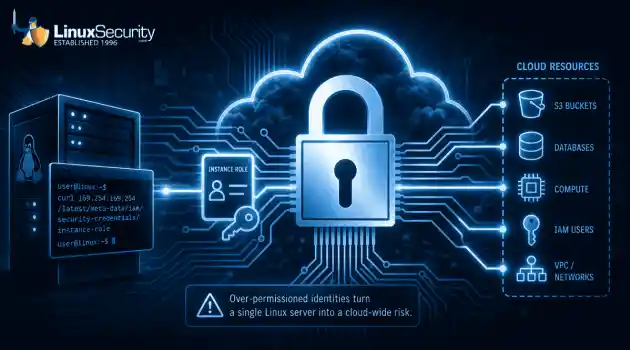
 For years, we secured our Linux infrastructure by building walls: VPCs, security groups, and hardened SSH configurations. We treated the cloud like a virtual data center, assuming that if we kept the "bad guys" out of the network, our workloads were safe. . That model is no longer sufficient. Today, one of the most common paths from an initial compromise to a major cloud breach is the identity assigned to your Linux workload. When an attacker gains code execution on a Linux instance—through a...
 Jul 17, 2026
 security practices patch management
 Most of us don't hear about a kernel vulnerability until a CVE lands in our inbox or the vulnerability scanner starts complaining. By then, the patch isn't new anymore. Kernel developers may have been passing it around for review, arguing over the implementation, or revising it for days before anyone outside that community noticed it. None of those discussions are secret. They're sitting in mailing list archives, Git commits, and patch reviews where they've been the whole time. The strange...
Jul 14, 2026
 Linux security cyber attacks
 Every Linux server in your fleet produces thousands of events every minute. From journald logs and auditd records to kernel-level eBPF hooks, your systems are constantly talking. Most of that noise is just the mundane churn of system services, CI/CD runners, or routine administrative automation. But among that noise, an attacker might be establishing a foothold, moving laterally, or setting up persistence. The challenge for any security team is: how do you separate the routine from the...
Jul 13, 2026
 open-source infrastructure risk
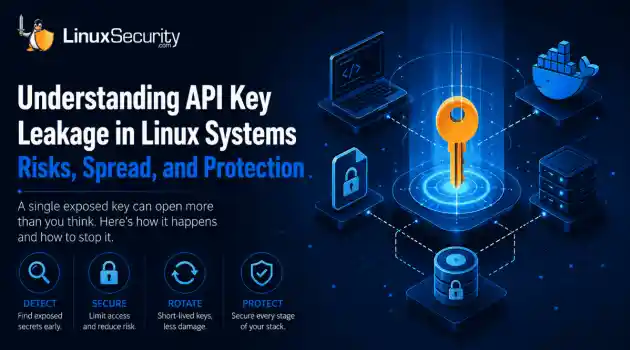
 Security scanners flag exposed API keys in public repositories every day. The initial response is usually predictable: delete the commit, revoke the credential, and move on. That’s a mistake. . In a real Linux environment, an API key never stays in one place. By the time it hits a public repo, it’s already everywhere. It’s in the CI/CD pipeline. It’s in your container registry. It’s in the build logs. It’s in the backups. Git makes this worse because the history never dies. Deleting a file in...
Jul 11, 2026
 open-source rootkit
 Most of us think of Linux rootkits as ancient history—the stuff of 90s hacking forums and clunky malware that would crash your system if you looked at it the wrong way. But if you think they’ve gone away, you’re mistaken. They’ve just gotten smarter. . Modern attackers aren't using the noisy tools of the past. Today’s threats are surgical. Many of today’s most advanced Linux rootkits operate at the kernel level or abuse legitimate system features to blend in with normal traffic. They’re...
Jul 09, 2026
 Refine features
X Clear Filters
Get the latest News and Insights
Get the latest Linux and open source security news straight to your inbox.
Community Poll
Should Linux servers automatically install security updates?
Loading...

Explore Latest Linux Security features
We found -4 articles for you...
102
 security advisoryauthenticationsecurity proxy
Sec-Wall Proxy: Authentication and SSL Configurations Examples
This article full of examples will show you various ways to test services secured using sec-wall, a feature-packed high performance security proxy. We'll be using cURL, a popular Linux command line tool and PycURL - a Python interface to cURL. As of version 1.0, sec-wall supports HTTP Basic auth, digest auth, custom HTTP headers, XPath-based authentication, WS-Security & SSL/TLS client certificates and each of the options is being shown below. . View the introduction in sec-wall: Open Source Security Proxy It is assumed that you'll be using the sec-wall's config.py file as listed below so it's worth pointing out that the server's SSL certificate uses a commonName of MySampleServer which means that you need to add the line similiar to the one below 127.0.0.1 MySampleServer to your /etc/hosts file. That's because the examples below do check the validity of the server's crypto material. The pki.zip (ZIP) attachment contains assorted keys and certificates while sec-wall-xpath_auth.xml and sec-wall-wsse_auth.xml contain data needed for invoking sec-wall using XPath-based and WS-Security authentication, respectively. config.py # -*- coding: utf-8 -*-# stdlib import os.path as path, uuid, sys # lxml from lxml import etree # Don't share it with anyone. INSTANCE_SECRET = '23e4da2148994e7ea0b85a9a03d01eb0' # May be shared with the outside world. INSTANCE_UNIQUE = uuid.uuid4().hex # Useful constants cur_dir = path.dirname(__file__) # Crypto keyfile = path.join(cur_dir, './crypto/server-key.pem') certfile = path.join(cur_dir, './crypto/server-cert.pem') ca_certs = path.join(cur_dir, './crypto/ca-chain.pem') server_type = 'https' # Where are we proxying the requests over to? target_host = ' # Credentials username = 'abc' password = 'abc' realm = 'Secure area' # ############################################################################## def basic_auth(): return { 'basic-auth': True, 'basic-auth-username': username, 'basic-auth-password': password, 'basic-auth-realm': realm, 'host': target_host, } def digest_auth(): return { 'digest-auth': True, 'digest-auth-username': username, 'digest-auth-password': password, 'digest-auth-realm': realm, 'host': target_host, } def custom_http_headers(): return { 'custom-http': True, 'custom-http-X-MyFancyUsername': username, 'custom-http-X-MyFancyPassword': password, 'host': target_host, } def xpath(): return { 'xpath': True, 'xpath-1': etree.XPath("/a/b/username/text() = '{0}'".format(username)), 'xpath-2': etree.XPath("//c/@password='{0}'".format(password)), 'host': target_host, } def wsse(): return { 'wsse-pwd': True, 'wsse-pwd-username': 'abc', 'wsse-pwd-password': 'abc', 'wsse-pwd-realm': realm, 'wsse-pwd-reject-empty-nonce-creation': True, 'wsse-pwd-reject-stale-tokens': True, 'wsse-pwd-nonce-freshness-time': sys.maxint, 'wsse-pwd-reject-expiry-limit': sys.maxint, 'host': target_host, } def ssl_cert(): return { 'ssl': True, 'ssl-cert': True, 'ssl-cert-commonName': 'My Client', 'ssl-cert-organizationName': 'My Company', 'host': target_host } urls = [ ('/basic_auth', basic_auth()), ('/digest_auth', digest_auth()), ('/custom_http_headers', custom_http_headers()), ('/xpath', xpath()), ('/wsse', wsse()), ('/ssl_cert', ssl_cert()), ] Basic auth cURL $ curl --basic -u abc:abc --cacert ./ca-chain.pem PycURL import pycurl curl = pycurl.Curl() url = ' ' # --basic switch curl.setopt(pycurl.HTTPAUTH, pycurl.HTTPAUTH_BASIC) # -u switch curl.setopt(pycurl.USERPWD, 'abc:abc') # --cacert switch curl.setopt(pycurl.CAINFO, './ca-chain.pem') curl.setopt(pycurl.URL, url) curl.perform() Digest auth cURL $ curl --digest -u abc:abc --cacert ./ca-chain.pem PycURL import pycurl curl = pycurl.Curl() url = ' ' # --digest switch curl.setopt(pycurl.HTTPAUTH, pycurl.HTTPAUTH_DIGEST) # -u switch curl.setopt(pycurl.USERPWD, 'abc:abc') # --cacert switch curl.setopt(pycurl.CAINFO, './ca-chain.pem') curl.setopt(pycurl.URL, url) curl.perform() Custom HTTP headers cURL $ curl -H "X-MyFancyUsername:abc" -H "X-MyFancyPassword:abc" --cacert ./ca-chain.pem PycURL import pycurl curl = pycurl.Curl() url = ' ' # -H switches curl.setopt(pycurl.HTTPHEADER, ['X-MyFancyUsername:abc', 'X-MyFancyPassword:abc']) # --cacert switch curl.setopt(pycurl.CAINFO, './ca-chain.pem') curl.setopt(pycurl.URL, url) curl.perform() XPath-based auth cURL $ curl --data @xpath_auth.xml --cacert ./ca-chain.pem PycURL import pycurl curl = pycurl.Curl() url = ' ' # --data switch # Note that it uses the file in Python instead of letting PycURL do it. curl.setopt(pycurl.POSTFIELDS, open('xpath_auth.xml').read()) # --cacert switch curl.setopt(pycurl.CAINFO, './ca-chain.pem') curl.setopt(pycurl.URL, url) curl.perform() WS-Security cURL $ curl --data @wsse_auth.xml --cacert ./ca-chain.pem PycURL import pycurl curl = pycurl.Curl() url = ' ' # --data switch # Note that it uses the file in Python instead of letting PycURL do it. curl.setopt(pycurl.POSTFIELDS, open('wsse_auth.xml').read()) # --cacert switch curl.setopt(pycurl.CAINFO, './ca-chain.pem') curl.setopt(pycurl.URL, url) curl.perform() SSL client cert cURL $ curl --cert client-cert.pem --key client-key.pem --cacert ./ca-chain.pem PycURL import pycurl curl = pycurl.Curl() url = ' ' # --key switch curl.setopt(pycurl.SSLKEY, './client-key.pem') # --cert switch curl.setopt(pycurl.SSLCERT, './client-cert.pem') # --cacert switch curl.setopt(pycurl.CAINFO, './ca-chain.pem') curl.setopt(pycurl.URL, url) curl.perform() Resources Visitus at Contact Dariusz Suchojad Download pki.zip (ZIP) Download sec-wall-xpath_auth.xml Download sec-wall-wsse_auth.xml . Integrating the sec-wall security proxy with HTTP requests using cURL and PycURL helps in authentication and SSL setup management effectively. Sec-Wall Security Proxy,cURL Authentication,SSL Configuration,Open Source Security Auth,PyCurl Examples. . Dave Wreski
 Jun 07, 2011
•
Jun 07, 2011
•

Get the latest News and Insights
Get the latest Linux and open source security news straight to your inbox.
Community Poll
Should Linux servers automatically install security updates?
Search Topics
Powered By

Linux Security - Your source for Top Linux News, Advisories, HOWTOs and Feature Releases
QUICK LINKS
subscribe to newsletters!
Like staying secure? So do we.
Sign up for updates, tips, and alerts!