Overly broad permissions can turn one compromised account into a much larger security problem. Learn how to reduce unnecessary access, review privileges, and apply least privilege across modern Linux systems. Review Linux Privileges×


Stay Ahead With Linux Security Features
 identity management security tactics
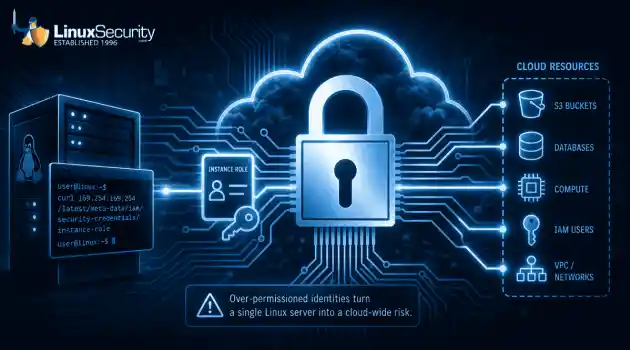
 For years, we secured our Linux infrastructure by building walls: VPCs, security groups, and hardened SSH configurations. We treated the cloud like a virtual data center, assuming that if we kept the "bad guys" out of the network, our workloads were safe. . That model is no longer sufficient. Today, one of the most common paths from an initial compromise to a major cloud breach is the identity assigned to your Linux workload. When an attacker gains code execution on a Linux instance—through a...
 Jul 17, 2026
 security practices patch management
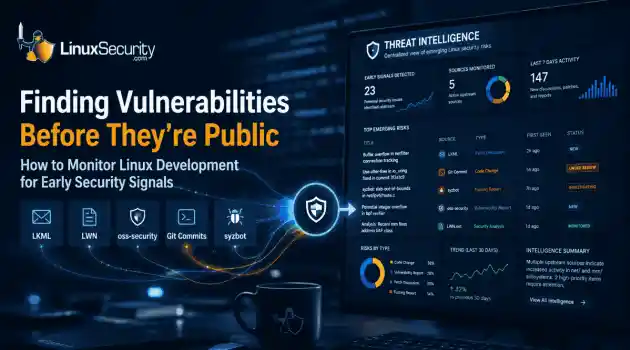
 Most of us don't hear about a kernel vulnerability until a CVE lands in our inbox or the vulnerability scanner starts complaining. By then, the patch isn't new anymore. Kernel developers may have been passing it around for review, arguing over the implementation, or revising it for days before anyone outside that community noticed it. None of those discussions are secret. They're sitting in mailing list archives, Git commits, and patch reviews where they've been the whole time. The strange...
Jul 14, 2026
 Linux security cyber attacks
 Every Linux server in your fleet produces thousands of events every minute. From journald logs and auditd records to kernel-level eBPF hooks, your systems are constantly talking. Most of that noise is just the mundane churn of system services, CI/CD runners, or routine administrative automation. But among that noise, an attacker might be establishing a foothold, moving laterally, or setting up persistence. The challenge for any security team is: how do you separate the routine from the...
Jul 13, 2026
 open-source infrastructure risk
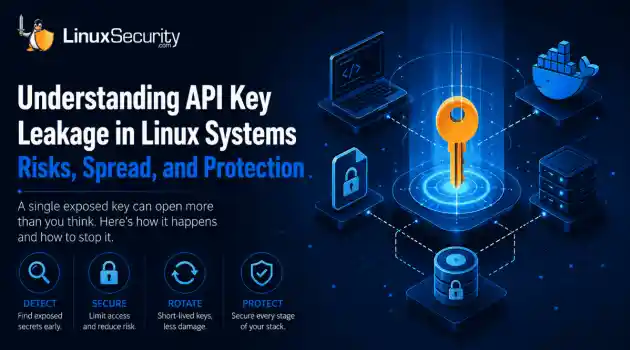
 Security scanners flag exposed API keys in public repositories every day. The initial response is usually predictable: delete the commit, revoke the credential, and move on. That’s a mistake. . In a real Linux environment, an API key never stays in one place. By the time it hits a public repo, it’s already everywhere. It’s in the CI/CD pipeline. It’s in your container registry. It’s in the build logs. It’s in the backups. Git makes this worse because the history never dies. Deleting a file in...
Jul 11, 2026
 open-source rootkit
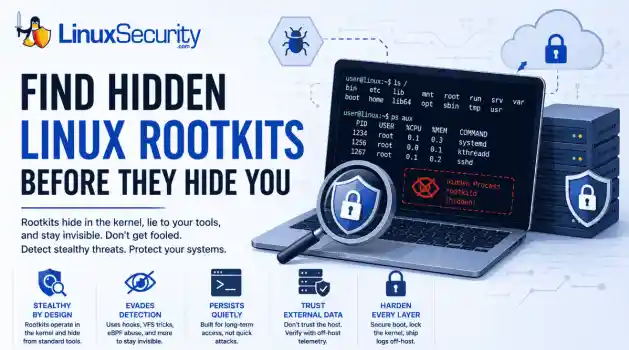
 Most of us think of Linux rootkits as ancient history—the stuff of 90s hacking forums and clunky malware that would crash your system if you looked at it the wrong way. But if you think they’ve gone away, you’re mistaken. They’ve just gotten smarter. . Modern attackers aren't using the noisy tools of the past. Today’s threats are surgical. Many of today’s most advanced Linux rootkits operate at the kernel level or abuse legitimate system features to blend in with normal traffic. They’re...
Jul 09, 2026
 Refine features
X Clear Filters
Get the latest News and Insights
Get the latest Linux and open source security news straight to your inbox.
Community Poll
Should Linux servers automatically install security updates?
Loading...
Explore Latest Linux Security features
We found 3 articles for you...
102
 security practicesmalware protectionuser experience
Exploring Benefits Of Code Signing Solutions In Securing Software
Code signing involves approving applications, software code, scripts, or programs to authorize their origin. The goal is to ensure that the code is never tampered with. Certificate Authorities (CA) confirm the identity of the code-signing source and link a public key to a code-signing certificate. . Performing a code sign provides several critical benefits, including code authentication, code or software author validation, and cryptographic protection. By including a virtual signature in the software, builders can assure users that the code has not been altered or tampered with because it has become signed. This system uses a unique private key to generate a virtual signature, which is then validated via a corresponding public key. Implementing stringent safety practices around code signing enables software to maintain its integrity and authenticity and builds trust. As cyber threats evolve, sturdy code-signing practices will become increasingly imperative to safeguard the software environment from malicious activities. In this guide, you’ll learn more about the top advantages of code signing, detailing five key benefits for Linux admins and infosec professionals. How Are Hackers Exploiting Code Signing Certificates? One method modern-day hackers employ involves exploiting code-signing certificates. They can make malware appear legitimate by compromising a private key and certificate. Once they gain access to these cryptographic credentials, they can sign malicious code, making it seem like it comes from a trusted source. This tactic deceives users and security systems, allowing the malware to bypass various defenses. Given these state-of-the-art threats, builders and corporations are now more critical than ever to signal their code using a fairly steady certificate. This involves employing superior safety features to guard non-public keys, including hardware security modules (HSMs) or other steady cryptographic gadgets. Regularly updating and monitoring certificates can help detectunauthorized usage or potential breaches. What Are the Benefits of Code Signing Solutions? 1. Authenticates Code Integrity A code signing solution , such as a hash function, provides a comprehensive code integrity check. This function is applied when assigning the code and then again at the destination, ensuring proof of code integrity throughout the process. By creating a unique digital fingerprint for the software, any alteration or tampering will result in a mismatch. If, for any purpose, the key doesn’t suit, you may fail to download it or receive a protection warning, alerting you to capacity issues. This approach not only validates the authenticity of the code but also complements safety by preventing the execution of unauthorized or corrupted code, thereby shielding customers from malicious software programs. In addition to using the hash function, you can also gain verification via a timestamp. Some code-signing certificates provide this tool as part of their package. The timestamp feature adds an extra layer of security and trust by recording the exact time and date when the code was signed. It comes as a timestamp data strip, which sits alongside the signature. This now not only verifies the integrity of the code at the time of signing but also guarantees that the signature stays valid even though the signing certificate expires or is revoked. Consequently, users can consider that the code changed into signed with a valid certificate at the desired time, similarly enhancing the general safety and reliability of the software. 2. Ensures Company Authenticity and Reputation You can adopt a code signing process to validate and approve software, programs, and additional code. Doing so safeguards you against cyberattacks, corruption, or tampering. Implementing this technique ensures that only confirmed and depended-on code is performed, protecting your systems from malicious threats. A trustworthy certificate will shield your highbrow belongings and your organization's reputation,ensuring that clients and customers can depend upon the authenticity and integrity of your software program. Additionally, it enables construct persons to accept as true with self-belief, as they can be confident that their code has not been altered or compromised. In an era wherein cyber threats continuously evolve, adopting a sturdy code signing method is crucial for keeping security and belief in your software program products. When customers and carriers believe you and do your all to guard their personal information, they’re much more likely to spend money on your services. In addition, they will feel safe downloading files and programs from you, knowing that you prioritize their security and privacy. This stage of trust and assurance ends in improved patron loyalty, as clients appreciate the reliability and integrity of your offerings. Satisfied clients aren't only in all likelihood to preserve the usage of your services. Still, they can also advocate them to others, expanding your purchaser base through tremendous phrase-of-mouth. Building and retaining this consideration is crucial for lengthy-term success and a boom in today’s competitive marketplace. Ensuring robust security measures and transparent practices can contribute to a strong, loyal customer relationship. 3. Boosts Revenue In this virtual age, socially engineered campaigns like spoofing and phishing are increasingly conventional. The culprits at the back of these schemes exploit the vulnerabilities of individuals who operate inside the virtual sphere by injecting virus payloads, ransomware , or malware into software systems. These assaults can cause excessive information breaches, economic losses, and damage to a business enterprise's popularity. The state of affairs has been exacerbated by the appearance of AI technology , which has supplied attackers with greater state-of-the-art tools to create convincing fake messages and automate attacks at a bigger scale. As a result, it has become even more vital for individuals andagencies to enforce robust cybersecurity measures, live vigilance, and educate themselves about those threats to shield their virtual belongings and keep belief with their stakeholders. Network platform providers and software publishers are increasingly mandating the code signing system, which necessitates a reliance on certificate authority (CA). By requiring code to be signed with a virtual certificate from a good CA, these entities ensure that software programs are allotted to users competently and securely. This method facilitates affirming the authenticity and integrity of the software program, stopping unauthorized alterations, and protecting customers from malicious code. As a result, customers could have extra self-assurance inside the software they download and deploy, understanding it's been vetted and accepted by a trusted source. This tremendous adoption of code signing practices no longer simply complements typical cybersecurity but also fosters agreement between software developers and their customers, contributing to a more steady virtual atmosphere. This is useful to big agencies, small companies, and start-ups. Why? When you pride yourself on defending your customers, vendors, and clients' records, you may benefit from trust among them. This agreement ends with a more robust courting agreement with your stakeholders, ensuring they are assured of their interactions with your enterprise. As a result, you'll boost authenticity and heighten your brand’s presence inside the market. This stronger popularity effectively draws new customers and encourages present ones to stay dependable, riding client retention. In the longer term, those factors collectively contribute to multiplied revenue, as a trusted and legit brand is much more likely to peer sustained commercial enterprise boom and profitability. 4. Creates A Secure, Safe Experience For Your Users As mentioned, the code signing process helps you build trust among your clients and gain it from your vendors. All partiesbenefit from embracing code-signed files or software, as this practice ensures the utmost security. When code is adequately demonstrated and authenticated, it prevents tampering and guarantees that the software program has no longer been altered since it was signed. This security stage is critical in protecting sensitive statistics and preserving the integrity of software program structures. By adopting code signing, agencies can provide users with a more secure experience, reinforcing agreement with and strengthening relationships with customers and vendors. Ultimately, this proactive method of safety and integrity fosters a more steady and dependable virtual environment for anybody worried. In addition, embracing code signing ensures a sleek user experience. Signing the code via a good certificate authority reduces the chance of installation screw-ups and safety warnings. This seamless enjoyment is vital for retaining personal satisfaction, as it minimizes interruptions and confusion for the duration of the installation system. By imparting users with a straightforward and honest setup revel in, you beautify their self-belief in your software and build a positive reputation. This no longer contributes to a higher general user enjoyment but reinforces the reliability and credibility of your software program, encouraging persistent use and fostering patron loyalty. Without investing in the proper methods and gear, you’re prone to information breaches. Such breaches may have excessive repercussions for your popularity and finances. When sensitive statistics are compromised, it erodes consideration among your clients and partners. It can bring about economic losses because of felony prices, regulatory fines, and the costs associated with remediation and damage management. The lengthy-term effect on your enterprise may be even more adverse, as the bad publicity and loss of patron confidence can also lead to decreased income and a weakened market position. Therefore, prioritizing strong security measuresand investing in effective protection techniques is crucial to shield your business and maintain its integrity and profitability. 5. Flawless Integration With Various Platforms The code signing system has advanced to aid numerous platforms and devices, with predominant ones consisting of Windows, Apple iOS, Linux, and Java, as well as mobile and net-primarily based technologies like Android and Adobe AIR. This extensive compatibility is crucial as code distribution continues to extend across numerous digital ecosystems, making it increasingly essential for developers and groups to ensure the authenticity and integrity of their software programs. One of the significant thing benefits of using code signing is the capability to set up a trusted relationship between the software and its users. When a bit of software is signed with a digital certificate from a good certificates authority (CA), it offers a cryptographic assurance that the code has no longer been altered or tampered with because it turned into signed. This virtual signature acts as a digital seal, uniquely linking the code to the signer's identity, making it nearly impossible to replicate or forge. This is vital in retaining the acceptance as accurate with customers, who rely upon those assurances to ensure that the software program they're putting in or the usage of is legitimate and secure. Many structures advise or require that code signing be performed with the aid of dependent certificate authorities to enhance security and save you from the distribution of malicious software programs. Trusted CAs play a vital role in verifying the identification of the software program publisher and issuing certificates that are identified by using diverse working systems and programs. This practice helps mitigate the danger of falling prey to cyber scammers who might try to distribute malicious code disguised as legitimate software programs. Using certificates from mounted and dependable authorities, developers can ensure their code is safeguardedagainst unauthorized alterations and that users are blanketed from capability threats. Additionally, using trusted certificates permits developers and companies to reject motion instructions from untrusted sources. This delivered layer of safety helps prevent unauthorized access and decreases the risk of malware infiltration. It also fosters a safer digital environment by ensuring that only verified and authenticated software is executed, protecting users and systems from potential harm. Overall, a complete code signing technique that uses trusted certificates and adheres to platform-specific recommendations drastically complements protection. It not only facilitates preserving the integrity of the software program being dispensed but also builds trust among users and stakeholders. By embracing these practices, developers and groups contribute to a more secure virtual panorama, reinforcing self-belief inside the software supply chain and minimizing cyber threats. Our Final Thoughts on the Benefits of Code Signing Solutions Code signing solutions are a surefire way to avoid information breaches and ensure the integrity of your software program. Whether you are a start-up or a large business enterprise, the benefits of code signing will assist you in earning acceptance as authentic with your clients and carriers and significantly enhance your sales. With over 560,000 new cyber threats emerging every day , it's far vital to implement robust safety features to defend your business. Adopting code signing practices will enhance your security posture, mitigate risks, and guard your organization's reputation. . Application signing is essential for verifying the integrity of software and safeguarding it against modifications, thus bolstering overall security.. Sign Code, Secure Software, Code Integrity, Cyber Threats, Authentication. . Brittany Day
 Aug 17, 2024
•
Aug 17, 2024
•
102
 security testingweb developmentuser experience
Strategies for Cross-Browser Compatibility Testing on Linux
In the dynamic landscape of web development , ensuring that applications perform uniformly across various web browsers is a vital aspect of user experience. This becomes increasingly important for Linux systems, where the default browsers and configurations range presents unique challenges. Cross-browser compatibility testing on Linux helps to identify and resolve these discrepancies, thereby enhancing the accessibility and functionality of web applications for all users. . Effective testing strategies on Linux involve a combination of manual checks and automated tests. Specialized multiple-browser testing tools listed by Functionize facilitate developers in assessing and verifying the consistency of web applications across different browser environments. As Linux users might gravitate towards browsers like Firefox or Chrome, it's essential that testing covers these along with any less common alternatives that are also in use. Understanding Cross-Browser Compatibility on Linux Systems Cross-browser compatibility on Linux systems ensures that web applications provide a consistent user experience across various browsers. Since Linux can be paired with multiple browsers, developers must verify that HTML, CSS, and JavaScript work as intended. The Importance of Cross-Browser Testing Testing across different browsers ensures that all users have access to the same quality of content and functionality, regardless of their choice of browser or Linux distribution. Web development on Linux must account for different rendering engines, as they interpret code differently, affecting the user experience (UX) and design integrity. Access to a site or application can be hindered by compatibility issues, making cross-browser compatibility a non-negotiable facet of a quality-focused development process. Cross-browser compatibility testing can improve user experience and search engine optimization (SEO), maximize market reach and accessibility, maintain credibility, ensure accessibility compliance, andprovide a competitive advantage. Critical Challenges in Cross-Browser Compatibility One significant challenge is managing the assortment of browsers on Linux, such as Firefox and Chrome, which may have different versions in circulation. The responsive design must be checked meticulously to ensure accessibility and usability on various screen sizes. Additionally, JavaScript functionality can exhibit divergent behaviors across browsers, leading to tricky compatibility issues. Therefore, browser compatibility testing on Linux concerns visual consistency, functionality maintenance, and ease of access for a diverse user base. What Are Common Cross-Browser Compatibility Issues? Common cross-browser compatibility issues Linux users may encounter include: CSS adds a layer of complexity . Browsers can interpret and apply styles inconsistently, resulting in visual disparities such as font size, color, spacing, and layout. These differences can compromise a website's design integrity and user experience. Some browsers disable plugins such as Flash or Java , which can cause compatibility issues. Certain site features may not work as intended or be inaccessible for certain browsers. Web developers often use third-party frameworks and libraries to streamline the development process. These dependencies are not always compatible with all browsers. These external tools may cause malfunctions and performance bottlenecks that can affect the overall functionality of your website. Developers can be plagued by browser-specific bugs that affect form submission, caching, and other crucial functions. These bugs can manifest differently in each browser, requiring meticulous testing and workarounds to ensure consistency and functionality across all browsers. Why Is Cross-Browser Compatibility Testing Critical for Robust Linux Security? Cross-browser compatibility testing is critical for robust Linux security. It can help protect against various threats and attacks targeting Linuxenvironments, including cross-site scripting (XSS) and SQL injection (SQLi) attacks. XSS attacks occur when a threat actor injects malicious, executable scripts into the code of a trusted application or website. Over 60% of web applications are susceptible to XSS attacks, accounting for over 30% of all web application cybersecurity exploits. SQL injection attacks involve inserting or” injecting” an SQL query into the input data from the client into the application. What Types of Cross-Browser Compatibility Testing Exist? The main types of cross-browser compatibility testing include: Functional Testing This type of testing is used to check if the website's interactive features and functionality work across browsers. For example, these tests ensure the forms are submittable, the buttons are clickable, and the navigation menus work correctly. Visual Testing This testing type focuses on the visual appearance and functionality of a web page or application in different browsers. These tests verify fonts, color, layout, and images to ensure they are displayed consistently and without visual glitches. Performance Testing This type of testing measures how responsive a site is across different browsers and devices. For example, you can measure the page loading time, check your site's responsiveness across various screen sizes, and ensure that resource-intensive elements (videos or animated graphics) don't cause performance problems. Cross-Device Testing This testing ensures the website works properly on all devices, including desktops, laptops, tablets, and mobile phones. Examples include testing touch interactions on mobile phones, ensuring responsiveness with different screen resolutions, and checking compatibility with various device orientations. Cross-Platform Testing This type of testing involves checking the compatibility between operating systems and web browsers. For example, you can test your website to see if it works on Linux, Windows, MacOS, and Androiddevices. Browser Version Testing This type of testing involves testing the website on various browser versions to ensure compatibility. Tests can be conducted on older versions, such as Internet Explorer 11, Firefox, or Chrome, to help users who may not have updated their browsers. Accessibility Testing This testing ensures a site is accessible to people with disabilities and complies with accessibility standards like WCAG (Web Content Accessibility Guidelines). To make your site more accessible to people with disabilities, test keyboard navigation, screen reader compatibility, and the use of ARIA attributes (Accessible Rich Internet Applications) , for example. Security Testing Security testing ensures a website's security features and protocols work consistently on different platforms and browsers. For example, it ensures that SSL certificates (Secure Sockets Layers) are implemented correctly and that login forms and security headers such as Content Security Policy (CSP) are effective. This comprehensive testing method helps to ensure a seamless, consistent user experience in diverse environments. Understanding how to incorporate security testing into cross-browser compatibility testing is an implied and necessary step in identifying and mitigating security vulnerabilities that could affect application performance across different browsers. Effective Testing Strategies for Ensuring Compatibility Effective cross-browser compatibility testing on Linux systems demands a strategic approach incorporating manual and automated methods. Ensuring web applications work flawlessly across various browsers, operating systems, and devices, such as smartphones, tablets, and laptops, requires a careful balance of testing techniques. Web developers use these strategies to validate HTML, CSS, and JavaScript functions across platforms like Chrome, Firefox, Safari, Edge, and Opera. Manual Testing Approaches Manual testing allows developers to experience the web application's performance andappearance on different browsers. Focused manual testing is essential, especially for critical functionalities and key user flows. Testers should begin with browsers that capture the highest traffic for the application, as these most represent the user base. For example, these should be the priorities for most users on Chrome or Firefox on Linux. Browser Installation : Install various browsers and their versions on Linux systems. Device Testing : Manually operate the application on various Linux-compatible mobile devices, tablets, and laptops. Emulation/Simulation : Utilize browser tools to emulate different screen sizes and resolutions, even without physical devices. Automated Testing Tools and Frameworks Automated testing enhances the efficiency of cross-browser compatibility tests, allowing for the execution of repetitive tasks without manual intervention. Utilizing frameworks and tools enables web developers to create and execute test scripts across multiple browsers and systems simultaneously. Selenium is an open-source tool that automates web browsers, supports Linux, and facilitates tests on various browsers, such as Mozilla Firefox and Google Chrome. Cloud-Based Platforms : Tools such as Lambdatest or BrowserStack provide access to many browsers and devices, including those not physically available. Parallel Testing : Run multiple tests across different browsers simultaneously to save time and increase test coverage. Continuous Integration (CI) : Integrate automated tests into the CI pipeline to ensure compatibility checks occur during every code push. Combining these manual and automated strategies helps maintain adherence to web standards and ensures a consistent and high-quality user experience across all supported platforms. Our Final Thoughts on Cross-browser Compatibility Testing On Linux Systems Cross-browser compatibility testing on Linux systems is essential for delivering a consistent web experience to all users. Developers mustprioritize effective testing strategies, such as assessing critical functionalities first and then branching out to other aspects of the site. Enhanced user experience and functionality across multiple browsers can be achieved by meticulously testing and addressing issues specific to different browsers and versions. By integrating best practices and tools, websites will perform reliably on Linux and other operating environments. . Robust assessment methods on Linux integrate manual evaluations and automated scripts to guarantee uniformity across various browsers.. Cross Browser Compatibility, Linux Security Tests, Web Development, User Experience Testing, Security Automation. . Brittany Day
May 18, 2024
•

102
 phpopen sourceuser experience
LinuxSecurity: Successful Migration to Joomla 4 And PHP 8
LinuxSecurity.com has been using the open-source Joomla Content Management System (CMS) and Hypertext Preprocessor (PHP) scripting language for nearly three decades and recently migrated to the latest versions, Joomla 4 and PHP 8. This allows LinuxSecurity to use new features and optimizations to provide visitors with an enhanced user experience. We’ve decided to pull back the curtain on our experience with the migration to Joomla 4 and PHP 8 to give users planning to migrate their websites insight into the lessons we learned. . What’s New in Joomla 4 & PHP8? Joomla has demonstrated significant strides with the release of Joomla 4 and PHP 8 over the last three years. Joomla 4 is built with modern open-source technologies to become a more robust and easy-to-use CMS platform with an intense focus on network security toolkits and is bringing both user experience and code quality improvements along with it, including: Faster page loading times Features to improve Search Engine Optimization (SEO) Framework 2.0 Bootstrap 5 integration Raising the minimum supported PHP version to PHP 7 New media manager Back-end UI improvements Improved functionality with the removal of previously deprecated functionality Simplified upgrade process with a one-click upgrade for core Limited backward compatibility breaks for extensions The release of PHP8 also brings many new and exciting features and optimizations, including: Named arguments Union types Attributes Constructor property promotion Match expression Nullsafe operator Just In Time (JIT) services for safe access Improvements in the type system, error handling, and consistency IDL Web Inc. Founder and Senior Developer Jacob Hodara explains how Joomla 4 and PHP 8 improve security posture and performance, “The key with any upgrade, whether it is software running on your computer or the web, is security . Without being too technical, both Joomla and PHP offer improved performance,ultimately giving the LinuxSecurity user base an improved and secure experience while visiting LinuxSecurity.com”. Our Migration Experience Overall, our migration to Joomla 4 and PHP 8 went pretty seamlessly. This outcome can be partially attributed to our careful planning, documentation, and team meetings, which helped iron out any possible data and network security issues. Hodara reflects, “We were well prepared with the amount of research, documentation, and testing done before going live with the upgraded site.” Below, we have listed various suggestions to keep in mind if your company plans to migrate to Joomla 4 and PHP 8. Our Top Suggestions for Users Migrating their Websites to Joomla 4 & PHP 8 Planning Check in with your developer to ensure all areas of your Joomla site are PHP 8 compatible, from extensions to templates and plugins. We found it helpful to locate the changelog and scan the document for PHP 8 references. Joomla 3.10.10 offers a Pre-Update Check report to see if it is or is not compatible with Joomla 4. If a system is not ready for Joomla 4, you may have to consider a different extension that offers the same functionality. Staging You will want to set up a staging environment to test PHP 8 and Joomla 4. The testing process can be lengthy, depending on the website's complexity. We recommend using a staging site to test your website correctly. Documentation Document any file modifications made for future reference. More importantly, document the process to launch the site, as you may need to refresh some data or content on the staging site. Testing & More Testing! After you’ve completed either upgrade, be sure to test every part of the website thoroughly. You will want to do a visual and functional check (form testing, user registration, user login, etc.). All of this will be helpful in checking that your company’s data and network security are strong enough after the migration. Final Thoughts on Migrating to Joomla 4 and PHP 8 We’re happyand proud to have completed the migration to Joomla 4 and PHP 8 to provide our users with an enhanced LinuxSecurity.com experience. We hope those planning to upgrade their websites have learned something from our migration experience! You can download Joomla 4 here and upgrade to PHP 8 here . Check out our Feature articles to learn about best practices to secure your Joomla website and best practices for PHP data and network security . Have you completed the migration to Joomla 4 and PHP 8? If so, how was your experience? If you’re considering upgrading, what are your main concerns? What features and optimizations are you most looking forward to? We’d love to hear about your experience in a contributed article ! . LinuxSecurity.com upgraded to Joomla 4 and PHP 8, transforming their platform's performance and user experience with enhanced features and security improvements. Joomla Migration, PHP 8 Features, Website Optimization. . Brittany Day
Sep 25, 2023
•
102
 user experienceuser feedbackmalware insights
Improving the Linux Security Dashboard Through User Input and Feedback
. We appreciate your input and continued support, and look forward to offering you an enhanced user experience in the coming months. As a token of our gratitude, here's a free infographic on the anatomy of a Linux fileless malware attack. Please download, save and share! Get My Free Infographic Security Dashboard Redesign Survey Objective & Results We’re in the process of redesigning the Security Dashboard section of our site for an enhanced user experience, and recently conducted a survey to get input from our users on some changes we are considering making and what features and capabilities of our site they value most. Below are the key findings from the survey. How do you compare? 1. What do you think about the idea of a “Security Dashboard” where you can get the latest Linux security info in one concise place? It's a great idea LinuxSecurity.com is already a dashboard I don’t think it would benefit me Please tell me more! 2. We’d like to get an idea how you consider security updates for your systems. What is your approach when updating your Linux system? My system updates automatically I review updates based on the application I review updates based on my distro 3. When viewing security advisories, I'd like the ability to: See the severity or impact of the vulnerability for all distros together See only distros I manage in a single view See all updates for distros I manage based on a particular vulnerability It’s Not Too Late to Get Involved in Designing the Next Generation of LinuxSecurity! Even though this survey is now closed, we always welcome feedback and ideas from the community! Please reach out to us via email or on social media with your thoughts and suggestions. We look forward to hearing from you!
Jun 24, 2022
•
102
 security measuresuser experienceopen source framework
Understanding Web Apps and Progressive Web Apps for Better User Experience
Technology is developing and advancing tremendously. New inventions are delivered to the market every year and all of these improve the entire domain a lot. But because there are so many options and opportunities on the market, you might end up feeling more confused than at the beginning. . Which one is the right option for you? How can you improve the website of your business so that it will attract more customers? How can you enhance the overall customer experience? Well, these are some very good questions. And you can find the answers to all of them in technology. Today, the great majority of people are using their smartphones to navigate the internet, order food or clothes, or find an available cab. So, web developers and business owners are looking for ways to make the online experience more engaging and pleasant for their customers. And because everyone is looking to do this, there are new solutions on the market. And Progressive Web Apps (PWA) will surely rule the future. For now, they are still at the beginning but are slowly gaining more momentum in the development world. So, what is PWA? How is it different from a regular web app? You will find the answers to these questions and many more details on this topic below. Regular Web Apps The first thing we need to shed more light on is regular web apps. To make the comparison between these and PWAs, we need to share more information about each of them. So, a regular web app can be translated into a website. Everyone has websites and knows how these look. A regular one means that the content that is on the website is adjusted and fits all the devices. Usually, they are built using a nice combination of front-end and back-end technologies. The most important feature of regular web apps is that they work on web browsers. However, every browser is different, so some functionalities might not work on some of them. So, the functionality of the website depends on the browser the user uses. Furthermore, the user needs to beonline to interact with any of the features available on this app. Progressive Web Apps So, what is a progressive web app? It is just a regular website but with some improvements. To build it, you pretty much need the same developer stack as for a regular web app. You need front-end technologies (HTML, CSS, and so on), but also back-end ones (JavaScript and many more). It’s also possible to upgrade your standard website and build it into a progressive web app, as long as you have a firm responsive foundation to build upon. Most e-Commerce businesses turn to progressive web apps so they can meet ever-increasing customer demands. They allow seamless usability with fast loading time and offline usability while reducing data consumption, which is perfect for limited mobile data plans. One of the most important characteristics of progressive web apps is that they behave like native apps. A major benefit is that the users don't have to go through a regular app installation process that takes too much time and takes up device storage. Open Source Frameworks For Building Progressive Web Apps Open-source frameworks are free templates that software developers can use as a foundation for apps. Frameworks are usually language-oriented, which means that each framework is used to build apps using a certain programming language. Coders often band together and create free-to-use frameworks to help each other in app development. Here are some examples of free open source frameworks that can be used for the development of PWA. Webpack Is an open-source tool that allows the bundling of numerous JavaScript modules. This means that instead of generating a multitude of files Webpack compiles them into a single or just a few files that could run an app. For progressive web apps, this allows faster load times and resource-saving. Ionic is a cross-platform open-source framework that provides tools to build both native and progressive web apps using the HTML5 programming language. It's perfect for bothmobile and desktop use which makes it the perfect PWA building tool. ReactJS is an open-source front-end development tool that allows building user-interface components. It allows you to build interactive components visible to users. PWA Builder is a free framework that can be used to build a PWA using an available template or an existing website that we wish to turn into a PWA. It also allows numerous adjustments, maintenance, and introduction of new web capabilities to progressive web apps. Angular is a framework designed for TypeScript and HTML users. It allows building single-page applications which makes it perfect for eCommerce users. Svelte is a compiler before all else because its best use is to compile components built by Angular and other frameworks. Based on JavaScript, Svelte is lightweight and allows building fast and reliable static pages. AMP / Accelerated Mobile Pages is a project developed by Google that allows the creation of pages that load fast. AMP allows you to build a version of your landing page that's instantly cashed on Google so it loads faster. Another reason why AMPs are faster is that they restrict HTML and CSS components for quicker mobile page rendering. Which framework we’re going to use to build our PWAs, depends on the purpose of the software solution we’re developing. Some frameworks are used to improve PWA capabilities, others allow you to build your progressive web app from scratch. Differences Between Regular Web Apps and Progressive Web Apps So, what are the differences between these two? Let's find out! Even though they are pretty similar, there are also a lot of differences that tell these two apart. The most notable difference is the native experience that PWAs provide, without the hustle of installing and constantly updating the app to use it. Furthermore, PWAs are fully responsive, meaning they will run optimally across different devices and operating systems. It’s logistically and economically beneficial because you don’t haveto build different apps for each platform you wish to serve. Unlike regular web apps that depend on the availability of internet connection, progressive web apps allow you to use basic features even if you're not connected to the internet. Since most resources are cashed, loading times are faster and data consumption is lower. As a result, the user experience is enhanced. Users can also choose to receive push notifications, which eCommerce business owners use to inform their customers of impending sales and special offers. Progressive Web Apps Security Secure tokens allow users to log in to different web portals using a single username and password. This is beneficial because it allows seamless access to different portals without remembering dozens of different security instructions. To enhance PWA security, we can use a series of different safety techniques and concepts. Here are a few suggestions and how they work: The use of OAuth and DIS Imagine having a PWA that's authorized through OAuth integrated with the Azure Active directory. The app will request access to the API that's located on the Azure server. Each time the app makes a request for access it needs to provide an OAuth token. Be Aware that Securing Tokens Using Web Storage Is Highly Risky! Securing tokens using web storage, however, is highly risky because web storages are vulnerable to cross-platform attacks. For this reason, developers use HTTP-only cookies, which means that retrieved tokens are not going to be stored on the client's side. One of the best ways to diminish all safety issues regarding secure tokens is to develop your PWA in such a way that all API calls are directed to the domain that hosts both PWA and web API. The Main Benefits of Secure Tokens Service workers are scripts that allow the transfer of information between the front and the backend of a PWA. Since they are registered only on browsers that are encrypted using an HTTPS security protocol they can't be endangered by a third partysuch as a malicious script. Service workers don't interact with cookies or DOM directly, their access to cache storage is constrained to caching purposes, and they can't read or set forbidden headers, which makes them an important security benefit. Another benefit of PWAs is the manifest file which is set in the HTML and holds information such as app name, and other front-end features. The existence of a manifest file prevents malicious software from targeting the app and changing any of its features. Final Thoughts Wondering what is the difference between regular web apps and progressive ones? Hopefully, this article shed more light on the features they come with. Progressive web apps or PWAs are developed using the same technology stack. You need both front-end and back-end technologies to build it, but also a few frameworks. But the differences are immense. For example, if you want to offer your customers a native app experience, you can use PWAs. you can update the app in real-time, without waiting for users to allow the update to happen. They are also more engaging and can help you accomplish your audience retention target. Progressive web apps are easier to use than regular web apps, which makes them the first choice of businesses and developers. Technology is developing a lot and will improve even more in the following years. So, keep an eye on the changes that will follow and make sure you implement the already available ones. . Understanding the differences between traditional web apps and progressive web apps is vital for improving online interaction and boosting customer satisfaction. Progressive Web Apps, Web Development, Open Source Frameworks, Customer Experience. . Brittany Day
Jun 22, 2022
•
102
 open sourceLinux distributionuser experience
LinuxSecurity User Survey Findings: Trends in Distribution and Security
Greetings fellow Linux users! Thank you to everyone who took part in our LinuxSecurity User Survey. As you may be aware of, LinuxSecurity.com is currently in the final stages of a major redesign in an effort to enhance user experience on the site, and your input is invaluable in the remainder of this process. It’s because of active, insightful community members like you that we have been able to remain the Linux community’s central resource for security news , advisories and HOWTOs for over two decades. . Wondering how you compare to other LinuxSecurity users? Want to get to know your fellow community members better? If so, be sure to check out the summary of our User Survey results below. Please continue to frequent our site and follow us on social media for more of the content you love - and don’t hesitate to contact us or reach out to us on Twitter or Facebook with questions, feedback, or suggestions - or simply to chat about our shared passion for open-source security! Yours in Open Source, Brittany Day Content Editor, LinuxSecurity.com Notable Survey Results 81% of respondents have been using Linux for more than five years. According to this survey, the majority of LinuxSecurity users are either Linux hobbyists, admins, or security professionals. When asked about their level of experience with Linux, nearly half of all survey respondents report managing multiple systems, and over one quarter say they are comfortable with the command line. 81% of respondents use multiple distros, with Ubuntu, CentOS, Debian, Red Hat and Linux Mint being among the most popular. We track distribution security advisories for many of these distros, and if you aren’t already subscribed to our weekly Linux Advisory Watch newsletter , doing so is an easy, convenient way to stay up-to-date on the latest advisories issued by your distro(s). According to this survey, network security , firewalls , intrusion detection , privacy and encryption are the Linux security topics of greatest interest to LinuxSecurity users. Do any of the above results surprise you? How do you compare? We want to get to know each of our users and hear his or her story. Let’s chat! Connect with us on social media: Twitter | Facebook . Examine the findings of the recent LinuxSecurity user poll and see how your experiences align with others in the community.. Linux User Survey, Open Source Participation, Community Insights, Distribution Preferences, User Experience. . Brittany Day
Mar 15, 2021
•
102
 open sourceuser experiencesecurity resource
LinuxSecurity: New Site Launching February 4, 2019 with Enhanced Features
After many months of development by a dedicated team of programmers and beta testers, the new LinuxSecurity is almost ready! With an all new look & feel, organizational changes, security events, and additions to our staff, we hope to better serve the Linux and open source community. Although there are many aesthetic improvements, a major part of our development has focused on creating a content structure and backend system that is easy to update. . The open-source community is constantly growing and evolving, and security matters and concerns pertaining to Linux users are anything but stagnant. As passionate members of the Linux community and maintainers of LinuxSecurity.com, we feel it is extremely important that this central security resource for open-source community members stays up-to-date and continues to provide Linux users with relevant content and the best possible overall experience each time they visit. To ensure this, we have chosen to launch a new and improved version of LinuxSecurity.com. LinuxSecurity.com has been trusted by Linux users since 1999 to provide the latest open-source security-related news, distribution advisories, HOWTOs and other information pertaining to the community. The new LinuxSecurity.com will include an improved version of all of these features, along with other new features such as forums, polls and book reviews. With a more contemporary design, the new site will be much easier to navigate and will contain updated graphics which should improve visitors’ visual experience on the site. At the moment, we are in the process of migrating content from the current site to the new site. The new site is expected to launch on February 4, 2019. Mark your calendars and stay up-to-date by visiting our Facebook and Twitter pages frequently for more information and announcements regarding the launch. We are excited to share this amazing new resource with you! Sincerely, The LinuxSecurity.com Administrative Team Find us on social media: Twitter: @lnxsec Facebook: LinuxSecurity . The open-source community is constantly growing and evolving, and security matters and concerns pert. months, development, dedicated, programmers, testers, linuxs. . Brittany Day
Feb 11, 2019
•
102
 user experiencecommunity engagementsite announcement
LinuxSecurity.com Introduces Fresh Website Design and Exciting Features
As Linux and security evolves, so has Linuxsecurity.com! Since 1996, Linuxsecurity.com has been the most comprehensive resource for all things in the world of security and open source. And as open source continues its rise in securing the world's information, we are continuing our pursuit in being at the forefront of this exciting growth. So we are unveiling the new look of Linux Security. . The open-source community is constantly growing and evolving, and security matters and concerns pertaining to Linux users are anything but stagnant. As passionate members of the Linux community and maintainers of LinuxSecurity.com, we feel it is extremely important that this central security resource for open-source community members stays up-to-date and continues to provide Linux users with relevant content and the best possible overall experience each time they visit. To ensure this, we have chosen to launch a new and improved version of LinuxSecurity.com. LinuxSecurity.com has been trusted by Linux users since 1999 to provide the latest open-source security-related news, distribution advisories, HOWTOs and other information pertaining to the community. The new LinuxSecurity.com will include an improved version of all of these features, along with other new features such as forums, polls and book reviews. With a more contemporary design, the new site will be much easier to navigate and will contain updated graphics which should improve visitors’ visual experience on the site. At the moment, we are in the process of migrating content from the current site to the new site. As a result, both the current and the new LinuxSecurity.com are temporarily unavailable. The new site is expected to launch on February 4, 2019. Mark your calendars and stay up-to-date by visiting our Facebook and Twitter pages frequently for more information and announcements regarding the launch. We are excited to share this amazing new resource with you! Sincerely, The LinuxSecurity.com Administrative Team Find us onsocial media: Twitter: @lnxsec Facebook: LinuxSecurity . The open-source community is constantly growing and evolving, and security matters and concerns pert. linuxsecurity, linux, security, evolves, since. . Brittany Day
Feb 10, 2019
•

Get the latest News and Insights
Get the latest Linux and open source security news straight to your inbox.
Community Poll
Should Linux servers automatically install security updates?
Search Topics
Powered By

Linux Security - Your source for Top Linux News, Advisories, HOWTOs and Feature Releases
QUICK LINKS
subscribe to newsletters!
Like staying secure? So do we.
Sign up for updates, tips, and alerts!