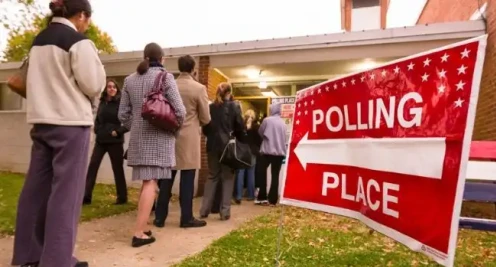
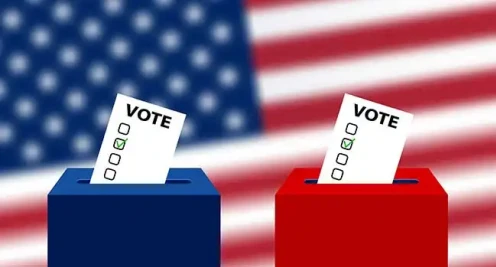
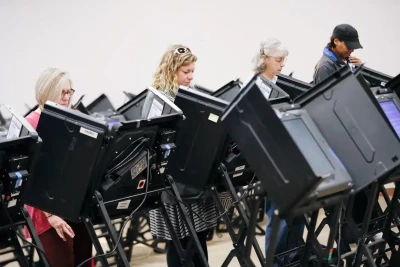
Experts agree that paper ballots are needed, but eight American states will use completely paperless machines in the 2020 elections regardless. What are your thoughts on this? Comment below.
States from Maine to California have recently enacted privacy, data security, cybersecurity, and data breach notification laws. We break down what each of these laws entails.
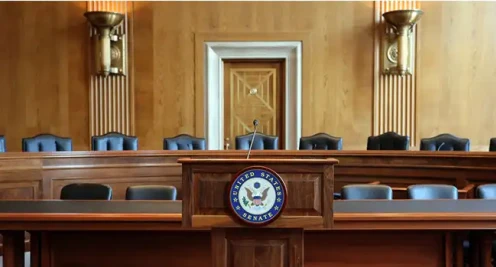
This report comes as Senate Republicans move to block election security legislation, arguing that election officials have already fixed the security issues they experienced in 2016. What are your thought on this?
Security experts and lawmakers say that creating a “backdoor” to unlock devices and messages would make those products vulnerable to hackers. What are your thoughts on this?
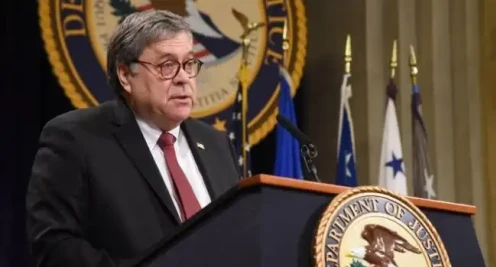
Duringa speech at a cybersecurity conferenceon Tuesday, Attorney General William Barr spoke out against the tech industry’s practice of using encryption tools that can only be unlocked by the end user, arguing that it endangers lives and makes it more difficult for law enforcement to do their jobs.
Barr said that encryption can be a valuable tool when it comes to protecting information from cybercriminals. He objected, however, to tech companies’ refusal to create ways for law enforcement to access locked or encrypted devices when they are issued search warrants.
Federal agencies tasked with protecting the personal and financial data of millions of Americans have failed to update their systems or implement basic cybersecurity defenses, according to a recent Senate report.
The House of Representatives passed an election security bill Thursday that is designed to prohibit cyberinterference through the forms of paper ballot voting, postelection audit, and replacing voting equipment.
Sometimes when tech policymakers try to solve a problem, their proposed cure would only make matters much worse. That’s certainly the case with draft US legislation that would give victims of cyberattacks the chance to hunt their suspected attackers down.
The European Union already suspected that Russia was trying to disrupt its parliamentary elections through hacks and other online interference, and now it's directly pointing a finger at the country. EU officials have published a report accusing Russia of orchestrating a "continued and sustained" misinformation campaign during the late May election similar to ones the country tried in the US, France and other countries. It used fake stories to "promote extreme views," stoke political tensions and, sometimes, discourage voter turnout.
Election Systems & Software, which describes itself as the nation’s leading elections-equipment provider, has vowed to stop selling paperless electronic voting systems—at least as the "primary voting device in a jurisdiction." And the company is calling on Congress to pass legislation mandating paper ballots and raising security standards for voting machines.
If you believe the US Federal Communications Commission, last June’s end of net neutrality—the system that required internet service providers to treat all data equally—has helped more Americans get broadband access. But the data behind this claim is highly controversial.
Huawei has filed a motion for a summary judgment against the US government that alleges section 889 of the National Defense Authorization Act 2019 (NDAA) is unconstitutional.
As of May 2019, over 20 US states have introduced bills seeking to regulate data privacy, data security, or some combination of the two. While many of these bills agree in spirit (i.e. privacy good, data collection and usage bad), the various bills are decidedly more divergent as to how to accomplish these objectives.
Since early April when Special Counsel Robert Mueller’s redacted report on the investigation into Russian interference in the 2016 presidential election was released, a storm of confusion and controversy has raged over what happened in Florida during that election. A cryptic passage in the Mueller report outlines how Unit 74455 of Russia’s military intelligence arm GRU sent “spear-phishing emails to public officials involved in election administration and personnel involved in voting technology.”
US legislators have sent an open letter to Google CEO Sundar Pichai asking for details about Sensorvault, an internal Google database that keeps track of users' historical geo-location details.
The French government just launched its own messaging app called Tchap in order to protect conversations from hackers, private companies and foreign entities. But Elliot Alderson, also known as Baptiste Robert, immediately found a security flaw. He was able to create an account even though the service is supposed to be restricted to government officials.
Garfield County, Utah, was recently affected by ransomware. Local government is an increasingly attractive target for criminals because of its high dependence on information technology, and generally poor security. Elected officials are under constant pressure to spend available funds on something visible and appealing to the electorate rather than unseen technology.
A new piece of bipartisan legislation aims to protect people from one of the sketchiest practices that tech companies employ to subtly influence user behavior. Known as “dark patterns,” this dodgy design strategy often pushes users toward giving up their privacy unwittingly and allowing a company deeper access to their personal data.