


Security Vulnerabilities  security advisory critical
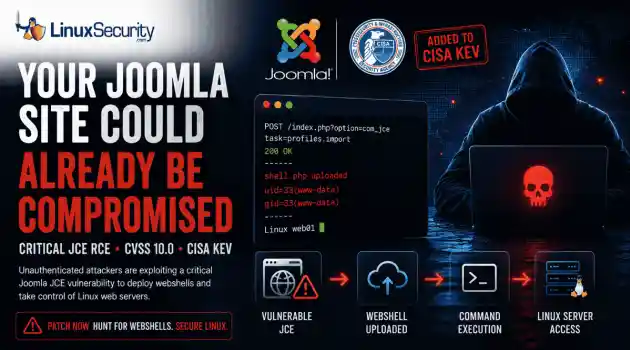
security advisory critical The Joomla Content Editor (JCE), one of the most widely deployed editor extensions for Joomla websites, is currently under active attack due to a critical vulnerability. . The issue, tracked as CVE-2026-48907 , affects JCE versions earlier than 2.9.99.5 and carries a CVSS score of 10.0. Because JCE is installed on a large number of public-facing Joomla sites, the vulnerability has quickly become a high-priority target for attackers and automated scanning campaigns. CISA has added the flaw to...
 Jun 17, 2026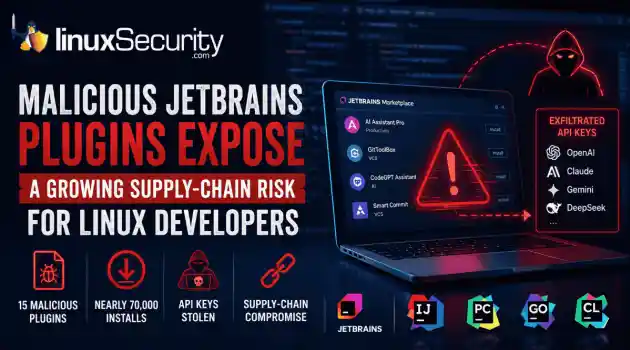
Security Trends security advisory open-source
security advisory open-source At least 15 malicious plugins and nearly 70,000 installs later, developers are being reminded that trusted marketplaces can become supply-chain attack vectors overnight. . How Malicious Plugins Steal API Credentials It’s simple. The user installs a plugin. It asks for API credentials. The developer clicks "Apply." A short time later, those keys could be sent to a third-party server. Think of an API key like a valet key to your house. It doesn't give them the deed to the property, but it lets...
Jun 17, 2026 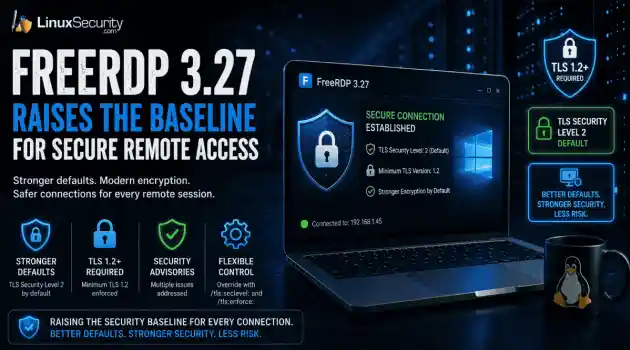
Security Projectssecurity advisory security update
security advisory security update Remote access tools do not need dramatic new features to improve security. Sometimes the more useful change is quieter, like stronger defaults that make weak encryption harder to use by accident. . What FreeRDP Is and Why This Release Matters FreeRDP is an open-source implementation of Microsoft’s Remote Desktop Protocol, used as both a library and a set of clients across Linux, Windows, macOS, Android, and other systems. In Linux environments, it is often the practical RDP client...
Jun 16, 2026 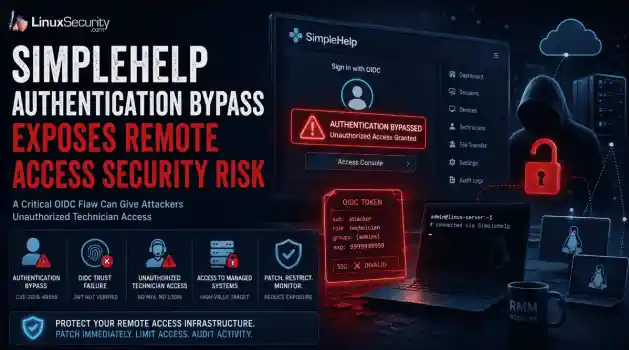
Security Vulnerabilities security advisory remote access
security advisory remote access Remote support platforms sit close to the systems attackers want most: administrator workflows, technician accounts, and managed endpoints. That is why the SimpleHelp OIDC flaw is more serious than a routine authentication bypass vulnerability. For organizations running these platforms on Linux-based infrastructure, the risk is compounded by the ease with which these services are deployed and integrated into larger management stacks. . What Is SimpleHelp and Why Is It a High-Value Target?...
Jun 16, 2026 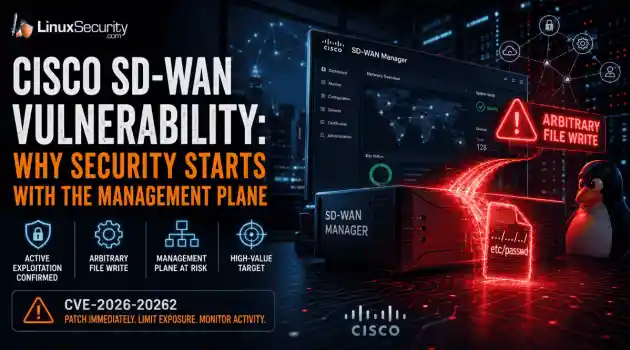
Network Securitysecurity advisory critical
security advisory critical For those of us who live and breathe Linux and open-source infrastructure, the "management plane" is usually just a collection of familiar tools—SSH, APIs, and centralized orchestration. But in the world of proprietary enterprise networking, the management plane is often a black box. Cisco’s latest SD-WAN issue serves as a stark reminder that even when these proprietary systems rely on Linux components under the hood, their centralized nature makes them the ultimate high-value target.....
Jun 16, 2026  Refine news
X Clear Filters Get the latest News and Insights
Get the latest Linux and open source security news straight to your inbox.
Community Poll
What got you started with Linux?
Loading...

Explore Latest Linux Security news
We found -4 articles for you...
78
 security advisoryUbuntucoreutils
Ubuntu 25.10: Transition to Rust-based Coreutils for Enhanced Security
Canonical has shaken up the Ubuntu ecosystem, announcing a major step forward —or sideways, depending on your view—by replacing the venerable GNU Coreutils with Rust-based uutils , starting with Ubuntu 25.10. This isn't just a tweak to the operating system’s innards. It's a foundational shift with implications that stretch across compatibility, security, and administration. If you’re neck-deep in managing Ubuntu systems, you need to pay attention. Changes like these can ripple through your workflows, and the worst thing you can do is be caught off guard. So, let’s dig in. . Rust is the foundation for this new approach. If you’ve been following the growing enthusiasm around Rust over the last few years, you’ve surely heard about its promises: its type system and how it prevents entire categories of bugs, its built-in security features that address memory safety, and its practical approach to modernizing codebases. Canonical is betting big on these attributes, pushing the Ubuntu project closer to a future where its core utilities are safer, faster, and potentially more maintainable. But this isn’t just about overhauling the inner workings of Ubuntu for the sake of technical symmetry. It’s about how something as basic as ls , cp , or find can fundamentally shift the operating system’s security and stability—or, depending on how this plays out, create headaches for admins who rely on GNU Coreutils behaving exactly as they have for decades. System administrators and developers don’t deal with these foundational tools in abstract terms. They’re baked into your scripts, they’re predictable, they’re trusted. When one of them fails to perform as expected, your day gets a lot worse, fast. Let's take a closer look at the mechanics of this transition, the growing appeal of Rust, the controversy surrounding this transition, and how you can successfully navigate this change. The Mechanics of the Transition Here’s how Canonical is handling this: starting with Ubuntu25.10, the replacement Coreutils will be rolled out as Rust-based versions via a system utility called oxidizr . Think of oxidizr as a kind of bridge, or maybe a valve—it lets you test the waters without diving straight into them. With oxidizr installed, you’ll have the ability to replace GNU Coreutils on your system with the Rust-based versions while keeping the originals safely backed up . If it works, great. If it doesn’t, no harm done; you roll back. The process sounds slick enough—and it needs to be. Canonical has openly stated that they’re pushing the boundaries with this experiment. Administrators will be warned repeatedly to tread cautiously. Oxidizr, at least initially, is labeled as experimental software. “Experimental” isn’t a word that inspires confidence when managing production infrastructure, but that’s exactly why oxidizr allows you to flip the switch back. Canonical has built escape hatches into this rollout because they know there will be edge cases, unexpected behaviors, and outright bugs. Why Rust, and Why Now? The timing of this move is no accident. Over the last few years, Rust has gained traction in both developer and security circles for its ability to write safer, more predictable code. It’s not just trendy—it solves legitimate problems. Many security exploits stem from issues like buffer overflows and use-after-free vulnerabilities, things that Rust’s design actively prevents. By integrating Rust into one of the most popular Linux distributions, Canonical is leaning heavily into this security philosophy. There’s also the question of maintainability. GNU Coreutils works, and it has worked for decades, but its complexities sometimes discourage new contributors from jumping in. Rust offers something that feels more modern, approachable, and inherently safer to newcomers. Canonical hopes this will result in a steady flow of contributors who might not otherwise get involved with legacy C code. And an influx of new minds can only help, especiallywhen security vulnerabilities need patching quickly. For administrators, this shift has a few parallels with adopting Rust-based utilities like sudo-rs , which Canonical is also set to introduce. These tools aren’t completely rewriting the rules of command-line behavior. Instead, they aim for the same functionality—with better safeguards. Over time, you’ll likely see fewer reports of vulnerabilities linked to the utilities embedded into Ubuntu. That’s a big win for everyone, assuming it pans out as expected. What Security Looks Like in Practice Security isn’t just something that gets better in theory. It has to work in the weeds. One of Rust’s standout features is its resistance to memory-related vulnerabilities, which account for a huge chunk of reported security issues in software. These are the kinds of bugs you don’t see coming until something breaks open, whether it’s a buffer overflow or an invalid memory write. With Rust-based utilities, the goal is to make such vulnerabilities disappear outright. But replacing Coreutils means handling functionality in some key edge cases—places where these utilities aren’t just running in isolation but interacting with other layers of the operating system. Compatibility is one concern Canonical isn’t glossing over. Early testing has pointed to missing or incomplete support for features like SELinux labels. These aren’t exotic use cases. If you’re relying on SELinux to enforce critical security policies, you can’t tolerate gaps in support. Canonical’s response, so far, has been to acknowledge these shortcomings and push fixes upstream. For admins, the takeaway is simple: test everything. Early adopters are bound to find workflows where the Rust-based utilities fall short, fall over, or behave differently from their GNU counterparts. That’s your opportunity to report the issue, but it’s also your opportunity to know when you should stick with GNU for the time being. The oxidizr utility provides that fallback mechanism,but relying on it too heavily might mean you’re sailing into waters that aren’t ready yet. Controversy and Conversations A shift of this magnitude doesn’t come quietly. Among admins and developers, the move has sparked debate—some practical, some philosophical. On one side are those with plenty of enthusiasm for Rust. It’s not hard to find praise for Canonical’s willingness to modernize and take risks. Rust-based utilities might not match GNU’s maturity yet, but the long-term security benefits aren’t easy to ignore. For those who spend their days patching bugs and locking down vulnerabilities, this looks like a step in the right direction. On the other side, concerns abound. Some are skeptical about replacing utilities with decades of real-world testing behind them. Stability doesn’t come easy in tools like these, and introducing new code always carries risk. Compatibility concerns are being raised left and right. Scripts, monitoring tools, and automated deployments often assume the behavior of GNU Coreutils. Any deviation—however slight—can gum up the works. There’s also the broader philosophical concern of replacing GNU components, which are tied deeply to the history of Linux itself. Some critics argue that this shift represents a break with traditional Unix philosophies, trading reliability and compatibility for the promise of security. Others worry that Rust-based utilities, while safer from certain classes of bugs, might introduce new issues administrators haven’t yet learned to anticipate. Our Final Thoughts: Navigating the Future as an Ubuntu User Canonical hasn’t left users high and dry with this transition. Their experimental approach signals that they’re aware of the stakes. Oxidizr, for all its warnings and disclaimers, gives admins the tools to experiment without committing. What’s clear is that this isn’t just a technical change—it’s a cultural one. Canonical is asking Ubuntu users, contributors, and administrators to rethink theirexpectations of core utilities. They’re asking the community to trust that the benefits of a safer code will outweigh the pains of adaptation. And they’re betting that Rust’s best features—its memory safety, its performance, its ability to attract contributors—will carry this transition forward. For system administrators, the lesson is straightforward: don’t get caught flat-footed. You need to test these utilities, even if you’re planning to stick with GNU for now. Understand where the differences lie, what edge cases might trip up your workflows, and what scripts or tools might need to be tweaked. Stay close to the community discussion. Canonical has been transparent so far, and the feedback they receive will shape how quickly uutils and oxidizr mature. This change isn’t coming as a surprise—we’ve got time to prepare for it. But make no mistake: Ubuntu 25.10 will mark a turning point, and all signs point to this being just the beginning. Rust is carving out its place in the Linux world. Whether you’re excited or apprehensive, it’s happening. Stay ready. . Examine how Ubuntu's transition to Rust-driven Coreutils is transforming security, improving features, and shaping future administration.. Rust utilities, Ubuntu Coreutils, Canonical shift, system administration. . Brittany Day
 May 08, 2025 •
 Vendors/Products
Get the latest News and Insights
Get the latest Linux and open source security news straight to your inbox.
Community Poll
What got you started with Linux?
Search Topics
Powered By

Linux Security - Your source for Top Linux News, Advisories, HOWTOs and Feature Releases
QUICK LINKS
subscribe to newsletters!
Like staying secure? So do we.
Sign up for updates, tips, and alerts!
Discover faster search, smarter navigation, and deeper Linux security insights. Read More