Overly broad permissions can turn one compromised account into a much larger security problem. Learn how to reduce unnecessary access, review privileges, and apply least privilege across modern Linux systems. Review Linux Privileges×


Stay Ahead With Linux Security Features
 identity management security tactics
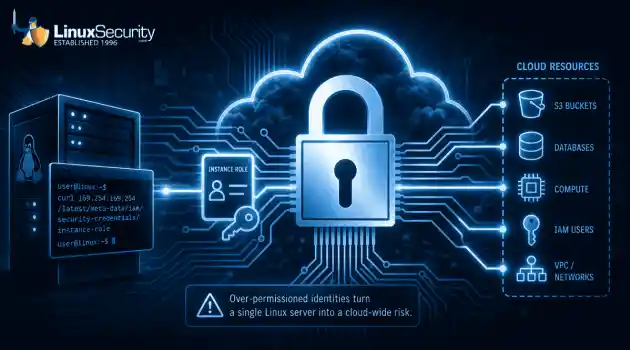
 For years, we secured our Linux infrastructure by building walls: VPCs, security groups, and hardened SSH configurations. We treated the cloud like a virtual data center, assuming that if we kept the "bad guys" out of the network, our workloads were safe. . That model is no longer sufficient. Today, one of the most common paths from an initial compromise to a major cloud breach is the identity assigned to your Linux workload. When an attacker gains code execution on a Linux instance—through a...
 Jul 17, 2026
 security practices patch management
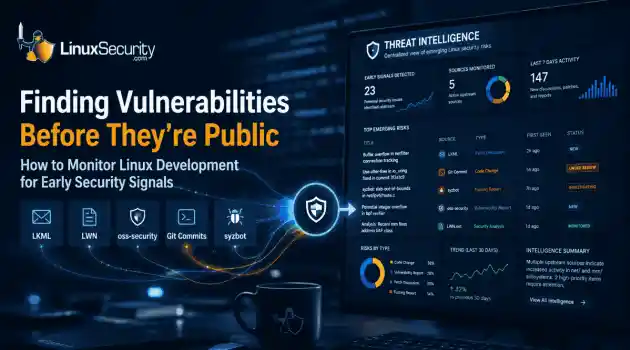
 Most of us don't hear about a kernel vulnerability until a CVE lands in our inbox or the vulnerability scanner starts complaining. By then, the patch isn't new anymore. Kernel developers may have been passing it around for review, arguing over the implementation, or revising it for days before anyone outside that community noticed it. None of those discussions are secret. They're sitting in mailing list archives, Git commits, and patch reviews where they've been the whole time. The strange...
Jul 14, 2026
 Linux security cyber attacks
 Every Linux server in your fleet produces thousands of events every minute. From journald logs and auditd records to kernel-level eBPF hooks, your systems are constantly talking. Most of that noise is just the mundane churn of system services, CI/CD runners, or routine administrative automation. But among that noise, an attacker might be establishing a foothold, moving laterally, or setting up persistence. The challenge for any security team is: how do you separate the routine from the...
Jul 13, 2026
 open-source infrastructure risk
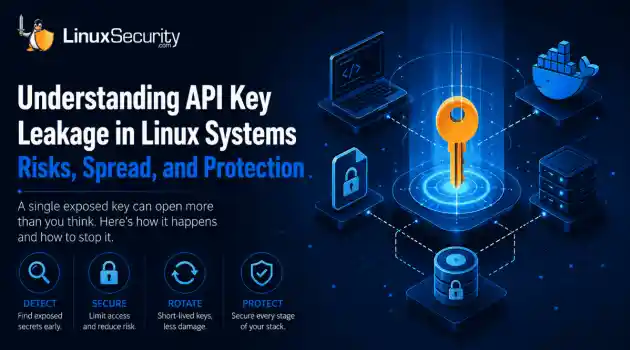
 Security scanners flag exposed API keys in public repositories every day. The initial response is usually predictable: delete the commit, revoke the credential, and move on. That’s a mistake. . In a real Linux environment, an API key never stays in one place. By the time it hits a public repo, it’s already everywhere. It’s in the CI/CD pipeline. It’s in your container registry. It’s in the build logs. It’s in the backups. Git makes this worse because the history never dies. Deleting a file in...
Jul 11, 2026
 open-source rootkit
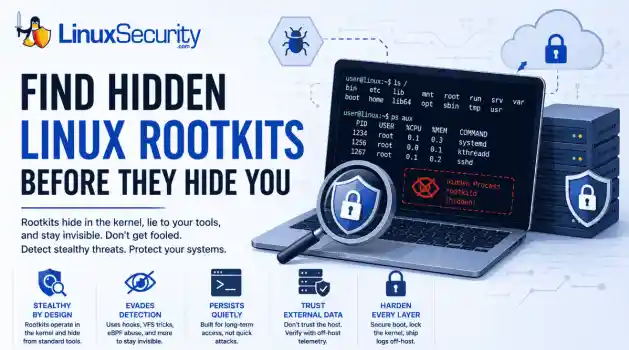
 Most of us think of Linux rootkits as ancient history—the stuff of 90s hacking forums and clunky malware that would crash your system if you looked at it the wrong way. But if you think they’ve gone away, you’re mistaken. They’ve just gotten smarter. . Modern attackers aren't using the noisy tools of the past. Today’s threats are surgical. Many of today’s most advanced Linux rootkits operate at the kernel level or abuse legitimate system features to blend in with normal traffic. They’re...
Jul 09, 2026
 Refine features
X Clear Filters
Get the latest News and Insights
Get the latest Linux and open source security news straight to your inbox.
Community Poll
Should Linux servers automatically install security updates?
Loading...
Explore Latest Linux Security features
We found 2 articles for you...
218
 security advisorylinux distributionprivacy
Exploring Privacy Focused Secure Linux Distros for Enhanced Security
Privacy and security have never been more important—or more under threat. With headlines constantly reporting data breaches, hacks, and the unchecked collection of sensitive personal information, it’s easy to feel like your digital life is always at risk. . However, there’s a silver lining for Linux users: experts widely agree that Linux is a highly secure OS —arguably the most secure OS available. That said, not all Linux distributions are created equal. While every distro benefits from the inherent strengths of Linux, some go the extra mile in safeguarding your privacy and security. From those designed for enterprise-grade reliability to others explicitly built for anonymity, there’s a distro tailored to meet your needs. We’ve explored some of the best specialized secure Linux distros, including insights from their developers, to help you navigate the options. Whether you’re focused on advanced security frameworks, protecting personal data, or simply locking down your system, this guide will help you choose the Linux distro that fits your priorities and gives you confidence in your digital security. Linux Security in 2026: Key Vulnerabilities and Solutions When it comes to security, Linux users undoubtedly fare better than their Windows or Mac-using counterparts. Linux offers inherent security advantages over proprietary OSes due to its diversity, flexibility, transparency of its open-source code, and role as a foundation for open-source intelligence tools. Distributions like Rocky Linux remain secure, RHEL-compatible options for users seeking enterprise-grade reliability in 2026. Thanks to its community-driven nature, security issues are caught and fixed quickly. Security technical implementation guides, like the DISA STIG, now support benchmarks for RHEL 9, ensuring compatibility with modern distributions like Rocky Linux. These guides provide clear security standards for users to follow, enhancing system resilience. Tools like the DISA STIG, on the otherhand, give you a solid framework for finding and managing these security gaps yourself. Along with its secure open-source roots, Linux's diversity within environments, the high level of configurability and control it provides sysadmins with features built into the kernel, such as SELinux and AppArmo, and the high level of security it offers also helps defend against attacks. In this sense, Linux is, in many ways, secure by design. Implementing reliable backup Linux solutions is another crucial step in maintaining system resilience. Although attacks targeting Linux systems are on the rise due to its relatively small user base, Linux is still a relatively unpopular target among malware operators and malicious hackers. Most malware still targets Windows, but the growing adoption of Linux in cloud and IoT environments has made it a target in 2026. Attackers increasingly exploit kernel vulnerabilities and IoT-specific malware to compromise Linux systems. Top Reasons to Choose Secure Linux Distros Like Rocky Linux Switching from a proprietary OS to a Linux distro like Ubuntu, Fedora, or Debian is an excellent step for privacy and security. In 2026, alternatives like Rocky Linux will continue to offer robust RHEL-compatible solutions, delivering enterprise-grade reliability and scalability for modern applications. If you really want to take things up a notch, implementing a security technical implementation guide ensures your system is locked down to meet top security standards. Secure Linux distros are built to focus on security, privacy, and anonymity. Understanding Linux distributions can help users choose the best option for their needs. Adding the DISA STIG into the mix makes sure your system lines up with well-established security standards, giving you extra peace of mind. Many of them incorporate Tor technologies and offer an impressive selection of hacking, pentesting, and digital forensics tools. As you can imagine, these characteristics and resources are invaluable whenassessing an organization's security infrastructure or conducting a security audit. Each distro offers a different balance of privacy and convenience. Rocky Linux emerges as a secure and reliable choice for those seeking stability in enterprise environments. Distros like Tails and Whonix leverage the Tor browser for Linux to maximize anonymity. However, these benefits come with some tradeoffs. The most popular programs and OSes typically have the weakest privacy protections but are also compatible with the majority of websites and offer the most support. While certain secure Linux distros are relatively mainstream and user-friendly, others have a steep learning curve, especially for less tech-savvy users. Explore the Top Secure Linux Distros for Privacy & Security 1. Qubes OS Qubes OS is ideal for users looking to mitigate risk by compartmentalizing their digital lives. As of 2025, version 4.2 introduces enhanced hardware compatibility and faster Qube management tools, making it even more user-friendly. Qubes OS uses multiple virtual machines—or 'Qubes'—to separate your systems into categories like 'work,' 'personal,' and 'Internet.' In its latest release, version 4.2, Qubes OS enhances hardware compatibility and improves Qube management tools, making it even more accessible to users in 2026. Users can ensure consistent security across these Qubes by following a security technical implementation guide. These Qubes, conveniently color-coded to help users differentiate them, are highly secure and can offer privacy advocates peace of mind in an increasingly invasive digital environment. As a result of this compartmentalization, if you happen to download malware to your work machine, your personal files won’t be affected, and vice versa. Integration of various Qubes is provided by the Application Viewer, which creates an illusion for the user that all system applications execute natively on the desktop - when, in reality, they are hosted in isolation in separate Qubes. The Dom0 domain manager, which manages the virtual disks of all other VMs, is isolated from the network to prevent attacks originating from an infected VM. In a conversation with the LinuxSecurity editors, Qubes OS Community Manager Andrew David Wong elaborated: “Rather than attempting to fix all of the security bugs in software, Qubes assumes that all software is buggy and compartmentalizes it accordingly, so that when flaws are inevitably exploited, the damage is contained and the user's most valuable data is protected.” Why We Love Qubes OS: Its “Security by Isolation” approach, which uses containers—aka “Qubes”—eliminates the concern of compromised programs. These Qubes are integrated into one everyday desktop environment and color-coded to help users stay organized. Sandboxing protects system components. Qubes OS offers full disk encryption for maximum file protection. 2. Tails Tails keep users safe online by using the Tor network , which is heralded for privacy and anonymity. In version 5.15, released in 2025, Tails introduces streamlined USB installation and an updated Tor browser, further enhancing its ease of use and privacy protections. Tails comes with the Tor browser for Linux, a secure email client, and other secure Internet tools. Tails is the most well-known privacy-focused distro and a popular choice among less tech-savvy security enthusiasts. A Tails Project contributor explains, “With Tails, anybody can turn any computer into a secure environment free from malware and capable of circumventing censorship.” On top of Tor's privacy and anti-censorship properties, Tails empowers users worldwide by developing and distributing an integrated and secure operating system that protects users from most surveillance and censorship threats by default. The distro provides a level of security that individual applications cannot achieve because they ultimately depend on the safety of the underlying operating system. The TailsProject relies heavily on donations and partnerships to maintain its independence and to continue serving the Linux community. Why We Love Tails: Its tight integration with the Tor network ensures anonymity online. The included web browser is pre-configured for maximum security and includes add-ons like NoScript, Ublock Origin, and HTTPS Everywhere. Users get access to Onion Circuits, a valuable tool that allows them to view how their PC traverses through the Tor network. Tails comes with the Aircrack-NG wireless network auditing tool. The OS is encrypted and designed to run with full functionality on a USB drive. The distro features a built-in Bitcoin wallet ideal for users looking to make secure cryptocurrency transactions. 3. Kali Linux Kali Linux is an industry-standard pentesting distro. In 2025, its latest updates include AI-driven pentesting tools, automating vulnerability detection, and improving workflow efficiency for security professionals. It is one of the most popular distros among pentesters , ethical hackers, and security researchers worldwide and contains hundreds of tools. A Kali Linux contributor provides some insight into the distro’s history and the benefits it offers users: “Named after a Hindu goddess, Kali has been around for a long time – but it’s still updated weekly, can be run in live mode or installed to a drive, and can also be used on ARM devices like Raspberry Pi.” Why We Love Kali Linux: Kali Linux uses LUKS full-disk encryption to protect sensitive pentesting data from loss, tampering, and theft. This flexible distro offers complete customization with live build . Users can automate and customize their Kali Linux installations over the network. “Forensics” mode makes this distro perfect for forensics work. A Kaili Linux training suite, Kali Linux Dojo , is available, where users can learn how to customize their own Kali ISO and learn the basics of pentesting. Theseresources are available on Kali’s website , free of charge. Kali Linux also boasts a paid-for pentesting course that can be taken online, with a 24-hour certification exam. Once you pass this exam, you’re a qualified pentester! 4. Parrot OS Parrot OS is constantly updated and has tons of hardening and sandboxing tools. By using the DISA STIG, you can configure Parrot OS to meet strict security requirements and get the most out of its features, from pentesting to reverse engineering and digital forensics - but this Debian -based distro also includes everything you need to secure your data and develop your own software. Parrot OS is frequently updated and offers users a wide selection of hardening and sandboxing options. Including backup Linux strategies further enhances its reliability. The distro’s tools are designed to be compatible with most devices via containerization technologies such as Docker or Podman . Parrot OS is very lightweight and runs surprisingly fast on all machines, making it an excellent option for systems with old hardware or limited resources. Why We Love Parrot OS: The distro provides pentesters and digital forensics experts with the best of both worlds - a state-of-the-art “laboratory” with a full suite of tools and standard privacy and security features. Applications that run on Parrot OS are fully sandboxed and protected. Parrot OS is fast, lightweight, and compatible with most devices. 5. BlackArch Linux This popular pentesting distro hails from Arch Linux and contains over 2,000 hacking tools - allowing you to use whatever you need without downloading new tools. BlackArch Linux offers frequent updates and can be run from a USB stick or CD or installed on your computer. BlackArch Linux is similar to Kali Linux and Parrot OS in that it can be burned to an ISO and run as a live system. This makes it a robust open-source intelligence tool for security professionals. However, this up-and-coming distro does offer a largeselection of preconfigured Window Managers. Why We Love BlackArch Linux: BlackArch Linux offers a large selection of hacking tools and preconfigured Window Managers. The distro provides an installer with the ability to build from source. Users can install tools either individually or in groups with the modular package feature. 6. Whonix Sometimes, using a live OS can be inconvenient – you have to restart your machine each time you want to use it, which is tedious and time-consuming. By installing an OS on your HD, however, you run the risk of the OS being compromised. Whonix offers a solution to this predicament – a virtual machine that works inside the free program Virtualbox and aims to provide security, privacy, and anonymity on the Internet. This Debian -based distro operates in two parts. The first part, known as the Gateway, routes all connections to the Tor network. The second part, referred to as the Workstation, runs user applications and can directly communicate only with the Gateway. The Workstation VM can only “see” IP addresses on the Internal LAN, which are identical in every Whonix installation. Therefore, user applications do not know the user’s actual IP address, nor do they have access to any information about the physical hardware of the machine on which the OS is running. This split design allows the user to remain completely anonymous and mitigates the risk of DNS leaks, which reveal private information such as web browsing history. Whonix has recently added an amnesic live mode that “forgets” users’ activities, leaving no traces on disk. The distro is currently working to create a unified desktop experience. Whonix developer Patrick Schleizer explains: “Our upcoming Whonix-Host extends many of our usability and hardening features to the entire desktop.” Whonix encourages users to provide feedback on their experience and sincerely appreciates donations and contributions to support the project’s ongoing efforts. Why We Love Whonix: Whonix comes with the Tor Browser and the Tox privacy instant messenger application, which ensures full-anonymous web browsing and instant messaging. The OS employs an innovative Host/Guest design to conceal users’ identities behind the anonymous proxy and prevent IP and DNS leaks. The distro features pre-setup Mozilla Thunderbird PGP email. Linux Kernel Runtime Guard (LKRG) , a kernel module that performs runtime integrity checking of the Linux kernel to detect security vulnerabilities and exploits, can be easily installed on Whonix . Best Secure Linux Comparison Table The comparison table comprehensively overviews several Linux distributions tailored for security-focused users. It encapsulates key factors such as User Friendliness, GUI Availability, Tutorial Availability, Community Support, Recommended User Level, Open Source License, and Top 3 Security Applications for each distribution. Tails OS, known for its strong privacy features, is moderately user-friendly. It offers abundant tutorials and robust community support, suggesting it's well-suited for intermediate users. Parrot Security OS (my favorite) is highly user-friendly, making it accessible to beginners and intermediates. It offers a plethora of tutorials and strong community support. Kali Linux is recommended for advanced users. It offers moderate user-friendliness, many tutorials, and a supportive community. Qubes OS scores low in user-friendliness, suggesting it's best for advanced users. It has limited GUI, moderate tutorials, and community support. BlackArch Linux is also geared toward advanced users with low user-friendliness, while Whonix provides an intermediate level of user-friendliness with moderate tutorials and community support. Each Linux distribution is backed by an open-source license. The table highlights three key security tools, helping readers discern which Linux distribution best suits their experience level and security needs. This comparison is aninvaluable resource for users to select a distribution that offers the appropriate balance of ease of use, educational resources, support, and advanced security functionalities to meet their specific requirements. Distribution User Friendliness GUI Availability Tutorial Availability Community Support Recommended User Level Open Source License Top 3 Security Applications Tails OS Moderate Yes High High Intermediate GPLv3 and others Tor, KeePassXC, Electrum Parrot Security OS High Yes High High Beginner to Intermediate GPLv3 and others Metasploit Framework, Nmap, Aircrack-ng Kali Linux Moderate Yes High High Advanced Various OSI approved Nmap, Metasploit Framework, Wireshark Qubes OS Low Limited Moderate Moderate Advanced GPLv2 Xen, FirewallVM, Whonix BlackArch Linux Low Yes Moderate Moderate Advanced Various OSI approved Metasploit, Wireshark, SQLmap Whonix Moderate Yes High Moderate Intermediate GPLv3 and others Tor, Onionshare, sdwdate Our Final Thoughts on Choosing a Secure Linux Distro There is a selection of excellent specialized secure Linux distros available to pentesters, software developers, security researchers, and users with a heightened concern for their security and privacy online. Picking the right Linux distro is about finding the balance that works for you. The DISA STIG helps standardize your setup, so it’s secure and follows proven best practices. A security technical implementation guide enables you to set things up correctly so you’re meeting solid security benchmarks right out of the gate. Based on your specific requirements and concerns, it is likely that one (or many!) of the distros profiled above could be an excellent fit for you, offering the tools and capabilities you are looking for in a distro, coupled with the peace of mind that your systemis secure and your privacy is protected online. . However, there’s a silver lining for Linux users: experts widely agree that Linux is a highly secu. privacy, security, never, important—or, under, threat, headlines, constantl. . Brittany Day
 Dec 22, 2025
•
Dec 22, 2025
•
218
 open source softwaresecurity challengescommunity trust
Exploring Open Source Security Challenges Benefits for Developers
Open-source security sits right in the middle of how we build software now. Most teams grab code from public repos, plug it in, and move fast. That’s fine until something deep in the stack breaks or turns out to be risky. Transparency helps, but that value depends on the people behind it. . At its core, open-source security is about keeping track of what you’re using and how safe it really is. It’s not just patching when a CVE drops. It’s knowing your dependencies, watching for abandoned projects, and spotting weak code before it becomes a bigger problem. We’ll go through the tradeoffs. Why open-source stays essential, where it trips people up, and what the community’s learned from real incidents. Then we’ll get into how teams can keep using open code without opening the door too wide. Overview & History of Open-Source Security When community-driven code-first took off, the real meaning of open-source security began to take shape. Early open-source projects made transparency and collaboration the basis of how software was built and maintained. Code stayed open for review, changes visible to everyone, which helped surface flaws faster and build trust in the process. The rise of projects like Linux, Apache HTTP Server, and OpenSSL set the pattern for community trust and faster patching cycles. Linux showed what a distributed review could look like. Apache built a governance model that kept collaboration organized. OpenSSL reminded everyone what happens when critical code runs without enough resources or oversight. Together, these projects shaped how we think about open-source security today. Key Milestones in Open-Source Security Year Event Security Significance 1985 Free Software Foundation founded Established the principle of peer-reviewed, open development. 1989 GNU General Public License introduced Ensured transparency and shared rights to audit code. 1990s–2000s Linux, Apache, OpenSSL projects grow Pioneered collaborative patching and community-based response models. 2025 Open-source software (OSS) reports highlight ubiquity and governance shift The 2025 OSSRA report found that 97% of audited codebases include open-source components. The findings pushed organizations toward tighter governance and better tracking of supply chain risk. Advantages of Open-Source Software Open-source has always been about shared visibility. Anyone can read the code, test it, and fix it. That openness is what gives open-source security its edge. Problems don’t hide for long when thousands of developers use the same libraries every day. Teams also stay in control. They patch when they need to, not when a vendor releases a fix. With the right application security tools, open code becomes a living system that adjusts faster than most commercial software ever could. Transparency Accelerates Detection When code is public, mistakes surface fast. People test, report, and correct issues as part of their daily work. Linus’s Law still applies: “Given enough eyeballs, all bugs are shallow.” That pace is visible in the Linux community. Researchers and maintainers watch the same codebase, often catching small flaws before they reach production. Collaboration Builds Stronger Defenses The best-known application security tools — OWASP ZAP, SonarQube, ClamAV — were built the same way. Openly, by distributed teams that review each other’s work. That rhythm of contribution and critique shortens patch cycles and improves testing coverage. Each project benefits from another. A detection rule refined in one tool shows up somewhere else. Regular security patches and updates keep the loop active. Transparency Prevents Malicious Code It’s hard to hide something malicious when everyone can read the diff. Public review doesn’t stop every bad actor, but itlimits how long bad code can stay unnoticed. That visibility builds quiet trust. Contributors know their work can be checked by anyone. Auditing becomes a habit, not a policy, and trust builds one review at a time. Forking and Independence Preserve Longevity Projects don’t have to die when interest fades. Forking lets them keep moving under new hands. It’s one of the quieter strengths of open-source security, driven by community. LibreOffice carried forward from OpenOffice when updates slowed. LineageOS did the same for Android, keeping security patches alive for devices long past official support. Forking maintains, not just running, which is the difference between old code and abandoned code. Challenges and Limitations of Open-Source Open-source survives on steady maintenance, not just good code. When those people stop, things slow down fast. A lot of projects run on volunteers or small teams with no budget. If they get busy or lose interest, patches stall and bugs linger. That’s the real problem in open-source security, not the code itself, but keeping enough hands on it to stay current. When teams know a project is slowing down, they usually add backups. They’ll deploy network security tools like Snort or Suricata to monitor traffic and flag anything suspicious. It’s a safety net, not a fix. Vulnerability scanning tools help too — Nessus, OpenVAS, whatever you’re running — but they can only point out what’s broken. If no one’s maintaining the code, nothing gets patched. That’s the real gap with open-source. The problems are visible; the question is whether someone’s still there to fix them. Case Studies: When Open-Source Security Failed Open-source works because people stay involved. When they don’t, things slip through. Open-source security depends on steady attention, and that doesn’t always hold. Heartbleed and Shellshock showed what happens when code outlives its oversight. The 2025 supply chain attacks proved it’s not just oldbugs anymore — attackers now go straight after the systems we use to share code. Heartbleed Bug (OpenSSL) The Heartbleed bug hit OpenSSL in 2014. It had been sitting in the code for years, missed by everyone. A few volunteers were keeping the project afloat with almost no funding. When the flaw came out, it forced emergency patching across most of the internet. It was a turning point. After that, companies began investing real money in the projects they relied on. Open-source security stopped being something everyone assumed “just worked.” Shellshock (Bash) Shellshock surfaced a few months later. The bug had been in Bash for decades, hiding in plain sight. People trusted it because it was old and familiar. Once exposed, it spread fast and forced admins to rethink what “stable” really means. The takeaway was simple. Even legacy code needs structured testing and reviews. Age doesn’t equal safety. 2025 Supply Chain Attacks (NPM, PyPI, Docker Hub) In 2025, attackers went after the source instead of the code. They got into developer accounts on NPM, PyPI, and Docker Hub , then pushed poisoned updates straight into trusted packages. Some of those updates had millions of downloads before anyone caught them. That changed how people handle releases. Teams started locking down who could publish, signing builds, and tracking dependencies tightly. It made everyone realize open-source security isn’t just about fixing bugs — it’s about securing the path that code takes to production. What These Incidents Changed Transparency helps, but only if people stay engaged. Legacy code carries risk just like new projects do. Funding and structured review matter more than trust. Supply chain defense is now part of everyday maintenance. Strengthening Open-Source Through Better Management Most teams learn the same thing the hard way — staying secure isn’t just about code. It’s about process. Good open-source security comes from maintaining updates,regularly scanning, and restricting access to what is needed. A few habits make the biggest difference. Automate what you can. Tools like Ansible and Puppet handle repetitive updates faster than humans ever will. Automation maintains systems and closes the gap between patch release and deployment. Run regular scans. Use application security tools such as OpenVAS or Nessus to identify weak spots early. These scans detect configuration drift and outdated dependencies before they become incidents. Layer your defenses . Pair those scanners with network security tools and continuous monitoring. Each layer catches what the others miss, such as traffic anomalies, misconfigured endpoints, and unpatched services. Tighten access. Role-based access control and least privilege go a long way toward security. Fewer admin rights mean fewer attack paths. It’s basic, but it works. It’s steady management, the kind that holds the rest of your security together. Global Initiatives Strengthening Open-Source Security The push to improve open-source security has gone global. Groups like the OpenSSF now fund audits, education, and full-time maintainers for critical projects. Bug bounty programs pull in fresh eyes, and training helps developers spot problems before they commit them. CI/CD systems play a significant role as well. Integrated testing and automated release checks keep patches moving fast through CI/CD pipelines , closing gaps before they reach production. Together, these efforts are turning open-source maintenance into a shared responsibility — not just for communities, but for the entire software ecosystem. Takeaway: The Future of Open-Source Security Open-source has always worked because people care enough to maintain it. Someone still has to patch, test, and manage the flow of updates. When that slips, so does open-source security. The path forward’s pretty simple. Keep the collaboration, but add structure. Fund the projects you rely on. Make maintenanceroutine, not a side task. That’s what keeps the ecosystem healthy and predictable. We’ll keep depending on open-source; that’s not changing. The question now is whether we’ll keep supporting it the way it needs. Do the benefits of OSS outweigh the risks? Connect with us @lnxsec . . Explore the challenges and benefits of open-source security, emphasizing the need for community involvement and effective management.. open source software security, collaborative development, software risks, community trust. . MaK Ulac
Nov 03, 2025
•

218
 security advisorynetwork securityaccess control
Linux Security Tips Against Malware in 2025 - Your Guide to Prevention
Recent years have demonstrated a notable shift in the cybersecurity landscape, with Linux systems increasingly targeted by adversaries. Once considered relatively immune to malware threats , Linux servers have seen the emergence of sophisticated attack vectors, including high-profile Linux malware strains such as Cloud Snooper, HiddenWasp, and Tycoon. . These exploits showcase advanced capabilities in spreading, evading detection, and compromising server environments. For security professionals, this evolution underscores the importance of an informed and proactive approach to Linux server security. While Linux continues to provide fundamental security advantages through its strict privilege model and kernel-level defenses, the rise in targeted attacks—including those exploiting misconfigurations and poorly managed services—requires system administrators to reevaluate their strategies. The inherent strengths of open-source systems, such as rapid vulnerability patching and transparent code review, remain essential. However, reliance solely on these mechanisms without attention to Linux security best practices leaves systems vulnerable to compromise. Let's examine some key measures for addressing modern threats, focusing on known vulnerabilities and behavioral adjustments to mitigate risks. The strategies I'll share include effective access control with SELinux, reducing brute force attack vectors, defending against kernel exploits with Linux Kernel Runtime Guard (LKRG), and prioritizing privacy measures for network security. By implementing robust techniques informed by recent trends in Linux malware and attack methods, we can maintain resilience in increasingly hostile environments. How Secure is Linux? Regardless of the rise in attacks targeting Linux servers in recent years, Linux still offers notable security and privacy advantages over proprietary OSes like Windows or MacOS. Because of the availability of its open-source code and the constant, thorough review that this codeundergoes by a vibrant worldwide community of developers and security experts, vulnerabilities are found and fixed very quickly and reliably compared to the closed-source code of proprietary OSes. Linux also greatly restricts root access through a strict user privilege model and features a selection of built-in kernel security defenses, including firewalls that use packet filters in the kernel, the UEFI Secure Boot firmware verification mechanism, the Linux Kernel Lockdown configuration option, and the SELinux or AppArmor Mandatory Access Control (MAC) security enhancement systems. However, despite the inherent security advantages that Linux offers, the OS is still vulnerable to compromise as a result of frequent misconfigurations and poorly managed services. While all Linux distros offer inherent security advantages over Windows or MacOS, pentesters, security researchers, and users who are simply looking to maximize their security, privacy, and anonymity online can achieve this by choosing a specialized secure Linux distro . Regardless of the distro you choose, there are certain behaviors and Linux security best practices that all system administrators should engage in to secure their system against malware threats, viruses, and other exploits. Here are our top tips for optimizing the security of your Linux system in this modern threat environment. Focus On The Fundamentals First The majority of Linux security threats can be attributed to either misconfigurations or poor system administration—such as failure to keep up with security updates—and are not a reflection of the security of Linux source code. The Cybersecurity and Infrastructure Security Agency (CISA) and the Federal Bureau of Investigation (FBI) urge system administrators to prioritize patching known security vulnerabilities - especially those being exploited by foreign threat actors. Cybercriminals often begin by focusing their efforts on known vulnerabilities, as exploitation of these flaws requires fewer resourceswhen compared to zero-day exploits (for which no patches are available) or the exploitation of vulnerable applications. LinuxSecurity.com tracks the latest Linux distribution security advisories , providing you with an easy and convenient way to stay informed of the latest updates issued by your distro. When looking to improve your Linux server security, begin by making sure that it is properly configured and up-to-date. Implementing the other tips and tools that we suggest in this article will do very little to keep you safe if these best practices haven’t been addressed. Control Access to Your System with SELinux Using Security-Enhanced Linux - often referred to as SELinux - is a great way to increase the control you have over access to your system. SELinux is a highly fine-grained and fairly technical mandatory access control (MAC) system that restricts access beyond what traditional discretionary access control (DAC) methods such as file permissions or access control lists (ACLs) can achieve. For example, there is no reason that a web browser should need access to an SSH key, so, in SELinux, this information would not be provided to the web browser. Stringent access controls are critical in preventing malicious actors from gaining administrative access to your system and installing rootkits or other types of malware. For this reason, SELinux has been adopted by multiple popular Linux distros including Fedora, Ubuntu and Debian, and typically enabled by default. Prioritize Network Security Using a VPN to encrypt data between you and your server is an excellent way to protect your privacy and anonymity online. By masking your internet protocol (IP) address, VPNs ensure that your web browsing history and other online actions are virtually untraceable. VPN use is crucial in staying safe online while working remotely. However, boosting your online privacy isn’t as simple as implementing any VPN - the VPN that you select is extremely important. When choosing a VPN, users shouldevaluate a range of characteristics, including speed, security, ease of use, and the reliability of the encryption technology used, among other factors. Wireguard (pictured below) is our top choice. The free and open-source VPN, which runs as a Linux kernel module (LKM), aims to exceed its competitors (namely OpenVPN ) in performance and power-saving ability. Wireguard offers the best of both worlds - it is both user-friendly and highly effective. Wireguard’s use of versioning of cryptography packages enables the VPN to focus on ciphers believed to be among the most secure current methods of encryption. In addition to using a quality VPN like Wireguard, users should check their routers for security bugs. Research conducted by Fraunhofer Institute for Communication (FKIE) revealed that the firmware present in a large number of popular home routers - many of which have never received a single security firmware update in their lifetime - is vulnerable to a wide range of serious security issues. Your router may very well be the biggest security hole in your network! Install Linux Kernel Runtime Guard to Detect Vulnerability Exploits Linux Kernel Runtime Guard (LKRG) is a kernel module created by Openwall that performs runtime integrity checking of the Linux kernel to detect security vulnerability exploits against the kernel. LKRG attempts to post-detect and rapidly respond to unauthorized kernel modifications or changes to credentials of running system processes - protecting against exploits gaining unauthorized root access through kernel vulnerabilities, exploits escaping, e.g., from Docker containers, LKM rootkits, and other serious threats to the security of a Linux system. The module is capable of combating the majority of both pre-existing and hopefully future Linux kernel vulnerability exploits. LKRG provides security through diversity - without the usability drawbacks associated with running an uncommon OS. LKRG is most useful on systems that realistically won't be promptlyrebooted into new kernels nor live-patched whenever a new kernel vulnerability is discovered. OpenWall Founder Alexander Peslyak elaborates: “LKRG offers best-effort protection against kernel vulnerability exploits with little effort on behalf of the user - no need to configure a policy, etc. - making it especially beneficial for systems that are not expected to be consistently kept up-to-date.” The module is compatible with a wide range of popular distros’ kernels, and can be easily installed in distros including RHEL, CentOS, Debian, Ubuntu and Whonix. Use Fail2ban to Prevent Brute Force Attacks Brute force attacks are very common among Linux servers. These attacks are often successful simply due to a lack of adequate intrusion prevention measures. Fail2ban is an excellent intrusion prevention application designed to secure servers against brute-force attacks. Fail2ban monitors logs and reacts to intrusion attempts by either installing firewall rules to reject potentially malicious IP addresses for a certain amount of time or blocking access to a specific port. You can download fail2ban from fail2ban Downloads . Download the Privacy Badger Extension to Secure Your Browser Against Trackers Privacy Badger is a free and open-source browser extension created by the Electronic Frontier Foundation (EFF) that prevents advertisers and other third-party trackers from secretly tracking the web pages you visit and your actions online. Privacy Badger takes a balanced approach to Internet privacy between advertisers and consumers by blocking advertisements and tracking cookies that violate the Do Not Track header on outgoing requests - which the extension automatically adds so users conveniently don’t have to configure this setting in their browser. With Privacy Badger downloaded on your system, if it appears that an advertiser is tracking you across multiple websites without your permission, the add-on automatically prevents that advertiser from being able to load any furthercontent in your web browser. In the eyes of the advertiser, you’ve suddenly and mysteriously disappeared. Privacy Badger can be installed on Google Chrome, Mozilla Firefox, Opera, and Firefox for Android. Generate an SSH Key Pair to Help Protect Your Privacy & Secure Your Server While using strong passwords is a great step toward strengthening your privacy and securing your server, generating a secure shell (SSH) key pair is an even better method and should be one of the first measures implemented when taking a proactive approach to server security. It is important to keep in mind that security is all about tradeoffs, and determining whether to rely on passwords or use SSH keys is a prime example of this. While passwords are certainly more convenient for most users, they are also often fairly easy for malicious hackers to guess or crack through brute force - leaving sensitive data and entire systems vulnerable. SSH key pairs are not as user-friendly as passwords but are far more secure due to the encryption used by both the server being logged into and the computer being used. An SSH key pair consists of two cryptographically secure keys that can be used to authenticate a client to a server. Each pair is made up of a public key that may be known by others and a private key that is retained by the client and should remain private. When an administrator generates an SSH key pair to secure a server, the public key is uploaded to the remote server that he or she wants to be able to log into with SSH. When a client attempts to authenticate to the server, the server can test whether the client possesses the private key. In order for an SSH key pair and the server it is protecting to remain secure, SSH keys must be stored in a safe location. When determining where to save keys, administrators should weigh the likelihood of a physical attack against the likelihood of a server hack. When in doubt, save SSH keys to a local device that is kept in a secure location to mitigate vulnerability in the eventof a hack. Perform Regular Security Audits The only way to be sure your system is as well protected as you think it is - or as it needs to be - is to frequently test and verify its security . Conducting regular security audits is a great way to identify gaps in your security defenses and determine how they can be addressed to better protect your server against vulnerabilities and attacks. The Linux Auditing System (AuditD) is a native feature of the Linux kernel that can provide administrators with valuable insight into the security, stability, and functionality of their systems. It works on the kernel level (where it can oversee all system processes) and collects and logs information on system activity to facilitate the investigation of potential security incidents. AuditD logs information according to its auditing rules as well as any rules that have been added. Our Final Thoughts on Optimizing Linux Security in 2025 While threats to the security and privacy of Linux systems are at an all-time high, Linux users are still safer online than their Windows- and MacOS-using friends . The increasingly popular open-source OS offers inherent security benefits due to the transparency of its source code and its relatively small user base, and a selection of specialized privacy- and security-focused Linux distros are available for users looking to take their digital security and anonymity one step further. Regardless of the distro they choose, all Linux users can improve their security posture by engaging in good cyber hygiene and implementing the tips and best practices offered in this article. LinuxSecurity Founder Dave Wreski explains, “With the drastic uptick in attacks targeting Linux systems in recent years, now is definitely not the time to slack when it comes to system security and maintenance. The majority of successful attacks on Linux systems cannot be blamed on the OS as a whole, but rather can be attributed to misconfigured servers and poor system administration.” Haveadditional questions about securing your Linux system? Please do not hesitate to reach out - we’re here to help! Connect with us on X @lnxsec. . Modern malware threats demand proactive Linux security measures with effective tips for maintaining resilience against attacks.. Linux security tips, malware threats, proactive security measures, SELinux access control, Linux Kernel Runtime Guard. . Brittany Day
Jun 29, 2025
•
218
 Linux securitymalware protectioncybersecurity
How Secure Is Linux? Benefits of Design, Privileges, and Defenses Explained
So, how secure is Linux? That’s a question every sysadmin has probably asked themselves at some point, whether they’re setting up a shiny new server or just letting their mind wander while staring at a terminal. . You’ve likely heard the praise for Linux: open-source, robust, and designed with security baked right in. But what does that actually mean? I mean, we all know no system is impenetrable, but Linux comes pretty close in ways that make it stand out. The kernel itself is packed with features that keep things buttoned up, from user privilege management to mandatory access controls like SELinux or AppArmor. If you’ve spent time hardening a system—tweaking SELinux policies, locking down sysctl.conf, or setting up kernel lockdown—you know there’s a lot of flexibility here. More than most other operating systems can offer, that’s for sure. But here’s the thing: there’s a reason Linux stays ahead in the security game. Its open-source nature means every line of code is out there for anyone to inspect, which is pretty handy when you’re hunting bugs. Compare that to Windows, where security by obscurity leaves you relying on a small team behind closed doors—and they’re not exactly crowdsourcing their fixes. That openness isn’t flawless, but it does give Linux the edge when it comes to spotting and patching vulnerabilities fast. Between the user-driven privilege model (seriously, not everyone is root, unlike in Windows) and the sheer diversity across distros and architectures, Linux makes life hard for attackers trying to exploit systems en masse. It’s not bulletproof, and misconfigurations are still a sysadmin’s Achilles' heel. But when Linux is set up correctly, those attackers are in for an uphill battle. Much of that stability disappears when quiet changes accumulate across permissions, logs, or update chains — a wider pattern commonly described as system drift in Linux . What Makes Linux Secure by Design? When it comes to security, Linux users are ata decided advantage over their Windows- or Mac-using counterparts. Unlike proprietary OSes, Linux is the most secure OS by design, as Linux security features are built into the system. The increasingly popular open-source OS is highly flexible, configurable, and diverse. Linux also implements a strict user privilege model and offers a selection of built-in kernel security defenses to safeguard against cybersecurity vulnerabilities and attacks. Linux source code is transparent to ensure any network security issues are short-lived despite being inevitable on even the most secure OS. Let’s look at Linux's features and how they contribute to robust data and network security. If you want a deeper breakdown of the core features of Linux that shape its security, we cover them in our dedicated guide. The Open-Source Security Advantage Linux security vulnerabilities are generally identified and eliminated very rapidly since their source code undergoes constant, thorough review by the vibrant, global open-source security community. In contrast, vendors like Microsoft and Apple employ a method known as “security by obscurity,” where source code is hidden from outsiders in an attempt to conceal security issues from threat actors. This approach is generally ineffective in preventing modern exploits because it undermines the security of the “hidden” source code by preventing outsiders from identifying and reporting data and network security weaknesses before malicious actors. When it comes to discovering security bugs, a small team of proprietary developers is no match for the worldwide community of Linux user-developers who are deeply invested in helping it maintain its status as the most secure OS. A Superior User Privilege Model Unlike Windows, where “everyone is an admin,” Linux greatly restricts root access through a strict user privilege model. On Linux, a superuser owns all the privileges, and ordinary users are only granted enough permissions to accomplish their tasks. Because Linux usershave low automatic access rights and require additional permissions to open attachments, access files, or adjust kernel options, it is harder to spread malware and rootkits on a Linux system. Thus, these inherent restrictions serve as a key defense against system compromise and attacks on network security. These controls work alongside basic integrity checks such as SHA256 hashing, which we cover in our guide to Linux integrity verification methods . Built-In Kernel Security Defenses The Linux kernel boasts an array of built-in security defenses, including firewalls with packet filters, UEFI Secure Boot firmware verification mechanisms, Linux Kernel Lockdown configuration options, and SELinux or AppArmor Mandatory Access Control (MAC) security enhancement systems. By enabling and configuring these Linux security features, known as Linux kernel self-protection, administrators can maintain the safest possible OS. Security through Diversity Linux environments allow for much diversity, as there are various distros, system architectures, and component companies that businesses can pick to meet their needs. This diversity not only helps satisfy users’ individual requirements but also enhances the secure OS so that attacks in network security are more difficult to achieve and cybersecurity bugs are harder to find. If cloud security breaches are to take place, however, malicious actors cannot use those tactics on a wide range of Linux systems, thanks to their diversity. In contrast, the homogeneous Windows “monoculture” makes these systems relatively easy and efficient attack targets. In addition to the design diversity seen in Linux, certain secure Linux distros are differentiated in ways that specifically address advanced security and privacy concerns shared among pentesters, reverse engineers, and data and network security researchers. Highly Flexible & Configurable There are vastly more configuration and control options available to Linux security administrators than to Windowsusers. For instance, Linux sysadmins have the ability to use SELinux or AppArmor. to lock down their system. These security policies offer granular access controls, providing a critical additional layer of security throughout an already secure operating system. Linux Kernel Lockdown configuration options strengthen the divide between userland processes and kernel code, and admins can harden the sysctl.conf file, the main kernel parameter configuration point for a Linux system, to give their server a sturdier foundation for their secure OS. Why Is Linux an Increasingly Popular Target among Cybercriminals? Linux powers the majority of the world’s high-value devices and supercomputers, and the secure OS’s user base is steadily growing. Unfortunately, cybercriminals have taken note of these cybersecurity trends. Malware authors and operators are targeting Linux systems in their malicious campaigns more frequently. The past few years have been plagued with emerging Linux malware strains. That being said, Linux is still a relatively small target, with 96% of new malware targeting Windows. Also, the recent increase in Linux malware breaches is not a reflection of whether or not Linux is a secure OS. The majority of attacks on Linux systems can be attributed to misconfigurations and poor administration, highlighting a widespread failure among Linux sysadmins to prioritize data and network security. Luckily, as Linux malware continues to become increasingly prevalent and problematic, Linux offers built-in protection against malware attacks through its strict user privilege model and design diversity. A selection of excellent reverse engineering and malware scanning toolkits, like REMnux, Chkrootkit, Rkhunter, Lynis, and Linux Malware Detect (LMD), is available to help admins detect and analyze malware on their systems. Our Final Thoughts: How Secure Am I As A Linux User? Alright, here’s the deal: Linux is an incredibly secure operating system, but let’s not pretend it’s magic. Ifyou neglect your configuration or ignore basic security practices, even the best-built systems will eventually come crashing down. Misconfigured servers, outdated setups, or just plain laziness—these open the door for attackers, no matter how locked down the kernel is. Sure, Linux has the tools: SELinux, AppArmor, Chkrootkit, you name it. But tools don’t mean much if they’re collecting dust. At the end of the day, it’s on the sysadmin to piece it all together, steer clear of the bad habits, and maintain systems with care. It’s not glamorous or exciting, but guess what? That’s how you stay secure. Honestly, security is like a pile of Lego bricks; the potential is there, but someone has to build it right. That said, Linux is still one of the best choices you can make when it comes to online security. No platform is invincible, but Linux gives you more control, more flexibility, and some serious advantages over Windows or macOS. The diversity across distros alone makes it harder for attackers to recycle their tactics or build one-size-fits-all exploits. And while the learning curve can rear its ugly head now and then—yeah, SELinux policies will test your patience—it’s worth it. You trade a bit of convenience for peace of mind, and that’s not a bad deal. As the saying goes (alright, maybe not literally), “The most secure system is the one turned off and tossed to the bottom of the ocean.” You’ve got to strike a balance and configure Linux to be as secure as needed without making it unusable. If you’re willing to put in the effort, Linux can be as close to "locked down" as you want. . You’ve likely heard the praise for Linux: open-source, robust, and designed with security baked ri. secure, linux, that’s, question, every, sysadmin, probably, asked, themselves. . Brittany Day
Jun 09, 2025
•
218
 attackransomwaresecurity awareness
Understanding Linux Ransomware Attack Steps and Protection Strategies
Ransomware has been making life miserable for IT folks for years now, and you’ve probably heard plenty about how it hits Windows systems . But Linux? Yeah, that’s not off-limits anymore. In fact, attackers are seeing Linux as an appealing target—servers running critical enterprise networks, government systems, and big databases that power everything from websites to operations. Anything important enough to cause chaos if it’s compromised, especially where someone’s willing to shell out money to get it back, gets a big bullseye on it. Sure, the majority of ransomware still goes after Windows machines, but if you’re thinking, “Linux is safe because fewer people target it,” that’s a gamble you don’t want to take these days. The methods attackers use are evolving, and even though Linux ransomware is still less common, the attacks themselves are clever, nasty, and diverse. . What’s scary here isn’t just the damage these attacks cause—encrypted files, downtime, reputation hits, and recovery costs—it’s how they sneak their way onto Linux systems in the first place. They exploit vulnerable setups, outdated software, misconfigurations, and anything careless or overlooked. The attack process itself is almost methodical, like breaking into a house and systematically going through every room. But knowing how these attacks work—and, more importantly, how to stop them—can make a big difference. Let’s break down what’s happening in these Linux-targeted ransomware attacks step by step so you have a clearer picture of the threat. Plus, we’ll talk about how to lock things down and avoid being the next “news headline.” Anatomy of a Linux Ransomware Attack Linux ransomware has become known for the sophistication and diversity of its tactics, methods, and techniques to compromise systems and generate profits for its operators. Ransomware attacks targeting Linux systems are generally carried out in a series of clearly defined steps, beginning with exploiting one or multipleunpatched vulnerabilities and ending with a payday for the attackers. Let’s take a closer look at the anatomy of a Linux ransomware attack, broken down step-by-step, to help you better understand this growing threat to your systems and your data. Step 1: Infection Unlike Windows ransomware variants, which spread via email or mall advertising, Linux ransomware infection relies on vulnerability exploitation. Linux ransomware exploits either unpatched system vulnerabilities or flaws in a service, such as a web server or email server, to obtain access to a target system and compromise files. For instance, the infamous Lilocked ransomware exploits out-of-date versions of the Exim message transfer agent to gain a foothold in a target environment. Rex, another dangerous strain of Linux ransomware, uses vulnerability scanners specific to Drupal, WordPress, Magento, Kerner, Airos, Exagrid, and Jetspeed to detect SQL injection vulnerabilities that can be exploited to gain admin credentials. Reliable backups remain one of the most effective defenses against ransomware, and for Linux-hosted e-commerce platforms, a well-planned Magento 2 backup approach is essential to restoring operations without paying attackers. Once in the target environment, the ransomware operator “phones home” to download a hidden executable by connecting to a predefined list of IP addresses that host the command-and-control (C2) server. At this point, the attacker typically copies the malicious executable to a local directory, such as the Temp folder, and then terminates and removes the script. The malicious payload is now executed in the target environment. Linux ransomware strains often possess privilege escalation capabilities, such as those seen in the notorious Lucifer and NotPetya variants. These advanced features enable ransomware operators to access parts of a system that would be inaccessible without privileged access. While Linux ransomware typically only affects those using the web server that is compromised,privilege escalation can magnify both the scope of an attack and its overall impact. Step 2: Staging This step can be seen as the “housekeeping” portion of a Linux ransomware attack. The ransomware sets itself up for smooth operation by attending to various items, including moving itself to a new folder and establishing persistence in the target environment, giving it capabilities such as the ability to run at boot, to run when in recovery mode, and to disable recovery mode altogether. At this stage of the attack, the ransomware communicates with the C2 server to negotiate its public key, which the operator generates and places in the ransomware to encrypt the randomly generated symmetric key. Step 3: Scanning Now that ransomware has established persistence and set itself up for success. It is prepared to encrypt target files. The ransomware scans compromised systems for a predefined list of file extensions and cloud file storage repositories of interest, mapping the locations of these files and repositories. Step 4: Encryption The encryption phase of an attack is when the real damage is done. Up until this point, nothing potentially irreversible has happened - the malware has simply set itself up and surveyed the target environment. Now, the ransomware creates an encrypted version of the target files using a random symmetric key. It generates and encrypts the symmetric key with its public key. It then deletes the original version of the files it has encrypted. For every location where files have been encrypted, copies of auto-generated ransom notes are created in multiple formats. Step 5: Extortion Once the encryption process is complete, a ransom note providing explicit payment instructions is displayed as the victim's desktop wallpaper. At this point, the ransomware terminates and deletes itself, as its mission in the target environment is complete. Meanwhile, ransomware operators wait for ransom to be paid in untraceable Bitcoin to a wallet they own. The victim must decideif he or she is willing to pay the ransom in exchange for the decryption of locked files or accept the fact that the files encrypted in the attack are permanently inaccessible. It is often helpful to enlist a ransomware recovery firm at this point, as they can offer advice and, in some cases, locate a decryption key that can be used to recover locked files. Final Thoughts & Best Practices for Protecting Against Linux Ransomware Let’s be real—Linux ransomware might not dominate headlines the way Windows ransomware does, but it’s a growing problem, and ignoring it is a mistake. The good news is that you’re already a step ahead by understanding how these attacks work and what they typically target. But here’s the thing: a lot of these compromises boil down to unpatched systems or sloppy administration. It’s not flashy, but staying on top of patches , cleaning up permissions, and verifying your configurations regularly can go a long way. Don’t assume your server’s safe just because it’s running Linux—that mindset’s outdated. Even small gaps, like a forgotten web server vulnerability or a missed security audit, create an opening for ransomware. And trust me, when ransomware hits, it’s not just a technical headache—it’s scrambling to fix broken systems while everyone else is demanding answers. So, what can you do today? Start with backups —seriously, I’ve seen too many people regret half-baked backup strategies when things go south. Make backups solid, spread them across different media, and test them once in a while. Then, tighten up access controls . If users don’t need access, they shouldn’t have it. IDS and IPS tools might sound like overkill for some setups, but they can be game-changers in spotting weird traffic early. And don’t forget regular audits—it’s boring, I know, but they can unearth issues before attackers do. This isn’t about chasing perfection; it’s about minimizing risk and staying prepared. Linux is resilient, sure, but ransomwaredoesn’t care about all that—it cares about the cracks. So, close them up! . Discover how Linux ransomware attacks occur and effective strategies to prevent and recover from them.. Linux Ransomware, Attack Strategies, Mitigation Techniques, Security Awareness, System Protection. . Brittany Day
Jun 05, 2025
•
218
 system managementkernel securityopen-source
Linux Business Security Open Source Framework User Rights and Kernel Traits
If you manage systems, you’ve probably thought about the Windows vs. Linux security debate more than once. Security isn’t just some checkbox for compliance; it’s the thing keeping attackers out of your networks and your reputation intact. . And while Windows gets the job done for a lot of companies, there’s a reason Linux is seen as the OS you turn to when security really matters. Think about it: Linux isn’t just open-source; it’s massively open to scrutiny. Developers all over the globe are poking at the code every day, not because they’re required to, but because they’re invested and genuinely care. Combine that with Linux’s stricter privilege system (where regular users absolutely do not get unlimited power by default) and a highly customizable design, and it’s pretty clear why businesses, governments, and even tech giants like Google and IBM put their chips on Linux when it comes to securing high-value environments. Now, if you’re thinking, “Yeah, but Windows isn't exactly insecure,” that’s fair. Microsoft isn’t clueless; they know what they're doing when it comes to hardening their OS. But here’s the kicker—Windows tends to rely on “security through obscurity,” which means the source code is locked up, hidden away from public eyes. That might sound good at first, but if you’ve been doing this for a while, you’ll know it also means fewer people catching bugs before bad actors exploit them. With Linux, it’s the opposite; there’s nowhere for vulnerabilities to hide when you’ve got thousands of developers constantly digging through the code with loud opinions. That said, Linux isn’t perfect, and you shouldn’t expect it to magically shield you from all threats. But if you want a foundation that’s built with security front and center, it’s definitely worth considering. Honestly, the numbers speak for themselves—when 97% of the world’s top domains are running Linux, there’s probably a good reason for it. The Open-Source Edge: Why DoesIt Matter? Let’s talk about why Linux’s open-source nature makes all the difference. With Linux, the source code is out in the wild, which means an army—literally thousands—of developers are poring over it daily. These people aren’t just doing it for fun (though, yeah, some of them probably think reading kernel code is fun); they’re invested. It’s a community effort to spot vulnerabilities before attackers even know they exist, so fixes get rolled out freakishly fast. Contrast that with Windows, where the code is hidden behind closed doors, stuck in a vault. That “security through obscurity” model? Eh, it’s not great. This means that only Microsoft’s in-house team is hunting for bugs, and no matter how skilled they are, they’re never going to match the sheer volume of eyeballs Linux has. By the way, big names like Google and IBM—who have arguably more resources than most—are actively funding kernel developers to beef up Linux security. That’s the level of trust people have in the platform. Linux greatly restricts root access through a strict user privilege model, where a superuser has all privileges and ordinary users only have permission to access whatever they need to accomplish their tasks. Because Linux users have low automatic access rights and require additional permissions to open attachments, access files, or adjust kernel options, it is more difficult to spread malware and rootkits on a Linux system than on a system running another OS. Although it is possible to implement least-privilege administration models on Windows systems, organizations rarely take this precaution, and, in reality, “everyone is an admin” on most Windows systems. As a result, attacks in network security can more easily spread malware and viruses on Windows systems than on Linux servers. User Privileges: You’re Not “Admin by Default” on Linux Here’s another thing that hardcore Linux folks won’t shut up about: user privileges. On Linux, even if you’re logged in, youdon’t automatically have godlike powers to mess with the system or execute sketchy scripts. Normal users are sandboxed—they only get access to what they absolutely need, no more. Installing something that might jack up your kernel? Yeah, you’ll have to elevate your privileges explicitly, and even then, Linux has safeguards baked in. On Windows? Let’s be honest. It’s an open secret that most users—even in business environments—are often “admins” by default. Everyone’s an admin, and everything gets full permissions. It’s like begging malware to stroll in and invite its friends. On Linux, spreading malware isn’t just harder; it often requires jumping through a series of flaming hoops, and most attackers don’t want to bother. The Diversity Defense Linux isn’t just one monolithic system—it’s a buffet. There are so many distributions (distros) with different architectures, security models, and components that targeting them is a pain for attackers. One exploit isn’t going to work everywhere when everyone’s running customized setups. It’s kind of like trying to break into a vault when every single one has a unique lock; you’ll probably move on to easier targets, like vanilla Windows installs that look identical from a hacker’s perspective. And if you’re deep into privacy and security concerns —maybe you dabble in pentesting or work in sensitive industries—there are even specialized distros like Kali Linux and Qubes OS, which are laser-focused on locking things down for folks who don’t mess around. Built-In Kernel Security That’s Actually Useful Let’s geek out about the kernel for a minute because this is where Linux does some cool stuff. Linux comes loaded with features like UEFI Secure Boot, Kernel Lockdown, and mandatory access controls (MAC) through tools like SELinux or AppArmor. These aren’t random options you’ll never use—they’re practical tools for hardening your system. Take Linux Kernel Lockdown, for instance. This niftyfeature can stop even root users from modifying kernel code. Why? Because let’s say your root account gets hijacked—Lockdown mode acts like a last-resort shield. You can enable it in two ways: integrity mode (to block any kernel modifications) or confidentiality mode (to block sensitive data access). Quick note: integrity mode is usually the smarter choice for most admins unless you’re running something super-sensitive where even root shouldn’t touch certain data. Then you’ve got SELinux and AppArmor, which help you dictate airtight security policies for your processes. They’re not some over-complicated headache—they’re flexible tools that let you control what applications can or can’t do. Compare that with Windows, where MAC options like Mandatory Integrity Control (MIC) exist but aren’t nearly as versatile or common. Hosting Without the Sticker Shock Let’s be real: Linux hosting is where small businesses and developers clinch the deal. It’s free—like, actually free—which means no annoying subscription fees or per-user license charges. For Linux server admins, a lot of what you need is baked in, with support for core languages like Python, PHP, Ruby, and so on. Plus, Linux hosting tools like cPanel make managing websites way easier. Meanwhile, Windows hosting? Costs can pile up fast, and you’re going to pay for those licenses whether you like it or not. If you’re someone running big sites (think about healthcare data portals or e-commerce platforms), Linux hosting wins both on price and security features. So, What About Windows? Here’s the deal: attackers love Windows. This is partially because it’s everywhere. However, Microsoft’s approach doesn’t help its case either. By keeping Windows code all locked up, third-party devs can’t find bugs ahead of time. The open-source community simply does this better because, honestly, nobody has more time or energy to dissect vulnerabilities. It’s worth mentioning that Microsoft is starting to embrace Linuxmore. Things like Windows Subsystem for Linux (WSL2) and Azure Sphere show they’ve realized the open-source model works, and you’ll even find Microsoft mingling with Linux devs in protective mailing lists. Still, out of the box, Windows isn’t going to give you the same peace of mind that Linux does when it comes to keeping your business safe. Wrapping It All Up: Which OS is Best for You? Here’s where all this lands: if you pick Linux for your business, you’re starting from a fundamentally secure place. There’s less malware targeting it, root users don’t get free reign, and the open-source nature of the system means bugs don’t linger. But—and this is a big but—it’s only one piece of the puzzle. A secure OS is part of a solid defense plan, but it’s not the whole strategy. You still need to think about layered security: assessing your network, patching vulnerabilities , and training your users not to click things just because they’re shiny. Linux gives you a strong foundation, though—and if you’re running servers or handling sensitive data, it’s hard to argue against the level of control it offers over Windows. . Explore the Linux security advantages over Windows, highlighting user rights, kernel traits, and why businesses prefer Linux.. Linux security, open source framework, user rights, kernel traits, business systems. . Brittany Day
Jun 02, 2025
•
218
 network securityLinux systemscybersecurity research
Comprehending Malware Risks on Linux and Strategies for Protection
If you’ve been keeping up with the latest IT security news, you may have noticed the increase in the number of attacks on network security within Linux systems. Cloud Snooper, EvilGnome, HiddenWasp, QNAPCrypt, GonnaCry, FBOT, and Tycoon have become prime malware variants to be aware of as a Linux admin. . Linux is considered a highly secure operating system , but Linux users are no longer immune to malware, ransomware and other pervasive security threats. In this article, we aim to put these recent Linux attacks into perspective, provide some background on Linux malware, and shed some light on other concerns users might have. The Modern Linux Threat Landscape in a Nutshell Despite the heralded safety landscape on Linux operating systems, network security threats, including malware and viruses, have grown to be serious concerns for Linux users. Attacks in network security have targeted Linux, as threat actors hope to obtain a Return on Investment when accessing such systems. The evolution of malware research in recent years has offered superior visibility into exploits in cyber security that threaten Linux servers. A vulnerable server of any sort is an open door for data and credential theft, DDoS attacks, cryptocurrency mining, and web traffic redirection. Most significantly, it can be used to host malicious Command and Control (C&C) servers. Just over a year ago, bringing to conclusion a collaborative three-year effort, security researchers identified various OpenSSH backdoors, including the notorious Linux/Ebury backdoor, which could be used to compromise servers with dangerous malware. Simultaneously, ESET researchers exposed 21 Linux-based malware families , 12 of which were previously undocumented. In a sense, these findings confirmed an evolving, increasingly dangerous array of data and network security threats, putting Linux users and their systems at risk. A Brief History of Linux Malware The increasing prevalence of Linux malware in recent years arguably creates theillusion of a new network security threat targeting Linux systems; unfortunately, though, Linux malware has been around for quite some time. The first piece of Linux malware, dubbed Stoag, was identified in 1996. Staog was a basic virus that attempted to gain root access by attaching itself to running executables, but it did not spread very successfully and was rapidly patched. Stoag made its claim to fame as the first piece of Linux malware, but Bliss, recognized in 1997, was the first Linux malware variant to grab headlines. Similar to Stoag, Bliss was a fairly mild infection that attempted to grab permissions via compromised executables, but it could be deactivated with a simple shell switch, fortunately. Guardian Digital CEO and LinuxSecurity.com founder Dave Wreski commented on the evolution of Linux malware, “Over the years, malware targeting Linux systems has become both more sophisticated and more common; however, up until fairly recently, Linux malware was still relatively scarce and primitive compared to the variants that threatened proprietary operating systems. As of 2018, there had not yet been a single widespread Linux malware attack or virus comparable to those that frequently target Microsoft Windows - which can be attributed to a lack of root access and rapid updates to the majority of Linux vulnerabilities.” Unfortunately for Linux users, the era of complete data and network security has ended, as the Linux threat landscape has remodeled to become significantly more complex and dangerous to users. Why Is Linux Malware A Growing Concern for Administrators? Much to the dismay of Linux system administrators and users, recent years have been plagued with emerging malware campaigns targeting Linux servers. These attacks in network security demonstrated new and dangerous tactics for spreading, allowing such cloud security breaches to remain undetected prior to compromising servers. Let’s go over the main Linux malware strains that have popularized in the past couple of years. CloudSnooper CloudSnooper uses a unique combination of sophisticated techniques to sneak into Linux and Windows servers so the malware can communicate freely with command and control servers through firewalls. CloudSnooper enables threat actors to work through servers “from the inside out” and is the first example of an attack formula that combines a bypassing technique with a multi-platform payload, targeting both Windows and Linux systems. While each individual element of CloudSnooper’s Tactics, Techniques, and Procedures (TTPs) has been observed previously, these aspects have not been utilized in combination until now. Experts in cyber security trends predict that this package of TTPs will be used as blueprints for dangerous new firewall attacks that could put data and network security in the line of fire. In sophisticated exploits in cyber security utilizing CloudSnooper, hackers pawned Amazon Web Services (AWS) servers and set up a rootkit, which enabled the cybercriminals to remotely control servers. Once they did this, the threat actors funneled sensitive data from compromised Windows and Linux machines to Command and Control (C2) servers. Security researcher Willem Mouton describes the attack: “From a technical perspective, it is a thing of beauty, as well as the fact that they made it cross-platform.” EvilGnome Discovered in July 2019, EvilGnome disguises itself as a Gnome shell extension so it can remain undetected by security software while spying on desktop users. EvilGnome is delivered via a self-extractable archive created using the make self shell script, and the infection is automated with the help of an autorun argument left in the headers of the self-executable payload. When downloaded on a Linux system, the malware is capable of stealing files, taking desktop screenshots, and capturing audio recordings from the user’s microphone so they can be downloaded and utilized in other modules. EvilGnome attacks have been linked to the Gamaredon Group, a Russian AdvancedPersistent Threat (APT) group notorious for developing custom malware variants. Both hacker groups use the same hosting provider and engage with the same C2 domains. Nothing has been confirmed regarding the connection between the groups, but Linux malware experiences have been similar between EvilGnome and Gamaredon Group. Therefore, it is highly likely that these attacks on network security come from the same source. HiddenWasp In early 2019, security researchers discovered a new strain of Linux malware created by Chinese hackers, which could be used to remotely control infected systems. Dubbed HiddenWasp, this sophisticated malware consists of a trojan, a user-mode rootkit, and an initial deployment script. HiddenWasp is deployed as a second-stage payload and is capable of running terminal commands, interacting with the local filesystem, and more. HiddenWasp displays similarities to several other Linux malware families, including Azazel, ChinaZ, and Adore-ng, suggesting that some of its code may have been borrowed. Unlike common Linux malware, HiddenWasp is not focused on DDoS activity or crypto-mining. Instead, it is a trojan used solely for targeted remote control. QNAPCrypt This past summer, security researchers identified a rare instance of Linux ransomware targeting Network-Attached Storage (NAS) servers. The malware, which they named QNAPCrypt, is an ARM variant that encrypts all files; however, unlike standard ransomware, the ransom note is delivered solely as a text file without any message on the screen. Each victim is provided with a unique Bitcoin wallet, a tactic that helps conceal the identity of the attackers. Once a system is infected, the ransomware requests a wallet address and a public RSA key from the C2 before file encryption. Fortunately, this is a flaw in QNAPCrypt’s design that enables victims to temporarily block threat actors’ operations to protect further data and network security. Despite this weakness, QNAPCrypt represents the “evolution and adaptation of anattack to bypass security controls.” Unfortunately, it isn’t very common for Linux system administrators to deploy endpoint monitoring to network file servers. GonnaCry GonnaCry is an emerging Linux ransomware variant under active development in Python and C for research purposes. Lead developer Tarcisio Marinho explains the motivation behind his work: “Since the worldwide spread of the Wannacry ransomware in May 2017 affected so many countries and companies, I kept wondering: Is it really hard to mess with a company’s or a person’s life with a computer? The answer is yes, it’s possible. And ransomware is a computer virus so powerful to do so.” GonnaCry begins its work by finding the files it will encrypt. Once it has identified these, the malware starts its encryption routine and creates a desktop file that will help the decryptor access the path, key, and IV used to encrypt each file. The ransomware then frees the memory allocated by the files on the computer. GonnaCry does not rival notorious variants like WannaCry and Petya in complexity, but according to Marinho, “The basic structure is working.” FBOT FBOT is a client variant of the infamous Mirai botnet that targets Linux IoT devices. According to the “Malware Must Die!” blog, FBOT re-emerged on February 9, 2020, after a month of inactivity, offering several technical updates , including advances in its infection method and its increased propagation speed. “Malware Must Die!” reflects on the re-emergence of FBOT and the future of Linux IoT malware: “We are in an era where Linux or IoT malware is getting into better form with advantages. It is important to work together with threat intelligence and knowledge sharing to stop emerging malicious activity before it becomes a big problem for all of us later on.” Tycoon Tycoon is an emerging strain of Java-based ransomware that targets both Linux and Windows systems. This dangerous ransomware variant, which was discovered by Blackberry securityresearchers, uses a little-known file format, making it highly difficult to detect before it detonates its file-encrypting payload. The researchers who discovered Tycoon reported that this was the first time they had seen a ransomware module compiled into a Java image (JIMAGE) file format. JIMAGE files are rarely scanned by anti-malware engines, and malicious JIMAGE files stand a good chance of going undetected as a result. BlackBerry explains in a blog post , “Malware writers are constantly seeking new ways of flying under the radar. They are slowly moving away from conventional obfuscation and shifting towards uncommon programming languages and obscure data formats.” BlackBerry researchers say that they have recently observed roughly a dozen “highly targeted” Tycoon infections, and the attackers appear to carefully select their victims, favoring small- and medium-sized businesses in the software and education industries. However, as is often the case, the researchers suggest that the actual number of infections is likely much higher. Knowing the various network security threats taking control of Linux systems is vital in making sure you take care of your server to prevent cyber security vulnerabilities from being exploited. Tips & Tools for Defending Linux Servers Against Malware With attacks in network security targeting Linux servers becoming increasingly common and dangerous, defending against malware and other advanced Linux threats is more critical than ever in maintaining a secure Linux system. Here are some tips and tools to consider when securing your Linux system, all of which can mitigate cyber security vulnerabilities and provide more data and network security: Double-check all cloud configurations, as user misconfiguration and lack of visibility are the top causes of cloud security breaches. Ensure that remote access portals are properly secured. Many network-level attacks are made possible because attackers find their way in through a legitimate, insecure remoteaccess portal by impersonating a trusted source. Create a complete inventory of all devices connected to a network and update all security software used on these devices frequently. Make sure that all external-facing services are fully patched. Be aware that firewall security is not a substitute for an organization’s own cloud security measures, and security patching should be done regularly. Set special rules in your firewall to block control packets specific to Cloud Snooper. Enable multi-factor authentication on all security dashboards or control panels used internally to prevent threat actors from disabling security software in the event of an attack. Review system logs regularly. It’s rare that threat actors are able to take over servers without leaving some trace of their actions, such as log entries showing unexpected or unauthorized kernel drivers being activated. Keep in mind, however, that criminals who already have root powers can tamper with your logging configuration and the logs themselves, making it more difficult to spot malicious activity. Remember that a comprehensive, defense-in-depth approach to security is essential in protecting your system from modern, advanced exploits in cyber security. How Can I Rapidly and Accurately Identify and Eliminate Linux Malware? If malware does get downloaded on your system, being able to rapidly and accurately identify and eliminate it is critical to protecting yourself, your users, and your files. Luckily, there are various effective open-source network security toolkits that can be used to detect and remove malware on your system: Linux Malware Detect: Linux Malware Detect is a malware cloud security scanner that can be used to detect malware in shared Linux environments. It utilizes threat data from network edge intrusion detection systems to identify and extract malware that is actively being used in attacks and generates signatures for detection. This tool also derives threat data from user submissions andcommunity resources. The Rootkit Hunter & Check Rootkit: The Rootkit Hunter (Rkhunter) and Check Rootkit ( chkrootkit ) are tools that scan local systems, identifying any potentially malicious software, such as malware and viruses that mask their existence on a system. Volatility: Volatility is an open-source memory forensics cloud security framework for incident response and malware analysis. Lynis: Lynis is a command-line application that scans a local or remote system to help an auditor identify potential network security issues. Cuckoo Sandbox: Cuckoo Sandbox is an excellent privacy sandbox for malware analysis. This tool allows you to safely execute possible malware samples, and it provides a comprehensive report on the code executed. Kali Linux: Kali Linux is a Linux distribution used for penetration testing, ethical hacking, and digital forensics. The included security penetration and management tools can be used for network discovery and other research purposes, as well as to identify potential cybersecurity vulnerabilities. Kali Linux includes many of the other network security. Malware as a Business The malware market is rapidly expanding and evolving, forcing the security industry to keep pace. The success of this market drives rapid innovation, perpetuating growth and encouraging further malicious activity. Threat actors are cr eating and utilizing increasingly agile and sophisticated malware strains in their attacks on network security, challenging engineers to build stronger defenses against them. Traditional antivirus software is no longer effective in detecting and combating advanced, modern exploits in cyber security. Protecting against today’s sophisticated malware threats requires a comprehensive, defense-in-depth approach to digital security. According to Verizon, 92.4 percent of malware is delivered via email . Thus, an effective email security strategy is imperative in preventing dangerous and costly infections. Malware is a seriousnetwork security threat to all businesses, as an infection can result in significant downtime, recovery costs, and reputation damage. Small businesses face a heightened risk because they often lack the resources and funding necessary to support a full-time IT department. Guardian Digital EnGarde Cloud Email Security provides fully managed, multi-layered email protection against malware, phishing, and other persistent email-borne network security threats. Through a transparent, collaborative, open-source approach to software development, Guardian Digital is able to access and provide resources and tools from an innovative global community in a way that no other vendor can. This approach, combined with decades of industry experience and engineering expertise, enables Guardian Digital to offer flexible enterprise-grade solutions to businesses of all sizes at competitive prices. Key benefits of EnGarde’s protection include: Advanced real-time defenses against social engineering and impersonation attacks Email encryption and sender authentication protocols detect fake “From” addresses and block them automatically Neutralizes network security threats associated with malicious attachments and links A scalable cloud-based system simplifies deployment and increases availability Tighter data and network security, adaptive implementation, and eliminated risk of vendor lock-in through the use of a community-powered open-source approach to software development Professional engineering services, as Guardian Digital expert engineers take the time to learn about each client’s key assets, operations, and specific needs Passionate, knowledgeable, around-the-clock customer support services Our Final Thoughts on Protecting Against Linux Malware Despite the growing number of data and network security threats targeting Linux systems, there is still solid evidence that Linux is secure by design. There is a vibrant worldwide community that provides strong arguments and seeksto improve security posture by scrutinizing all resources introduced, allowing companies to have more transparency with their open-source code once it is accessible to all operating systems intended. Because of the workers constantly reviewing the source code in Linux kernels, cyber security vulnerabilities are identified and remedied faster than flaws that exist in the opaque source code of proprietary operating systems like Microsoft Windows. Threat actors recognize and exploit such weaknesses, directing the majority of their attacks at proprietary software, platforms, and operating systems. According to ESET security researchers, the Operation Windigo botnet, which uses Cdorked web servers to compromise Apache and more, has been detected in 26,000 infections since May 2013. The infamous ZeroAccess Windows-based botnet had infected nearly two million Windows PCs before it was taken down in December 2013. The digital threat landscape is rapidly evolving to become more advanced and dangerous. While the majority of attacks in network security still victimize proprietary operating systems, threat actors are experimenting with newer targets like Linux. Linux users should undoubtedly be aware of the growing risk that their systems face and recognize that as this new decade unfolds, prioritizing system data and network security and maintenance is more critical than ever. In many cases, malware attacks can be attributed to administration issues and cyber security vulnerabilities in individual accounts instead of to poor operations. Guardian Digital CEO Dave Wreski states, “Although it may be easy to blame the rise in Linux malware in recent years on security vulnerabilities in the operating system as a whole, this is unfair and largely untrue. The majority of malware exploits on Linux systems can be attributed to misconfigured servers.” On a broader scale, the rise of Linux malware should serve as a wake-up call for the security industry to allocate more resources to detect these networksecurity threats. As Linux malware continues to become more complex, even more common malware will target Linux frequently and still fly under the radar. . Linux is considered a highly secure operating system, but Linux users are no longer immune to malwar. you’ve, keeping, latest, security, noticed, increase. . Brittany Day
Mar 19, 2025
•

Get the latest News and Insights
Get the latest Linux and open source security news straight to your inbox.
Community Poll
Should Linux servers automatically install security updates?
Search Topics
Powered By

Linux Security - Your source for Top Linux News, Advisories, HOWTOs and Feature Releases
QUICK LINKS
subscribe to newsletters!
Like staying secure? So do we.
Sign up for updates, tips, and alerts!