Overly broad permissions can turn one compromised account into a much larger security problem. Learn how to reduce unnecessary access, review privileges, and apply least privilege across modern Linux systems. Review Linux Privileges×


Stay Ahead With Linux Security Features
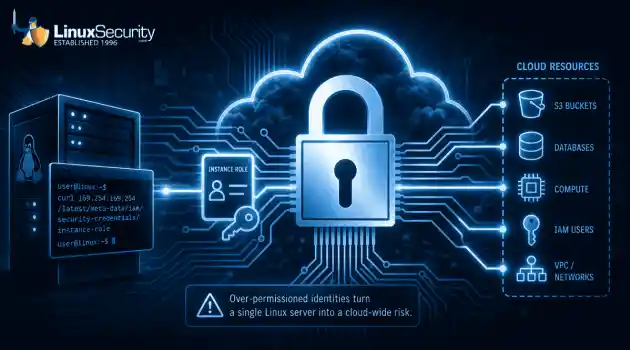
 identity management security tactics
 For years, we secured our Linux infrastructure by building walls: VPCs, security groups, and hardened SSH configurations. We treated the cloud like a virtual data center, assuming that if we kept the "bad guys" out of the network, our workloads were safe. . That model is no longer sufficient. Today, one of the most common paths from an initial compromise to a major cloud breach is the identity assigned to your Linux workload. When an attacker gains code execution on a Linux instance—through a...
 Jul 17, 2026
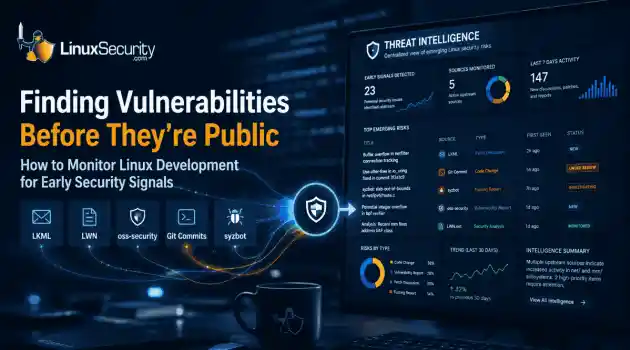 security practices patch management
 Most of us don't hear about a kernel vulnerability until a CVE lands in our inbox or the vulnerability scanner starts complaining. By then, the patch isn't new anymore. Kernel developers may have been passing it around for review, arguing over the implementation, or revising it for days before anyone outside that community noticed it. None of those discussions are secret. They're sitting in mailing list archives, Git commits, and patch reviews where they've been the whole time. The strange...
Jul 14, 2026
 Linux security cyber attacks
 Every Linux server in your fleet produces thousands of events every minute. From journald logs and auditd records to kernel-level eBPF hooks, your systems are constantly talking. Most of that noise is just the mundane churn of system services, CI/CD runners, or routine administrative automation. But among that noise, an attacker might be establishing a foothold, moving laterally, or setting up persistence. The challenge for any security team is: how do you separate the routine from the...
Jul 13, 2026
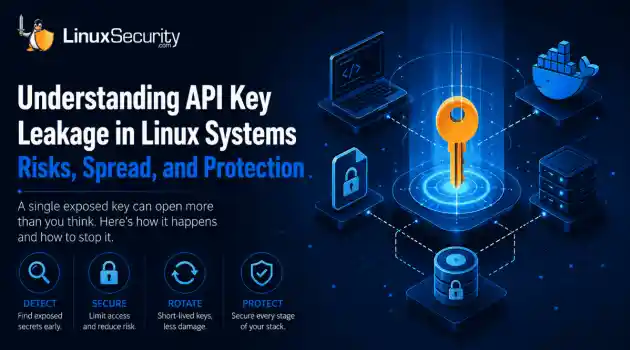 open-source infrastructure risk
 Security scanners flag exposed API keys in public repositories every day. The initial response is usually predictable: delete the commit, revoke the credential, and move on. That’s a mistake. . In a real Linux environment, an API key never stays in one place. By the time it hits a public repo, it’s already everywhere. It’s in the CI/CD pipeline. It’s in your container registry. It’s in the build logs. It’s in the backups. Git makes this worse because the history never dies. Deleting a file in...
Jul 11, 2026
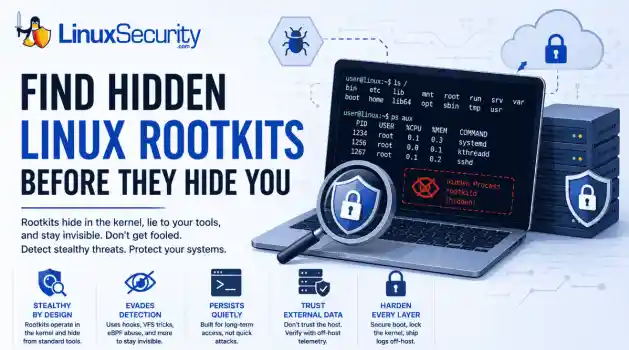 open-source rootkit
 Most of us think of Linux rootkits as ancient history—the stuff of 90s hacking forums and clunky malware that would crash your system if you looked at it the wrong way. But if you think they’ve gone away, you’re mistaken. They’ve just gotten smarter. . Modern attackers aren't using the noisy tools of the past. Today’s threats are surgical. Many of today’s most advanced Linux rootkits operate at the kernel level or abuse legitimate system features to blend in with normal traffic. They’re...
Jul 09, 2026
 Refine features
X Clear Filters
Get the latest News and Insights
Get the latest Linux and open source security news straight to your inbox.
Community Poll
Should Linux servers automatically install security updates?
Loading...
Explore Latest Linux Security features
We found -2 articles for you...
102
 cybersecurity threatsidentity managementLinux admin
Evolving Linux Malware Threats: A Guide for Admins in Cloud-Native Contexts
For a long time, Linux malware followed a familiar pattern. A compromised host. A binary written to disk. Persistence through cron, systemd, or a quiet modification that survived reboots. If you hardened the system and watched for changes, you felt reasonably in control. That model no longer matches how Linux is actually run. Modern Linux malware increasingly assumes it is landing in environments where hosts are disposable, workloads are short-lived, and the real authority sits somewhere above the operating system.. Most Linux infrastructure today lives inside cloud and container platforms that are ephemeral and API-driven by design. Containers, Kubernetes, managed services. Linux is still there, but it is no longer the primary unit of control. That shift changes what attackers optimize for. Persistence on a single machine matters less when you can influence what gets deployed next. Early 2026 research from Check Point describes a framework called VoidLink that reflects this reality. It is not notable because it is noisy or flashy, but because it fits cloud-native environments almost too well. VoidLink signals a broader transition in Linux malware away from host-centric techniques toward control planes, identities, and orchestration logic. It assumes images will be rebuilt and nodes will disappear. Control comes from understanding how workloads are created, scheduled, and authenticated, often through mechanisms that look legitimate on the surface. Traditional defenses still have value, but on their own, they are no longer sufficient. Understanding this shift is now part of the job for Linux administrators, because risk, visibility, and policy all move with it. The Evolution of Linux Malware Frameworks If you look back at older Linux malware , the assumptions are easy to spot. The host mattered. Machines stayed up for months or years. Persistence was the goal, and success meant surviving reboots, package upgrades, and the occasional admin poking around. Root access was the prize, because once youhad it, you could stay. Most defensive guidance grew out of that world, and for a long time, it worked well enough. Cloud and container environments quietly broke those assumptions. Hosts are no longer stable assets. Containers may exist for minutes. Images are rebuilt automatically. In that context, traditional persistence loses much of its value. You start to see Linux malware adapt by shifting its focus away from the filesystem and toward the systems that decide what runs in the first place. Control moves up the stack, toward orchestration platforms, cloud APIs, and identity systems that sit above any single node. Modern Linux malware frameworks reflect that change in how they are built. They are modular, often split into loaders, plugins, and optional components that can be deployed only when needed. That structure looks familiar to anyone who works with microservices or cloud-native applications, and it is not an accident. Attackers now assume that orchestration layers are the real terrain. Instead of clinging to a host, they aim to influence deployment, scheduling, or identity in ways that let access reappear even as infrastructure churns. As a result, today’s Linux malware is often more flexible and quieter than what came before. For Linux administrators, this means threat modeling can no longer stop at host hardening. Cloud APIs and control planes are now part of the attack surface, whether they were designed that way or not. Why Cloud and Container Environments Are Attractive to Attackers Cloud and container platforms change more than how applications are deployed. They change what is visible, what is durable, and what feels normal. Containers deliberately abstract away much of the operating system, and in doing so, they also blur traditional security boundaries. Processes come and go. Filesystems reset. From the outside, it can be difficult to tell whether something unusual happened or whether the platform simply behaved as designed. That ambiguity creates room for abuse. Centralization plays an equally important role. Kubernetes and cloud APIs concentrate enormous control behind a relatively small number of interfaces. A single service account, role, or token can influence scheduling, networking, storage, and identity across large parts of an environment. When those identities are misconfigured, lateral movement often requires no exploit at all. Access is granted by policy, not by vulnerability, and that access tends to look legitimate in logs. From an attacker’s perspective, this is far more efficient than breaking out of individual containers one by one. Ephemeral infrastructure further tilts the balance. Workloads disappear before artifacts can be examined. Network policies are frequently permissive during early adoption and rarely revisited. CI/CD systems extend execution well beyond runtime, pulling code, building images, and deploying workloads automatically. Once you start to see how these pieces connect, the appeal becomes obvious. Container security is not just about runtime protection. It is about protecting the orchestration, identity, and control layers that decide what runs at all. For Linux administrators, that is where attention has to shift, even if the hosts themselves look quiet. VoidLink as a Case Study in Cloud-Native Linux Malware VoidLink is useful to study because it does not behave like a one-off Linux payload. It is a framework, built as a collection of components that can be deployed selectively depending on the environment. Researchers describe loaders, implants, rootkit-style capabilities, and extensible plugins, all designed to work together rather than as a single artifact. That structure matters. It suggests a system meant to be operated, updated, and reused, not simply dropped onto a compromised machine and forgotten. The design choices behind VoidLink line up closely with how modern infrastructure actually runs. It is built to function across cloud providers and container platforms, including Kubernetes, Docker, and major publicclouds. The codebase spans languages such as Zig, Go, and C, which points to developers comfortable with both low-level systems work and cloud-native tooling. Debug symbols left in some components indicate active development, not a finished campaign frozen in time. That detail alone changes how you think about lifecycle and intent. This is not something thrown together quickly to exploit a single weakness. Attribution is more complicated. Analysis published so far points toward Chinese-affiliated developers, based on language artifacts and development patterns, but stops short of tying the framework to a specific organization or state actor. Intent is equally unclear. Some analysts have noted that the level of documentation, modularity, and interface design resembles a product more than a bespoke intrusion tool. That does not mean it is commercial malware in the traditional sense, but it does suggest a mindset closer to software engineering than opportunistic compromise. For Linux administrators, the lesson is not about who wrote VoidLink, but how it was written. Malware at this level is designed, maintained, and evolved by skilled teams who understand cloud platforms as well as operators do. These are not random scripts scraped from forums. They are frameworks that assume churn, abstraction, and centralized control, and they grow more capable over time. That reality should change how risk is assessed, because it raises the baseline for what a modern Linux threat looks like. What VoidLink Reveals About Modern Linux Attack Chains When malware is built for cloud and container environments, the attack chain looks different from the start. Initial access often does not come from a memory corruption bug or a kernel exploit. It comes from the configuration. An exposed API, an over-permissive role, a service account that was meant to be temporary and never revisited. In cloud-native environments, access is frequently granted by design, which makes the first step of an intrusion both quieter and harder toclassify as malicious. Execution also shifts away from the idea of a single compromised host. Workloads run inside containers, scheduled jobs, or serverless tasks that are expected to appear and disappear. From the platform’s perspective, something started, did its work, and exited. Malware that operates in this space does not need to linger. What used to be called persistence is often replaced by the ability to trigger redeployment, reuse credentials, or influence orchestration so that access returns naturally as part of normal operations. Command-and-control follows the same pattern. Instead of unusual outbound connections, communication blends into cloud service traffic and API calls that administrators expect to see. Privilege escalation targets identity rather than the kernel, focusing on IAM roles, service accounts, and tokens that can unlock broader access. When the workload is gone, so are many of the artifacts you would normally investigate. For Linux administrators, this changes what detection looks like. Files and processes still matter, but identity, behavior, and control-plane activity increasingly tell the real story. Monitoring Gaps Linux Admins Commonly Have Today Many Linux environments appear quiet, not because nothing is happening, but because the right things are not being observed. Host-based monitoring still plays an important role, yet it stops at the boundary of the operating system. Control-plane actions do not show up as processes. API calls do not look like system calls. When activity shifts upward into orchestration and cloud services, traditional tools simply have nothing to say about it. Kubernetes audit logs are a good example. They are often disabled, sampled, or retained briefly due to volume and cost. Even when they are collected, they tend to live apart from runtime telemetry, which makes it difficult to connect an API request to the workload it created. Cloud API logs suffer from the same problem. They describe what was requested, not how that requesttranslated into execution inside a container or a node. Container lifecycle events are frequently treated as background noise because environments are already noisy by design. Network monitoring adds another layer of false confidence. Many tools still assume relatively static endpoints and predictable traffic patterns, assumptions that do not hold in dynamic clusters. When alerts do not fire, it can feel reassuring. In practice, it often means visibility does not extend into the layers attackers now prefer. For Linux administrators, this gap matters. It is not just about missing alerts. It is about missing entire classes of activity that never touch the host in ways older tools were built to see. How Linux Admins Should Adapt Their Security Approach Adapting to cloud-native Linux malware does not start with adding more agents to hosts. It starts with recognizing where control actually lives. In containerized environments, the Kubernetes control plane and cloud APIs are not just management layers. They are security-critical surfaces. Decisions about what runs, under which identity, and with what network access are made there, often long before a process ever starts on a node. That shift changes what monitoring needs to focus on. Workload creation events, scheduling decisions, and orchestration actions become as important as process execution. Cloud audit logs begin to matter more when they are correlated with what actually ran and under which service account. Least privilege takes on a more concrete meaning because overbroad roles and service accounts effectively become persistence mechanisms. Container security , in this sense, is less about catching something after it runs and more about understanding how it was allowed to run in the first place. There is also an operational adjustment that is easy to overlook. When compromise happens at the service or identity level, it does not map cleanly to a single host or team. Detection and response require coordination between platform, operations, andsecurity functions that may not have been tightly aligned before. Policies need to reflect that reality. They have to account for how Linux workloads are created, authorized, and redeployed, not just how they behave once they are running. For many administrators, that is the real change this new class of malware forces. Our Final Thoughts: Decision Points for Linux Admins and Platform Teams Once you accept that Linux malware now operates comfortably above the host, a different set of questions starts to matter. Visibility becomes an ownership problem as much as a technical one. Someone has to decide who is responsible for seeing control-plane activity and responding to it. In many organizations, Kubernetes, cloud infrastructure, and Linux operations sit with different teams, each assuming the others are watching closely. That gap is where problems tend to settle. Logging decisions follow quickly. Not every log can be kept forever, but some logs are no longer optional. Kubernetes audit events, cloud API calls, and identity changes start to carry the same weight that syslogs and authentication logs once did. Where detection lives also becomes less obvious. Host-based tooling still has value, but it cannot see everything. Cluster-level signals and cloud-level context often need to be part of the same picture, even if that complicates tooling and workflows. There are tradeoffs here that cannot be avoided. More visibility can slow teams down. Tighter controls can frustrate developers and operators who are used to moving quickly. Linux administrators increasingly find themselves at the center of those discussions, translating risk into practical constraints. These are not decisions about installing another tool. They are architectural and organizational choices that shape how much control and how much uncertainty an environment is willing to live with. . Explore how cloud-native environments alter Linux malware strategies, and what administrators must change to secure systems.. Linux Malware, CloudSecurity, Container Risks, Cybersecurity Strategies, Identity Management. . Brittany Day
 Jan 22, 2026
•
Jan 22, 2026
•
102
 network securityremote accesscybersecurity threats
Wake-on-LAN Insights for Remote Management and Cybersecurity Best Practices
Will the pre-pandemic norm of exclusively in-office work ever return? The answer is a resounding no. What was coined as the new normal in 2020 has seamlessly transitioned into the normal of 2023 and beyond. Research from Gartner® forecasts that "almost 50% of employees will continue to work remotely post COVID-19." . With the need for organizations to provide a secure and flexible work environment, it is imperative for system administrators to equip themselves with an enhanced network security toolkit to troubleshoot and secure remote endpoints. The Art of Powering Up Dormant Endpoints Wake-on-LAN (WoL) is a network protocol and feature that enables admins to wake up a computer or device in a low-power state (sleep, hibernate, powered off) using a network signal referred to as a magic packet. A magic packet is a special network feature containing specific information the target device requires to wake up. This packet is designed to be recognizable by the target device's Network Interface Card (NIC), even when the device is in a low-power state and not actively listening to regular network traffic. The magic packet contains the target device's NIC Media Access Control (MAC) address, which is a unique identifier assigned to each network device. Magic packets are sent as a broadcast or unicast message to local networks. If sent as a broadcast, it is intended for all devices on the network to hear. If sent as a unicast, it's explicitly directed to the MAC address of the target device. Suppose the magic packet is sent from a different network segment or over the Internet. In that case, routers must be configured to broadcast the packets to the appropriate subnet, forwarding them to the Virtual Local Area Network (VLAN) where the target device resides. The NIC of the target device is programmed to listen for magic packets, even when the rest of the device is in a low-power state. When the NIC receives a magic packet that matches its MAC address, it wakes up the device. Upon receivingthe magic packet, the NIC sends a signal to the computer's motherboard, which initiates the device power-up. This can involve waking up the CPU, initializing hardware components, and establishing network connectivity. Once the device is powered on and connected to the network, it becomes operational and can respond to regular network traffic, including remote access requests. The true potential of WoL often needs to be more appreciated in the eyes of IT administrators. Numerous misconceptions and uncertainties surrounding its reliability and prerequisites have obscured its capabilities and made people question how many cyber security vulnerabilities it protects. Common WoL Myths & Misconceptions Debunked Wake-on-LAN Works Over the Internet Misconception: Many believe that WoL can be used easily over the Internet, just like a local network. Reality: WoL is primarily designed for Local Area Networks (LANs). To use it over the Internet, WAN requires additional configurations like port forwarding, a static IP, or a dynamic DNS service. Any Packet Can Wake the Device Misconception: Some might think that any random network packet can trigger the Wake-on-LAN feature. Reality: WoL relies on a specific "magic packet" that contains the target computer's MAC address in a particular pattern. Regular packets won't wake the device. It Consumes a Lot of Power Misconception: Devices awaiting a WoL packet drain a significant amount of power. Reality: While there's a slight increase in power consumption in the low-power state compared to being fully off, this increase is minimal and not typically a major concern for most users. Wake-on-LAN Works Automatically Misconception: Once you have a device capable of WoL, it will just work without any configuration. Reality: For WoL to be functional, it needs to be enabled in the computer's BIOS or UEFI settings and by adjusting an endpoint's broadcast address to match its MAC address. Once Set Up, It Always Works Misconception: After the initial setup, WoL will always work without fail. Reality: Various factors like network changes, software updates, or power disruptions can interfere with WoL. Periodic testing or troubleshooting might be needed to make sure that you always stay on top of any network security threats or cyber security vulnerabilities. Understanding and debunking these misconceptions ensures a more informed and effective use of the Wake-on-LAN feature. What Are the Main Applications of WoL? To use WoL effectively, it is crucial to understand its applications: Protecting unattended endpoints from threats and attacks in network security Regular and swift endpoint security patching is essential to safeguard endpoints from ransomware , malware attacks , and other network security threats. Yet, the timing of cybersecurity vulnerability exposure is unpredictable. What if a security event occurs during the weekend or at night when endpoints lie dormant and beyond physical reach? How can these devices be patched when it matters most? This is precisely where WoL can come to the rescue. With WoL, admins can instantly awaken all network devices and deploy crucial patches without delay. This approach empowers them to respond within minutes and safeguard endpoints with minimal effort. Enhancing end-user performance Sysadmins are often burdened with time-consuming tasks, such as software and OS updates and less critical security patching. Constant interruptions stemming from these enhancements can adversely impact employee performance, so it is important to consider how these tasks can be executed without interrupting workflow. The recommended approach is to update or patch endpoints during non-working hours. IT administrators can wake up the devices, update them, and depart discreetly. Efficient time management Booting up and configuring a laptop or desktop can take up to fifteen minutes daily, summing up to about five hours per month lost from device startup. To mitigate this,automation can be put in place. Admins can schedule routine wake-up tasks for endpoints, either each morning or aligned with work shifts, just before users access their devices. This facilitates users to resume their work seamlessly and without delay. Remote server management In a data center or IT infrastructure, multiple servers often perform critical functions, such as hosting websites, applications, databases, and more. These servers may need periodic maintenance, updates, or troubleshooting. Traditionally, IT administrators would need to access each server to perform these tasks physically, a time-consuming and costly process. With WoL, administrators can remotely wake up servers in a sleep or low-power state. This eliminates the need to be physically present at the data center to power each server individually. Servers can be awakened for maintenance tasks such as software updates, hardware upgrades, and diagnostics. Since these tasks can be performed without waiting for servers to boot up, there is minimal downtime, and the services hosted on these servers experience less disruption. What Are the Potential Security Implications of WoL? Wake-on-LAN (WoL) is a powerful network security toolkit, but like many technologies, it introduces potential risks when managed inappropriately. Here are some potential network security issues about which to be concerned: Unauthorized wake-ups: One of the most straightforward risks is unauthorized users triggering WoL, leading to unintended power consumption and potential wear on systems. WoL Over the Internet: When WoL is exposed over the Internet, attackers could continuously wake a system, leading to potential Denial of Service (DoS) attacks by ensuring the system never stays in a low-power state. Exposure of MAC Addresses: The magic packet requires the target machine's MAC address. If cybercriminals get a hold of a MAC address, they could target specific machines with WoL or other attacks in network security. Interference with BusinessProcesses: In business settings, unauthorized or accidental use of WoL could interfere with maintenance processes or backup operations that are scheduled for off-hours. WOL Security Best Practices Given these potential network security issues, adhering to the following best practices is vital to ensure that WoL is both beneficial and secure. Restrict Network Access: Only allow WoL packets from trusted parts of your network. Employ network segmentation and firewall rules to ensure that only authorized devices can send magic packets. Disable WoL When Not Required: If you don't need the WoL feature, disable it. Only activate it when necessary and deactivate it afterward. Avoid Exposing WoL Over the Internet: WoL is best used within local networks. If you must use it over the Internet, ensure you're employing VPNs and robust authentication methods to mitigate risks. Regularly Monitor and Log: Keep logs of when machines are powered on, especially if using WoL. If a device is repeatedly waking without reason, it might be an indication of unauthorized WoL activity, in which case you will want to scan your system for any cyber security vulnerabilities that would have allowed for that breach. Keep Systems Updated: While not directly related to WoL, it's always a good practice to keep systems updated. If an attacker uses WoL to wake a machine, having the latest security patching can prevent further exploits in cyber security. By understanding the potential network security issues and implications of Wake-on-LAN, users, and organizations can use the best practices to harness WLAN’s benefits while minimizing risks. Advanced WoL with Remote Access Plus Remote Access Plus is an advanced IT troubleshooting tool with exclusive WoL capabilities, advanced settings, and an intuitive workflow. Here are the main reasons why Remote Access Plus stands out. It can: Initiate WoL for not just one but multiple endpoints from the dashboard with a single action. Awaken computersrunning on both Windows and Linux operating systems. Enhance the success rate of WoL by adjusting an endpoint's broadcast address to match its MAC address. Easily wake your devices with a single tap from your smartphone. Final Thoughts on the Benefits of Securely Implemented WoL In today's ever-evolving remote work landscape, Wake-on-LAN (WoL) has become an indispensable network security toolkit for IT administrators. Far from being a plug-and-play gimmick, WoL offers strategic functionality, waking up devices in low-power states through the use of specialized “magic packets.” However, it's crucial to understand that WoL comes with its own set of limitations and cyber security vulnerabilities you must consider. Leveraging advanced platforms like Remote Access Plus can help organizations unlock the full potential of WoL, from safeguarding endpoints to efficient server management. As remote work continues to define our professional lives, the secure and efficient implementation of tools like WoL isn't just an advantage but a necessity. Explore the benefits of WoL, along with many other advanced troubleshooting tools, for free! . Boosting administrative efficiency and mitigating risks through the protection of distant endpoints utilizing Wake-on-LAN methods.. Wake-on-LAN Benefits, Remote Endpoint Management, Cybersecurity Techniques, Network Functionality. . Brittany Day
Aug 28, 2023
•

102
 network securitydata breachcybersecurity threats
Improving Enterprise Security Posture With ManageEngine Tools
Enterprise vulnerability management is vital to having a robust, proactive endpoint security strategy that enables organizations to identify and address data and network security issues before they lead to an attack or cloud security breach. This cyclical process involves identifying IT assets and correlating them with a continually updated vulnerability database to identify network security threats, misconfigurations, and bugs. Such management prioritizes the urgency and impact of each issue so your company can respond to critical cybersecurity vulnerabilities swiftly prior to exploitation. . Despite the value of establishing and maintaining vulnerability management tools to strengthen and improve security posture, too many organizations still fall short in obtaining such a service due to various challenges and roadblocks. Unfortunately, more businesses fall victim to breaches than ever before; in fact, global cyberattacks increased by 38% in 2022. In order to protect against cybersecurity vulnerabilities, enterprises need an end-to-end vulnerability management and compliance solution that provides 360-degree visibility into their security risk exposure and offers built-in remediation. In this article, we will discuss the obstacles businesses face when setting up their enterprise vulnerability management, the benefits of having this effective service, and how it can help defend against damaging cybersecurity threats and vulnerabilities. Why Are Vulnerability Management & Compliance Critical Challenges for the Enterprise? Despite the central role that vulnerability management holds in an effective endpoint security strategy, there are common roadblocks that organizations face that impede their ability to reliably identify and fix security risks and shortcomings. In most organizations, there are simply too many cybersecurity vulnerabilities across thousands of heterogeneous assets in distributed networks to be tracked manually, and not all of them pose an equal risk. With the window between networksecurity threats and hackers shrinking, organizations must be swift in their detection and remediation of such cybersecurity weaknesses. It is unrealistic for organizations to move forward without the assistance of an automated enterprise vulnerability management and compliance solution, as so few companies have the time, resources, and knowledge to be able to combat network security issues effectively on their own. Anandraj Paul, Head of Development and Endpoint Security at ManageEngine, states, “Many vulnerability management tools on the market offer patching through a third-party integration, but juggling multiple tools for vulnerability assessment and patch management results in a fragmented and inefficient workflow. Moreover, if an adversary does use a vulnerability to gain access to the network, they will exploit overlooked misconfigurations to laterally move and compromise other machines within the network. To prevent this, every loophole and software vulnerability must be addressed to minimize the attack surface and strengthen security." Linux Security expert and LinuxSecurity.com Founder Dave Wreski adds, “ While issuing vendor-published patches to affected machines is the ideal remediation option, having a fail-safe plan to fall back on in the case of unpatchable circumstances like end-of-life software and zero-day vulnerabilities is essential to preventing attacks and breaches.” Security Spotlight: How ManageEngine Vulnerability Manager Plus Meets Our Criteria for an Effective Vulnerability Management Solution ManageEngine Vulnerability Manager Plus is a multi-OS vulnerability management and compliance solution we love since it is an effective and efficient solution. It is an end-to-end vulnerability management tool delivering comprehensive coverage, continual visibility, rigorous assessment, and built-in remediation of cybersecurity threats and vulnerabilities, all from a single console, wherever your endpoints are located. Let’s take a closer look at what makes ManageEngineVulnerability Manager Plus a great option for organizations looking to improve security posture without sacrificing convenience. Cybersecurity Vulnerability Assessment With the plethora of network security issues that exist in OSes, third-party software, programs, and applications today, organizations need to be able to identify and prioritize real data and network security threats, as new vulnerabilities are identified every 90 minutes. ManageEngine Vulnerability Manager Plus enables organizations to assess and prioritize cybersecurity vulnerabilities based on exploitability, severity, age, affected system count, and the availability of the fix. ManageEngine’s cybersecurity vulnerability assessment tool regularly scans your network for weaknesses, delivers insights into risk, and helps close the vulnerability management loop instantly with direct remediation from the console. With ManageEngine, organizations can: Eliminate blind spots and keep track of assets. Gain extensive vulnerability coverage. Catch online and web application security vulnerabilities as they appear using continuous monitoring logs. Assess vulnerability risk and prioritize response. Enable cybersecurity vulnerability management to see critical network security issues at a glimpse with dashboard widgets (pictured below). Leverage built-in security patching to ensure swift and accurate remediation. Compliance Modern IT’s dynamic nature causes inevitable security gaps, as IT teams are forced to make constant changes to configurations, which can lead to newer systems and software being overlooked, leaving them with insecure setups. Poorly configured systems pave the way for malicious hackers and pose significant compliance risks by incurring hefty fines from regulatory bodies. The Center for Internet Security (CIS) benchmarks provide prescriptive guidance for establishing a secure baseline configuration for assets. However, the requirements are challenging to meet, monitor, and maintain without the helpof a solution like ManageEngine Vulnerability Manager Plus. ManageEngine’s CIS compliance feature helps accomplish and maintain data and network security as well as audit objectives, as over 75 CIS benchmarks regularly monitor your endpoints for all applicable CIS benchmarks, instantly detecting violations and suggesting detailed, corrective actions. The feature allows organizations to easily: Group policies. Map targets and schedule audits. Audit and improve compliance. Patch Management Once your cybersecurity vulnerabilities get identified and assessed, the next step is to utilize security patching to protect your company against damaging exploits in cybersecurity. In order to be effective, efficient, and secure, patch management must be carefully planned and orchestrated. If not, it can potentially cause more harm than the vulnerabilities it is supposed to address. ManageEngine Vulnerability Manager Plus has a built-in patching module that helps you customize, orchestrate, and automate complete patching so that the process is to your liking. The module gives organizations the ability to: Seamlessly patch a heterogeneous, multi-platform IT infrastructure. Test, approve, and decline patches. Automate patch deployment. Customize the patch management process with flexible deployment policies Security Configuration Management Zero-day cybersecurity vulnerabilities are inevitable. Without ensuring you have established and maintained ideal data and network security configurations in your endpoints, a single vulnerability could shake your organization to the core. Effective security configuration management tools involve continually detecting configuration drifts and misconfigurations across various components in your endpoints so you can focus on bringing them back into alignment. ManageEngine Vulnerability Manager Plus facilitates the entire cycle of security configuration management from a single interface, including detecting misconfigurations, categorizing andprofiling them, resolving them with built-in remediation, and reporting the final configuration posture. The solution’s capabilities verify that the data and network security of systems is enforced with complex passwords, least privileges, memory protection, and CIS and STIG security guideline compliance. Web Server Hardening Web servers are the point of contact between a business and its customers. Servers deliver web pages to clients upon request and host websites and web-based applications. Since a web server is an Internet-facing device, it can provide an entry point for attackers if not configured properly. In order to keep pace with industry demands, enterprises must constantly make changes to their server configurations, but making these changes manually often results in dangerous configuration drifts. ManageEngine Vulnerability Manager Plus continuously monitors your web servers for default and insecure configurations so it can display them in the console. With a vulnerability management tool, administrators and IT teams can identify servers whose communications are not secured via a Secure Sockets Layer (SSL) certificate. SSL certificates are valuable for ensuring data encryption and decryption to protect companies from unauthorized interception. ManageEngine Vulnerability Manager Plus provides a detailed description of the cause, impact, and remediation of each server misconfiguration. These critical insights can be used to help set up a secure server that is protected against attacks in network security, including URL manipulation attacks, input validation attacks, Denial of Service attacks, brute-force attacks, session hijacking, clickjacking, and source code disclosure, among other network security threats. High-Risk Software Audit The proliferation of different devices and software in recent years, especially post-pandemic, has inevitably put enterprises at risk of unsupported and unauthorized software, including end-of-life software, peer-to-peer software, and remote desktopsharing software. This software can compromise a corporate server with network security threats like information disclosure, malicious code injection, and unauthorized access, all of which can damage an organization's data network security and reputation. It is of critical importance to audit such high-risk software installed in network systems without administrators’ knowledge. With ManageEngine Vulnerability Manager Plus at your disposal, you can: Monitor your network endpoints continuously and detect end-of-life software, peer-to-peer software, and remote sharing tools present in them. Get details on the expiry date and the number of days before software in your network faces end-of-life. Obtain real-time information on the number of machines that are affected by this software. Eliminate this software with just a click of a button from the console. Zero-Day Vulnerability Mitigation Though we would all love to put an end to cybersecurity vulnerabilities once and for all with security patching, such a solution is not always realistic. In some cases, patches aren't available to fix flaws, mainly when they are zero-day vulnerabilities and other publicly disclosed network security threats. Luckily, ManageEngine Vulnerability Manager Plus can help organizations harden their systems and software against network security issues that have no patching options. This vulnerability management tool allows enterprises to: Leverage a dedicated view for zero-days. Deploy mitigation scripts. Stay up-to-date with the latest security patching opportunities. Get notified about zero-day patches. Keep track of OS and application end of life. With ManageEngine Vulnerability Manager Plus, you can stop waiting around for patches and deploy pre-built, tested scripts to secure your network with zero-day mitigation solutions. Beyond the Capabilities of Traditional Vulnerability Management Tools ManageEngine Vulnerability Manager Plus exceeds the capabilities of traditional vulnerabilitymanagement and compliance solutions in the following critical areas to provide stronger, more reliable protection against cybersecurity vulnerabilities: Executive reports : Review and improve security posture to make informed decisions with holistic reports. Antivirus Audits : Gain insight on antivirus protection across your network systems. Deployment Policies : Decide when to patch, what to patch, and how to patch. Role-Based Administration : Define roles and delegate tasks to technicians based on enterprise needs. Final Thoughts on Securing Your Organization Against Cybersecurity Vulnerabilities With the increase in cybercrime and the growing complexity of the modern IT infrastructure, a comprehensive, automated vulnerability management tool and strategy has never been more important for your enterprise. ManageEngine Vulnerability Manager Plus exceeds the capabilities of traditional vulnerability management solutions to improve security posture, increase visibility, and help businesses meet compliance standards. Anandraj Paul, Head of Development, Endpoint Security, ManageEngine, explains, "There's no silver bullet solution that renders your network impenetrable to cyber exploits. But by constantly reevaluating and strengthening the security stance of your network with Vulnerability Manager Plus, you stand a much better chance against detecting and thwarting cyber trespassers in your network." Ready to improve your vulnerability management and compliance strategy to ward off cyberattacks in network security and cloud security breaches? We encourage you to download ManageEngine Vulnerability Manager Plus and see for yourself why we recommend it so strongly! . Evaluating organizational vulnerability management strategies is vital for strengthening endpoint security and reducing the risk of data breaches effectively. Enterprise Security Management, Cyber Threat Mitigation, IT Compliance Strategies, Risk Assessment Tools, Endpoint Vulnerability Solutions. . Brittany Day
Mar 20, 2023
•

Get the latest News and Insights
Get the latest Linux and open source security news straight to your inbox.
Community Poll
Should Linux servers automatically install security updates?
Search Topics
Powered By

Linux Security - Your source for Top Linux News, Advisories, HOWTOs and Feature Releases
QUICK LINKS
subscribe to newsletters!
Like staying secure? So do we.
Sign up for updates, tips, and alerts!