Overly broad permissions can turn one compromised account into a much larger security problem. Learn how to reduce unnecessary access, review privileges, and apply least privilege across modern Linux systems. Review Linux Privileges×


Stay Ahead With Linux Security Features
 identity management security tactics
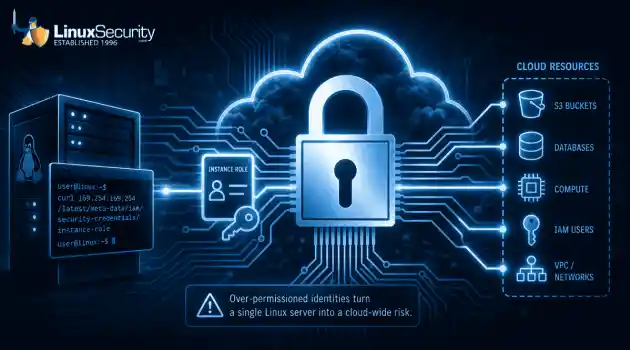
 For years, we secured our Linux infrastructure by building walls: VPCs, security groups, and hardened SSH configurations. We treated the cloud like a virtual data center, assuming that if we kept the "bad guys" out of the network, our workloads were safe. . That model is no longer sufficient. Today, one of the most common paths from an initial compromise to a major cloud breach is the identity assigned to your Linux workload. When an attacker gains code execution on a Linux instance—through a...
 Jul 17, 2026
 security practices patch management
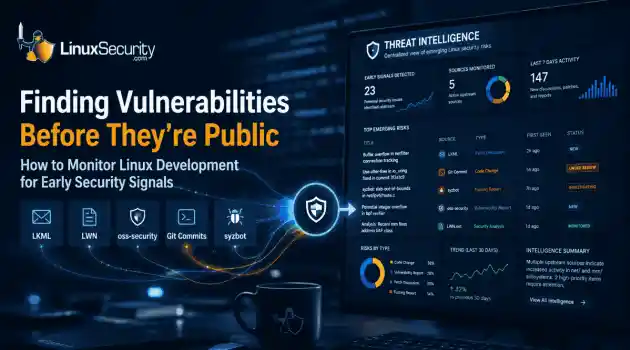
 Most of us don't hear about a kernel vulnerability until a CVE lands in our inbox or the vulnerability scanner starts complaining. By then, the patch isn't new anymore. Kernel developers may have been passing it around for review, arguing over the implementation, or revising it for days before anyone outside that community noticed it. None of those discussions are secret. They're sitting in mailing list archives, Git commits, and patch reviews where they've been the whole time. The strange...
Jul 14, 2026
 Linux security cyber attacks
 Every Linux server in your fleet produces thousands of events every minute. From journald logs and auditd records to kernel-level eBPF hooks, your systems are constantly talking. Most of that noise is just the mundane churn of system services, CI/CD runners, or routine administrative automation. But among that noise, an attacker might be establishing a foothold, moving laterally, or setting up persistence. The challenge for any security team is: how do you separate the routine from the...
Jul 13, 2026
 open-source infrastructure risk
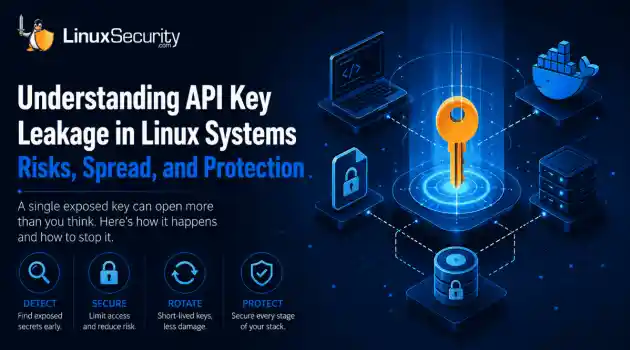
 Security scanners flag exposed API keys in public repositories every day. The initial response is usually predictable: delete the commit, revoke the credential, and move on. That’s a mistake. . In a real Linux environment, an API key never stays in one place. By the time it hits a public repo, it’s already everywhere. It’s in the CI/CD pipeline. It’s in your container registry. It’s in the build logs. It’s in the backups. Git makes this worse because the history never dies. Deleting a file in...
Jul 11, 2026
 open-source rootkit
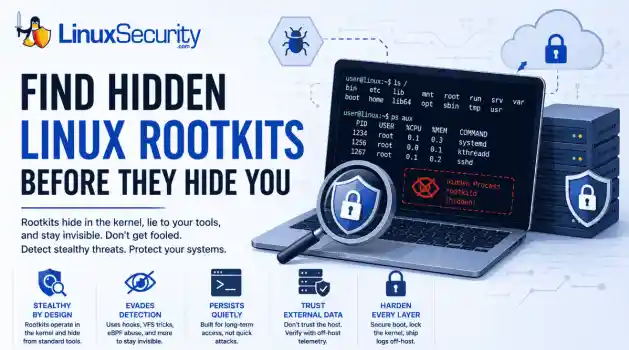
 Most of us think of Linux rootkits as ancient history—the stuff of 90s hacking forums and clunky malware that would crash your system if you looked at it the wrong way. But if you think they’ve gone away, you’re mistaken. They’ve just gotten smarter. . Modern attackers aren't using the noisy tools of the past. Today’s threats are surgical. Many of today’s most advanced Linux rootkits operate at the kernel level or abuse legitimate system features to blend in with normal traffic. They’re...
Jul 09, 2026
 Refine features
X Clear Filters
Get the latest News and Insights
Get the latest Linux and open source security news straight to your inbox.
Community Poll
Should Linux servers automatically install security updates?
Loading...
Explore Latest Linux Security features
We found -1 articles for you...
102
 security measuresdata privacybiometric security
Navigating Data Privacy Laws and AI Risks in 2025 for Linux Admins
In 2025, we Linux security admins face new challenges brought on by growing data privacy concerns that demand increased attention to detail and strict compliance . The rise of biometric security—a powerful tool for authentication—also brings significant risks if not managed correctly. Look no further than the high-profile troubles of Bunnings Group and White Castle , where failures in obtaining explicit user consent for biometric data collection led to legal and financial repercussions. Ensuring transparent, consent-based data collection practices is key to avoiding similar pitfalls. . Further, the lack of unified federal data privacy legislation means admins must navigate a patchwork of state-specific laws from places like Delaware, Iowa, and New Jersey. Staying updated and compliant with these diverse regulations is crucial. Additionally, with AI development continuing unabated following the rollback of federal restrictions, it's imperative to adopt robust data privacy measures to protect sensitive information processed by AI models. Proactive security measures and vigilant compliance practices are increasingly essential in this fragmented regulatory environment, and data privacy must be a priority for all Linux security professionals. Let's examine common data privacy concerns and practical measures for improving data privacy in 2025 and beyond. The Rise of Biometric Security: Boon and Bane Biometric security has become a critical component of modern authentication methods. Identifying individuals based on unique physical characteristics—such as fingerprints, facial features, or even iris patterns—offers a higher security level than traditional passwords. As convenient and secure as biometrics may seem, Linux security admins must tread carefully. The legal troubles faced by companies like Bunnings Group and White Castle underscore the importance of obtaining explicit consent before collecting and storing biometric data. In the case of Bunnings Group in Australia and WhiteCastle in the U.S., the lack of clear, explicit consent from users resulted in significant backlash and legal consequences. For security admins, the lesson is clear: always prioritize transparency regarding biometric data. This means implementing robust mechanisms to inform users about what data is being collected, how it will be used, and obtaining explicit consent. Even the most secure biometric system can become a liability without these measures. This could involve integrating consent management platforms into your existing systems, ensuring that every user interaction involving biometric data is logged and retrievable for auditing purposes . Additionally, staying updated with regional and international regulations concerning biometric data will help admins maintain compliance and avoid the pitfalls experienced by others. Navigating State-Level Data Privacy Regulations As federal data privacy legislation remains elusive, state-level regulations have emerged to fill the void. Unfortunately, this fragmented regulatory landscape creates a unique challenge for Linux security admins, who now must ensure compliance with varying state laws. Delaware, Iowa, and New Jersey have established data privacy regulations, each with nuances and requirements. Because there is no single federal framework, security administrators must remain constantly alert and adaptive. Understanding each state's legal requirements is paramount to designing compliant systems. For instance, Delaware may have different privacy laws from Iowa or New Jersey, necessitating tailored data collection, storage, and user consent approaches. To handle this complexity, it is crucial to implement regular training and updates for your team on state regulations. Compliance management software is also invaluable for automating and monitoring legal requirements to keep systems compliant. Fostering privacy awareness among your employees can go far in mitigating risks associated with noncompliance. By encouraging engaging in best practices andtaking a proactive stance, Linux security admins can successfully navigate various state regulations. The Impact of AI on Data Privacy Artificial Intelligence has brought profound change across various industries, particularly cybersecurity. However, with potential executive orders concerning AI being repealed and development continuing apace without as many restrictions as possible, data privacy is becoming more complicated than ever, requiring even greater diligence in protecting one's information. AI models thrive off large amounts of data, including sensitive material. Linux security admins must take precautionary steps to safeguard this sensitive information against breaches or misuse. Due to a lack of federal oversight, individual organizations bear greater responsibility in ensuring their AI systems meet regulations. Start by conducting thorough data impact assessments to understand the implications of incorporating AI systems with existing infrastructure, identify any privacy risks, and devise strategies to counter them. This may include anonymizing data before feeding it into AI models or installing robust access controls that restrict usage. Regular audits and evaluations will ensure ongoing compliance with data privacy standards. Maintaining transparency with users about how AI systems use their data is also key in building trust and alleviating concerns. Communicate the purpose and role of data collection and any safeguards to protect user information. Linux security administrators can successfully navigate AI development by prioritizing transparency and proactive privacy measures while guaranteeing robust data protection. Proactive Security Measures for a Fragmented Regulatory Environment Given the growing incidence of lawsuits alleging privacy violations, proactive security measures are becoming more crucial to maintaining compliance. With numerous fragmented regulatory landscapes and an increased focus on data privacy concerns, waiting until issues arise isn't an option.Instead, preventive strategies should be implemented to protect user data and maintain compliance. Regular vulnerability and penetration testing must be conducted to identify and address security gaps. Implement robust encryption protocols both for data at rest and in transit to protect it against unauthorized access and check that access controls and authentication mechanisms meet industry best practices. Establishing a comprehensive data privacy policy is equally essential to protecting user information. A policy such as this should detail how data is collected, stored, and shared, as well as safeguards in place to protect it. Regular reviews should take place to make necessary updates as regulations change or new threats emerge. Fostering privacy awareness within your organization is also key. Hold regular training sessions to educate employees about the significance of data privacy and their roles in upholding it, encourage best practices such as securing devices with strong passwords, and implement security-first measures whenever possible. Embedding data protection practices into daily operations creates an atmosphere where data protection becomes part of daily operations. Staying Informed and Adaptive With ever-evolving data privacy concerns, remaining informed and adaptive is critical for Linux security admins. Regularly tracking updates to and developments of data privacy laws at both state and federal levels will help ensure ongoing compliance. Fostering a culture of continuous learning within your team can strengthen your organization's adaptability. Encouraging employees to pursue certifications or participate in training programs related to data privacy and security can ensure your organization has enough expertise and skillsets available to handle evolving regulations and concerns. Establishing strong collaboration and communication channels between legal and compliance teams can significantly strengthen your ability to stay compliant. Engage them regularly inreviewing regulatory changes, potential risks, and mitigation strategies. Working together, you can develop a robust framework that protects user data while navigating the complex regulatory environment. Our Final Thoughts on Ensuring Data Privacy in 2025 Linux security admins facing data privacy challenges in 2025 must adopt proactive measures, transparency, and adaptability to navigate them effectively. Biometric security, fragmented state regulations, and Artificial Intelligence all present unique obstacles that require robust data protection strategies. Admins can navigate these difficulties by prioritizing user consent, keeping informed about state laws about AI systems, and cultivating an awareness culture surrounding privacy issues. Maintaining trust and security with robust data privacy practices is essential to your organization's safety and success in 2025 and beyond. . Compliance with various state data privacy regulations and biometric security is crucial for Linux admins facing 2025 challenges.. linux, security, admins, challenges, brought, growing data, privacy c. . Brittany Day
 Jan 29, 2025
•
Jan 29, 2025
•
102
 data privacyencryption toolscommunication security
Enhancing Communication Security Using Open-Source E2EE Tools
End-to-end encryption is an increasingly popular method that online services are using to ensure their users’ security. End-to-end encryption, also known as E2EE, encodes messages sent from one user to another in a way that ensures that only the sender and recipient can decode the message. . Using open-source technology can add another layer of security to E2EE software. Open-source technology has publicly available code, meaning that anyone can proofread the code for flaws and help find and fix bugs. Publicly reviewable code is especially important for security technology. The security of E2EE relies on the trust that only the sender and receiver of a message can read the message and that no one in the middle has access. Allowing users to check the code of a platform that uses E2EE helps ensure that the users’ communications are really encrypted. End-to-end encryption uses a method known as public key encryption to ensure that only the sender and receiver of a message can read it. Public key encryption works by giving every user two “keys,” a private and public key. Sending a message to a user encrypts it using the receiver’s public key, while his or her private key is needed to decode it. This means that messages are unreadable to anyone who is not meant to receive a message, including the company running the service. E2EE is primarily known for its use in messaging apps such as WhatsApp, Telegram, and Signal. However, it is also used for applications like password managers and data transfer and storage. In these cases, E2EE ensures that only the owner of the data is able to access it. The Best Open-Source Software with End-To-End Encryption There are many open-source programs that incorporate end-to-end encryption, and using these programs can help make everyday tasks more secure. Because end-to-end encryption is used for the transmission of messages between two parties, it is commonly found in secure messaging apps. Messaging Apps Linphone : Linphone isa free and open-source video calling software similar to Skype. Linphone uses several types of encryption, including E2EE for instant text messages. It is available on iOS, Android, Windows, Mac, and Linux. Wire : Wire is an open-source video calling and messaging software focused on businesses and government clients. There are several different subscriptions available for iOS, Android, Windows, Mac, and Linux. Delta Chat : Delta Chat is a messaging program similar to WhatsApp. Delta Chat uses protocols typically used for emails, meaning that Delta Chat can be used to message anyone with an email address, even if they do not have Delta Chat. It is available on iOS, Android, Windows, Mac, and Linux. ChatSecure : ChatSecure is an encrypted messaging app available on iOS. ChatSecure is more basic than the other programs on this list since it is only available on iOS and only supports text messaging without attachments. However, it has a strong focus on security with many customizable security options. VPNs Libreswan : Libreswan is a free and open-source VPN built for Linux. It has been around for 25 years and is included with several Linux distributions by default. OpenVPN : OpenVPN is one of the most popular open-source VPNs available. While it does have compatibility with more devices than Libreswan, it is only free for a limited number of connected devices. SoftEther : SoftEther is a free and open-source VPN available for Windows, Mac, and Linux. While it does take some work to set up, it is more customizable and available on more platforms than many alternatives. Other Software Nextcloud : Nextcloud is a free open-source file sharing software that uses E2EE. Nextcloud is similar to Dropbox or Google Drive, except it is self-hosted instead of relying on third party servers, making it a good option for companies looking for privacy. Tor Browser : Tor is one of the most secure browsers available. It is known for its use of onion routing , inwhich user traffic is sent through several layers of encryption. Tutanota: Tutanota is an email service with a focus on privacy. It can be used to send encrypted emails, even to users who do not use Tutanota. It is free, open-source, and available on desktop and mobile devices. Flaws of End-to-End Encryption While end-to-end encryption is one of the best methods for keeping data secure, like everything, it has flaws and can be broken. First, E2EE only encrypts data in transit. If someone steals or hacks a phone, he or she can still read all the messages on the phone, even if they were sent using E2EE—once the data is sent, it is totally unencrypted. Additionally, “man-in-the-middle” attacks have been developed in which hackers intervene so that messages are encrypted with their keys instead of those of the intended recipient. Some programs also have backdoors—intentional exploits created by developers that allow them to access the data of their users. While this is unlikely to be a concern for users who are not breaking laws, backdoors can be taken advantage of by malicious attackers who discover them. This is one benefit of open-source software—it can not have any secret backdoors because its code is publicly viewable. Conclusion While no encryption algorithm is perfect, using software that incorporates end-to-end encryption is a great way to stay private and secure. Furthermore, ensuring that E2EE software is open-source can improve security even more by certifying that the software is well proofread and tested and that it is truly private and secure. Ultimately, while end-to-end encryption has flaws, it is one the best ways to keep messages confidential. . Open-source tools revolutionize end-to-end encryption by giving users control over communication and enhancing data privacy while fostering innovation and trust. End-To-End Encryption, Open-Source Software, Secure Messaging, Data Privacy Tools. . Yosef Davidowitz
Jul 25, 2022
•

102
 security practiceskey managementdata privacy
Best Encryption Techniques to Boost Data Privacy on Linux Systems
In our increasingly digital society, protecting the privacy of sensitive data and our behavior online is a universal concern. Many users switch to Linux for its superior privacy features and the excellent selection of privacy-focused distros that it offers. . Regardless of the OS you are using, encryption is a critical element of digital privacy. In this article, we explore the best and most reliable methods of file encryption on Linux. Our experts have firsthand experience using these programs and understand the technology behind them, equipping us with the knowledge to help you securely encrypt files on your Linux system and avoid common pitfalls associated with Linux file encryption. What Is Encryption? Encryption is the process of encoding data in such a way that only authorized parties will be able to read it. Encrypted data can only be decoded by a decryption key. Public-key cryptography, which uses pairs of public keys that may be known by others and private keys that may never be known by anyone except for the owner, is the basis for all encryption today. This system enables anybody to encrypt a message using the intended receiver's public key. The encrypted message can then only be decrypted with the receiver's private key. Public key algorithms underpin numerous modern Internet standards and protocols including TLS , S/MIME , PGP and GPG . Proper Encryption & Decryption Key Management & Storage As you can now see, proper, secure encryption and decryption key management and storage is critical in ensuring that encrypted files remain secure and accessible to authorized parties, while remaining inaccessible to unauthorized parties. If an encryption key is lost or stolen, data that has been encrypted with this key can never be recovered- and could potentially end up in the hands of cyber thieves. Thus, encryption keys should always be backed up and stored offline in a secure location, such as in a USB key kept in your safety deposit box. Our Top Linux File Encryption Methods Thereare numerous excellent methods and programs that can be used to encrypt files on Linux, so selecting the best one for your specific needs may seem a bit overwhelming. To help you make an informed decision, we’ll introduce you to some of our favorites. Archive Manager A general Archive Manager is preinstalled in all Linux systems, and is the most basic way to encrypt files o n Linux. Encrypting files using the the Archive Manager is quite simple: Right-click on the file you want to encrypt and then click on “Compress”. Select the.zip extension and then click on “Create”. Open the zip file you’ve created and click on the hamburger icon at the top right of the file. Select the password option from the drop-down menu and set up your password. Click on “Save”. Your files are now encrypted with a password. GnuPG GnuPG (aka GPG or Gnu Privacy Guard), which is pre-installed in most distros, allows users to encrypt files and sign them using the Command Line. This unique hybrid encryption tool employs a two-prong approach to encryption to help speed up the encryption process without compromising security. This involves using both conventional symmetric-key cryptography, as well as public-key cryptography. GnuPG comes with a collection of frontend applications and libraries, and features a versatile key management system along with access modules for a wide range of public key directories. You can download GnuPG index . Source: Ubuntu Pit You can learn how to encrypt and decrypt files with GnuPG on Linux in this. Nautilus Nautilus is a great alternative for users who are more comfortable using a GUI than the Command Line. The software, which encrypts files with either a passphrase or a key, can be used for the encryption and decryption of data, and also functions as a file manager. To install Nautilus on your Debian system, run the following command: $ sudo apt-get install seahorse-nautilus -y Once installed, restart Nautilus with the following command: $ nautilus -q To encrypt files using Nautilus: Go to the folder where the file that you want to encrypt resides. Right-click on the file and then click on “Encrypt”. Now you have two options: Either select a paraphrase that will prompt you to enter a password to encrypt your file or choose a key that you have already created beforehand to encrypt your file. To decrypt a file: Right-click on the encrypted file and then click on “Open With Decrypt File”. Enter your passphrase. TOMB Tomb is a simple, user-friendly Command Line encryption tool popular among Linux user-developers. A defining feature of Tomb is its ability to generate password-protected encrypted storage vaults referred to as “tombs”. These tombs can be safely transported and hidden in a filesystem, and can be separated for additional security. For instance, your tomb file can be kept on your hard disk and the key files in a USB stick. Unfortunately, Tomb does not have a graphical user interface (GUI) and relies on Command Line input in order to function. You can install Tomb from the project’s Github page . Learn how to create tombs and how to hide a tomb key in an image in this Tecmint tutorial . CryFS CryFS is an excellent cloud-based tool that lets you encrypt your files and store them anywhere. It is compatible with popular cloud services like Dropbox, iCloud and OneDrive, among many others. CryFS works in the background, so you won’t notice it when accessing your files. The tool goes way beyond just encrypting your files- it also encrypts your file sizes, metadata and directory structure. The base directory contains a configuration file that is encrypted twice - once with aes-256-gcm and once with a password that you choose. This password is also used to conduct integrity checks. You can download the latest version of CryFS, CryFS 0.10.2, CryFS Downloads . Learn how to use CryFS in this tutorial . 7-zip 7-zip offers strong, straightforward Command Line encryptionusing 256-AES encryption, along with a very high compression ratio. The official name of 7-zip for Linux is p7zip. The "p" here is short for POSIX (an open standard designed to make applications compatible across different platforms), to indicate that p7zip is a POSIX compliant implementation of 7-zip. 7-zip is also a powerful file manager. You can download the latest version of 7-zip, 7-zip 21.01 alpha, 7-zip downloads. Learn how to encrypt files on Linux using 7-zip in this TechRepublic tutorial . Tails OS Tails is a specialized secure Linux distro created for a privacy-oriented user experience. The OS is referred to as the ‘ amnesic incognito live system ’, as it can only be accessed through an external USB drive on a amnesic host computer, meaning that it will have nothing but the new default form on every single usage. All Tails connections run through the Tor network - concealing users’ location and other private information. Tails features a selection of built-in state-of-the-art cryptography and security measures including: Encryption and signing of emails by default using OpenPGP whenever you use the email client, text editor, or the file browser Instant messages are protected with robust encryption using Off-The-Record messaging (OTR) Files are securely deleted (with no option of recovery) using Nautilus Wipe You can download Tails OS on your Linux system Tails OS Downloads . Learn more about Tails OS and why it is among our favorite secure Linux distros in this LinuxSecurity feature article . Conclusion With cyberattacks and privacy issues becoming an increasingly serious and prevalent threat, users must secure data using strong encryption. Luckily, Linux offers a selection of highly secure and reliable file encryption methods, many of which you are now familiar with. Are you using any of the methods introduced in this article, or other Linux file encryption methods we didn’t explore? Let’s discuss! Connect with us on social media: Twitter | Facebook . Regardless of the OS you are using, encryption is a critical element of digital privacy. In this art. increasingly, digital, society, protecting, privacy, sensitive, behavior, onlin. . Brittany Day
Mar 28, 2021
•
102
 encryptionsecurity measuresGnuPG
Cryptography Insights: Managing Keys and Data Security with GnuPG
This week's article is an introduction to cryptography using GNU Privacy Guard. . Copyright 2000 by Richard C. Jankowski Copyright license terms available at Originally written for linuxsecurity.com Introduction We live in the digital age. Email correspondence is commonplace, business proposals are stored on computer systems, financial and legal information is sent across networks. Nobody can get this information other than the intended recipient, right? Don't bet on it. Just about everything you do while connected to a network can be easily watched. System Administrators can rifle through your email, and disgruntled employees can intercept copies of your financial and legal documents as you transfer them across your LAN. Laptops are often stolen, and the loss is much greater if the system also contains confidential information. Sending sensitive information in email, transferring it around on a network, or even leaving it on your hard drive is the digital equivalent of putting that information on a neon billboard in Times Square. Encryption is one of the most effective ways to ensure your information is secure. Correctly using a good encryption package, such as GNU Privacy Guard (GnuPG), will help insure your data remains private. Email sent encrypted with GnuPG can only be decrypted by the person whom the message is intended. Encrypted messages which are intercepted and stolen are worthless to anyone but the intended recipient. GnuPG is GPL Software that follows the OpenPGP Standard. It is intended as a replacement for the PGP encryption package, and does not use any patented encryption algorithms. It can be downloaded from http://www.gnupg.org , and runs on Linux, FreeBSD, many other flavors of UNIX, as well as Windows. Public Key Cryptography Public Key Cryptography, also known as Asymmetric Cryptography, uses a pair of keys, a public key and a secret key. The public key is usedto encrypt a message that only the corresponding secret key can decrypt. The public key is meant to be distributed, while the secret key must not. While the keys are related, it is mathematically impractical to derive one key from the other. An example would be that Susan makes her public key available to the world by putting it on her Website, emailing it to friends, etc. If I want to send Susan an encrypted message, I would use GnuPG with Susan's public key to encrypt the message, turning it from plaintext to ciphertext. Once the message has been encrypted, only the person who has possession of Susan's secret key is able decrypt it. Once I encrypt the message for Susan, I cannot derive the original message from the ciphertext. Without access to Susan's secret key, the only way to decrypt the message is by using a brute force attack. A brute force attempt would require every possible key be tried in effort to decrypt the message. This would take the computing equivalent of billions of mainframes trillions and trillions of years. Making sure Susan's secret key isn't compromised is essential in keeping her messages secure. Creating and Managing Keys Once GNU Privacy Guard is compiled and installed, you must create your keys with the command `gpg --gen-key` as following: [susan:~]$ gpg --gen-key gpg (GnuPG) 1.0.0; Copyright (C) 1999 Free Software Foundation, Inc. This program comes with ABSOLUTELY NO WARRANTY. This is free software, and you are welcome to redistribute it under certain conditions. See the file COPYING for details. gpg: /home/susan/.gnupg: directory created gpg: /home/susan/.gnupg/options: new options file created gpg: /home/susan/.gnupg/secring.gpg: keyring created gpg: /home/susan/.gnupg/pubring.gpg: keyring created Please select what kind of key you want: (1) DSA and ElGamal (default) (2) DSA (sign only) (4) ElGamal (sign and encrypt) Your selection? 1 You must select the type of key you would like touse. For most users the default, DSA and ElGamal, is sufficient. DSA keypair will have 1024 bits. About to generate a new ELG-E keypair. minimum keysize is 768 bits default keysize is 1024 bits highest suggested keysize is 2048 bits What keysize do you want? (1024) Next, you are asked what keysize you want. In general, 1024 bits is more than adequate. The larger the key the longer it will take for encrypting and decrypting messages. Requested keysize is 1024 bits Please specify how long the key should be valid. 0 = key does not expire = key expires in n days w = key expires in n weeks m = key expires in n months y = key expires in n years Key is valid for? (0) Key does not expire at all Is this correct (y/n)? y In this example, Susan doesn't want her keys to expire, so she accepts the default. You need a User-ID to identify your key; the software constructs the user id from Real Name, Comment and Email Address in this form: "Heinrich Heine (Der Dichter) " Real name: Susan Q. Public Email address:
Mar 21, 2000
•

Get the latest News and Insights
Get the latest Linux and open source security news straight to your inbox.
Community Poll
Should Linux servers automatically install security updates?
Search Topics
Powered By

Linux Security - Your source for Top Linux News, Advisories, HOWTOs and Feature Releases
QUICK LINKS
subscribe to newsletters!
Like staying secure? So do we.
Sign up for updates, tips, and alerts!