Overly broad permissions can turn one compromised account into a much larger security problem. Learn how to reduce unnecessary access, review privileges, and apply least privilege across modern Linux systems. Review Linux Privileges×


Stay Ahead With Linux Security Features
 identity management security tactics
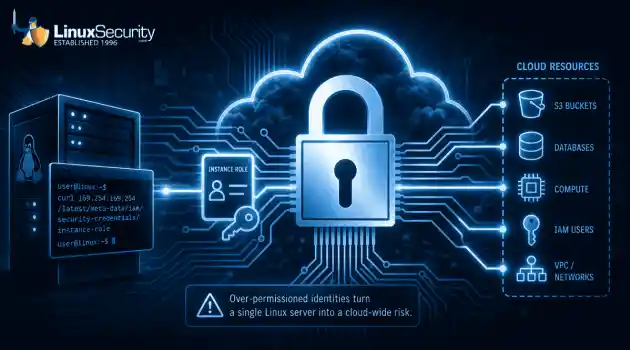
 For years, we secured our Linux infrastructure by building walls: VPCs, security groups, and hardened SSH configurations. We treated the cloud like a virtual data center, assuming that if we kept the "bad guys" out of the network, our workloads were safe. . That model is no longer sufficient. Today, one of the most common paths from an initial compromise to a major cloud breach is the identity assigned to your Linux workload. When an attacker gains code execution on a Linux instance—through a...
 Jul 17, 2026
 security practices patch management
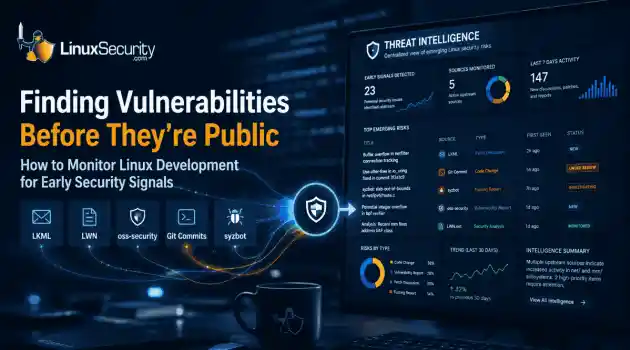
 Most of us don't hear about a kernel vulnerability until a CVE lands in our inbox or the vulnerability scanner starts complaining. By then, the patch isn't new anymore. Kernel developers may have been passing it around for review, arguing over the implementation, or revising it for days before anyone outside that community noticed it. None of those discussions are secret. They're sitting in mailing list archives, Git commits, and patch reviews where they've been the whole time. The strange...
Jul 14, 2026
 Linux security cyber attacks
 Every Linux server in your fleet produces thousands of events every minute. From journald logs and auditd records to kernel-level eBPF hooks, your systems are constantly talking. Most of that noise is just the mundane churn of system services, CI/CD runners, or routine administrative automation. But among that noise, an attacker might be establishing a foothold, moving laterally, or setting up persistence. The challenge for any security team is: how do you separate the routine from the...
Jul 13, 2026
 open-source infrastructure risk
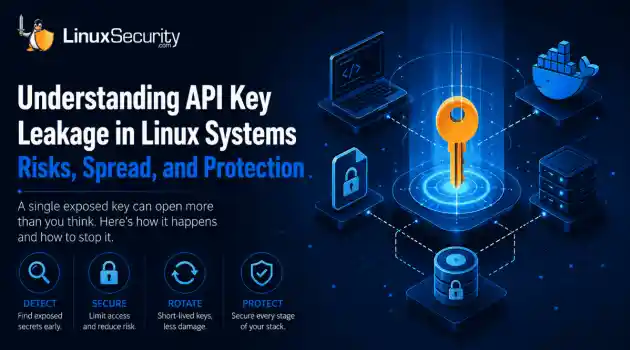
 Security scanners flag exposed API keys in public repositories every day. The initial response is usually predictable: delete the commit, revoke the credential, and move on. That’s a mistake. . In a real Linux environment, an API key never stays in one place. By the time it hits a public repo, it’s already everywhere. It’s in the CI/CD pipeline. It’s in your container registry. It’s in the build logs. It’s in the backups. Git makes this worse because the history never dies. Deleting a file in...
Jul 11, 2026
 open-source rootkit
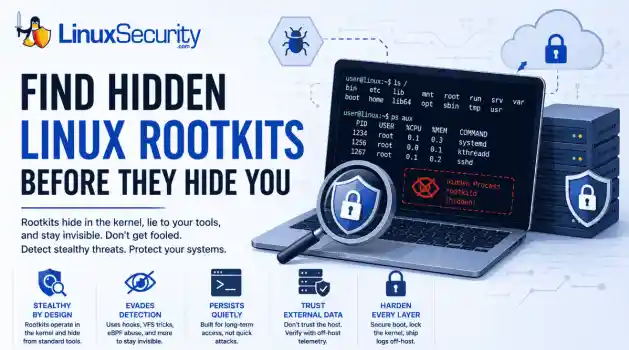
 Most of us think of Linux rootkits as ancient history—the stuff of 90s hacking forums and clunky malware that would crash your system if you looked at it the wrong way. But if you think they’ve gone away, you’re mistaken. They’ve just gotten smarter. . Modern attackers aren't using the noisy tools of the past. Today’s threats are surgical. Many of today’s most advanced Linux rootkits operate at the kernel level or abuse legitimate system features to blend in with normal traffic. They’re...
Jul 09, 2026
 Refine features
X Clear Filters
Get the latest News and Insights
Get the latest Linux and open source security news straight to your inbox.
Community Poll
Should Linux servers automatically install security updates?
Loading...
Explore Latest Linux Security features
We found 0 articles for you...
102
 data protectionencryption practicesdisk encryption
Disk Encryption: An Authoritative Guide for Linux Users
A lost Linux laptop or a recycled server drive can leak everything on it — from system files to sensitive data. Disk encryption changes that. It locks the entire drive, and nothing can be read until the right key is supplied. In this guide, we’ll look at what disk encryption does, how it works on Linux, where it helps most, and the options that are still worth using in 2025. . What Is Disk Encryption and Why Does It Matter Disk encryption turns the contents of a drive into unreadable code. Without the key, nothing on the disk can be accessed. Full disk encryption is the strongest form — see our sysadmin-focused guide for the deep dive. On Linux, the process is transparent once you log in. The operating system handles decryption automatically, so files open and save as they normally would. File encryption works differently. It lets you choose what to secure. Disk encryption takes the broader approach: it covers everything, including the operating system, swap space, and temporary files that users don’t usually see. Why does this matter? Because unprotected storage leaks data in ways people often overlook. A laptop left in an airport, a drive sent back for warranty service, or a retired server put into recycling can all expose sensitive information. With disk encryption, the hardware is locked. Without the key, it’s useless. Regulators recognize this. Frameworks like HIPAA and GDPR treat encryption as the standard for protecting data at rest, and fines often follow when it isn’t in place. How Disk Encryption Works in Linux Linux disk encryption protects everything written to the drive. Data is encrypted before storage and unlocked only after the correct passphrase is provided. To the user, the process is invisible. The system boots, the password is entered, and files open as if nothing special is happening. Underneath, everything on disk stays locked. Most modern distributions — Ubuntu, Fedora, Debian — rely on the same two components: Dm-crypt :handles encryption and decryption at the block level. LUKS2 : manages passphrases, recovery keys, and metadata to keep the setup consistent across systems. That pairing is now the baseline for linux disk encryption. It’s what makes the process seamless, whether you’re encrypting a laptop, a server, or even a removable drive. Performance used to be the trade-off. On older hardware, encryption could slow down disk operations noticeably. With today’s CPUs, AES instructions offload much of the work. In practice, the slowdown is small enough that most users never see it — but the protection it provides is significant. Disk Encryption Security Concerns Disk encryption keeps data safe on a powered-off or lost device, but it doesn’t block every type of attack. Once the system is unlocked, other risks come into play. Weak passphrases can be guessed or brute-forced. For example, a short password like “1234” can be cracked in seconds, even if the underlying encryption is strong. Standards bodies stress that a strong key matters as much as the cipher itself. Malware or keyloggers can steal the passphrase at the moment it’s typed in. Even with disk encryption in place, if malware is running on the system, it can capture the passphrase as you type. Phishing and supply chain exploits remain a real threat. Incidents like the supply chain attack targeting Telegram bots showed that attackers don’t need to break encryption if they can trick users or compromise the software supply chain. Unpatched operating systems open another door. Once the machine is running, exploits against an outdated kernel or library make the encryption irrelevant. Disk encryption stops data leaks from stolen hardware, but keeping a system secure also requires updates, monitoring, and careful handling of credentials. That’s why pairing disk encryption with strong passwords and regular updates is considered baseline security. Benefits of Disk Encryption for Linux Systems Thereal strengths of disk encryption show up in ordinary situations — the kind that don’t make headlines but still cause real damage when they go wrong. Lost or stolen devices . A laptop forgotten at airport security, or an external drive slipped into the wrong bag, won’t leak a thing without the passphrase. To whoever finds it, the hardware might as well be blank. Compliance . Regulators don’t care whether a breach happened by accident or through theft. Under HIPAA, GDPR, and CCPA, unencrypted data at rest is a violation. With disk encryption in place, the same lost laptop doesn’t trigger fines. End-of-life protection . Old servers and workstations often carry sensitive data long after they’re powered down. Destroying the encryption keys — a crypto-erase — wipes that data permanently. The drive can be resold or recycled without risk. Disk encryption doesn’t make a system bulletproof, but it takes some of the most common and costly risks off the table. Limitations of Disk Encryption While disk encryption is powerful, it’s not a cure-all. Users need to understand its trade-offs to use it effectively. Performance Impact of Disk Encryption on Linux : Disk encryption puts extra work on the system, and the impact shows up differently depending on the hardware. On an older desktop, copying a big folder can feel sluggish. On newer machines, the difference is usually small enough that most people won’t notice. Key Management Risks in Disk Encryption : If disk encryption keys are lost, the data is permanently inaccessible. Weak passphrases or missing backups create the biggest risks. Secure backups and multiple recovery keys are essential so one mistake doesn’t lock out an entire system. Why Disk Encryption Does Not Protect Data in Transit : Disk encryption protects data at rest but not in transit. Once the system is unlocked, files and memory are just as exposed as on an unencrypted machine. Malware and exploits can still steal information or move laterallythrough the network. Disk encryption won’t stop an attacker who steals data after you’ve logged in. Disk encryption does one job well: it protects the files on a drive if the hardware goes missing. Once the system is open and running, though, other risks take over. The risks and downsides of enabling full disk encryption It’s one of the strongest ways to keep data safe at rest — but it’s not without costs. Lose the keys, lose the data. A forgotten passphrase or a damaged LUKS header usually means the drive is gone. Backups are the only safety net. Performance isn’t free. Modern CPUs handle it well. On older hardware or in heavy I/O jobs, you’ll feel the drag. Recovery gets harder. Swapping disks, migrating, or fixing corruption takes more planning when everything is locked. Boot isn’t bulletproof. A misconfigured initramfs or an unsigned bootloader can give an attacker with hands on the machine a way in. Memory can leak. Cold-boot and side-channel attacks are still possible if a device is left sleeping instead of shut down. And once it’s open, it’s open. Malware, phishing, and remote exploits work the same on an encrypted system as they do on any other. Best practice: Back up keys and headers in safe places, use strong passphrases, lock down boot, and shut the machine off when you walk away. Encryption protects the drive itself — the rest still depends on you. Linux Disk Encryption Options in 2025 Linux offers a handful of disk encryption tools, but only a few are still worth using in practice. Tool/Method Best Use Case Pros Cons Status dm-crypt with LUKS2 Default on most distros Strong, well-maintained Some setup knowledge Recommended VeraCrypt Removable or cross-platform media Free, portable Not kernel-native Recommended Enterprise solutions Hybrid cloud / large fleets Centralized key management Cost, added complexity Recommended eCryptfs / loop-AES Legacy systems only Still found in old setups Weak defaults, outdated Avoid For most Linux users, disk encryption through dm-crypt and LUKS2 is the default. It’s built into Ubuntu, Fedora, and Debian installers and works reliably across laptops and servers. VeraCryp t still has a place when drives need to be moved between operating systems. Older tools like eCryptfs or loop-AES are mostly historical; they’re better replaced than deployed. Best Practices for Deploying Disk Encryption Getting the most out of disk encryption depends on how it’s set up and maintained. A few practical steps go a long way. Enable at OS install for a clean deployment. Back up recovery keys securely. Test recovery and crypto-erase before production. Use strong, unique passphrases. Don’t rely solely on FDE — combine with secure boot, patches, and backups. Handled this way, disk encryption stays reliable not just for lost devices, but across the full life of the system. FAQ: Disk Encryption on Linux Does disk encryption slow Linux? On a modern laptop, barely. Most CPUs have built-in instructions that take the load off, so you won’t notice it when browsing or editing documents. Copy a huge folder on older hardware, though, and the slowdown becomes obvious. Do I really need it on a personal machine? Yes. A laptop left in a coffee shop or an external drive forgotten at the office can expose everything on it. Disk encryption makes the device look like random noise until the right key is entered. How is file encryption different from disk encryption? File encryption is pick-and-choose. You decide which documents or folders to lock. Disk encryption covers the whole drive — even swap space and temporary files you never think about. That’s why it’s the standardchoice for Linux systems now. Conclusion: Why Disk Encryption Should Be Your Baseline The case for disk encryption is clear. It keeps stolen laptops from leaking data, meets compliance requirements under HIPAA and GDPR, and makes device retirement safe with crypto-erase. In 2025, linux full disk encryption is no longer optional — it’s expected. Most distributions include it by default, and it’s one of the simplest ways to keep your data safe. . What Is Disk Encryption and Why Does It Matter Disk encryption turns the contents of a drive into un. linux, laptop, recycled, server, drive, everything, system, files. . MaK Ulac
 Sep 23, 2025
•
Sep 23, 2025
•
102
 data integrityencryption toolslinux best practices
The CIA Triad: Enhancing Open Source Security in Linux Systems
The CIA triad — no relation to the Central Intelligence Agency — is an information security framework for protecting information. It examines the confidentiality, integrity, and availability of an organization’s data, giving users a valuable tool for assessing and implementing systems or finding weaknesses. . It’s particularly relevant to your open-source and Linux environments. Although Linux has comparatively fewer security vulnerabilities than Windows , some open-source projects are small, volunteer-led endeavors. That could make it easier to introduce vulnerabilities that go unnoticed before it’s too late. No matter your company’s size or type, the CIA triad provides a methodical approach to evaluating your current data security approach and breach preparedness strategies. Learning about tools, tips, and best practices associated with this framework will give you the confidence to implement the CIA triad successfully in your Linux systems and guide others in doing the same. In this article, you’ll also see how each triad component applies in the real world and what to do when overcoming specific challenges. They’ll help you compare what your company does now to how it should alter cybersecurity to meet each framework’s ideals. The associated preparedness reduces breach risks while minimizing the likelihood of other cybersecurity issues that could disrupt operations. Confidentiality in Open-Source Linux Environments Confidentiality involves maintaining information’s privacy and ensuring only authorized parties can access it. A related aspect requires implementing appropriate safeguards to stop malicious individuals from stealing it. These preventive measures reduce breach likelihood and limit cybercriminals’ efforts once they obtain data. Methods such as multifactor authentication and the principle of least privilege also support confidentiality as defined in the CIA triad. In the first instance, people need more than passwords to access data andorganizational resources. That way, stolen passwords or those leaked online are insufficient. Someone must also enter a piece of information only they have, such as a temporary code sent to their phones. The principle of least privilege restricts what people can access, only allowing them to proceed if the data or another resource relates to their task or role. Those checks prevent someone from hacking an account and quickly escalating their privileges. Linux users can ensure confidentiality through encryption by making the information indecipherable without the correct decryption key. This approach also works well in environments where the theft or loss of physical storage devices could compromise data confidentiality. Are you looking for more encryption tools in your Linux environment, or are you ready to use them? Consider GnuPG, which lets you encrypt and sign your communications or implement a key-management strategy. You can rely on it to transfer files between devices securely or encrypt and sign sensitive documents stored in cloud services. Alternatively, OpenSSL is a commercial-grade, feature-rich toolkit for secure communications and general-purpose cryptography. Try it when you need to generate self-signed certificates or want to work with symmetric key algorithms for encryption. Since disk encryption is essential for data confidentiality, you need an open-source tool to handle it. One option is VeraCrypt, which creates a virtual encrypted disk inside a file and mounts it like a real one. The encryption occurs automatically and in real-time, supporting your workflow. Consider using VeraCrypt to encrypt a partition or your entire computer, protecting the files on it, as well as browser-based content. Pre-Encryption Considerations Although encryption improves data confidentiality, it also causes a slight but measurable performance decrease because of the extra step required for disk access. However, the effect is less noticeable when people only encrypt particularfiles or folders rather than their whole computers. Additionally, encryption provides an unnecessary level of security for some settings. Consider the type of data you must protect and who accesses it before determining how and what to encrypt. Fortunately, the wide assortment of tools available — including those mentioned — makes it easy to find user-friendly options for your existing or anticipated needs. Finally, assess whether privacy laws such as the General Data Protection Regulation (GDPR) or the Health Insurance Portability and Accountability Act (HIPAA) have influenced your decision to focus on encryption to improve data confidentiality. Such laws place increasing responsibilities on those who collect, store, or handle information, requiring them to keep it safe with appropriate cybersecurity measures. Integrity in Open-Source Linux Environments Data integrity supports the accuracy and trustworthiness of information used throughout organizations. This CIA triad aspect is critical for executives who use business intelligence tools and other products to guide their decisions with up-to-date data. Excellent data integrity also reassures customers that the company has robust processes for preventing accidental or malicious changes that could erode integrity and cause confusion. Many organizations develop methods to track changes, showing which party made them, when, and for what reasons. Cryptographic hashing is one way for Linux users to maintain and ensure data integrity, especially since most distributions have built-in cryptography tools. This one-way method proves that no one changed the information in transit, which is helpful for communications such as email. Secure hash algorithms (SHA) are the most widely used for data integrity and have three types. Besides relying on SHA for password storage and authentication, people use them to verify digital signatures. In this approach, the signer’s private key encrypts the hash, creating a document’s digitalsignature. Digital signatures are popular safeguards that show people have downloaded authentic software versions. Version control systems (VCS) also support data integrity by providing all contributors and collaborators with unified and consistent views of a project’s data. Git is a popular VCS made in 2005 by developers working on Linux. It allows users to see a complete timeline of changes and information about a project’s progress. Businesses can use it to streamline communications and increase productivity, especially among users in various time zones. Data Integrity Considerations Secure hashing through SHA and other algorithms is slow by design, which affects data transfer speeds and can slow down your computer if the hashing requires significant overhead. However, since SHA speeds vary by string length, choosing the appropriate one for your hashing needs keeps speeds as high as possible. Additionally, any good-quality hash should have collision resistance, meaning it’s incredibly challenging to find two hashes that produce the same output. Collision resistance stops file tampering and keeps passwords secure. Besides the increased security, one of the good things about SHA resource requirements is that the necessary storage space is only fractionally more than what the data itself takes up. Before moving forward with a data integrity plan, consider the potential impact of standards such as ISO/IEC 27001. This international computer security standard has a significant data integrity aspect. This part of the CIA triad also supports non-repudiation, confirming information’s authenticity and origin while proving it was sent, when applicable. Availability in Open Source Linux Environments The CIA triad’s third prong concerns whether the people who need to access data can do so without negatively impacting its confidentiality or integrity. Meeting this goal can be tricky because users may find availability competes with the other two parts of the triad, making itchallenging to satisfy all three simultaneously. Complications also arise when addressing the data availability needs of various groups, such as customers or employees. However, when people can smoothly access information as needed, their productivity and overall perception of the company will rise. You can prioritize high availability with a redundant array of independent disk (RAID) configurations. They support data availability by combining several physical hard or solid-state drives into one logical unit. Although some focus on speed, others improve fault tolerance. You must select the most appropriate options for your organization, but Linux offers several integrated tools for configuring and managing RAID arrays. Implementing failover solutions is another essential part of upholding data availability within the CIA triad. Companies can switch automatically and seamlessly to backup systems when outages occur. That capability supports business continuity during and after cyberattacks. Since data breaches cost an average of $3.9 million , reducing damages is imperative. What Tools and Patch Management Strategies Support Data Availability? Expand your Linux toolbox of failover solutions by using open-source products. Consider Pacemaker, which allows recovery from machine and application-level failures and can detect if they occur. The company behind Pacemaker also offers Corosync, an availability manager that automatically restarts failed application processes. Robust patch management processes also support high data availability by decreasing the chances of cybercriminals exploiting known vulnerabilities. Consider the unattended upgrades feature within Debian and Ubuntu-based distributions as part of your strategy. Once activated, it keeps the machines updated without your manual input. Similarly, the yum-cron package allows scheduling when those automatic updates run. One popular option is to make it happen during every system start. How Can I Implement Data AvailabilityStrategies? While developing your organization’s data availability use cases, always consider the information involved and who must access it. Getting stakeholder feedback regarding what they like and dislike about current strategies will help you keep what works and identify new ways to cope with the stated challenges. Consider applicable availability-related regulations, such as service level agreements, too. Ensure decisions align with your business continuity efforts and disaster recovery plans. Decision-makers must also take a cost-versus-benefit approach with their redundancy and failover systems. Since it’s likely too expensive and demanding to create them for all of a company’s data, the practical approach is to consider which information would be most disruptive if lost or inaccessible. Additionally, people must balance system performance and high availability, especially when using RAID configurations. Some prioritize speed, while others emphasize reliability. Options such as RAID 10 provide the best of both worlds. Implementing the CIA Triad: A Holistic Approach Bringing the CIA triad into your existing Linux cybersecurity practices requires thoroughness and attentiveness to your company’s data, who uses it, and for what purposes. Use this best practices checklist for the best outcomes, referring to it along with the above suggestions: Ensure your robust encryption protocols cover data storage and transmission. Establish effective access control measures to keep information safe without limiting productivity. Perform detailed audits to compare your company’s status against the recommendations contained in reputable cybersecurity frameworks. Deploy digital signatures, hashing algorithms, and VSC to establish and maintain data integrity. Create and uphold systems for documenting changes and seeking the appropriate approval. Become familiar with built-in and third-party Linux tools that support the CIA triad. Hold regular employee trainingsessions to illustrate how workers can uphold the CIA triad. Understand the potential performance tradeoffs associated with some security measures and reach suitable compromises. Consider the internal and external factors that would necessitate updating how your company uses the CIA triad. Further Challenges and Considerations of Using the CIA Triad in Linux Environments The tradeoffs between security, performance, and usability require people to carefully consider their current needs and how they may change. This information will also help them set accurate expectations for how some of the CIA triad’s elements may slightly change workflows, such as causing small but noticeable slowdowns. Informing workers about those potential performance decreases and the reasons behind them will encourage everyone to commit to the CIA triad’s principles despite encountering occasional downsides. Although the evolving threat landscape poses perpetual cybersecurity challenges, the CIA triad’s key advantage is that it remains relevant despite those changes. Even when new risks arise, confidentiality, integrity, and availability will be necessary for data and those using it. Additionally, you can adapt the CIA triad as your organization grows or changes its focus. Since Linux prioritizes open-source collaboration , it allows people to work faster to patch known vulnerabilities or update security tools to protect against new threats. Additionally, although open source is not always more secure, people find and flag problems faster, potentially resulting in less vulnerable systems and software. Our Final Thoughts: The CIA Triad Will Remain Relevant Even as company leaders hire more team members, acquire additional customers, or enter new market segments, they must maintain data confidentiality, integrity, and availability. The CIA triad maintains those aspects as organizations change and grow, ensuring they retain tight cybersecurity and follow best practices for Linuxsecurity. The CIA triad is also an excellent way to keep a proactive security posture in the ever-changing open-source landscape and its associated cybersecurity threats. No matter your organization’s size or data, this framework supports better security preparedness now and for the foreseeable future. . Discover the techniques to incorporate the CIA triad into your Linux safeguarding approach for optimal data security.. CIA Triad, Linux Security, Data Protection, Information Assurance, Open Source Tools. . Brittany Day
Jun 22, 2024
•
102
data privacyencryption toolscommunication securityEnhancing Communication Security Using Open-Source E2EE Tools
End-to-end encryption is an increasingly popular method that online services are using to ensure their users’ security. End-to-end encryption, also known as E2EE, encodes messages sent from one user to another in a way that ensures that only the sender and recipient can decode the message. . Using open-source technology can add another layer of security to E2EE software. Open-source technology has publicly available code, meaning that anyone can proofread the code for flaws and help find and fix bugs. Publicly reviewable code is especially important for security technology. The security of E2EE relies on the trust that only the sender and receiver of a message can read the message and that no one in the middle has access. Allowing users to check the code of a platform that uses E2EE helps ensure that the users’ communications are really encrypted. End-to-end encryption uses a method known as public key encryption to ensure that only the sender and receiver of a message can read it. Public key encryption works by giving every user two “keys,” a private and public key. Sending a message to a user encrypts it using the receiver’s public key, while his or her private key is needed to decode it. This means that messages are unreadable to anyone who is not meant to receive a message, including the company running the service. E2EE is primarily known for its use in messaging apps such as WhatsApp, Telegram, and Signal. However, it is also used for applications like password managers and data transfer and storage. In these cases, E2EE ensures that only the owner of the data is able to access it. The Best Open-Source Software with End-To-End Encryption There are many open-source programs that incorporate end-to-end encryption, and using these programs can help make everyday tasks more secure. Because end-to-end encryption is used for the transmission of messages between two parties, it is commonly found in secure messaging apps. Messaging Apps Linphone : Linphone isa free and open-source video calling software similar to Skype. Linphone uses several types of encryption, including E2EE for instant text messages. It is available on iOS, Android, Windows, Mac, and Linux. Wire : Wire is an open-source video calling and messaging software focused on businesses and government clients. There are several different subscriptions available for iOS, Android, Windows, Mac, and Linux. Delta Chat : Delta Chat is a messaging program similar to WhatsApp. Delta Chat uses protocols typically used for emails, meaning that Delta Chat can be used to message anyone with an email address, even if they do not have Delta Chat. It is available on iOS, Android, Windows, Mac, and Linux. ChatSecure : ChatSecure is an encrypted messaging app available on iOS. ChatSecure is more basic than the other programs on this list since it is only available on iOS and only supports text messaging without attachments. However, it has a strong focus on security with many customizable security options. VPNs Libreswan : Libreswan is a free and open-source VPN built for Linux. It has been around for 25 years and is included with several Linux distributions by default. OpenVPN : OpenVPN is one of the most popular open-source VPNs available. While it does have compatibility with more devices than Libreswan, it is only free for a limited number of connected devices. SoftEther : SoftEther is a free and open-source VPN available for Windows, Mac, and Linux. While it does take some work to set up, it is more customizable and available on more platforms than many alternatives. Other Software Nextcloud : Nextcloud is a free open-source file sharing software that uses E2EE. Nextcloud is similar to Dropbox or Google Drive, except it is self-hosted instead of relying on third party servers, making it a good option for companies looking for privacy. Tor Browser : Tor is one of the most secure browsers available. It is known for its use of onion routing , inwhich user traffic is sent through several layers of encryption. Tutanota: Tutanota is an email service with a focus on privacy. It can be used to send encrypted emails, even to users who do not use Tutanota. It is free, open-source, and available on desktop and mobile devices. Flaws of End-to-End Encryption While end-to-end encryption is one of the best methods for keeping data secure, like everything, it has flaws and can be broken. First, E2EE only encrypts data in transit. If someone steals or hacks a phone, he or she can still read all the messages on the phone, even if they were sent using E2EE—once the data is sent, it is totally unencrypted. Additionally, “man-in-the-middle” attacks have been developed in which hackers intervene so that messages are encrypted with their keys instead of those of the intended recipient. Some programs also have backdoors—intentional exploits created by developers that allow them to access the data of their users. While this is unlikely to be a concern for users who are not breaking laws, backdoors can be taken advantage of by malicious attackers who discover them. This is one benefit of open-source software—it can not have any secret backdoors because its code is publicly viewable. Conclusion While no encryption algorithm is perfect, using software that incorporates end-to-end encryption is a great way to stay private and secure. Furthermore, ensuring that E2EE software is open-source can improve security even more by certifying that the software is well proofread and tested and that it is truly private and secure. Ultimately, while end-to-end encryption has flaws, it is one the best ways to keep messages confidential. . Open-source tools revolutionize end-to-end encryption by giving users control over communication and enhancing data privacy while fostering innovation and trust. End-To-End Encryption, Open-Source Software, Secure Messaging, Data Privacy Tools. . Yosef Davidowitz
Jul 25, 2022
•
102
 data protectionfile encryptiondisk encryption
Best File & Disk Encryption Tools For Securing Your Data
As we rapidly transition to an increasingly digital society, data protection is a greater concern than ever before. Encryption is one of the most effective and widely used methods of securing sensitive information from unauthorized parties. In this article, we'll introduce you to some Linux file and disk encryption tools we love to help you safeguard critical data and protect your privacy online. . Linux File Encryption: A Foundation of Modern Data Security Attackers are becoming increasingly creative in the methods they are employing to gain access to sensitive information that can be monetized for personal gain. While almost 85% of malware attacks target Windows systems and Linux offers inherent security advantages over Windows or MacOS due to its transparent open-source code, strict user privelege model and architectural diversity, Linux is becoming an increasingly popular attack target due to its growing popularity and the high-value devices it powers worldwide. Linux Is Becoming an Increasingly Popular Attack Target While almost 85% of malware attacks target Windows systems, Linux is becoming an increasingly popular attack target due to its growing popularity and the high-value devices it powers worldwide. Now more than ever, Linux users should opt to add a layer of privacy in the form of file and disk encryption. Encryting files and folders ensures that data is unreadable and unusable - even in the event that your computer gets hacked. Luckily, there a number of great tools avialable to Linux users that make the process fast, easy and highly secure. Our Favorite File & Disk Encryption Software for Linux WinMagic SecureDoc for Linux SecureDoc for Linux is a Linux endpoint security solution that provides enterprise-class full drive encryption for Linux endpoints by separating encryption into two components - encryption and key management. The defense-in-depth solution works seamlessly with Linux native encryption, building on the capabilities available in Linux (such asdm-crypt) to provide an overarching layer of manageability, visibility, and automation that scales at an enterprise level and facilitates compliance. SecureDoc for Linux supports a Zero Trust strategy, tackling the challenges associated with implementing Zero Trust recommendations by allowing initial live conversion of disk permitting admins and users to log in and work on the machine while encryption occurs. SecureDoc also reduces IT management costs by enabling a pre-boot network-based authentication as an additional security measure to ensure data on drives is never left unprotected during boot-up. In addition, SecureDoc provides damage control for lost or stolen devices by removing keys to ensure data cannot be accessed even with the right credentials. Some of the core features of SecureDoc for Linux include: Live disk conversion allows admins and users to log in and work on the machine while encryption occurs. Removes the need to clear the disk and reinstall the operating system before commencing encryption Encryption statuses are monitored and available centrally in a single pane of glass admin portal. SecureDoc enables pre-boot network-based authentication as an additional security measure to ensure data on drives is never left unprotected during boot-up. Supports Smart Card based MFA at pre-boot (e.g., PIV cards) SD Linux makes it easy for AD and Azure AD users to log into encrypted devices. Login to encrypted devices without having to be pre-provisioned for access on the device. SecureDoc Enterprise Server provides a simple central management for all OS endpoints, including Linux, Windows, and Mac. CryFS CryFS is a free and open-source cloud-based tool that lets you encrypt your files and store them anywhere. Setting it up is a breeze and it is compatible with popular cloud services like Dropbox, iCloud, OneDrive, among many others. CryFS works in the background - so you won’t notice it when accessing your files. This tool doesn’t just encrypt your files- it alsoencrypts your file sizes, metadata, and directory structure. The base directory contains a configuration file with the information CryFS requires to decrypt it. This configuration file is encrypted twice: once with aes-256-gcm and once with your chosen password. This same password will also be used for integrity checks. Cryptmount Cryptmount is a user-friendly open-source disk encryption tool that lets beginners encrypt a specific filesystem without requiring superuser privileges. It uses the dev mapper mechanism, which offers several advantages such as improved functionality in the kernel, transparent support for filesystems stored on either raw disk partitions or loopback files, separate encryption of filesystem access keys which allows access passwords to be changed without re-encrypting the entire filesystem, as well as the ability to store multiple encrypted filesystems within a single disk partition using a designated subset of blocks for each. Cryptmount not only allows users to protect important filesystems, but also makes it possible to swap system space. Multiple encrypted filesystems can be “mounted”, or made active, or “unmounted”, or deactivated, depending on the users’ immediate needs. This is particularly useful when working in an encrypted environment, but not wanting to mess around with your system’s inbuilt partitions. You can learn how to install and configure Cryptmount on your Linux system in this Tecmint tutorial . Cryptsetup Cryptsetup is an open-source utility made to easily allow users to set up disk encryption basedon the DMCrypt kernel module. This module includes plain dm-crypt volumes, LUKS volumes, loop-AES, TrueCrypt (including VeraCrypt extension), and BitLocker formats. It uses the standard LUKS (Linux Unified Key Setup) design to protect against low entropy attacks and provide multiple keys support and effective passphrase revocation. The use of LUKS also allows compatibility among distributions as well as multiple password security. LUKSstores all necessary setup information in the partition header, allowing users to easily transport or migrate data. Dm-crypt Dm-crypt, which operates under the GNU General Public License (GPL) , is great for encrypting entire disks of information, including removable media such as USB sticks, internal OS partitions and individual files. Some Linux distributions even allow Dm-crypt to encrypt and secure root system files. Because Dm-crypt only deals with transparent encryption of block devices, it is much more flexible than other encryption tools. One particularly great feature of the dm-crypt system is that it doesn’t have to work directly with a disk driver. Instead, it can save all data to a single file as opposed to using LUKS and a whole disk partition. Thus, you can have dm-crypt create a single file within which you could create an entire filesystem. Then you can mount that single file as a separate drive, and then access it from any piece of software - just like you would any other drive. eCryptfs eCryptfs is a free, open-source, cryptographic filesystem for Linux. You can think of it as “GnuPG (introduced below) as a filesystem”. The filesystem stores cryptographic metadata in each file’s header, which allows for the copying of encrypted files between hosts. These encrypted files can then be decrypted with the corresponding key in the Linux kernel keyring. This tool has been part of the Linux kernel since version 2.6.19 and is used in Google Chrome, as the basis for Ubuntu's Encrypted Home Directory and in several network-attached storage (NAS) devices. GnuPG GnuPG (aka GPG or Gnu Privacy Guard) is a free and open-source implementation of the OpenPGP standard as defined by RFC4880 (also known as PGP). It was engineered to replace Symantec’s PGP cryptographic software suite. This tool supports several types of encryption algorithms including public-key cryptography (RSA EIGamal, DSA), symmetrical key algorithms (Blowfish, AES, IDEA, etc), cryptographic hashfunctions (RIPEMD, SHA) and compression (ZIP, ZLIB, BZIP2). GnuPG also lets you encrypt and decrypt files from the command line and comes with a collection of frontend applications and libraries. Additionally, it features a versatile key management system along with access modules for a wide range of public key directories. Gostcrypt Gostcrypt , a fork of the now discontinued Truecrypt project, is a free and open-source cryptographic tool for Linux, Windows and MacOS. It currently uses the GOST 28147-89 algorithm, but is planning to move to GOST Grasshopper since the release of version 1.3.1. The Grasshopper algorithm aims to supersede the current GOST 28147-89 algorithm (64-bit block and 256-bit key, Feistel structure). Unlike the GOST 28147-89 algorithm, GOST Grasshopper belongs to the SPN (Substitution Permutation Network) family. This features 128-bit blocks (plaintext, ciphertext) and a 256-bit master key from which 10 128-bit subkeys can be derived. TOMB TOMB is a free and open-source encryption and backup tool for GNU/Linux systems. It’s written in easy-to-review code, linking commonly-shared components, and is popular among Linux user-developers for this reason. TOMB is touted as one of the best file encryption software options available for Linux today. It creates encrypted storage folders that can be opened and closed with their respective key files (which are also password-protected). A “tomb” is a locked and safely-transportable folder hidden in a filesystem. These tombs can be separated, for instance, your tomb file can be kept on your hard disk and the key files in a USB stick. Unfortunately, Tomb does not have a graphical user interface (GUI), and relies on Command Line input in order to function. Protect Your Data Today Data privacy has always been a pressing concern, but never been more critical than in today’s work-from-home environment. While Linux systems enjoy built-in security and privacy due to the system’s open-source nature, architecturaldiversity and strict user privilege model, this doesn’t mean that your files are safe in the event that your system gets hacked. If you want to keep your private files private, try out one of the eight excellent file and disk encryption tools for Linux covered in this article. Edited by Brittany Day, LinuxSecurity.com Content Editor and Guardian Digital, Inc. Director of Communications. . Linux File Encryption: A Foundation of Modern Data Security Attackers are becoming increasingly crea. rapidly, transition, increasingly, digital, society, protection, greater, concern. . Brittany Day
May 26, 2022
•
102
 security practiceskey managementdata privacy
Best Encryption Techniques to Boost Data Privacy on Linux Systems
In our increasingly digital society, protecting the privacy of sensitive data and our behavior online is a universal concern. Many users switch to Linux for its superior privacy features and the excellent selection of privacy-focused distros that it offers. . Regardless of the OS you are using, encryption is a critical element of digital privacy. In this article, we explore the best and most reliable methods of file encryption on Linux. Our experts have firsthand experience using these programs and understand the technology behind them, equipping us with the knowledge to help you securely encrypt files on your Linux system and avoid common pitfalls associated with Linux file encryption. What Is Encryption? Encryption is the process of encoding data in such a way that only authorized parties will be able to read it. Encrypted data can only be decoded by a decryption key. Public-key cryptography, which uses pairs of public keys that may be known by others and private keys that may never be known by anyone except for the owner, is the basis for all encryption today. This system enables anybody to encrypt a message using the intended receiver's public key. The encrypted message can then only be decrypted with the receiver's private key. Public key algorithms underpin numerous modern Internet standards and protocols including TLS , S/MIME , PGP and GPG . Proper Encryption & Decryption Key Management & Storage As you can now see, proper, secure encryption and decryption key management and storage is critical in ensuring that encrypted files remain secure and accessible to authorized parties, while remaining inaccessible to unauthorized parties. If an encryption key is lost or stolen, data that has been encrypted with this key can never be recovered- and could potentially end up in the hands of cyber thieves. Thus, encryption keys should always be backed up and stored offline in a secure location, such as in a USB key kept in your safety deposit box. Our Top Linux File Encryption Methods Thereare numerous excellent methods and programs that can be used to encrypt files on Linux, so selecting the best one for your specific needs may seem a bit overwhelming. To help you make an informed decision, we’ll introduce you to some of our favorites. Archive Manager A general Archive Manager is preinstalled in all Linux systems, and is the most basic way to encrypt files o n Linux. Encrypting files using the the Archive Manager is quite simple: Right-click on the file you want to encrypt and then click on “Compress”. Select the.zip extension and then click on “Create”. Open the zip file you’ve created and click on the hamburger icon at the top right of the file. Select the password option from the drop-down menu and set up your password. Click on “Save”. Your files are now encrypted with a password. GnuPG GnuPG (aka GPG or Gnu Privacy Guard), which is pre-installed in most distros, allows users to encrypt files and sign them using the Command Line. This unique hybrid encryption tool employs a two-prong approach to encryption to help speed up the encryption process without compromising security. This involves using both conventional symmetric-key cryptography, as well as public-key cryptography. GnuPG comes with a collection of frontend applications and libraries, and features a versatile key management system along with access modules for a wide range of public key directories. You can download GnuPG index . Source: Ubuntu Pit You can learn how to encrypt and decrypt files with GnuPG on Linux in this. Nautilus Nautilus is a great alternative for users who are more comfortable using a GUI than the Command Line. The software, which encrypts files with either a passphrase or a key, can be used for the encryption and decryption of data, and also functions as a file manager. To install Nautilus on your Debian system, run the following command: $ sudo apt-get install seahorse-nautilus -y Once installed, restart Nautilus with the following command: $ nautilus -q To encrypt files using Nautilus: Go to the folder where the file that you want to encrypt resides. Right-click on the file and then click on “Encrypt”. Now you have two options: Either select a paraphrase that will prompt you to enter a password to encrypt your file or choose a key that you have already created beforehand to encrypt your file. To decrypt a file: Right-click on the encrypted file and then click on “Open With Decrypt File”. Enter your passphrase. TOMB Tomb is a simple, user-friendly Command Line encryption tool popular among Linux user-developers. A defining feature of Tomb is its ability to generate password-protected encrypted storage vaults referred to as “tombs”. These tombs can be safely transported and hidden in a filesystem, and can be separated for additional security. For instance, your tomb file can be kept on your hard disk and the key files in a USB stick. Unfortunately, Tomb does not have a graphical user interface (GUI) and relies on Command Line input in order to function. You can install Tomb from the project’s Github page . Learn how to create tombs and how to hide a tomb key in an image in this Tecmint tutorial . CryFS CryFS is an excellent cloud-based tool that lets you encrypt your files and store them anywhere. It is compatible with popular cloud services like Dropbox, iCloud and OneDrive, among many others. CryFS works in the background, so you won’t notice it when accessing your files. The tool goes way beyond just encrypting your files- it also encrypts your file sizes, metadata and directory structure. The base directory contains a configuration file that is encrypted twice - once with aes-256-gcm and once with a password that you choose. This password is also used to conduct integrity checks. You can download the latest version of CryFS, CryFS 0.10.2, CryFS Downloads . Learn how to use CryFS in this tutorial . 7-zip 7-zip offers strong, straightforward Command Line encryptionusing 256-AES encryption, along with a very high compression ratio. The official name of 7-zip for Linux is p7zip. The "p" here is short for POSIX (an open standard designed to make applications compatible across different platforms), to indicate that p7zip is a POSIX compliant implementation of 7-zip. 7-zip is also a powerful file manager. You can download the latest version of 7-zip, 7-zip 21.01 alpha, 7-zip downloads. Learn how to encrypt files on Linux using 7-zip in this TechRepublic tutorial . Tails OS Tails is a specialized secure Linux distro created for a privacy-oriented user experience. The OS is referred to as the ‘ amnesic incognito live system ’, as it can only be accessed through an external USB drive on a amnesic host computer, meaning that it will have nothing but the new default form on every single usage. All Tails connections run through the Tor network - concealing users’ location and other private information. Tails features a selection of built-in state-of-the-art cryptography and security measures including: Encryption and signing of emails by default using OpenPGP whenever you use the email client, text editor, or the file browser Instant messages are protected with robust encryption using Off-The-Record messaging (OTR) Files are securely deleted (with no option of recovery) using Nautilus Wipe You can download Tails OS on your Linux system Tails OS Downloads . Learn more about Tails OS and why it is among our favorite secure Linux distros in this LinuxSecurity feature article . Conclusion With cyberattacks and privacy issues becoming an increasingly serious and prevalent threat, users must secure data using strong encryption. Luckily, Linux offers a selection of highly secure and reliable file encryption methods, many of which you are now familiar with. Are you using any of the methods introduced in this article, or other Linux file encryption methods we didn’t explore? Let’s discuss! Connect with us on social media: Twitter | Facebook . Regardless of the OS you are using, encryption is a critical element of digital privacy. In this art. increasingly, digital, society, protecting, privacy, sensitive, behavior, onlin. . Brittany Day
Mar 28, 2021
•

Get the latest News and Insights
Get the latest Linux and open source security news straight to your inbox.
Community Poll
Should Linux servers automatically install security updates?
Search Topics
Powered By

Linux Security - Your source for Top Linux News, Advisories, HOWTOs and Feature Releases
QUICK LINKS
subscribe to newsletters!
Like staying secure? So do we.
Sign up for updates, tips, and alerts!