Overly broad permissions can turn one compromised account into a much larger security problem. Learn how to reduce unnecessary access, review privileges, and apply least privilege across modern Linux systems. Review Linux Privileges×


Stay Ahead With Linux Security Features

 identity management security tactics
 For years, we secured our Linux infrastructure by building walls: VPCs, security groups, and hardened SSH configurations. We treated the cloud like a virtual data center, assuming that if we kept the "bad guys" out of the network, our workloads were safe. . That model is no longer sufficient. Today, one of the most common paths from an initial compromise to a major cloud breach is the identity assigned to your Linux workload. When an attacker gains code execution on a Linux instance—through a...
 Jul 17, 2026
 security practices patch management
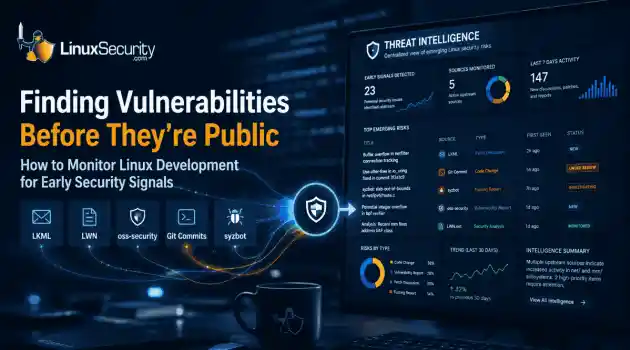
 Most of us don't hear about a kernel vulnerability until a CVE lands in our inbox or the vulnerability scanner starts complaining. By then, the patch isn't new anymore. Kernel developers may have been passing it around for review, arguing over the implementation, or revising it for days before anyone outside that community noticed it. None of those discussions are secret. They're sitting in mailing list archives, Git commits, and patch reviews where they've been the whole time. The strange...
Jul 14, 2026
 Linux security cyber attacks
 Every Linux server in your fleet produces thousands of events every minute. From journald logs and auditd records to kernel-level eBPF hooks, your systems are constantly talking. Most of that noise is just the mundane churn of system services, CI/CD runners, or routine administrative automation. But among that noise, an attacker might be establishing a foothold, moving laterally, or setting up persistence. The challenge for any security team is: how do you separate the routine from the...
Jul 13, 2026
 open-source infrastructure risk
 Security scanners flag exposed API keys in public repositories every day. The initial response is usually predictable: delete the commit, revoke the credential, and move on. That’s a mistake. . In a real Linux environment, an API key never stays in one place. By the time it hits a public repo, it’s already everywhere. It’s in the CI/CD pipeline. It’s in your container registry. It’s in the build logs. It’s in the backups. Git makes this worse because the history never dies. Deleting a file in...
Jul 11, 2026
 open-source rootkit
 Most of us think of Linux rootkits as ancient history—the stuff of 90s hacking forums and clunky malware that would crash your system if you looked at it the wrong way. But if you think they’ve gone away, you’re mistaken. They’ve just gotten smarter. . Modern attackers aren't using the noisy tools of the past. Today’s threats are surgical. Many of today’s most advanced Linux rootkits operate at the kernel level or abuse legitimate system features to blend in with normal traffic. They’re...
Jul 09, 2026
 Refine features
X Clear Filters
Get the latest News and Insights
Get the latest Linux and open source security news straight to your inbox.
Community Poll
Should Linux servers automatically install security updates?
Loading...
Explore Latest Linux Security features
We found -2 articles for you...
102
 security advisorylocal privilege escalationexploit
Ubuntu Dirty Frag Important Local Privilege Escalation Exploit
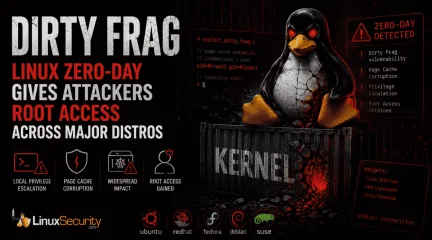
Just weeks after Linux defenders began responding to Copy Fail , researchers have disclosed another serious privilege escalation vulnerability that can deliver reliable root access on major distributions. . Known as Dirty Frag, the exploit abuses Linux page cache corruption to modify protected files directly in memory without relying on unstable race conditions or crash-prone exploitation methods. Unlike race-condition exploits that rely on timing or unstable behavior, Dirty Frag succeeds consistently. No kernel panic is required. No memory corruption crash window needs to line up perfectly. According to researcher Hyunwoo Kim, the exploit chain works reliably enough to provide immediate root access across a wide range of environments. At the time of disclosure, no CVE had been assigned, and no official patches were broadly available. How the Dirty Frag Exploit Works Dirty Frag is not a single vulnerability. It is a chained local privilege escalation attack built from two separate Linux kernel flaws: xfrm-ESP Page-Cache Write RxRPC Page-Cache Write Both vulnerabilities abuse the Linux kernel’s handling of fragmented socket buffer structures ( sk_buff ) during in-place cryptographic operations. At a high level, the exploit abuses Linux zero-copy networking behavior. Using splice() and related kernel interfaces, attackers can place references to page-cache-backed memory into fragmented socket buffers. Vulnerable cryptographic code paths then perform in-place operations directly against those fragments. That allows protected memory pages to be modified even when the attacker only has read access to the underlying file. In practice, attackers can: patch /usr/bin/su with shellcode alter /etc/passwd bypass authentication launch a root shell All from an otherwise unprivileged local context. What makes Dirty Frag especially dangerous is that the exploit modifies files through the Linux page cache in memory rather than writingdirectly to disk. That breaks long-standing security assumptions around read-only file access and protected cached pages. Why Security Researchers Are Comparing It to Dirty Pipe Dirty Frag belongs to the same vulnerability class as: Dirty Pipe Dirty COW Copy Fail All of them abuse unintended write behavior against cached pages in memory. Dirty Pipe targeted pipe_buffer structures. Dirty Frag instead abuses the frag field inside Linux socket buffers. That difference matters because it opens another path to modifying supposedly protected memory pages during network and cryptographic processing. The exploit effectively turns internal kernel crypto operations into arbitrary write primitives. Two Exploit Paths Cover Each Other’s Weaknesses One reason Dirty Frag is especially concerning is that the two exploit variants compensate for each other. The ESP variant The xfrm-ESP attack path provides a strong arbitrary write primitive, but typically requires: user namespaces CAP_NET_ADMIN within a namespace Some hardened environments restrict unprivileged namespace creation, which can block this path. The RxRPC variant The RxRPC attack path does not require namespace creation and can work entirely from unprivileged APIs. Instead of patching binaries directly, it manipulates /etc/passwd entries to bypass authentication. Its limitation is module availability. Some distributions do not ship rxrpc.ko by default. Together, they broaden exploitability If one path is blocked by policy or configuration, the other may still succeed. That flexibility is exactly why researchers are treating Dirty Frag as more than another isolated Linux kernel bug. Why You Need To Take Dirty Frag Vuln Seriously Several characteristics make Dirty Frag more dangerous than a typical Linux local privilege escalation vulnerability. Reliable Exploitation Changes the Threat Model Many Linux kernel privilege escalation exploits rely on raceconditions, unstable timing windows, or behaviors that frequently crash systems during exploitation attempts. Dirty Frag is different. According to researcher Hyunwoo Kim, the exploit chain works reliably without requiring race conditions or precise timing. The attack also avoids the kernel instability commonly associated with memory corruption exploits, making successful privilege escalation far more practical for real-world attackers. That reliability significantly lowers the barrier to weaponization. Broad Linux Distribution Exposure Increases Risk Researchers confirmed successful exploitation against multiple major Linux distributions, including: Ubuntu Red Hat Enterprise Linux CentOS Stream AlmaLinux Fedora openSUSE Tumbleweed Because the affected functionality exists deep inside common Linux kernel networking and cryptographic subsystems, organizations may find it difficult to quickly determine exposure across large environments. Shared infrastructure, CI/CD systems, developer platforms, and container-heavy deployments may face elevated risk. Public Exploit Code Is Already Available The coordinated disclosure process reportedly broke down after a third party publicly released exploit details ahead of schedule. Once the embargo collapsed, researchers and maintainers released technical writeups and proof-of-concept exploit chains publicly. As a result, attackers already have access to: detailed exploit documentation weaponized proof-of-concept code mitigation bypass techniques practical exploitation examples before many organizations have production-ready patches available. Temporary Mitigation Available Until vendors release patches, researchers recommend disabling the affected modules where possible. sh -c "printf 'install esp4 /bin/false\ninstall esp6 /bin/false\ninstall rxrpc /bin/false\n' > /etc/modprobe.d/dirtyfrag.conf; rmmod esp4 esp6 rxrpc 2> /dev/null; true" Be aware that this mitigation has anoperational impact. Disabling these modules may break: IPsec VPN functionality AFS distributed file systems services relying on RxRPC Some administrators have also noted that if the vulnerable modules are already loaded, a reboot may be necessary after unloading them to fully clear the affected page cache state. SELinux May Reduce Exposure Some early testing suggests that strict SELinux policies can interfere with exploitation. Researchers discussing the flaw noted that SELinux Strict Policy configurations using user_t contexts appeared capable of blocking exploit execution paths associated with Dirty Frag and Copy Fail. Kernel Hardening Still Matters Dirty Frag is another reminder that SELinux , AppArmor , and other hardening layers can still help reduce zero-day impact even before patches arrive. The Bigger Problem Facing Linux Security Dirty Frag arrives only weeks after the Linux ecosystem began responding to Copy Fail, another actively exploited privilege escalation vulnerability. CISA recently added Copy Fail to its Known Exploited Vulnerabilities catalog , warning federal agencies to patch affected systems quickly due to the risk of real-world exploitation. Now, another exploit chain in the same vulnerability family has appeared before many defenders fully addressed the previous one. The trend is difficult to ignore. Researchers are increasingly finding ways to abuse: page cache interactions splice behavior zero-copy networking in-place cryptographic operations inside the Linux kernel. The result is a growing class of high-impact privilege escalation vulnerabilities that can bypass traditional assumptions about file protections and memory isolation. What Linux Administrators Should Do Right Now Organizations running Linux servers should immediately: Determine whether affected modules are loaded Restrict unprivileged user namespace creation where feasible Apply temporary mitigations ifoperationally possible Monitor vendor advisories closely Watch for unusual privilege escalation activity Harden SELinux or AppArmor policies where applicable Prioritize patch deployment once fixes become available Systems with shared-user access, developer workloads, CI/CD infrastructure, or container-heavy environments may face elevated risk. Final Thoughts Dirty Frag does not feel like an isolated kernel mistake. It looks more like another sign that attackers and researchers are getting better at abusing the same weak points inside Linux memory handling and page-cache behavior. Dirty COW exposed it years ago. Dirty Pipe reinforced it. Copy Fail pushed it further. Now Dirty Frag arrives with reliable exploitation, public proof-of-concept code, and multiple paths to root access before many defenders have even finished patching the last round of issues. What stands out here is the consistency. No unstable race conditions. No complicated crash timing. Just predictable abuse of trusted kernel operations that were never expected to become write primitives. That changes the risk calculation for shared systems, developer infrastructure, container hosts, and anywhere unprivileged local access already exists. The bigger problem is that these bugs keep surfacing in different forms while targeting the same underlying assumptions around memory isolation and protected file access. Defenders can patch this specific flaw once updates land, but the pattern itself is becoming harder to dismiss. Stay Ahead of Linux Security Threats Sign up for our newsletter for weekly analysis covering Linux kernel vulnerabilities, privilege escalation exploits, container security risks, and hardening strategies. Dirty Pipe: High Severity Linux Vulnerability Explained DirtyCred: Another Linux Privilege Escalation Threat What Is an RCE Vulnerability in Linux? Linux Risk Management and Exploitation Trends The Evolution of Linux Security Threats . Known as Dirty Frag,the exploit abuses Linux page cache corruption to modify protected files direct. weeks, linux, defenders, began, responding, researchers, disclosed, another. . MaK Ulac
 May 08, 2026
•
May 08, 2026
•
102
 security advisoryunauthorized accesscritical
Nvidia: CVE-2025-23359 critical: Container Toolkit RCE threat
Nvidia recently disclosed a critical vulnerability in their Linux Container Toolkit and GPU Operator (CVE-2025-23359) that allows malicious actors to execute unauthorized code, disrupt services, escalate privileges, and access or tamper with sensitive data. . Affected versions include the Nvidia Container Toolkit up to version 1.17.3 and GPU Operator up to version 24.9.1. To protect your systems quickly from potential harm, taking immediate steps against potential attacks should be a top priority. For optimal infrastructure protection, admins impacted by this flaw should immediately upgrade to the latest patched versions of Nvidia Container Toolkit 1.17.4 and GPU Operator 24.9.2 . Its is essential to ensure configurations meet Nvidia security guidelines, regularly conduct security audits, and robustly monitor suspicious activities. By remaining proactive and informed, you can reduce risks while safeguarding against this significant threat. To help you better understand how to mitigate your risk, I'll share practical measures you can implement to secure your systems and data against compromise. Exploring the Technical Details of this Vulnerability This Time-of-Check Time-of-Use (TOCTOU) vulnerability enables a malicious container image to potentially gain unauthorized access to the host system's filesystem. If an adversary designs a container image with harmful intent, they could manipulate it to break out of the container environment and access or tamper with files on the host system. This flaw allows an attacker to run arbitrary code on a targeted system. As a result, they could potentially: Access sensitive data or systems by running commands as a privileged user. Exploit the flaw to elevate their privileges and perform actions beyond their initial access. Steal, modify, or delete data within the containerized environment. Take Immediate Action & Apply Patches! Timely patching is one of the easiest and most efficient ways to protect systems againstthis recent Nvidia vulnerability. Nvidia has released updates that address vulnerabilities present in affected versions, so security admins should upgrade to Nvidia Container Toolkit version 1.17.4 or later as soon as possible and GPU Operator version 24.9.2 or beyond. Both patches contain essential fixes that reduce the risk associated with this vulnerability. It is critical to note that the default behavior of the toolkit is altered. CUDA compatibility libraries in the container will not be mounted by default to specific paths now. While a feature flag (allow-cuda-compat-libs-from-container) can revert to the old behavior, we strongly advise against it as this exposes patched systems to this vulnerability again. Admins should ensure this flag is disabled to ensure robust security. Beyond simply applying patches, administrators should create a culture of regular updates and maintenance within their organizations. Patching is one of the simplest yet often forgotten aspects of cybersecurity hygiene. We admins must ensure our systems always run the latest software versions from vendors like Nvidia that contain security enhancements and fixes for known vulnerabilities in updates. Adopt Secure Configuration Practices Patching may address known vulnerabilities, but ensuring secure configurations is equally vital. Administrators must review their current setups to ensure they adhere to Nvidia's recommended security settings - particularly concerning --no-cntlibs being enabled in production environments. This flag ensures container libraries are not accidentally exposed and decreases the attack surface available to potential threats. Configuration reviews must be part of any comprehensive security protocol, with regular assessments to detect misconfigurations or vulnerabilities across your entire architecture. Including team members trained in security and best practices will offer invaluable insights for optimizing settings. The Need for Regular Security Audits Conducting regular securityaudits is an indispensable component of maintaining a secure infrastructure. Audits allow organizations to identify any vulnerabilities or areas for improvement that require urgent action. Audits may be conducted internally or through third-party specialists who offer impartial assessments of your system's security posture. Security audits examine various aspects of your operational infrastructure, such as application security, data protection practices, network vulnerabilities, and user access policies. By proactively addressing weaknesses identified through an audit, threat actors will no longer be able to exploit your systems. Furthermore, audits help strengthen a culture that prioritizes security within an organization and keeps everyone aware of threats and effective defense strategies against them. The Power of Awareness and Training Human error is frequently the weakest link in cybersecurity defenses. Hence, enhancing awareness and providing comprehensive training to users and administrators working in Linux Nvidia environments is crucial to mitigating vulnerabilities. Such training should include topics like recognizing potential security threats, best practices for system configuration and updates, and discussing any newly announced vulnerabilities like this recent one disclosed by Nvidia. Establishing a culture of security involves encouraging open dialogue. Team members should feel at ease reporting potential issues or asking questions to better comprehend security policies. Incorporating regular updates and training sessions will ensure everyone understands potential threats while also being empowered to act accordingly to secure digital environments. Vigilance Through Monitoring Although regular patching and maintenance activities are essential, continuous monitoring further strengthens a system's defenses. By setting up monitoring tools that detect unusual or unauthorized activities, Linux security admins can respond swiftly and prevent potentially destructive breaches. Monitoring technologies and practices may include intrusion detection systems, logging tools, and Security Information and Event Management (SIEM) solutions to provide actionable insights and maintain complete visibility over your operational environment. Regularly reviewing logs and alerts facilitates immediate threat detection and builds intelligence regarding the threats in your digital environment. The Importance of Network Segmentation and Access Controls Network segmentation and access controls are often underestimated strategies for strengthening security against vulnerabilities. Network segmentation involves breaking a network into individual, isolated segments to limit any attackers who gain entry. This approach can significantly lessen the adverse consequences of breaches by isolating sensitive or critical systems from less secure or irrelevant segments. By implementing access controls, administrators can limit the capabilities and movement of users within a system based on their necessity and clearance levels. Granting only what users need to perform their jobs significantly reduces accidental or malicious misuse of system resources. Reviewing access rights periodically ensures they reflect changes in roles or tasks accordingly. Our Final Thoughts on Staying One Step Ahead of Nvidia Security Bugs Multiple flaws in Nvidia's Container Toolkit and GPU Operator have recently been identified that require Linux security administrators to remain alert and agile. By prioritizing immediate patching, secure configuration practices, regular security audits, awareness training programs, vigilant monitoring practices, network segmentation strategies, and security awareness training as part of an adaptive defense strategy for our organizations, we can establish comprehensive yet adaptive defense mechanisms against any threats to network integrity. Linux security admins must recognize the value of developing an ongoing cybersecurity posture that anticipates and mitigates risks proactivelyrather than reacting to vulnerabilities that appear. This ensures their organizations respond effectively to current threats and are prepared for new ones. . Nvidia disclosed a critical vulnerability affecting Container Toolkit and GPU Operator. Urgent action needed!. nvidia, recently, disclosed, critical, vulnerability, their, linux, container, toolkit, operator. . Brittany Day
Feb 17, 2025
•

102
 security advisorycriticalprivilege escalation
Polkit Memory Issue Affects All Linux Distros: Critical Advisory
The Qualys Research Team reached out to LinuxSecurity after discovering a memory corruption vulnerability in polkit’s pkexec. Pkexec is a SUID-root program that is installed by default on every major Linux distribution of the open-source operating system. This vulnerability is easily exploited and gives hackers the opportunity to gain full root privileges on a vulnerable host. Much like the Log4j vulnerability, the severity of this flaw is high and it is imperative that vulnerabilities are reported in a timely fashion. Experts also expressed that due to the simple possibility for exploitation the vulnerability needs to be patched and mitigated immediately. . Vulnerability Disclosure Formerly known as PolicyKit, Polkit is a component in Unix-like operating systems designed for controlling system-wide privileges. The technology works by providing an organized method of communications between non-privileged processes and privileged processes. With root permission, it is entirely possible to use polkit to perform commands with elevated privileges using the command pkexec followed by the command intended to be executed. Pkexec contained the memory-corruption vulnerability since 2009, making it so that people with limited control of a vulnerable machine can exploit to escalate privileges all the way to root. Hackers who may already have leverage on a vulnerable machine can exploit the flaw to secure a malicious payload of command runs with the highest available system rights. Researchers are calling the vulnerability ‘Pwnkit’ which can be exploited even if the Polkit daemon isn’t running. Timeline 2021-11-18: Advisory sent to secalert@redhat. 2022-01-11: Advisory and patch sent to distros@openwall. 2022-01-25: Coordinated Release Date (5:00 PM UTC). Impact Experts were shocked to find that the vulnerability has been undetected for 12+ years and has directly affected each version since the initial release in 2009. If hacke rs are successful in exploitingthe vulnerability, it would allow an unprivileged user access to full root privileges on a vulnerable host. Security researchers at Qualys have been able to independently verify the vulnerability, develop an exploit, and obtain full root privileges on default installations of Ubuntu, Debian, Fedora, and CentOS. As it affects all major Linux distributions and is easily exploitable, other distributions are likely vulnerable and probably exploitable. Due to the fact that this vulnerability is considered extremely severe, the Qualys Research Team will not publish the exploit. Mitigations & Additional Resources Qualys recommends that users apply patches for this vulnerability immediately. Customers can search our vulnerability knowledge base for CVE-2021-4034 . If no patches are available for your operating system, you can remove the SUID-bit from pkexec as temporary mitigation; for example: # chmod 0755 /usr/bin/pkexec. . Qualys has reported a severe polkit vulnerability that affects numerous Linux distributions, necessitating immediate updates or mitigation strategies to safeguard systems.. Polkit Memory Corruption, Linux Privilege Escalation, Qualys Advisory. . Justice Levine
Jan 26, 2022
•

Get the latest News and Insights
Get the latest Linux and open source security news straight to your inbox.
Community Poll
Should Linux servers automatically install security updates?
Search Topics
Powered By

Linux Security - Your source for Top Linux News, Advisories, HOWTOs and Feature Releases
QUICK LINKS
subscribe to newsletters!
Like staying secure? So do we.
Sign up for updates, tips, and alerts!