Audit Linux privileges now to limit compromise, escalation, and system-wide damage. Review Linux Privileges×


Stay Ahead With Linux Security Features
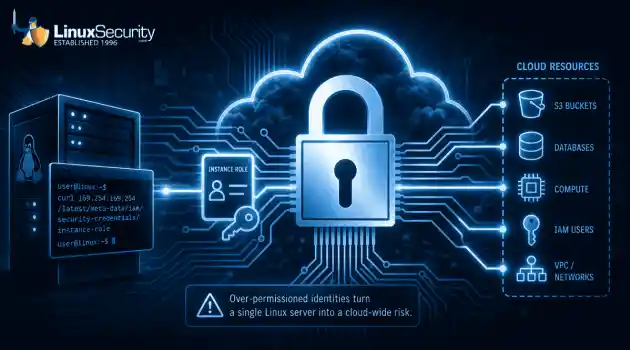
 identity management security tactics
 For years, we secured our Linux infrastructure by building walls: VPCs, security groups, and hardened SSH configurations. We treated the cloud like a virtual data center, assuming that if we kept the "bad guys" out of the network, our workloads were safe. . That model is no longer sufficient. Today, one of the most common paths from an initial compromise to a major cloud breach is the identity assigned to your Linux workload. When an attacker gains code execution on a Linux instance—through a...
 Jul 17, 2026
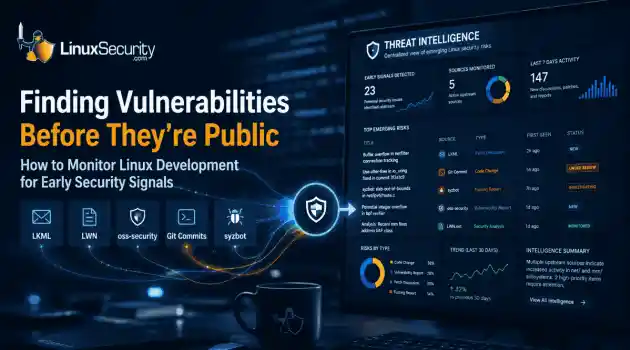 security practices patch management
 Most of us don't hear about a kernel vulnerability until a CVE lands in our inbox or the vulnerability scanner starts complaining. By then, the patch isn't new anymore. Kernel developers may have been passing it around for review, arguing over the implementation, or revising it for days before anyone outside that community noticed it. None of those discussions are secret. They're sitting in mailing list archives, Git commits, and patch reviews where they've been the whole time. The strange...
Jul 14, 2026
 Linux security cyber attacks
 Every Linux server in your fleet produces thousands of events every minute. From journald logs and auditd records to kernel-level eBPF hooks, your systems are constantly talking. Most of that noise is just the mundane churn of system services, CI/CD runners, or routine administrative automation. But among that noise, an attacker might be establishing a foothold, moving laterally, or setting up persistence. The challenge for any security team is: how do you separate the routine from the...
Jul 13, 2026
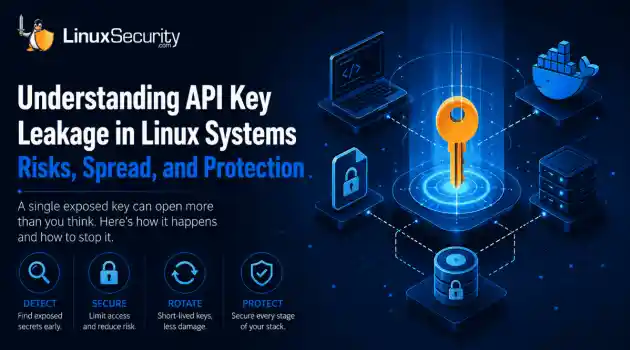 open-source infrastructure risk
 Security scanners flag exposed API keys in public repositories every day. The initial response is usually predictable: delete the commit, revoke the credential, and move on. That’s a mistake. . In a real Linux environment, an API key never stays in one place. By the time it hits a public repo, it’s already everywhere. It’s in the CI/CD pipeline. It’s in your container registry. It’s in the build logs. It’s in the backups. Git makes this worse because the history never dies. Deleting a file in...
Jul 11, 2026
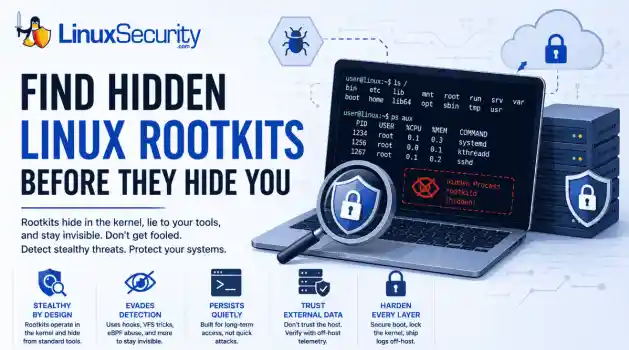 open-source rootkit
 Most of us think of Linux rootkits as ancient history—the stuff of 90s hacking forums and clunky malware that would crash your system if you looked at it the wrong way. But if you think they’ve gone away, you’re mistaken. They’ve just gotten smarter. . Modern attackers aren't using the noisy tools of the past. Today’s threats are surgical. Many of today’s most advanced Linux rootkits operate at the kernel level or abuse legitimate system features to blend in with normal traffic. They’re...
Jul 09, 2026
 Refine features
X Clear Filters
Get the latest News and Insights
Get the latest Linux and open source security news straight to your inbox.
Community Poll
Should Linux servers automatically install security updates?
Loading...
Explore Latest Linux Security features
We found 1 articles for you...
218
 system managementkernel securityopen-source
Linux Business Security Open Source Framework User Rights and Kernel Traits
If you manage systems, you’ve probably thought about the Windows vs. Linux security debate more than once. Security isn’t just some checkbox for compliance; it’s the thing keeping attackers out of your networks and your reputation intact. . And while Windows gets the job done for a lot of companies, there’s a reason Linux is seen as the OS you turn to when security really matters. Think about it: Linux isn’t just open-source; it’s massively open to scrutiny. Developers all over the globe are poking at the code every day, not because they’re required to, but because they’re invested and genuinely care. Combine that with Linux’s stricter privilege system (where regular users absolutely do not get unlimited power by default) and a highly customizable design, and it’s pretty clear why businesses, governments, and even tech giants like Google and IBM put their chips on Linux when it comes to securing high-value environments. Now, if you’re thinking, “Yeah, but Windows isn't exactly insecure,” that’s fair. Microsoft isn’t clueless; they know what they're doing when it comes to hardening their OS. But here’s the kicker—Windows tends to rely on “security through obscurity,” which means the source code is locked up, hidden away from public eyes. That might sound good at first, but if you’ve been doing this for a while, you’ll know it also means fewer people catching bugs before bad actors exploit them. With Linux, it’s the opposite; there’s nowhere for vulnerabilities to hide when you’ve got thousands of developers constantly digging through the code with loud opinions. That said, Linux isn’t perfect, and you shouldn’t expect it to magically shield you from all threats. But if you want a foundation that’s built with security front and center, it’s definitely worth considering. Honestly, the numbers speak for themselves—when 97% of the world’s top domains are running Linux, there’s probably a good reason for it. The Open-Source Edge: Why DoesIt Matter? Let’s talk about why Linux’s open-source nature makes all the difference. With Linux, the source code is out in the wild, which means an army—literally thousands—of developers are poring over it daily. These people aren’t just doing it for fun (though, yeah, some of them probably think reading kernel code is fun); they’re invested. It’s a community effort to spot vulnerabilities before attackers even know they exist, so fixes get rolled out freakishly fast. Contrast that with Windows, where the code is hidden behind closed doors, stuck in a vault. That “security through obscurity” model? Eh, it’s not great. This means that only Microsoft’s in-house team is hunting for bugs, and no matter how skilled they are, they’re never going to match the sheer volume of eyeballs Linux has. By the way, big names like Google and IBM—who have arguably more resources than most—are actively funding kernel developers to beef up Linux security. That’s the level of trust people have in the platform. Linux greatly restricts root access through a strict user privilege model, where a superuser has all privileges and ordinary users only have permission to access whatever they need to accomplish their tasks. Because Linux users have low automatic access rights and require additional permissions to open attachments, access files, or adjust kernel options, it is more difficult to spread malware and rootkits on a Linux system than on a system running another OS. Although it is possible to implement least-privilege administration models on Windows systems, organizations rarely take this precaution, and, in reality, “everyone is an admin” on most Windows systems. As a result, attacks in network security can more easily spread malware and viruses on Windows systems than on Linux servers. User Privileges: You’re Not “Admin by Default” on Linux Here’s another thing that hardcore Linux folks won’t shut up about: user privileges. On Linux, even if you’re logged in, youdon’t automatically have godlike powers to mess with the system or execute sketchy scripts. Normal users are sandboxed—they only get access to what they absolutely need, no more. Installing something that might jack up your kernel? Yeah, you’ll have to elevate your privileges explicitly, and even then, Linux has safeguards baked in. On Windows? Let’s be honest. It’s an open secret that most users—even in business environments—are often “admins” by default. Everyone’s an admin, and everything gets full permissions. It’s like begging malware to stroll in and invite its friends. On Linux, spreading malware isn’t just harder; it often requires jumping through a series of flaming hoops, and most attackers don’t want to bother. The Diversity Defense Linux isn’t just one monolithic system—it’s a buffet. There are so many distributions (distros) with different architectures, security models, and components that targeting them is a pain for attackers. One exploit isn’t going to work everywhere when everyone’s running customized setups. It’s kind of like trying to break into a vault when every single one has a unique lock; you’ll probably move on to easier targets, like vanilla Windows installs that look identical from a hacker’s perspective. And if you’re deep into privacy and security concerns —maybe you dabble in pentesting or work in sensitive industries—there are even specialized distros like Kali Linux and Qubes OS, which are laser-focused on locking things down for folks who don’t mess around. Built-In Kernel Security That’s Actually Useful Let’s geek out about the kernel for a minute because this is where Linux does some cool stuff. Linux comes loaded with features like UEFI Secure Boot, Kernel Lockdown, and mandatory access controls (MAC) through tools like SELinux or AppArmor. These aren’t random options you’ll never use—they’re practical tools for hardening your system. Take Linux Kernel Lockdown, for instance. This niftyfeature can stop even root users from modifying kernel code. Why? Because let’s say your root account gets hijacked—Lockdown mode acts like a last-resort shield. You can enable it in two ways: integrity mode (to block any kernel modifications) or confidentiality mode (to block sensitive data access). Quick note: integrity mode is usually the smarter choice for most admins unless you’re running something super-sensitive where even root shouldn’t touch certain data. Then you’ve got SELinux and AppArmor, which help you dictate airtight security policies for your processes. They’re not some over-complicated headache—they’re flexible tools that let you control what applications can or can’t do. Compare that with Windows, where MAC options like Mandatory Integrity Control (MIC) exist but aren’t nearly as versatile or common. Hosting Without the Sticker Shock Let’s be real: Linux hosting is where small businesses and developers clinch the deal. It’s free—like, actually free—which means no annoying subscription fees or per-user license charges. For Linux server admins, a lot of what you need is baked in, with support for core languages like Python, PHP, Ruby, and so on. Plus, Linux hosting tools like cPanel make managing websites way easier. Meanwhile, Windows hosting? Costs can pile up fast, and you’re going to pay for those licenses whether you like it or not. If you’re someone running big sites (think about healthcare data portals or e-commerce platforms), Linux hosting wins both on price and security features. So, What About Windows? Here’s the deal: attackers love Windows. This is partially because it’s everywhere. However, Microsoft’s approach doesn’t help its case either. By keeping Windows code all locked up, third-party devs can’t find bugs ahead of time. The open-source community simply does this better because, honestly, nobody has more time or energy to dissect vulnerabilities. It’s worth mentioning that Microsoft is starting to embrace Linuxmore. Things like Windows Subsystem for Linux (WSL2) and Azure Sphere show they’ve realized the open-source model works, and you’ll even find Microsoft mingling with Linux devs in protective mailing lists. Still, out of the box, Windows isn’t going to give you the same peace of mind that Linux does when it comes to keeping your business safe. Wrapping It All Up: Which OS is Best for You? Here’s where all this lands: if you pick Linux for your business, you’re starting from a fundamentally secure place. There’s less malware targeting it, root users don’t get free reign, and the open-source nature of the system means bugs don’t linger. But—and this is a big but—it’s only one piece of the puzzle. A secure OS is part of a solid defense plan, but it’s not the whole strategy. You still need to think about layered security: assessing your network, patching vulnerabilities , and training your users not to click things just because they’re shiny. Linux gives you a strong foundation, though—and if you’re running servers or handling sensitive data, it’s hard to argue against the level of control it offers over Windows. . Explore the Linux security advantages over Windows, highlighting user rights, kernel traits, and why businesses prefer Linux.. Linux security, open source framework, user rights, kernel traits, business systems. . Brittany Day
 Jun 02, 2025
•
Jun 02, 2025
•
102
 cybersecurityhashingauthentication method
Exploring Passkeys: Simplifying Secure Authentication for Users
Passwords are becoming a concept of the past as passkeys have moved to the forefront. When users create a passkey on their device, they must select the correct key to log into the services and websites they need. . This convenient, up-and-coming cybersecurity feature can benefit countless organizations by safeguarding their sensitive data and preventing cloud security breaches. Users will store passkeys as hashes on their cyber- and email security servers. Hashes transform a key or string of characters into another value to improve security posture through encryption keys. Hashing is a one-way encryption option, which sets it apart from standard encryption network security toolkits, as this type of protection makes it more challenging for cybercriminals to decode and hack a passkey. For example, if a cybersecurity professional wants to sign a piece of software digitally before making it accessible for download on their website, they would generate a hash before and after adding their digital signature to the script or software application. This procedure makes downloading and sending the documents easier to the recipient, whose browser can decrypt the file and check for two distinct hash values. Then, the browser can execute the same hash function method to secure the information and signature again, ensuring efficient email data and network security. Hashes generate and compare data on a server whenever a user enters a passkey. Unfortunately, certain user disadvantages can arise, giving cybercriminals more opportunities to access and crack such hashes. However, threat actors cannot decrypt passwords, so they would fail in any attacks in network security that need a password to enter the server. This article will discuss passkeys, how to set them up, and the security pros and cons so you understand everything you need to set up a passkey today. What Is a Passkey? A passkey is a digital credential tying a user’s account to a website or application. Passkeys allow users to authenticatethemselves without entering a username or password or providing any additional authentication factor. This technology aims to replace legacy authentication mechanisms like passwords. Poor password selection and management can lead to data loss through cloud security breaches . According to Finance Online, such attacks in network security have affected eighty-one percent of companies. Therefore, businesses, employees, and individuals should avoid passwords and consider passkeys. How Do Public Vs. Private Mechanisms Factor into Passkeys? Now that passkeys are becoming a significant feature among many tech and software companies worldwide, users are growing accustomed to the benefits of having a passkey for logging in. Instead of dealing with the stress and time put into remembering and using traditional passwords, passkeys offer an easier way to enter your server securely. The comparison between public and private mechanisms for passkeys , however, still comes into question. A public key is stored with the company with which you created your account, and the private key is stored locally on a device used to create the passkey. After a user generates a passkey, they can log in to passkey-enabled accounts. Upon logging in, the user must complete a challenge, which will be sent to any devices or mechanisms within reach, to authenticate access. The authenticator uses the stored private key to solve the "challenge" and respond to the server. The "signing" process can confirm you own the private encryption key and verify your identity so you can log in to your account successfully. How Are Major Organizations Such As Google, Outlook, Microsoft, and Gmail Using Passkeys? Major organizations' use of passkeys instead of passwords is undoubtedly a big deal. Google has stated that passkeys provide a more straightforward, secure way to sign into online accounts. Users have received positive feedback about the new feature, so passkeys have become even more accessible on Google and will be a default optionacross personal accounts. When users sign in, they'll see a prompt to create and use passkeys, simplifying future sign-ins. There will be a "Skip password when possible" option in the Google Account settings that users can utilize to enable passkeys. However, having a password-protected Gmail will still be an option, at least for a little longer, so users can familiarize themselves with the Passkey feature. Gmail accounts are always set up through Google, but not all Google accounts function through a Gmail account, as you can use another email security server to house your email account, such as Yahoo. Either way, so long as you have a Google account, you can create, edit, and collaborate on Google Docs. Gmail, with Google, provides more accessibility for users, making it a default option across many personal accounts, saving users the hassle of figuring out passwords for both Google and other email accounts. Microsoft and Outlook, both separately and as a team, agree that passkeys are a more accessible option for email data and network security. Microsoft Exchange is a server application and an email security server solution dedicated to being a network resource management platform. Outlook is an email client installed on one's desktop for secure email. Both email security software believe passkeys provide a more secure and convenient way to sign in. With passkeys, you can use Windows Hello to sign in with a PIN, facial recognition, or fingerprint, making the authentication process faster and more convenient. Microsoft also believes that passkeys are the future of authentication since they're incredibly easy to use and intuitive, eliminating the need for complicated password creation processes and the hassle of remembering them to maintain a secure email. Essentially, Google, Outlook, Microsoft, and Gmail agree on their stance regarding passkeys and passwords and which option is more beneficial for users going forward. How Can I Set Up Passkey Security Across All Platforms? As discussed,passkey data and network security provide users less hassle by allowing them to skip the password sign-in and use a simple and more secure method for generating and storing passkeys on all devices. As a result, passkeys don’t require as much interaction or management. Here is how to set up passkeys on multiple different platforms: Google and Gmail Creation Head to myaccount.google.com On the left side of the page, click on “Security.” Under “How you sign into Google,” click on “Passkeys.” If you don’t see this option, you’ll need to click on “Use your phone to sign in” and link your account to a phone or tablet. Click on the blue “Use Passkeys” button. To manually create a passkey, click the white “Create a passkey” button. If you’re on an incompatible PC, you’ll see a dialog box with a blue button to “Use another device.” You can set up a device like a phone or tablet by scanning a QR code or a security key. Microsoft and Outlook Creation Open a website or app that supports passkeys Create a passkey from your account settings Choose where to save the passkey. By default, Windows offers to protect the passkey locally if you're using Windows Hello. If you select the option “Use another device,” you can choose to save the passkey in one of the following locations: This Windows device : the passkey is saved locally on your Windows device and protected by Windows Hello (biometrics and PIN) iPhone, iPad, or Android device : The passkey is saved on a phone or tablet and protected by the device's biometrics if offered by the device. This option requires you to scan a QR code with your phone or tablet, which must be near the Windows device. Linked device : The passkey is saved on a phone or tablet and protected by the device's biometrics if offered by the device. This option requires the linked device to be close to the Windows device, and it's only supported for Android devices. Security key : the passkey is savedto a FIDO2 security key, protected by the key's unlock mechanism (for example, biometrics or PIN) Select “Next” and complete the process on the chosen device What Are the Security Pros of Having a Passkey? There are many benefits to consider when switching from a password-protected Gmail or other web account to a passkey, including: Passkeys are more tricky to crack than passwords. Each passkey is distinct and linked to the user’s device via a public/private cryptographic pair , making it much more difficult for an attacker to gain unauthorized access without physically possessing the device. Passkeys provide a smoother user experience, allowing users to sign in conveniently and securely without a password. Individuals frequently forget and reset passwords, resulting in an unpleasant user experience. However, with passkeys, users no longer need to create or remember complex passwords. Every passkey is strong by default. You don’t have to manually generate anything or worry about whether your private key is long enough or random enough. All you have to do is create an account and request that your authenticator generate a secure public and private key pair on your behalf. Passkeys are convenient and more suitable to use than passwords. Users don’t need to remember long, complex passwords and can log in to their accounts more quickly. What Are the Security Cons of Having a Passkey? Although having a password is suitable for email security purposes and creates an extra step for hackers to try to get into a user’s device, there are still some downsides to consider: Since passkeys are a new and unfamiliar technology for many users, adopting and integrating this method into their daily routines can take time and effort. Users may need to learn how to use their passkey device and adjust to the new authentication process. Passkeys are also device-specific, and syncing functionality has yet to be widely available, though many password managers and operatingsystems should support syncing eventually. Most websites and apps do not support passkeys, which will change in the future of network security. Having only certain websites and services support this data and network security feature is not a long-lasting solution. If users lose access to all their devices, they may have trouble recovering account access. Most sites and services support account recovery options if someone forgets a password. Similar functionality may be provided for passkeys, which may involve providing IDs or other forms of legitimation. Passkeys support recovery keys, but the active users have to save them. Passkeys can only be created using biometrics, so verifying your account may be difficult. To use them, you must ensure your fingers are clean or your face is clear so the device can recognize you every time you log in. Also, passkeys may be more challenging for users with disabilities or older devices. Final Thoughts on Passkeys vs. Passwords Passkeys provide a more secure way for users and individuals to ensure information and email protection. Due to their added email security and convenience, they may eventually replace traditional passwords. Apple, Google, and Microsoft are focusing on the future of network security by developing passkeys to encourage users to implement them. Have you made the switch? . Uncover the advantages of passkeys in fortifying security and simplifying login procedures, thereby lessening dependence on conventional passwords.. Authentication Methods, Password Alternatives, Cybersecurity Innovations. . Brittany Day
Nov 30, 2023
•

102
 open sourcesoftware developmentcode review
Understanding The Benefits And Drawbacks Of Open Source Security
This article will explore the key benefits and potential drawbacks of open source security in under a minute. . Open Source Security Basics Open-source software refers to software that has publicly accessible and editable code. While allowing public access to a program’s code does not sound like something that would help improve its security, security has always been a fundamental part of open-source software. In the late 1990s, the think tank Foresight Institute started to promote open-source software in an attempt to improve software security, eventually helping Netscape release the code for Netscape Communicator. Since then, open-source development has become massively popular and is a major focus for software companies such as Adobe, Red Hat, and Google. Open Source Security Benefits One of the main advantages of open-source software is that it makes it easier to develop secure programs. As large-scale software becomes a more important part of daily life, open-source code gives smaller development teams the resources to create these large programs. There are hundreds of open-source libraries that take care of common tasks. For example, most software contains logging, a behind-the-scenes feature allowing a program to record messages, such as errors. Open-source libraries like Log4j allow developers to add these fundamental features to their programs without having to program them from scratch themselves. If every development team had to program basic features like logging without the foundation of open-source code, software development would not only be more tedious but less secure since development teams would have to spread their resources too thin and waste valuable development time programming features that have been programmed thousands of times before. Furthermore, the fact that anyone can contribute to an open-source project helps to increase its security. Open-source code allows the public to update it, and oftentimes allows users to modify and distribute theirown branch of a program. For example, the release of the open-source Linux kernel by Linus Torvalds in 1993 has led to hundreds of independently managed Linux-based operating systems. Programs like bug bounties are also being used to encourage the public to find bugs in open-source software, allowing a fresh set of eyes to look for exploits. Returning to the previous logging example, the fact that libraries like Log4j are public and reviewable by anyone means that bugs and security flaws can be caught and patched rapidly. Potential Security Drawbacks of Open Source Despite the benefits noted above, it is important to mention that open-source software can have security flaws. The aforementioned Log4j library, despite being theoretically more secure, recently made the news for Log4Shell , a massive security exploit found in its code. Because Log4j is used by countless programs, the exploit affected everything from IBM servers to Minecraft. When several projects share code, it is easier for large scale exploits affecting multiple programs to exist. However, it is only because Log4j is open-source that this exploit was found by members of the public in the first place. Log4j was quickly patched, and as long as the latest version is being used, is safe. Know That Open-Source Software Can Have Security Flaws When several projects share code, it is easier for large scale exploits affecting multiple programs to exist. That being said, vulnerabilities in open-source software are often found and fixed rapidly due to the transparency of open-source code. Final Thoughts & Further Resources on Open Source Security Ultimately, letting anyone contribute to an open-source program is beneficial for security. If thousands of programs use the same open-source library, fixing a bug or security exploit in that library will increase the security of thousands of programs. Additionally, since the code is open to public contributions, more people will be able to test andreview the code. Furthermore, using publicly available code also lets developers expand their projects without having to worry about spreading themselves too thin or slacking on bug review. As long as the code they are incorporating is up to date and secure, then they can safely use it to add functionality to their program. LinuxSecurity’s Advisories section is a great resource for making sure you don’t miss critical security updates, and if you want to know more, my previous article details what is being done by developers, organizations, and the government to improve the security of open-source software. . Investigate essential advantages and possible disadvantages of open-source security. Understand how visibility enhances software security.. Open Source Security, Software Development Benefits, Code Review Practices. . Yosef Davidowitz
Jun 13, 2022
•
102
 open sourceemail securitycommunity collaboration
Benefits of Open Source Email Security Over Proprietary Solutions
Open Source is currently being recognized by more organizations than ever before for its ability to give rise to flexible, cost-effective and exceptionally secure software and technologies. Over 75% of organizations worldwide are now contributing to and consuming open-source software and products. . The open-source community is expected to continue to grow and thrive in the coming years, which will further increase the overall credibility of Open Source and enhance the various benefits that open-source options are able to offer businesses and individuals alike. This article will explore why choosing an open-source email security solution can offer key advantages over proprietary alternatives including superior security, reliability, resiliency, flexibility and cost-efficiency. The Open Source Philosophy The term “Open Source” refers to software, products, projects or initiatives that are developed and designed to be highly transparent and publicly accessible. That being said, the true meaning of the term “open source” extends far beyond its basic definition. Open source is a philosophy that emphasizes innovation through collaboration. Ideas and initiatives are freely accessible to everyone, encouraging community involvement and tapping into worldwide talent. Products created using the open-source development model are able to be reviewed, modified and shared by experts worldwide. The driving force behind open-source development is the motivation to create software and solutions that are as effective as possible at serving a specific purpose, often benefiting the global community in the process. Open-source software and products are held to a higher standard than proprietary alternatives due to the fact that customers can view open-source code and access information about development methodology. This community-powered, transparent approach fosters honesty and genuinely high product quality as a competitive advantage. A Brief History of Open Source Although Open Source is nowrecognized as superior to proprietary development in many regards, it was not until the late 1990s that open-source software became fairly mainstream. In prior years, individuals had no choice but to utilize proprietary software sold by companies that provided no insight into their software development and the source code of their products. The concept of free software was introduced with the creation of the GNU project in 1983, and flourished with the release of the General Public Licence (GPL) in 1989. At this point, free software and the idea of open-source development lacked credibility and were quickly dismissed by proprietary vendors who felt threatened by the emerging movement. This further propagated the idea that Open Source was risky and unprofessional. In the decade following the creation of the GPL, a series of high-profile events led to a significant increase in the professionalization and the public acceptance of free and open-source software. In 1999, the IPOs of Red Hat and VA Linux had massive gains in share price on their opening days as publicly traded companies, a testament to the fact that Open Source was going commercial and that open-source technology had the potential to offer businesses various benefits in terms of product quality, security, flexibility and cost-effectiveness that proprietary technology could not match. In 1999, IBM announced that it was investing $1 billion in the development of Linux, convincing traditional enterprise users that switching to the open-source operating system was far less risky than they had previously assumed. The following year, Sun Microsystems created the OpenOffice project, releasing the source code to its cross-platform office suite, StarOffice. The combination of the market credibility that tech giants like IBM and Sun Microsystems gave Open Source, the massive Silicon Valley funding of open-source projects and the attention that Wall Street brought to relatively new open-source companies resulted in the widespread embrace of the open-sourcedevelopment model and the prevalence of Open Source and Linux in the tech industry today. What Are the Advantages of Choosing Open Source over Proprietary? Because of the availability and transparency of open-source code, open-source products can be engineered to achieve superior levels of quality, reliability and security over a longer duration of time than projects that do not utilize the open-source development model. Here is a brief summary of some of the key advantages associated with choosing Open Source. Increased Security The visibility of open-source code allows developers and engineers to freely access open-source projects. As a result, IT and security experts worldwide are able to review and improve upon open-source programs. Because open-source products are thoroughly reviewed by the community both as they are being developed and while they are in use, vulnerabilities are identified and corrected very rapidly. As the open-source community continues to grow, open-source development is becoming increasingly secure. Of the 750 million lines of open-source code that are currently part of the Coverity Scan database, only 1.1 million defects have been identified and 650,000 have already been addressed. Furthermore, because the source code of open-source software is easily accessible, customers have the ability to apply their own patches. This often results in exceptionally secure products, with much fewer flaws and bugs than proprietary alternatives on average. Superior Product Quality Validated by the Community Open Source is highly dependent on the principles of communication and collaboration. This encourages active discussion surrounding the development of new features and the resolution of problems. Open Source fosters rapid innovation as a competitive advantage, and the high standards of the community result in extremely high quality products. In a recent survey conducted by the Linux Foundation, 49% of companies utilizing open-source programs felt that Open Source ensures a high levelof quality and frequent releases of code to the community. Open-source projects and programs are under constant scrutiny from experts worldwide, which serves as continuous validation that measures such as performance and security are optimal. Community Values Foster Innovation & Problem Solving The community that surrounds open source development has much more to offer in regard to innovation and problem solving than small, private groups working on proprietary projects do. Open-source developers aim to create products that are as effective and useful to the community as possible, while proprietary products are often developed with the main goal of benefiting the vendor. Fifty-seven percent of businesses currently running open-source programs identify open-source culture within the company as the most significant measure of a program’s success. In general, the open-source community is an inclusive environment that values diverse perspectives and ideas. This community-powered approach to development fosters high levels of innovation and results in exceptional software and technology. Freedom & Flexibility Both the open-source community and its programs and projects are diverse and distributed, so by choosing open-source options individuals and enterprises avoid the risk of vendor lock-in or holding orphaned software that a proprietary vendor has abandoned. Open-source products and solutions are also highly scalable and customizable, so they can often be adjusted relatively easily and cost-effectively to meet businesses’ specific and evolving needs. Cost-Efficiency Open-source development is significantly more cost-effective than proprietary development. Because opacity does not exist in Open Source, code is shared and utilized by developers and engineers around the world, thus keeping the cost of open-source development to a minimum. In addition, proprietary software requires expensive licensing fees. This automatically drives the prices of proprietary technology up, while open-source products areoften able to offer far more competitive pricing. According to Red Hat’s The State of Enterprise Open Source report, 33% of businesses worldwide feel that lower total cost of ownership is a key benefit associated with choosing open-source technologies and solutions. What Are the Potential Drawbacks of Choosing Open Source over Proprietary? There are relatively few downsides associated with choosing open-source software or products over proprietary options. However, there are a few potential drawbacks that should be considered. Quality Support Is Not a Given Since the scope of open-source initiatives is usually much broader than that of proprietary projects, it can sometimes be difficult to find quality customer support. Before investing in an open-source product or technology, be sure to adequately research the vendor and the support they provide. Many open-source companies do offer outstanding customer support. Product Use Is Not Always Easy to Master Open-source products can offer a large assortment of features and abilities and, as a result, can sometimes be a bit difficult to use and master at first. In comparison, closed-source technology is often focused on a narrower market of end users, and can be designed to be more user-friendly to a specific segment of the population. Also, consumers of proprietary technology are often more concerned with functionality and ease-of-use than how those factors are accomplished. In general, it is usually better to invest some time in familiarizing yourself with an open-source product (many of which are quite easy to use) than to settle for a closed-source alternative simply for its apparent convenience. Increased Risk In certain cases, choosing Open Source can be a bit more risky than settling for commercial, proprietary options. Some open-source software vendors are small and relatively nimble companies, while others are large and financially strong. A growing number of large corporations are recognizing the many benefits of adopting Open Source andmany are acquiring smaller open-source vendors. IBM recently announced its purchase of RedHat for $34 billion, a decision that serves as direct validation of the credibility associated with Open Source. Choosing a smaller open-source vendor is not always associated with increased risk; however, as with any important decision, it is critical to do adequate research before making a commitment. What Are the Benefits of Choosing an Open-Source Operating System Like Linux? Similar to open-source products and open-source software, open-source operating systems like Linux offer inherent advantages because of the way in which they are designed and maintained. Thus, solutions and technology that run on Linux can be crafted to offer a higher level of security, stability, customization and compatibility than technology that runs on a proprietary operating system. As more people continue to become aware of the benefits of Open Source, the net market share of Open Source products and operating systems is expected to increase. Because there are so many variations of Linux across various types of technology, it is impossible to determine a figure that accurately represents the current net market share for Linux. However, Linux is consistently the most used operating system for IoT and smart devices. Here is a summary of two prominent advantages that Linux users enjoy: Linux is Inherently Secure Because Linux is composed of open source technology, security flaws are recognized and eliminated before they become an issue for the public. In the words of Linux creator Linus Torvalds, “Given enough eyeballs, all bugs are shallow”. Because of the intense review that Linux is continuously undergoing, fewer viruses and worms are written to attack Linux programs. In comparison, opaque proprietary alternatives like Microsoft Windows are relatively easy targets for malicious coders, making these operating systems likely victims of malware and viruses. Linux also offers rock-solid stability, which the operating systeminherited from its predecessor Unix. Linux Is Highly Customizable Linux has been customized by various distributions to create diverse programs and applications. Third parties are often able to further customize distributions’ programs to meet companies’ evolving needs more specifically. The high level of customization that is possible within all Linux distributions makes Linux compatible with a wide array of software, applications and solutions. Linux is harmonious with any network and can be supported by numerous hardware platforms through basic levels of customization. What Are the Advantages of Choosing an Open-Source Email Security Solution? The advantages that Open Source offers in regard to both performance and security are magnified in open-source solutions that run on an open-source OS like Linux. Provided that an email security solution is well-designed and optimally engineered to combat advanced and emerging threats like spear phishing and zero-day attacks, open-source technology provides an optimal foundation on which exceptional levels of security and dependability can be achieved. Guardian Digital EnGarde Cloud Email Security utilizes a hardened version of Linux and entirely open-source software to provide intuitive real-time protection against the most sophisticated and evasive threats. EnGarde leverages resources and intelligence from the vibrant, global open-source community, and employs the most advanced security and productivity features available including Artificial Intelligence, Machine Learning and the highest levels of encryption. Through a combination of an innovative open-source design, expert engineering and ongoing system monitoring, maintenance and support, EnGarde provides organizations with the proactive, multi-layered email security defenses and real-time cybersecurity business insights required to make email safe for business in this modern digital threat environment. Guardian Digital’s Contributions to the Open-Source Community: Guardian Digital recognizes that it has benefited immensely from Open Source, and desires to give back to a community that has provided incredible intelligence and unwavering support. For this reason, Guardian Digital sponsors and maintains LinuxSecurity.com . For the past 25 years, the site has been a go-to resource for the Linux community which provides the latest open-source news, advisories, updates and information. Guardian Digital has also contributed to or spearheaded a selection of other open-source projects , including EnGarde Secure Linux and Apache SpamAssassin. This article was originally published on the Guardian Digital Blog. . Explore the benefits of open-source email protection tools compared to proprietary alternatives, emphasizing both security and affordability.. Open Source Email Security, Cost-Effective Solutions, Community Driven Technology. . Brittany Day
Jun 29, 2021
•
102
 managed serviceshosting solutionssecurity benefits
Explore Secure Linux Hosting Options with RoseHosting's Management Benefits
Linux prevails as the most popular OS among hosting providers - and for good reason. Linux is secure by design , cost-efficient, compatible with the majority of key programming languages used worldwide and offers high levels of customization. . There are a plethora of excellent Linux hosting solutions available to businesses, and selecting a hosting provider may be a bit daunting as a result. To assist in the process, we’ll take a look at three popular types of Linux hosting and the benefits that each offers. We’ll then introduce you to RoseHosting, a provider of fully-managed, highly secure Linux hosting solutions that we love. Linux Hosting: The Clear Choice for Businesses Linux hosting solutions offer a selection of unique benefits that proprietary alternatives are unable to match - a greater level of security being one of the most notable advantages. Linux is generally regarded as an exceptionally secure OS - arguably the most secure OS . Because of its open-source roots, Linux offers robust security due to the involvement and support that the innovative, global open-source community provides. Linux source code undergoes ongoing scrutiny by user-developers who are deeply invested in their work, both for their own benefit and for the benefit of the community. As a result of this careful, constant review, Linux security vulnerabilities are generally identified and eliminated very quickly - often before they are discovered and exploited by malicious actors. Linux is also highly diverse , follows a strict user privilege model and offers a selection of built-in kernel security defenses - characteristics that further enhance its security and the security of the solutions it powers. That being said, the benefits of Linux hosting go beyond security. The open-source foundation of Linux allows code to be modified and redistributed without restriction, resulting in the potential for a greater level of customization in server capabilities and user options than is possible in morerestrictive proprietary platforms such as those that run on Windows. Linux also supports the majority of key programming languages used worldwide including Python, MySQL, PHP, Ruby and Perl. Moreover, Linux hosting providers do not bear any subscription charges or per-user licence fees as they would with Windows, a benefit that directly carries over to the consumer. Types of Linux Hosting There are multiple types of Linux hosting services available to businesses, each offering a unique set of characteristics and benefits designed to meet customers’ varying requirements. Three common types of Linux hosting include: VPS Hosting VPS (Virtual Private Server) hosting works as a Virtual machine sold as a service by an Internet hosting service provider. This type of hosting allows for complete isolation and better control over system configuration. Dedicated Server Hosting Dedicated server hosting (also known as bare metal server hosting) refers to hosting services provided by a physical computer designed specifically for running these services without any interruptions. Dedicated server hosting is generally based in a single-tenant environment where physical resources are not shared with other tenants. As a result, customers enjoy direct access to the server, high levels of customization, full hardware control and cost predictability. KVM Hosting KVM (Kernel-based Virtual Machine) is an open-source virtualization hosting technology built into Linux. KVM makes it possible to turn Linux into a hypervisor that allows a host machine to run multiple, isolated virtual environments called guests or virtual machines (VMs). Because KVM is part of existing Linux source code, businesses immediately benefit from every new Linux feature, fix and advancement without additional engineering. RoseHosting: A Breath of Fresh Air in the Hosting Industry If you’re searching for a fast, reliable and secure Linux hosting solution, then RoseHosting is a provider that we strongly suggest you consider.Established in 2001, RoseHosting has provisioned over 100,000 Linux virtual servers worldwide, and has earned its reputation as one of the best managed hosting companies over the past two decades. While RoseHosting also offers web hosting and cloud dedicated server hosting, it specializes in managed VPS hosting. When RoseHosting emerged two decades ago, the company was the sole provider of commercial Linux VPS hosting services. Although this has changed over the years, RoseHosting comes unmatched in terms of experience and the quality of service it provides its customers. RoseHosting takes great pride in never overselling - a common problem in the hosting industry. Jeff Wilson, RoseHosting Marketing Manager, comments on the issue, “Overselling gives hosting, in general, a bad name that is really unfair to the hosting companies that don’t do it. We have not done it since day one. It’s unfair.” RoseHosting VPS hosting is fully-managed, making it ideal for businesses that are short on IT resources and expertise, or simply looking to optimize security and convenience. RoseHosting VPS customers effectively have a dedicated IT department that takes care of every detail regarding their server's and website's daily operations and performance, freeing up valuable IT resources that would otherwise be put toward these critical ongoing tasks. RoseHosting administrators handle website migration at no additional charge, making getting started with RoseHosting easy and efficient. Customers also get to take advantage of RoseHosting Support, which consists of a team of expert Linux administrators. No request is too big for RoseHosting Support experts, and customers receive a response to a Support request in less than five minutes on average. Wilson explains the significance of RoseHosting fully-managed support: Our approach is very different from the rest of the market where most of the larger cloud providers are totally unmanaged, or to get managed service you have to pay a lot of extra fees, and theyare quite expensive. With us, the plan is what you pay and you also get our hand-holding server management support, which is unmatched in the hosting industry. No other hosting provider lets their customers have full root access to their servers and include a free unlimited fully-managed support. They would let you have one or the other, never both. For these reasons, turnover is extremely low, and over 90% of customers stay with RoseHosting for 10-20 years. Powered by enterprise SSD drives, RoseHosting VPS is ultra-fast and highly reliable, with 99.99% uptime guaranteed. All servers are connected to a Gigabit Network, facilitating faster speeds and lower latency with no limitations. Free weekly backups, firewall security and hardening and free Let’s Encrypt SSL further enhance the security that RoseHosting VPS provides through its open-source foundation and expert managed services. Key Takeaways Linux hosting offers businesses a selection of key benefits including high levels of security, cost-efficiency, compatibility with the majority of key programming languages used worldwide and high levels of customization. Businesses can choose between VPS hosting solutions, dedicated server hosting and KVM depending on their specific needs and priorities. RoseHosting VPS hosting is an excellent choice for businesses looking to free up IT resources and enhance security with a fast, reliable, fully-managed Linux hosting solution. Wilson sums up RoseHosting’ s approach to hosting, “We’re always trying to improve our services through better hardware, virtualization, more space, and RAM. There is a lot of small print in this industry, but not with our hosting. What you see is exactly what you get, no less, no more — and we think it’s the best.” . Explore various Linux hosting solutions available for businesses, highlighting the benefits of secure managed hosting with RoseHosting.. linux, prevails, popular, among, hosting, providers, reason, secure. . Brittany Day
Jun 06, 2021
•
102
 email securitycommunity supportcost efficiency
Top Six Benefits of Open Source for Email Security Solutions
Open source programs and solutions offer many advantages over proprietary alternatives including better quality, higher levels of security, superior flexibility, lower costs and a thriving community surrounding open source development. . Top Six Advantages of Open Source Development/Products According to Guardian Digital Guardian Digital is an open source email security company and a strong proponent of the open source development model. The enterprise was founded as an internet security provider, and has since narrowed its focus to email security. Guardian Digital relies on highly secure purpose-based open source programs that provide customers with the most effective and reliable comprehensive email security solutions. These solutions are designed to offer businesses and individuals reliable protection against the latest and most sophisticated email-related threats. As an active contributor to the Linux community and as the sponsor of LinuxSecurity.com, Guardian Digital strives to educate society on the myriad benefits that open source solutions offer both enterprises and individuals. Notable advantages of open source include: 1. Quality: Open source development is transparent and collaborative. Developers are able to access code and communicate with other experts in the open source community. They discuss the development of features and work together to solve problems. The collaboration that is inherent of open source development leads to exceptional levels of innovation and results in the highest quality products. 2. Security: Open source products are often more secure than proprietary alternatives. The visibility of open source code provides developers and engineers with access to open source projects. As a result, open source experts around the world are able to review and improve upon open source programs. Because open source products are thoroughly reviewed by the community, vulnerabilities are detected and fixed very rapidly. This results in exceptionally secure products. 3. Freedom andflexibility: Because open source programs are standards based and freely accessible, individuals and enterprises can avoid the risk of vendor lock-in by choosing open source solutions. Using proprietary software can force people and businesses to continue relying on a product because they lack the flexibility and freedom to escape, even if they are unsatisfied or the price increases. 4. Cost effective: Although open source products are not free, they are often much more cost effective than proprietary solutions. Unlike open source software, proprietary software requires licensing fees, which automatically drives the prices of proprietary products up compared to the prices of alternative open source options. 5. Community values: Open source developers aim to create products that are as effective and useful to the community as possible. Open source engineering is often supported by a community that shares the common goal of creating and improving solutions so that they will offer the most benefits possible to both businesses and society as a whole. In contrast, proprietary products are often developed with the main goal of benefitting the vendor. Moreover, the vast and vibrant community that surrounds open source development has much more to offer in regards to innovation and problem solving than small, private groups working on proprietary solutions do. 6. Becoming increasingly popular: More enterprises and individuals than ever before are choosing open source solutions over proprietary products. This increase in popularity is providing the open source community with support and resources, enabling open source development to continue evolving and improving. As a result, open source products maintain a leading edge over often stagnant and outdated proprietary technology. According to ZDNet, 78 percent of companies of all sizes across industries are now choosing open source software over alternative proprietary solutions(https://www.zdnet.com/article/its-an-open-source-world-78-percent-of-companies-run-open-source-software/). This percentage will likely continue to increase as more businesses recognize the various competitive advantages that open source solutions provide in regards to product quality, security, and freedom from vendor lock-in. Guardian Digital is extremely pleased that open source software is becoming increasingly prevalent and that a large percentage of society is currently benefiting from open source development. . Top Six Advantages of Open Source Development/Products According to Guardian Digital Guardian Digita. source, programs, solutions, offer, advantages, proprietary, alternatives. . Brittany Day
Jun 01, 2018
•

Get the latest News and Insights
Get the latest Linux and open source security news straight to your inbox.
Community Poll
Should Linux servers automatically install security updates?
Search Topics
Powered By

Linux Security - Your source for Top Linux News, Advisories, HOWTOs and Feature Releases
QUICK LINKS
subscribe to newsletters!
Like staying secure? So do we.
Sign up for updates, tips, and alerts!