Audit Linux privileges now to limit compromise, escalation, and system-wide damage. Review Linux Privileges×


Stay Ahead With Linux Security Features
 security advisory vulnerability
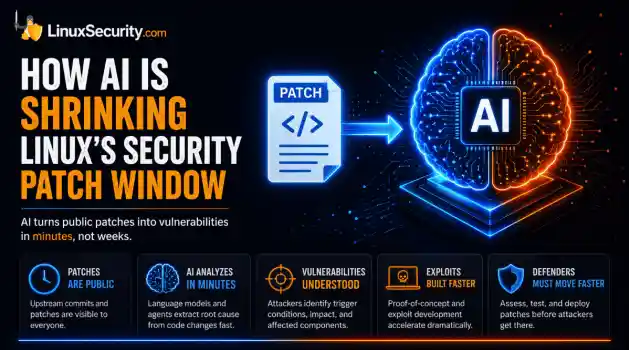
 For decades, Linux defenders relied on a comfortable assumption: a public security patch did not imply an imminent vulnerability. While open-source openness made vulnerability fixes public to everyone on kernel.org or the Linux Kernel Mailing List (LKML), converting a raw commit into a weaponized exploit took a significant amount of manual effort. This delay, estimated in weeks or months, gave businesses enough time to assess exposure, organize testing windows, and push changes across...
 Jul 27, 2026
 security advisory path traversal
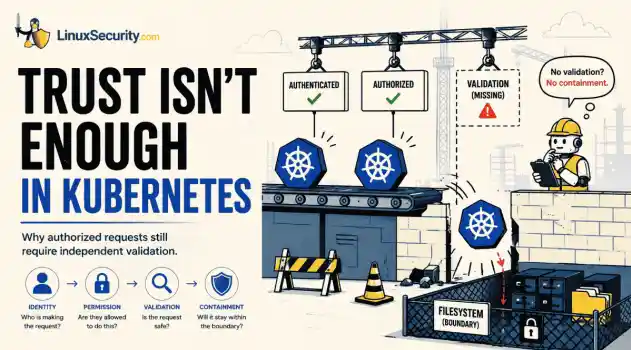
 Two newly fixed storage bugs in Kubernetes showed more than just a problem with path traversal. They found a common security flaw in the cloud: powerful parts often think that requests accepted by a higher system are safe to run. This is a simple lesson for the platform and security teams: RBAC can accept a request without showing that its parameters will stay within a certain filesystem boundary. This is clear from a new study from SentinelLabs into flaws in the Kubernetes CSI drivers for NFS...
Jul 24, 2026
 security advisory update
 A large volume of Linux security updates and advisories this week across major distributions once again, but it wasn't just the volume that was the story. Where maintainers and security teams focused their attention was evident in the concentration of fixes targeting Linux kernel updates, identity services, DNS infrastructure, and internet-facing software. . Instead of looking at each advisory in isolation, administrators gain more value from the general trends they reveal about Linux security...
Jul 23, 2026
 identity management security tactics
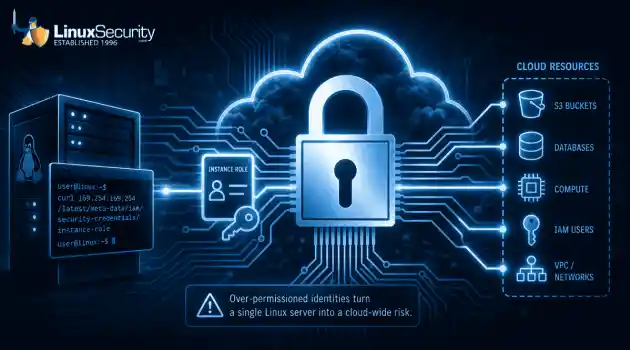
 For years, we secured our Linux infrastructure by building walls: VPCs, security groups, and hardened SSH configurations. We treated the cloud like a virtual data center, assuming that if we kept the "bad guys" out of the network, our workloads were safe. . That model is no longer sufficient. Today, one of the most common paths from an initial compromise to a major cloud breach is the identity assigned to your Linux workload. When an attacker gains code execution on a Linux instance—through a...
Jul 17, 2026
 security practices patch management
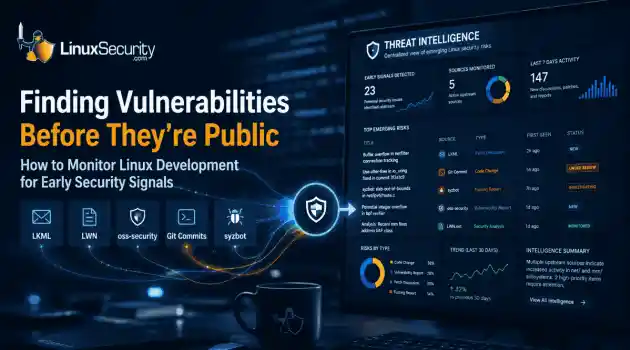
 Most of us don't hear about a kernel vulnerability until a CVE lands in our inbox or the vulnerability scanner starts complaining. By then, the patch isn't new anymore. Kernel developers may have been passing it around for review, arguing over the implementation, or revising it for days before anyone outside that community noticed it. None of those discussions are secret. They're sitting in mailing list archives, Git commits, and patch reviews where they've been the whole time. The strange...
Jul 14, 2026
 Refine features
X Clear Filters
Get the latest News and Insights
Get the latest Linux and open source security news straight to your inbox.
Community Poll
Are host-based firewalls still worth using?
Loading...
Explore Latest Linux Security features
We found -2 articles for you...
102
 security advisoryhighnpm
The npm Supply Chain Problem: Why Installing Packages Executes Untrusted Code
Running npm install is a reflex at this point. You see a progress bar, a few hundred dependencies fly by, and the lockfile updates. You move on to the next task. But that command isn't just a file transfer. It is execution. And it runs with the same user permissions you use to check your email or push to production. The most dangerous code on a Linux system may execute before your application even starts. The recent npm supply chain attack on the Axios library showed how easily a postinstall script is weaponized. By exploiting npm lifecycle scripts , attackers turned a trusted utility into a delivery mechanism for a remote access trojan (RAT). This isn't about a bug in the code. It is about how the installation process is designed to work. . npm install Doesn’t Just Download Code, It Executes It We have conditioned ourselves to think of package managers as glorified downloaders. They aren't. They are execution engines. Modern development ecosystems run scripts during the install phase to handle tasks like compiling native extensions or setting up local environments. In the Node.js world, these are npm lifecycle scripts. If a package manifest contains a preinstall script or a postinstall script, npm runs that code. Automatically. This isn't a vulnerability or a clever hack: it’s the intended design of the tool. The pattern is everywhere. Python’s pip executes arbitrary code via setup.py . Rust’s cargo relies on build.rs to compile dependencies. These tools operate on a single, massive assumption: if you asked to install it, you’ve already decided to trust every line of code inside it. This Is a Software Supply Chain Attack: Not Just a Package Issue On March 31, 2026, the JavaScript community got a clear look at how this trust is turned against us. Attackers hijacked the maintainer account for Axios, a library used by millions . They didn’t even touch the Axios source code. They just added a new, malicious dependency called plain-crypto-js . This was a textbook software supply chain attack. It relied on transitive trust and indirect compromise. The attackers didn't need to break your server. They just poisoned a single third-party dependency deep in your tree. While this incident targeted npm identities, the pattern is part of a larger trend of executing unverified code across Git and CI/CD pipelines. When a developer ran npm install axios , the system resolved the tree and triggered a hook that pulled down a cross-platform RAT. The whole thing was over in seconds. There was no kernel exploit. No zero-day. The system executed the attacker’s code because that is how software supply chain security is currently architected. The Reality of Dependency Risk Every time you add a library, you aren't just adding one piece of code. You are inviting an entire dependency tree into your environment. Many of these are transitive dependencies, which are the libraries that your libraries depend on. You might only intend to use one trusted tool, but you are effectively granting execution rights to hundreds of authors you have never heard of. This creates a massive dependency management risk that stays hidden until an incident occurs. This Happens Inside the Trust Boundary This is why it is a Linux security problem. When you run an install command, those scripts run with your user permissions. They have immediate, quiet access to everything you touch on your developer workstation. The attack doesn't need to break in. It is already past the gates. It uses your identity to move files and talk to the network. This is a direct Linux privilege misuse. These scripts can easily exfiltrate: Your SSH keys in ~/.ssh/ Your .env files with production secrets Your cloud provider tokens and API keys Your browser sessions and cookies CI/CD runners usually have even more power. One npm install can compromise your entire pipeline before you even run a single test on your own code. Why Traditional Security Tools Miss This Mostof our security stack is built for the runtime. We use SELinux to sandbox a web server or AppArmor to restrict a browser. We watch firewalls for weird outbound traffic from long-running processes. But the installation process happens in the dark. This is a build-time execution gap. The execution is fast and ephemeral. Because it happens inside a process you already trust, it almost never trips an alarm. In the Axios attack, the malicious script cleaned up after itself , deleting its traces the moment the payload was delivered. Your security tools are looking for a long-running threat. They won't find it here. No binaries were changed. No new services were started. The breach is finished before the application even launches. Who Is Responsible for the Fix? In a decentralized ecosystem, accountability is fragmented. There is no single security officer for the Linux supply chain. Instead, the responsibility is split across layers that often point fingers at each other. The package registries, like npm and PyPI , are the first line of defense. Their job is to secure the source. In response to waves of account takeovers, they have started mandating two-factor authentication (2FA) for popular maintainers. They are also implementing automated malware scanning to catch malicious hooks. But these registries are archives, not auditors. They cannot realistically vet every line of code in the millions of packages they host. The tool maintainers, the teams behind npm , pip , and cargo , are the architects of the bridge. They are the ones who decide that install should also mean execute. There is a slow movement toward secure-by-default configurations, like proposals to sandbox build scripts. However, changing these defaults risks breaking the millions of legitimate builds that already exist. The system treats the package manager as a trusted agent of the user. This leaves the final layer of responsibility with the organization running the code. Security isn't just about what the registrycatches. It is about the execution boundaries you build on your own host. How to Reduce the Risk If the problem is that the Linux system trusts the wrong thing at the wrong time, the fix is to stop granting that trust by default. You can’t manually audit every line of a tree, but you can change how the system handles the installation. To achieve a secure npm install, the most immediate step is to break the link between downloading code and executing it. In the npm ecosystem, you can use npm ignore scripts security features by running: npm install --ignore-scripts This keeps the package on the disk but prevents the postinstall script from touching your CPU. For higher-stakes environments like CI/CD pipelines, the answer is containerized builds and network isolation. Instead of running installs on a host with access to your credentials, move the build to a restricted container using tools like Podman . If the code executes in a sandbox with no way to reach your .ssh folder or talk to the internet, the threat is contained. This Isn’t Just npm It is easy to blame JavaScript, but this is a structural reality. The Rust security model is open about the fact that the compiler assumes dependencies are trusted. You see the same pip install security risk in the Python world and cargo build script security concerns in Rust. Every modern package manager works the same way. The system runs foreign code just to get the software ready to build. The risk isn't just about where the code came from. It is about what the system does with it the second it arrives on the disk. Most teams think the clock starts when an application runs in production. It doesn't. The exposure starts much earlier. It starts when a dependency is installed, and the system executes code it was never actually meant to trust. FAQ: Understanding npm and Supply Chain Security What is an npm? The term npm refers to the Node Package Manager. It is a tool used by developers to share and install JavaScriptcode. It consists of a command-line client and a large online database of code called the npm registry. What is npm used for? Developers use npm modules to add functionality to their applications without writing everything from scratch. It automates the process of finding, installing, and updating code libraries. What are npm vulnerabilities? These are security flaws found in npm modules. They can range from accidental bugs that allow data leaks to npm vulnerabilities intentionally placed by attackers to steal credentials or gain remote access to a system. How does an npm supply chain attack work? This happens when an attacker compromises a legitimate package or its maintainer. When users download the updated version, they unknowingly install malicious code. Because these tools often run scripts during installation, the attack can execute before the developer even runs their application. Why is the Axios attack significant in software supply chain attack news? The Axios incident proved that even highly popular, trusted libraries are targets. It showed that attackers don't need to find a new bug in Linux: they can simply use the built-in features of an npm package manager to deliver malware. . npm install Doesn’t Just Download Code, It Executes It We have conditioned ourselves to thi. running, install, reflex, point, progress, hundred, dependencies. . MaK Ulac
 Apr 03, 2026
•
Apr 03, 2026
•
102
 security riskslinux distributionopen source security
Why Software Supply Chain Security Matters in Linux Systems
For Linux users, software supply chain security means protecting the entire path from source to install. It covers who authors and reviews the code, how it is built, how artifacts and metadata are signed, where they are mirrored, and which keys the client trusts. In short: provenance, freshness, and scoped trust across the package pipeline. . Signatures and HTTPS are not enough. The distribution layer still introduces risk through build system breaches, website-level distribution swaps, stale or broken mirrors, mismanaged repository keys, and community repositories without strong guarantees. Each of these failures bypasses cryptography without breaking it. We see the same patterns repeat in open source supply chain security: outdated packages served from mirrors, keys that expire or sprawl, community packages that look legitimate but were never vetted, and infrastructure that turns trusted delivery into an attack path. The problem isn’t the math. It’s the systems around it. The fix is not “turn on HTTPS and move on.” It requires signed metadata and verifiable provenance, sane mirror freshness policies, and per-repository key isolation on the client. That is the baseline for modern software supply chain security. Why Software Supply Chain Security Matters for Linux Users Open source supply chain security isn’t a theoretical problem — it shapes how Linux systems run and how secure they remain for administrators, security teams, and everyday users alike. Admins and engineers: Stale mirrors and expired keys don’t just raise warning messages. They break deployments, block updates, and in some cases allow corrupted or even malicious packages to slip through. Security teams: Attackers rarely waste effort trying to break cryptography itself. They target the weak spots around it — mirrors, build systems, or community repositories — where they can bypass signatures and HTTPS without ever touching the math. Everyday users: A package downloaded over HTTPS and signed with avalid key can still be malicious if the repository serving it is compromised. The surface looks safe, but the content underneath isn’t. At LinuxSecurity , we’ve seen these risks play out in real-world incidents for years. That history is what makes them so important to understand. The following case studies show how each of these weak points has been exploited in practice. Incidents That Shaped Open Source Supply Chain Security Incidents span more than a decade, and they fall into two groups. From early cases like FreeBSD 2012 and Linux Mint 2016 to recent compromises, the same risks have continued to surface across Linux ecosystems. FreeBSD 2012 Infrastructure Compromise: Build System Breach This incident illustrates the failure mode of compromised build infrastructure. As one of the legacy cases, the 2012 FreeBSD breach demonstrated early on how fragile the build environment could be. Several package-building servers were compromised, creating the possibility that malicious code could be introduced during the build process. According to the project’s official postmortem , the intrusion affected servers used to prepare software distributions. While signed binaries continued to be produced, the compromise showed that signatures mean little if the system generating those binaries has already been tampered with. Provenance becomes critical in open-source supply chain security, as delivery integrity cannot compensate for poisoned origins. The takeaway is clear: provenance and build isolation are essential to any credible security model. T o us at LinuxSecurity , The real weakness isn’t the signatures. It’s the build environment itself. Once attackers reach that layer, they can turn out validly signed malware, and every downstream control fails with it. Some argue that identifying and disclosing such errors proves the system works. In reality, an infrastructure compromise demonstrates how brittle the trust model is when attackers reach inside thebuild environment itself. FreeBSD proved that when the build system itself is poisoned, provenance collapses no matter how strong the signatures. Distribution adds a different weakness: the servers users depend on to fetch software can be turned against them. The Linux Mint hack in 2016 was the most evident proof of that. Linux Mint Hack (2016): Distribution-Layer Compromise Back in 2016, a major compromise showed how fragile the distribution infrastructure could be. Attackers breached the Linux Mint website and quietly replaced official ISO download links with images containing a backdoor. The project later confirmed on its site that modified ISOs had been served directly from the distribution page. HTTPS and GPG were technically intact, but once attackers controlled the download portal, those checks offered no real protection. Trojanized ISOs spread quickly to users who believed they were following best practices. This showed how software supply chain security depends on delivery paths as much as code. It’s tempting to write incidents like this off as rare. The reality is that every breach, no matter how isolated, maps directly to a weakness that will surface again if left unaddressed. At LinuxSecurity, we’ve long pointed to the Mint hack as evidence that signatures can’t defend a broken delivery path. Infrastructure has to be guarded with the same rigor as the code itself. Mint showed how delivery can be subverted after the build. XZ exposed an even deeper cut: compromise at the source, where the maintainer workflow itself became the entry point. XZ Utils Backdoor (2024): Maintainer Workflow Compromise In 2024, malicious code was discovered in XZ Utils versions 5.6.0 and 5.6.1, compromising the maintainer workflow. What set this attack apart was patience. The attacker spent years inside the project, sending patches and building credibility until they were treated as a trusted maintainer. By the time the backdoor landed, it blended in as just another update. Thatlong game is what made the compromise so effective — the usual safeguards never triggered, because the attacker was already on the inside. CISA confirmed the incident as CVE-2024-3094 , rating it CVSS 10.0 and warning of impacts across Debian, Fedora, and Ubuntu development channels. Technical analysis later explained how the backdoor worked and why it was so dangerous: payloads persisted even when downstream container images were rebuilt, allowing the compromise to spread beyond the original packages. HTTPS and valid signatures never failed, but software supply chain security collapsed when provenance did. With the maintainer account compromised, the backdoor entered as an “official” change, collapsing trust before cryptographic checks or delivery controls could even play a role. Some argued the damage was limited because stable users were not affected. In reality, timing and vigilance prevented worse fallout. The lesson stands: modern compromises can emerge from trusted maintainers, and when they do, the usual assurances of signatures and HTTPS cannot contain the risk. The XZ case was caught quickly, but discovery didn’t erase the damage. Once malicious code is released, it clings to downstream images and caches. That persistence was exactly what surfaced in 2025, when Docker Hub continued to distribute backdoored versions long after the upstream fix. XZ Persistence in Docker Hub (2025): Downstream Amplification The 2024 XZ backdoor didn’t disappear once patched. It carried into 2025, embedded in Docker Hub base images and derivative containers. This was the failure mode of downstream persistence, where compromised artifacts spread and linger across caches and builds long after the upstream fix. Binarly’s report found more than 35 public Docker images still shipping the backdoored XZ Utils library, including Debian-based ones. The problem didn’t stop there — “second-order” images built on top of those bases multiplied the exposure. This isn’t mirror staleness.Container ecosystems replicate tainted binaries indefinitely, giving compromised artifacts a half-life of years, not weeks. Because these images inherit directly from upstream distributions, the weakness cascades across the ecosystem. What persistence reveals Once poisoned, artifacts replicate through container bases and derivatives. There is no recall mechanism to purge compromised libraries. Risk spreads silently, infecting and building long after the upstream issue is fixed. Persistence is one of the hardest problems in software supply chain security. Once an artifact is embedded in Docker or similar ecosystems, it doesn’t fade out quickly — it lingers. That cascading effect points to another gap in open source supply chain security: not just persistence of bad code, but the trust we extend to code that enters the ecosystem in the first place. AUR Chaos RAT Malware (2025): Community Trust Failure This case illustrates the failure mode of community trust. Unlike official repositories, the Arch User Repository (AUR) accepts user-submitted packages without upstream review. In 2025, several of those packages were found to deliver the Chaos RAT malware. Malicious versions of utilities such as arch-wiki-lite and vim-patchupdate were uploaded and distributed through the AUR. The scope of the compromise was detailed in Chaos RAT in AUR , where users expecting benign tools instead installed a remote access trojan. Community reaction captured by Linuxiac reflected the ongoing debate over whether the AUR should be treated as part of the distribution or as an inherently untrusted space. Open-source supply chain security has to account for where software originates, not just how it is transported. Some argue that AUR use is a personal choice, but package managers blur those boundaries — once a malicious package circulates, the risk spreads. What this shows Community repos bypass upstream review Signatures only confirm delivery, not trustworthiness Risk spillsover into the broader ecosystem Community repos revealed how extending trust too far can poison the ecosystem, proving once again that software supply chain security is about provenance, not just signatures. Community repos revealed how extending trust too far can poison the ecosystem. But risk isn’t limited to the edges. Research in 2025 showed that even the official infrastructure behind Fedora and openSUSE carried exploitable flaws. Fedora & openSUSE Build Services (2025): Modern Infra Risks In 2025, new research exposed critical weaknesses in the infrastructure behind major Linux distributions. Investigations into Fedora’s Pagure forge and the Open Build Service (OBS) used by openSUSE revealed vulnerabilities in the very systems responsible for managing and building packages. This represents modern build and repository infrastructure risks, echoing the lessons first seen in the FreeBSD compromise of 2012. One of the most severe findings was CVE-2024-47516 , a critical argument injection vulnerability in Pagure that enabled remote code execution during repository history retrieval. At the same time, research from Fenrisk showed how the source service in OBS could be manipulated to alter package sources directly. Together, these disclosures confirmed that infrastructure-level compromises are not just historical anomalies. The same class of risk persists today, nearly identical in nature to the problems uncovered more than a decade earlier. For software supply chain security, the implications are clear. Even if signing keys are properly managed, poisoned binaries can slip through when the systems that assemble and distribute them are insecure. Provenance collapses if attackers can compromise the build process itself. Building infrastructure remains one of the weakest points in the Linux supply chain. Some dismissed these as proofs-of-concept, but that misses the point — if today’s core build services can be modeled as exploitable, the system is already brittle. The onlyvariable left is timing. Why the Same Failures Repeat Across Incidents A decade’s worth of incidents makes the pattern clear. Incident Weak Point Why Crypto Didn’t Help Lesson FreeBSD 2012 Build infra compromise Signed binaries were still malicious Even valid signatures can’t protect if the build environment itself is poisoned. Linux Mint 2016 Website compromised HTTPS and GPG were intact but irrelevant A trusted download site turned hostile, showing the distribution layer is as critical as the code it serves. XZ Utils 2024 Maintainer workflow Crypto verified poisoned binaries as “legit” Provenance collapsed when a maintainer account was abused, proving trust can fail at the source. DockerHub Persistence 2025 Mirrors, caches, derivatives Tainted images lived on after removal Without recall, poisoned artifacts persist and spread downstream long after the fix. AUR Chaos RAT 2025 Community repo trust Signatures delivered malware anyway Community repositories bypass review, proving that provenance matters as much as delivery. Fedora/OBS 2025 Build service flaws Vulnerable infrastructure could sign bad code Even in 2025, core build services can still be modeled as exploitable, showing how brittle the foundation remains. These incidents show that software supply chain security is not a problem cryptography can solve on its own. It depends on securing the entire delivery chain, from build systems and distribution sites to mirrors, caches, and community repositories. Why Mirrors and Metadata Integrity Matter in Open Source Supply Chain Security The last set of incidents showed how attackers plant malicious code at different points in the chain. Mirrors and metadata integrity represent adifferent risk. They determine whether those compromises fade quickly or linger long after the initial breach. Fedora Metalink Freshness Checks: Freshness Enforcement Fedora treats mirror freshness as a security control, not just an uptime concern. This is the failure mode of stale mirrors, and Fedora’s answer is to enforce “freshness” at the metadata level. As described in the Fedora infrastructure blog , package delivery depends on repomd.xml checksums and timestamp validation. If a mirror falls out of sync, Fedora clients reject it. To users, the result looks like downtime, but the outages are a defense at work. Mirror staleness is more than an inconvenience. It is a vector for replay and rollback attacks. That’s why freshness enforcement is a core part of software supply chain security. For open-source supply chain security, keeping metadata fresh is as critical as key management. Outages here are intentional safeguards. At LinuxSecurity , we’ve pointed out that this is exactly the kind of control missing in earlier incidents like FreeBSD’s 2012 compromise. The same risks seen more than a decade ago still shape modern infrastructure. Some argue that mirrors are simply an availability issue. In reality, without enforced freshness, outdated packages can be replayed as if they were current, and cryptographic checks alone will not stop it. Fedora demonstrates proactive enforcement. Debian shows the opposite, where brittle checks allow the problem to surface in practice. Debian SecureApt: Rollback Fragility In Debian, open-source supply chain security relies on SecureApt and its Valid-Until mechanism. This represents the failure mode of rollback fragility: protections against stale mirrors that can also lock users out when freshness checks break down. As detailed in the Debian security manual , Release and InRelease files are signed and include a Valid-Until field. When a mirror drifts or a system clock slips, users see the familiar error: “Release file expired.” Itprotects against rollback but also shows how brittle the system becomes when mirrors lag. Some argue that these errors simply prove the system is working. That is true, but it also demonstrates how fragile the trust model can be when enforcement collides with real-world infrastructure. Debian’s model shows the price of enforcing freshness when mirrors drift: security holds, but usability breaks. That tension is what pushed projects to rethink key hygiene in the years that followed. Key Hygiene and Isolation on the Client Side Attacks on infrastructure and mirrors show where the chain can be poisoned. Key management on the client side decides how far that poison spreads. apt-key Deprecation: Trust Scope Failure For years, Ubuntu and Debian-based systems used apt-key to manage repository signing keys. It worked, but it was insecure: a single trusted key meant a compromise in one repository could affect them all — the failure mode of trust scope. Canonical announced the deprecation of apt-key in its Discourse post . The replacement uses deb822 source entries with the Signed-By option, which lets each repository define its own key. The move acknowledged what the community already knew: shared trust anchors undermine software supply chain security, while scoped keys and isolated trust boundaries reduce the blast radius of a compromise. Shared keys created a global blast radius. Per-repo keys isolate trust, reducing fallout when one key is exposed. Key hygiene failures are dangerous because they fail silently until compromise has already spread. Per-Repository Key Isolation: Trust Scope Failure With deb822 and the Signed-By directive, each repository now carries its own signing key. This model directly addresses the failure mode of trust scope, where a single global key once had authority over every source. Benefits of per-repo key isolation: Limits compromise to one repository rather than the entire system Reduces systemic risk if a single key is exposed Encouragesbetter hygiene and accountability across maintainers This shift matters because software supply chain security depends on limiting how far a compromise can travel once it begins. Isolating keys ensures that a poisoned source does not cascade across unrelated repos. For open-source supply chain security, it is the difference between a local breach and an ecosystem-wide incident. Some argue that key isolation is overkill. In practice, one bad key under the old model meant global compromise. Scoped trust prevents that outcome and keeps failure contained. This is why key hygiene sits at the heart of modern software supply chain security. Client-Side Controls Show Their Own Weak Points Mirrors, keys, and client-side controls show that failures aren’t only upstream — they play out on end-user systems as well. Incident Weak Point What Users Saw Security Trade-off Failure Mode Fedora Metalink Stale or broken mirrors Outages when mirrors drifted Enforced freshness stopped rollback, but at the cost of availability Freshness Enforcement Debian SecureApt Expired Release files “Release file expired” errors Valid-Until blocked stale repos, but also locked users out Rollback Fragility apt-key Deprecation Shared global key One key is trusted everywhere Convenience created a global blast radius Trust Scope Failure Per-Repo Keys Poor key isolation Each repo now has its own key Scoped trust prevents cascades, improves maintainer accountability Trust Scope Failure Together, these cases reinforce the main point: software supply chain security cannot be reduced to signatures and HTTPS. Even when cryptography is intact, weaknesses in mirrors, metadata, and key hygiene expose users to rollback, replay, and trust-scope failures. Opensource supply chain security has to account for every layer, from upstream build systems to client-side validation. How to Improve Open Source Supply Chain Security: Practical Fixes The incidents made one thing clear: distribution is where the chain most often fails. Provenance, freshness, and scoped trust are the controls that matter. Signed metadata and provenance keep packages traceable and stop poisoned repositories from masquerading as legitimate. Mirror freshness policies block rollback and replay by rejecting outdated files before they spread. Per-repository key isolation contains a compromise to a single source instead of exposing an entire system. Our perspective: These aren’t advanced features. They are the baseline. They don’t close every gap, but they stop the failures that have defined the last decade of attacks. Enterprise ecosystems like Microsoft and Red Hat enforce provenance and freshness through centralized infrastructure. Open source has the same needs but depends on fragmented adoption, which leaves room for the same failures to resurface. These aren’t optional add-ons. They are the foundation of modern software supply chain security, and without them, open source software supply chain security will keep repeating the same incidents we’ve already seen. Conclusion: Rethinking Open Source Supply Chain Security The failures we’ve traced don’t come from broken cryptography. Signatures and HTTPS hold up. What fails is distribution — the systems, mirrors, workflows, and trust models that deliver code. From FreeBSD’s compromised build servers to Linux Mint’s website breach, from XZ’s maintainer compromise to Docker and AUR persistence, the same pattern repeats. The fix is not new crypto, but a focus on provenance, freshness, and scoped trust. Without that, software supply chain security will keep failing in predictable ways. . Explores risks in Linux software supply chain security and the importance of securing the entire packagedelivery process.. linux, users, software, supply, chain, security, means, protecting, entire, source. . MaK Ulac
Oct 01, 2025
•

102
 open sourcedata encryptionsoftware transparency
Biden's Cybersecurity Order Requires Federal Software Compliance Standards
On Wednesday, May 12th, in the wake of the recent Colonial Pipeline ransomware attack that shut down one of the largest US pipelines for nearly a week, President Biden signed an executive order placing strict new standards on the cybersecurity of all software sold to the federal government. This order is part of a broad, multi-layered initiative to improve national security by incentivizing private companies to practice better cybersecurity or risk being locked out of federal contracts. . For the first time, the United States will require all software purchased by the federal government to meet, within six months, a series of new cybersecurity standards. Although the companies would have to “self-certify,” violators would be removed from federal procurement lists, which could kill their chances of selling their products on the commercial market. The new order also requires all federal agencies to encrypt data, whether it is in storage or while it is being transmitted. This order addresses a disconcerting trend: cyberattacks - the vast majority of which are email-borne - are rapidly evolving to become more sophisticated, prevalent and far-reaching than ever before. Many of these attacks target critical infrastructure - a point most recently highlighted by the Colonial Pipeline ransomware outbreak. Over the past year, approximately 2,400 ransomware attacks have hit corporate, local and federal offices. Biden’s new executive cybersecurity order recognizes the critical importance of Open Source in securing the software supply chain, stating that the government must ensure "to the extent practicable, to the integrity and provenance of open-source software used within any portion of a product." It is not surprising that the report specifically addresses open-source security. After all, according to open-source company Tidelift, 92% of applications contain open-source components. Luckily, the open-source community itself is already combating this issue with the Software Package DataExchange (SPDX), which aims to enable software transparency through a Software Bill of Materials (SBOM) - a formal record containing the details and supply chain relationships of various components used in building software - that already meets the executive order's requirements. In addition, The Linux Foundation’s Open Source Security Foundation (OpenSSF) has also been working to secure open-source software and its components through its mission of “collaboration to secure the open-source ecosystem”. Also, the Linux Foundation recently announced a new open-source software signing service: the sigstore project , which seeks to improve software supply chain security by enabling the easy adoption of cryptographic software signing backed by transparency log technologies. Besides sigstore, the Linux Foundation oversees multiple projects designed to maintain trusted source code supply chains including in-toto , The Update Framework (TUF) and OpenChain (ISO 5230). The open-source community is also addressing the order’s call for the encryption of data at rest and in transit with the renowned open-source project Let's Encrypt , the world's largest certificate authority for TLS certificates. The bottom line is that Open Source shows significant promise in meeting today and tomorrow’s most significant cybersecurity challenges. It has become clearly apparent that cybersecurity needs to be a top priority - not just for the federal government, but for everyone. David A. Wheeler, the Linux Foundation's Director of Open Source Supply Chain Security, emphasizes the importance of community involvement in securing the open-source supply chain, "We couldn't do this without the many contributions of time, money, and other resources from numerous companies and individuals; we gratefully thank them all. We are always delighted to work with anyone to improve the development and deployment of open-source software." I’m pleased to see this type of legislation put into place. Cybersecurity and data privacy areserious, universal concerns that must be addressed individually by businesses, as well as at the national level. This order offers vendors a great enough incentive that it is hard to imagine they would choose not to comply. While there is no silver bullet, it is encouraging to see that the open-source community is well on its way to meeting this order’s critical demands. . The federal government imposes updated cybersecurity regulations for software acquired by its agencies, bolstering defenses across the board.. Enhanced Cybersecurity Standards, Open Source Initiatives, Software Supply Chain Compliance. . Brittany Day
May 24, 2021
•

Get the latest News and Insights
Get the latest Linux and open source security news straight to your inbox.
Community Poll
Are host-based firewalls still worth using?
Search Topics
Powered By

Linux Security - Your source for Top Linux News, Advisories, HOWTOs and Feature Releases
QUICK LINKS
subscribe to newsletters!
Like staying secure? So do we.
Sign up for updates, tips, and alerts!