Overly broad permissions can turn one compromised account into a much larger security problem. Learn how to reduce unnecessary access, review privileges, and apply least privilege across modern Linux systems. Review Linux Privileges×


Stay Ahead With Linux Security Features

 identity management security tactics
 For years, we secured our Linux infrastructure by building walls: VPCs, security groups, and hardened SSH configurations. We treated the cloud like a virtual data center, assuming that if we kept the "bad guys" out of the network, our workloads were safe. . That model is no longer sufficient. Today, one of the most common paths from an initial compromise to a major cloud breach is the identity assigned to your Linux workload. When an attacker gains code execution on a Linux instance—through a...
 Jul 17, 2026
 security practices patch management
 Most of us don't hear about a kernel vulnerability until a CVE lands in our inbox or the vulnerability scanner starts complaining. By then, the patch isn't new anymore. Kernel developers may have been passing it around for review, arguing over the implementation, or revising it for days before anyone outside that community noticed it. None of those discussions are secret. They're sitting in mailing list archives, Git commits, and patch reviews where they've been the whole time. The strange...
Jul 14, 2026
 Linux security cyber attacks
 Every Linux server in your fleet produces thousands of events every minute. From journald logs and auditd records to kernel-level eBPF hooks, your systems are constantly talking. Most of that noise is just the mundane churn of system services, CI/CD runners, or routine administrative automation. But among that noise, an attacker might be establishing a foothold, moving laterally, or setting up persistence. The challenge for any security team is: how do you separate the routine from the...
Jul 13, 2026
 open-source infrastructure risk
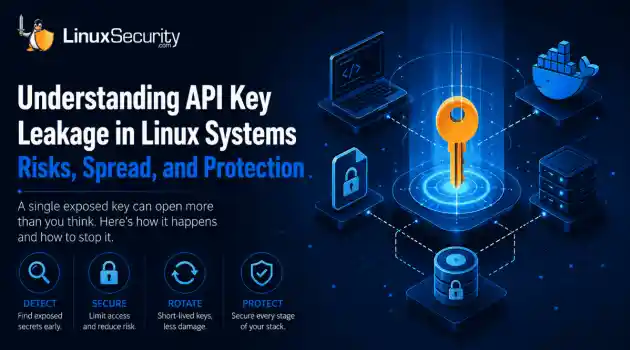
 Security scanners flag exposed API keys in public repositories every day. The initial response is usually predictable: delete the commit, revoke the credential, and move on. That’s a mistake. . In a real Linux environment, an API key never stays in one place. By the time it hits a public repo, it’s already everywhere. It’s in the CI/CD pipeline. It’s in your container registry. It’s in the build logs. It’s in the backups. Git makes this worse because the history never dies. Deleting a file in...
Jul 11, 2026
 open-source rootkit
 Most of us think of Linux rootkits as ancient history—the stuff of 90s hacking forums and clunky malware that would crash your system if you looked at it the wrong way. But if you think they’ve gone away, you’re mistaken. They’ve just gotten smarter. . Modern attackers aren't using the noisy tools of the past. Today’s threats are surgical. Many of today’s most advanced Linux rootkits operate at the kernel level or abuse legitimate system features to blend in with normal traffic. They’re...
Jul 09, 2026
 Refine features
X Clear Filters
Get the latest News and Insights
Get the latest Linux and open source security news straight to your inbox.
Community Poll
Should Linux servers automatically install security updates?
Loading...
Explore Latest Linux Security features
We found -1 articles for you...
102
 network securitycybersecurityransomware
IceFire Ransomware: Tactics, Protection, and Security Practices for Linux
IceFire Ransomware, which already utilizes exploits in cybersecurity to attack Linux systems, has recently developed a new strain . This threat takes advantage of an IBM Aspera Faspex file-sharing vulnerability ( CVE-2022-47986 ) that had previously only targeted Windows systems and media and entertainment companies. Since Linux systems tend to be quite powerful in mitigating risks, IceFire Ransomware is all the more concerning, as it can breach robust cybersecurity systems and cause substantial harm. . The ransomware operators' tactics are consistent with those of the "Big-Game Hunting (BGH)" ransomware families, as the variant focuses on attacking large enterprises, leveraging double extortion, utilizing evasion techniques like deleting log files, and implementing numerous persistence mechanisms. Double extortions are detrimental since these attacks in network security typically demand twice as much for the ransom payment. As network security issues rise, you must stay up-to-date on the latest security news. Knowing the best security practices can help you mitigate risks before they damage your server. This article will review ransomware, dive into IceFire Ransomware, and show you how to protect your server. What Is Ransomware? Ransomware cybercriminals focus on breaching a company’s system, decrypting sensitive files and valuable data, and forcing victims to pay a ransom, or a large sum of money, before returning company work to employees. This type of malware is more damaging to a business than typical malware and phishing email attacks since money is involved. What Does a Ransomware Attack Look Like? During a ransomware attack, users might receive a phishing email that appears to be from a trustworthy sender due to the use of social engineering tactics. Users will open the message and download attachments or links that lead to legitimate-looking documents and websites. Then, cybercriminals can install ransomware they please onto a server, infecting a system and taking away primaryaccess to data companies need for daily operations. What is IceFire Ransomware and its Characteristics? IceFire Ransomware on Linux systems comes across as 2.18 MBs, 64-bit Executables, and Linkable Binary Files (ELF) with open-source GNU Compiler Collection (GCC) for AMD64 system processor architecture. Cybercriminals deployed the services against CentOS hosts so they could run successfully on Intel-based Ubuntu and Debian distributions. Impacted systems download the IceFire payloads, execute them to encrypt files, and rename them with the ".ifire" extension. Then the payload stealthily deletes itself to avoid detection. IceFire Linux payload scripts exclude encryption for specific system-critical files and paths like the following: .cfg, .o, .sh, .img, .txt, .xml, .jar, .pid, .ini, .pyc, .a, .so, .run, .env, .cache, .xmlb, p, /boot, /dev, /etc, /lib, /proc, /srv, /sys, /usr, /var, /run. This intentional deletion prevents encryption so companies can still operate their server. The variant exploits cybersecurity vulnerabilities by implementing itself into the system rather than relying on phishing emails and third-party frameworks. As a result, network security threats may go undetected for an extended period while devising a plan of attack. Once the business faces a breach, there is very little they can do to stop it since the cybercriminals have done extensive research when sitting inside the company's server for so long. The Linux IceFire ransomware payload uses an RSA encryption algorithm with an RSA public key hard-coded into the binary. The payload drops a ransom note from an embedded resource and writes it to each directory targeted for file encryption. The ransom note includes a predefined username and password that you must use to access the ransom payment website hosted on a Tor hidden service to ensure anonymity. How Could IceFire Break Into Secure Linux Systems? Linux security expert and LinuxSecurity.com Founder Dave Wreski remarks, “Linux presents more challenges forransomware operators than Windows, especially on a large scale. Many Linux systems are servers less susceptible to common infection methods like phishing or drive-by downloads. Thus, attackers have resorted to exploiting application vulnerabilities, as we have recently seen with the IceFire ransomware group.” How Can I Secure My Linux Systems Against IceFire Ransomware? Cybercriminals target Linux operating systems more frequently since their highly secure servers outperform Windows and macOS in data and network security. More online customers rely on Linux to power a company's high-value devices as the necessity for email protection skyrockets. Malware , rootkits , and more malicious network security threats put Linux users at risk even more as the system popularizes. Unfortunately, we know only one threat management platform that can combat and stop evasive ransomware attacks in network security: Vali Cyber's ZeroLock . What is ZeroLock? How Can It Protect Against IceFire? ZeroLock rapidly and reliably reacts to attacks in network security by deploying email security solutions that effectively combat malware, rootkits, and ransomware. This service injects code into all aspects of a system so it can monitor the controls organizations use frequently. ZeroLock can suspend, delete, or cache any files, links, or downloads that it considers suspicious. Cybersecurity hardening with ZeroLock keeps cloud security breaches far away from your business and ensures email protection throughout your server. What Other Email Security Options Do I Have to Combat Threats? If you are searching for solutions to add to your security tactics on top of Vali Cyber’s ZeroLock, consider implementing these best email security practices that can improve security posture in your Linux system: Stay up-to-date on the latest cybersecurity vulnerabilities impacting your systems. Register as a LinuxSecurity user, subscribe to our Advisory Watch newsletter, and customize your advisories based on distros toknow the latest security news that could cause network security issues for your business. Follow @LS_Advisories on X for real-time updates. Avoid a Single Point of Failure (SPOF) attack by backing up critical files and diversifying your storage media so cybercriminals cannot utilize repetition in a breach. This solution will not stop attacks, but it can mitigate damage. Integrate the principle of least privilege for your users so accounts only provide the access an employee needs and nothing more, reducing the likeliness of an internal breach. Monitor network activity and system logs closely to stop any attack or risk as quickly as possible. Identify anomalous behavior when keeping tabs on event activity. Regularly checking prevents harm from reaching your company. Use a combination of IP filtering, an Intrusion Detection System (IDS), and an Intrusion Prevention System (IPS). These three options can quickly improve security posture and combat more network security threats. Use Linux security extensions that control and restrict access to data or network resources. Such applications will prevent cybersecurity vulnerabilities from being abused during a possible attack. Implement robust network segmentation and data compartmentalization to minimize the impact of a potential ransomware attack. Utilize cloud security audits on systems regularly. Test them and utilize security patching as needed to prevent any risk that could severely harm the productivity of your business. Our Final Thoughts on Securing Linux Systems Against Ransomware Understanding the data and network security issues you may face during a ransomware attack is vital in guaranteeing your company knows how to protect itself from such threats in the first place. IceFire can encrypt files and delete itself from servers to go undetected when hacking into a system and inflicting damage. Although IceFire Ransomware is not the most significant risk out there, it can be detrimental to a business, especially considering itcan get through Linux security systems, which are relatively defensive in their approach to email security. Fortunately, you can utilize various solutions to prevent an IceFire attack from reaching your organization. Wreski concludes, "Linux ransomware is a serious and increasingly prevalent threat, but luckily, attacks can be prevented with sound administration, the implementation of the right technology, and the other security best practices shared in this article." Continue learning how to strengthen your server's email protection by checking out our blog and articles about other types of ransomware and phishing attacks reaching Linux systems. . Discover IceFire ransomware's strategies and implement robust measures to protect Linux environments from evolving cyber threats successfully.. IceFire Ransomware, Linux Security Threats, Protect Linux Servers, Ransomware Prevention Tips, Cybersecurity Practices. . Brittany Day
 Mar 13, 2023
•
Mar 13, 2023
•
102
 security advisoryLinux distributionupdates
Customize Your Security Advisories For Improved Linux Defense
Regardless of the Linux distribution you’re using, staying on top of the latest security advisories is essential in maintaining an updated, secure Linux system. . Threat actors primarily focus on known security bugs in their attacks, as exploiting these flaws is relatively easy compared to zero-day vulnerabilities for which no patches are available. By tracking the security advisories issued by your distro, you can apply updates as soon as they become available to mitigate the serious risk that known vulnerabilities pose to the security and integrity of your system. LinuxSecurity makes staying informed of the latest updates simple and convenient by tracking security advisories for 13 popular distros and offering the ability to create a user profile and customize your advisories based on the distro(s) you use. In addition to providing a comprehensive, strategic way for admins to ensure that they receive the updates and guidance they need to keep their systems secure, LinuxSecurity offers extensive training and documentation to help them troubleshoot issues and expand their skill set. How To Customize Your Advisories: Register as a LinuxSecurity user here . Customize your User Profile to include your avatar, a short bio, links to your social media profiles and the LinuxSecurity newsletters you would like to subscribe to (all optional). When finished, click “Register”. This will bring you to your User Dashboard. Select the “Edit Profile” button in the upper righthand corner of the page. Under “Personal Information”, check the boxes next to the distro(s) that you would like to track advisories for. Click “Submit” to save the changes you have made. Now that you have customized your advisors, you will be able to view this information at-a-glance from your User Dashboard. Subscribe to our weekly Linux Advisory Watch Newsletter to be informed via email when your distro(s) has released an update for a vulnerable program or applicationhighlighted in that week’s newsletter. If you haven’t registered as a LinuxSecurity user and customized your advisories, what are you waiting for? Do yourself a favor and make your life as a Linux admin easier- and more secure! Join the LinuxSecurity Community Now> . Stay informed about security advisories to guard your Linux system against known vulnerabilities and threats efficiently.. regardless, linux, distribution, you’re, using, staying, latest, security, advisorie. . Brittany Day
Jan 13, 2022
•

102
 Linux securitythreat managementopen source tool
CrowdSec: Effective DDoS Mitigation and IP Threat Management
CrowdSec is a massively multiplayer firewall designed to protect Linux servers, services, containers, or virtual machines exposed on the Internet with a server-side agent. It was inspired by Fail2Ban and aims to be a modernized, collaborative version of that intrusion-prevention tool. . CrowdSec is free and open-source (under an MIT License), with the source code available on GitHub . It uses a behavior analysis system to qualify whether someone is trying to hack you, based on your logs. If your agent detects such aggression, the offending IP is then dealt with and sent for curation. If this signal passes the curation process, the IP is then redistributed to all users sharing a similar technological profile to “immunize” them against this IP. The goal is to leverage the power of the crowd to create a real-time IP reputation database. As for the IP that aggressed your machine, you can choose to remedy the threat in any manner you feel appropriate. Ultimately, CrowdSec leverages the power of the community to create an extremely accurate IP reputation system that benefits all its users. It was clear to the founders that Open Source was going to be one of the main pillars of CrowdSec. The project's founders have been working on open-source projects for decades - they didn’t just jump on the train. Rather, they are strong Open Source believers. They believe that the crowd is key to the mass hacking plague we are experiencing, and that Open Source is the best lever to create a community and have people contribute their knowledge to the project, ultimately make it better and more secure. The solution recently turned 1.x, introducing a major architectural change: the introduction of a local REST API. How CrowdSec Works CrowdSec is written in Golang and was designed to run on modern, complex architectures such as clouds, lambdas, and containers. To achieve this, it's "decoupled," meaning you can "detect here" (e.g., in your database logs) and "remedy there" (e.g., in your firewall or rproxy). Thetool uses leaky buckets internally to allow for tight event control. Scenarios are written in YAML to make them as simple and readable as possible without sacrificing granularity. The inference engine lets you get insights from chain buckets or meta-buckets, meaning if several buckets (e.g., web scan, port scan, and login attempt failed) overflow into a "meta-bucket," you can trigger a "targeted attack" remediation. Aggressive IPs are dealt with using bouncers. The CrowdSec Hub offers ready-to-use data connectors, bouncers (e.g., Nginx, PHP, Cloudflare, Netfilter), and scenarios to deter different attack classes. These bouncers can remedy threats in various ways. Crowdsec works on bouncers such as Captcha, limiting applicative rights, multi-factor authentication, throttling queries, or activating Cloudflare attack mode just when needed. You can get a sense of what's happening locally (and where it's occurring) with a lightweight visualization interface and strong Prometheus observability . Crowdsourcing Security While the Crowdsec software currently looks like a spruced up Fail2Ban, the project's goal is to leverage the power of the crowd to create a highly accurate IP reputation database. When CrowdSec bounces a specific IP, the triggered scenario and the timestamp are sent to our API to be checked and integrated into the global consensus of bad IPs. While we are already redistributing a blocklist to our community, we plan to really improve upon this aspect as soon as we have dealt with other prerequisite code lines. The network already has sightings of 130,000+ IPs (refreshed daily) and is able to redistribute ~10% (13,000) of those to our community members. Our vision is that once the CrowdSec community is large enough, we will all generate, in real-time, the most accurate IP reputation database available. This global reputation engine, coupled with local behavior assessment and remediation, should allow many businesses to achieve tighter security at a very low cost. Case Studies Here are two examples of what CrowdSec does: Case #1 A company protecting its customers from DDoS attacks set up a DDoS mitigation strategy relying on Fail2Ban. When one of its customers was attacked by a 7,000-machine botnet, CrowdSec was able to ingest all the logs and successfully banned more than 95% of the botnet, efficiently mitigating the attack in less than five minutes. For the sake of comparison, to deal with this attack Fail2Ban would have needed to process several thousand logs per minute, which is quite challenging and would have taken nearly 50 minutes. Case #2 An e-commerce business was going through a massive credit card stuffing attack. The attacker was spamming the payment gateway, testing thousands of different credit card details using a sole IP address. Instead of having to amend all of its apps to try to detect the attack, by installing CrowdSec, the company could scan all the logs and block the intrusion within minutes. Business model A common stress among open-source projects is setting up a viable monetization model. So, in full transparency, we'll offer premium subscriptions to businesses that want to leverage our IP reputation database without contributing to it or sharing their banned IP data. This will allow anyone to query the IP reputation database upon receiving the first packet from an unknown IP before accepting it. Getting Started and Getting Involved CrowdSec's setup is quick and easy (taking just five minutes, tops). It's heavily assisted by a wizard to allow as many people and organizations as possible to use it. The project is production-grade and already runs in many places, including hosting companies (although it's still in beta). Currently, community members come from 70+ countries across six different continents and have blocked 130,000+ malicious IPs. The Crowdsec team is looking for more users, contributors, and ambassadors to take the project to the next level. The team would love to hear your feedback about this latest release. If youare interested in testing the software or would like to get in touch with the team, check the following links: Download CrowdSec v1.x The CrowdSecwebsite Their GitHub repository Thank you to the Crowdsec project for contributing this article. . Uncover the ways in which CrowdSec, an open-source security tool, fortifies Linux systems by leveraging a community-powered IP reputation framework.. crowdsec, collaborative firewall, IP security, threat remediation, open source. . Brittany Day
Feb 22, 2021
•
102
 network monitoringsecurity technologythreat management
Exploring Network Intrusion Prevention Systems: Benefits And Challenges
Anyone keeping track of the security vendor/technology hype knows that IPS has quickly replaced IDS as the “next big thing. What NIPS Isn’t First and foremost, NIPS is not a tool for stopping elite crackers. That may be how it’s being marketed, but it’s crap. If you’re the type to fall for that sort of hype then you’re probably in a lot more danger than any given technology can help you with. A Simple Question Whether or not IPS is worthless or a godsend to your organization hinges on a single question – “How good is your organization at staying patched?. What NIPS Isn’t First and foremost, NIPS is not a tool for stopping elite crackers. That may be ho. anyone, keeping, track, security, vendor/technology, knows, quickly, replaced. . Anthony Pell
Feb 11, 2010
•

Get the latest News and Insights
Get the latest Linux and open source security news straight to your inbox.
Community Poll
Should Linux servers automatically install security updates?
Search Topics
Powered By

Linux Security - Your source for Top Linux News, Advisories, HOWTOs and Feature Releases
QUICK LINKS
subscribe to newsletters!
Like staying secure? So do we.
Sign up for updates, tips, and alerts!