Overly broad permissions can turn one compromised account into a much larger security problem. Learn how to reduce unnecessary access, review privileges, and apply least privilege across modern Linux systems. Review Linux Privileges×


Stay Ahead With Linux Security Features
 identity management security tactics
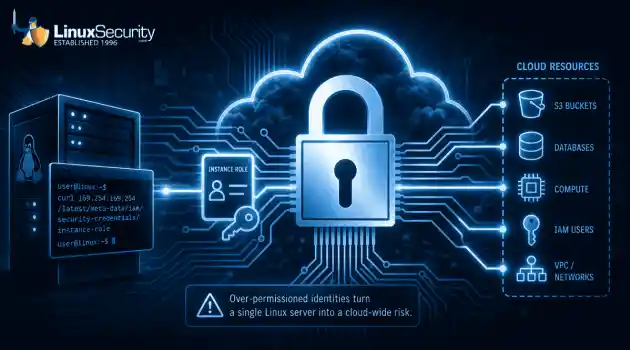
 For years, we secured our Linux infrastructure by building walls: VPCs, security groups, and hardened SSH configurations. We treated the cloud like a virtual data center, assuming that if we kept the "bad guys" out of the network, our workloads were safe. . That model is no longer sufficient. Today, one of the most common paths from an initial compromise to a major cloud breach is the identity assigned to your Linux workload. When an attacker gains code execution on a Linux instance—through a...
 Jul 17, 2026
 security practices patch management
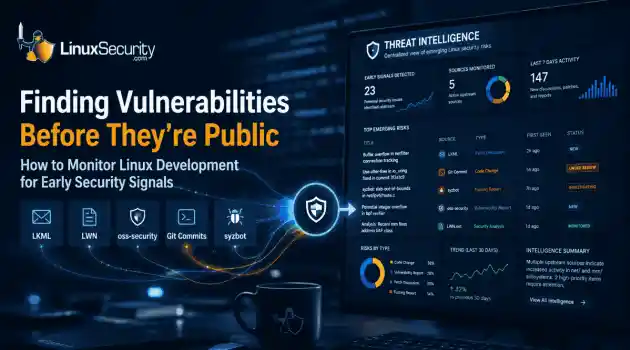
 Most of us don't hear about a kernel vulnerability until a CVE lands in our inbox or the vulnerability scanner starts complaining. By then, the patch isn't new anymore. Kernel developers may have been passing it around for review, arguing over the implementation, or revising it for days before anyone outside that community noticed it. None of those discussions are secret. They're sitting in mailing list archives, Git commits, and patch reviews where they've been the whole time. The strange...
Jul 14, 2026
 Linux security cyber attacks
 Every Linux server in your fleet produces thousands of events every minute. From journald logs and auditd records to kernel-level eBPF hooks, your systems are constantly talking. Most of that noise is just the mundane churn of system services, CI/CD runners, or routine administrative automation. But among that noise, an attacker might be establishing a foothold, moving laterally, or setting up persistence. The challenge for any security team is: how do you separate the routine from the...
Jul 13, 2026
 open-source infrastructure risk
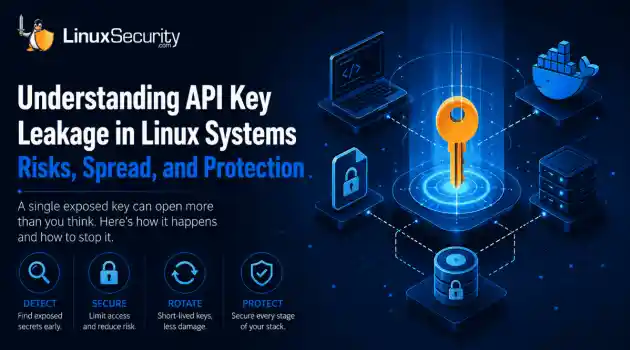
 Security scanners flag exposed API keys in public repositories every day. The initial response is usually predictable: delete the commit, revoke the credential, and move on. That’s a mistake. . In a real Linux environment, an API key never stays in one place. By the time it hits a public repo, it’s already everywhere. It’s in the CI/CD pipeline. It’s in your container registry. It’s in the build logs. It’s in the backups. Git makes this worse because the history never dies. Deleting a file in...
Jul 11, 2026
 open-source rootkit
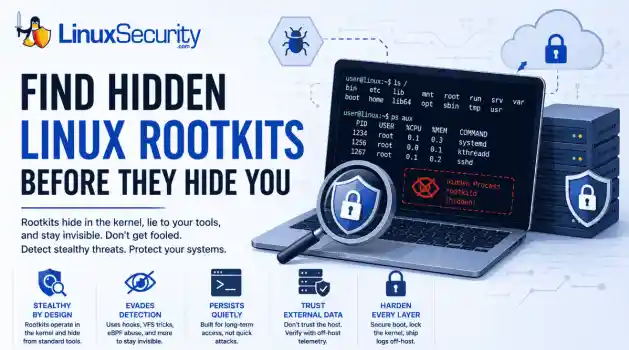
 Most of us think of Linux rootkits as ancient history—the stuff of 90s hacking forums and clunky malware that would crash your system if you looked at it the wrong way. But if you think they’ve gone away, you’re mistaken. They’ve just gotten smarter. . Modern attackers aren't using the noisy tools of the past. Today’s threats are surgical. Many of today’s most advanced Linux rootkits operate at the kernel level or abuse legitimate system features to blend in with normal traffic. They’re...
Jul 09, 2026
 Refine features
X Clear Filters
Get the latest News and Insights
Get the latest Linux and open source security news straight to your inbox.
Community Poll
Should Linux servers automatically install security updates?
Loading...
Explore Latest Linux Security features
We found 12 articles for you...
102
 access controlLinux securitysecurity tools
Seccomp, AppArmor, SELinux: Where Linux Security Controls Fall Short
Most Linux hardening work stays focused on access. Flip on a control, lock things down, move on. Doesn’t mean you’re actually covered. . Think of it more like structural integrity than perimeter defense. We obsess over the front door, locks, badges, and policy layers. Useful, sure. But none of that tells you what happens underneath when something slips past or a core path behaves differently than expected. That’s where things tend to break. Not at the policy level, but in how it’s enforced once the system is under real conditions, real load, real misuse. This piece looks at where those controls fall short in practice, and what those gaps turn into once they’re exposed. Why Access Control Doesn’t Always Mean Protection Let’s start with the basics of access control security. The main idea is simple: restrict what an unprivileged user or process can do. If a program isn't allowed to touch a file, it shouldn't be able to cause harm. Sounds foolproof, right? But in real system security, things slip through the cracks. Misconfigurations, missing rules, and the chaotic nature of production environments create large gaps between the design of a system and how it functions under pressure. What Seccomp, AppArmor, and SELinux Actually Do To understand the gaps, it helps to know what these tools actually bring to the table for Linux security and how they form a Linux access control architecture: Seccomp: Short for "Secure Computing Mode," it limits the system calls a process can make to the underlying kernel. AppArmor: Uses path-based profiles to control exactly which files and programs a process can access. SELinux: Uses labels to enforce strict rules about which processes, users, and files can interact. Each tool is incredibly powerful, but none of them covers everything on their own. Where These Controls Actually Fail When looking at AppArmor vs SELinux, people often debate which tool is superior. The truth is that both have specificlimitations when put into practice. You can find detailed breakdowns of these security control limitations on the Trail of Bits Blog . Correct Configuration Doesn’t Mean Protection A control can be enabled, and the system can still be fully exposed. Most environments fail while everything looks correct. Seccomp Limitations It lacks context: Seccomp filters system calls, but it doesn't understand the full behavior of a program. Narrow scope: If an attacker finds a way to abuse permitted system calls, the barrier fails. AppArmor Limitations Profile accuracy: AppArmor depends entirely on the profile being correct. If a profile is too broad or missing rules, the protection does nothing. Path-based weaknesses: Because it tracks file paths, changes in directories or symbolic links can sometimes allow malicious files to bypass the rules. SELinux Limitations The complexity trap: SELinux is highly detailed, making it notoriously hard to configure. Disabled in practice: Because it is so complex, administrators often turn it off or use permissive mode to keep applications running. Why Container Security Is Still a Problem Many teams rely on built-in access controls for container security. However, these tools were not designed to handle modern microservices out of the box. Containers share the host's kernel and memory. If a single container is compromised, the shared kernel makes it much easier for an attacker to break out. The tools we mentioned don't fully isolate workloads by themselves. To understand how sandbox boundaries can fail, take a look at real-world analyses from Google Project Zero . Kubernetes Security Isn’t Just About Policies Adding a layer of Kubernetes security on top of a Linux host doesn't solve the core problem if the host itself is unpatched or misconfigured. Kubernetes relies on the underlying operating system to enforce constraints. If the host kernel is vulnerable, the policy layers won'tbehave as expected. You can explore the exact technical interactions between Linux security and the orchestrator in the Kubernetes Security Docs . Why Security Settings Break in Real Environments Policy enforcement is never a "set it and forget it" task. As software updates and configurations change: Settings change over time: Rules are written but rarely updated as applications evolve. Teams don't update rules: Protections are sometimes turned off to fix broken applications. Over-reliance on defaults: Teams assume a profile is working simply because it is installed. For real, kernel-level discussions on what breaks and why, take a look at the Openwall Kernel Hardening mailing list. What This Means for Infrastructure Security These tools help restrict behavior, but they don’t define how secure a system actually is. Infrastructure security depends on how the system behaves, not just how it’s configured. In most environments, multiple layers depend on the same underlying system. Containers, Kubernetes workloads, and endpoint protections all rely on the Linux host to enforce rules correctly. If that system isn’t configured properly, those protections don’t work the way people expect. For example, a security profile might block access to certain files or system functions, but still allow enough behavior for an attacker to move through the system. The control is technically enabled, but it isn’t stopping what actually matters. That’s where problems start. Policies can look correct, profiles can be active, and everything can appear locked down, while the system still allows unintended behavior. Looking at configuration alone doesn’t tell you much. What matters is what’s actually enforced, how those controls behave in real use, and where they stop working. Infrastructure security isn’t about setting rules. It’s about knowing whether those rules hold up in practice. Rethinking Cybersecurity Best Practices for Linux Most cybersecuritybest practices focus on enabling controls, but that’s only part of the picture. In real systems, what matters is whether those controls hold up under actual conditions. Linux security tools like seccomp, AppArmor, and SELinux are often treated as checkboxes. Once they’re enabled, teams assume they’re working as intended. In practice, that’s where problems start. Strong system security comes from verifying how protections behave in production, not just trusting the configuration. That means testing policies, reviewing what is actually enforced, and understanding where controls fall short. The difference between a secure environment and a vulnerable one is rarely the presence of controls. It’s whether those controls have been validated. What Actually Matters for System Security Seccomp, AppArmor, SELinux. Useful controls, no argument. But they’re not the posture, they’re just pieces that either hold under pressure or quietly don’t. Most systems don’t fall over because something’s missing. They fail in the gap between what’s configured and what actually gets enforced, which is wider than people think and rarely checked once things “look right.” Assumptions carry a lot of weight here. No one notices until a process escapes a profile, a rule never fires, or a kernel path behaves differently than expected under load. If you want updates on kernel issues, practical breakpoints, and what actually fails in live environments, subscribe to Linux Security’s weekly newsletter . . Explore the gaps in Linux security tools like Seccomp and SELinux under real-world conditions and how they affect system integrity.. Linux Security Frameworks, Seccomp Limitations, AppArmor Configurations, SELinux Strengths, Infrastructure Security Challenges. . MaK Ulac
 May 01, 2026
•
May 01, 2026
•
102
 open source toolssecurity toolsLinux tools
Top Linux Malware Scanners for Detection and System Hardening
In this blog, we will break down the most relevant examples, so you’ll see exactly what kinds of attacks are active today and why scanning tools are necessary to catch them before they cause damage. . What Types of Malware Do Users and System Administrators Face Today? Linux isn’t immune to attacks, which is why a linux malware scanner is important. The number of linux malware families has grown in recent years. Admins deal with trojans, ransomware, worms, botnets, keyloggers, and rootkits. In some cases, zero-day exploits give attackers a way in before patches are available. Cryptojacking This attack mines cryptocurrency with stolen CPU cycles. On Linux, it often runs quietly on servers or cloud instances where usage spikes can go unnoticed. Certain cryptojacking malware goes as far as killing competing processes to maximize resource usage, a tactic that also makes detection harder — unless a linux malware scanner is in place to catch unusual patterns before they spiral. Newer approaches also use browser-based mining techniques, such as WebAssembly, so even client machines can be pulled into the operation. Xbash Xbash was first reported in 2018. Written in Python, it blended ransomware, cryptomining, and botnet features in one package. While it isn’t dominating headlines in 2025, it remains a reference point for how linux malware evolves. Its design showed early on that attackers would merge multiple techniques to maximize impact, a trend that continues in more recent campaigns and underscores why relying on a linux malware scanner is critical for visibility. XorDDoS XorDDoS is still one of the most active linux malware families. It began by brute-forcing SSH on servers, but newer builds don’t stop there. They hit Docker containers and cloud workloads, adapting to whatever environment gives them reach. Campaigns also rely on fallback servers to keep command-and-control alive, even when some nodes are blocked. The result is a botnet that’s harder to shake off and moreflexible than it was a few years ago — making a dependable linux malware scanner one of the few tools that can reliably spot its activity. The takeaway: Linux malware keeps evolving, and it becomes clearer when you look at how secure Linux is . Attackers usually succeed because of misconfigurations, not the OS. Regular linux malware analysis and consistent use of a trusted linux malware scanner are essential to detect issues early and prevent serious damage. Emerging Linux Threats in 2025 Older malware families are still active, but new names are appearing too. In mid-2025, researchers reported Plague, a malicious PAM module that hides inside authentication and gives attackers a quiet, persistent way back in. Around the same time, PXA Stealer showed up — an infostealer aimed at Linux that goes after browser data, saved passwords, and other sensitive information. XorDDoS hasn’t gone away either. What started as brute-force SSH attacks has stretched into Docker containers and cloud systems. Recent campaigns also rely on fallback servers to keep command-and-control alive even if parts of the network are taken down. Taken together, these examples show how linux malware is no longer just about rootkits or cryptominers. It’s moving toward stealthier, data-driven attacks — and catching them early means relying on a trusted linux malware scanner. The pace of rising malware threats to Linux makes a strong linux malware scanner more critical than ever. What If There's Malware? Choosing the Right Linux Malware Scanner If malware is found or suspected, running a linux malware scanner is the first step. The tools below can help audit your system and uncover traces of compromise. Lynis: Beyond a Linux Malware Scanner Lynis is an open-source auditing tool for UNIX-based systems. While not a dedicated linux malware scanner, it runs a deep security scan, testing defenses and pointing out areas for hardening. Many administrators take it a step further by setting Lynis to run automaticallyon a schedule — a process covered in our guide to automating audits with Lynis . The tool reviews system details, installed packages, and configuration issues. It also checks for weak user accounts, wrong file permissions, firewall settings, and other risks. Key uses: Security auditing – thorough checks with clear recommendations. Compliance testing – verifies systems against security standards. System hardening – practical steps to strengthen defenses. Vulnerability detection – highlights weak points that linux malware could exploit. We demonstrated a full example of this process in our article on performing Linux security audits with Lynis , where common findings and fixes are explained. Lynis works methodically, covering everything from accounts to software to firewall rules. Its reports make it a reliable linux malware scanner for administrators who want a clear view of their system’s security. To see what a full audit report looks like in practice, we broke down each stage in our guide to auditing Linux systems with Lynis . How to install via terminal: root@sage:~# dnf install lynis Note: While the basic setup is simple, there are additional audit modes and options worth knowing. Our Lynis Linux security audit tool guide walks through those details for admins who want full control over the process. How to check Lynis Commands: root@sage:~# lynis -h | grep " " This should output: [ Lynis 3.1.5 ] Lynis comes with ABSOLUTELY NO WARRANTY. This is free software, and you are welcome to redistribute it under the terms of the GNU General Public License. See the LICENSE file for details about using this software. 2007-2025, CISOfy - https://cisofy.com/lynis/ Enterprise support available (compliance, plugins, interface and tools) [+] Initializing program Usage: lynis command [options] Command: audit audit system : Perform local security scan audit system remote : Remotesecurity scan audit dockerfile : Analyze Dockerfile show show : Show all commands show version : Show Lynis version show help : Show help update update info : Show update details Options: Alternative system audit modes --forensics : Perform forensics on a running or mounted system --pentest : Non-privileged, show points of interest for pentesting Layout options --no-colors : Don't use colors in output --quiet (-q) : No output --reverse-colors : Optimize color display for light backgrounds --reverse-colours : Optimize colour display for light backgrounds Misc options --debug : Debug logging to screen --no-log : Don't create a log file --profile : Scan the system with the given profile file --view-manpage (--man) : View man page --verbose : Show more details on screen --version (-V) : Display version number and quit --wait : Wait between a set of tests --slow-warning : Threshold for slow test warning in seconds (default 10) Enterprise options --plugindir : Define path of available plugins --upload : Upload data to central node More options available. Run '/usr/bin/lynis show options', or use the man page. Lynis Audit Command: root@sage:~# lynis audit system This should output: [ Lynis 3.1.5 ] ################################################################################ Lynis comes with ABSOLUTELY NO WARRANTY. This is free software, and you are welcome to redistribute it under the terms of the GNU General Public License. See the LICENSE file for details about using this software. 2007-2025,CISOfy - https://cisofy.com/lynis/ Enterprise support available (compliance, plugins, interface and tools) ################################################################################ [+] Initializing program ------------------------------------ - Detecting OS... [ DONE ] - Checking profiles... [ DONE ] --------------------------------------------------- Program version: 3.1.5 Operating system: Linux Operating system name: Fedora Linux Operating system version: 42 Kernel version: 6.16.7 Hardware platform: x86_64 Hostname: sage --------------------------------------------------- Profiles: /etc/lynis/default.prf Log file: /var/log/lynis.log Report file: /var/log/lynis-report.dat Report version: 1.0 Plugin directory: /usr/share/lynis/plugins --------------------------------------------------- Auditor: [Not Specified] Language: en Test category: all Test group: all --------------------------------------------------- - Program update status... [ NO UPDATE ] [+] System tools ------------------------------------ - Scanning available tools... - Checking system binaries... [+] Plugins (phase 1) ------------------------------------ Note: plugins have more extensive tests and may take several minutes to complete - Plugins enabled [ NONE ] [+] Boot and services ------------------------------------ - Service Manager [ systemd ] - Checking UEFI boot [ ENABLED ] - Checking Secure Boot [ DISABLED ] - Checking presence GRUB2 [ FOUND ] - Checking for password protection [ OK ] - Checkrunning services (systemctl) [ DONE ] Running the lynis audit system creates two files: lynis.log and lynis-report.dat. On distributions like Ubuntu and Rocky Linux, some of the commands and paths differ — something we explained in our guide to running a Lynis security audit . The log is a record of each test the audit runs and the outcome it reports. The report is more focused, pulling out the issues it detects, listing possible vulnerabilities, and offering suggestions to harden the system. Below is an example of a lynis-report.dat file: report_version_major=1 report_version_minor=0 report_datetime_start=2025-09-22 19:34:08 auditor=[Not Specified] lynis_version=3.1.5 os=Linux os_name=Fedora Linux os_fullname=Fedora Linux 42 (Adams) os_version=42 linux_version=Fedora os_kernel_version=6.16.7 os_kernel_version_full=6.16.7-200.fc42.x86_64 hostname=sage test_category=all test_group=all plugin_directory=/usr/share/lynis/plugins lynis_update_available=0 binaries_count=4350 binaries_suid_count=/usr/bin/at /usr/bin/atq /usr/bin/atrm /usr/bin/chage /usr/bin/chfn /usr/bin/chsh /usr/bin/crontab /usr/bin/fusermount /usr/bin/fusermount-glusterfs /usr/bin/fusermount3 /usr/bin/gpasswd /usr/bin/grub2-set-bootflag /usr/bin/mount /usr/bin/mount.nfs /usr/bin/mount.nfs4 /usr/bin/newgrp /usr/bin/pam_timestamp_check /usr/bin/passwd /usr/bin/pkexec /usr/bin/sg /usr/bin/staprun /usr/bin/su /usr/bin/sudo /usr/bin/sudoedit /usr/bin/umount /usr/bin/umount.nfs /usr/bin/umount.nfs4 /usr/bin/unix_chkpwd /usr/bin/userhelper /usr/bin/vmware-user /usr/bin/vmware-user-suid-wrapper /usr/sbin/grub2-set-bootflag /usr/sbin/mount.nfs /usr/sbin/mount.nfs4 /usr/sbin/pam_timestamp_check /usr/sbin/umount.nfs /usr/sbin/umount.nfs4 /usr/sbin/unix_chkpwd /usr/sbin/userhelper binaries_sgid_count=/usr/bin/locate /usr/bin/lockdev /usr/bin/plocate /usr/bin/screen/usr/sbin/lockdev binary_paths=/var/lib/snapd/snap/bin,/usr/bin,/usr/sbin,/usr/local/bin,/usr/lib64/ccache vm=2 container=0 systemd=1 plugins_enabled=0 hostid=95d4692a387be7f441ca6e1213a446e9ae6e0bde hostid2=0936e5cd8a0702ef829eaf6c24e715cfb0b335c6a96c0ec19fe69c00c59ecbe5 running_service_tool=systemctl running_service[]=abrt-journal-core running_service[]=abrt-oops running_service[]=abrt-xorg running_service[]=abrtd running_service[]=accounts-daemon running_service[]=alsa-state running_service[]=atd running_service[]=auditd running_service[]=avahi-daemon running_service[]=bluetooth running_service[]=chronyd Chkrootkit Rootkits are hard to detect and often give attackers hidden access to a system. Chkrootkit is a lightweight script that scans binaries for tampered commands and known signatures. It’s still useful, but since it depends on a fixed signature set, it can miss newer or more advanced threats. Some administrators address this gap by pairing Chkrootkit with AIDE, a file integrity monitor that spots unexpected changes in system files. How Does Chkrootkit Protect You from Rootkits? Detection: It scans system binaries for signs of rootkits, checking for tampered commands and known malicious signatures. Simplicity: Chkrootkit’s use of basic commands makes it accessible for beginners, reducing the learning curve typically associated with security tools. This tool is precious for its targeted approach, focusing on one of the most elusive types of malware. Pairing it with integrating AIDE with Chkrootkit extends its coverage to file integrity monitoring as well. How to install via terminal: root@sage:~# dnf install chkrootkit How to check Chkrootkit Commands: root@sage:~# chkrootkit -h Usage: /usr/lib64/chkrootkit-0.58/chkrootkit [options] [test ...] Options: -h show this help and exit -V show version information and exit -l show available tests and exit -d debug -q quiet mode -x expert mode -r dir use dir as the root directory -p dir1:dir2:dirN path for the external commands used by chkrootkit -n skip NFS mount points -T fstype skip mount points of the supplied file system type Chkrootkit Running: root@sage:~# chkrootkit ROOTDIR is `/' Checking `amd'... not tested Checking `basename'... not infected Checking `biff'... not found Checking `chfn'... not infected Checking `crond'... not infected ... Chkrootkit with Grep: root@sage:~# chkrootkit | grep -E "INFECTED|not infected|not tested|nothing found|Vulnerable" ROOTDIR is `/' Checking `amd'... not tested Checking `basename'... not infected Checking `biff'... not found Checking `chfn'... not infected Checking `crond'... not infected ... These are the messages Chkrootkit prints during its tests: INFECTED – the command was likely modified by a known rootkit. not infected – no known rootkit signature was found. not tested – the test wasn’t run, often because the command isn’t available. nothing found – the command to be checked doesn’t exist on the system. Vulnerable but disabled – the command is infected but not active (not running or disabled in inetd.conf ). Chkrootkit in Expert mode: root@sage:~# chkrootkit -x Searching for suspicious strings in binaries... /usr/bin/awk: not infected /usr/bin/ls: not infected /usr/sbin/sshd: not infected ... Chkrootkit in Expert mode with Grep: root@sage:~# chkrootkit -x | egrep '^/' /usr/bin/awk: not infected /usr/bin/ls: not infected /usr/sbin/sshd: not infected ... The parameters in chkrootkit -x | egrep '^/' run Chkrootkit in expert mode. This tells it to include pathname strings in system commands, which can reveal suspicious patterns in the binaries. Since Chkrootkit relies on a fixed signature set, this option gives it a bit more reach. Rootkits are still a real problem. They letattackers hide access through weak spots or misconfigurations, making effective Linux rootkit detection and prevention critical for long-term security. Chkrootkit isn’t perfect, but used with a linux malware scanner, it can flag signs of compromise and point you toward cleanup. Linux Malware Detect (LMD): A Dedicated Linux Malware Scanner Linux Malware Detect is a free, open-source linux malware scanner. It pulls in threat data from intrusion detection systems and uses that to build signatures, so it’s aimed at catching malware that’s actually active in the wild. Why consider LMD? Active monitoring –the signatures are updated often, so this linux malware scanner doesn’t fall behind on new threats. Broad coverage – it can scan for many kinds of linux malware, which makes it useful as a general tool. For admins who want something simple but effective, LMD is a solid option. It keeps up with the threat landscape without adding much overhead. How to install via terminal: root@sage:~# wget http://www.rfxn.com/downloads/maldetect-current.tar.gz HSTS in effect for www.rfxn.com:80 Saving 'maldetect-current.tar.gz' HTTP response 200 [https://www.rfxn.com/downloads/maldetect-current.tar.gz] maldetect-current.ta 100% [=========================================================> ] 1.58M --.-KB/s [Files: 1 Bytes: 1.58M [6.65MB/s] Redirects: 0 Todo: 0 E] Linux Malware Detect has to be downloaded from the R-fx Networks – Linux Software & Blog website. We use the command wget rfxn to get the download and save it in our current working directory. How to extract the download (LMD): root@sage:~# tar -zxvf maldetect-current.tar.gz maldetect-1.6.6/ maldetect-1.6.6/files/ maldetect-1.6.6/install.sh maldetect-1.6.6/README maldetect-1.6.6/LICENSE maldetect-1.6.6/CHANGELOG maldetect-1.6.6/conf.maldet ... root@sage:~# cd maldetect-1.6.6 We use the tar -zxvf maldetect-current.tar.gz command to extract the tar file.After extraction, you’ll see a new folder, usually named maldetect-1.6.6. After extraction, you’ll see a new folder, usually named something like maldetect-1.6.6 (the current release as of 2025). The version number may be different if a newer release is available, so adjust the command to match what you see with cd maldetect-1.6.6. Run the Install Script: root@sage:~/maldetect-1.6.6# ./install.sh ./install.sh sh /path/to/install.sh Doing this should output: Created symlink '/etc/systemd/system/multi-user.target.wants/maldet.service' → '/usr/lib/systemd/system/maldet.service'. Linux Malware Detect v1.6.6 (C) 2002-2023, R-fx Networks ; (C) 2023, Ryan MacDonald ; This program may be freely redistributed under the terms of the GNU GPL installation completed to /usr/local/maldetect config file: /usr/local/maldetect/conf.maldet exec file: /usr/local/maldetect/maldet exec link: /usr/local/sbin/maldet exec link: /usr/local/sbin/lmd cron.daily: /etc/cron.daily/maldet maldet(1533069): {sigup} performing signature update check... maldet(1533069): {sigup} local signature set is version 20250225482944 maldet(1533069): {sigup} new signature set 202509223097979 available maldet(1533069): {sigup} downloading https://cdn.rfxn.com/downloads/maldet-sigpack.tgz maldet(1533069): {sigup} downloading https://cdn.rfxn.com/downloads/maldet-cleanv2.tgz maldet(1533069): {sigup} verified md5sum of maldet-sigpack.tgz maldet(1533069): {sigup} unpacked and installed maldet-sigpack.tgz maldet(1533069): {sigup} verified md5sum of maldet-clean.tgz maldet(1533069): {sigup} unpacked and installed maldet-clean.tgz maldet(1533069): {sigup} signature set update completed maldet(1533069): {sigup} 17638 signatures (14801 MD5 | 2054 HEX | 783 YARA | 0 USER) After installation, let’s edit the configuration file: root@sage:~# vi /usr/local/maldetect/conf.maldet Using the vi /usr/local/maldetect/conf.maldet command, we can update the configuration file of maldet toedit some settings. Email Alerts: email_alert="1" email_addr="
Sep 24, 2025
•

102
data analysisLinux administrationsecurity toolsClatScope: Powerful OSINT Integration for Linux Administrators
Cyber threats never clock out, and neither do the challenges of staying ahead. . For me, OSINT isn't just about gathering data —it's about cutting through the noise to find what truly matters. Searching various sources, dealing with different platforms, and manually cross-referencing information is time-consuming and inefficient. So, I'm constantly on the lookout for tools that simplify the process and put actionable intelligence front and center. ClatScope is one of these. It is a powerful OSINT research tool that efficiently processes large volumes of unstructured data, transforming it into a streamlined and well-organized workflow. Let us explain how ClatScope is changing OSINT and why every security professional needs to have it. Challenges of Traditional OSINT Research Traditional Open Source Intelligence (OSINT) research can present numerous unique challenges. The sheer volume of online data available can be daunting; with new information being created alarmingly rapidly, finding relevant and reliable information may seem impossible. Compounding this issue further is its ever-increasing pace; keeping up with it all becomes impossible while remaining accurate over time. The accuracy and reliability of online sources are also often a top concern. The internet provides both credible and dubious sources, so researchers need to develop skills for distinguishing credible data from disinformation, propaganda, or deliberately deceptive content. Verifying data's authenticity often involves gathering information from multiple independent sources - which may take considerable time and energy. Security researchers like Dancho Danchev have spent years analyzing how OSINT can be used effectively to separate reliable intelligence from misinformation. How ClatScope Simplifies OSINT Research Before ClatScope, keeping track of data from various services like Shodan and HaveIBeenPwned meant handling numerous websites separately. You would have to open several tabs, log in to eachservice, and then pull it out by hand to get the information you need. It was time-consuming, and scripts or custom tools were often needed to make it all work. For a Linux administrator who was short on time, having to go back and forth to make sure nothing got missed was a pain. This is where it revolutionizes the process. ClatScope is a game-changer because it unites all those services through APIs . No more hopping between sites; you can do everything in one interface. With this tool, it's as easy to obtain the data you need as it is to set up some API keys. Then, you have one place to extract, process, and visualize your data. Easy and a massive time-saver. You don’t need to write complex scripts or handle unnecessary complications. The tool provides simple, easy-to-follow documentation to walk you through incorporating API keys, and before you know it, you’re pulling in data from all manner of sources with ease. It streamlines the whole process, enabling you to focus on what’s important—interpreting and acting on the data itself. In short, ClatScope makes what used to be a headache a simple, streamlined process. Give it a try, and see how much simpler your workflow can be. ClatScope Tool Features ClatScope is a comprehensive OSINT (Open-Source Intelligence) tool designed for retrieving geolocation, DNS, WHOIS data, phone and email information, data breaches , and more. It now includes 60 powerful OSINT features, making it a versatile tool perfect for investigators, pentesters, or anyone conducting reconnaissance activities. Here are some standout features of it: IP Address Lookups : Retrieves IP geolocation details, ISP, and region. Performs DNSBL checks to see if an IP is blacklisted. Phone Number Lookups : Fetches basic phone number details, such as region and carrier, and conducts reverse phone lookups via the Perplexity API. Email Lookups and Analysis : Checks email validity existence of mail exchanger (MX) records, performs data breach checks against Have IBeen Pwned (HIBP), and analyzes raw email headers. Username Searches : Searches across multiple platforms like Facebook, Twitter, Instagram, etc., to see if a username exists. Domain/Website Lookups : Conducts DNS record queries, WHOIS details retrieval, SSL certificate analysis, and more. Hudson Rock Lookups : Checks if an infostealer has compromised an email, username, or IP. Fact Check & Relationship Search : Verifies data accuracy and maps connections between individuals and entities. Travel Risk Analysis : Evaluates potential security risks based on 40 parameters Additional Features: Password strength checking, reverse DNS lookups, person name searches, settings menu for color scheme customization, and more. Simplicity and Efficiency Linux administrators understand the value of simplicity without compromising functionality, which it excels in doing. Its easy interface enables swift navigation through its various features, while its central role as an OSINT hub enables seamless information gathering using API integrations. API Integrations and Their OSINT Contributions When you're working with a lot of data, using ClatScope's APIs can make all the difference. You might want to connect to services that can get the data, work with it, and show it without you having to do all the hard work. The documentation is good, so even someone who has never used APIs before can get it up and running quickly. ClatScope API Integrations for OSINT Shodan : Allows the search and analysis of internet-connected devices, unveiling potential vulnerabilities and exposed services. HaveIBeenPwned (HIBP) : Checks for compromised email accounts and usernames in data breaches, detailing the nature of each breach. VirusTotal : Offers malware scanning for files and URLs, with comprehensive reports on detected threats. Censys : Provides insights into network and system exposure by delivering detailed security and configuration analyses. Hunter.io :Identifies email addresses linked to specific domains, including source and authority information. BinaryEdge : Conducts extensive data collection on exposed devices globally, identifying potential cyber threats. Pulsedive : Delivers threat intelligence by aggregating data from diverse sources to provide in-depth threat context and analysis. Hudson Rock : Identifies email, username, domain, and IP infections linked to infostealers. Botometer : Evaluates Twitter/X accounts for automated bot activity. ClatScope brings together diverse OSINT data sources, making it easier for Linux admins to conduct thorough investigations, identify potential risks, and ensure better network security. Setting Up API Keys First, gather an API key from the service you intend to connect to. Shodan or HaveIBeenPwned will issue you one after registering with them, with ClatScope providing instructions for plugging it into their tool. Benefits of API Integration With the help of these APIs, ClatScope facilitates the scanning of vulnerable devices, the detection of compromised accounts, and the proper visualization of data. It conserves time and effort by encompassing all these activities under the umbrella of one solution. Ease of Use and Data Aggregation The greatest advantage of this approach is its ease of use. There is no need for difficult coding: simply follow the steps outlined in the documentation and insert your API key when prompted. This will not only save you time but also allow you to explore data more deeply without the usual drawbacks inherent in its procurement and processing. It excels at data aggregation from multiple sources, giving an overall picture of what information you're investigating. From email breaches and social media activity to IP address details or IP address location details, ClatScope gathers this information in an organized, digestible manner. This makes analysis accessible for ethical hackers and pentesters who require extensive reconnaissance work. ClatScope Is Great for Novices and Experts One of ClatScope's greatest strengths lies in its ability to benefit both beginners and experts alike. For beginners looking to get involved with pentesting or OSINT, it provides an accessible setup process and clear documentation, helping lower the entry barrier into this field while providing ample guidance that makes complex tasks manageable. It also provides depth and flexibility to advanced users such as ethical hackers and security advocates, offering depth in its analyses while being easy to integrate into various data sources and tailor to complex investigations effectively. Steps for getting started with ClatScope include the following: Install ClatScope : Download and install it from its GitHub repository . Installation procedures should be similar to those of other Linux apps and should be well-documented on GitHub's page. Set Up API Keys : Once configured, API keys for each service you plan to integrate are guided through this step by the tool so you can easily connect with data sources that meet your criteria. Starting Your Investigation : To start your investigation efficiently, ClatScope features an intuitive GUI. Simply input all necessary parameters, select data sources, and let it gather and analyze all collected information - leaving an organized format suitable for further analysis or reporting purposes. Subscription Program ClatScope's Subscription Program offers ongoing support and updates that include technical assistance, exclusive features, and security patches, ensuring ClatScope remains an effective OSINT tool in your arsenal . Subscribers gain access to premium features, enhanced customer support, and regular software upgrades that keep the tool aligned with cyber threats that change quickly over time. Engaging with the ClatScope community offers numerous ways to learn and develop while contributing significantly to its advancement. Start by joining official forums or websites such as Reddit orStack Overflow, where you can join discussions, exchange knowledge, and provide solutions (or request them). Attending meetups, webinars, and online hackathons via social media and mailing lists is likewise beneficial. Creating tutorials or guides and contributing to shared knowledge repositories are highly appreciated as a way to expand documentation. ClatScope also offers a subscription service for users who prefer not to configure API keys manually. Subscribers receive a pre-configured version of ClatScope with API keys included, eliminating the need to set up third-party integrations. This version ensures full functionality, with built-in security measures to prevent unauthorized access. Subscription tiers provide different levels of API access, and new keys are issued monthly. Other than documentation, ClatScope community members can contribute by suggesting new features to make the tool more functional and user-friendly, translating its application and documentation for wider release, or reporting bugs with detailed descriptions so as to assist in fixing problems. ClatScope: The Future and Its Lasting Impact The tool is still in development , with constant improvements being made to make it even more efficient. Trend analysis with machine learning , more extensive API support, and automated report generation are some of the features being considered to improve its functionality. These will continue to make intelligence gathering easier, saving security experts time and effort. ClatScope is a super-effective and user-friendly OSINT tool that simplifies data collection and analysis through an intuitive interface, seamless API integration, and comprehensive data aggregation. Whether you're a Linux administrator, open-source security professional, pentester, or ethical hacker, it provides the tools you need for efficient and detailed intelligence gathering, making it a valuable asset. Thanks so much to Joshua Clatney for his help and review of this article! . Explore howClatScope revolutionizes OSINT for Linux admins, streamlining data collection and analysis.. cyber, threats, never, clock, neither, challenges, staying, ahead, osint, isn'. . MaK Ulac
Feb 18, 2025
•
102
 security toolslinux securityattack simulation
Advanced Breach And Attack Simulation Tools For Linux Security Strategies
Cybersecurity threats are becoming more imminent daily in today's fast-paced digital landscape. In 2023, there were 2365 cybersecurity attacks, an increase of 72% from 2021. These attacks are also becoming more sophisticated daily, making traditional security measures inadequate. . Companies must resort to more advanced security methods to prevent the loss of sensitive data and operational disruption due to security threats. In this article, we’ll explore how you can use Breach and Attack simulations (BAS), a cutting-edge cybersecurity technique, to protect your organization from cybersecurity threats. What Is Breach and Attack Simulation (BAS)? Breach and attack simulation, abbreviated as BAS, is a modern-day cybersecurity mechanism replicating real-world attackers' behavior. It's rapidly gaining popularity, with a market value projected to reach $3.5 million by 2032 with a CAGR of 22.1%. BAS technology allows you to simulate controlled cyberattacks to assess how ready your company’s security posture is against a real cyberattack. It copies real-world cybercriminals' tactics and helps point out your organization’s strengths, weaknesses, and areas for improvement when faced with cyberattacks. Why Is BAS Critical in Linux and Open-Source Ecosystems? BAS is critical for robust cybersecurity in Linux and open-source environments for the following reasons: Identifying Threats Proactively BAS allows you to stay one step ahead of cyber criminals by letting you identify potential vulnerabilities in your company’s security framework beforehand. These simulations are based on vast data on emerging threats and can implement various scenarios in your company. That way, your organization can mitigate the risk of costly data breaches, regulatory fines, and reputation damage before it even happens. It also facilitates a culture of constantly improving your security system, a need of the current dynamic cybersecurity world. Your security and IT team can conduct simulationsregularly and incorporate lessons learned in each iteration to identify repetitive issues in your system over time. With this iterative approach, you can build a strong security posture over time. Realistic Threat Scenarios Another significant advantage of BAS is that you can analyze your organization’s security posture. Unlike traditional tests of system vulnerability, which apply across the entire system, BAS has a more holistic approach to evaluating system security by launching a controlled attack on a specific aspect of your security infrastructure. You can use hacker TTPs, tactics, and procedures to identify blindspots you might not see unless an actual attack happens. Resource Allocation A holistic and iterative approach to improving your company’s security footprint means your budget is allocated more efficiently. With BAS, you can reallocate limited resources to address critical security issues. This will let you eliminate threats on a priority basis and significantly reduce the probability of an imminent damaging attack. What Are the Top Open-Source Breach and Attack Simulation Tools for Linux? BAS is a vital strategy in cybersecurity , and different tools facilitate BAS simulations. Here are some of our favorite open-source tools: Metasploit Framework The Metasploit framework is one of the most popular and powerful open-source tools for penetration testing and security validation. It provides a comprehensive suite of tools to stimulate real-world attacks and assess the security posture of systems and networks. In Metasploit, you have a vast repository of publicly available exploits for Linus and customizable payloads that can be delivered to exploited systems to perform various tasks, such as establishing remote access. It also has some auxiliary modules that perform scanning, fuzzing, and other types of testing without exploiting vulnerabilities. Post-exploitation modules are available for gathering information, escalating privileges, and maintainingaccess. Metasploit also allows for the automation of tasks using scripts. It is commonly used to scan for known vulnerabilities in Linux systems and stimulate attacks by exploiting known vulnerabilities to test the effectiveness of security controls. To stimulate attacks with Metasploit, install it on a Linux system and launch it. Use auxiliary modules to scan for vulnerabilities. After you search for, figure out, and launch exploits, use the meterpreter payload to perform post-exploitation tasks. Infection Monkey Infection Monkey is an open-source BAS tool developed by Guardicore. It stimulates various attack techniques to test the resiliency of data centers and cloud environments against cyber attacks. It also helps organizations identify vulnerabilities, misconfigurations, and weaknesses in their security posture. Its key features include attack simulation by lateral movement, which stimulates how an attacker can move within the network after gaining initial access. Similarly, it also tests the network’s susceptibility to credential theft attacks. Infection Monkey is also helpful in testing compliance with CIS benchmarks to ensure systems are configured securely. It identifies common misconfigurations that attackers could exploit. It allows customization of attack vectors to match specific threat models and organizational needs, and users can define custom payloads for more specific attack simulators. To deploy Infection Monkey in Linux, verify that your environment meets the system requirements for running Monkey Island and Monkey agents. You can clone the software from its repository on GitHub and install the necessary dependencies to set it up. You can access the interface through a web browser and follow the on-screen instructions to complete the initial setup and configuration. Then, you can define attack scenarios and start your simulation. CALDERA CALDERA is an open-source platform developed by MITRE to automate adversary emulation, red teaming, and securityassessment. It runs on the MITRE ATT&CK framework to simulate realistic attack scenarios, helping organizations understand their security posture and improve their defenses. Its key features include modularity through easily extendable plugins, flexibility, automation, and central management through its server interface. CALDERA utilizes the MITRE ATT&CK framework, a knowledge base of adversary tactics and techniques based on real-world observations. CALDERA maps its actions to ATT&CK techniques to create custom attack scenarios that reflect specific adversaries or threat models relevant to the organization. This allows you to gain insights into potential attack paths and vulnerabilities, focus on the most critical vulnerabilities and misconfigurations, and improve your defenses based on the simulation results. To run CALDERA, you will need Python, 3.6+, Git, and Docker on your system. Then, clone the CALDERA repository from GitHub and create and activate a virtual environment. Once you install the necessary dependencies, start the CALDERA server and access its web interface on a web browser. You can use the web interface to generate an agent for your target Linux machines, transfer it, and execute it. CALDERA can also create attack scenarios using ATT&CK techniques. How Can I Set Up and Run Simulations? Implementing breach and attack simulations in your company includes, but is not limited to, defining clear objectives, threat intelligence, and simulation tool selection, especially if your company has a Linux-based system. The first step to implementing BAS, or any advanced security framework in Linux, is to define the program's scope. This lets you determine whether your simulations will target Linux-specific attacks like malware or insider threats or run a comprehensive broad-spectrum attack scenario irrespective of the operating system. Once you’ve defined what purpose you want BAS to serve, you can select whether you want network-based, endpoint-based, or hybrid simulations. This choicewill also depend on your system requirements. Once you’ve chosen the appropriate BAS framework, you’ll have to test run several simulations and iterate to determine the more optimized testing for your system. You can use already-designed compatible simulation tools like Metasploit, OpenVAS , etc., to improve your system’s adaptability to BAS. Best Practices for Linux Security Validation Here are some practical tips for Linux Security Validation admins should implement: Frameworks and Methodologies for Structuring BAS Exercises BAS exercises continuously assess and improve an organization’s security by stimulating a real-world cyberattack scenario. One common BAS framework is the MITRE ATT&CK framework, which is helpful in mapping exercises to cover a wide range of tactics and identifying gaps in your current detection capabilities. Similarly, the NIST ( National Institute of Standards and Technology Cybersecurity Framework (CSF) is used for BAS exercises and has five primary functions: identifying crucial vulnerabilities, protecting assets by implementing controls, detecting cybersecurity events, responding to an incident, and recovering to ensure business continuity. Strategies for Effective Vulnerability Management Effective vulnerability management involves identifying, assessing, and systemically mitigating vulnerabilities. One common strategy is patch management, in which you must develop a comprehensive policy that prioritizes patches based on the severity of vulnerabilities. You can configure management tools like Ansible, Puppet, and Chef to automate this process and reduce human errors. You should also have a framework to prioritize vulnerabilities. One such framework leverages the Common Vulnerability Scoring System (CVSS) scores. When prioritizing remediation efforts, consider how critical your affected assets are. Continual Optimization for Threat Model Validation in Linux Systems You must regularly review and update your threat models for continuousoptimization. Ideally, you should update your models once every three months. Ensure the threat model contains all components and integrations and involves key stakeholders from development, operations, and security teams in the review process. You can use automated threat modeling tools like Pytm to automatically create and update threat models and integrate them into your DevSecOps pipeline. These tools help scale your threat modeling efforts in complex environments. Similarly, red team exercises where you stimulate sophisticated attacks are also crucial for threat model validation. Case Studies and Real-world Applications BAS can be successfully implemented on Linux platforms. Let’s take the case of a financial institution using Infection Monkey to improve the security of its Linux-based servers. It deployed Infection Monkey across the institution's data centers and stimulated lateral movement, credential theft, and privilege escalation scenarios. As a result, the institution identified several vulnerabilities, such as outdated software and weak passcodes. We can also take the example of a Tech Startup utilizing Metasploit for proactive security testing to analyze the improvement of security postures through open-source BAS tools. They used the Metasploit framework to test their Linux servers' security, including SQL injection, cross-site scripting (XSS), and remote code execution attacks. These simulations helped them discover critical vulnerabilities early in the development cycle, reducing the risk of exploitation in production. BAS can also mitigate ongoing security challenges. As cyber-]attacks evolve, attackers develop new techniques to bypass existing security measures. But BAS tools like CALDERA keep up with the latest attack techniques, ensuring simulations are relevant and up-to-date. They provide a realistic view of the current security measures. For example, a healthcare security provider that regularly updates CALDERA scenarios to include the latest ransomwaretechniques helps the provider stay ahead of emerging threats, significantly reducing the risk of successful attacks. Our Final Thoughts on the Importance of Comprehensive Security Validation & Attack Simulation Companies need to find ways to defend themselves from constantly changing dangers. Breach and attack simulations are one such tool. They allow you to evaluate and escalate cyber security measures by copying digital attack conditions similar to real-world hacks. Give some of these threat protection strategies and tools a try to secure your Linux systems and protect your critical data against Linux security vulnerabilities and attacks. . Investigate sophisticated breach and attack simulation methodologies to fortify defenses against changing vulnerabilities in Unix-based systems.. Breach And Attack Simulation, Linux Security Tools, Attack Simulation Techniques, Open Source Security, Cybersecurity Tools. . Brittany Day
Jul 27, 2024
•
102
 Linux securitymalwaresecurity tools
History And Security Strategies For Linux Malware Threats
Linux is an open-source operating system that has been popular among developers and IT professionals for its stability and security . However, over the years, Linux has faced its fair share of security threats in the form of malware. In this article, we will discuss the history of malware on Linux and what measures are being taken to stop it. . The first known instance of malware on Linux was in 1999, when a worm named “Ramen” spread rapidly through the Internet. Ramen exploited vulnerabilities in Linux systems, causing significant damage to infected machines. This was a wake-up call for the Linux community, which had previously considered the platform to be immune to malware. In the years that followed, Linux faced numerous malware attacks, including viruses, Trojans, and spyware. The most notable of these was the “Slammer” worm, which caused widespread damage to the Internet in 2003. Slammer targeted a vulnerability in Microsoft SQL Server and was able to infect Linux systems that were running the software. Despite the increasing threat of malware, the Linux community continued to develop and improve the security of the platform. In 2005, the Linux Kernel Security Project was launched to focus on the development of secure kernel-level code. This was followed by the launch of the Linux Malware Detect project, which aimed to provide a fast and efficient way to detect malware on Linux systems. In recent years, the threat of malware on Linux has become more sophisticated, with attackers leveraging advanced techniques such as fileless malware and weaponized documents to compromise systems. To counteract these threats, the Linux community has continued to develop new security technologies and techniques. For example, the introduction of containers and virtualization technologies has helped to isolate systems and reduce the attack surface of Linux systems. Top Six Malware Threats Affecting Linux Servers Linux servers, although less vulnerable than Windows servers, are not immune to malwarethreats. In this article, we will discuss the top six malware threats that affect Linux servers. SSH Brute Force Attacks These attacks target the Secure Shell (SSH) protocol, a protocol used for remote login to a server. The attacker repeatedly tries to guess the login credentials through automated processes until they succeed. To protect against these attacks, it is recommended to implement strong passwords, limit login attempts, and use key-based authentication. Rootkit A rootkit is a type of malware that gives attackers unauthorized access to a server by hiding their presence and activity. This makes it difficult to detect and remove rootkits, as they often modify system files and alter the behavior of security tools. Regular system scans and updates, as well as using a host-based intrusion detection system, can help mitigate the risk of a rootkit attack. Cryptojacking Cryptojacking is a type of attack where the attacker hijacks the server's resources to mine cryptocurrency. This type of attack can slow down the server and consume large amounts of resources, potentially causing performance issues. Implementing software that blocks known malicious domains and IP addresses, as well as regularly updating the system, can help prevent cryptojacking attacks. Backdoors Backdoors are a type of malware that allows an attacker to bypass normal authentication procedures and gain unauthorized access to a server. Backdoors can be installed through various means, including exploiting vulnerabilities, phishing attacks, or through malicious software downloads. Regular system scans and updates, as well as monitoring network traffic, can help detect and prevent backdoor attacks. Botnets Botnets are a network of infected computers that can be controlled remotely by an attacker. They are often used to launch distributed denial-of-service (DDoS) attacks or send spam. Botnets can infect Linux servers through vulnerabilities, phishing attacks, or through malicious software downloads. Regular system updates andscans, as well as monitoring network traffic, can help prevent botnet attacks. Web Shells A web shell is a type of malware that allows an attacker to remotely execute commands on a server through a web interface. They are often used to carry out malicious activities, such as data theft or DDoS attacks. Web shells can be installed through various means, including exploiting vulnerabilities, phishing attacks, or through malicious software downloads. Regular system scans and updates, as well as monitoring network traffic, can help detect and prevent web shell attacks. Linux servers are not immune to malware threats, and it is important to take steps to protect against these attacks. Implementing strong passwords, limiting login attempts, using key-based authentication, regularly updating the system, and monitoring network traffic are some of the ways to protect against these threats. It is important to be vigilant and stay informed of the latest threats, as the cybersecurity landscape is constantly evolving. Open Source Proactive Approach to Security The Linux community has also adopted a proactive approach to security , with the development of secure coding practices and regular security audits of the Linux codebase. In addition, the Linux Foundation hosts a range of security projects and initiatives aimed at improving the security of Linux systems. To further enhance the security of Linux systems, the community has developed a range of security tools and utilities. These include firewalls, intrusion detection systems, and antivirus software. These tools are designed to detect and prevent malware infections, and to help administrators respond quickly to security incidents. One of the key strategies for stopping malware on Linux is to educate users about the importance of security. The Linux community has been working hard to raise awareness of the threat of malware and to provide users with the information and tools they need to keep their systems secure. This has included the development ofonline resources, such as security blogs and forums, and the creation of security training programs for users and administrators. Is Linux More Susceptible to Malware Attacks Than Other Operating Systems? Linux has historically been considered more secure than other operating systems , such as Windows, due to its open-source architecture, which allows for a more transparent development process and easier identification of vulnerabilities. Additionally, the Linux community has a strong focus on security and promptly addresses vulnerabilities when they are discovered. However, the popularity of Linux-based systems, such as Android, has increased the attack surface and made Linux a more attractive target for malware authors. Additionally, as with any operating system, Linux is only as secure as the practices and configuration of the individual users and organizations running it. Overall, while Linux is less susceptible to malware attacks than other operating systems, it is still important to follow best practices for security and regularly update software to minimize the risk of an attack. What Can Be Done to Stop Malware Attacks on Linux? To stop malware attacks on Linux, the following steps can be taken: Keep software up-to-date : Regularly update the operating system and installed applications to fix vulnerabilities and prevent exploits. You can use tools such as apt-get or dnf on Debian and Red Hat based systems, respectively. Use strong passwords: Implement strong password policies and use unique, complex passwords to prevent brute-force attacks. You can use tools such as pam_cracklib to enforce strong password policies. Use anti-malware software: Install and run anti-malware software that can detect and remove malware. Examples of anti-malware software for Linux include ClamAV, Sophos Antivirus, and Malwarebytes. Enable firewalls: Enable the built-in firewall or install a third-party firewall to block unauthorized network access and prevent malwarefrom spreading. Examples of firewalls for Linux include ufw, iptables, and firewalld. Practice safe browsing: Be cautious when downloading and installing software and avoid clicking on suspicious links or attachments. You can use browser extensions , such as uBlock Origin or NoScript, to block unwanted scripts and advertisements that could be malicious. Limit user privileges: Limit the privileges of users and run applications as a non-privileged user whenever possible. You can use tools such as sudo or su to run applications as a non-privileged user. Use a sandbox: Run applications in a sandbox environment to contain any potential malware and prevent it from affecting the rest of the system. You can use tools such as Firejail or AppArmor to create a sandbox environment for applications. Regular backups: Regularly backup important data to prevent data loss in case of an attack. You can use tools such as rsync or duplicity to perform backups. These methods, along with the specific tools and applications mentioned, can help to reduce the risk of malware attacks on Linux systems. However, it's important to stay vigilant and continuously update security measures as new threats emerge. Technologies Currently Under Development to Stop Malware Attacks on Linux There are several technologies currently under development to stop malware attacks on Linux, including: Machine learning Machine learning algorithms are being developed to detect and prevent malware attacks in real-time, by analyzing patterns of behavior and identifying suspicious activity. Applications: ClamAV: An open-source antivirus engine that uses machine learning to detect malware. OSSEC: A host-based intrusion detection system that uses machine learning to detect threats. Containerization Containerization technologies, such as Docker and Kubernetes, are being used to isolate applications and prevent malware from spreading across the system. Applications: Docker: Apopular open-source platform for building, shipping, and running distributed applications in containers. Kubernetes: An open-source platform for automating deployment, scaling, and management of containerized applications. Sandboxing Sandboxing technologies allow applications to run in a confined environment, limiting the ability of malware to access the underlying system and reducing the risk of infection. Applications: Firejail: A lightweight sandboxing tool for Linux that can be used to run applications in a confined environment. AppArmor: A Linux security module that provides fine-grained control over application behavior and can be used to enforce sandboxing. Virtualization Virtualization technologies, such as virtual machines, are being used to create isolated, secure environments for running applications, reducing the risk of malware infections. Applications: KVM: A full virtualization solution for Linux that can be used to create isolated virtual machines. VirtualBox: An open-source virtualization platform that can run multiple operating systems on a single physical machine. Endpoint protection Endpoint protection solutions are being developed to provide comprehensive security for devices running Linux, including anti-malware, firewall, and intrusion detection and prevention. Applications: ClamAV: An open-source antivirus engine that provides endpoint protection for Linux devices. AIDE: A file and directory integrity checker that can detect changes to the file system and alert administrators to potential malware infections. File-integrity monitoring File-integrity monitoring tools are being developed to detect changes to the file system, alerting administrators to potential malware infections and helping to prevent data loss. Applications: Tripwire: An open-source file-integrity monitoring tool that can detect changes to the file system and alert administrators to potential malware infections. OSSEC: A host-basedintrusion detection system that provides file-integrity monitoring and can detect changes to the file system. Patch management Automated patch management solutions are being developed to make it easier to keep systems up-to-date and secure against known vulnerabilities. Applications including yum, dnf and apt-get provide a convenient and automated way to manage software updates and security patches on Linux systems, reducing the time and effort required to keep systems secure and up-to-date. They help to stop malware attacks by ensuring that known vulnerabilities are patched, making it more difficult for attackers to exploit those vulnerabilities and gain access to systems. These technologies are aimed at improving the security of Linux systems and reducing the risk of malware attacks, while also making it easier to manage security and ensure that systems remain protected over time. Our Thoughts In conclusion, the history of malware on Linux has been a story of evolution, as the Linux community has adapted to changing security threats and improved the security of the platform. Today, Linux is considered to be one of the most secure operating systems available, and the Linux community continues to work hard to keep it that way. Whether it’s through the development of new security technologies, the adoption of secure coding practices, or the education of users, the Linux community is committed to protecting Linux systems from the threat of malware. . Explore the evolution of Linux-related malware, its ramifications, and the continuous initiatives by the community to address and mitigate security vulnerabilities effectively.. Linux Malware, Malware Detection, Open Source Security, Cyber Threats, System Security. . Dave Wreski
Feb 06, 2023
•
102
network securitymalwarerootkitMalware Detection and Network Security Tips for Linux Users
The best and most secure Operating System (OS) by design is Linux. Most devices, including Android OS, mobile operating systems, Chromebooks, and tablets, use Linux as a baseline. Unfortunately, Linux has become a target for viruses and malware despite general beliefs that the OS is immune to such data and network security threats. No OS is capable of completely removing online risks. . We must recognize that Linux, though safer than other servers, can still fall victim to attacks in network security. Therefore, users must take precautions and integrate robust cybersecurity projects to protect businesses. Beforehand, however, you need to check your current Linux OS to make sure you are not facing compromise. This article will cover the Linux network security issues, cloud security scanners, and best practices to consider when dealing with any exploits in cybersecurity. What Threats Do Linux Users Face? Companies must utilize new strategies and network security toolkits to combat the growing popularity of Linux malware and ransomware . Regardless of what OS you use, whether Windows or Linux, you need to understand the risk your business faces. Linux was worth 5.33 billion USD in 2021, and its value has since increased, as there is an expectation that Linux will hold a value of around 22.15 billion USD by 2029. Due to Linux’s recognition as a strong combatant against malware attacks in network security, such exploits in cybersecurity have only expanded. Threat actors implement cross-platform ransomware between Android, Linux, and iOS to make their impact more harmful. Therefore, companies must research what network security threats they face and what services will help mitigate such risks best. Malware Malware is a blanket term for viruses and software designed to disrupt a smartphone, personal computer, laptop, or server by interfering with a computer network’s functions to create data leaks and cloud security breaches. Here are a few attacks to know when using Linux: State-Sponsored Attacks State-sponsored attacks occur when organizations and individuals monitor countries or nations to gain information. During the Russia-Ukraine dispute, companies deployed Wiper malware to see how nation-state groups reacted to the war. Internet of Things (IoT) Malware IoT houses a family of viruses, including Mozi, Mirai, and XorDDos, that can launch Denial-of-Service (DoS) attacks once they take over a server. Linux malware attacks in network security increased by thirty-five percent in 2021 because of these viruses. Cryptojacking Cryptojacking involves attackers using software specifically designed to generate cryptocurrencies through computational resources. The first cryptojacking case reported was in 2018, when a threat actor infiltrated Tesla's Kubernetes. The most significant crypto-miner families are Sysrv and XMRig. Ransomware Ransomware blocks access to your device and encrypts all your data. Notable ransomware gangs like Hive, REvil, DarkSide, and Conti carefully plan and execute malware samples to target assets in a Linux host during a cloud security breach. Conti and Defray777/RansomExx currently work together to inflict harm on businesses. Rootkits Rootkits are malicious software programs malicious hackers use to gain privileged, administrative access to an OS, interfering with how your computer functions and processes data. Once activated, a rootkit can cause more damage, as it can integrate Trojans, keyloggers, bots, and ransomware to harm your data and network security. Lightning framework, or Swiss Army Knife, can be a backdoor that grants threat actors the opportunity to install rootkits with Secure Shell (SSH). Popular Open-Source Malware/Virus/Rootkit Scanners Here are a variety of open-source cloud security scanners and network security toolkits to consider when integrating cybersecurity projects into your Linux system and business: Lynis Lynis is an incredible open-source cloud security audit scanner that assists securityprofessionals and system administrators by scanning devices and security systems. Lynis hardens your devices against cloud security breaches and data leaks. This scanner works well with Linux, BSD, and macOS devices. Chkrootkit Check Rootkit helps protect your device from malware, botnets, and rootkits through easily navigable resources. It's simple to install, which is excellent for beginners, and it has been repeatedly tested to ensure it can still combat data and network security threats. Linux Malware Detect Linux Malware Detect (LMD) is one of the best open-source malware scanners available, as it uses signatures created through network Intrusion Detection Systems to detect malware. This Linux malware scanner goes through specific files and systems based on your needs. ClamAV ClamAV works well for all devices, including macOS, BSD, and Windows. It includes a GUI version to catch malware, viruses, and trojans. This is the most frequently utilized anti-virus software for Linux users, and you can install it right here. Top Tips to Prevent Malware Attacks on Linux Here are a few practical solutions to protect your data and network security on Linux: Use Strong Passwords Simple-to-remember passwords are the easiest to guess, so you must implement complicated, strong passwords on Linux devices and applications. Passwords should consist of letters, numbers, and special characters, and you should turn on Multi-Factor Authentication (MFA) to keep your servers extra safe. Restrict User Access Minimize user privileges only to what workers need and nothing more. This keeps your Linux devices protected from network security threats. Only trusted users who need advanced access should be granted such privileges. Use a VPN When browsing online, use a VPN so your Linux device does not pick up viruses from different websites. Every device and server has a VPN, such as this one for Chrome . Install a suitable VPN so you can browse safely. Pay Attention to Fine Logs Linuxdevices offer several logs with tons of information you can scan, so read the information for any possible discrepancies or exploits in cybersecurity. You can use various network security toolkits to perform this scanning automatically, saving time and energy. Keep Your Device Updated People with old or un-updated devices face the brunt of attacks in network security that infect their systems with viruses. You must keep your servers up-to-date to avoid ten times more cybersecurity vulnerabilities than fully updated businesses. Make sure to update your Linux device regularly. Our Final Thoughts on How to Check if Your Linux System is Infected with a Virus Malware and ransomware on Linux devices have become a growing issue, so you must protect your business with all methods applicable. Remember the network security threats you might face and the scanners and tips we have recommended to assist you. Use these best practices to stay on track in protecting your Linux devices and systems against attacks in network security that could lead to compromise. . Safeguard your Linux environments against malicious entities through robust scanning solutions, proactive measures, and an all-encompassing reference for individuals.. Linux Malware Detection, Cybersecurity for Linux, Linux Security Practices, Linux Network Threats, Open Source Security Tools. . Brittany Day
Jan 23, 2023
•
102
open source softwarelinux distributionsecurity toolsExplore Predator-OS 20.04 LTS: A Secure Linux Distro for Pentesters
Predator-OS - "the OS that naturally preys on others"- is a free and open-source security-centric project for penetration testing and ethical hacking that can also be used as a privacy-focued, hardened Linux distro. LinuxSecurity researchers spoke with Founder and lead developer Hossein Seilany to get insight into the unique features and benefits that newly released Predator-OS 20.04 LTS offers hackers, pentesters and privacy-conscious Linux users. . Predator-OS was established in 2021 and is maintained by Hossein Seilany. It is a free open-source community project, Free (as in freedom). The project just recently announced the release of Predator-OS 20.04 LTS. Predator-OS is well-suited for penetration testing and ethical hacking and also provides a secure, anonymized Linux OS. Predator Linux is based on Ubuntu 20.04 LTS Mini, kernel 5.10 LTS, and uses a fully customized xfce4 lightweight desktop with a special menu of tools. Predator Linux has around 1300 pre-installed tools which are split into 40 categories. These tools are imported from both Debian and Ubuntu repositories and the GitHub page. Most kernel and user configs are customized by default to prevent hacking, non-privileged access, and to reduce the attack surface. A wide array of built-in firewalls and defensive tools provide end-users with granular control over the OS. The distro can be run as Live-CD or from a USB Drive and installation mode. Operates in 9 Different Modes Predator-OS has nine different modes and operates in the following modes for easy and faster access to all tools: defensive, offensive, privacy, hardened, secured, settings, and pentesting modes. Users can switch between these modes quickly and easily. The Predator-OS distribution has its own unique features and benefits including: Easy installation and extensive hardware support Lightweight with a user-friendly interface Includes all features and tools of popular secure Linux distros - and more! Offers the ability to run Windows tools onLinux Users have the option of either booting live or installing You can view a full list of the distro’s features predator-os downloads. Predator-OS At-A-Glance OS Type: Linux Based on: Ubuntu Mini 20.04 LTS Kernel: 5.10 LTS Architecture: armhf, i686, PowerPC, ppc64el, s390x, x86_64 Desktop: Xfce Other Desktop: as soon as possible: KDE plasma, mate Category: penetration testing, security, privacy, Forensics, Live Medium, hardened, anonymized Click> predator-os downloads to download Predator-OS on your system. Are you using Predator-OS? If so, we'd love to hear your thoughts and feedback! Please share your experience in the Comments section below. . Unveil the capabilities of Viper-OS 20.04 LTS, an innovative Linux distribution tailored for security testing and safeguarding personal privacy. Explore further.. Predator-OS, Ethical Hacking Tools, Open-Source Pen Testing, Privacy Focused Linux. . Brittany Day
Jan 05, 2022
•
102
 security toolscryptographyfile encryption
Best Tools for Securing Files and Disks on Linux Operating Systems
Most of us are familiar with Microsoft Windows or macOS - these OSes dominate the personal computing space. But the OS that is taking over the world isn’t owned by Microsoft, Apple, or any tech company for that matter. . In fact, the most popular OS in the world today isn’t owned by anyone. It’s the completely open-source Linux operating system. While Linux-based systems are generally considered to be more resistant to cyberattacks and cybercrime , they are not completely invulnerable to a determined intruder. Encryption is one of the most effective and widely used methods of securing senstive information from unauthorized parties. This article will introduce five of our favorite file and disk encryption tools to keep your important enterprise information safe from prying cybercriminals. Why Is Linux A Great OS for the Enterprise? What makes Linux such an appealing OS for enterprise purposes is its open-source nature. Unlike proprietary software such as Microsoft’s server solutions which have high licensing fees, Linux is freely available to anyone. More importantly, Linux’s core components can be easily edited, swapped out, or totally replaced by a user with the appropriate skills. This makes Linux amazingly customizable and adaptable to different businesses' needs and requirements. The benefits of employing a Linux-based distribution include: Free Open-source Widespread and accessible availability of support resources Cloud computing & storage standard Easy scalability A high degree of reliability Supports multitasking and cooperative work Not hardware intensive Highly secure Linux & Cybersecurity Many IT and cybersecurity experts consider Linux to be the safest, most secure operating system available to the world today. Because Linux is open-source, anyone can review it and ensure that there are no bugs or exploitable backdoors built into the OS. The same cannot be said of proprietary operating systems such as Microsoft’s Windowsor Apple’s macOS platforms. While both Microsoft and Apple may have a large team of well-resourced, professional developers working on security issues, no team of coders can compare to the sheer number of Linux user-developers around the world. Linux-based systems also benefit from a more secure user privileges hierarchy that discourages social engineering attacks, such as malicious email attachments. Its incredible distribution diversity also makes Linux a relatively unattractive target for cyber thieves in comparison to proprietary OSes. Linux comes in various forms and packages from Ubuntu to Debian to Gentoo just to name a few. Because Linux comes in so many different flavors and segmented audiences, it is much more difficult for a cybercriminal to develop a single, effective virus or piece of malware that can affect many users. Proprietary competitors, on the other hand, come in just one or two flavors. Windows, for example, is a prime example of this “monoculture effect”. It is much more profitable, and therefore attractive, for hackers or criminal organizations to develop an attack against Windows, which has a comparably much, much larger user base running identical OSes. Top 5 Linux File & Disk Encryption Tools 7-Zip 7-Zip offers strong command line encryption on Linux. Many people are familiar with 7-Zip as an archiving and zipping utility. However, for Linux user-developers, 7-Zip also offers a suite of robust encryption tools intended to keep your data safe and secure. Find out more about how to encrypt files and data with 7-Zip on your Linux distribution . Tomb Tomb is an excellent, easy-to-use, and minimalist command line encryption tool popular among Linux user-developers. Like Linux itself, Tomb is also totally free and open-source. One of the primary features of Tomb is its ability to generate encrypted storage vaults to be opened and closed using a password chosen by the user. These so-called “tombs” are like a locked folder that can be safelytransported and hidden in a filesystem away from malicious users. Unfortunately, Tomb does not have a graphical user interface (GUI) and relies on command line input in order to function. Learn more about Tomb file encryption on Linux . Cryptmount Cryptmount allows users to not only protect important file systems information but also swap system space. Multiple encrypted file systems can be “mounted”, or made active, or “unmounted”, or deactivated, depending on the users’ immediate needs. This is particularly useful when you want to work in an encrypted environment without having to mess around with your system’s inbuilt partitions. Like the other disk encryption tools above, Cryptmount relies on passphrases to maintain operational security. A strong passphrase will go a long way towards rebuffing cyberattacks and hacking attempts. Learn more about how to protect filesystems with Cryptmount . Gnu Privacy Guard (GnuPG or GPG) GnuPG , also known as GPG, is a unique hybrid encryption tool that not only employs conventional symmetric-key cryptography but also uses public-key cryptography. This two-prong approach to encryption helps speed up the encryption process without compromising OS security. GnuPG is popular among journalists who use the tool to encrypt important documents and protect the identities of their sources. GnuPG operates under the GNU General Public License (GPL) . Download GnuPG - the GNU Privacy Guard - to encrypt and sign your data. Dm-crypt Dm-crypt is great for encrypting entire disks of information, including removable media such as USB sticks, internal OS partitions, as well as individual files. In fact, some Linux distributions even allow Dm-crypt to encrypt and secure root system files. Because Dm-crypt only deals with transparent encryption of block devices, it is much more flexible than other encryption tools. Dm-crypt operates under the GNU General Public License (GPL) . Learn more about how to encrypt a Linux file system with Dm-crypt. The Bottom Line While Linux users enjoy built-in security and privacy as a result of the OS’s open-source nature, architectural diversity and strict user privilege model, this doesn’t mean that your files are safe in the event that your Linux system gets hacked! If you want to keep your sensitive data private, try out one of the awesome file and disk encryption tools for Linux covered in this article and let us know what you think on Twitter . About the Author Stephen Wright Stephen Wright is the founder and CEO of Wright Business Technologies . He is responsible for the overall success of the company, clients, employees, and vendor partners who support the business. Stephen graduated from Texas Tech University with a degree in business management and established Wright Business Technologies in 1992. He later earned his MBA, also from Texas Tech University. . Secure your Linux data with top encryption tools like LUKS, GnuPG, and VeraCrypt, enhancing protection against unauthorized access and data breaches. Linux Encryption Tools, Disk Security Solutions, Open Source Encryption, File Protection Software. . Brittany Day
Sep 04, 2021
•

Get the latest News and Insights
Get the latest Linux and open source security news straight to your inbox.
Community Poll
Should Linux servers automatically install security updates?
Search Topics
Powered By

Linux Security - Your source for Top Linux News, Advisories, HOWTOs and Feature Releases
QUICK LINKS
subscribe to newsletters!
Like staying secure? So do we.
Sign up for updates, tips, and alerts!