A major internal repository breach at GitHub has exposed a critical and overlooked blind spot in Linux supply chain security.
Kernel exploits, exposed SSH services, weak firewall rules, and vulnerable daemons dominated the Linux threat model for yea...
Popular software hosting service GitHub has acquired Semmle, a code analysis platform that helps product developers and security researchers discover potential zero-days and critical vulnerabilities in large codebases. Learn more in a great The Next Web article:
Chrome 77 has been released with no EV indicators, contact picker or permanent Guest Mode. Learn more about Chrome 77, which is available for Linux users:
The new Kubernetes Security Platform comes with enhanced capabilities for DevOps and security teams to protect their container and Kubernetes environments. Get the details:
Are you familiar with bpftrace, a new Linux tracer that analyzes production performance problems and troubleshoots software? Learn more in this awesome Opensource.com article:
IBM Corp. todayannouncedthat it has reengineered its software portfolio to now be "cloud-native and optimized to run on Red Hat OpenShift." This will allow enterprises to build "mission-critical" apps once and "run them on all leading public clouds, including AWS, Microsoft Azure, Google Cloud Platform, Alibaba and IBM Cloud and on private clouds," according to the announcement.
In recent months, we’ve seen quite a few reports of the Google Play Store hosting counterfeit apps that are designed to dupe users and earn money through ad farms. In the latest reveal, CSIS Security Group’s report suggests that a fake app – promising updates for Samsung phones – has been installed by over 10 million users.
Huawei is making moves to sidestep the Trump administration's de facto ban by trademarking its own operating system. The OS, which has reportedly been in the works for years, was named in trademark applications filed in Peru under the name "Hongmeng," for use within nine countries and Europe (although it's been filed under the name "Ark OS" on the continent).
To no one's surprise, Huawei isn't reacting calmly to losing key suppliers in the wake of the US' trade restrictions. Representative Abraham Liu said the company was the "victim of the bullying by the US administration," and that this was an attack on the "liberal, rules-based order." He added that the company wasn't taking the loss of Android support lying down. Huawei was "working closely" with Google to see how it could "handle the situation," Liu said, noting that Google had no motivations to block the company beyond complying with US law.
Following the US crackdown on Chinese technology companies, Google has cut off Huawei’s Android license, dealing a huge blow to the besieged phonemaker. Reuters first reported the news, and The Verge subsequently confirmed Google’s suspension of business with Huawei with a source familiar with the matter.
Artificial Intelligence (AI), machine learning (ML), and big data seem to be the buzzwords of the decade. We’re not just talking robots or autonomous cars — AI and ML’s reach will surely be beyond that. What that really is has been yet to be determined, but the technology will surely stretch across all that SDxCentral covers including 5G, IoT, security, SDN, NFV, and monitoring.
Kicking off Tuesday in Boston is Red Hat Summit 2019 where Red Hat Enterprise Linux 8.0 could be released or at least hearing more about the company's plans for releasing this next major installment of RHEL.
The Internet Systems Consortium (ISC) has released security updates for its Berkeley Internet Name Domain (BIND), fixing vulnerabilities that if exploited could cause a denial of service condition.
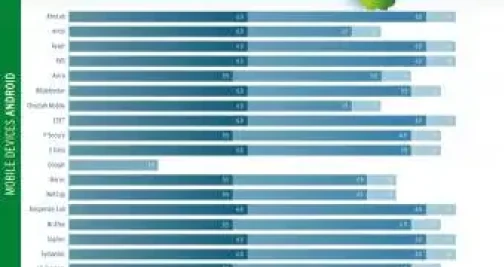
A new set of antivirus tests conducted by AV-TEST show that Android users should not rely on Google Play Protect as their exclusive mobile security product.