Overly broad permissions can turn one compromised account into a much larger security problem. Learn how to reduce unnecessary access, review privileges, and apply least privilege across modern Linux systems. Review Linux Privileges×


Stay Ahead With Linux Security Features

 identity management security tactics
 For years, we secured our Linux infrastructure by building walls: VPCs, security groups, and hardened SSH configurations. We treated the cloud like a virtual data center, assuming that if we kept the "bad guys" out of the network, our workloads were safe. . That model is no longer sufficient. Today, one of the most common paths from an initial compromise to a major cloud breach is the identity assigned to your Linux workload. When an attacker gains code execution on a Linux instance—through a...
 Jul 17, 2026
 security practices patch management
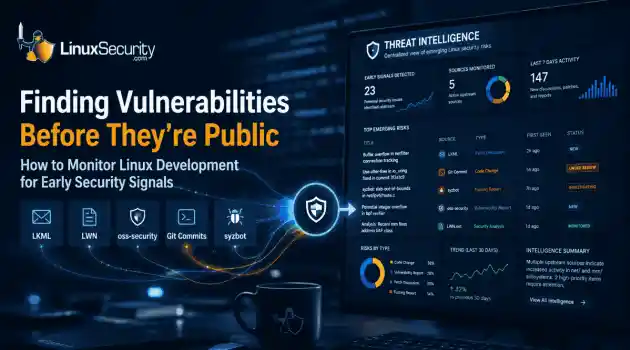
 Most of us don't hear about a kernel vulnerability until a CVE lands in our inbox or the vulnerability scanner starts complaining. By then, the patch isn't new anymore. Kernel developers may have been passing it around for review, arguing over the implementation, or revising it for days before anyone outside that community noticed it. None of those discussions are secret. They're sitting in mailing list archives, Git commits, and patch reviews where they've been the whole time. The strange...
Jul 14, 2026
 Linux security cyber attacks
 Every Linux server in your fleet produces thousands of events every minute. From journald logs and auditd records to kernel-level eBPF hooks, your systems are constantly talking. Most of that noise is just the mundane churn of system services, CI/CD runners, or routine administrative automation. But among that noise, an attacker might be establishing a foothold, moving laterally, or setting up persistence. The challenge for any security team is: how do you separate the routine from the...
Jul 13, 2026
 open-source infrastructure risk
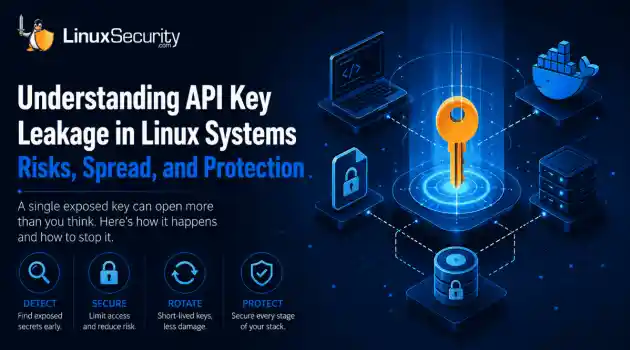
 Security scanners flag exposed API keys in public repositories every day. The initial response is usually predictable: delete the commit, revoke the credential, and move on. That’s a mistake. . In a real Linux environment, an API key never stays in one place. By the time it hits a public repo, it’s already everywhere. It’s in the CI/CD pipeline. It’s in your container registry. It’s in the build logs. It’s in the backups. Git makes this worse because the history never dies. Deleting a file in...
Jul 11, 2026
 open-source rootkit
 Most of us think of Linux rootkits as ancient history—the stuff of 90s hacking forums and clunky malware that would crash your system if you looked at it the wrong way. But if you think they’ve gone away, you’re mistaken. They’ve just gotten smarter. . Modern attackers aren't using the noisy tools of the past. Today’s threats are surgical. Many of today’s most advanced Linux rootkits operate at the kernel level or abuse legitimate system features to blend in with normal traffic. They’re...
Jul 09, 2026
 Refine features
X Clear Filters
Get the latest News and Insights
Get the latest Linux and open source security news straight to your inbox.
Community Poll
Should Linux servers automatically install security updates?
Loading...
Explore Latest Linux Security features
We found 6 articles for you...
102
 Linux securityopen source toolsrisk mitigation
Enhancing Linux Security with Breach Simulation Techniques
Cybersecurity threats have reached a new level of prevalence and sophistication, and innovative methods and tools are urgently needed to protect sensitive information. Recent statistics are eye-opening: According to Statista, 2,365 recorded cybersecurity attacks in 2023, a surprising 72% growth compared to 2021. . As these attacks become increasingly advanced, traditional security measures must be more robust. Organizations must know the latest forensic Linux distro updates and adopt advanced security protocols that protect them from data breaches and operational disruptions. Breach and attack simulation, or BAS, is emerging in this domain as one of the best modern protection methods. In this article, we will discuss BAS, why it is so essential for Linux environments, and some of the most well-known open-source tools available. What is Breach and Attack Simulation? Breach and Attack Simulation , BAS, is a cybersecurity mechanism conducted to act much like real-world attackers. BAS permits an organization to identify the weak points of its security frameworks by simulating controlled cyberattacks. According to MarketsandMarkets, the BAS market is expected to grow at a CAGR of 22.1% during the forecast period, reaching $3.5 billion by 2032. BAS offers essential insight into an organization's security posture by emulating cybercriminal tactics. It provides a balance sheet of strengths and weaknesses, offering an overall perspective on the capability of security measures to withstand real cyberattacks. In this dynamic world of cyber threats, BAS is earmarked as one of the pivotal weapons in the cybersecurity armory. Why is BAS So Important in Linux and Open-Source Systems? Linux and open-source environments are a dream for an attacker, both because of widespread enterprise usage and due to some inherent vulnerabilities that might persist within the code contributions that occur in open-source. With BAS, organizations can stay one step ahead of cybercriminals by discovering what maygo wrong in the security framework before it happens. It is integral to proactive risk mitigation against data breaches , regulatory fines, and reputational damage. By emulating a range of attack vectors using comprehensive feeds of up-to-date data on emerging threats, organizations get to shore up the gaps in their defenses before those gaps can be leveraged. Most Famous Breach and Attack Simulation Open Source Tools for Linux BAS is a fundamental approach to cybersecurity improvement, and several open-source tools make implementing it possible. The following are some of the most well-known BAS tools for Linux: Metasploit Framework Metasploit Framework is generally regarded as among the most advanced open-source tools for penetration testing and security validation. It consists of tools intentionally developed to mimic actual attacks and assess a security posture. Its immense repository of publicly available exploits permits users to deliver various attack vectors against the exploited systems by crafting custom-made payloads. Critical capabilities of Metasploit include: Post-Exploitation Modules: Such modules provide post-exploitation information gathering, privilege escalation, and access maintenance. Automation Capabilities: It allows users to run scripts, increasing efficiency in security testing and information-gathering processes. Vulnerability Scanning: Metasploit is usually used to exploit any known vulnerability on a Linux system and to test the effectiveness of the available security controls. Start with Metasploit. Install it on any Linux system, open the framework, and use auxiliary modules for vulnerability scanning . Then, look for exploits, identify them, and launch them, using meterpreter to post-exploit. Infection Monkey Another well-known open-source BAS tool is Infection Monkey by Guardicore. This tool emulates various attack techniques to test the security of a data center or cloud environment from cyber threats. It identifies weakspots, misconfigurations, and gaps in an organization's security posture. Key Features of Infection Monkey: Lateral Movement Simulation: This feature exposes how an attacker can move inside a network after gaining initial access. Compliance Testing: Infection Monkey does compliance testing against CIS benchmarks , ensuring a system is securely configured. Customizable Attack Vectors: Users can define attack scenarios fitting for organizational needs. To deploy Infection Monkey, ensure your environment matches the system requirements. Then, clone the software from its GitHub repository , install the required dependencies, and open the user interface with a web browser, where you can create and configure attack scenarios. CALDERA CALDERA is an open-source, next-generation tool that provides automated adversary emulation, red teaming, and security assessment. It uses the MITRE ATT&CK framework to perform realistic attack scenarios and help organizations improve their security posture insights. Key Features of CALDERA include: Modularity: Caldera's modularity makes it extensible through plugins, allowing organizations to tailor simulations for threats specific to their concerns. Automation and Central Management: This is done by providing a server-side interface from which the administration of simulations is quickly done centrally. Realistic Attack Scenarios: Because its actions map to ATT&CK techniques, CALDERA helps an organization fix critical vulnerabilities in its defenses. For the use of CALDERA, target systems will need to have Python, Git, and Docker installed. A clone can be made from GitHub and placed in a virtual environment where one creates and installs the requirements to open a web interface to generate and execute attack scenarios. Understanding the Importance of Including BAS in Cybersecurity Strategies Organizations can no longer afford to implement only responsive cybersecurity measures. Proactive steps arecritical to protect digital assets. Some of the top benefits derived from integrating BAS into cybersecurity include: Enhanced Security Posture : BAS allows organizations to detect and fix vulnerabilities before attackers can leverage them. This proactive approach improves the security posture overall, lessening the chances of successful cyberattacks. Data-Driven Decision Making: BAS gives valuable insights to organizations through attack simulations, after which informed decisions can be made on investments and improvements in security. It facilitates resource optimization for them by prioritizing areas of enhancement. Improved Incident Response: BAS assists an organization in refining its incident response plan by emulating realistic attack scenarios. Teams will know where their response mechanisms are lacking and can incorporate improvements for swift and effective responses against live threats. Cost Savings: Proactively addressing vulnerabilities using BAS can save an organization millions of dollars in costs related to data breaches, regulatory fines, and damage to brand reputation. The investment made in tools and simulations can result in significant long-term savings. Our Final Thoughts on the Importance of BAS for Robust Linux Security With the increased Linux security threats, protecting digital assets requires advanced tools and techniques. For organizations to adapt to today’s evolving threats, Breach and attack simulation is necessary. BAS replicates real-world attacks to assess security postures and provide actionable insights. Tools like Metasploit Framework, Infection Monkey, and CALDERA will automatically help an organization identify weak links and thus improve security measures and incident response. Organizations must stay current on emerging threats and the tools required to mitigate them. Equipped with BAS at the forefront of their cybersecurity strategies, they are better set to navigate this complex world of cybersecurity successfullyand defend against an expanding array of attacks. In other words, adopting BAS is not an option but a necessity for organizations committed to robust security postures in this digital age. Are you using BAS to improve your cybersecurity strategy? We'd love to hear about it! Reach out to us on X @lnxsec, and let's discuss it. . As cyber threats grow sophisticated, organizations must adopt breach simulation techniques and tools to improve Linux security.. cybersecurity, threats, reached, level, prevalence, sophistication, innovative. . Dave Wreski
 Oct 31, 2024
•
Oct 31, 2024
•
102
 network securitysecurity controlsdata encryption
Strategies To Secure Data Warehouses In Linux Environments
The world of enterprise solutions relies heavily on effective data management. Standard systems, which work great for small businesses, simply break down once you have thousands of moving components operating worldwide - if not hundreds of thousands. Maintaining unstructured data, primarily if your business operates on a global scale, isn’t just a waste of resources; it’s also a risk to your company. . Understanding how to properly organize and secure your information in a data warehouse within a Linux system can help you prevent cyberattacks from inside and outside your company while keeping your data safe. So, where do you get started? Let's begin by examining what a data warehouse is and what may put yours at risk. I’ll then share practical measures for improving data warehouse security. What is a Data Warehouse? Data warehouses are one of the prime options for large enterprises to sort, secure, and silo their data so that it can quickly be processed, analyzed, and used for more in-depth insights and recommendations. This is because a data warehouse works beyond simply structuring your most recent data; it provides a framework that allows you to store historical versions of documents alongside their modern counterparts. They work by regularly transferring data from operational system databases like ERPs or CRMs, apps, social media, the Internet of Things, and more. This produces a histography of the data you need for your business, allowing you to tackle current issues and better map trends as they adapt over the years. Why Does Your Large-Scale System Need a Data Warehouse? There are several reasons why building a data warehouse to structure and store your data should be the number one step when it comes to securing your data on Linux, especially when it comes to cloud-based warehouses: Historical documents are automatically sorted. Data is automatically duplicated and backed up on multiple servers. Centralized data is easier to keep track ofand secure. Access controls are a breeze to implement. What’s Putting Your Data Warehouse at Risk? Linux systems are known for their security and scalability. Thanks to the open-source nature of the system itself, which is constantly being updated and provides more user access control for businesses, you are right on track for securing your large datasets (and their historical versions). Before we get into what steps you can take to prevent data breaches in a Linux system further, let’s recap just what type of threats you’re defending against: Data Breaches : Unauthorized access to confidential data often leads to the exposure or theft of sensitive data, such as financial or personal information. Financial loss, reputational damage, and legal consequences are all possible outcomes. Ransomware: Ransomware is malicious software that encrypts a victim's files and demands payment for the key to decrypt them. Data loss, disruption of operations, and financial extortion are all possible consequences. SQL Injection: SQL injection is a code injection technique that exploits vulnerabilities within a web application’s database layer through malicious SQL queries. Its impacts include unauthorized data access and manipulation and potential database corruption. Insider threats : Insider threats are security risks that originate within an organization. They usually involve employees or contractors misusing their access to systems and data. Data breaches, intellectual theft, and operational sabotage could be severe consequences of insider threats. DDoS attacks: Distributed denial-of-service attacks overwhelm a system, network, or service with internet traffic and make it unusable for users. Service downtime, user distrust, and financial losses are all possible consequences. Implement these Key Methods to Boost Data Warehouse Security You will next need to take proactive steps towards securing your data warehouse. This willfurther minimize the risk of cyberattacks or insider attacks from harming your business. Implement Robust Access Controls The first step will always be to implement robust access controls . Think of these controls as keys to a building. Users should only be able to access the rooms available and no one else’s. This prevents large-scale data breaches and potential insider attacks from interfering with your operations. To do this, you will need to define: Users and Roles : Everyone who has access to your data warehouse must have a unique user identification, and each user must have a defined role (level of access). Permissions : You need to define and set more than just the level of access. You also need to set each user’s permissions, which refer to what they can do with the data they can access. Examples of permissions include read-only, access, or edit. Create Access Controls You can create these access controls using Role-Based Access Control, which works wonders for businesses employing hundreds or thousands of people. In this approach, each role is clearly defined beforehand, and the level of access is locked. You can also use services like OpenLDAP, which allows you to manage user accounts centrally, group those accounts, and create access control policies for your data warehouse. This approach works to simplify your administration efforts and provides consistent access levels across your entire network. Encrypt Data in Transit and at Rest Data is at risk in transit (during a download or upload) and at rest (in your data warehouse). The best way to secure data in both situations is to encrypt it. This way, if someone intercepts the data at any stage, they will need a decryption key to make sense of the information. Organizations that routinely exchange sensitive documents with external stakeholders should also implement secure file sharing practices that maintain encryption, access controls, and auditability throughout the document lifecycle.Dedicated virtual data room platforms can help ensure confidential files remain protected while still allowing authorized users to collaborate, review, and share information efficiently. The open-source tools you will want to look at to accomplish this encryption include: LUKS : Linux Unified Key Setup (LUKS) provides full disk encryption if you store data on-site. SSL/TLS Protocols : This protocol encrypts data as it is transferred over a network, essential when managing a cloud-based warehouse. PostgreSQL: If you are looking for a built-in encryption solution, PostgreSQL encrypts your entire database or specific columns containing sensitive data. Implement Top-Notch Network Security Several security solutions must be standard to protect your Linux system and data warehouse. Firewalls Firewalls are the security guards that protect your entire network. They work to filter incoming traffic to block out suspicious users and connections before they even have a chance to peek at your data. Thankfully, Linux has top-notch firewall options available, but you are likely to use the below: iptables : this is the built-in firewall option for Linux. While powerful, you will need a technical expert to configure your settings based on your needs fully. ufw (Uncomplicated Firewall) : This is just a user-friendly frontend for iptables, so if you need a simplified solution to implement Linux’s iptables firewall system, use this option. Establishing rules beforehand is good practice when setting up your firewall. This can mean only allowing traffic from certain IP addresses or endpoints while blocking everything else. You can also filter services, allowing access only to essential services like database ports through your firewall. VPNs Virtual Private Networks (VPNs) are essential for Linux administrators to secure remote access to data stores. VPNs create encrypted tunnels that ensure data is transmitted securely between users anddata warehouses. Selecting a VPN that uses robust encryption algorithms like AES-256 and supports multi-factor authentication (MFA) is essential. These measures enhance security significantly by preventing eavesdropping and making it unlikely that unauthorized access will occur even if login credentials have been compromised. Administrators should also focus on network segmentation and monitoring. They should log VPN connections to detect any unusual activity. It is important to keep VPN software up-to-date with the latest security updates to minimize vulnerabilities. Linux administrators can secure sensitive data and comply with regulatory requirements by implementing a robust VPN. They can also ensure business continuity via secure remote access. A well-managed VPN is essential to maintaining data warehouse security and integrity. Intrusion Detection Systems (IDS) Intrusion Detection Systems (IDSs) are essential in providing data warehouse security by constantly monitoring network traffic and system activities for signs of malicious behavior, such as port scans, malware communications, or hacking attempts in real-time and alerting administrators immediately with immediate alerts that enable swift responses. IDS is available both Network-based (NIDS) for network traffic monitoring and Host-based (HIDS) for individual devices. Administrators should regularly update signatures to recognize emerging threats and fine-tune rules to limit false positive alerts so alerts remain meaningful and actionable, ensuring data warehouse security is maintained. IDS also helps meet regulatory compliance by providing logs and reports on security incidents. They're indispensable tools for proactive threat detection, incident response management, risk analysis, risk mitigation, and improved data warehouse operations security and integrity. Conduct Regular Penetration Tests and Security Audits Penetration testing (pentesting) is an essential security practice that simulates cyberattacks to identify andexploit vulnerabilities within data warehouse environments, with the objective being to uncover security gaps before malicious actors exploit them. Effective pentesting requires an in-depth knowledge of internal and external attack vectors, such as network security issues, application vulnerabilities, and configuration weaknesses. This involves both automated tools and manual techniques mimicking potential attack scenarios to assess your security posture. Pentesting is essential to increasing data warehouse security as it gives administrators actionable insights into vulnerabilities and their potential impact. By addressing these vulnerabilities, they can implement targeted security measures to strengthen the warehouse further. In addition, regular pentesting helps administrators ensure compliance with regulatory standards and industry best practices, taking a proactive approach to risk management while increasing security awareness among IT teams and helping protect data integrity and confidentiality for long-term storage within warehouses. Use These Security Frameworks and Standards There are several famous Linux-friendly security frameworks and standards in which to invest. By building such a structured approach, you cover all your bases, ensure your business is protected with industry best practices, and reduce the risk of a cyberattack. Just a few of the frameworks and standards you should have in your Linux system to protect your data include: ISO/IEC 27001 : This international standard outlines the best practices for security management. To properly secure your data, follow this framework’s instructions. NIST Cybersecurity Framework (CSF) : This framework provides a high-level structure for identifying, protecting, detecting, and recovering from cyber-attacks. CIS Benchmarks: This set of configuration recommendations for Linux helps ensure your data warehouse is secure. Consider These Open-Source Security Tools One of the prime reasons to investin a Linux system is the sheer number of open-source tools that allow you to customize every element of your setup. When it comes to securing your data specifically, however, you’ll want to look at these options: Security Information and Event Management (SIEM): This tool centralizes log data across all security measures, from firewalls to servers. It’s used to identify security events and suspicious activity in real-time. Endpoint Detection and Response (EDR): Endpoints, or devices, are a significant security threat. EDR works on securing those endpoints and monitoring suspicious activity to minimize threats. Network Security Monitoring (NSM): This tool analyzes network traffic to identify suspicious activity and potential threats. Our Final Thoughts on Improving Data Warehouse Security Unstructured data is a big red target on your back. Compiling all that information into a data warehouse allows you to use your data more intelligently while also making it easier to protect yourself with the array of Linux security and open-source solutions available. Implement the best practices discussed in this article and rest easy knowing your critical data is secure from tampering, theft, and compromise. . Enhance your Linux data hub security by implementing robust controls, utilizing encryption techniques, establishing network safeguards, and adhering to industry best practices.. Data Warehouse Security, Linux Security Tools, Network Security Best Practices, Encryption Techniques, Cybersecurity Standards. . Brittany Day
Aug 09, 2024
•

102
network securityLinux securitysecurity assessmentEthical Hacking: Essential Skills for Strengthening Linux Defenses
Ethical hacking, or analyzing a system without permission to try and discover vulnerabilities that hackers can use, is an essential part of maintaining robust Linux security. Ethical hacking helps prevent cyberattacks before they happen by identifying vulnerabilities before they are exploited by malicious actor. . Hacking has a poor reputation and is generally thought of as having malicious intent, but ethical hacking is essential and helps organizations and the open-source community maintain a robust cybersecurity posture. To help you better understand the importance of ethical hacking, let's examine its role in network security, how it differs from malicious hacking, how it is carried out, and more in this comprehensive guide. What Is Hacking? While a hacker was once defined as someone skilled in information technology who uses their technical knowledge to achieve a goal or overcome an obstacle, hacking has evolved over the years. Today, hacking compromises digital devices and networks through unauthorized access to an account or computer system. Although hacking is not always malicious, people commonly associate it with illegal activity and data theft. Malicious and ethical hackers are becoming increasingly sophisticated in their methods, tactics, and techniques to obtain sensitive information, often enabling them to go completely unnoticed. Modern hacking is a multibillion-dollar industry and is critical in finding and fixing vulnerabilities before malicious actors exploit them. What Types of Hacking Exist? There are many types of hacking, but all involve breaking into a computer to extract or damage information. Here are the most common types of hacking: Physical hacking involves physically accessing a computer, such as breaking the machine through its casing. System hacking involves penetrating a computer's security measures to steal data or gain control over the system. Wireless hacking refers to exploiting vulnerabilities in wireless networks, which canallow unauthorized access to networks and systems. Cyber espionage is stealing confidential information from another organization for economic gain or political purposes. Cyberterrorism refers to any terrorist activity conducted through cyber means, such as hacking computer systems or releasing malicious software. What is Ethical Hacking? Ethical hacking is the term for testing computer security to identify and exploit vulnerabilities. It aims not to damage or disrupt systems but to identify and fix potential vulnerabilities . There are many different types of ethical hacking, including penetration testing, vulnerability assessment, and red teaming. Penetration testing is the most common type of ethical hacking. It involves trying to breach security measures on a system using various techniques such as social engineering and password cracking . Vulnerability assessment is often used to find existing vulnerabilities in a system, while red teaming tests how well a company's security measures defend against attacks from outsiders. You can learn all the skills of an ethical hacker by enrolling in the ethical hacking certification course. Although ethical hacking can be fun and exciting, taking precautions is essential. Always use caution when entering any system you do not have access to, and remember that cybersecurity is everyone's responsibility. What Is the Difference Between Ethical and Malicious Hackers? Ethical hackers are individuals who use their technical skills to identify and examine issues in computer systems. Malicious hackers, on the other hand, engage in attacks against other people or organizations with the intent of causing harm. Businesses typically hire ethical hackers to help them identify network and system vulnerabilities. On the other hand, malicious hackers often work for criminal organizations or governments who use their hacking abilities for illegal purposes, such as stealing information or disrupting operations. What Is The Role of anEthical Hacker? Ethical hackers use their hacking skills to help companies and organizations improve the security of their systems. They work independently or as part of a team and usually have a background in computer science or information technology. Ethical hackers use various techniques to identify systems' weaknesses and protect data. In addition to penetration testing, they may attempt to trick employees into revealing sensitive data, test whether laptops and mobile devices are properly stored and protected, and explore all possible ways a malicious hacker may exploit an organization. An ethical hacker’s job is to approach and replicate a malicious hacker's methods, tactics, and techniques but stop short of following through on an attack. Ethical hackers may employ some or all of the following strategies to find vulnerabilities: Port scanning using tools like Nmap to scan an organization’s systems and locate open ports Examining security patch installations to check that they cannot be exploited Using social engineering techniques to manipulate psychology, such as dumpster diving (rummaging through trash cans for passwords or other sensitive information that can be used to launch an attack), shoulder surfing to gain access to critical information, or employing kindness to trick employees into sharing their passwords Attempting to evade IDS (Intrusion Detection systems), IPS (Intrusion Prevention systems), honeypots , and firewalls Sniffing networks, bypassing and cracking wireless encryption, and hijacking web servers and web applications Investigating issues related to laptop theft and employee fraud Ethical hackers report any vulnerabilities or concerns and work with a company or organization to fix any security vulnerabilities or address any issues they have identified. They may also provide advice on how to improve system security overall. Ethical hackers are legally required to report any issues they find since this is privileged information that couldbe used for illegal purposes. It should be noted that even the most sophisticated ethical hacking skills are wasted if the organization fails to respond adequately to any problems or weaknesses found and reported. Ethical Hacks and Ethics in Hacking Ethical hacking is the practice of testing a system for vulnerabilities and exploits. The goal is to assess the security of an information system, network, or computer system. Ethical hacking can be used to find and exploit system vulnerabilities for purposes such as unauthorized access, data theft or destruction, or reconnaissance. The ethical hacker must adhere to a set of principles called the Ethical Hacking Principles of Practice (EHP). These principles are designed to help the ethical hacker abide by the laws and regulations governing their activity, protect the privacy of individuals involved, respect intellectual property rights, and avoid causing harm. There are several ways to do ethical hacking. One way is to use penetration testing tools. These tools allow you to scan for system vulnerabilities and test their protection. Another way to do ethical hacking is to use manual methods such as scanning networks for open ports or checking whether users have proper permissions. You can also use social engineering attacks to get users to reveal sensitive information. Finally, you can use spoofing techniques to make it look like someone else is trying to attack a system. While ethical hacking is often rewarding, there is also a risk of contracting malicious hackers who may want to harm your system. To protect yourself, it would be best always to take precautions, such as using a firewall and updating your software. How Do Hackers Establish a Connection to the Network? There are many ways a hacker can establish a connection to the network. Some of the most common ways that hackers sneak past security to infiltrate business networks include: Weak IP Addresses By rapidly scanning through billions of IP combinations, hackers search fora weakly secured IP address and then make a connection once one is found. This allows them to invade an organization’s network using the digital address of one of their machines. Exploiting weak IP addresses is perhaps the easiest way for hackers to identify weakly secured networks to hack quickly. Phishing scams Email phishing scams typically masquerade as legitimate mass emails from a trusted authority or organization. The email asks readers to click a malicious link and verify account data, such as login credentials. Once the data has been handed over, hackers can access the account information they need to infiltrate the network further. Sub-par Software While downloading an unreputable free software solution or using a cheap and unknown option might sound like a good idea, you’re putting your network at serious risk. These sub-par solutions could enable backers to access your network to obtain sensitive information or install viruses. Vulnerable Software Hackers frequently exploit vulnerable, unpatched software to infiltrate the target network. This is why delaying patching or failing to patch software is so dangerous. Admins and IT teams must track security advisories and apply patches as soon as they are released. Password Hacking People too often rely on default passwords that are easy to look up or easy to guess options like password123. These weakly designed passwords make it easier for hackers to access accounts. What Tools Are Used for Ethical Hacking? Various ethical hacking tools can be used for penetration tests and debugging systems. Some popular tools include: Nmap: Nmap , short for “Network Mapper,” is an open-sourced tool for network discovery and auditing. It is now one of the most widely used tools by system administrators for network mapping. Nmap searches for hosts and services on a network. Netcat: Netcat is a simple network utility for sending data between computers using the TCP/IP protocol. Wireshark: Wireshark isa free software application that captures and analyzes network packets. Angry IP Scanner: Angry IP Scanner is a lightweight program that can scan ports and IP addresses of any range. It uses a multi-threaded approach for fast scanning, creating a separate thread for each IP address. Metasploit: Metasploit is a powerful tool that can probe systematic vulnerabilities on networks and servers. These are just a few ethical hacking tools that can be used for penetration testing and security research. Each tool has its strengths and weaknesses, so it is vital to choose one that will fit the specific needs of the investigation. Ethical Hacking FAQs How can I be an ethical hacker? Hackers who perform ethical hacking are responsible for protecting and improving organizations' technology. Detecting vulnerabilities that could lead to a security breach is one of the most critical services they provide to these organizations. Identifying vulnerabilities and reporting them to an organization is the job of an ethical hacker. Is ethical hacking easy? Even if you already have a background in cyber security, it is hard to stay up to date even if you are an ethical hacker. There are many resources online, but many are wrong and outdated. How long will it take to become a hacker? It may take anywhere between 18 months and six years for a person to be fully proficient in ethical hacking. It will probably take you longer to learn hacking and coding if you have no prior experience in hacking or programming. If you are looking to obtain your Certified Ethical Hacker (CEH) qualification, you must have two years of relevant information security work experience and pass a four-hour exam consisting of 125 multiple-choice questions. This certificate remains valid for three years. Is becoming a hacker hard? This question can be answered briefly: almost anyone can learn how to hack a computer. As a result, there is a longer answer to this question. To summarize, it is a good choicefor people who are energetic and enthusiastic about challenging activities and have particular backgrounds and personality types. These learning environments would be most suitable for people familiar with programming languages and have a baseline vocabulary upon which they can base their material. Our Final Thoughts on the Importance of Ethical Hacking in the Realm of Linux Security Ethical hacking is the process of testing a network or system for vulnerabilities. Although it can be gratifying, it can also be quite challenging. You must understand computer security and malicious behavior to do ethical hacking effectively. This article provides the basics to start practicing ethical hacking responsibly. The next step is to take an ethical hacking certification course to help you quickly learn the essential tools and hacking skills required. Best of luck on your journey! . Hacking has a poor reputation and is generally thought of as having malicious intent, but ethical ha. ethical, hacking, analyzing , system, without, permission, discover, vulnerabilities. . Brittany Day
Jun 13, 2024
•
102
 data protectionweb applicationrisk assessment
Linux Web Apps: Achieve SOC 2 Compliance and Secure Your Applications
Security is vital for your Linux web apps, but keeping up with the latest exploits and meeting compliance standards can quickly become overwhelming. . This article breaks down the essentials of locking down your Linux web apps and simplifies the process of meeting essential compliance standards like SOC 2. You'll learn the key steps to safeguarding your web apps using proven security controls and get pointers for tackling SOC 2 requirements . Whether you're a startup looking to assure customers or an enterprise preparing for an audit, you'll learn how easy it is to protect your apps and prove your security posture. What Vulnerabilities and Attacks Threaten Linux Web Apps? Web app vulnerabilities refer to weaknesses or flaws within web applications that attackers can exploit to compromise the security of the application, its data, or its users. These vulnerabilities can exist in various web application components, including the frontend user interface, backend server logic, and the interaction between different components. Common types of web app vulnerabilities include: Injection: Attackers can inject malicious code into the application to steal data or disrupt operations. Broken Authentication: Attackers can gain unauthorized access to accounts by exploiting weaknesses in authentication procedures. Sensitive Data Exposure: Sensitive data can be exposed if not adequately secured. Broken Access Control: Attackers can gain access to data they shouldn't be able to see. Security Misconfiguration: Applications can be vulnerable if not correctly configured. Cross-Site Scripting : Attackers can inject malicious scripts into an application to steal data or hijack user sessions. Insecure Direct Object References: Attackers can access data they shouldn't be able to see by exploiting weaknesses in how applications handle object references. Cross-Site Request Forgery: Attackers can trick users into performing actions in an application they don't intend toperform. Failed Logging & Monitoring: Organizations may be unable to detect attacks if they don't correctly log and monitor activity. What Is SOC 2 Compliance and Why Does It Matter? If you manage a web application, data security must be a top priority. One of the best ways to do that is to achieve SOC 2 compliance with the help of SOC 2 compliance automation, which ensures your controls and safeguards meet industry standards. SOC 2, short for Service Organization Control 2, is a comprehensive framework designed to assess the security, availability, processing integrity, confidentiality, and privacy of data handled by service providers. Achieving SOC 2 compliance means that a company's systems and processes meet rigorous American Institute of Certified Public Accountants (AICPA) standards. This certification assures customers that their data is handled carefully and meets industry best practices. Failing to meet SOC 2 compliance standards can have several repercussions for an organization, particularly those that deal with sensitive data or provide services to other businesses. Some potential repercussions include loss of customer trust and confidence, increased risk of data breaches and security incidents, and difficulty obtaining contracts with new customers and forming partnerships. How Can I Achieve SOC 2 Compliance for My Linux Web Apps? Admins and organizations should implement the following best practices to ensure their Linux web apps are secure and compliant with industry standards and regulations: Conduct a risk assessment. The first step is identifying potential risks and threats to your web app infrastructure and data. This involves evaluating an organization's information systems, infrastructure, and processes to identify vulnerabilities, assess risks, and recommend measures to mitigate those risks (like unauthorized access, data breaches , and system failures). Evaluating your risk exposure will help determine the appropriate SOC 2 controls to implement. Thisevaluation typically involves the following key steps: 1. Identifying Assets : This involves identifying all the assets within the web application infrastructure, including hardware, software, data, and personnel. 2. Risk Assessment: In this step, the identified threats and vulnerabilities are assessed to determine their potential impact and likelihood of occurrence. Risk assessment helps prioritize security measures based on the level of risk they pose to the organization. 3. Vulnerability Scanning and Penetration Testing: Vulnerability scanning involves using automated tools to scan the web application for known vulnerabilities such as outdated software versions, misconfigurations, or insecure coding practices. Penetration testing , however, involves simulating real-world attacks to identify security weaknesses that automated tools may not detect. 4. Remediation: Based on the assessment's findings, organizations should prioritize and implement remediation measures to address the identified security vulnerabilities and weaknesses. 5. Continuous Monitoring and Review: Security is an ongoing process, and continuous monitoring and review of the web application infrastructure are essential to detect and respond to new threats and vulnerabilities as they emerge. Establish and document security policies. You'll need written policies covering data access, storage, transmission, and disposal. These should map to the SOC 2 Trust Service Criteria, which, in summary, are the following: Security: This principle focuses on protecting the system against unauthorized access, both physical and logical. It involves implementing safeguards to prevent unauthorized access to data and ensuring the confidentiality and integrity of information. Availability: Availability concerns the system's accessibility, ensuring it is reliably available for operation and use as agreed upon or required. This includes measures to prevent and mitigate downtime and disruptions impacting service availability. Processing Integrity: Processing integrity ensures system processing is complete, valid, accurate, timely, and authorized. It encompasses controls to prevent errors, inaccuracies, or unauthorized alterations during data processing. Confidentiality: Confidentiality addresses the protection of sensitive information from unauthorized disclosure. It involves controls to restrict access to data only to authorized individuals or entities and to prevent unauthorized disclosure or exposure. Privacy: Privacy focuses on the collection, use, retention, disclosure, and disposal of personal information by an organization's privacy notice and regulatory requirements. It involves implementing controls to safeguard individual's personal data and ensure compliance with applicable privacy laws and regulations. Implement robust access control. Organizations should employ password protection, two-factor authentication (2FA), role-based access control, and user activity monitoring to restrict access to sensitive data and systems. Password protection involves enforcing strong password policies, encrypting passwords, and implementing multi-factor authentication (MFA) for an added layer of security. 2FA requires users to provide a second verification form, like a code sent to their phone and their password. Role-based access ensures that users only have access to the resources relevant to their roles within the organization, reducing the risk of unauthorized access. User activity monitoring involves logging and analyzing user actions to detect suspicious behavior, allowing for timely responses to potential security threats. Encrypt sensitive data. Any confidential information stored or transmitted by your web app should be encrypted. Several crucial measures should be implemented to safeguard encryption keys effectively. Firstly, robust industry-standard encryption algorithms such as AES (Advanced Encryption Standard) must be employed to secure the keys. Utilize hardware security modules (HSMs) ortrusted execution environments (TEEs) to provide a secure key generation, storage, and operations environment. Implement proper key management practices, including regular key rotation and securely storing keys in a centralized key management system. Additionally, strict access controls and authentication mechanisms should be enforced to restrict access to the keys only to authorized users and services. Audit and monitor key usage and access regularly for suspicious activities. By implementing these measures, organizations can significantly enhance the protection of encryption keys and safeguard sensitive data from unauthorized access or compromise. Conduct employee training. Educating your staff on security best practices and policies is crucial for safeguarding your organization's data. Train them on password hygiene, phishing awareness, and proper data handling procedures to minimize the risk of security breaches. Regular refreshers will reinforce the importance of data security and compliance. Additionally, LinuxSecurity offers excellent educational resources and newsletters specifically tailored to educate users on topics related to Linux security, providing valuable insights and updates to enhance your organization's security posture. Use web app pentesting to identify threats. Web application penetration testing, commonly known as web app pentesting, is a proactive approach to identifying and addressing security vulnerabilities within web applications. It involves simulating real-world attacks on a web application to uncover weaknesses that malicious actors could exploit. The primary goal is to identify and mitigate security flaws before attackers can exploit them. During a web app pentesting process, trained security professionals, known as penetration testers or ethical hackers, systematically assess the application's security. This assessment typically involves the following steps: Reconnaissance: Gather information about the web application, infrastructure,technologies, and potential attack vectors. Scanning: Identify all the entry points, functionality, and endpoints exposed by the web application, such as forms, input fields, APIs, and URLs. Vulnerability Assessment: Perform automated and manual testing to identify common security vulnerabilities, including but not limited to injection flaws (e.g., SQL injection, XSS), authentication bypass, insecure direct object references (IDOR), insecure deserialization, and misconfigurations. Gain Access: Attempt to exploit the identified vulnerabilities to demonstrate their impact and severity. This step involves validating vulnerabilities by executing attacks within a controlled environment without causing harm to the application or its users. Post-Access Analysis: Analyze the penetration test results, prioritize vulnerabilities based on their severity and potential impact, and provide actionable recommendations for remediation. Reporting: Document the findings, including detailed descriptions of identified vulnerabilities, their potential impact, and recommended remediation steps. The report should be comprehensive and understandable to technical and non-technical stakeholders and include evidence of successful exploitation where applicable. Implement advanced secure coding practices. Implementing advanced secure coding practices is essential for improving Linux web app security. These practices help prevent vulnerabilities that attackers could exploit. By following these practices, developers can significantly reduce the risk of security breaches and protect sensitive data from unauthorized access or manipulation. Some key advanced secure coding practices for Linux web app security include: Input Validation: Validate all user input to prevent attacks such as SQL injection and Cross-Site Scripting (XSS). Use libraries or frameworks that offer built-in input validation functions to ensure data integrity. Authentication and Authorization: Implement robust authenticationmechanisms, such as multi-factor authentication (MFA), and enforce proper authorization controls to restrict access to sensitive resources based on user roles and permissions. Session Management: Use secure session management techniques, such as generating unique session IDs, encrypting session data, and implementing session expiration policies to prevent session hijacking and fixation attacks. Encryption: Use HTTPS with TLS encryption to secure data transmission between clients and servers. Employ strong cipher suites, enable HSTS (HTTP Strict Transport Security), and implement certificate pinning to protect against man-in-the-middle attacks. Error Handling: Implement proper error handling mechanisms to avoid leaking sensitive information to attackers. Provide informative error messages to users without revealing internal system details that could be exploited. Prevent Injection Attacks: Use parameterized queries and input validation to prevent injection attacks, such as SQL injection and command injection. Regular Security Audits and Penetration Testing: Conduct routine security audits and penetration tests to identify vulnerabilities and assess security measures' effectiveness. How Can I Automate SOC 2 Compliance Processes for Efficiency? Automating essential parts of the SOC 2 compliance process can save your team considerable time and effort. Rather than manual data collection and report generation, automation tools can handle many of these tasks for you. Continuous Compliance Monitoring With automation, you can continuously monitor your web apps and systems. Automated scans will check for vulnerabilities or configuration issues that could impact security or compliance on an ongoing basis. You'll get alerts when problems are detected so you can address them immediately. Streamlined Audit Preparation When it's time for your annual SOC 2 audit, much of the work will already be done. Automated tracking of risks, controls, and processes means you'll have readyevidence for auditors. Rather than scrambling to gather documentation, your team can focus on higher-value initiatives. Automated report generation also simplifies creating materials for your auditors. Optimized Control Testing Control testing procedures ensure your web apps meet all necessary compliance standards. However, testing controls manually can require significant time and resources. Automation tools can execute control tests on your behalf and provide detailed results, allowing your team to optimize control testing processes. What Tools Can Help with Automated Vulnerability Scanning? Automated vulnerability scanning tools are crucial in identifying security weaknesses within Linux web applications. These tools streamline the process of detecting vulnerabilities and provide actionable insights for remediation. Some popular tools can be found in this list . Final Thoughts: Are Your Web Apps SOC 2 Compliant? So, in closing, you've got this. Keeping your web apps secure and compliant may feel daunting, but taking it step-by-step and leveraging frameworks like SOC 2 can make it very manageable. Start by speaking to an expert to see where you stand before proceeding with the audit. You'll meet essential compliance standards and protect sensitive data in no time. The peace of mind and trust you'll build with customers will be worth the effort. . Lock down your Linux web apps with essential security steps and ensure compliance with SOC 2 standards effectively.. security, vital, linux, keeping, latest, exploits, meeting, compl. . Brittany Day
May 18, 2024
•
102
network securitycyber threatsweb applicationComprehensive Guide to Penetration Testing Methods for Web Applications
Web applications are an integral part of most business operations responsible for storing, processing, and transmitting data. However, these systems are sometimes exposed to web application security vulnerabilities and risks. They attract malicious hackers who exploit these application security trends for their personal gain, thereby raising major web application concerns. . To address this growing concern, a thorough penetration testing web application should be performed to assess and identify the network security issues within them proactively. Pentesting a website is an effective way of identifying security gaps so they can be addressed immediately. In this article, we will discuss what penetration testing is and how to utilize it to protect your web applications from current and future network security threats. What is a Web Application Penetration Test? Penetration testing web applications is a technique that aims at evaluating and gathering information concerning the possible cyber security vulnerabilities and flaws in the web application system. This tactic gathers detailed information on how these network security issues could compromise the web application and impact business operations. Pentesting a website involves simulating attacks in network security on the application to gain insight into an attacker’s perspective. This could be using SQL injection techniques and others that include steps like scoping, reconnaissance, gathering information, discovering web application security vulnerabilities, exploits in cyber security, and developing reports. Penetration testing for websites can be performed manually or automated to help you find weaknesses in your application security trends so that the logic, coding, and security configurations can be adjusted to mitigate such network security issues. Why do Businesses Need Penetration Testing? Considering the evolving threat landscape and growing rate of cybercrime, performing penetration testing on websites so youcan take into account all web application security vulnerabilities that could compromise your data is essential. Organizations must consider pentesting a website as a part of the Software Development Life Cycle (SDLC) to ensure the best practices to use against various web application security vulnerabilities. Here are some reasons why we believe penetration tests are important for business: A penetration test is an effective way to identify unknown cybersecurity vulnerabilities. The test helps validate the effectiveness of the overall security measures implemented. The Penetration Test is essential to augment the web application firewall from the web application security perspective. Penetration tests help businesses identify and prioritize resources to mitigate network security issues. The test helps users discover the most vulnerable route for attacks in network security and their possible impact. The test helps you find security flaws and loopholes that can result in sensitive data and/or cloud security breaches. Why does the Web Application Require a Penetration Test? The basic objective of performing a penetration test is to identify known and unknown cybersecurity vulnerabilities and implement measures to mitigate them. The assessment helps you find flaws in web application systems as well as the effectiveness of security measures, policies, and procedures being implemented. The reason why pentesting a website is so valuable is so network security issues can be identified and taken care of ahead of time. Here are the three main components evaluated when pentesting a website: Evaluates People Penetration tests evaluate how well prepared and aware the employees are of the current network security threats and whether or not they are equipped to deal with risks and potential cloud security breaches. It further helps determine whether or not employees require advanced training programs in terms of cyber security and techniques. This can help workers to protectsensitive data from any cyber security vulnerabilities. Evaluate Process Pentesting a website also determines whether or not the processes implemented are effective and in line with the cybersecurity programs. It is important to verify whether or not the processes have been set as per the established policies and employee integration. The penetration test helps discover loopholes in the process and facilitates fixing these network security issues in the process. Evaluate Policies Security policy forms the base of any business operations and processes. It also forms the foundation of any cybersecurity program. So, penetration testing for websites may also detect gaps in policies and facilitate the addition or implementation of new policies. For instance, certain companies may focus on preventing network security threats by implementing certain security policies. However, they may not have specific policies for dealing with incidents of breaches or attacks in network security. During the process of penetration tests, such gaps in policies are highlighted, and businesses should implement policies that focus on responding to attacks. The test further highlights whether or not the security personnel is equipped to respond to situations and further prevent significant damage. Prioritization of Resources By revealing the network security issues and problems within web applications, penetration test reports can help decision-making in regards to prioritizing resources to immediately fix the gaps that need immediate attention. This information works as a guide for developers and programmers to fix web application security vulnerabilities by building strong code and secure websites. Now that we are aware of the importance of a web application penetration test let us learn and understand the different network security threats to defend against. Web Application Vulnerability Types Advancements in technology and the evolving threat landscape have resulted in the discovery of new types of webapplication security vulnerabilities. Open Web Application Security Project (OWASP) is an open community of IT professionals who aim to highlight network security issues to make the web safer for users and other entities. Below are some of the most common web application threats listed in the OWASP Community: Injection An injection is a web application security flaw that enables various types of attacks in network security. Malicious actors stage an attack to access sensitive data by inputting certain malicious information into a web application, causing alterations to the system and to command execution, and compromising data and web application services. Leveraging such flaws, attackers may delete, alter, or damage data and create Denial of Service attacks that can impact your business. Broken Authentication Broken authentication facilitates cybercriminals to stage attacks on users as a result of exploits in cyber security. A threat actor accesses information like passwords and keys that help to compromise a user’s identity. The hacker impersonates a legitimate user and gains unauthorized access to the systems, networks, and applications. This can be a result of cyber security vulnerabilities such as poor identity and access management controls, poor session oversight, and poor credential management. Sensitive Data Exposure Any sensitive and important data meant to be protected against unauthorized access could be breached during Sensitive Data Exposure attacks in network security. These web application security vulnerabilities can put companies at higher risk levels. The most common Sensitive Data Exposure attack is the Lack of Secure Sockets Layer (SSL) protocol that authenticates and encrypts data, misconfigures cloud storage locations, transmits data in clear text, utilizes outdated or weak encryption algorithms and cryptography keys, and more. This network security threat is very different from data and network security breaches, where hackers steal information and reveal data.Instead, Sensitive Data Exposure is a vulnerability that is generated unknowingly, leaving information visible to the public. Broken Access Control Access controls are critical to prevent unauthorized access and data breaches in systems and applications. To ensure maximum and high-level security, implement effective IAM and PAM controls. However, broken access controls can tamper with these efforts, as broken access controls are web application vulnerabilities that allow hackers to gain unauthorized access to sensitive data and resources. This can result in a high-level risk of data tampering, alteration, damage, or theft. Attackers can take advantage of these weaknesses to stage their attacks and impact business operations. Security Misconfiguration Security misconfiguration is a vulnerability wherein the security controls of the web applications are misconfigured or left with unsafe security patching. Security misconfigurations are one of the most common web application security vulnerabilities that enter systems due to a company's failure to change default passwords and security settings. These breaches can result from utilizing default passwords, not enforcing secure password policies, ignoring unpatched software, incorrectly configuring files, implementing poor web application firewalls, and more. Cross-Site Scripting Cross-site scripting is a kind of attack wherein malicious scripts are injected into a trusted web application. This works by manipulating a vulnerable web application, executing malicious code, and compromising the user’s interaction with the application. Typically, when the malicious script is injected, the user opens a web page on their browser where the malicious code downloads and executes in the browser, redirecting users from a legitimate site to a malicious one. Cross-site scripting vulnerabilities grant attackers the ability to hijack the user’s session and take over the account, thereby resulting in account compromise. Insecure Direct Object References Insecure Direct Object References (IDOR) are network security issues that occur in a web application when a developer utilizes an identifier for direct access to an object in the internal database and does not implement additional access control and authorization checks. This results in data access and compromise. Although IDOR is not a direct network security threat, it allows hackers to stage attacks in network security that provide them access to unauthorized data. Cross-Site Request Forgery Cross-Site Reference Forgery (XSRF, “Sea Surf,' or Session Riding) is an attack that tricks the victim into submitting their identity and privilege to perform unwanted activities. These attacks in network security use social engineering techniques that force users to perform undesired actions, such as changing information in a web application. There are numerous ways in which the user can be tricked to perform this forced and unwanted activity. If an attacker generates a malicious request via an email or chat, users could log into the web application from where attackers can transfer funds, make unauthorized purchases, change email addresses, and more. Failed Logging & Monitoring Insufficient logging and monitoring is a vulnerability that occurs due to log failures. When the organization's log fails to capture necessary information, such as logs and audits, an organization’s activities and events can leave trails that allow for cloud security breaches and other attacks in network security. Logs and audits are reports on the happenings and activities in your systems, networks, and applications that can detect anomalies and incidents impacting the security of the organization’s operations and infrastructure. Collecting the right event log data is essential to preventing and mitigating network security issues and threats. Some of the most common web application security vulnerabilities include failed logins, failed logs of error, failed logs of high-value transactions, failed application and logmonitoring, and lack of real-time alerts, detection, escalation, and response. Such problems can lead to high-level security risks and breaches. Penetration Testing Process Active and Passive Reconnaissance The initial first step to a Web Application Penetration Test is to conduct an active and passive reconnaissance. This is also popularly known as the evidence-gathering stage, where the tester gathers information from freely available data by probing the web application. Active Reconnaissance Active reconnaissance means directly looking at the target system to get an output. The attacker engages with the target system and conducts a port scan to find any web application security vulnerabilities. Passive Reconnaissance Passive reconnaissance means collecting information that is readily available on the internet. This process does not require any direct engagement with the target system and is mostly done by using public resources or using platforms like Google for collecting information. Scanning This is the second step of pentesting a website. At this stage, workers inspect the application to understand its performance on a real-time basis. This step involves identifying open ports and discovering cybersecurity vulnerabilities in the application. The basic objective of conducting a web application scan is to determine network security issues and misconfigurations in web-based applications so that they can be mitigated. Gaining Access After collecting all relevant information pertaining to the application, the tester stages an attack on the application to uncover a target’s weaknesses . Thereafter, the tester tries to take advantage of these exploits in cyber security to escalate privileges, steal data, and intercept traffic. This is done to gauge the level of risk, damage, and impact that can be caused if web application security vulnerabilities are ignored. Maintaining Access Next, testers see if they can maintain prolonged access and presence in the exploitedapplication. This is to understand whether the attacker can gain in-depth access to sensitive systems, networks, and information for the duration of time they are actively inside the web application. This process typically imitates the advanced persistent network security threats that an attacker stages to remain in the application for months at a time to steal sensitive information. Report & Analysis The results of pentesting a website are compiled into a report and provide details regarding the web application security vulnerabilities exploited, the sensitive data exposed, and the amount of time a penetration tester maintained access and remained undetected. All the information collected from the test is then analyzed, and security solutions are provided as actionable guidance for closing security gaps. The report helps organizations with security patching to protect against all network security threats. Testing Methods Pentesting a website can be done through various methods depending on the objectives you hope to achieve through an assessment. Let’s discuss the different types of penetration testing methods: External Testing An external penetration test involves targeting the assets of the company that are visible to the internet, including web applications, company websites, emails, and domain name servers. Applications face simulated attacks in network security from externally visible devices and applications, gaining unauthorized access to extract valuable data. Internal Testing An internal penetration test involves targeting the assets of the company from inside the company, posing as a malicious insider. This does not necessarily mean simulating a rogue employee, but instead, it could involve staging an attack using various social engineering tactics in hopes of stealing the employee’s credentials. This test exposes the insider threats that sensitive data is exposed to in an organization. Such screening helps identify employees who are likely to respond to socialengineering or phishing attacks and try to mitigate the cyber security vulnerabilities at risk. Blind Testing In blind testing, the tester simulates a real-life attack on applications but with information gained from the security team. The organization’s security team will know when and where an attack will occur so they can prepare for it accordingly. However, they will have limited information about the breach strategy and techniques. The blind testing strategy highlights the effectiveness of the organization’s current cyber security program and gives an insight into how an actual attack would take place. Double-Blind Testing In the double-blind testing technique, the security team will have no prior knowledge of the simulated attack. So, similar to a real-world attack, the team will not have time to build their defenses. This testing technique helps examine the security monitoring systems, incident identification, alert systems, and response procedures of the organization, all of which are valuable in finding any web application security vulnerabilities that could interfere with the security patching process. Targeted Testing Targeted testing is a scenario wherein both the tester and security team work together in the process of targeted testing on the application. Both parties are aware of the activities and stages of testing that will be performed. Overall, targeting testing can be utilized as an important training exercise that provides the security team with real-time feedback from a hacker’s perspective. Final Thoughts on Web Application Penetration Testing Pentesting a website helps to identify where there are web application security vulnerabilities and exploits in cyber security in general. Finding these weaknesses is useful for helping workers to do any security patching needed ahead of time so that real-time attacks are not as harmful, if harmful at all. We suggest organizations proactively run a web application penetration test to address potential network securityissues that could impact the company during a security incident. Depending on the goals of a penetration test, testers can utilize techniques that provide organizations with opportunities to improve security posture and general defenses against various network security threats. Performing the web application penetration test is a great way to patch security gaps and vulnerabilities that may otherwise go unnoticed. . Conducting vulnerability assessments is essential for reducing online application threats and protecting confidential information and operational workflows.. Penetration Testing Strategies, Cyber Threat Assessment, Web App Defense Techniques. . Justice Levine
Jul 23, 2023
•
102
 security advisorynetwork securityintrusion detection
Proven Strategies to Assess the Security of Your Linux Server Setup
Linux is a widespread OS known for its robust data and network security . That being said, cybersecurity vulnerabilities are inevitable in any OS. Therefore, Linux system administrators must be vigilant about monitoring and verifying the safety of their servers on an ongoing basis in order to protect sensitive data and prevent attacks on network security. After all, the majority of exploits in cybersecurity on Linux systems resulted from poor administration . . The only way to be sure your server is as well protected as needed is to test it and verify it is working as you expect. This article will introduce LinuxSecurity’s top methods and tools for checking that your Linux server security is safe. We will cover port scanning, intrusion detection, penetration testing, reverse engineering, and auditing, and we will guide you in the direction of other valuable resources to help you get started on your journey to stronger security. What Are the Top Methods for Verifying Linux Server Security? Port Scanning Port scanning, or the process of evaluating ports on a server to identify cybersecurity vulnerabilities, is one method that administrators should employ when looking to evaluate the overall security of a Linux server. Port scanning Linux servers reveals what ports are open to receiving information and what security devices exist between the sender and the target. This information can be used to identify potential network security issues that could be exploited by attackers. Linux users have an array of excellent port scanners to choose from. In this section, we’ll introduce our three favorite open-source port scanners and direct you to some helpful tutorials demonstrating how to perform a port scan on your Linux servers. Let’s take a look at three great port scanners available to Linux users: Nmap Nmap , which stands for “Network Mapper,” is by far the most popular and versatile port scanner available, for good reason. The free and open-source port scanner offers an array of optionsfor performing quick, effective scans on both local and remote networks. Nmap can be used for active port scanning to discover open ports on specific networks/hosts, as well as for host discovery to identify potential hosts that are responding to network requests. Linux Nmap’s capabilities extend beyond port scanning, as it can also be used for penetration testing, fingerprinting operating systems, vulnerability scanning, OS detection, and application version detection. Nmap has both CLI and GUI interfaces (the GUI is called Zenmap ) and can also be run from the classic command line terminal. You can learn how to install Nmap on Linux here . Learn how to perform a ping scan, a host scan, and an OS and services scan with Nmap. Unicornscan Unicornscan is the second most popular open-source port scanner after Nmap. It features renowned asynchronous TCP and UDP scanning capabilities as well as non-common network discovery patterns that provide alternative ways to find out important details about remote operating systems and services. Unicornscan can be used for both active and passive remote OS, application, and component identification. The fast, comprehensive port scanner offers custom module support, customized data-set views, and PCAP file logging and filtering. You can download Unicornscan here . Angry IP Scanner Thanks to its multi-thread approach that separates each scan, Angry IP Scanner is known for its impressive scanning speed. The free multi-platform scanner searches for open ports on any remote network and then exports scanned results into either TXT, XML, or CSV files. Angry IP Scanner has other notable features , including its web server and NetBIOS information detection capabilities and its easy, seamless plugin integration with Java. Angry IP Scanner Linux can be downloaded here . Intrusion Detection Intrusion detection , or monitoring a network or system for malicious activity or policy violations, is a critical part of maintaining a secure Linux server. The informationgathered through intrusion detection provides administrators with valuable insight into the attacks in network security that could potentially threaten their servers. This is valuable information to be aware of when setting up preventative defenses. In this section, we’ll examine a few great open-source Linux Intrusion Detection System (IDS) tools and honeypots that can help server administrators proactively identify and respond to network security threats to their systems, thus preventing data theft and system compromise. We’ll then explore the importance of monitoring logs. Snort Snort is the leader in free and open-source Network Intrusion Detection Systems (NIDS). The popular network security toolkit has various modes that can be used to analyze real-time traffic. The intrusion detection mode is based on a set of rules that the user can either create or download from the Snort community . Linux Snort can also be used for port scanning, OS fingerprinting, and detecting attacks in network security using signature-based and anomaly-based techniques. Snort is easy to install and supported by a large, vibrant community, which makes this cloud security scanner and detection service all the more reassuring. Snort can be downloaded here. Learn how to install and use Snort for intrusion detection in this LinuxHint tutorial . OSSEC In the realm of Host-based Intrusion Detection Systems (HIDS), OSSEC dominates. This full-featured open-source IDS tool is highly effective and extensible. OSSEC’s client/server-based management and logging architecture secures sensitive information against exploits in cybersecurity like tampering and theft by delivering alerts and logs to a centralized server. This server can analyze and notify regarding network security threats even if the host system is compromised or offline. A convenient benefit of this client/server design is one’s ability to centrally manage agents from a single server. OSSEC is very lightweight and is backed by a strong, supportive community.OSSEC can be downloaded here. Learn how to install and use OSSEC for intrusion detection in this LinuxHint tutorial . Suricata Suricata is a modern NIDS that employs signature-based, anomaly-based, and policy-driven intrusion detection methods. It features multi-threading capabilities, GPU acceleration, and multiple-model statistical anomaly detection. Suricata can examine HTTP requests, TLS/SSL certificates, and DNS transactions. Suricata is compatible with Snort's data structure, enabling users to implement Snort policies in Suricata. Suricata can be downloaded here. Cowrie Cowrie is a medium interaction SSH and telnet honeypot that logs brute force attacks in network security and shell interaction. The open-source honeypot emulates a Unix system in Python and functions as a proxy to log malicious activity. Cowrie features JSON logging for easy processing in log management solutions. Monitoring Logs Monitoring logs is an essential part of verifying the data and network security of a server. It must be done on a regular basis to ensure that your systems remain secure. Critical Linux log monitoring categories include application, event, service, and system logs. Many Linux distributions offer network security toolkits for automating this ongoing task. The Logwatch Linux application, for instance, sends a daily email report of all of the logs on a server, providing administrators with valuable information, including potential malicious activity, SSH attempts, IPs causing errors, and the number of sent emails in the server. In a large corporate environment, it is a common practice to send Logwatch emails (along with other mail directed to the root user) to a single company email list. Administrators in the company then subscribe to this email list to stay informed of any notifications regarding suspicious activity detected in any of the company’s server logs. Logwatch can be downloaded here. Fail2ban is another excellent application for monitoring logs and detecting intrusionattempts. This intrusion prevention software and cloud security framework keeps servers safe against brute-force attacks in network security by reacting to intrusion attempts. These reactions could be either installing firewall rules to reject potentially malicious IP addresses for a certain amount of time or blocking access to a specific port. Linux Fail2ban can be downloaded here. Penetration Testing Penetration testing (commonly referred to as pen testing or ethical hacking) is the practice of testing a computer system, network, or application to identify cybersecurity vulnerabilities that could be exploited by malicious actors. As you can imagine, information gathered in pen tests is invaluable in verifying the data and network security of a Linux server and preventing attacks. There are an array of excellent pentesting network security toolkits available to Linux users, and there is a certain group of Linux distro for penetration testing . In this section, we’ll introduce our top two distros for Linux penetration testing: Kali Linux and ParrotOS. Kali Linux Kali Linux is one of the most popular Linux distros among pentesters, ethical hackers, and security researchers. The flexible, full-featured distro contains hundreds of pentesting tools, protects sensitive pentesting data with LUKS full-disk encryption, and offers high customization levels. Kali Linux also offers training and support through the Kali Linux Dojo training suite. Key Features & Benefits: Kali Linux uses LUKS full-disk encryption to secure sensitive pentesting data against loss, tampering, and theft. “Forensics” mode makes this distro perfect for investigative work. Users can automate and customize their Kali Linux installations over the network. This flexible distro offers full customization with live-build . On the training suite, Kali Linux Dojo users can learn how to customize their own Kali ISO and learn the basics of pentesting. All of these resources are available on Kali’s website , freeof charge. Kali Linux also offers a paid-for pentesting course that can be taken online with a 24-hour certification exam. Once you pass this exam, you’re a qualified pentester! ParrotOS Parrot OS is a fully-portable laboratory for pentesting, reverse engineering, and digital forensics. The fast, lightweight distro is frequently updated and offers a wide array of hardening and privacy sandboxing options. ParrotOS tools and features are designed to be compatible with the majority of devices via containerization technologies such as Docker or Podman . Key Features & Benefits: ParrotOS provides pentesters and digital forensics experts with a state-of-the-art “laboratory” featuring a full suite of tools accompanied by standard privacy and security features. Applications that run on Parrot OS are fully sandboxed and protected. Parrot OS is fast, lightweight, and compatible with most devices. Reverse Engineering & Malware Scanning Reverse engineering, or the process of deconstructing an artificial environment to gain insight into its design, architecture, and code, can be extremely helpful in securing or verifying the data and network security of a Linux server. This process plays a central role in malware detection and analysis, as it can help administrators identify network security threats like malware on their systems, which they can then study, eliminate, and learn from so they can apply the knowledge to prevent future attacks in network security. In this section, we will profile the six malware scanning and reverse engineering tools Linux favors, as well as some toolkits and utilities. REMnux REMnux is a free, community-powered toolkit for reverse engineering and malware analysis. The toolkit conveniently enables analysts to investigate malware without having to find, install, and configure the tools needed to do so. REMnux offers a distro that can be downloaded as a VM in the OVO format and then imported into your hypervisor, installed from scratch on a dedicatedhost, added to an existing system running a compatible version of Ubuntu, or run as a Docker container . Chkrootkit Chkrootkit is a free and open-source rootkit detector that locally scans for signs of a rootkit and hidden security holes on Unix/Linux systems. The scanner consists of a shell script that checks system binaries for rootkit modification along with a selection of programs designed to scan systems for different network security issues. Chkrootkit can be downloaded here. Rkhunter Rkhunter is a powerful and user-friendly open-source tool designed to scan Linux systems for rootkits, backdoors, and local exploits in cybersecurity. The comprehensive cloud security scanner inspects and analyzes a system to detect hidden security holes. Rkhunter Linux can be downloaded here. Lynis Lynis is a powerful and popular malware and vulnerability scanning and auditing tool for Unix/Linux operating systems. The free and open-source scanner detects network security issues and configuration errors, performs firewall auditing, checks file/directory permissions, and verifies file integrity and installed software. Lynis can be downloaded here . Learn how to scan your Linux system with Lynis in this Opensource.com tutorial . LMD Linux Malware Detect (LMD) is a full-featured, open-source malware scanner designed specifically for hosted environments; however, this tool can be used to detect network security threats on any Linux system. Linux LMD includes a full reporting system, where administrators can view both current and past scan results accompanied by email alerts after every scan and an array of other useful features. The scanner can be integrated with the ClamAV scanner engine for stronger performance and improved security posture. Project Freta Microsoft recently announced Project Freta , a free cloud-based malware scanning tool for Linux. The tool uses snapshot-based memory forensics, comparing thousands of images of Linux VMs to identify previously undetected malware. Auditing Conducting frequent cloud security audits is an essential part of establishing the data and network security of your Linux servers. System auditing Linux enables administrators to discover security bugs, breaches, or policy violations on their systems. In this section, we’ll take a look at the Linux Auditing System (AuditD) and the insight that this valuable feature can provide administrators into the security, stability, and functionality of their systems. What is the Linux Auditing System? The Linux Auditing System (AuditD) is a native feature of the Linux kernel that collects information on system activity to facilitate the investigation of potential network security issues. AduditD works on the kernel level, where it can oversee all system processes and activities and uses the AuditD daemon to log what it finds. In most Linux distributions, AuditD is installed by default and runs automatically with the system. It logs information according to auditing and added rules. AuditD monitors three categories of events: system calls, file access, and select, pre-configured auditable events within the kernel. It enables administrators to audit activity using these categories of events, including authentications, failed cryptographic operations, abnormal terminations, SELinux modification, and program execution. When any one of the audit rules in place is triggered, AuditD outputs a comprehensive record that can be used to investigate the incident. When implementing the Linux Auditing System, you will likely need to create some of your own rules. There are two types of rules that administrators can write: file system and system call rules. System activities like specific scripts executed, userland events, and internal kernel behaviors cannot be triggered using AuditD. When writing rules, it is critical to remember that audit rules work on a “first match wins” basis. In other words, once audited activity matches a rule, no further rules will be evaluated. Thus, the order in which rules arewritten is of utmost importance. To view the audit records generated by a triggered rule, administrators can use the native ausearch and aureport utilities. Ausearch lets you search your audit log files for specific criteria, and aureport creates summary reports from the audit log files. It is crucial for administrators to ensure that AuditD is properly configured and hardened to provide genuine, reliable information. Begin by checking that AuditD’s configuration is immutable using the control option “-e 2.” Then, confirm that logs are stored in a centralized, secure location - ideally, a server dedicated to accepting remote syslog events. AuditD is a very useful and free feature for facilitating investigations, especially historical investigations, in response to an incident. That being said, AuditD does have some serious weaknesses that should be taken into consideration, namely bugginess, excessive overhead, lack of granularity, missing container support, and onerous output. Final Thoughts on Verifying Linux Server Security Regardless of the OS you’re running, securing your servers is an ongoing process that requires vigilant monitoring, testing, verification, and maintenance. In recent years, Linux has become an increasingly popular target among cybercriminals due to its growing popularity. However, the good news is that the majority of attacks in network security on Linux systems can be attributed to poor administration and can thus be prevented with greater attention to security and system hardening. Frequently verifying the data and network security of your Linux servers using methods such as port scanning, intrusion detection, penetration testing, reverse engineering, and auditing is the only way to confirm that your servers are indeed as secure as you need them to be. . The only way to be sure your server is as well protected as needed is to test it and verify it is wo. linux, widespread, known, robust, network, security, being, cybersecur. . Brittany Day
Mar 27, 2023
•
102
open source softwarelinux distributionsecurity toolsExplore Predator-OS 20.04 LTS: A Secure Linux Distro for Pentesters
Predator-OS - "the OS that naturally preys on others"- is a free and open-source security-centric project for penetration testing and ethical hacking that can also be used as a privacy-focued, hardened Linux distro. LinuxSecurity researchers spoke with Founder and lead developer Hossein Seilany to get insight into the unique features and benefits that newly released Predator-OS 20.04 LTS offers hackers, pentesters and privacy-conscious Linux users. . Predator-OS was established in 2021 and is maintained by Hossein Seilany. It is a free open-source community project, Free (as in freedom). The project just recently announced the release of Predator-OS 20.04 LTS. Predator-OS is well-suited for penetration testing and ethical hacking and also provides a secure, anonymized Linux OS. Predator Linux is based on Ubuntu 20.04 LTS Mini, kernel 5.10 LTS, and uses a fully customized xfce4 lightweight desktop with a special menu of tools. Predator Linux has around 1300 pre-installed tools which are split into 40 categories. These tools are imported from both Debian and Ubuntu repositories and the GitHub page. Most kernel and user configs are customized by default to prevent hacking, non-privileged access, and to reduce the attack surface. A wide array of built-in firewalls and defensive tools provide end-users with granular control over the OS. The distro can be run as Live-CD or from a USB Drive and installation mode. Operates in 9 Different Modes Predator-OS has nine different modes and operates in the following modes for easy and faster access to all tools: defensive, offensive, privacy, hardened, secured, settings, and pentesting modes. Users can switch between these modes quickly and easily. The Predator-OS distribution has its own unique features and benefits including: Easy installation and extensive hardware support Lightweight with a user-friendly interface Includes all features and tools of popular secure Linux distros - and more! Offers the ability to run Windows tools onLinux Users have the option of either booting live or installing You can view a full list of the distro’s features predator-os downloads. Predator-OS At-A-Glance OS Type: Linux Based on: Ubuntu Mini 20.04 LTS Kernel: 5.10 LTS Architecture: armhf, i686, PowerPC, ppc64el, s390x, x86_64 Desktop: Xfce Other Desktop: as soon as possible: KDE plasma, mate Category: penetration testing, security, privacy, Forensics, Live Medium, hardened, anonymized Click> predator-os downloads to download Predator-OS on your system. Are you using Predator-OS? If so, we'd love to hear your thoughts and feedback! Please share your experience in the Comments section below. . Unveil the capabilities of Viper-OS 20.04 LTS, an innovative Linux distribution tailored for security testing and safeguarding personal privacy. Explore further.. Predator-OS, Ethical Hacking Tools, Open-Source Pen Testing, Privacy Focused Linux. . Brittany Day
Jan 05, 2022
•
102
 penetration testingethical hackingprivacy enhancement
Predator-OS: A Lightweight Secure Distro for Ethical Hacking and Privacy
Predator-OS is a free and open-source secure Linux distro that is ideal for penetration testing, ethical hacking and digital forensics, but is also a great option for any user looking to improve his or her privacy and anonymity online with a security-centric, hardened OS. . Recently established in 2021, Predator-OS is based on Ubuntu 20.04 LTS Mini, and uses the 5.10 LTS kernel. The distro features a fully customized xfce4 lightweight desktop and around 1300 pre-installed tools, including built-in firewalls and defensive tools that provide end-users with granular control over the OS. These tools are imported from both Debian and Ubuntu repositories. Most kernel and user configs are customized by default to reduce the attack surface and prevent hacking and non-privileged access. Predator-OS has nine different modes for quick and easy access to all tools, and can be switched to pentesting mode or a defensive, offensive, privacy, hardened, or secured setting at any time. Predator-OS can be run as a Live-CD or from a USB Drive. Key features of Predator-OS include: Easy installation and extensive hardware support Lightweight distro with a user-friendly interface Includes all features and tools offered by popular secure Linux distros - and more! Provides the ability to run Windows tools on Linux Offers the option of either booting live and or installing You can view a full list of the distro’s features index. Click Predator OS Downloads to download Predator-OS on your system. Have a security-focused open-source project that you think would be of interest to our audience and would like us to cover in a future Security Spotlight feature article? Connect with us on Twitter - we’d love to hear the details! . Guardian-Linux integrates Debian 11 with 1500 utilities to enhance safety and individual privacy in a streamlined Linux environment.. Predator-OS, Secure Linux Distro, Privacy Tools, Ethical Hacking, Open Source Software. . Brittany Day
Aug 15, 2021
•

Get the latest News and Insights
Get the latest Linux and open source security news straight to your inbox.
Community Poll
Should Linux servers automatically install security updates?
Search Topics
Powered By

Linux Security - Your source for Top Linux News, Advisories, HOWTOs and Feature Releases
QUICK LINKS
subscribe to newsletters!
Like staying secure? So do we.
Sign up for updates, tips, and alerts!