Overly broad permissions can turn one compromised account into a much larger security problem. Learn how to reduce unnecessary access, review privileges, and apply least privilege across modern Linux systems. Review Linux Privileges×


Stay Ahead With Linux Security Features
 identity management security tactics
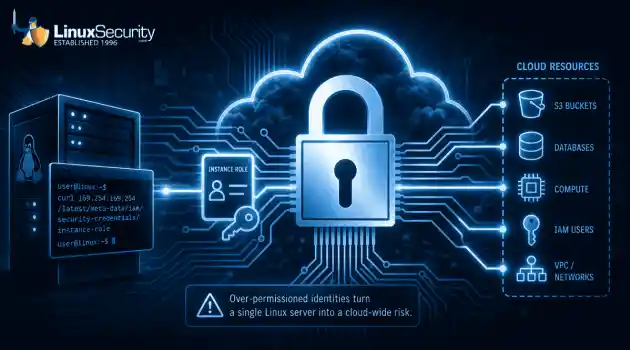
 For years, we secured our Linux infrastructure by building walls: VPCs, security groups, and hardened SSH configurations. We treated the cloud like a virtual data center, assuming that if we kept the "bad guys" out of the network, our workloads were safe. . That model is no longer sufficient. Today, one of the most common paths from an initial compromise to a major cloud breach is the identity assigned to your Linux workload. When an attacker gains code execution on a Linux instance—through a...
 Jul 17, 2026
 security practices patch management
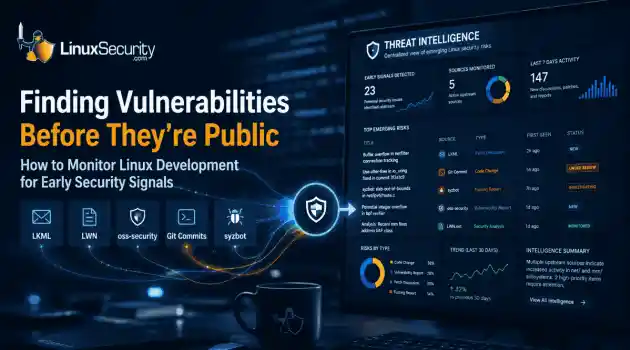
 Most of us don't hear about a kernel vulnerability until a CVE lands in our inbox or the vulnerability scanner starts complaining. By then, the patch isn't new anymore. Kernel developers may have been passing it around for review, arguing over the implementation, or revising it for days before anyone outside that community noticed it. None of those discussions are secret. They're sitting in mailing list archives, Git commits, and patch reviews where they've been the whole time. The strange...
Jul 14, 2026
 Linux security cyber attacks
 Every Linux server in your fleet produces thousands of events every minute. From journald logs and auditd records to kernel-level eBPF hooks, your systems are constantly talking. Most of that noise is just the mundane churn of system services, CI/CD runners, or routine administrative automation. But among that noise, an attacker might be establishing a foothold, moving laterally, or setting up persistence. The challenge for any security team is: how do you separate the routine from the...
Jul 13, 2026
 open-source infrastructure risk
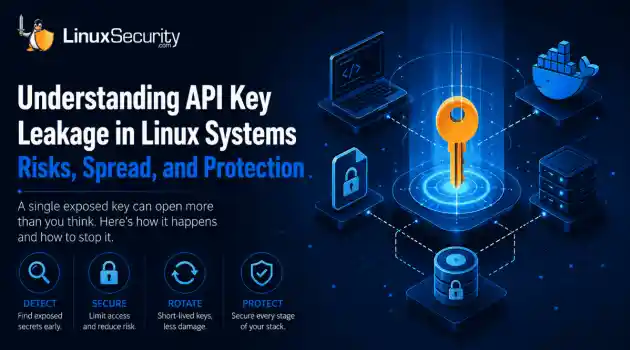
 Security scanners flag exposed API keys in public repositories every day. The initial response is usually predictable: delete the commit, revoke the credential, and move on. That’s a mistake. . In a real Linux environment, an API key never stays in one place. By the time it hits a public repo, it’s already everywhere. It’s in the CI/CD pipeline. It’s in your container registry. It’s in the build logs. It’s in the backups. Git makes this worse because the history never dies. Deleting a file in...
Jul 11, 2026
 open-source rootkit
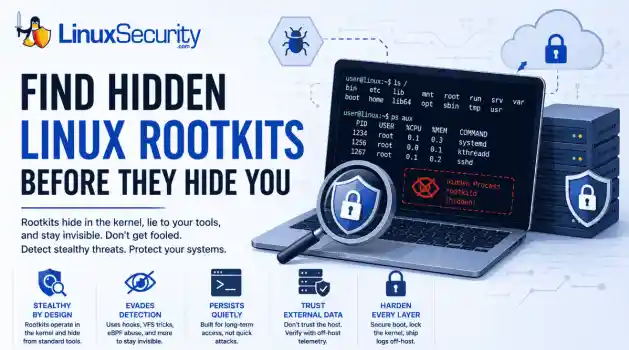
 Most of us think of Linux rootkits as ancient history—the stuff of 90s hacking forums and clunky malware that would crash your system if you looked at it the wrong way. But if you think they’ve gone away, you’re mistaken. They’ve just gotten smarter. . Modern attackers aren't using the noisy tools of the past. Today’s threats are surgical. Many of today’s most advanced Linux rootkits operate at the kernel level or abuse legitimate system features to blend in with normal traffic. They’re...
Jul 09, 2026
 Refine features
X Clear Filters
Get the latest News and Insights
Get the latest Linux and open source security news straight to your inbox.
Community Poll
Should Linux servers automatically install security updates?
Loading...
Explore Latest Linux Security features
We found 3 articles for you...
218
 security advisorylinux distributionprivacy
Exploring Privacy Focused Secure Linux Distros for Enhanced Security
Privacy and security have never been more important—or more under threat. With headlines constantly reporting data breaches, hacks, and the unchecked collection of sensitive personal information, it’s easy to feel like your digital life is always at risk. . However, there’s a silver lining for Linux users: experts widely agree that Linux is a highly secure OS —arguably the most secure OS available. That said, not all Linux distributions are created equal. While every distro benefits from the inherent strengths of Linux, some go the extra mile in safeguarding your privacy and security. From those designed for enterprise-grade reliability to others explicitly built for anonymity, there’s a distro tailored to meet your needs. We’ve explored some of the best specialized secure Linux distros, including insights from their developers, to help you navigate the options. Whether you’re focused on advanced security frameworks, protecting personal data, or simply locking down your system, this guide will help you choose the Linux distro that fits your priorities and gives you confidence in your digital security. Linux Security in 2026: Key Vulnerabilities and Solutions When it comes to security, Linux users undoubtedly fare better than their Windows or Mac-using counterparts. Linux offers inherent security advantages over proprietary OSes due to its diversity, flexibility, transparency of its open-source code, and role as a foundation for open-source intelligence tools. Distributions like Rocky Linux remain secure, RHEL-compatible options for users seeking enterprise-grade reliability in 2026. Thanks to its community-driven nature, security issues are caught and fixed quickly. Security technical implementation guides, like the DISA STIG, now support benchmarks for RHEL 9, ensuring compatibility with modern distributions like Rocky Linux. These guides provide clear security standards for users to follow, enhancing system resilience. Tools like the DISA STIG, on the otherhand, give you a solid framework for finding and managing these security gaps yourself. Along with its secure open-source roots, Linux's diversity within environments, the high level of configurability and control it provides sysadmins with features built into the kernel, such as SELinux and AppArmo, and the high level of security it offers also helps defend against attacks. In this sense, Linux is, in many ways, secure by design. Implementing reliable backup Linux solutions is another crucial step in maintaining system resilience. Although attacks targeting Linux systems are on the rise due to its relatively small user base, Linux is still a relatively unpopular target among malware operators and malicious hackers. Most malware still targets Windows, but the growing adoption of Linux in cloud and IoT environments has made it a target in 2026. Attackers increasingly exploit kernel vulnerabilities and IoT-specific malware to compromise Linux systems. Top Reasons to Choose Secure Linux Distros Like Rocky Linux Switching from a proprietary OS to a Linux distro like Ubuntu, Fedora, or Debian is an excellent step for privacy and security. In 2026, alternatives like Rocky Linux will continue to offer robust RHEL-compatible solutions, delivering enterprise-grade reliability and scalability for modern applications. If you really want to take things up a notch, implementing a security technical implementation guide ensures your system is locked down to meet top security standards. Secure Linux distros are built to focus on security, privacy, and anonymity. Understanding Linux distributions can help users choose the best option for their needs. Adding the DISA STIG into the mix makes sure your system lines up with well-established security standards, giving you extra peace of mind. Many of them incorporate Tor technologies and offer an impressive selection of hacking, pentesting, and digital forensics tools. As you can imagine, these characteristics and resources are invaluable whenassessing an organization's security infrastructure or conducting a security audit. Each distro offers a different balance of privacy and convenience. Rocky Linux emerges as a secure and reliable choice for those seeking stability in enterprise environments. Distros like Tails and Whonix leverage the Tor browser for Linux to maximize anonymity. However, these benefits come with some tradeoffs. The most popular programs and OSes typically have the weakest privacy protections but are also compatible with the majority of websites and offer the most support. While certain secure Linux distros are relatively mainstream and user-friendly, others have a steep learning curve, especially for less tech-savvy users. Explore the Top Secure Linux Distros for Privacy & Security 1. Qubes OS Qubes OS is ideal for users looking to mitigate risk by compartmentalizing their digital lives. As of 2025, version 4.2 introduces enhanced hardware compatibility and faster Qube management tools, making it even more user-friendly. Qubes OS uses multiple virtual machines—or 'Qubes'—to separate your systems into categories like 'work,' 'personal,' and 'Internet.' In its latest release, version 4.2, Qubes OS enhances hardware compatibility and improves Qube management tools, making it even more accessible to users in 2026. Users can ensure consistent security across these Qubes by following a security technical implementation guide. These Qubes, conveniently color-coded to help users differentiate them, are highly secure and can offer privacy advocates peace of mind in an increasingly invasive digital environment. As a result of this compartmentalization, if you happen to download malware to your work machine, your personal files won’t be affected, and vice versa. Integration of various Qubes is provided by the Application Viewer, which creates an illusion for the user that all system applications execute natively on the desktop - when, in reality, they are hosted in isolation in separate Qubes. The Dom0 domain manager, which manages the virtual disks of all other VMs, is isolated from the network to prevent attacks originating from an infected VM. In a conversation with the LinuxSecurity editors, Qubes OS Community Manager Andrew David Wong elaborated: “Rather than attempting to fix all of the security bugs in software, Qubes assumes that all software is buggy and compartmentalizes it accordingly, so that when flaws are inevitably exploited, the damage is contained and the user's most valuable data is protected.” Why We Love Qubes OS: Its “Security by Isolation” approach, which uses containers—aka “Qubes”—eliminates the concern of compromised programs. These Qubes are integrated into one everyday desktop environment and color-coded to help users stay organized. Sandboxing protects system components. Qubes OS offers full disk encryption for maximum file protection. 2. Tails Tails keep users safe online by using the Tor network , which is heralded for privacy and anonymity. In version 5.15, released in 2025, Tails introduces streamlined USB installation and an updated Tor browser, further enhancing its ease of use and privacy protections. Tails comes with the Tor browser for Linux, a secure email client, and other secure Internet tools. Tails is the most well-known privacy-focused distro and a popular choice among less tech-savvy security enthusiasts. A Tails Project contributor explains, “With Tails, anybody can turn any computer into a secure environment free from malware and capable of circumventing censorship.” On top of Tor's privacy and anti-censorship properties, Tails empowers users worldwide by developing and distributing an integrated and secure operating system that protects users from most surveillance and censorship threats by default. The distro provides a level of security that individual applications cannot achieve because they ultimately depend on the safety of the underlying operating system. The TailsProject relies heavily on donations and partnerships to maintain its independence and to continue serving the Linux community. Why We Love Tails: Its tight integration with the Tor network ensures anonymity online. The included web browser is pre-configured for maximum security and includes add-ons like NoScript, Ublock Origin, and HTTPS Everywhere. Users get access to Onion Circuits, a valuable tool that allows them to view how their PC traverses through the Tor network. Tails comes with the Aircrack-NG wireless network auditing tool. The OS is encrypted and designed to run with full functionality on a USB drive. The distro features a built-in Bitcoin wallet ideal for users looking to make secure cryptocurrency transactions. 3. Kali Linux Kali Linux is an industry-standard pentesting distro. In 2025, its latest updates include AI-driven pentesting tools, automating vulnerability detection, and improving workflow efficiency for security professionals. It is one of the most popular distros among pentesters , ethical hackers, and security researchers worldwide and contains hundreds of tools. A Kali Linux contributor provides some insight into the distro’s history and the benefits it offers users: “Named after a Hindu goddess, Kali has been around for a long time – but it’s still updated weekly, can be run in live mode or installed to a drive, and can also be used on ARM devices like Raspberry Pi.” Why We Love Kali Linux: Kali Linux uses LUKS full-disk encryption to protect sensitive pentesting data from loss, tampering, and theft. This flexible distro offers complete customization with live build . Users can automate and customize their Kali Linux installations over the network. “Forensics” mode makes this distro perfect for forensics work. A Kaili Linux training suite, Kali Linux Dojo , is available, where users can learn how to customize their own Kali ISO and learn the basics of pentesting. Theseresources are available on Kali’s website , free of charge. Kali Linux also boasts a paid-for pentesting course that can be taken online, with a 24-hour certification exam. Once you pass this exam, you’re a qualified pentester! 4. Parrot OS Parrot OS is constantly updated and has tons of hardening and sandboxing tools. By using the DISA STIG, you can configure Parrot OS to meet strict security requirements and get the most out of its features, from pentesting to reverse engineering and digital forensics - but this Debian -based distro also includes everything you need to secure your data and develop your own software. Parrot OS is frequently updated and offers users a wide selection of hardening and sandboxing options. Including backup Linux strategies further enhances its reliability. The distro’s tools are designed to be compatible with most devices via containerization technologies such as Docker or Podman . Parrot OS is very lightweight and runs surprisingly fast on all machines, making it an excellent option for systems with old hardware or limited resources. Why We Love Parrot OS: The distro provides pentesters and digital forensics experts with the best of both worlds - a state-of-the-art “laboratory” with a full suite of tools and standard privacy and security features. Applications that run on Parrot OS are fully sandboxed and protected. Parrot OS is fast, lightweight, and compatible with most devices. 5. BlackArch Linux This popular pentesting distro hails from Arch Linux and contains over 2,000 hacking tools - allowing you to use whatever you need without downloading new tools. BlackArch Linux offers frequent updates and can be run from a USB stick or CD or installed on your computer. BlackArch Linux is similar to Kali Linux and Parrot OS in that it can be burned to an ISO and run as a live system. This makes it a robust open-source intelligence tool for security professionals. However, this up-and-coming distro does offer a largeselection of preconfigured Window Managers. Why We Love BlackArch Linux: BlackArch Linux offers a large selection of hacking tools and preconfigured Window Managers. The distro provides an installer with the ability to build from source. Users can install tools either individually or in groups with the modular package feature. 6. Whonix Sometimes, using a live OS can be inconvenient – you have to restart your machine each time you want to use it, which is tedious and time-consuming. By installing an OS on your HD, however, you run the risk of the OS being compromised. Whonix offers a solution to this predicament – a virtual machine that works inside the free program Virtualbox and aims to provide security, privacy, and anonymity on the Internet. This Debian -based distro operates in two parts. The first part, known as the Gateway, routes all connections to the Tor network. The second part, referred to as the Workstation, runs user applications and can directly communicate only with the Gateway. The Workstation VM can only “see” IP addresses on the Internal LAN, which are identical in every Whonix installation. Therefore, user applications do not know the user’s actual IP address, nor do they have access to any information about the physical hardware of the machine on which the OS is running. This split design allows the user to remain completely anonymous and mitigates the risk of DNS leaks, which reveal private information such as web browsing history. Whonix has recently added an amnesic live mode that “forgets” users’ activities, leaving no traces on disk. The distro is currently working to create a unified desktop experience. Whonix developer Patrick Schleizer explains: “Our upcoming Whonix-Host extends many of our usability and hardening features to the entire desktop.” Whonix encourages users to provide feedback on their experience and sincerely appreciates donations and contributions to support the project’s ongoing efforts. Why We Love Whonix: Whonix comes with the Tor Browser and the Tox privacy instant messenger application, which ensures full-anonymous web browsing and instant messaging. The OS employs an innovative Host/Guest design to conceal users’ identities behind the anonymous proxy and prevent IP and DNS leaks. The distro features pre-setup Mozilla Thunderbird PGP email. Linux Kernel Runtime Guard (LKRG) , a kernel module that performs runtime integrity checking of the Linux kernel to detect security vulnerabilities and exploits, can be easily installed on Whonix . Best Secure Linux Comparison Table The comparison table comprehensively overviews several Linux distributions tailored for security-focused users. It encapsulates key factors such as User Friendliness, GUI Availability, Tutorial Availability, Community Support, Recommended User Level, Open Source License, and Top 3 Security Applications for each distribution. Tails OS, known for its strong privacy features, is moderately user-friendly. It offers abundant tutorials and robust community support, suggesting it's well-suited for intermediate users. Parrot Security OS (my favorite) is highly user-friendly, making it accessible to beginners and intermediates. It offers a plethora of tutorials and strong community support. Kali Linux is recommended for advanced users. It offers moderate user-friendliness, many tutorials, and a supportive community. Qubes OS scores low in user-friendliness, suggesting it's best for advanced users. It has limited GUI, moderate tutorials, and community support. BlackArch Linux is also geared toward advanced users with low user-friendliness, while Whonix provides an intermediate level of user-friendliness with moderate tutorials and community support. Each Linux distribution is backed by an open-source license. The table highlights three key security tools, helping readers discern which Linux distribution best suits their experience level and security needs. This comparison is aninvaluable resource for users to select a distribution that offers the appropriate balance of ease of use, educational resources, support, and advanced security functionalities to meet their specific requirements. Distribution User Friendliness GUI Availability Tutorial Availability Community Support Recommended User Level Open Source License Top 3 Security Applications Tails OS Moderate Yes High High Intermediate GPLv3 and others Tor, KeePassXC, Electrum Parrot Security OS High Yes High High Beginner to Intermediate GPLv3 and others Metasploit Framework, Nmap, Aircrack-ng Kali Linux Moderate Yes High High Advanced Various OSI approved Nmap, Metasploit Framework, Wireshark Qubes OS Low Limited Moderate Moderate Advanced GPLv2 Xen, FirewallVM, Whonix BlackArch Linux Low Yes Moderate Moderate Advanced Various OSI approved Metasploit, Wireshark, SQLmap Whonix Moderate Yes High Moderate Intermediate GPLv3 and others Tor, Onionshare, sdwdate Our Final Thoughts on Choosing a Secure Linux Distro There is a selection of excellent specialized secure Linux distros available to pentesters, software developers, security researchers, and users with a heightened concern for their security and privacy online. Picking the right Linux distro is about finding the balance that works for you. The DISA STIG helps standardize your setup, so it’s secure and follows proven best practices. A security technical implementation guide enables you to set things up correctly so you’re meeting solid security benchmarks right out of the gate. Based on your specific requirements and concerns, it is likely that one (or many!) of the distros profiled above could be an excellent fit for you, offering the tools and capabilities you are looking for in a distro, coupled with the peace of mind that your systemis secure and your privacy is protected online. . However, there’s a silver lining for Linux users: experts widely agree that Linux is a highly secu. privacy, security, never, important—or, under, threat, headlines, constantl. . Brittany Day
 Dec 22, 2025
•
Dec 22, 2025
•
102
 security riskslinux distributionopen source security
Why Software Supply Chain Security Matters in Linux Systems
For Linux users, software supply chain security means protecting the entire path from source to install. It covers who authors and reviews the code, how it is built, how artifacts and metadata are signed, where they are mirrored, and which keys the client trusts. In short: provenance, freshness, and scoped trust across the package pipeline. . Signatures and HTTPS are not enough. The distribution layer still introduces risk through build system breaches, website-level distribution swaps, stale or broken mirrors, mismanaged repository keys, and community repositories without strong guarantees. Each of these failures bypasses cryptography without breaking it. We see the same patterns repeat in open source supply chain security: outdated packages served from mirrors, keys that expire or sprawl, community packages that look legitimate but were never vetted, and infrastructure that turns trusted delivery into an attack path. The problem isn’t the math. It’s the systems around it. The fix is not “turn on HTTPS and move on.” It requires signed metadata and verifiable provenance, sane mirror freshness policies, and per-repository key isolation on the client. That is the baseline for modern software supply chain security. Why Software Supply Chain Security Matters for Linux Users Open source supply chain security isn’t a theoretical problem — it shapes how Linux systems run and how secure they remain for administrators, security teams, and everyday users alike. Admins and engineers: Stale mirrors and expired keys don’t just raise warning messages. They break deployments, block updates, and in some cases allow corrupted or even malicious packages to slip through. Security teams: Attackers rarely waste effort trying to break cryptography itself. They target the weak spots around it — mirrors, build systems, or community repositories — where they can bypass signatures and HTTPS without ever touching the math. Everyday users: A package downloaded over HTTPS and signed with avalid key can still be malicious if the repository serving it is compromised. The surface looks safe, but the content underneath isn’t. At LinuxSecurity , we’ve seen these risks play out in real-world incidents for years. That history is what makes them so important to understand. The following case studies show how each of these weak points has been exploited in practice. Incidents That Shaped Open Source Supply Chain Security Incidents span more than a decade, and they fall into two groups. From early cases like FreeBSD 2012 and Linux Mint 2016 to recent compromises, the same risks have continued to surface across Linux ecosystems. FreeBSD 2012 Infrastructure Compromise: Build System Breach This incident illustrates the failure mode of compromised build infrastructure. As one of the legacy cases, the 2012 FreeBSD breach demonstrated early on how fragile the build environment could be. Several package-building servers were compromised, creating the possibility that malicious code could be introduced during the build process. According to the project’s official postmortem , the intrusion affected servers used to prepare software distributions. While signed binaries continued to be produced, the compromise showed that signatures mean little if the system generating those binaries has already been tampered with. Provenance becomes critical in open-source supply chain security, as delivery integrity cannot compensate for poisoned origins. The takeaway is clear: provenance and build isolation are essential to any credible security model. T o us at LinuxSecurity , The real weakness isn’t the signatures. It’s the build environment itself. Once attackers reach that layer, they can turn out validly signed malware, and every downstream control fails with it. Some argue that identifying and disclosing such errors proves the system works. In reality, an infrastructure compromise demonstrates how brittle the trust model is when attackers reach inside thebuild environment itself. FreeBSD proved that when the build system itself is poisoned, provenance collapses no matter how strong the signatures. Distribution adds a different weakness: the servers users depend on to fetch software can be turned against them. The Linux Mint hack in 2016 was the most evident proof of that. Linux Mint Hack (2016): Distribution-Layer Compromise Back in 2016, a major compromise showed how fragile the distribution infrastructure could be. Attackers breached the Linux Mint website and quietly replaced official ISO download links with images containing a backdoor. The project later confirmed on its site that modified ISOs had been served directly from the distribution page. HTTPS and GPG were technically intact, but once attackers controlled the download portal, those checks offered no real protection. Trojanized ISOs spread quickly to users who believed they were following best practices. This showed how software supply chain security depends on delivery paths as much as code. It’s tempting to write incidents like this off as rare. The reality is that every breach, no matter how isolated, maps directly to a weakness that will surface again if left unaddressed. At LinuxSecurity, we’ve long pointed to the Mint hack as evidence that signatures can’t defend a broken delivery path. Infrastructure has to be guarded with the same rigor as the code itself. Mint showed how delivery can be subverted after the build. XZ exposed an even deeper cut: compromise at the source, where the maintainer workflow itself became the entry point. XZ Utils Backdoor (2024): Maintainer Workflow Compromise In 2024, malicious code was discovered in XZ Utils versions 5.6.0 and 5.6.1, compromising the maintainer workflow. What set this attack apart was patience. The attacker spent years inside the project, sending patches and building credibility until they were treated as a trusted maintainer. By the time the backdoor landed, it blended in as just another update. Thatlong game is what made the compromise so effective — the usual safeguards never triggered, because the attacker was already on the inside. CISA confirmed the incident as CVE-2024-3094 , rating it CVSS 10.0 and warning of impacts across Debian, Fedora, and Ubuntu development channels. Technical analysis later explained how the backdoor worked and why it was so dangerous: payloads persisted even when downstream container images were rebuilt, allowing the compromise to spread beyond the original packages. HTTPS and valid signatures never failed, but software supply chain security collapsed when provenance did. With the maintainer account compromised, the backdoor entered as an “official” change, collapsing trust before cryptographic checks or delivery controls could even play a role. Some argued the damage was limited because stable users were not affected. In reality, timing and vigilance prevented worse fallout. The lesson stands: modern compromises can emerge from trusted maintainers, and when they do, the usual assurances of signatures and HTTPS cannot contain the risk. The XZ case was caught quickly, but discovery didn’t erase the damage. Once malicious code is released, it clings to downstream images and caches. That persistence was exactly what surfaced in 2025, when Docker Hub continued to distribute backdoored versions long after the upstream fix. XZ Persistence in Docker Hub (2025): Downstream Amplification The 2024 XZ backdoor didn’t disappear once patched. It carried into 2025, embedded in Docker Hub base images and derivative containers. This was the failure mode of downstream persistence, where compromised artifacts spread and linger across caches and builds long after the upstream fix. Binarly’s report found more than 35 public Docker images still shipping the backdoored XZ Utils library, including Debian-based ones. The problem didn’t stop there — “second-order” images built on top of those bases multiplied the exposure. This isn’t mirror staleness.Container ecosystems replicate tainted binaries indefinitely, giving compromised artifacts a half-life of years, not weeks. Because these images inherit directly from upstream distributions, the weakness cascades across the ecosystem. What persistence reveals Once poisoned, artifacts replicate through container bases and derivatives. There is no recall mechanism to purge compromised libraries. Risk spreads silently, infecting and building long after the upstream issue is fixed. Persistence is one of the hardest problems in software supply chain security. Once an artifact is embedded in Docker or similar ecosystems, it doesn’t fade out quickly — it lingers. That cascading effect points to another gap in open source supply chain security: not just persistence of bad code, but the trust we extend to code that enters the ecosystem in the first place. AUR Chaos RAT Malware (2025): Community Trust Failure This case illustrates the failure mode of community trust. Unlike official repositories, the Arch User Repository (AUR) accepts user-submitted packages without upstream review. In 2025, several of those packages were found to deliver the Chaos RAT malware. Malicious versions of utilities such as arch-wiki-lite and vim-patchupdate were uploaded and distributed through the AUR. The scope of the compromise was detailed in Chaos RAT in AUR , where users expecting benign tools instead installed a remote access trojan. Community reaction captured by Linuxiac reflected the ongoing debate over whether the AUR should be treated as part of the distribution or as an inherently untrusted space. Open-source supply chain security has to account for where software originates, not just how it is transported. Some argue that AUR use is a personal choice, but package managers blur those boundaries — once a malicious package circulates, the risk spreads. What this shows Community repos bypass upstream review Signatures only confirm delivery, not trustworthiness Risk spillsover into the broader ecosystem Community repos revealed how extending trust too far can poison the ecosystem, proving once again that software supply chain security is about provenance, not just signatures. Community repos revealed how extending trust too far can poison the ecosystem. But risk isn’t limited to the edges. Research in 2025 showed that even the official infrastructure behind Fedora and openSUSE carried exploitable flaws. Fedora & openSUSE Build Services (2025): Modern Infra Risks In 2025, new research exposed critical weaknesses in the infrastructure behind major Linux distributions. Investigations into Fedora’s Pagure forge and the Open Build Service (OBS) used by openSUSE revealed vulnerabilities in the very systems responsible for managing and building packages. This represents modern build and repository infrastructure risks, echoing the lessons first seen in the FreeBSD compromise of 2012. One of the most severe findings was CVE-2024-47516 , a critical argument injection vulnerability in Pagure that enabled remote code execution during repository history retrieval. At the same time, research from Fenrisk showed how the source service in OBS could be manipulated to alter package sources directly. Together, these disclosures confirmed that infrastructure-level compromises are not just historical anomalies. The same class of risk persists today, nearly identical in nature to the problems uncovered more than a decade earlier. For software supply chain security, the implications are clear. Even if signing keys are properly managed, poisoned binaries can slip through when the systems that assemble and distribute them are insecure. Provenance collapses if attackers can compromise the build process itself. Building infrastructure remains one of the weakest points in the Linux supply chain. Some dismissed these as proofs-of-concept, but that misses the point — if today’s core build services can be modeled as exploitable, the system is already brittle. The onlyvariable left is timing. Why the Same Failures Repeat Across Incidents A decade’s worth of incidents makes the pattern clear. Incident Weak Point Why Crypto Didn’t Help Lesson FreeBSD 2012 Build infra compromise Signed binaries were still malicious Even valid signatures can’t protect if the build environment itself is poisoned. Linux Mint 2016 Website compromised HTTPS and GPG were intact but irrelevant A trusted download site turned hostile, showing the distribution layer is as critical as the code it serves. XZ Utils 2024 Maintainer workflow Crypto verified poisoned binaries as “legit” Provenance collapsed when a maintainer account was abused, proving trust can fail at the source. DockerHub Persistence 2025 Mirrors, caches, derivatives Tainted images lived on after removal Without recall, poisoned artifacts persist and spread downstream long after the fix. AUR Chaos RAT 2025 Community repo trust Signatures delivered malware anyway Community repositories bypass review, proving that provenance matters as much as delivery. Fedora/OBS 2025 Build service flaws Vulnerable infrastructure could sign bad code Even in 2025, core build services can still be modeled as exploitable, showing how brittle the foundation remains. These incidents show that software supply chain security is not a problem cryptography can solve on its own. It depends on securing the entire delivery chain, from build systems and distribution sites to mirrors, caches, and community repositories. Why Mirrors and Metadata Integrity Matter in Open Source Supply Chain Security The last set of incidents showed how attackers plant malicious code at different points in the chain. Mirrors and metadata integrity represent adifferent risk. They determine whether those compromises fade quickly or linger long after the initial breach. Fedora Metalink Freshness Checks: Freshness Enforcement Fedora treats mirror freshness as a security control, not just an uptime concern. This is the failure mode of stale mirrors, and Fedora’s answer is to enforce “freshness” at the metadata level. As described in the Fedora infrastructure blog , package delivery depends on repomd.xml checksums and timestamp validation. If a mirror falls out of sync, Fedora clients reject it. To users, the result looks like downtime, but the outages are a defense at work. Mirror staleness is more than an inconvenience. It is a vector for replay and rollback attacks. That’s why freshness enforcement is a core part of software supply chain security. For open-source supply chain security, keeping metadata fresh is as critical as key management. Outages here are intentional safeguards. At LinuxSecurity , we’ve pointed out that this is exactly the kind of control missing in earlier incidents like FreeBSD’s 2012 compromise. The same risks seen more than a decade ago still shape modern infrastructure. Some argue that mirrors are simply an availability issue. In reality, without enforced freshness, outdated packages can be replayed as if they were current, and cryptographic checks alone will not stop it. Fedora demonstrates proactive enforcement. Debian shows the opposite, where brittle checks allow the problem to surface in practice. Debian SecureApt: Rollback Fragility In Debian, open-source supply chain security relies on SecureApt and its Valid-Until mechanism. This represents the failure mode of rollback fragility: protections against stale mirrors that can also lock users out when freshness checks break down. As detailed in the Debian security manual , Release and InRelease files are signed and include a Valid-Until field. When a mirror drifts or a system clock slips, users see the familiar error: “Release file expired.” Itprotects against rollback but also shows how brittle the system becomes when mirrors lag. Some argue that these errors simply prove the system is working. That is true, but it also demonstrates how fragile the trust model can be when enforcement collides with real-world infrastructure. Debian’s model shows the price of enforcing freshness when mirrors drift: security holds, but usability breaks. That tension is what pushed projects to rethink key hygiene in the years that followed. Key Hygiene and Isolation on the Client Side Attacks on infrastructure and mirrors show where the chain can be poisoned. Key management on the client side decides how far that poison spreads. apt-key Deprecation: Trust Scope Failure For years, Ubuntu and Debian-based systems used apt-key to manage repository signing keys. It worked, but it was insecure: a single trusted key meant a compromise in one repository could affect them all — the failure mode of trust scope. Canonical announced the deprecation of apt-key in its Discourse post . The replacement uses deb822 source entries with the Signed-By option, which lets each repository define its own key. The move acknowledged what the community already knew: shared trust anchors undermine software supply chain security, while scoped keys and isolated trust boundaries reduce the blast radius of a compromise. Shared keys created a global blast radius. Per-repo keys isolate trust, reducing fallout when one key is exposed. Key hygiene failures are dangerous because they fail silently until compromise has already spread. Per-Repository Key Isolation: Trust Scope Failure With deb822 and the Signed-By directive, each repository now carries its own signing key. This model directly addresses the failure mode of trust scope, where a single global key once had authority over every source. Benefits of per-repo key isolation: Limits compromise to one repository rather than the entire system Reduces systemic risk if a single key is exposed Encouragesbetter hygiene and accountability across maintainers This shift matters because software supply chain security depends on limiting how far a compromise can travel once it begins. Isolating keys ensures that a poisoned source does not cascade across unrelated repos. For open-source supply chain security, it is the difference between a local breach and an ecosystem-wide incident. Some argue that key isolation is overkill. In practice, one bad key under the old model meant global compromise. Scoped trust prevents that outcome and keeps failure contained. This is why key hygiene sits at the heart of modern software supply chain security. Client-Side Controls Show Their Own Weak Points Mirrors, keys, and client-side controls show that failures aren’t only upstream — they play out on end-user systems as well. Incident Weak Point What Users Saw Security Trade-off Failure Mode Fedora Metalink Stale or broken mirrors Outages when mirrors drifted Enforced freshness stopped rollback, but at the cost of availability Freshness Enforcement Debian SecureApt Expired Release files “Release file expired” errors Valid-Until blocked stale repos, but also locked users out Rollback Fragility apt-key Deprecation Shared global key One key is trusted everywhere Convenience created a global blast radius Trust Scope Failure Per-Repo Keys Poor key isolation Each repo now has its own key Scoped trust prevents cascades, improves maintainer accountability Trust Scope Failure Together, these cases reinforce the main point: software supply chain security cannot be reduced to signatures and HTTPS. Even when cryptography is intact, weaknesses in mirrors, metadata, and key hygiene expose users to rollback, replay, and trust-scope failures. Opensource supply chain security has to account for every layer, from upstream build systems to client-side validation. How to Improve Open Source Supply Chain Security: Practical Fixes The incidents made one thing clear: distribution is where the chain most often fails. Provenance, freshness, and scoped trust are the controls that matter. Signed metadata and provenance keep packages traceable and stop poisoned repositories from masquerading as legitimate. Mirror freshness policies block rollback and replay by rejecting outdated files before they spread. Per-repository key isolation contains a compromise to a single source instead of exposing an entire system. Our perspective: These aren’t advanced features. They are the baseline. They don’t close every gap, but they stop the failures that have defined the last decade of attacks. Enterprise ecosystems like Microsoft and Red Hat enforce provenance and freshness through centralized infrastructure. Open source has the same needs but depends on fragmented adoption, which leaves room for the same failures to resurface. These aren’t optional add-ons. They are the foundation of modern software supply chain security, and without them, open source software supply chain security will keep repeating the same incidents we’ve already seen. Conclusion: Rethinking Open Source Supply Chain Security The failures we’ve traced don’t come from broken cryptography. Signatures and HTTPS hold up. What fails is distribution — the systems, mirrors, workflows, and trust models that deliver code. From FreeBSD’s compromised build servers to Linux Mint’s website breach, from XZ’s maintainer compromise to Docker and AUR persistence, the same pattern repeats. The fix is not new crypto, but a focus on provenance, freshness, and scoped trust. Without that, software supply chain security will keep failing in predictable ways. . Explores risks in Linux software supply chain security and the importance of securing the entire packagedelivery process.. linux, users, software, supply, chain, security, means, protecting, entire, source. . MaK Ulac
Oct 01, 2025
•

102
 security advisoryhardeninglinux distribution
Hardening Linux SSH Configs Against Proxy Attacks and Risks
Let’s be honest—your Linux server isn’t the fortress you hope it is if your SSH setup isn’t locked down tight. Recently, security teams have been tracking a spike in attacks, and it’s not just the usual malware game we’ve seen before. Attackers are going low-key and crafty, exploiting weak SSH security to install legitimate tools like TinyProxy and Sing-box to turn compromised servers into proxy nodes. These tools are completely normal when used properly, but they’re a dream for attackers who want to hide their tracks or sell access to your system. . Here’s the deal: the rise of attacks on misconfigured Linux SSH servers isn’t just a freak occurrence. It’s part of a growing trend—bad actors are ditching custom malware and leaning into legitimate software to fly under the radar. What does that mean for you? It means these threats can be harder to spot, more annoying to clean up, and potentially dangerous for others relying on your systems’ security. Understanding These Attacks: How Do They Work & Who Is At Risk? First off, who’s vulnerable here? Well, it’s anyone who’s too relaxed about their Linux SSH configurations. Admins dealing with servers exposed to the internet, systems relying on weak passwords, or those that let SSH requests flow freely without strict controls—you’re on attackers’ radar. And small organizations, personal VPS setups, or cloud servers lacking dedicated security resources? These attackers know there’s gold there. So, how do these attacks usually play out? It typically starts with brute-force or dictionary attacks aimed at SSH credentials. Once they slip into your server, they roll out one of their preferred proxy tools. Case 1: TinyProxy TinyProxy ’s lightweight and easy to install—exactly what an attacker wants. Once inside, a bash script grabs TinyProxy through your package manager. The real action starts when they mess with the configuration file, something like /etc/tinyproxy/tinyproxy.conf . The goal? Open it upso the proxy accepts connections from anywhere in the world. How? An Allow 0.0.0.0/0 rule gets slapped in there, scrapping the idea of restrictions entirely. To make sure their setup sticks, attackers adjust service settings to load TinyProxy automatically. Suddenly, your system—usually accessible through port 8888—becomes a platform for their next move or a product for shady dealings on the dark web. Case 2: Sing-box TinyProxy isn’t the only tool getting abused. Enter Sing-box . This one’s a flexible proxy tool that supports fancier protocols like vmess and vless. Attackers love Sing-box for its ability to bypass regional blocks or restrictions, whether they’re accessing services like Netflix or ChatGPT, or just trying to stay hidden. It installs in much the same way. A script pulls it in, and the attackers tweak it for their purposes, whether anonymity or profit. Your server? It’s just a middleman now, working overtime for someone who didn’t ask permission. Spotting Trouble How do you know if you’ve been hit? The clues are subtle but manageable if you’re alert. Start with login patterns—are there weird IPs repeatedly trying to brute-force their way into your SSH? Take note, especially when failed attempts suddenly switch to successful logins. Look for unexpected services or processes running on your system. TinyProxy or Sing-box shouldn’t be active without your knowledge. If TinyProxy is up, its configuration file is often the smoking gun. Check /etc/tinyproxy/tinyproxy.conf for suspicious edits, like an unrestricted Allow 0.0.0.0/0 line. Are your machine’s resources spiking? If attackers start monetizing their proxy node, your CPU, bandwidth, or disk I/O might take a noticeable hit. Unusual outbound network connections—especially to unknown destinations—are another hint that something’s up. Persistence techniques are popular too. Watch for cron jobs or modified systemd service files that restart proxy tools every time your system boots. GetSerious About Locking Down SSH Countering these attacks boils down to proactive defense—don’t make your system an easy target. SSH isn’t inherently insecure , but poor configurations and weak credentials invite trouble. Make SSH Authentication Solid First, dump password-based SSH authentication in favor of key pairs. No one’s brute-forcing a 4096-bit RSA key anytime soon. If you still use passwords, stop relying on ones you can recite from memory. Long, random, complex—those are the passwords that withstand dictionary and brute-force hits. Disable root access over SSH. There’s pretty much zero justification for allowing root logins directly. Just revoke that option (PermitRootLogin no) in /etc/ssh/sshd_config. Changing the default SSH port from 22 to something less obvious also makes life harder for automated scans. Cut Down Access Firewalls work, so use them. Whether you’re relying on iptables , ufw , or what’s baked into your cloud provider, lock SSH traffic down as much as reasonably possible. If your server doesn’t need to be exposed to the entire internet, don’t expose it. Use VPNs or restricted jump hosts instead. If exposure is unavoidable, use /etc/hosts.allow and /etc/hosts.deny to whitelist trustworthy IP addresses. Tools and Monitoring: Your Best Allies Install tools like Fail2Ban or DenyHosts —every repeated failed SSH login attempt should trigger a block. Regularly patch your systems , but also check your logs (e.g., /var/log/auth.log ) for anything odd. If you notice bursts of failed logins, dig deeper. Keep tabs on your network activity. Tools like netstat let you pinpoint unusual ports, processes, or outbound connections. SIEM tools are invaluable here if you’re managing multiple machines. Reduce Your Attack Surface Strip your server down to what’s actually necessary. If services aren’t actively needed, disable them. Fewer services mean fewer potential entry points. Consider proxies themselves—are youhosting a legitimate proxy service? Tighten those configurations and keep non-proxy systems clean of proxy tools entirely. The Final Word on These Attacks The fact that attackers are exploiting tools like TinyProxy and Sing-box is a frustrating reminder of how quickly legitimate software can become a security risk. These attacks are smart—they don’t rely on fancy malware but use tools that might already be installed on your system, making detection tougher. But smart doesn’t mean undefeatable. Keep your SSH configurations airtight, stay on top of your logs and processes, and never assume your server is too small to be targeted. Every system has its appeal, whether for launching attacks or making money through proxies. The best defense is vigilance. So get to work—your Linux servers are worth the effort! . Poorly set up Linux SSH servers are becoming prime targets for gateway assaults, revealing vulnerabilities that can compromise your networks.. SSH Hardening, Proxy Attacks, Linux Server Security, SSH Configuration Issues, Security Best Practices. . Brittany Day
Jul 03, 2025
•
102
 malware threatlinux distributionuser awareness
Linux Security Overview: User Savvy, Architecture & Malware Defense
As a Linux security admin, you've likely spent countless hours fine-tuning your systems' defenses, but here's a reality check: Linux's inherent safety isn't just about firewalls and kernel updates . Often, the savvy users themselves serve as a frontline defense against malware. Unlike their Windows and macOS counterparts, Linux users tend to have a deeper understanding of their operating systems, enabling them to identify and avoid suspicious activity before it becomes a threat. This user knowledge cultivates a proactive approach to security that bridges the gap traditional measures might miss. . Moreover, the architecture of Linux itself plays a critical role in its resilience against viruses. With robust permission settings and sandboxing features, Linux ensures the impact is usually contained even if malware slips through. Add to that the complexity introduced by the vast diversity of Linux distributions—each with its nuances—and you've got a landscape that poses significant challenges for malware developers. Combined with Linux's relatively smaller market share and vigilant open-source community, these factors create an environment less hospitable to viruses. This multi-faceted approach to security sets Linux apart and offers peace of mind in your day-to-day operations. Let's examine the various factors that contribute to your security from virus infections as a Linux user. I'll also examine the history of Linux viruses and the ongoing battle to secure our systems against them. While Linux users face comparatively lower risks, we are not immune to the virus threat , and remaining proactive and vigilant is critically important in preventing infections! The Role of User Knowledge and Behavior One of the often-overlooked aspects of Linux security is the user base itself. Linux users usually have a stronger technical background and a more in-depth understanding of their systems. This knowledge empowers users to take proactive steps in safeguarding their machines. For example, they aremore likely to recognize phishing attempts , avoid untrusted downloads, and understand the implications of running commands with superuser privileges. This heightened awareness translates directly into a more secure operating environment. The conventional wisdom that security is only as strong as its weakest link takes on new meaning when that weakest link—often the user—is substantially more robust in the Linux ecosystem. Users who delve into open-source projects and educate themselves about system architecture naturally contribute to a safer computing environment. While not an invincible defense, this layer of informed vigilance is a significant deterrent to potential malware threats. Robust Architecture and Permissions Linux had long been recognized for its security . Its design puts extra protection measures in place to help make it incredibly resilient, such as using permissions and user roles to ensure greater protection than many other operating systems. Every action that could impact a Linux system requires explicit user consent. When installing new software, a user typically must provide their password, thus guaranteeing that no unauthorized programs slip through undetected. Sandboxing is another key concept. Sandboxing isolates applications from critical system components and each other, and any malware infections are limited by being contained in the sandbox. This approach to risk mitigation ensures that one compromised app won't lead to wider system attacks. Market Share and Diversity Linux's relatively smaller market share is instrumental in its defense against viruses. Malware developers typically prioritize platforms with high potential for widespread impact. Windows dominates this field and thus often becomes the target for these attacks, followed by macOS. However, due to having fewer users, Linux remains less attractive to malicious code creators. Additionally, the sheer diversity of Linux distributions (distros) presents potential attackers with another layer ofcomplexity. Each distro may feature its setup, package management system, and default configurations, making it challenging to develop universal malware for each. Due to this fragmentation of attack surfaces on Linux platforms, malware developers must put forth much greater effort targeting Linux effectively - thus acting as a natural deterrent against attacks. Community Vigilance and Open-Source Nature Linux's open-source nature fosters a community-driven approach to security. Thousands of developers scrutinize code, identify vulnerabilities , and submit patches. Thanks to this collaborative environment, security updates can be released much more rapidly than in proprietary systems. When vulnerabilities are discovered quickly, the community responds with patches and transparent communication of risks. Many Linux distributions also utilize repositories--centralized locations from which users can securely download and update applications--to reduce malware risk and ensure software quality. Relying on reputable repositories instead of downloading software directly from random websites dramatically lowers the risk of inadvertent malware installation and increases safety for Linux users. Understanding the Evolution of Viruses on Linux The history of viruses on Linux is both interesting and instructive. Early on, virus threats to Linux systems were virtually nonexistent. Bliss , the second known Linux virus, appeared only as a proof-of-concept threat requiring root permission to execute (something most experienced users wouldn't grant anyway). As Linux became increasingly prominent in servers and enterprise environments, more threats emerged. Instead of targeting desktop users exclusively, attackers started targeting Linux-based servers running web-facing applications. Malware such as rootkits and more sophisticated exploits began surfacing at this time. Responding to emerging threats has been a challenge successfully met by the Linux community. Through platforms like SELinux(Security-Enhanced Linux) and AppArmor, the Linux operating system has built advanced security frameworks to defend against known and unknown threats. Furthermore, these tools provide fine-grained control over system access and application behavior, adding another layer of protection. The Ongoing Battle Despite these advantages, no operating system is immune to threats, and vigilance remains essential. The sophistication of modern malware continues to grow, and Linux is not overlooked entirely by cybercriminals. The rise of IoT devices, many running lightweight Linux distros, presents new avenues for potential vulnerabilities that attackers might exploit. As Linux security admins, the mission is to stay ahead of these evolving threats. Regular system updates, continuous education, and prompt application of patches are fundamental practices. Actively monitoring systems for unusual activity and staying engaged with the broader Linux community can provide valuable insights and timely warnings. Our Final Thoughts on the Threat Viruses Pose to Linux Systems In digital security, Linux presents a compelling case study for how a blend of user behavior, architectural robustness, community vigilance, and market dynamics can collectively create a safer computing environment. While no system is foolproof, the practical, layered defenses inherent in Linux—from user education and permissions to sandboxing and community engagement—offer a unique model of resilience. Understanding these safety mechanisms and their importance is crucial for any Linux security admin. The history of viruses on Linux serves as both a cautionary tale and a testament to the community's ingenuity in facing threats head-on. By maintaining rigorous security practices and fostering informed user communities, we can continue to safeguard our Linux systems against current and emerging cyber threats. . Explore how user behavior and Linux architecture enhance malware defenses and safety against attacks.. linux, security,admin, you', likely, spent, countless, hours, fine-tuning, systems'. . Brittany Day
Dec 30, 2024
•
102
 security advisorycritical updatelinux distribution
Keep Informed with Real-Time Linux Security Alerts on Twitter
Today, we have awesome news for the security-conscious Linux sysadmin: securing your systems by staying up-to-date on the latest advisories issued by your distro(s) just got easier and far more convenient with the creation of the @LS_advisories Twitter handle ! LinuxSecurity Live Advisory Updates is a page that provides live updates on critical Linux security advisories issued by 15 popular Linux distros. The page is sponsored by LinuxSecurity.com ( @lnxsec on Twitter ) as a way to help admins monitor the latest advisory updates on Twitter. . Staying on top of the latest security advisories and applying updates as soon as they become available is critical in securing your critical systems and sensitive data against attacks in network security leading to downtime and compromise. Unpatched cybersecurity vulnerabilities are an easy way for adversaries to gain unauthorized access to systems and launch damaging exploits in cybersecurity including malware , ransomware , and rootkits . Following @LS_advisories on Twitter enables admins to make sure they are updating their systems as soon as security patching options are released before network security issues are exploited by attackers. To search for a list of all advisories posted to this feed for a specific distro, simply enter LS_Advisories followed by the name of the distro you would like to view advisories for in the Twitter search bar. For instance, if you want to view a list of all Fedora advisories posted to this feed, simply search “LS_Advisories Fedora”. Registering as LinuxSecurity user , then subscribing to our Linux Advisory Watch newsletter and customizing your advisories for the distro(s) you use is another excellent way to stay on top of the latest, most significant network security threats impacting the data and network security of your systems. We look forward to engaging with you on Linux Twitter, and hope that this account makes your Linux system administration easier, safer, and more efficient! . Keep abreast ofvital Linux security alerts to safeguard your systems adeptly and promptly.. Linux Security Advisories,Critical Updates,Sysadmin Monitoring. . Brittany Day
Mar 27, 2023
•
102
 open source softwarelinux distributionsecurity tools
Explore Predator-OS 20.04 LTS: A Secure Linux Distro for Pentesters
Predator-OS - "the OS that naturally preys on others"- is a free and open-source security-centric project for penetration testing and ethical hacking that can also be used as a privacy-focued, hardened Linux distro. LinuxSecurity researchers spoke with Founder and lead developer Hossein Seilany to get insight into the unique features and benefits that newly released Predator-OS 20.04 LTS offers hackers, pentesters and privacy-conscious Linux users. . Predator-OS was established in 2021 and is maintained by Hossein Seilany. It is a free open-source community project, Free (as in freedom). The project just recently announced the release of Predator-OS 20.04 LTS. Predator-OS is well-suited for penetration testing and ethical hacking and also provides a secure, anonymized Linux OS. Predator Linux is based on Ubuntu 20.04 LTS Mini, kernel 5.10 LTS, and uses a fully customized xfce4 lightweight desktop with a special menu of tools. Predator Linux has around 1300 pre-installed tools which are split into 40 categories. These tools are imported from both Debian and Ubuntu repositories and the GitHub page. Most kernel and user configs are customized by default to prevent hacking, non-privileged access, and to reduce the attack surface. A wide array of built-in firewalls and defensive tools provide end-users with granular control over the OS. The distro can be run as Live-CD or from a USB Drive and installation mode. Operates in 9 Different Modes Predator-OS has nine different modes and operates in the following modes for easy and faster access to all tools: defensive, offensive, privacy, hardened, secured, settings, and pentesting modes. Users can switch between these modes quickly and easily. The Predator-OS distribution has its own unique features and benefits including: Easy installation and extensive hardware support Lightweight with a user-friendly interface Includes all features and tools of popular secure Linux distros - and more! Offers the ability to run Windows tools onLinux Users have the option of either booting live or installing You can view a full list of the distro’s features predator-os downloads. Predator-OS At-A-Glance OS Type: Linux Based on: Ubuntu Mini 20.04 LTS Kernel: 5.10 LTS Architecture: armhf, i686, PowerPC, ppc64el, s390x, x86_64 Desktop: Xfce Other Desktop: as soon as possible: KDE plasma, mate Category: penetration testing, security, privacy, Forensics, Live Medium, hardened, anonymized Click> predator-os downloads to download Predator-OS on your system. Are you using Predator-OS? If so, we'd love to hear your thoughts and feedback! Please share your experience in the Comments section below. . Unveil the capabilities of Viper-OS 20.04 LTS, an innovative Linux distribution tailored for security testing and safeguarding personal privacy. Explore further.. Predator-OS, Ethical Hacking Tools, Open-Source Pen Testing, Privacy Focused Linux. . Brittany Day
Jan 05, 2022
•
102
 security advisoryencryptionlinux distribution
Threat Advisory: Linux Ransomware Risks and Prevention Insights
Ransomware has dominated cybersecurity news headlines for the past decade, and for good reason. Through a combination of advanced encryption and effective extortion mechanisms, a ransomware attack can have devastating consequences for any victim including data loss, reputation harm, recovery costs and significant downtime. . While 85% of ransomware attacks target Windows systems, Linux is becoming an increasingly popular target due to the high value of the devices it powers - namely, servers that administer enterprise and government networks, web services and massive databases owned by organizations that can afford to pay to have operations and critical data restored after an attack. Although ransomware variants that target Linux devices are still in the minority, Linux ransomware has proven to be diverse and sophisticated in its distribution techniques and extortion methods. In this article, we’ll examine the anatomy of a Linux ransomware attack, explore the magnitude of the ransomware risk Linux users face compared to Windows users and offer some tips and advice for protecting against Linux ransomware. Anatomy of a Linux Ransomware Attack Linux ransomware can be characterized by the sophistication and diversity of the tactics, methods and techniques that it employs to compromise systems and generate profits for its operators. Ransomware attacks targeting Linux systems are generally carried out in a series of clearly-defined steps, beginning with the exploitation of one or multiple unpatched vulnerabilities and ending with a payday for the attackers. Let’s take a closer look at the anatomy of a Linux ransomware attack, broken down step-by-step, to help you gain a more thorough understanding of this growing threat to your systems and your data. Step 1: Infection Unlike Windows ransomware variants which spread via email or maladvertising, Linux ransomware infection relies on vulnerability exploitation. Linux ransomware exploits either unpatched system vulnerabilities or flaws in aservice, such as a web server or email server, to obtain access to a target system and compromise files. For instance, the infamous Lilocked ransomware exploits out-of-date versions of the Exim message transfer agent to gain a foothold in a target environment. Rex, another dangerous strain of Linux ransomware, uses vulnerability scanners specific to Drupal, WordPress, Magento, Kerner, Airos, Exagrid, and Jetspeed to detect SQL injection vulnerabilities that can be exploited to gain admin credentials. Once in the target environment, the ransomware operator “phones home” to download a hidden executable by connecting to a predefined list of IP addresses that host the command-and-control (C2) server. At this point, the attacker typically copies the malicious executable to a local directory such as the Temp folder and then terminates and removes the script. The malicious payload is now executed in the target environment. Linux ransomware strains often possess privilege escalation capabilities, such as those seen in the notorious Lucifer and NotPetya variants. These advanced features enable ransomware operators to access parts of a system that would be inaccessible without privileged access. While Linux ransomware typically only affects those using the web server that is compromised, privilege escalation can magnify both the scope of an attack and its overall impact. Step 2: Staging This step can be seen as the “housekeeping” portion of a Linux ransomware attack. The ransomware sets itself up for smooth operation by attending to various items including moving itself to a new folder and establishing persistence in the target environment, giving it capabilities such as the ability to run at boot, to run when in recovery mode and to disable recovery mode altogether. At this stage of the attack, the ransomware communicates with the C2 server to negotiate its public key, which the operator generates and places in the ransomware to encrypt the randomly-generated symmetric key. Step 3: Scanning Nowthat the ransomware has established persistence and set itself up for success, it prepares to encrypt target files. The ransomware scans compromised systems for a predefined list of file extensions and cloud file storage repositories of interest, mapping the locations of these files and repositories. Step 4: Encryption The encryption phase of an attack is when the real damage is done. Up until this point, nothing potentially irreversible has happened - the malware has simply set itself up and surveyed the target environment. Now, the ransomware creates an encrypted version of the target files using a random symmetric key it generates and encrypts the symmetric key with its public key. It then deletes the original version of the files it has encrypted. For every location where files have been encrypted, copies of auto-generated ransom notes are created in multiple formats. Download In the event that either network storage or cloud storage locations that were discovered and mapped in the scanning process become unavailable, ransomware can patiently lay dormant in the target environment (relying on the persistence it established during the staging phase) until these locations become available for encryption once again. Step 5: Extortion Once the encryption process is complete, a ransom note providing explicit payment instructions is displayed as the victim's desktop wallpaper. At this point, the ransomware terminates and deletes itself, as its mission in the target environment is complete. Meanwhile, ransomware operators wait for ransom to be paid in untraceable Bitcoin to a wallet they own. The victim must decide if he or she is willing to pay the ransom in exchange for the decryption of locked files, or accept the fact that the files encrypted in the attack are permanently inaccessible. It is often helpful to enlist a ransomware recovery firm at this point, as they can offer advice and, in some cases, locate a decryption key that can be used to recover locked files. Key Takeaways Linux ransomware is on the rise, but ransomware risk is still significantly lower for Linux users than for their Windows- and MacOS-using counterparts. Although Linux is becoming an increasingly attractive target among ransomware developers and operators, the vast majority of ransomware still targets Windows systems, and as a result of the privilege system that Linux adheres to, the impact of a ransomware attack exploiting a vulnerable Linux web server is generally much smaller than a ransomware attack affecting a Windows system. In addition, because Linux is an open-source OS, Linux source code undergoes constant scrutiny from the “many eyes” of the global open-source community. As a result, vulnerabilities in Linux that could potentially be exploited in ransomware attacks are generally identified and fixed much faster than security bugs that exist in proprietary OSes. That being said, Linux ransomware is a serious and growing threat that all administrators and users face - and must be viewed as such. Because Linux ransomware attacks exploit unpatched vulnerabilities, responsible, secure administration is critical in preventing compromise. LinuxSecurity Founder Dave Wreski explains,”The majority of attacks on Linux servers can be attributed to misconfigurations and poor administration. Frequently testing and verifying server security is the only way administrators can ensure that their servers are safe from ransomware, rootkits and other malicious exploits.” Here are our top tips and advice for protecting against Linux ransomware: Backup critical files and diversify the storage media to avoid a single point of failure (SPOF). This won’t prevent an attack, but can mitigate potential damage. Keep servers and endpoints up to date to ensure that they use the latest security patches. Implement the principle of least privilege for user accounts. Monitor network activity and system logs closely. Keep tabs on event logs to identify anomalous behavior before it causes harm. Use a combination of IP filtering, an intrusion detection system (IDS) and an intrusion prevention system (IPS). Use Linux security extensions that control and restrict access to data or network resources. Implement robust network segmentation and data compartmentalization to minimize the impact of a potential ransomware attack. Audit systems regularly. The Bottom Line: Linux ransomware is a serious and increasingly prevalent threat; however, attacks can be prevented with sound administration and the implementation of security best practices. . While 85% of ransomware attacks target Windows systems, Linux is becoming an increasingly popular ta. ransomware, dominated, cybersecurity, headlines, decade, reason. . Brittany Day
Nov 28, 2021
•
102
 linux distributionsecurity toolsinterview
Interview With Vincenzo Ciaglia: Founder of Netwosix Linux Distro
In this article, a brief introduction of Netwosix is given and the project founder Vincenzo Ciaglia is interviewed. Netwosix is light Linux distribution for system administrators and advanced users.. Introduction : One of the latest additions to the Linux security community is the Netwosix project. The first public release was made available this year on January 31st. Netwosix is a light distribution intended for system administrators and other advanced users. It is based on the 2.6.1 Linux kernel and includes GCC 3.3.2. It also includes a diverse range of security tools that may be useful to a pentester or paranoid system administrator. A complete list of packages can be found here. On of the best things about the Netwosix project is the enthusiasm of the founder. It will not take you long to realize that Vincenzo Ciaglia certainly loves what he is doing, and is making a valiant effort to contribute to the community. It would be great if more people exhibited his passion to contribute to open source security. Another interesting aspect about this project is that Vincenzo has written his own package manager. He calls it Nepote and gives a description later in the interview. Interview : LinuxSecurity.com : Please introduce yourself. Who are you, where are you from, how long have you been involved with security and/or Linux. Vincenzo Ciaglia : My name is Vincenzo Ciaglia and I am from Italy. I'm 17 years old and have been involved in security, networking, and Linux since 2000. I love open source systems and the GNU philosophy. In my spare time I read many books, papers, and other related material. I also enjoy coding in PERL and C. LinuxSecurity.com : What is Netwosix, and what does it do differently than other distributions? Who is the target user? Vincenzo Ciaglia : Linux Netwosix is a powerful and optimized Linux distribution for servers and Network securityrelated jobs. It has been created for sysadmins and security specialists. Linux Netwosix is powered by its portage system: Nepote. Nepote is the acronim of NEtwosix POrting Tool Environment and it's similar to the xBSD systems. Nepote gives the sysadmin a fast configuration tool for software packages, helping with fast and complete installations from the Internet. LinuxSecurity.com : Who are some of the key members of the Netwosix development team? What do they specialize in? Vincenzo Ciaglia : Actually, I am the only developer of Linux Netwosix. I maintain the project and portage tree. LinuxSecurity.com : What made you want to create your own distribution? What is the process that you took to bring it from an idea to a reality? Vincenzo Ciaglia : Only the simple concept, a passion for Linux security and networking. There aren't many distributions that include all of the same fuctions as Netwosix LinuxSecurity.com : Specifically, what security features/network tools does Netwosix provide? What is the advantage of using Netwosix? Vincenzo Ciaglia : Netwosix provides a big collection of security tools ready to be used by the expert users (localized into /netwosix/additional and /netwosix/tools of Official Netwosix CDROM. You can view a complete list of all packages at The advantages? Netwosix is a light distribution. There is a large amount of choice during the installation and you will not install useless packages like many others distributions. The install is only a base system (using a .tgz or a .tar.gz installation method) then the sysadmin will decide which packages install and which ones not. Linux Netwosix is the first linux distribution to run Linux kernel 2.6.1 by default. LinuxSecurity.com : Tell us more about Nepote. What is the purpose; how did it originate? What is the advantage Nepote has over similar software? Vincenzo Ciaglia : Nepote is the package tool of Linux Netwosix. It has been created from the idea of Armando Trinchillo, one of my best friends, and it's the acronim of NEtwosix POrting Tool Environment. Actually I'm developing more features to improve Nepote. Now it gives users the possibility of installing packages through our portage tree rather than installing many packages from the Internet, similar to xBSD systems. LinuxSecurity.com : Does the Netwosix project need volunteers? If so, in what area? How can someone get involved? Vincenzo Ciaglia : Yes, volunteers are welcome! Email me to suggest features or help in implementation. LinuxSecurity.com : How would you describe this experience? Vincenzo Ciaglia : I'm studying the TCP/IP protocols and Distributed Systems. I would create some softwares about these arguments. Maybe ... in the future. Now, i only want create the best Linux Distribution for the GNU/LINUX networker. Linux Netwosix Release Announcement : ************************************************************************** Linux Netwosix Announcement Release Italy Release 1.0 - 31 January 2004 by Vincenzo Ciaglia ************************************************************************** The NETWOSIX Linux distribution (v. 1.0) is now available. Overview: ******************* Linux Netwosix is a powerful and optimized Linux distribution for servers and Network Security related jobs. It can be also used for special operations as penetration test with its big collection of software and sources security oriented. It's a ligh distribution created for the requirements of every SysAdmin and it's very portable and highly configurable. Our philosophy is to give a big liberty of configuration to the SysAdmin. Only in this way he/she can configure a powerful and stable server machine. Linux Netwosix have also a powerful ports system (Nepote) similar to the xBSD systems but more flexible and usable. Features: ******************* It runs Linux Kernel 2.6.1. Linux Netwosix is the first distribution that uses this new and powerful kernel by default. System binaries linked with the GNU C Library, version 2.3.2. Printer server powered by CUPS 1.1.19. Duoble possibility of installation: from .tgz or from .tar.gz (for experts). Iptables 1.2.7a. GCC 3.3.2 as the default C compiler. It runs "nepote" as default Porting Tool. Perl 5.8.2 as perl compiler. A big collection of tools security-oriented is localized into /netwosix/tools of the Official NETWOSIX CDROM. Extra Features: ******************** XFree86 4.3.0 Support for fully encrypted network connections with OpenSSL, OpenSSH, and GnuPG. Apache 2.0.48 web server and PHP 4.3.4 Zebra 0.93, the free routing software distributed under GNU GPL. Support for Proftp 1.2.9 and Wu-FTP 2.6.2. Wireless tools (wireless_tools25) Download CD Image (HTTP) ******************** > > > > rsync://rm.mirror.garr.it/netwosix Acknowledgements ******************** Futurahost.com for hosting netwosix.org Robert d'Aystetten Pablo Povarchik Armando Trinchillo CD Image Checksum ******************** MD5 (netwosix1.0.x86.iso)62ce6077f762b9e36b28f873f6981f61 ---- Vincenzo Ciaglia - Project Leader of Linux Netwosix - . HexaOS is a minimalistic Linux distribution tailored for network administrators and cybersecurity professionals, facilitating efficient configurations.. Netwosix Linux, Lightweight Distribution, Security Tools, Sysadmin Resources. . Brittany Day
Feb 18, 2004
•

Get the latest News and Insights
Get the latest Linux and open source security news straight to your inbox.
Community Poll
Should Linux servers automatically install security updates?
Search Topics
Powered By

Linux Security - Your source for Top Linux News, Advisories, HOWTOs and Feature Releases
QUICK LINKS
subscribe to newsletters!
Like staying secure? So do we.
Sign up for updates, tips, and alerts!